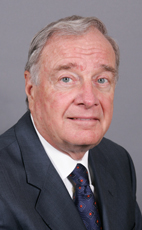
House of Commons photo

Crucial Fact

  • His favourite word was tax.

Last in Parliament September 2008, as Liberal MP for LaSalle—Émard (Québec)

Won his last election, in 2006, with 48% of the vote.

Statements in the House

Canadian Economy October 23rd, 1995

Mr. Speaker, the hon. member has asked two questions.

In terms of the first one on the value of the dollar, as the hon. member knows Canada has a floating exchange rate. Under those circumstances the value of the dollar is established by the markets. When the occasion requires, the Bank of Canada will intervene to ensure there are orderly markets.

On the second question relating to Canada's obligations, I am very confident international and domestic markets are completely assured that Canada will under all circumstances fulfil its obligations.

However I should like to take advantage of the question asked by the hon. member to reaffirm, without any hesitation and without any equivocation, that Canada stands 100 per cent, four square behind all its obligations.

Income Tax Conventionsimplementation Act, 1995 October 19th, 1995

It made every single concession. Every point it thought the Americans would raise at the table, it gave up before it got there, because this indeed is a craven government.

He was referring to Bill S-9, what we approved yesterday. He was criticizing the very bill that was passed in substantially the same form. He did not agree that the Conservative government was headed in the right direction.

That borders on the hypocritical. If a member who criticizes something vehemently and strongly in opposition has the chance to change it, to improve it, to fix it or to make it better when in power, he or she should do so. But the government goes along and in the course of the last two years has basically passed about 10 Conservative bills substantially in the form that were on the shelf gathering dust. Its members just took them off the shelf, blew off the dust, presented them in the House, put Liberal on them, and now they are being passed.

I am sure some members of the Liberal government are deeply hurt because their party said in the past that it would never cut the deficit on the backs of the sick or the poor and this is exactly what it is now doing.

The Liberals are cutting and transferring the debt from the federal government to the provincial governments. They are cutting health care and welfare services by $7 billion and are calling it the social transfer bill or whatever. This is what they said they would not do.

There have to be some Liberals over there who are hurting, who are bleeding internally, because they are losing their roots. They are losing what they are supposed to be doing in terms of protecting the people who elected them. They are not protecting them. They are going against their wishes. They are breaking a lot of the promises they made in the red book.

During the election they said on free trade that they did not like NAFTA and that they would renegotiate.

Transfer Payments October 6th, 1995

Again, Mr. Speaker, I can only repeat the same thing. The government, the Prime Minister, the Minister of Health and myself have all stated in this House that one of the goals of the current reform is to reverse the trend, stop our reserves from shrinking and maintain a level that will allow us to set the amount to be transferred to the provinces, including Quebec.

Transfer Payments October 6th, 1995

Mr. Speaker, again-and this is unfortunate-separatists do not have a firm grasp of figures.

At present, while receiving approximately $29 billion from Quebec, we give that province approximately $41 billion, which means a net gain of $11 billion for Quebec. What we must ask ourselves is this: Should Quebec ever achieve independence, what will the separatist movement do to bridge that gap?

Social Program Reform October 6th, 1995

Mr. Speaker, as I said before, the hon. member's analysis is quite preposterous. It is quite clear that no decision has been made on distribution. Second, I think that the hon. member should also consider equalization, which is a very important factor.

The hon. member seems unwilling to talk about it, but let me tell you that, in 1996-97 for example, equalization payments to Quebec will amount to $4 billion or 42 per cent of federal equalization payments to the provinces.

Social Program Reform October 6th, 1995

Mr. Speaker, the Minister of Human Resources Development and I intend to sit down with provincial officials to determine how the country and the provinces can restructure their finances.

That said, the hon. member has just quoted figures that have been used by other separatists. As I said before in this House, they are basing their arguments on something that is quite preposterous.

Social Program Reform October 6th, 1995

Mr. Speaker, under the present system, there is a decline in the amounts to be spent on transfers to the provinces.

That being said, one of the reasons we decided to proceed with these reforms, and this was explained by the Prime Minister and the Minister of Health, and I said it myself here in this House, was to reverse this trend while maintaining a certain level of money in these transfers. In other words, we intend to freeze these amounts to stop this decline, for reasons we discussed with the provinces, in other words, the federal government firmly intends to remain involved in improving social programs in Canada.

The Economy October 5th, 1995

Mr. Speaker, the hon. member has properly identified a problem the government in its deficit reduction program has identified and is seeking to address, the very high level of foreign indebtedness which exists primarily in the private sector and in a number of provincial government borrowings.

I do not believe, however, the solutions brought forth by the member really suit. We must increase the percentage of Canada's savings.

As far as the reserve requirements of the banks, if we are to create jobs we want to make sure our banks are competitive with other banks.

As far as the 20 per cent rule, we have looked at it. As members know, there have been recommendations that the 20 per cent rule be increased. Those are not recommendations I would be inclined to accede to at this time.

Federal Debt October 5th, 1995

Hide, Mr. Speaker? Tell us what a sovereign Quebec's debt level will be. Tell us how much higher interest rates will be in a sovereign Quebec. Tell us how much higher taxes will be in a sovereign Quebec? Let us lay all the cards on the table. Tell us the truth. He should tell us the truth, Mr. Speaker, about the negative impact of independence in Quebec.

Federal Debt October 5th, 1995

Mr. Speaker, the auditor general fully agrees with us that, before this debate can take place-and we are all in favour of this debate-there should at least be statistical data and figures available. He made this quite clear. Last year's figures are not ready yet. As soon as they are and as soon as we get an invitation from the committee, we will gladly go before the committee.

Having said that, I would like to mention what the auditor general asked us to do. He asked us to produce an annual financial statement, and we did. He asked us to provide the public with more information on our tax expenditures, and we did. He asked us to produce an annual economic update; we did so for our first two budgets and will do so again this time around.