Mr. Speaker, I have to say they sound like a cow herd in heat.

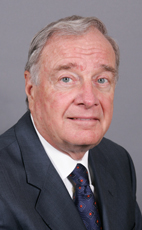 House of Commons photo
Won his last election, in 2006, with 48% of the vote.
The Economy September 29th, 1995
Mr. Speaker, I have to say they sound like a cow herd in heat.
The Economy September 29th, 1995
Mr. Speaker, when reading these studies the hon. member should read them all.
It is very clear that as a major exporting country we are affected by the declines in the economies of Japan and the United States. That is obviously going to affect us.
The Economy September 29th, 1995
Mr. Speaker, as is so often the case, the basis for the question is without foundation.
Within the first year of our taking office this country created over 430,000 jobs. Since November of last year there have been over 230,000 new jobs created in the private sector.
Yes it is true there have been job losses in the public sector at the federal, provincial and municipal levels. I find it surprising the Reform Party would not point out that this is because governments are cutting their spending. There is a lot less job loss in the public sector than there would have been if the slash and burn policies of the Reform Party had been brought in.
We came into office intending to reverse the terrible destructive policies of the previous government, a government this member worked for. We have done it and the Canadian economy is now well poised for long term sustainable growth.
Canada-Quebec Monetary Union September 27th, 1995
Mr. Speaker, what would it accomplish to put Quebec in the same position as, say, France is with respect to the Bundesbank or the bank of some other country?
When Canada is in a period of full growth, if there is a downturn in Quebec, monetary policy will be set in Canada to the detriment of Quebecers.
Tell me, what point is there in becoming independent if the tools of independence are handed over to another? It is totally pointless.
Canada-Quebec Monetary Union September 27th, 1995
No, Mr. Speaker, not in the least, but that is not the question. The question is this: How can it be that a Quebec desiring independence not only wishes to use the currency of another country but also is prepared to turn all of the control and influence a country must have over its monetary policy over to that other country?
This is the touchy situation in which Quebec will find itself, this is the fundamental tool it will have forgone.
Canada-Quebec Economic Union September 27th, 1995
Mr. Speaker, what I am saying is that the Canadian government will not be prepared to do what the separatist movement is willing to do, that is to jeopardize the protection afforded to the agricultural sector, and to also jeopardize the automobile industry, the bilateral panels and the cultural exemptions.
Mr. Speaker, is the hon. member prepared to jeopardize the safeguards that we have put in place to protect French language and culture?
Canada-Quebec Economic Union September 27th, 1995
Mr. Speaker, it is not me but the NAFTA provisions which would require that the United States and Mexico get the same benefits and privileges. Our country would be opposed, because it would stand to lose too much.
Canada-Quebec Economic Union September 27th, 1995
Mr. Speaker, the hon. members are having a hard time understanding. At present, Canada is part of NAFTA. This agreement was signed and ratified. So, cultural exemptions, the agricultural policy, binational panels, all those things are already in place and Canada will continue to enjoy them.
The only problem would be if Canada wanted or agreed to negotiate an economic union. All this would then be at risk.
The difference between Quebec and Canada is that, if Quebec wishes to join NAFTA, this will mean no more agricultural policy, no more cultural exemptions, no more binational panels and no more procurement policy.
At present, Quebec is part of NAFTA and things are working well. If Quebec separates and then wants to join NAFTA, it will be undermining the basis of the Quebec economy. That is what I call putting your cards on the table.
Canada-Quebec Economic Union September 27th, 1995
Mr. Speaker, all the more reason for Quebec to remain in Canada. What I said yesterday was very clear. I did not say that there would be no trade between Quebec and Canada. What I said is that there would be no economic union between Quebec and Canada as described in the referendum question. And the reason for this is very obvious: while $33 billion in goods are sold to Quebec by the rest of Canada, $165 billion in exports go to the U.S., and Canada can never put this at risk.
Division Of The Federal Debt September 27th, 1995
Mr. Speaker, I will answer, since they have so much trouble asking questions.
If the hon. member wishes to ask hypothetical questions, we can do that too. If the debt of a separate Quebec were to triple or worse, how high would the resulting interest rates be for us Quebecers? How much would our income tax go up? What kind of cuts would we see in social services? They would be draconian.