Medical Assistance in Dying Safeguards Act

An Act to amend the Criminal Code and An Act to amend the Criminal Code (medical assistance in dying) and to make related amendments to other Acts

Sponsor

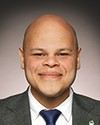
Sean Fraser  Liberal

Status

Second reading (House), as of Nov. 16, 2026

Subscribe to a feed (what's a feed?) of speeches and votes in the House related to Bill C-41.

Summary

This is from the published bill.

This enactment amends the Criminal Code to, among other things,
(a) clarify that a person cannot receive medical assistance in dying on the basis of a mental illness; and
(b) create exemptions from the offences of culpable homicide and administering a noxious thing, in order to permit a medical practitioner or a nurse practitioner to provide medical assistance in dying to a person who has lost the capacity to consent to the procedure if the person made an advance request to receive medical assistance in dying when they had that capacity and if
(i) the person is eligible to receive medical assistance in dying and the medical practitioner or nurse practitioner ensures that the applicable safeguards are complied with,
(ii) the person prepared their advance request in accordance with the applicable criteria, including that the person was diagnosed, before the request was signed, with a serious and incurable illness or disease that was reasonably expected to lead to an irreversible loss of the capacity to consent to receiving medical assistance in dying, and
(iii) the province in which the person would receive medical assistance in dying has in force a provincial legislative regime that identifies the repository in which advance requests are stored and that includes rules in relation to, among other things, making, storing, withdrawing and amending or replacing advance requests.
The enactment also amends An Act to amend the Criminal Code (medical assistance in dying) so that the exclusion from eligibility to receive medical assistance in dying in relation to a mental illness remains in force.
Finally, the enactment makes related amendments to other Acts.

Elsewhere

All sorts of information on this bill is available at LEGISinfo, an excellent resource from Parliament. You can also read the full text of the bill.

Bill numbers are reused for different bills each new session. Perhaps you were looking for one of these other C-41s:

C-41 (2023) Law An Act to amend the Criminal Code and to make consequential amendments to other Acts
C-41 (2017) Law Appropriation Act No. 1, 2017-18
C-41 (2014) Law Canada-Korea Economic Growth and Prosperity Act
C-41 (2012) Law Appropriation Act No. 3, 2012-13

Votes

Nov. 16, 2026 Passed Time allocation for Bill C-41, An Act to amend the Criminal Code and An Act to amend the Criminal Code (medical assistance in dying) and to make related amendments to other Acts

Debate Summary

line drawing of robot

This is a computer-generated summary of the speeches below. Usually it’s accurate, but every now and then it’ll contain inaccuracies or total fabrications.

Bill C-41 would maintain the exclusion of medical assistance in dying where mental illness is the sole underlying condition and establish a framework for advance requests by adults with capacity-limiting illnesses, subject to safeguards and provincial or territorial legislation.

Liberal

  • Supports Bill C-41: The Liberals support the bill’s two central changes: maintaining the exclusion for MAID when mental illness is the sole underlying condition, and permitting advance requests subject to safeguards.
  • Maintains mental illness exclusion: They argue that uncertainty about whether mental illness is irremediable, limited clinical consensus and gaps in mental health services make expansion unsafe; the exclusion should remain indefinitely.
  • Allows advance requests: They support letting capable adults with an incurable, capacity-limiting illness set out in advance when they would want MAID, preserving personal choice and respecting their expressed wishes.
  • Safeguards and provincial roles: The bill retains eligibility requirements and adds protections, including independent assessments, the ability to revoke a request and rules against proceeding where consent is unclear. Provinces and territories decide whether to implement advance requests.

Conservative

  • Split the bill: Conservatives support permanently excluding mental illness as the sole basis for MAID, but insist that provision be separated from advance requests so each issue receives its own vote and scrutiny.
  • Oppose advance requests: They argue advance requests risk ending lives without contemporaneous consent, as a person’s wishes may change and clinicians must make subjective judgments about suffering, refusal and eligibility.
  • Strengthen safeguards and care: Conservatives call for stronger national oversight, enforceable safeguards and better access to health, disability, mental-health and palliative supports, so MAID does not substitute for care.

NDP

  • A free vote on conscience: The NDP caucus treats Bill C-41 as a matter of conscience, recognizing profound differences while balancing autonomy, dignity, equality and protection of vulnerable people.
  • Unequal access to advance requests: Kwan notes that advance requests would be available only where provinces or territories enact the required framework, raising concerns that Canadians’ rights could depend on where they live.
  • Mental illness eligibility remains contested: The bill maintains the exclusion for people whose sole underlying condition is mental illness; Kwan outlines equality concerns alongside expert and disability-rights concerns about irremediability, treatment access and safeguards.
  • Care must make choice meaningful: The government must ensure timely, affordable access to health care, housing, disability supports, mental health treatment and palliative care so assisted dying is not a substitute for unavailable support.
  • Thorough, inclusive review: Kwan urges the committee not to rush the bill and to hear people with lived experience, Indigenous organizations, families, advocates and experts through a transparent, human-rights-based process.

Bloc

  • Mental illness exclusion: The Bloc opposes indefinitely excluding people with serious, incurable mental illnesses from MAID, arguing that a blanket ban is discriminatory and likely unconstitutional. It calls for rigorous safeguards and says eligible people should not be left to pursue costly legal challenges.
  • Respect Quebec’s jurisdiction: The Bloc wants the Criminal Code to avoid restricting Quebec’s MAID laws and supports allowing provinces to develop care procedures. It warns that federal criteria, especially the test of relief through “reasonable means,” may be more restrictive than Quebec’s intolerability standard.
  • Advance requests and choice: The Bloc supports advance requests and emphasizes that a capable person should define in advance the conditions they find intolerable. It opposes others’ values overriding those wishes and wants Quebec’s approach accommodated.
  • Careful, non-partisan study: The Bloc criticizes the government for rushing the bill and urges thorough, evidence-based debate that hears from affected people and experts. Members suggest splitting the bill so advance requests can proceed while the mental-illness issue is resolved.
Was this summary helpful and accurate?

Medical Assistance in Dying Safeguards ActGovernment Orders

November 4th, 2026 / 11:20 p.m.

Liberal

Guillaume Deschênes-Thériault Liberal Madawaska—Restigouche, NB

Mr. Speaker, in such a sensitive debate, I would like to ask my colleague why it is important to ensure that we use precise language. In Canada, the term used is medical assistance in dying. We have precise terms that we have been using for nearly a decade now. Why is it important to ensure we use the correct language when debating such a sensitive issue? In what way does this also constitute a matter of respect for the people concerned?

Medical Assistance in Dying Safeguards ActGovernment Orders

November 4th, 2026 / 11:20 p.m.

Conservative

Jamil Jivani Conservative Bowmanville—Oshawa North, ON

Mr. Speaker, I agree that using language is important, which is why I call it euthanasia. MAID is an acronym and a term made to sanitize something that is morally very consequential. I think it was used by the government to take something that is very disturbing to many Canadians and make it sound innocuous. It is not innocuous. It is euthanasia. It is about people's lives being ended. This is serious. We do not need government acronyms in order to talk about this.

Medical Assistance in Dying Safeguards ActGovernment Orders

November 4th, 2026 / 11:20 p.m.

Conservative

Marc Dalton Conservative Pitt Meadows—Maple Ridge, BC

Mr. Speaker, there are few debates in Parliament that are more consequential and more deeply impactful than when we are called to debate life-and-death legislation. Issues of this importance require us to look beyond being partisan, and this is not the first time the chamber has had to grapple with such profound moral weight. We just have to look at our history.

I am thinking of capital punishment. A private member's bill was introduced to abolish it in 1914. For decades, in the 1950s, 1960s, 1970s, 1980s and 1990s, parliamentarians in this chamber grappled with that issue. They debated whether deterrence prevented murders, the morality of a state taking a human life, whether life imprisonment was a sufficient punishment and the irreversible possibility of making a mistake. We fast-forward to today. Medical assistance in dying is, without question, one of the most consequential public policy decisions this Parliament has ever made. It is a matter of life and death, literally, and that is precisely why we cannot afford to get this wrong.

When Canada first introduced medical assistance in dying in 2016, Canadians were assured by the government that it would be a carefully controlled, exceptional measure built on very clear limitations and uncompromising safeguards. We were told it was strictly an end-of-life compassionate option for those facing a reasonably foreseeable natural death. That is what we were told, but look at where we are today.

The data tells us a staggering story. In 2024 alone, 16,499 Canadians received MAID. Since its introduction, more than 76,000 Canadians have died through this program. It is approaching 100,000 now, in 2026. In 2024, MAID accounted for approximately 5.1% of all deaths across Canada. This is an extraordinary number. To put this in perspective, let us look across the border at California. It is a jurisdiction with about the same population size as Canada. Medical assistance in dying was legalized in both Canada and California at exactly the same time, yet we can look at the comparison of numbers: in Canada, 76,475 deaths, versus just 5,423 in California. In 2024, as I mentioned, there were 16,499 in this country versus 1,032 in California.

I think about how dramatically our legislation has evolved. In 2021, through Bill C-7, the government expanded eligibility far beyond those whose natural deaths were reasonably foreseeable. We created two distinct tracks, including a track for individuals who are not approaching the end of life. In so doing, Canada became one of the most permissive jurisdictions in the entire world when it came to assisted dying. By removing the requirement of natural death to be reasonably foreseeable, the government extended MAID to people with disabilities and chronic illnesses who were not otherwise dying. This approach is far outside the traditional, globally recognized end-of-life care model.

Mental illness was initially excluded from this expansion, but only temporarily. Ever since, Parliament has repeatedly had to step in to extend that exclusion as a matter of crisis management. Bill C-39 kicked the deadline down the road. Bill C-62 extended it again, to March 17, 2027, a date that we are now quickly approaching.

We must ask ourselves why MAID for mental illness was delayed in the first place. It was delayed because committees heard testimony after testimony from the front lines stating that this was an incredibly dangerous direction to go in. There was substantial, overwhelming agreement among mental health advocates, disability advocates, psychiatric professionals and academic experts. The special joint committee's recommendation was clear, to permanently exclude mental illness as a sole underlying condition for MAID, and Conservatives agree entirely with this.

We believe that someone suffering from depression, PTSD or another severe mental illness should be met with access to treatment, support and hope, not a path to assisted death. Mental illness can be utterly devastating. It distorts how a person sees themselves, how they view their current circumstances and how they perceive the future. However, we know that circumstances can change. Treatment can work. People can recover. People who once saw absolutely no hope can go on to live incredibly meaningful, beautiful lives.

I have shared this before, but it bears repeating. In my early twenties, I went through a clinical depression. It was a very dark period of time in my life. I had suicidal thoughts. Thankfully, I never made any attempts, but in that darkness I received vital support from health care professionals and those closest to me. I came out of it. Today, that dark period is a very distant memory. I feel no pain from it, but at the time I felt utterly incapacitated. With time and support, I recovered. I went on to go to university, become a teacher, an MLA in British Columbia, a member of Parliament, a father and a grandfather. I have lived a full and rich life and I am thankful. If MAID for mental illness had been legal and readily marketed for people like me at that time, how many would have gone that route?

The government itself has recognized these serious concerns, which is why it repeatedly extended the exclusion. However, with the current exclusion set to expire on March 17, 2027, there is an urgent need to act, and Conservatives have acted. The member for Cloverdale—Langley City introduced a private member's bill, Bill C-218, which would have permanently and cleanly excluded mental illness as a sole underlying condition for MAID. What happened? The Liberals voted against it. On October 7, this House had a clear opportunity to advance that protective legislation and the government voted it down. Now, just weeks later, the government has introduced its own legislation, Bill C-41, which we are debating right now as we approach midnight. What has it done? It has taken the exact permanent exclusion for mental illness and attached it to a completely separate, massive and entirely undebated element, the advance request for MAID. Let us call it what it is. The Liberals do not want to subject their new expansion of MAID to the raw public scrutiny that the mental illness expansion faced. The more the expert witnesses, physicians, psychiatrists and professional organizations spoke out about mental illness, the more the general public became concerned. They do not want to go in that direction. By chaining these two issues together in Bill C-41, it is trying to sneak a massive new policy under the radar. I say, shame.

The political dynamic in this House has shifted. Following the by-elections and floor crossings earlier this year, the Liberal government now holds a majority. It no longer needs collaboration with the opposition. It no longer needs to seek multipartisan consensus on matters of life and death. Because of this, it has the raw numbers to pass legislation independently, and it is using that power to ram this through. It is rushing this bill through the House, cutting off the thorough, isolated scrutiny that each one of these profound issues desperately deserves.

Conservatives are deeply concerned with the safeguards in this bill, particularly with the sudden expansion to advance directives. The cold, hard fact is that there is already widespread abuse and inappropriate promotion with our current MAID regime. Time and again, I talk with residents in my community who tell me horror stories about family members having MAID actively promoted and suggested to their loved ones. One of my own staff members was offered MAID three separate times because of the migraines he suffered from a fall a decade ago. Another man told me how his father was offered MAID because of a hip injury. The son had to step in and tell providers that his father needed exercises and stretching, not MAID. He helped his father get the proper rehabilitation and guess what. He is out of the hospital. He is not dead.

Medical Assistance in Dying Safeguards ActGovernment Orders

November 4th, 2026 / 11:30 p.m.

Liberal

Guillaume Deschênes-Thériault Liberal Madawaska—Restigouche, NB

Mr. Speaker, in 2016, the adoption of Canada's MAID legislation marked a significant change in Canadian society. It gave people living with an incurable illness and experiencing intolerable suffering an additional option in their end-of-life care: medical assistance in dying.

My colleague cited a number of statistics and shared several anecdotes in his speech, but I would like a clear answer. Is he for or against allowing individuals to make a free and informed choice about MAID based on their own circumstances?

Medical Assistance in Dying Safeguards ActGovernment Orders

November 4th, 2026 / 11:30 p.m.

Conservative

Marc Dalton Conservative Pitt Meadows—Maple Ridge, BC

Mr. Speaker, I am opposed to the abuse we are currently seeing in the system, with people being encouraged to pursue medical assistance in dying. Now there is an effort to introduce yet another element. There are a great many concerns that still need to be discussed.

Medical Assistance in Dying Safeguards ActGovernment Orders

November 4th, 2026 / 11:30 p.m.

Bloc

Luc Thériault Bloc Montcalm, QC

Mr. Speaker, in his speech, my colleague said that he thought it was immoral for a person who is not terminally ill to have access to MAID. However, Bill C-14 was inconsistent with the Carter decision. Ms. Carter and Ms. Taylor were not terminally ill. They were approaching the terminal phase of their illness. Being terminally ill does not mean that death is imminent or that a person is not already experiencing intolerable and irremediable suffering.

The Supreme Court is of the opinion that creating a blanket exclusion for people who are not terminally ill but who are suffering infringes on the right to life because it forces them to cut their life short rather than allowing them to determine when their suffering has become intolerable. What people want is to live as long as possible, up to the limit of what they can tolerate. That is what MAID allows for in cases that are not related to a reasonably foreseeable natural death.

As a legislator, how can my colleague promote a bill that is unconstitutional?

Medical Assistance in Dying Safeguards ActGovernment Orders

November 4th, 2026 / 11:35 p.m.

Conservative

Marc Dalton Conservative Pitt Meadows—Maple Ridge, BC

Mr. Speaker, the member is talking about what is already the law. What we are discussing now is whether MAID should be available to people whose sole underlying condition is a mental illness, and there is broad agreement in this House that it should not be. However, the debate primarily focuses on end-of-life decisions for persons with Alzheimer's disease, for example, or other similar health problems.

Medical Assistance in Dying Safeguards ActGovernment Orders

November 4th, 2026 / 11:35 p.m.

Liberal

Natilien Joseph Liberal Longueuil—Saint-Hubert, QC

Mr. Speaker, I am not challenging my colleague's right to his personal convictions. I am challenging his possible intention to put his rights above the rights and autonomy of others. Can my colleague explain to the House the difference between therapeutic obstinacy and the right to die with dignity?

Medical Assistance in Dying Safeguards ActGovernment Orders

November 4th, 2026 / 11:35 p.m.

Conservative

Marc Dalton Conservative Pitt Meadows—Maple Ridge, BC

Mr. Speaker, what we are saying is that there needs to be a debate about this. This is not something we should be rushing through. We are talking about life and death.

The Liberals made a lot of mistakes. As a matter of fact, that is the reason they delayed it once, twice and I believe three times. Now they realize that they got it wrong. They got it wrong before, and they are going to get it wrong again.

This is serious. It is very complex. There are a lot of different pieces that we need to look at, not have rushed debates in the middle of the night that have to be done by a certain period. This is not good for Canada. No matter what the member may think, we need to make sure it works.

Medical Assistance in Dying Safeguards ActGovernment Orders

November 4th, 2026 / 11:35 p.m.

Bloc

Marie-Hélène Gaudreau Bloc Laurentides—Labelle, QC

Mr. Speaker, it is late, but it is never too late to talk about what life is all about.

In fact, death is a fact of life. That is what we are discussing tonight. Let me begin with my conclusion. We have heard our colleagues repeatedly point out that Quebec was ahead of the curve, that it conducted multiparty consultations and that it even took the time to examine each step of the process. Today, we are saying that Quebec is not only ready, but that it also needs the latitude, insofar as the Criminal Code is concerned, to fully implement its legislation.

Here, we began studying medical assistance in dying five years ago, looking in particular at what took place in Quebec. That work yielded a wealth of findings that now allow us to clearly distinguish between two situations: advance requests and individuals who have been suffering from unbearable mental illnesses for decades.

What I am beginning to realize is that we are not going to make it happen. Some people want to divide the bill, others want to have two votes. Basically, I cannot even keep up. There is one thing I do understand, though. Can we take action together and agree that if certain provinces and territories are not ready, that is their business? If we in Quebec are ready, because we have been talking about it for years, then please let us implement what we believe is right for us. This would illustrate that such a sensitive bill was drafted through a collaborative process. I do not think we will achieve that here in the House. We have perfectly legitimate differences of opinion, but when it comes to end-of-life care, human dignity is being set aside when the individual should come first regarding decisions about their own life.

When someone is making a decision for themselves, I would feel very uncomfortable doing or saying anything that might influence that person. It is not up to me to tell them, no, they cannot die, or yes, they can die. It is up to the individual.

I am saying this because I have been through it myself. I am talking about it, but I am certainly not trying to oversimplify things and suggest that the law should be based on my experience. I want that to be clear. I have lived experience. In 2017, my father was diagnosed with ALS. People who were here more than a decade ago knew the MP Mauril Bélanger. ALS is a devastating disease. It causes tremendous suffering. It can reach a point where a person is no longer able to endure that suffering, which in this case is both physical and psychological because the person is trapped in their own body.

In 2017, my father participated in several research studies. At the time, even I, as his young daughter, would tell him that he could not possibly be thinking about death. He told me that death is just part of life. However, after discussing his case with researchers and scientists, he chose to die with his illness rather than from it. In the final stages of ALS, swallowing and breathing become increasingly difficult. The heart does not stop, but people generally end up suffocating. Because my father was eligible for MAID, he chose to die without having to endure that suffering. No one wants their parents to leave them, but he made me understand something.

It was only afterwards that I realized how understandable it is not to want to lose a loved one. It is out of love. What I am hearing in these discussions is, above all, a fear that the person might miss out on something, that there could still be moments of happiness. I could have a colleague tell me that a person with dementia has experienced 24 hours of complete lucidity over the course of three months. Ultimately, it is up to the person who is caring for their loved one. We are unable to come to an agreement about the role of loved ones this evening.

I am thinking back to when my father told me he was going to die from his illness. Of course, there was the possibility of intervention, but no one was ever able to intervene. I experienced it myself. How many times did we have to reaffirm the legitimacy of my father's right to refuse treatment, to ask that he not be allowed to suffer, and to have his end-of-life wishes respected?

He had been trapped in his body for 20 years. He told me one day that he had been using a ventilator, a BiPAP, for eight years, that he never took it off and wore it 24 hours a day, seven days a week. He could not take it anymore. The ventilator had replaced his lungs. I told him it was a natural reaction.

That is what this is all about. Let nature take its course and let us not try to save lives. If we are sick, let us die. That is what I hear, and it troubles me. In my father's case, he lived for eight years with a device that prolonged his life, but on the day he could no longer bear having that machine on his face all the time, we respected his wishes. It may have been that way from the start, eight years earlier, but he would have missed my wedding, he would not have seen my children grow up. Is it not selfish to want more time with our loved one?

Essentially, today we are debating and talking about other people. When we are talking about others, perhaps we should ask the person who is making the choice what they want, particularly in the case of advance requests. That is also what worries me. Some say that people can live a whole other life.

Earlier, I shared an analogy, or rather a story, about a colleague. I asked him what an advance request was. Simply put, sometimes we know somebody for 50, 60 or 90 years, and then they are diagnosed with Alzheimer's. This person gets to say what they will and will not endure. They may not want their personality to change completely. They may not want to have to be fed. They may not want to be confined to a chair because they tend to wander around the building. I suggested a scenario where a person who has been in politics his entire life undergoes a 180-degree personality change, causing him to strip off his clothes and flirt with everyone he encounters. If this person acted happy, people would see it in a positive light. They would think he had certain wishes that he expressed when he still had the capacity to choose. Now that he no longer has the capacity to say that this is not the end of life he wanted, however, his wishes are no longer valid. That is what I am having a hard time understanding.

As long as our discussions do not focus strictly on ethics and the protection of each individual's right to choose, simply saying that we are going to hold more meetings and conduct more analyses will only prolong the debate.

We will never see the end of it in the House.

What I want is for every individual to be able to make their own decisions about how their life ends.

Medical Assistance in Dying Safeguards ActGovernment Orders

November 4th, 2026 / 11:45 p.m.

Conservative

Todd Doherty Conservative Cariboo—Prince George—Omineca, BC

Mr. Speaker, I have listened to this debate at length. I think my hon. colleague knows that my record stands in the House as one fighting against suicide. As I said in my speech and my comments, we are seeing a number of concerns already with the legislation as it stands. The medical community, those who have to deliver those lethal doses, those end-of-life medications, have concerns. We are asking on this side if, perhaps, this should be studied a little bit more, if we should hear from those professionals, because none of us in the House are doing that. There is nothing to prepare any of us to be able to vote on this. I do not think there has been enough study of this bill.

I think it is out of compassion that we are pushing back and fighting for those who are perhaps considering this.

Medical Assistance in Dying Safeguards ActGovernment Orders

November 4th, 2026 / 11:45 p.m.

Bloc

Marie-Hélène Gaudreau Bloc Laurentides—Labelle, QC

Mr. Speaker, I did not have time to expand on prevention and the potential to save lives. Many of my colleagues have said that, when it comes to mental health in particular, we should start by putting all our efforts and energy into the service delivery networks. Yes, there are shortcomings.

Imagine a loved one saying that they are going through an unbearable situation and they are going to request MAID. That person is sending a cry for help in the face of suffering. I am very sensitive to the issue of suicide. It may sound crazy to say, but if the person makes that request, rather than committing an irreversible act, that is, killing themselves, they have a better chance of getting through the crisis. That person will be cared for, because they will obviously not be eligible for MAID, and they will not fall through the cracks.

Medical Assistance in Dying Safeguards ActGovernment Orders

November 4th, 2026 / 11:50 p.m.

Liberal

Guillaume Deschênes-Thériault Liberal Madawaska—Restigouche, NB

Mr. Speaker, my colleague gave a great presentation on the importance of respecting the wishes of others. It should be perfectly clear that this is a choice, not an obligation. Every individual decides whether medical assistance in dying is right for them or not.

We have heard all sorts of things tonight. I would like my colleague to elaborate on what we have heard, especially the fact that MAID is still a choice and that strict guidelines are in place. It is not automatic. A person who requests MAID does not automatically get it.

I would like my colleague to tell us more about that, in light of what we have heard during this evening's debate.

Medical Assistance in Dying Safeguards ActGovernment Orders

November 4th, 2026 / 11:50 p.m.

Bloc

Marie-Hélène Gaudreau Bloc Laurentides—Labelle, QC

Mr. Speaker, I would like to clear something up. If I am diagnosed with Alzheimer's disease, I will not directly receive MAID. If I do not want it and never will, I will never receive it. I am under no obligation. If I decide today that I want MAID, but I change my mind tomorrow, my most recent decision takes precedence. What is there to be afraid of?

Does my colleague agree that this bill could be split? We could move ahead on advance requests, and the committee could take some time to explore the mental health component a little more.

Medical Assistance in Dying Safeguards ActGovernment Orders

November 4th, 2026 / 11:50 p.m.

Bloc

Andréanne Larouche Bloc Shefford, QC

Mr. Speaker, my question is simple. We heard that there was a lack of data and that there was no basis for it. Can my colleague, a member from Quebec, give us more details about the data and the serious approach undertaken by the Select Committee on Dying with Dignity? A report was published on this issue in Quebec.