Medical Assistance in Dying Safeguards Act

An Act to amend the Criminal Code and An Act to amend the Criminal Code (medical assistance in dying) and to make related amendments to other Acts

Sponsor

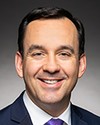
Sean Fraser  Liberal

Status

Second reading (House), as of Nov. 16, 2026

Subscribe to a feed (what's a feed?) of speeches and votes in the House related to Bill C-41.

Summary

This is from the published bill.

This enactment amends the Criminal Code to, among other things,
(a) clarify that a person cannot receive medical assistance in dying on the basis of a mental illness; and
(b) create exemptions from the offences of culpable homicide and administering a noxious thing, in order to permit a medical practitioner or a nurse practitioner to provide medical assistance in dying to a person who has lost the capacity to consent to the procedure if the person made an advance request to receive medical assistance in dying when they had that capacity and if
(i) the person is eligible to receive medical assistance in dying and the medical practitioner or nurse practitioner ensures that the applicable safeguards are complied with,
(ii) the person prepared their advance request in accordance with the applicable criteria, including that the person was diagnosed, before the request was signed, with a serious and incurable illness or disease that was reasonably expected to lead to an irreversible loss of the capacity to consent to receiving medical assistance in dying, and
(iii) the province in which the person would receive medical assistance in dying has in force a provincial legislative regime that identifies the repository in which advance requests are stored and that includes rules in relation to, among other things, making, storing, withdrawing and amending or replacing advance requests.
The enactment also amends An Act to amend the Criminal Code (medical assistance in dying) so that the exclusion from eligibility to receive medical assistance in dying in relation to a mental illness remains in force.
Finally, the enactment makes related amendments to other Acts.

Elsewhere

All sorts of information on this bill is available at LEGISinfo, an excellent resource from Parliament. You can also read the full text of the bill.

Bill numbers are reused for different bills each new session. Perhaps you were looking for one of these other C-41s:

C-41 (2023) Law An Act to amend the Criminal Code and to make consequential amendments to other Acts
C-41 (2017) Law Appropriation Act No. 1, 2017-18
C-41 (2014) Law Canada-Korea Economic Growth and Prosperity Act
C-41 (2012) Law Appropriation Act No. 3, 2012-13

Votes

Nov. 16, 2026 Passed Time allocation for Bill C-41, An Act to amend the Criminal Code and An Act to amend the Criminal Code (medical assistance in dying) and to make related amendments to other Acts

Debate Summary

line drawing of robot

This is a computer-generated summary of the speeches below. Usually it’s accurate, but every now and then it’ll contain inaccuracies or total fabrications.

Bill C-41 would indefinitely exclude eligibility for medical assistance in dying when mental illness is the sole underlying condition, permit advance requests for eligible adults subject to safeguards and provincial or territorial laws, and update MAID data collection and reporting.

Liberal

  • Supports Bill C-41: The Liberals support a cautious, compassionate bill that balances individual autonomy with protections for vulnerable people and makes two major changes to MAID rules.
  • Allows advance requests: The bill would let eligible adults with capacity-limiting illnesses request MAID in advance, subject to safeguards; provinces and territories must enact legislation before offering it.
  • Maintains mental illness exclusion: The Liberals would indefinitely maintain the exclusion for cases where mental illness is the sole underlying condition, citing uncertainty about irremediability, clinical consensus and access to mental health care.
  • Improves oversight and reporting: The bill would expand data collection on advance requests and streamline reporting, strengthening transparency and public accountability while reducing unnecessary paperwork for health care providers.

Conservative

  • Supports mental illness exclusion: Conservatives support permanently excluding mental illness as the sole underlying condition for MAID, arguing that recovery is possible and people need treatment, support and hope.
  • Opposes advance requests: They oppose the advance-request provisions or demand they be studied separately, citing unresolved risks around consent, changing wishes, subjective assessments of suffering and irreversible harm to vulnerable people.
  • Split the bill: Conservatives urge the government to separate the broadly supported mental illness exclusion from advance requests, pass the former promptly and give the latter thorough parliamentary scrutiny and public consultation.
  • Strengthen care and oversight: They call for stronger national oversight and enforceable safeguards, alongside accessible mental health, disability, palliative and other health supports so MAID is not a substitute for care.

NDP

  • A free vote on conscience: The NDP treats Bill C-41 as a matter of conscience, with deeply held differences, and emphasizes balancing individual dignity and autonomy with protection for vulnerable people.
  • Unequal access to advance requests: The bill would allow advance requests only where provinces and territories have the required legislative regime, raising concern that Canadians’ access and rights could differ by where they live.
  • Mental illness exclusion and safeguards: The bill maintains the exclusion for people whose sole underlying condition is mental illness. Kwan notes both equality concerns and serious questions about irremediability, treatment access and safeguards.
  • Care must support autonomy: Meaningful choice requires access to health care, housing, disability supports, mental health treatment and palliative care. The government must address gaps rather than let assisted dying substitute for support.
  • Thorough, inclusive scrutiny: Kwan urges the committee not to rush the bill and calls for a transparent, human-rights-grounded process that hears lived experience, Indigenous organizations, disability advocates and medical experts.

Bloc

  • Opposes permanent exclusion: The Bloc opposes permanently excluding people whose sole underlying condition is mental illness, viewing a blanket ban as discriminatory and potentially unconstitutional; it says safeguards and further study are preferable to abandoning affected people.
  • Protect Quebec’s framework: The Bloc supports advance requests but warns that the federal Criminal Code could impose stricter rules than Quebec’s law, particularly through its “reasonable means” criterion, and calls for harmonization that respects Quebec’s jurisdiction.
  • Supports bill in principle: The Bloc will support the bill in principle so committee can examine concerns about advance-request criteria, hear experts and improve safeguards while protecting individual choice and dignity.
  • Rejects rushed passage: Members criticize the government for urging rapid passage despite years of debate, and call for careful, non-partisan study that hears from affected people and respects provincial differences.

Green

  • Supports advance directives: The bill is critical because it would let people of sound mind determine in advance the circumstances of their death and protect their right to die with dignity.
  • Rejects a rushed, patchwork approach: The bill should not be rushed, and the federal government should not leave advance directives to a patchwork of provincial laws; people should be able to make decisions while mentally capable.
  • Prioritizes support for living: She opposes expanding MAID for mental health conditions until people can access social assistance, a guaranteed livable income and wraparound supports, and welcomes delaying that change.
  • Calls for amendments: She considers the bill well intentioned but incomplete, urging the government to hear advocates and accept amendments to get the safeguards right.
Was this summary helpful and accurate?

Medical Assistance in Dying Safeguards ActGovernment Orders

November 16th, 2026 / 4:45 p.m.

Conservative

Rachael Thomas Conservative Lethbridge, AB

Madam Speaker, I cannot put myself into the frame of reference or mindset of a Liberal member. I value the voices of Canadians too much. I understand the need to hear from experts on this issue. I understand the need to have robust discussion, to hold proper meetings, but unfortunately, the government does not. Why the Liberals are sweeping that under the rug and pretending there is nothing to see here and that we can just push this through as if it is some frivolous piece of legislation is beyond my ability to comprehend, but it is incredibly dangerous and it is a massive disservice to the Canadian public.

Medical Assistance in Dying Safeguards ActGovernment Orders

November 16th, 2026 / 4:45 p.m.

Bloc

Mario Beaulieu Bloc La Pointe-de-l'Île, QC

Madam Speaker, as my colleague mentioned earlier, advance requests for MAID have been in place in Quebec for the past two years. They have not caused any problems and the rules are very clear. I have experienced this personally with my parents. An advance request may, for example, specify that MAID should be provided when a person no longer recognizes their loved ones, can no longer have meaningful or enjoyable interactions with others, or has become incontinent and is no longer able to care for themselves.

These are very specific criteria, and they must be established while the person still has the capacity to make such decisions. It is as though my colleague is suggesting that, once a person has lost that capacity or their memory, they might feel differently. However, that would be completely contradictory.

As I understand it, my colleague opposes advance requests altogether. In Quebec, advance requests already exist, and we do not want the practice to be criminalized. My colleague appears to believe that the debate that took place in Quebec over many years is not valid and that advance requests should be rejected.

Medical Assistance in Dying Safeguards ActGovernment Orders

November 16th, 2026 / 4:50 p.m.

Conservative

Rachael Thomas Conservative Lethbridge, AB

Madam Speaker, today the government has presented us with a piece of legislation that is of two minds: one, it would take away medical assistance in dying from those who would request it because of mental illness as their sole reason; and, two, the other part of this legislation would allow for an individual to request medical assistance in dying as an advance directive.

To put these two together is a disservice to the Canadian public, because the second component—

Medical Assistance in Dying Safeguards ActGovernment Orders

November 16th, 2026 / 4:50 p.m.

The Assistant Deputy Speaker (Alexandra Mendès) Alexandra Mendes

We must resume debate. We are way past time.

The hon. member for Airdrie—Cochrane.

Medical Assistance in Dying Safeguards ActGovernment Orders

November 16th, 2026 / 4:50 p.m.

Conservative

Blake Richards Conservative Airdrie—Cochrane, AB

Madam Speaker, I rise today to speak about Bill C-41, the government's latest piece of legislation related to medical assistance in dying.

Now, my Conservative colleagues and I welcome the overdue admission in this bill that expanding MAID to individuals suffering solely from mental illness is a dangerous step. We know that people living with mental illness can experience tremendous suffering, but we also know that recovery is possible, that circumstances can change, and that people deserve access to the treatment and support that can help them rebuild their lives.

For years, Conservatives have been arguing that Canadians struggling with mental illness deserve treatment, support and hope, not the government telling them that MAID is the best option for them. The responsibility of government should be to ensure that these options are available, not to create a system where someone who is struggling may come to see MAID as their best or only option.

The other part of this piece of legislation is a separate issue altogether, the idea of advance requests. I really struggle to understand why the Liberals feel the need to tie these two issues together. I think I do understand why, but I really struggle to understand why they are doing this, taking two different issues, one where there seems to be pretty broad agreement, and another one where there is certainly a need for more study. Advance requests raise serious questions about consent, safeguards, provincial jurisdiction and a whole host of things that need to be considered. They deserve to have a thorough study, not to just be rushed through in a piece of legislation because they are being tied together with the other concept that there is obviously a need to rush but also where there seems to be a lot more broad consent.

I think it is even more important to note that in the context of the government's track record, in terms of ensuring that there are proper safeguards, ensuring that getting this legislation right when it comes to the topic of medical assistance in dying, the government's track record is not exactly good.

There is no doubt that this piece of legislation needed to be split into two pieces of legislation to be voted on separately, so that one could pass with the speed that is needed, and the other one could be studied properly. Not only did the Liberals ignore our legitimate pleas to split the bill, but now they are shutting down debate, and ramming it through without allowing for that proper study or for that scrutiny to take place that needs to happen.

This is literally a matter of life or death. The Liberals are relegating this legislation to limited debate based on, frankly, what seems to be just petty politics. The Liberals have to stop playing games with people's lives. Let us pass the mental illness provisions, and let us give the advance request the study and scrutiny it is due.

I want to speak a little, while I have the floor, about the impact of medical assistance in dying on the veteran community. That is a community that is near and dear to my heart, and one that I spend a lot of time thinking about and working for. It is an issue that I hear about quite consistently when I speak with veterans across Canada. There are far too many heartbreaking stories from veterans out there who were seeking help from the government to access benefits that they are entitled to, but instead of getting that help that they were asking for to live their lives, they were being offered, and in some cases even pressured, to consider medical assistance in dying.

Can members imagine the impact that has on someone, when they go to the government looking for help to live their lives and are asked if they would consider death instead? Can members imagine the impact that must have on someone, especially when they may already be in a state of suicidality, PTSD or mental health issues? They are already dealing with sanctuary trauma from the organization that is supposed to help them not being there for them, and then they get that.

We need to understand what is happening here. When we are talking about these cases, we are talking about heroes who stepped up and served this country. When those veterans returned to Canada, they did not ask for handouts, but asked for the care they earned through their service. They asked for treatment and assistance in their transition back into civilian life. What did they get from the government? They were met with a mountain of delays and denials. Worst of all, in some cases, they were offered medical assistance in dying. In some cases, they were even pressured to consider it.

I really want people to think about that. A veteran calls Veterans Affairs for help and the person on the other end of the line instead offers them death. The system is so overwhelmed and backlogged that, for whatever reason, in some cases, death is being considered a more efficient option than support. If that is the case, that is a deeply broken system.

These stories should concern every single Canadian, no matter what their stance on medical assistance in dying is otherwise. Our veterans made a commitment to Canada. They accepted difficult assignments, away from their families. In many cases, they returned home carrying physical or psychological injuries that came from their service. When they came back after fighting those battles, they found themselves fighting another battle, this time with their own government. They are forced to navigate complicated application processes; wait months, and in many cases, even years, for decisions on their benefits; and then are often forced to repeatedly demonstrate that those injuries were sustained while serving.

Consider what that means for someone who has already sacrificed so much for Canada. They may be dealing with physical and psychological injuries that affect their daily lives. They are not asking for special treatment. They are just asking for the government to honour the commitments it made to them when they signed up to serve. The government has a responsibility to ensure that every veteran who reaches out for help is treated with dignity and compassion. That means ensuring that VAC employees are well-trained and are ensuring that veterans are connected with the appropriate health care and support services.

That brings me to the question of safeguards and accountability. When it comes to medical assistance in dying, the government must be able to demonstrate that medical practitioners are properly trained, that eligibility requirements are being respected and that concerns raised by patients, families and health care professionals are being taken seriously. That means ensuring that individuals are making decisions freely, that they understand the options available to them and that they are not being influenced by outside pressure, by inadequate access to care or a feeling that they have become a burden on their families or society.

Bill C-41 must get this right. While we welcome the decision to maintain the exclusion for individuals suffering solely from mental illness, finally, serious questions certainly remain about the safeguards, the oversight and the government's ability to protect vulnerable Canadians.

Canada should be a country where someone struggling with their mental health knows that help is available, where someone living with a disability knows they will be supported and where someone facing a serious illness knows they and their family will not be left to navigate those challenges alone. It should certainly be a country where the men and women who put their lives on the line in service to Canada can return home knowing that their government will stand behind them.

We have a responsibility to protect those who are most vulnerable. That responsibility must be reflected in our laws, our policies and, most importantly, the services we deliver to Canadians. The answer here is straightforward. Canadians struggling with a mental illness deserve treatment, individuals living with disabilities deserve support and those facing serious illnesses deserve access to quality care. Our veterans deserve the benefits and assistance they earned through their service to this country.

The government must ensure that MAID is never presented as a substitute for the care and treatment that Canadians deserve. When someone reaches out to the government for help, they should be met with compassion and solutions, not the suggestion that death is their best option.


Medical Assistance in Dying Safeguards ActGovernment Orders

November 16th, 2026 / 5 p.m.

Winnipeg North Manitoba

Liberal

Kevin Lamoureux LiberalParliamentary Secretary to the Leader of the Government in the House of Commons

Madam Speaker, I truly value all life. To address this legislation, I have done significant background work to be able to share with the House what has taken place with MAID since the mid-1990s.

When a parliamentary committee has actually recommended, and this goes back to 2023, to have advance requests and then I see the Conservatives prepared to pass MAID legislation after only two hours of debate, it seems to me that there is a faction within the Conservative Party that just does not want the legislation to ultimately pass.

Does the member support, in principle, what the legislation is proposing, including advance requests? These are the very same advance requests that the Province of Saskatchewan, for example, wants to put into place.

Medical Assistance in Dying Safeguards ActGovernment Orders

November 16th, 2026 / 5 p.m.

Conservative

Blake Richards Conservative Airdrie—Cochrane, AB

Madam Speaker, there is a saying that when someone is explaining, they are losing. That is exactly what we are hearing over there. The suggestion has been clearly made here that there is a need to split this piece of legislation because one piece has broad agreement. On the other piece, there is a need for further study.

Why could that not happen? Why could we not do that? We could split the legislation so we could ensure proper study and the proper safeguards on the one piece. On the other piece, the government has finally come around on that one. Frankly, it could have just voted for the piece of Conservative legislation and that would have been dealt with.

This seems to me like one of those examples where if someone is explaining, they are losing. The Liberals are losing.

Medical Assistance in Dying Safeguards ActGovernment Orders

November 16th, 2026 / 5 p.m.

Bloc

Sébastien Lemire Bloc Abitibi—Témiscamingue, QC

Madam Speaker, section 1 of the Charter of Human Rights and Freedoms grants every human being the right to life and to personal security, inviolability and freedom.

Quebec society believes that the right to life implies the right to die. In this context, medical assistance in dying must be established as a right that gives individuals the opportunity to avoid terminal suffering and medical paternalism, thereby ensuring their dignity. Allowing MAID means allowing people to choose how, when and where they wish to die, giving them the right to dignity.

I would like to hear my colleague's thoughts on that. Is that not a reason to support the bill?

Medical Assistance in Dying Safeguards ActGovernment Orders

November 16th, 2026 / 5 p.m.

Conservative

Blake Richards Conservative Airdrie—Cochrane, AB

Madam Speaker, let me start by making it quite clear that I support wholeheartedly the portion of the bill dealing with ensuring we have the safeguards in place for those with mental illness. I struggle with the other parts more, mostly because I do not really trust the Liberals to get the safeguards right. They have proven time and time again that they do not seem to be able to do that. That is why the study is needed.

Having said that, I recognize there is a range of different opinions out there in terms of what those safeguards should be. It is not a matter of legislation passing or not passing. It is a matter of making sure it gets the proper study and scrutiny that it deserves.

Medical Assistance in Dying Safeguards ActGovernment Orders

November 16th, 2026 / 5 p.m.

Conservative

Alex Ruff Conservative Bruce—Grey—Owen Sound, ON

Madam Speaker, I want to thank my hon. colleague for his unrelenting advocacy for our veterans over the last number of years, and in particular for shining a light on this issue where, unfortunately, employees of Veterans Affairs Canada were offering MAID to our veterans. That is point one.

Point two is the member for Winnipeg North keeps asking if we support this in principle. That is fine, he can ask that question. I actually think there is going to be a split feeling on that, even among all parties in this House. However, I am concerned that, and the ship has sailed, the Liberals have used time allocation on this bill here at second reading. As the member highlighted in his speech, it is so important that we get this right going forward.

Does the member share the same concerns I have that the Liberal government is now going to likely use time allocation even during debate at committee and take away the opportunity for all the stakeholders and experts to testify at committee so that we can make sure we get this bill right?

Medical Assistance in Dying Safeguards ActGovernment Orders

November 16th, 2026 / 5:05 p.m.

Conservative

Blake Richards Conservative Airdrie—Cochrane, AB

Madam Speaker, on the first part of his question, the only thing that I would disagree with is that member used the past tense when he referred to veterans being offered medical assistance in dying. I have heard many stories and I do not believe it is in the past, unfortunately, though I wish that were the case.

I also want to thank the member for his service because that is always something that deserves mentioning.

In terms of the second part of his question, the reality here is that the government has repeatedly failed to ensure proper safeguards in the legislation around the topic of medical assistance in dying. I do not have much faith that the government has it right in this instance. It certainly needs that proper scrutiny and study, and it is not receiving that. It is ramming this bill through, and I think it is doing it for a very—

Medical Assistance in Dying Safeguards ActGovernment Orders

November 16th, 2026 / 5:05 p.m.

The Assistant Deputy Speaker (Alexandra Mendès) Alexandra Mendes

We are already over the member's time.

The hon. member for King—Vaughan.

Medical Assistance in Dying Safeguards ActGovernment Orders

November 16th, 2026 / 5:05 p.m.

Conservative

Anna Roberts Conservative King—Vaughan, ON

Madam Speaker, it is always a pleasure to rise on behalf of the residents of King—Vaughan, especially on a topic as important as this one.

The Special Joint Committee on Medical Assistance in Dying heard considerable concerns about safeguards and oversights in the MAID process. There are serious moral and legal considerations when we discuss MAID for Canadians whose sole underlying medical condition is mental illness. We are asking whether it is possible to know with enough certainty to make an irreversible decision that a person's condition would never improve.

After hearing from experts and the people directly affected, it recommended keeping the exclusion in place indefinitely. I support that recommendation. The most important thing we need to keep front and centre in this debate is that MAID must never become a cheaper or easier alternative to providing real and effective support to Canadians who are suffering. We cannot tell Canadians in a vulnerable state that the help they need is many months or even years away and then turn around and tell them that MAID is the option.

When someone finally works up the courage to ask for help and is told they will have to wait six months, what are they supposed to do tonight? What are they supposed to do tomorrow? We have a responsibility to make sure that Canadians have access to those supports when they need them most.

Bill C-41 would keep the exclusion in place for Canadians whose sole underlying medical condition is mental illness. The government should instead bring forward a separate bill to maintain this exclusion, so that the House can debate and vote on that question on its own. The committee has given Parliament a clear recommendation, and the House should act on it, but questions that were raised when the government first introduced MAID are still being raised today: How do we make sure that consent is freely given when someone feels they have run out of options? What guidance do doctors have when they are uncertain about eligibility? How do we know whether a person has had a genuine opportunity to access the care that might have helped them? Being told that a treatment exists is one thing. Being able to find a doctor who provides it, affording it, getting it and receiving that treatment when one needs it is another.

Canadian seniors are concerned about safeguards. They want to know that when they go to the hospital for treatment, they will get the care they came for. A senior recently told me that a family member brought her to the hospital because she had a bad flu. They told me that during that visit, they were offered MAID without asking about it. They are now afraid to go back to the hospital. The next time this senior falls ill and their family tells them they need to go to the hospital, they may hesitate. They may stay home longer than they should. Many seniors in this country are already in a vulnerable situation. They should be able to go to the hospital, tell the doctor exactly what they are going through and feel confident that they will get the care they need.

There is one thing I am crystal clear on. Canadians who are suffering from mental illness and who can get better must have the opportunity to get better. They should never feel pushed toward an irreversible decision because they could not get the help they needed. Someone may have already tried several treatments. They may have been referred to a specialist and spent months waiting to be seen. They may be relying on a family member who is doing everything they can to help and has run out of places to call. Those Canadians are asking for something very practical. They need an appointment they can get to, treatment they can afford and someone they can call when things get worse.

We are in no position to make MAID available to people whose sole underlying medical condition is a mental illness. It would also be profoundly unfair to this country's medical professionals to put them in such a difficult moral and legal position. A doctor may know that another treatment is worth trying and also know that their patient cannot afford it or cannot get an appointment. We need to take seriously what that means for the patients and the doctors as well.

We cannot tell veterans who have fought and suffered for this country that the care they need, the treatment they need and the medication they need are months away and then turn around and raise MAID in the meantime. It is an insult to their service, their courage and their love of this great country. A veteran who calls for help should be able to say how difficult things have become and know that the person on the other end of that call will help them get care. They should be able to ask when they will see a specialist, what help is available while they wait, and who they can call if things get worse. After all we have asked of them, they should never have to wonder whether asking for that help was a mistake.

We need to see how the existing safeguards work in practice, especially in the most difficult cases. If a patient or a family member raises a concern, who hears it? Who reviews what happens? How does Parliament find out whether the safeguards we put in place are being followed? These questions matter to the Canadians who depend on us right now.

The special joint committee has heard serious concerns about the safeguards and oversights. It is up to us as parliamentarians to take those concerns seriously. We need to listen to doctors, nurses and legal experts. We need to hear from veterans and veterans groups, Canadians living with mental illness, Canadians with disabilities, and seniors and their families, who are often the first to see when someone is struggling. They can tell us whether the system worked for them and where they were left trying to find out on their own.

When we ask a committee to listen to those Canadians and bring forward recommendations, we have a responsibility to act on what we heard. Conservatives will continue to work in the House to make sure those voices are heard. We will fight to keep the exclusion in place for Canadians whose sole underlying medical condition is mental illness. We will keep pressing for safeguards that work in practice and for Canadians who reach for mental health support to get the help they ask for.

When a senior goes to the hospital, when a veteran calls for treatment or when a Canadian who has been struggling for months finally asks for help, they should be able to count on us to make that help available. No Canadian should ever feel that MAID is their only option because the help they asked for never came.

Medical Assistance in Dying Safeguards ActGovernment Orders

November 16th, 2026 / 5:15 p.m.

Winnipeg North Manitoba

Liberal

Kevin Lamoureux LiberalParliamentary Secretary to the Leader of the Government in the House of Commons

Madam Speaker, the Conservatives are trying to give this narrative that advance requests have not been debated, when in fact that is not the case. I will go back to a committee that in 2023 made a recommendation that we incorporate advance requests. In fact, the Conservative member of Parliament who chairs the status of women committee wanted to see advance requests. I am wondering if the member could give a clear indication: Does she believe that her colleague who chairs the status of women committee is wrong in her belief that we should have advance requests?

Medical Assistance in Dying Safeguards ActGovernment Orders

November 16th, 2026 / 5:15 p.m.

Conservative

Anna Roberts Conservative King—Vaughan, ON

Madam Speaker, I am going to answer that question, because I respect my colleague, and I respect her decision. It is not her decision I am worried about. It is the decision of the Liberal government that I cannot trust. I cannot trust it to make these decisions on behalf of individuals who have issues of mental health and need the help that they wanted. For that individual, my colleague across the way who made those comments, I have sat with seniors on their last dying breath, and they have always hoped that there would be an opportunity to live another day.

I think maybe what you should do is look into your heart and soul and start realizing that life is something that we all cherish, and we all want to live it to the fullest extent.