Okay. Thank you for that.
It's just my own observation here in terms of listening to all of the testimony and reading that water report.... Was it 600 pages?

Evidence of meeting #23 for Environment and Sustainable Development in the 45th Parliament, 1st session. (The original version is on Parliament’s site, as are the minutes.) The winning word was community.
A recording is available from Parliament.
Conservative

Ellis Ross Conservative Skeena—Bulkley Valley, BC
Okay. Thank you for that.
It's just my own observation here in terms of listening to all of the testimony and reading that water report.... Was it 600 pages?
Conservative
Ellis Ross Conservative Skeena—Bulkley Valley, BC
Four hundred.... Anyway, it's my own observation that we're talking about two different issues here, but they're related.
One is existing risks for zoning that happened 50 or 100 years ago and that we're trying to resolve and to remediate. That's versus what we're talking about now in terms of future planning, which is to say that we should not go near these types of risks in terms of zoning, whether you're talking about forest fire risk or flooding risk.
Has your organization acknowledged these two different categories? Did you try to resolve some of these different issues?
Executive Director, Ouranos
Well, it is clearly an issue. I think it's more that the municipal people, or even the provincial policy people, are in a much better position than scientists in order to have the discussion and make this happen. Increasingly, this is the type of discussion that is happening. Even the regulation recognized what was very key, that with respect to new buildings, you have to avoid the risk areas, but with the existing ones, you have to recognize that people are still there. They want to keep their homes, etc.
I think policy has evolved to introduce those aspects into that.
Conservative
Ellis Ross Conservative Skeena—Bulkley Valley, BC
Okay. Thank you.
I'm running out of time here, but I think the central question that's facing this committee right now is that somehow the federal government, through taxpayer dollars, should backstop private insurance companies in terms of some of the risk for premiums and whatnot. Has your organization come across this issue?
Executive Director, Ouranos
We haven't worked on it, but it is obviously an issue. It is a very dangerous issue. We've even seen in the U.S. that if you play with the role of government and with the private sector for insurance, you can actually worsen the situation if you don't do this with care.
Liberal
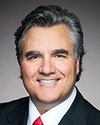
The Chair Liberal Angelo Iacono
Thank you, Mr. Ross.
Mr. St‑Pierre, you have the floor for six minutes.
Liberal

Eric St-Pierre Liberal Honoré-Mercier, QC
Thank you.
Mr. Bourque, thank you for being here today. I want to congratulate Ouranos and the incredible work you're doing in Quebec. I've been following your very important work for over a decade. Your organization plays a very important role for Quebeckers.
You were in the news recently. In early January, I believe, the media reported on a study showing that, by 2100, the temperature will increase by 6.6°C in northern Quebec and by 3.5°C or 4°C in the south.
I'm curious. Can you comment on that study or that data?
Executive Director, Ouranos
The media made it into a news story, but it wasn't really a news story. Ouranos is working with Environment and Climate Change Canada on a project called the Canadian Centre for Climate Services. Its website is climatedata.ca. This project enables any community to download climate change scenarios—temperature, precipitation and degree days—and a host of climate indicators.
We develop scientific knowledge and put it on the website so that municipal stakeholders making climate change adaptation plans can continually access the best available data to move their projects forward. That study wasn't particularly new. I actually think that climate change science is becoming quasi-operational in terms of providing information that decision-makers can rely on.
Liberal
Eric St-Pierre Liberal Honoré-Mercier, QC
Thank you for that clarification.
You also mentioned that, in 2024, costs exceeded $9 billion.
Can you comment on the costs for Quebeckers, including the citizens of Honoré‑Mercier?
What would the costs be in 2030 or even 2040? Have you done any modelling on those costs?
Executive Director, Ouranos
I don't have the figures with me, but I think I can provide the committee with some documents if you want to look at them.
Two reports from the Canadian Climate Institute provide a whole range of fairly detailed economic analyses of the effects on GDP in both pessimistic and optimistic greenhouse gas emission scenarios as a way of sampling uncertainty. The information is readily available.
I could add to that. I've been working in this field for 25 years. Twenty-five years ago, when I gave presentations on climate change, people kind of thought of me as an alien talking about faraway stuff. All that stuff is happening now. Science did a good job of predicting what is happening now. Naturally, people are afraid that, over the next 25 years, things will not improve. In fact, it's going to get worse before it gets better. That's why I invite all decision-makers to use the available science, which tells us about future risks, as much as possible.
Liberal
Eric St-Pierre Liberal Honoré-Mercier, QC
Thank you.
You're right. These things are generally accepted now, and we hear about them a lot. You're no longer an alien.
You mentioned reports from the Canadian Climate Institute and other reports. Can you forward those reports to the committee after the meeting?
Liberal
Eric St-Pierre Liberal Honoré-Mercier, QC
That's perfect.
You also mentioned the average cost of, I believe, $270 per person.
I represent the riding of Honoré‑Mercier, which includes Rivière‑des‑Prairies and Anjou. In addition, I'm not too far from my Bloc Québécois colleague who represents the riding of Repentigny.
Could you tell us about the effect of these impacts, these costs, on constituents?
What kind of impact does this have on constituents, whether they voted for me or for my Bloc Québécois colleague?
Executive Director, Ouranos
When it comes to floods in particular, people don't realize that there are all kinds of them: floods arising from ice jams; river flooding; floods due to rising sea levels and coastal storms; floods in urban areas due to basins, and therefore heavier storm rainfall. So we can see that it's not just a linear increase in floods, but an increase in various types of floods.
Regarding constituents, I made a presentation at the National Assembly of Quebec, and I was surprised to see at least five members rise and mention that many people were coming to constituency offices to say they had suffered damages and that they were no longer insurable. In some cases, middle-income residents were becoming increasingly vulnerable as a result of these events.
That's what I want to talk to you about.
Liberal
Eric St-Pierre Liberal Honoré-Mercier, QC
That's great.
Thank you.
Ms. Taylor, I'll go to you very quickly. You mentioned a report called “Climate Damages and Canada's Looming Home Insurance Crisis: Who Pays?” Can you provide a copy of that report to this committee?
You mentioned polluters, but can you be a bit more specific? Which polluters are you talking about?
Senior Policy Analyst, Investors for Paris Compliance
Yes, I can provide that report.
In terms of which polluters, it's not specific. In the case of tobacco cost recovery, they were global tobacco companies. When it comes to polluters, they can also be global polluters. They're not specifically Canadian polluters but, of course, Canadian polluters are a part of that.
Liberal
Bloc

Patrick Bonin Bloc Repentigny, QC
Thank you, Mr. Chair.
Ms. Taylor, I'd like to know what you think of a proposal in the Bloc Québécois's election platform to tax the excessive profits of oil and gas companies and reinvest that revenue in adapting to climate change and building community resilience.
Do you think it's a worthwhile proposal?
Senior Policy Analyst, Investors for Paris Compliance
I'm sorry. I'm not sure what proposal you're referring to. Could you say that again?
Bloc
Patrick Bonin Bloc Repentigny, QC
The idea would be to tax the profits of oil and gas companies to generate revenue that would be used for adapting to climate change and building community resilience.
Senior Policy Analyst, Investors for Paris Compliance
I didn't mention that in my remarks, if that's what you said. I'm sorry. I hope the translation is correct.
If the question is whether this is just another form of a carbon tax, I think it's actually the other way around. Canadians are currently having those costs imposed on them through increased severe weather damages, and these costs are imposed on the public by major polluters. Currently, it's almost the opposite of a tax, and there are still costs that need to be recovered outside of what a tax is focused on doing.
Bloc
Patrick Bonin Bloc Repentigny, QC
Therefore, do you think that oil and gas companies should cover the cost of the climate disruption for which they are responsible?
Senior Policy Analyst, Investors for Paris Compliance
Climate science is clear that oil and gas producers have emissions that contribute to climate change. I think we're past the point of discussing whether that climate science is correct. That leads to how these emissions lead to specific costs that are then imposed on the public. Historically, when there are corporate actors profiting from imposing public harm, we then use cost recovery mechanisms to recover those costs.
Bloc
Patrick Bonin Bloc Repentigny, QC
Some insurers are warning us about climate-related risks, but they continue to invest in fossil fuel projects. They are even insuring fossil fuel projects.
In your opinion, isn't that a bit of a contradiction when it comes to risk prevention? Aren't these insurers somewhat in a conflict of interest situation?