Thank you, Mr. Deschênes.
We're going to have to abridge the last couple of rounds. It'll be four minutes and four minutes, and then that'll be the end of the panel here.
Mr. Gunn, you have the floor.

Evidence of meeting #22 for Fisheries and Oceans in the 45th Parliament, 1st session. (The original version is on Parliament’s site, as are the minutes.) The winning word was mpas.
A video is available from Parliament.
Liberal
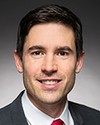
The Chair Liberal Patrick Weiler
Thank you, Mr. Deschênes.
We're going to have to abridge the last couple of rounds. It'll be four minutes and four minutes, and then that'll be the end of the panel here.
Mr. Gunn, you have the floor.
Conservative

Aaron Gunn Conservative North Island—Powell River, BC
Thank you, Chair.
Mr. MacDonald, from your vantage point and experience, do you believe the federal government's implementation of this crusade to close 30% of Canada's coast to various fishing activities by 2030 has been driven by science and an evidence-based desire to preserve certain ecological areas, or has it been driven by politics?
University of British Columbia, As an Individual
I believe the people within Parks Canada and DFO who are doing the actual work are doing it for the right reasons.
However, if you were to ask most people in the industry on the west coast, we would say that the process seems to have been so driven by time and with an outcome already predetermined that it is being done more for political reasons than truly for conservation—and that is what fishermen want. We want a system that's implemented with conservation in mind, not politics.
Conservative
Aaron Gunn Conservative North Island—Powell River, BC
From your vantage point, you mentioned that you were on the water for six months of the year. How devastating would these closures be to the fishing industry, should the realities that are laid out in the draft proposals put forward by DFO become a reality?
University of British Columbia, As an Individual
It would be crushing to our industry.
You get to a certain tipping point where there's not enough fish being landed up and down the coast to support off-load facilities and truck drivers and all the things that we need to make the industry work, all the infrastructure. If it goes through as set out in draft two, we'll be well past that point.
The prawn fishery in particular is a big part of my income in my year. We won't have a fishery anymore. With the number of licences we have, you can't take away 40% of the fishing effort for the coast and still have an economically or biologically sustainable fishery.
Conservative
Aaron Gunn Conservative North Island—Powell River, BC
You mentioned that this was the number one reason that people were leaving, exiting the industry, not wanting to take the financial risk to get into the industry, take out loans, buy boats and that kind of thing.
Can you lay it out for us? This has been going on for years, this process. We had DFO officials in here just months ago, still saying two different things about whether areas were going to be no-take or not no-take or what the economic impacts were going to be, with no socio-economic studies having been conducted at all.
Because the northern shelf bioregion is not in place at the moment, what is the impact of the uncertainty of not knowing what is coming tomorrow and the day after?
University of British Columbia, As an Individual
That's what I was trying to get at in my intro.
That uncertainty that has been created has really driven people out of the fishery, because, as I said, it's going to take you 15 years to pay off a $1.5-million prawn license. If what is in draft two—which is being said is what's going to happen—goes into place, in 15 years we won't have a viable prawn fishery.
It is the number one driver of fear of investment right now. Boats require a massive amount of upkeep. Every year we look at what we made for the year and we budget for our repairs and maintenance, R and M, for our boats. People are holding off on big long-term projects, because while we know what draft two says, we don't actually know what's going to happen once those MPAs are in place. What are our fishery managers going to do to make sure that we still have a viable fishery once these are in place? We don't know, and our fishery managers often don't know either.
Conservative
Aaron Gunn Conservative North Island—Powell River, BC
Really quickly, Mr. Carr, could there be some ecological concerns about pushing the same size of fishing fleet into a smaller and smaller area by creating a vast network of MPAs? If the quota remains the same, are you going to have the possibility of heavier or localized overfishing if it's not spread out along an entire coastline?
Professor, University of California, Santa Cruz, As an Individual
In that case, what you would do, as you're suggesting, is that you would really change the landscape of fishing mortality. It would be increased where you concentrate that fishing mortality and alleviate it elsewhere, so the real question is, how do you make the balance so as to prevent that?
February 4th, 2026 / 6:05 p.m.
Liberal
The Chair Liberal Patrick Weiler
Thank you very much, Mr. Gunn.
Our last questioner will be Mr. Morrissey, for four minutes.
Liberal

Bobby Morrissey Liberal Egmont, PE
Thank you, Chair.
I want to thank the witnesses in this round and in the earlier round. They really addressed this issue from lifelong experiences. Thank you for your testimony here.
Mr. Carr, can Canada achieve its objective to protect sensitive parts of the oceans and protect the fishery at the same time? Are those two a contradiction?
Professor, University of California, Santa Cruz, As an Individual
I think there are inherent trade-offs between the two, but you can balance the two objectives. It's been demonstrated at least throughout California. There haven't been any fisheries that have been lost with the implementation of 124 marine protected areas along the coast of California.
That being said, as I said in my introduction, we have not done a sufficient socio-economic analysis of the well-being of those, but they certainly can coexist.
Liberal
University of British Columbia, As an Individual
I believe they can coexist. I believe we can have robust fisheries and a robust economy on the coast, and I believe we can also protect the things that are currently unprotected that need to be protected to maintain biodiversity.
Liberal
Bobby Morrissey Liberal Egmont, PE
What does the department have to do in the next year or 10 months to do away with 10 years of consultation that has led—and I totally agree with you—to unacceptable anxiety within the fishing industry?
It's unacceptable, and there's no reason to take that long.
University of British Columbia, As an Individual
I would say that we need to change course on the way it's being implemented and we need to make sure that when consultation with industry is done—which is being done, and no one's saying it's not—our advice really needs to be taken into consideration.
When we're going to those meetings and saying, “If you do this, we won't have a fishery anymore”, they're saying, “Thanks for coming.” They listen and they appreciate it, but when things are released, our advice has not been taken into consideration.
If we can change course and have a collaborative approach, the fishing industry is there and willing to do it. We have an incredible amount of knowledge. There's an incredible amount of first nations' commercial fishermen knowledge up and down the coast. We want to collaborate. We want these things to be implemented in a way that protects what's unprotected and we have a vibrant economy. That can be done, but we need to have a change in direction so that we're working together.
Liberal
Liberal
The Chair Liberal Patrick Weiler
That's a good way of wrapping it up, then.
That will conclude our second panel.
I want to thank our witnesses for being here today and for travelling a long distance to provide the testimony. As you've heard today, it's going to be incredibly important as we're putting together our reports and recommendations for the government on how to move forward.
I would like to mention that our next meeting will be on Monday, when we're going to continue the study on marine and coastal protections.
Is it the will of the committee to adjourn?