Evidence of meeting #14 for Foreign Affairs and International Development in the 45th Parliament, 1st session. (The original version is on Parliament’s site, as are the minutes.) The winning word was diaspora.

A recording is available from Parliament.

On the agenda

Members speaking

Before the committee

Urban  Assistant Deputy Minister, Africa Branch, Department of Foreign Affairs, Trade and Development
Smith  Director General, Pan-African Affairs Bureau, Department of Foreign Affairs, Trade and Development
Nicholls  Director, Central and Southern Africa Bilateral Relations Division, Department of Foreign Affairs, Trade and Development
Steffen  Director General, West Africa and Maghreb Bureau, Department of Foreign Affairs, Trade and Development

4:25 p.m.

Assistant Deputy Minister, Africa Branch, Department of Foreign Affairs, Trade and Development

Cheryl Urban

I'll begin, and my colleagues can provide a little more specificity.

Indeed we are very much aware that countries like Russia and China have a large presence on the continent. In fact, they're increasing the number of embassies they have and increasing their presence. The trade volumes are generally getting bigger, and there's involvement with mineral extraction, arms supplies, etc.

This is something that the Government of Canada is well aware of. It's also why we maintain a diplomatic presence in a number of countries, including in West Africa and in countries like Mali. By maintaining relationships with our government counterparts, we are providing a counterbalance and a Canadian influence, and it allows us to stay abreast of issues of concern on the continent.

Did you want to add something, Sue?

4:30 p.m.

Director General, West Africa and Maghreb Bureau, Department of Foreign Affairs, Trade and Development

Susan Steffen

Given that I cover the West African region, it's obviously an issue that is top of mind very often.

I think we need to be realistic about what is possible. We will do our best by staying engaged. We're often asked why we continue to speak with interlocutors with whom we don't agree, and it is very much for that reason. At some point, we're going to find some common issue we can agree on. We can move forward together and try to build a relationship that shows opportunities and different ways of doing things that are more aligned with the way we would like to see things happening.

Right now, in that region, it is very difficult. The presence of Russia is deep. The presence of China is deep, and I would say it's very long-standing. That is one of the things we pay close attention to. Sometimes we don't get the result today, and sometimes we don't get it tomorrow, but if we continue to work at it now, we will get it in a slightly more medium-term perspective.

4:30 p.m.

Conservative

Kurt Holman Conservative London—Fanshawe, ON

Thank you.

I want to go back to specific questions. What steps is Canada taking to counter China's belt and road initiative, and does the department have concerns about Beijing's expansion of soft power through this program?

4:30 p.m.

Assistant Deputy Minister, Africa Branch, Department of Foreign Affairs, Trade and Development

Cheryl Urban

There are a number of ways. I would actually point to Canada's G7 presidency this year, through which Canada is mobilizing its G7 partners. For example, there's the G7 critical minerals action plan. I think this is a recognition that there are G7 countries and other aligned countries that have a focus on undertaking, for example, critical mineral extraction in a sustainable way and adhering to international standards. This is an approach where we feel that we can collectively make inroads. Therefore, we are very much focused on collaborating with like-minded partners.

Another way is an initiative called the PGII, through which G7 members are collectively investing in infrastructure around the world, including on the African continent. The idea there is for a value proposition to make sure that there is an alternative and a counterweight.

As part of the Africa strategy, we're looking at our own Canadian trade diversification and looking at prioritizing markets. Some of that is identifying where there are African partners we can partner with to build supply chains that are of interest to Canada and where there are critical minerals that may be of interest to Canada and to our allies.

Kurt Holman Conservative London—Fanshawe, ON

Thank you.

How has the recent suspension of France's counterterrorism efforts in Mali affected Canada's Africa strategy?

4:30 p.m.

Director General, West Africa and Maghreb Bureau, Department of Foreign Affairs, Trade and Development

Susan Steffen

Mali is the gift that keeps on giving.

I don't know at this point that I can answer that question directly.

The changes in the American presence in the whole region of West Africa is taking some adjustment for everyone, for the governments of that region in particular. For everyone who is engaged there, the French have a particular relationship with the countries in that region, and we are all adjusting to the stance that those countries have taken.

It's not the forward progress that we would hope for, but, as I said earlier, we stay engaged to see what it is and where there are opportunities. If we don't stay engaged, then we won't be able to find the opportunities, so we're there. We have a smallish presence in Mali, and we have a small presence in Burkina Faso. For now, they're there under very difficult circumstances to keep those doors of communication open and to see where we can have some kind of positive impact.

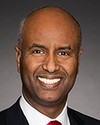
The Chair Liberal Ahmed Hussen

Thank you.

4:35 p.m.

Assistant Deputy Minister, Africa Branch, Department of Foreign Affairs, Trade and Development

Cheryl Urban

Maybe I'll just add a reference to the African strategy.

The Chair Liberal Ahmed Hussen

Be very brief.

4:35 p.m.

Assistant Deputy Minister, Africa Branch, Department of Foreign Affairs, Trade and Development

Cheryl Urban

Very quickly, our objectives in the African strategy are not only with Mali. We also have strong partnerships, and part of our approach is to build partnerships with countries like Côte d'Ivoire, Ghana and Benin, which are strong democracies we can partner with to fight against the spread of terrorism and instability in the region. We also have a special envoy for the Sahel, who co-operates internationally. Our efforts, I think, are worthwhile, and they're broader. There are challenges specifically with operating in the country, but it's part of a bigger picture, and I think that it is as important as ever right now to be engaging in it.

The Chair Liberal Ahmed Hussen

Thank you very much.

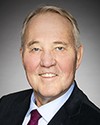
Next, we have MP Bill Blair.

You have five minutes.

Bill Blair Liberal Scarborough Southwest, ON

Thank you very much, Mr. Chair.

Thank you to all the witnesses, not just for your appearance today, which has been very informative and very helpful to this committee, but also for your important work on the African strategy. I think you've positioned the country well for the next steps.

I'd like to talk a bit about some of those next steps. As has already been acknowledged by my colleagues, there are some challenges. I think China is well established in Africa through its belt and road investments. Not only do they overwhelmingly dominate the extraction of critical minerals and copper in Central Africa and critical minerals through Zimbabwe and Mali, but they are also dominating the processing of those minerals, so our supply chains, quite frankly, are somewhat in jeopardy.

Frankly, I note that money, notwithstanding our good relationships, is very important in these investments. The United States in 2019 established their International Development Finance Corporation, and they put about $8 billion a year into African development, which I think could be advantageous for us.

My question is going to pertain to the next steps in the Africa strategy. How do we position Canada? In particular, I'd like to hear your thoughts on the development and negotiation of multilateral agreements with African countries that are rich in critical minerals, to secure and sustain those sustainable supply chains.

You, Ms. Steffen, referenced the possibility of establishing formal partnership frameworks with African nations to coordinate investment, technology transfer and environmental standards.

We understand that environment can be challenging, but, at the same time, I think the obvious next step in our strategy is to establish bilateral and multilateral agreements with either a specific nation or a group of nations that we can work with in this area.

4:35 p.m.

Assistant Deputy Minister, Africa Branch, Department of Foreign Affairs, Trade and Development

Cheryl Urban

That is a very real challenge that we are well aware of when it comes to critical minerals and the processing of critical minerals.

When you look at the engagement of the United States, one thing that is often spoken about is the dismantling of USAID and the departure from an international development perspective, but that also coincides with the United States going in more heavily on the economic side and having an emerging policy of trade, not aid, in terms of how they undertake their diplomacy. In fact, I believe they are now replacing China as the primary investor on the continent.

There are opportunities for Canada. We know that there's a lot of focus right now on the Lobito corridor in southern Africa, and there are opportunities for Canada to engage with other parties, including African ones, for example. As I mentioned, we've had lots of discussions with South Africa in our G7 and G20 presidencies, looking at opportunities for collaboration, and even with the United States to look at where there are opportunities for Canada in this space.

I'll turn to Drew to elaborate.

4:35 p.m.

Director General, Pan-African Affairs Bureau, Department of Foreign Affairs, Trade and Development

Andrew Smith

I would say that as far as multilateral engagement goes, certainly we can work through the African Union. There are well-established standards and approaches to mining generally, but to critical minerals as well. That's an important focus for us.

In terms of bilateral relationships, I think the question is how we—as a government, as the public sector—can engage in what are effectively private sector operations. Also, can we ensure that the minerals and the supply chains that we need to supply those minerals to are consistent with our standards? I think that's very important. If we look at the G7 action plan on critical minerals, standards are central to that piece.

As I was mentioning earlier, Canada's brand in Africa is very much geared towards meeting those ESG standards that the G7 and other like-minded countries have established and feel are important in our business operations in Africa. I think that's an important way of contrasting where Canada stands in terms of mineral extraction and production.

I guess the other question is on beneficiation and how we partner with governments in Africa around the question of how we can ensure there is local benefit coming from the extraction of these minerals.

Bill Blair Liberal Scarborough Southwest, ON

I believe that this committee would be strongly supportive of our continuing efforts both in development aid and in diplomacy in that region, but I think we also have to reflect on the practicalities of advancing Canada's economic interests in the region as well.

I think we have a great deal to offer, but governance issues and even corruption in some of these countries make it very difficult to ensure adherence to and compliance with those standards in the mining operations.

The Chair Liberal Ahmed Hussen

Give a very brief answer, please. We are out of time.

Bill Blair Liberal Scarborough Southwest, ON

If you have a response, please....

4:40 p.m.

Director General, Pan-African Affairs Bureau, Department of Foreign Affairs, Trade and Development

Andrew Smith

I would just very quickly say that as part of our thinking around the trade and development program, on the issues you're raising around corruption and other limitations, the things that create excessive risk within markets for Canadian companies, that's something we're trying to address alongside the work that trade commissioners do in these markets.

The Chair Liberal Ahmed Hussen

Thank you very much.

Next we have MP Simard.

You have two and a half minutes.

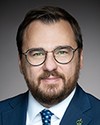
Mario Simard Bloc Jonquière—Hébertville—Pays-des-Bleuets, QC

Thank you very much, Mr. Chair.

I want to follow up on that.

Ms. Urban, you spoke earlier about an initiative, or whatever it is, called the IOGC.

Can you quickly explain what that is?

4:40 p.m.

Assistant Deputy Minister, Africa Branch, Department of Foreign Affairs, Trade and Development

Cheryl Urban

It's the Partnership for Global Infrastructure and Investment.

This initiative began under the U.K. government during its presidency of the G7.

Mario Simard Bloc Jonquière—Hébertville—Pays-des-Bleuets, QC

Okay, but that's not what we're talking about. There is a discussion to have floor prices on critical minerals, which would mean that we would get—

Is it under this initiative?

4:40 p.m.

Assistant Deputy Minister, Africa Branch, Department of Foreign Affairs, Trade and Development

Cheryl Urban

No, it's different.

Do you want to speak to the PGII?

4:40 p.m.

Director General, Pan-African Affairs Bureau, Department of Foreign Affairs, Trade and Development

Andrew Smith

I would just say that the PGII is very much connected with critical minerals. It's about the transport corridor. It looks at transport corridors generally—

Mario Simard Bloc Jonquière—Hébertville—Pays-des-Bleuets, QC

Okay.