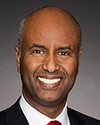
Evidence of meeting #34 for Foreign Affairs and International Development in the 45th Parliament, 1st session. (The original version is on Parliament’s site, as are the minutes.) The winning word was information.

A recording is available from Parliament.

On the agenda

Members speaking

Before the committee

Brookfield  Director General, Sanctions and Strategic Export Controls, Department of Foreign Affairs, Trade and Development
Lang  Director General, Integrity Policy and Programs, Department of Citizenship and Immigration
Liao-Moroz  Executive Director, Human Rights, Freedoms and Inclusion, Department of Foreign Affairs, Trade and Development
Csaba  Director General, Consular Affairs Bureau, Department of Foreign Affairs, Trade and Development
Budnisky  Senior Director, Communication Legislative and Regulatory Policy, Department of Canadian Heritage
Silver  Director of Policy and Projects, Raoul Wallenberg Centre for Human Rights

The Chair Liberal Ahmed Hussen

I call this meeting to order.

Welcome to meeting number 34 of the House of Commons Standing Committee on Foreign Affairs and International Development.

Pursuant to the order of reference of the House of Commons on Tuesday, February 24, 2026, the committee is meeting on Bill C-219, an act to amend the Department of Foreign Affairs, Trade and Development Act, the Justice for Victims of Corrupt Foreign Officials Act (Sergei Magnitsky Law), the Special Economic Measures Act and the Broadcasting Act.

Today's meeting is taking place in a hybrid format, pursuant to the Standing Orders. Members are attending in person in the room and remotely using the Zoom application.

I would now like to welcome our witnesses for the first hour.

From the Department of Canadian Heritage, we have Charlene Budnisky, senior director, communication legislative and regulatory policy.

From the Department of Citizenship and Immigration, we have Tara Lang, director general, integrity policy and programs.

From the Department of Foreign Affairs, Trade and Development, we have Robert Brookfield, director general, sanctions and strategic export controls; Kati Csaba, director general, consular affairs bureau; and Angelica Liao-Moroz, executive director, human rights, freedoms and inclusion.

Up to five minutes will be given for opening remarks, after which we will proceed with rounds of questions from colleagues.

I now invite Mr. Brookfield to make an opening statement of up to five minutes.

Robert Brookfield Director General, Sanctions and Strategic Export Controls, Department of Foreign Affairs, Trade and Development

Thank you.

Honourable members of the committee, good morning. Thank you for inviting me to discuss Bill C‑219.

The promotion and protection of human rights are a central priority for Canada. The laws that the bill seeks to amend play an important role in strengthening the Government of Canada's ability to respond effectively to gross violations and acts of violence committed abroad. Today, I will present some initial perspectives on potential areas for improvements to the bill.

The bill proposes amendments to the Department of Foreign Affairs, Trade and Development Act. We welcome the requirement to publish an annual report outlining Canada's efforts to strengthen human rights globally. Such a report would be an opportunity to meaningfully capture the breadth of our engagement in this area. However, with the bill as presently proposed, we are concerned about a number of elements.

First, we are concerned that divulging the names and details surrounding cases of individual human rights defenders, including Canadians, could put their safety at risk from the regimes that have detained them. Thus, any list that the minister could publish, even with ministerial discretion, would in reality be a short list not likely to satisfy the intent of the bill.

Second, the bill uses the term “prisoners of conscience”. It would be preferable to follow Canada's long-standing practice of using the internationally recognized term of “human rights defenders” when referring to individuals who peacefully advocate for human rights. This approach is reflected in “Voices at Risk: Canada's Guidelines on Supporting Human Rights Defenders”.

Third, we have concerns that publishing a detailed list without distinguishing between foreign nationals, Canadian citizens and permanent residents of Canada could have unintended negative consequences for the delivery of consular services to Canadian citizens.

The bill also proposes amendments to the Justice for Victims of Corrupt Foreign Officials Act and the Special Economic Measures Act. I will comment on some key elements of those proposed amendments.

First, the bill seeks to expand and clarify sanctions triggers, including a response to transnational repression. We consider expanding the situations in which Canadian legislation could be used to be desirable, but we would suggest that a broader expansion to allow for other situations, such as countering scam centres and cybercrime, would be preferable.

Second, the bill would issue visa restrictions for the immediate family members of sanctioned individuals, subject to limited exceptions. However, sanctioned individuals and their family members are already prohibited entry under the Immigration and Refugee Protection Act administered by the Minister of Public Safety. Thus, creating an additional visa ban power would be duplicative. It also risks undermining the clear accountability of the Minister of Foreign Affairs for sanctions while diluting existing accountabilities for inadmissibility decisions and weakening parliamentary oversight. We would suggest removing it.

Third, the bill proposes rigid mandatory timelines for asset forfeiture and disposal. We consider that these timelines could undermine due process and international coordination, and we believe they should be removed.

Fourth, the bill would mandate information sharing from the RCMP and FINTRAC and would impose fixed timelines for sanctions decisions. While information sharing is essential, we believe these measures would negatively impact the handling of sensitive intelligence and decision-making flexibility. As a result, we believe they should also be removed.

Finally, the bill proposes amendments to the Broadcasting Act that would require the immediate revocation of a broadcasting licence where a broadcaster operating in Canada is found to be under the significant influence of a foreign person or entity that is subject to Canadian sanctions or has committed genocide. This legislation does not fall under Global Affairs Canada's mandate, but Canadian Heritage notes that the provision raises concerns regarding a lack of proper process, a defined role for the CRTC, and clarity around key concepts such as vulnerability to significant influence and evidentiary standards.

In conclusion, Bill C-219 engages a broad range of legislative frameworks that underpin Canada’s efforts to promote and protect human rights and to hold perpetrators of serious violations accountable. While the bill advances objectives that Canada strongly supports, several of the proposed amendments would raise important legal, operational and coordination questions, including with respect to due process, existing authorities and effective implementation across government.

As the committee considers this bill, Global Affairs Canada would encourage careful consideration of how proposed changes can best reinforce the effectiveness, coherence and credibility of Canada’s sanctions and human rights tools.

Thank you, Chair.

The Chair Liberal Ahmed Hussen

Thank you very much for your statement.

I will now open the floor to questions, beginning with MP James Bezan. You have six minutes.

3:35 p.m.

Conservative

James Bezan Conservative Selkirk—Interlake—Eastman, MB

Thank you, Mr. Chair.

I want to thank the officials for appearing today.

Is the definition of “family member” that you want to see put in the legislation, rather than using the term “immediate family member”, taken from the immigration and refugee protection regulations?

3:35 p.m.

Director General, Sanctions and Strategic Export Controls, Department of Foreign Affairs, Trade and Development

Robert Brookfield

To clarify, our preference would be that we rely on the immigration and refugee protection regulations, but I'll let my colleague elaborate on that point.

James Bezan Conservative Selkirk—Interlake—Eastman, MB

Under that definition, a family member is limited to a spouse, a dependent child and a dependent child of a dependent child, with the definition of a dependent child being someone under 22 years of age. You understand that the problem we have is that corrupt foreign officials are bringing their adult children here to hide themselves, along with the illicit wealth that has been gained.

I prefer using the immediate family definition out of the Canadian labour standards regulations, which says that immediate family is:

(a) the employee’s spouse or common-law partner;

(b) the employee’s father and mother and the spouse or common-law partner of the father or mother;

(c) the employee’s children and the children of the employee’s spouse or common-law partner;

(d) the employee’s grandchildren;

(e) the employee’s brothers and sisters;

(f) the grandfather and grandmother of the employee;

Immediate family is adult children and siblings. That, to me, better protects Canada from being used as a safe haven by these corrupt foreign officials and the gross human rights violators we're trying to stop.

Wouldn't you agree with that?

Tara Lang Director General, Integrity Policy and Programs, Department of Citizenship and Immigration

I would suggest that under the current legislation we have for sanctions, any of those individuals could already be named and sanctioned very specifically.

The slippery slope in the space of an expanded family definition is that for visa processing, what we receive from a sanctions perspective is the name of the sanctioned individual. It's impossible to calculate the brother-in-law, the grandmother, the sister, the aunt or the uncle. When a visa officer receives an application, it would say, “James Bezan. Sanctioned individual”. You're inadmissible—

3:40 p.m.

Conservative

James Bezan Conservative Selkirk—Interlake—Eastman, MB

I am in Russia, so far. Let's not go beyond that.

3:40 p.m.

Director General, Integrity Policy and Programs, Department of Citizenship and Immigration

Tara Lang

Say you have an adult son who might already be in Canada. The visa officer wouldn't have that information at their disposal.

The purposeful definition of a family member works for IRPA. If the purpose is truly to sanction individuals who might be benefiting from a regime or unscrupulous practices, then that individual should be named, and those family members who are associated shouldn't be painted with that same brush. I think there are charter implications with that.

More than that, you're risking the person's potentially getting into Canada because these officers couldn't possibly know all the family relations of a sanctioned individual unless they're named.

3:40 p.m.

Conservative

James Bezan Conservative Selkirk—Interlake—Eastman, MB

It would get a little more difficult when you start talking about girlfriends, boyfriends, intimate partners and that type of stuff, but with family members, it doesn't take that long to research—if it's somebody coming in from the Iranian regime, as an example—so that we'd be able to say, “This is a brother”. Potentially, you'd have someone to do that background research.

Some of this comes down to whether you guys have enough resources at hand or you should be allocated more to enforce the sanctions from the standpoint of a travel ban or visa ban that's been put in place.

3:40 p.m.

Director General, Integrity Policy and Programs, Department of Citizenship and Immigration

Tara Lang

I don't think this is a question of resources. On an application—family members are defined in IRPA—there's a tight definition. The reason for this is that, down the line, if we have a tight definition and somebody comes in, they can't then sponsor their uncle or their cousin. If the intention is to keep people out of Canada, then they should be sanctioned individually.

I would say that under the current regime, this can be done, and recommend that it is what should be done to protect Canadian society.

3:40 p.m.

Conservative

James Bezan Conservative Selkirk—Interlake—Eastman, MB

You mentioned, Mr. Brookfield, that you didn't like the use of the term “prisoners of conscience”. You prefer “human rights defenders”. Where does that definition come from? You're saying it is a Canadian tradition. I don't find it anywhere. If you look at prisoner of conscience, Amnesty International is the one that coined the term.

I think it aligns with what we've always talked about as parliamentarians when we're talking in the House, when we're in debate and when we're here at committee. When you look at the legislation that came up in the last Parliament from my colleague Mr. Lawrence, it was with the NDP that we added in this definition of prisoner of conscience. It passed third reading before it was sent off to the committee with this terminology in there.

Just because you guys prefer one term, it doesn't mean that prisoner of conscience isn't better.

3:40 p.m.

Director General, Sanctions and Strategic Export Controls, Department of Foreign Affairs, Trade and Development

Robert Brookfield

I'll let my colleague answer.

Angelica Liao-Moroz Executive Director, Human Rights, Freedoms and Inclusion, Department of Foreign Affairs, Trade and Development

We have long used the term human rights defender. Perhaps I'll take a minute to explain how we differentiate that from the term prisoners of conscience.

When we talk about a human rights defender, we're referring to people or groups that peacefully—the key word is peacefully—promote and protect human rights. We prefer this broader definition because it focuses very much on the role and the activities of the individual, as opposed to prisoners of conscience, which can be a subset of human rights defenders. That term focuses more on their custodial situation than on what they are doing and what they are advocating for.

I would say the term human rights—

3:40 p.m.

Conservative

James Bezan Conservative Selkirk—Interlake—Eastman, MB

Let me interrupt you. Where in legislation do we currently use that term in Canada?

3:40 p.m.

Executive Director, Human Rights, Freedoms and Inclusion, Department of Foreign Affairs, Trade and Development

Angelica Liao-Moroz

It's an internationally agreed upon concept. It stems from the United Nations. There are a number of recurring UN resolutions. It's widely used in the UN system by many member states and regional organizations, and it is a term that we have used in government to guide our engagement, including in our official guide that we provide to our officials abroad when detailing how they should be supporting and protecting human rights defenders abroad.

The Chair Liberal Ahmed Hussen

Thank you very much.

We'll go next to MP Vandenbeld. You have six minutes.

Anita Vandenbeld Liberal Ottawa West—Nepean, ON

Thank you very much, Mr. Chair.

I have a few questions, but I'd like some clarification on that last one about human rights defenders and prisoners of conscience.

“Human rights defenders” is a broader category. Is that correct? Once a prisoner is released, they may still be under surveillance, they may still be targeted and their family may still be targeted, but they're not technically a prisoner of conscience anymore. The term human rights defender would capture a larger group of people.

3:45 p.m.

Executive Director, Human Rights, Freedoms and Inclusion, Department of Foreign Affairs, Trade and Development

Angelica Liao-Moroz

Thank you very much for the clarification. That's exactly right. The point we are trying to make is that it's not a personal preference of one term or the other but more about having inclusivity.

When we talk about prisoners of conscience, the mind goes to somebody who's detained and being imprisoned. When we talk about human rights defenders, we're talking about the broad spectrum of defenders. They can be journalists, indigenous leaders, business associates, youth or students. It's not about just what their custodial arrangement is. They could be facing any number of threats—intimidation, surveillance, etc. It goes beyond the narrower lens of detention and imprisonment.

Anita Vandenbeld Liberal Ottawa West—Nepean, ON

Thank you.

My questions are for Mr. Brookfield. You outlined a number of areas in which you have concerns about the bill, but this bill also modernizes our Magnitsky sanctions regime. It updates and expands it in a number of areas, including transnational repression, which probably wasn't as exposed when the first bill came through as it is now.

Could you tell us what the good things are in this bill?

3:45 p.m.

Director General, Sanctions and Strategic Export Controls, Department of Foreign Affairs, Trade and Development

Robert Brookfield

I'd highlight, as you did, that the ability to have broader opportunities under the Special Economic Measures Act, in particular, to deal with transnational repression is potentially quite helpful.

One of the challenges between the Special Economic Measures Act and the JVCFOA is that the evidence required to list is a bit more specific. Having a broader trigger with respect to transnational repression, as I mentioned, and other topics would allow us greater latitude so that we don't necessarily need to have evidence of a specific individual engaging in a specific human rights abuse, but rather a more general linkage between a problem that is occurring and the individual's contribution to that problem, as we do in other areas. Sanctions against Russian oligarchs are an example of that.

Anita Vandenbeld Liberal Ottawa West—Nepean, ON

You said this could be even further broadened. Cybercrime was one of the things you mentioned. What would those areas be?

3:45 p.m.

Director General, Sanctions and Strategic Export Controls, Department of Foreign Affairs, Trade and Development

Robert Brookfield

The one that I would particularly highlight is scam centres. In November last year, both the United States and the United Kingdom, at the same time, issued sanctions under their human rights legislation, essentially, or their human rights sanctions regimes against an organization called the Prince Group, which is located in Cambodia. It's involved in abductions and doing scams within the area and more internationally. Later on—this year, in fact—South Korea did the same thing for the first time. It had autonomous sanctions against that same group.

We, in Canada, could not put sanctions on that group without doing sanctions against Cambodia, because the trigger for doing sanctions under the Special Economic Measures Act requires a link to the country.

Another example is cybercrime. For example, we listed a group in Kyrgyzstan called A7. It was a conduit for Russian funding. We were able to link it to Russia and Russia's support of the war against Ukraine, but had we wanted to go against a unit that was not directly linked to the war against Ukraine or to the Russian government, we would have had challenges.

The United Kingdom, for example, has sanctioned cybercrime actors in Russia that are not necessarily linked to the regime or activities in Ukraine, but linked to activities against the United Kingdom directly.

Those are the sorts of areas in which our allies have flexibility, and we think it would be helpful if we had it as well.

Anita Vandenbeld Liberal Ottawa West—Nepean, ON

Thank you. That's something we can certainly reflect on.

I was a bit confused when you talked about the unintended consequences of the annual publication of all the consular cases we're working on. You said that because of the difference between permanent residents, citizens and foreign nationals.... I think your words were that there would be unintended consequences for our consular services. How?

Kati Csaba Director General, Consular Affairs Bureau, Department of Foreign Affairs, Trade and Development

I'm happy to speak on that front.

The bill does not currently distinguish between foreigners, Canadian citizens—some of whom might be dual citizens—and permanent residents of Canada. Whenever Canadians find themselves detained abroad, they automatically become eligible for consular services. What can happen is that publicly disclosing that they are in this situation and publicly criticizing the government make it more difficult for us to have consular access to those individuals.

Normally, we would seek to do prison visits to check on the well-being of those Canadian citizens, but if we are out there, publicly naming and shaming—as much as I know there are other good reasons for doing that—it can make it very difficult to support Canadian citizens who find themselves in that situation. It's not just those who are named on the list but also any other Canadian citizens who happen to be detained in the same country, because we must ultimately have some degree of co-operation with local officials in order to access those Canadians.