It's a huge principle.
My second question is with respect to the Arctic Council and the chair going from Russia to Norway to Denmark.... What do you see as Canada's role in this upcoming period in the Arctic Council?

Evidence of meeting #5 for Foreign Affairs and International Development in the 45th Parliament, 1st session. (The original version is on Parliament’s site, as are the minutes.) The winning word was north.
A video is available from Parliament.
Liberal

Rob Oliphant Liberal Don Valley West, ON
It's a huge principle.
My second question is with respect to the Arctic Council and the chair going from Russia to Norway to Denmark.... What do you see as Canada's role in this upcoming period in the Arctic Council?
Director General, Arctic, Eurasian and European Affairs, Department of Foreign Affairs, Trade and Development
Our role is really to support the chairship and ensure that the Arctic Council is seen to be as active and vibrant as possible as part of the Arctic foreign policy.
We make it clear that there can be no business as usual with Russia. Certainly with what's happening with airspace violations, etc., there is no prospect of meetings at the senior Arctic official or political level at the Arctic Council, but the working groups, which are the pistons of the Arctic Council and technical in nature, scientific, are meeting virtually with all eight participating as they might. That's important to keep the science moving forward.
Liberal
Director General, Arctic, Eurasian and European Affairs, Department of Foreign Affairs, Trade and Development
Absolutely. Their priorities are on oceans, climate and engaging indigenous voices. As for the Kingdom of Denmark, with Greenland in the chair, we're very closely aligned with their priorities.
Liberal
Rob Oliphant Liberal Don Valley West, ON
The third question is with respect to NATO and its area of responsibility. Is there a perception of any change with the accession of Finland and Sweden into NATO on engagement and convincing NATO partners that our spending in the north, our work in the north and our engagement in Arctic security is really part of NATO? Is there a conversation about that?
Executive Director, Regional Security and Defence Relations Division, Department of Foreign Affairs, Trade and Development
Certainly, you're correct in saying that with Finland and Sweden becoming members of the alliance, we see a bit of a shift north in terms of areas of interest on the part of European security. With Sweden and Finland joining the alliance, they have brought forward lots of real capabilities, so they're a very welcome addition to the alliance.
We've seen, since 2022, a real shift in European security with Russia's invasion in Ukraine. We have seen, obviously, drones and the like in the past few weeks, so the security situation in Europe has changed dramatically, so too has the security situation in North America. We talked about Russian and Chinese joint operations coming close to North America with hypersonic missiles, etc. We are, in fact, engaged in a conversation with European allies, with NATO allies, about getting more recognition for Canadian contributions to security in North America.
SACEUR's area of responsibility covers European territory. It does not cover NATO. That said, NATO's article 5 commitment does cover North America and does cover our territory, but historically Canada and the U.S. have said, “You know, North America is ours. We're taking care of it through NORAD binationally and nationally.”
However, there are some investments we're going to be making that we want to be given more credit for in the NATO context.
Liberal
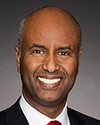
The Chair Liberal Ahmed Hussen
Thank you very much.
Next, we'll go to MP Patrick Bonin.
Mr. Bonin, you have the floor for six minutes.
Bloc

Patrick Bonin Bloc Repentigny, QC
Thank you, Mr. Chair.
Greetings to the witnesses. Thank you for being here.
Mr. Rivière, I would like to come back to the issue of climate change that you talked about earlier.
Is there currently a specific strategy for National Defence related to climate change?
Commander of Joint Task Force (North), Canadian Armed Forces
Brigadier-General Daniel Rivière
Mr. Chair, I would have to consult with people, because that's not part of my mandate. So the answer on those details will follow.
Bloc
Commander of Joint Task Force (North), Canadian Armed Forces
Brigadier-General Daniel Rivière
I certainly will.
Executive Director, Regional Security and Defence Relations Division, Department of Foreign Affairs, Trade and Development
I can answer part of that.
In Montreal, there is the NATO Centre of Excellence for Climate Change and Security. This centre of excellence, led by Canada with 11 other allies, is examining the issue of climate change and its implications on operational issues for allied forces. For example, it involves ensuring the ability to work in environments that are colder, hotter, wetter and so on. That's one of the aspects. Canada is a leader in the context of the Montreal-based centre of excellence.
Bloc
Patrick Bonin Bloc Repentigny, QC
Okay.
To your knowledge, then, there is no specific climate change strategy. As such, I think the United States has a specific strategy on the Arctic and climate change.
So you're saying that Canada is part of a working group for the time being, but that there is no specific strategy on this issue.
Executive Director, Regional Security and Defence Relations Division, Department of Foreign Affairs, Trade and Development
I know that the Department of National Defence has a climate change and security strategy for the operationalization of its equipment, but I'm not aware of all the details.
Bloc
Patrick Bonin Bloc Repentigny, QC
I'll continue on the subject of climate change, this time with the example of the melting ice in the Arctic. We're talking about the possibility of an ice-free sea in the summer as early as 2030. If I understand correctly, 12 submarines are being considered for patrol in that region.
Can you tell us when the process to purchase the submarines will be finalized and if they will be armed? Also, why do we need 12 submarines when, to my knowledge, there is already one?
Commander of Joint Task Force (North), Canadian Armed Forces
Brigadier-General Daniel Rivière
Mr. Chair, I would have to defer to my colleagues from the Royal Canadian Navy and the ADM of materiel to answer that question. That is outside of my mandate as commander of Joint Task Force North.
Executive Director, Regional Security and Defence Relations Division, Department of Foreign Affairs, Trade and Development
Let me partially answer that, as my team is involved in this process.
Indeed, the goal is to obtain up to 12 conventional propulsion submarines, in part to patrol our three maritime coasts, including the Arctic. Two companies are currently in the running, a German company and a South Korean company.
To answer your question, our goal is to have armed submarines. We have to make sure we have what we call “domain awareness”. A submarine has a lot of capabilities to know what's going on in the field. It's also important to make sure that we can defend ourselves or repel adversaries, if necessary.
As for the timelines, I'm not in a position to tell you exactly when a contract will be signed or when a decision will be made by the government, but the goal is to have the first submarine delivered and operational by 2035.
Bloc
Patrick Bonin Bloc Repentigny, QC
Okay.
I believe Quebec is currently the only province with part of its territory considered to be part of the Arctic. There are policy direction documents on international relations for Quebec.
What do you think is the added value of Quebec's presence in terms of Arctic work and international discussions, given the province's unique geography?
Director General, Arctic, Eurasian and European Affairs, Department of Foreign Affairs, Trade and Development
Mr. Chair, we are currently working with all the provinces and territories that have a presence in the Arctic. That also includes Manitoba and Newfoundland and Labrador.
This collaboration with the provinces and territories helps us think about our Arctic foreign policy through the lens of national priorities. It is therefore essential to engage our foreign policy through the lens of national priorities.
Bloc
Patrick Bonin Bloc Repentigny, QC
The chair has informed me that I have only a few seconds of speaking time left.
Thank you, gentlemen.
Liberal
The Chair Liberal Ahmed Hussen
Thank you very much, Mr. Bonin.
We'll proceed to the next round of questions, beginning with MP Rood.
You have five minutes.
Conservative

Lianne Rood Conservative Middlesex—London, ON
Thank you, Chair.
Thank you, witnesses, for being here.
You mentioned drones, and I'm going to focus a bit more on drones right now. I'm curious what classes of drones—fixed-wing, rotary or vertical takeoff and landing—are currently certified and routinely deployed north of 60° for intelligence, surveillance and reconnaissance, for search and rescue, for maritime domain awareness and for logistics.
Commander of Joint Task Force (North), Canadian Armed Forces
Brigadier-General Daniel Rivière
What I've seen, as part of my mandate and through Operation Nanook, which is our main operational activity in the north, is actual testing of some remote or uncrewed drones, but when it comes to major platform procurement projects, that's not something I can actually answer today.
Conservative
Lianne Rood Conservative Middlesex—London, ON
Of the drones that are currently being used, do you have any idea what their endurance, range and payload specifications are? Do you know any of that, especially since it's -40°C? I guess that's what I'm getting at—the climate.