Evidence of meeting #5 for Foreign Affairs and International Development in the 45th Parliament, 1st session. (The original version is on Parliament’s site, as are the minutes.) The winning word was north.

A video is available from Parliament.

On the agenda

Members speaking

Before the committee

Sinclair  Director General, Arctic, Eurasian and European Affairs, Department of Foreign Affairs, Trade and Development
Laporte  Executive Director, Regional Security and Defence Relations Division, Department of Foreign Affairs, Trade and Development
Daniel Rivière  Commander of Joint Task Force (North), Canadian Armed Forces

11:55 a.m.

Executive Director, Regional Security and Defence Relations Division, Department of Foreign Affairs, Trade and Development

Eric Laporte

Yes, you are correct in saying that in the past, the U.S. has done so, and the possibility of it doing it again in the future is not something that could be excluded. We know that this spring the President issued an executive order on shipbuilding that also includes a tasking to the Department of Defense to secure Arctic waters without clarifying what the waters are.

In terms of the Canadian response to a U.S. sailing that is unauthorized, if I can put it that way, I'd rather not say what the position is or what the response would be at this time.

11:55 a.m.

Conservative

Michael Chong Conservative Wellington—Halton Hills North, ON

What assets do we have in the north to prevent that from happening?

11:55 a.m.

Executive Director, Regional Security and Defence Relations Division, Department of Foreign Affairs, Trade and Development

11:55 a.m.

Conservative

Michael Chong Conservative Wellington—Halton Hills North, ON

Maybe I could reference something earlier. My understanding is that, during the early days of the pandemic, there was a Canadian ban on ships transiting through the Arctic archipelago waters, but I heard that a boat did transit through those waters. Is that correct?

11:55 a.m.

Executive Director, Regional Security and Defence Relations Division, Department of Foreign Affairs, Trade and Development

Eric Laporte

I'm not aware of the details of that. I can say that Canada does require ships that are transiting through that are over 300 tonnes or are conducting maritime scientific research to apply for permits to do so. We've done those permits in the past.

11:55 a.m.

Conservative

Michael Chong Conservative Wellington—Halton Hills North, ON

What assets do we have to prevent that from happening? Do we have any assets up there—any naval assets or diplomatic assets? What would we do other than indicate our opposition to an unauthorized transit?

11:55 a.m.

Executive Director, Regional Security and Defence Relations Division, Department of Foreign Affairs, Trade and Development

Eric Laporte

I'll leave it to the general to speak about assets that are there. Certainly, we have greater domain awareness, including from space, so we would be able to track potential surface vessels coming in. We also know very much the ice floe situations. I think there would be some early warning, perhaps, for a surface vessel.

There's always the possibility of sending aircraft to overfly to communicate with ships of whatever nationality that are transiting. Our presence could be felt.

Noon

Conservative

Michael Chong Conservative Wellington—Halton Hills North, ON

Based on the information that you'll provide to the committee, if our claim to these waters as internal to Canada is not widely recognized by other maritime states and vessels such that U.S. warships start transiting through that passage and we are unable to prevent that from happening, it seems like that weakens our claim.

Noon

Liberal

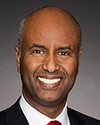
The Chair Liberal Ahmed Hussen

Give a brief response, please, if at all.

Noon

Director General, Arctic, Eurasian and European Affairs, Department of Foreign Affairs, Trade and Development

Robert Sinclair

Briefly, I'd also highlight that we do have Arctic and offshore patrol vessels, which is a capability that the United States does not have. We are partnering with the U.S. through the ICE pact on building icebreakers. It's a capability that the U.S. does not have compared to Canada. I would say that the premise of the question does not negate our legal standing vis-à-vis the Northwest Passage.

Noon

Liberal

The Chair Liberal Ahmed Hussen

Thank you.

We will next go to MP Rob Oliphant.

You have five minutes.

Noon

Liberal

Rob Oliphant Liberal Don Valley West, ON

Thank you, Mr. Chair.

I'm following up a bit more on the continental shelf issue that Mr. Chong, as well as Ms. Vandenbeld, raised. The areas under consideration are not limited to one side. We have issues on the east side and on the west side.

Are there different processes that we will be undertaking to map that, to negotiate it? What is the international law that we are going to be using to assert the internal-water nature of that in both the west and the east? We still haven't finished the Hans Island issue with respect to the continental shelf. We've done the island itself, but there's still negotiating to be done there, as well as in the Beaufort.

Noon

Director General, Arctic, Eurasian and European Affairs, Department of Foreign Affairs, Trade and Development

Robert Sinclair

I appreciate the question.

In terms of the Hans Island accord with Denmark, I would like to clarify that the agreement is very much in place and has established a boundary line on the continental shelf beyond 200 nautical miles in the Labrador Sea. That boundary is the longest continuous maritime boundary in the world. Where we are now is working with Inuit and indigenous partners and with the Kingdom of Denmark on implementing the agreement—so, to take into account issues like indigenous mobility. I just wanted to clarify the situation on that.

In terms of the Northwest Passage, our position is that it is Canada's by dint of historical title. The waters of the Northwest Passage join Canada together; they don't divide Canada. Indigenous peoples have used these waters and territories since time immemorial. That's part of our shared sovereignty as well.

Noon

Executive Director, Regional Security and Defence Relations Division, Department of Foreign Affairs, Trade and Development

Eric Laporte

Thank you for the question, and thanks to Mr. Sinclair for explaining that.

I would also point out that the Beaufort Sea is an area of dispute that we have with the U.S. That one is also well managed. Canada and the U.S. have collaborated extensively in the preparation of our respective extended continental shelf submissions. In September 2024, we announced the creation of a joint Canada-U.S. task force to undertake negotiations on the maritime boundary in the Beaufort Sea. There was a first negotiating meeting held in November 2024. Changes in the U.S. administration, however, have paused all negotiations. It's not just Beaufort Sea-related but it's all international negotiations, pending a review of policies and positions.

Historically, we've managed that relationship well, and we're waiting for next steps.

Rob Oliphant Liberal Don Valley West, ON

It seems we've managed it by accepting realities and acting as though we have it without having a declaration from the other partners. Am I right on that? We assume sovereignty. We assume the borders, but have others assumed the borders as well?

12:05 p.m.

Executive Director, Regional Security and Defence Relations Division, Department of Foreign Affairs, Trade and Development

Eric Laporte

Perhaps I can start, and then leave it to others. In the case of Hans Island, there's a declaration. There was a negotiated settlement.

In the case of the Arctic archipelago, some states have indicated that they oppose our statement, but a number of states have not positioned themselves. Perhaps it's best we not ask them at the moment.

Rob Oliphant Liberal Don Valley West, ON

Could I just shift a little from the defence and sovereignty issues to culture, education and the interest that Canada has in circumpolar conversations and in Arctic conversations about the shared cultures of the Inuit people, the Greenlandic people and others, as well as non-indigenous peoples in the north. We still have many non-indigenous Canadians living in the north.

Do we have a policy on culture? Do we have a policy on education? I know that science and research are big issues at the Arctic Council, but what about the softer sides of engagement on that?

The Chair Liberal Ahmed Hussen

Provide a very short response, please.

12:05 p.m.

Director General, Arctic, Eurasian and European Affairs, Department of Foreign Affairs, Trade and Development

Robert Sinclair

An important part of our engagement with indigenous people.... At the Arctic Council, it's a priority for Canada to promote indigenous knowledge. Efforts are ongoing amongst others at the National Gallery, for instance, to promote circumpolar indigenous culture. We just had a delegation in town of curators. There were some Sami representatives as part of that visit.

The Chair Liberal Ahmed Hussen

Thank you very much.

We will now go to MP Patrick Bonin for two and a half minutes.

Patrick Bonin Bloc Repentigny, QC

My understanding is that Canada currently has a moratorium on oil and gas development in the Arctic. With regard to the Northwest Passage, is it possible for tankers to go through the Northwest Passage? Are there ways to intervene? Given the potential opening of this passage following the melting of the ice floes, does Canada have to give its authorization for oil tankers to pass through it?

12:05 p.m.

Executive Director, Regional Security and Defence Relations Division, Department of Foreign Affairs, Trade and Development

Eric Laporte

Thank you, Mr. Chair.

As I said earlier, permits must be requested for vessels conducting scientific research. That's also the case for carriers. For the latter, it is the responsibility of Transport Canada, not Global Affairs Canada.

What I'm about to say may be wrong, but I'm not convinced that oil tankers could have used the Northwest Passage. Even though different routes may be open for a few weeks during the season, it's still a fairly difficult passage. Furthermore, there would certainly be major environmental risks in the event of an oil spill.

Patrick Bonin Bloc Repentigny, QC

Could you get back to the committee on oil tankers in the Northwest Passage, please? We'd be interested in that.

I would like to come back to the federal government's investment decisions. What is the process used to ensure that the various projects put forward truly meet the needs of local communities in terms of collaboration?

12:05 p.m.

Executive Director, Regional Security and Defence Relations Division, Department of Foreign Affairs, Trade and Development

Eric Laporte

Can you better define the different projects you're talking about? Are these National Defence projects?

Patrick Bonin Bloc Repentigny, QC

Yes, I'm talking about the investments that are being made.