Thank you very much, Mrs. Fortier.
We will go next to the fourth round of questioning, beginning with MP Kramp-Neuman.

Evidence of meeting #5 for Foreign Affairs and International Development in the 45th Parliament, 1st session. (The original version is on Parliament’s site, as are the minutes.) The winning word was north.
A video is available from Parliament.
Liberal
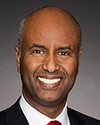
The Chair Liberal Ahmed Hussen
Thank you very much, Mrs. Fortier.
We will go next to the fourth round of questioning, beginning with MP Kramp-Neuman.
Conservative

Shelby Kramp-Neuman Conservative Hastings—Lennox and Addington—Tyendinaga, ON
Thank you.
We've covered a lot today, so I'm going to change the direction a little bit.
Despite the broader tensions we're currently having with Canada-U.S. relations, are you able to give us a quick rundown regarding joint Canadian-U.S. partnerships in the north, anything from defence issues, resource development, transportation issues to joint agreements?
Director General, Arctic, Eurasian and European Affairs, Department of Foreign Affairs, Trade and Development
In Arctic terms, there's the ICE pact, which is first and foremost front of mind. The ICE pact is not just about building ships and putting icebreakers in the water. It's also about what's behind the ships as well. The knowledge, the skills, the capacity, the capabilities that stand behind all of that speaks to the closeness of the relationship with Canada and the U.S.
I'll turn to Eric.
Executive Director, Regional Security and Defence Relations Division, Department of Foreign Affairs, Trade and Development
Thank you.
Despite the challenging relationship at the moment on the defence and security side of the equation, the relationship is still very strong and active every day through NORAD, for example, and the binational command. That co-operation remains unscathed from whatever we're hearing from the White House. We can also point to the fact that the defence production sharing agreement, the DPSA, that we have with the United States is still in full force, which allows Canadian firms to bid as equals to U.S. entities for Department of Defense contracts.
Director General, Arctic, Eurasian and European Affairs, Department of Foreign Affairs, Trade and Development
I was remiss in not highlighting that when I was a senior Arctic official before the appointment of Ambassador Mearns, I spoke very frequently with my U.S. colleague about the Arctic Council and how our interests align.
I would note that our chairship is coming up in a little less than four years' time, and the U.S. follows us, so we certainly had discussions about how we could identify themes that could run through the Canadian chairship into the U.S. one, to bring a North American focus to the Arctic Council after 12 years of European chairship.
Conservative
Shelby Kramp-Neuman Conservative Hastings—Lennox and Addington—Tyendinaga, ON
Next, are you aware if Arctic sovereignty has come up in any discussions with the U.S. in the context of the ongoing trade talks?
Director General, Arctic, Eurasian and European Affairs, Department of Foreign Affairs, Trade and Development
I'm not in a position to comment on that, Mr. Chair.
Conservative
Shelby Kramp-Neuman Conservative Hastings—Lennox and Addington—Tyendinaga, ON
On the Beaufort Sea boundary, what is Canada's negotiating mandate with the United States, and what are the milestones for working toward a framework agreement?
Director General, Arctic, Eurasian and European Affairs, Department of Foreign Affairs, Trade and Development
I can't speak to the specifics of our negotiating mandate. We had the first technical meeting last November, I believe. The Inuvialuit Regional Corporation was part of the delegation for that. The mandate was informed by consultations with indigenous and territorial partners.
Conservative
Shelby Kramp-Neuman Conservative Hastings—Lennox and Addington—Tyendinaga, ON
Thank you.
Lastly, Canada has publicly stated that due to Russia's invasion of Ukraine, there will be no business as usual in Arctic diplomacy with Russia. Perhaps I could have you elaborate on that or speak a little bit to the fact that Russia is expected to continue low-level probes, such as submarine underwave transits and electronic interference, all ultimately calibrated to test Canada's surveillance without escalation.
If you could speak to that, I would appreciate it.
Executive Director, Regional Security and Defence Relations Division, Department of Foreign Affairs, Trade and Development
Thank you for the question.
As mentioned, it's not business as usual with Russia, given its illegal invasion of Ukraine. Historically, we've had relatively good co-operation with the Russians in the Arctic. As I mentioned at the beginning, they continue to be bolstering their defensive capabilities and their military capabilities in the Arctic. The purpose is really to reinforce a northern sea route, so the route that goes along its northern territory.
Russia is Russia. It continues to probe, as we've seen in Europe, and it does so everywhere else.
Conservative
Shelby Kramp-Neuman Conservative Hastings—Lennox and Addington—Tyendinaga, ON
I'll circle back to one last question with regard to the U.S. Does the Government of Canada continue to assess the risk of military attack in North America, in the Arctic, as low? Do you believe the United States shares in that assessment?
Executive Director, Regional Security and Defence Relations Division, Department of Foreign Affairs, Trade and Development
I can say that from a Canada-U.S. perspective and NORAD perspective, the military command is always watching out for any potential invasion or attack.
Liberal
The Chair Liberal Ahmed Hussen
Thank you very much.
We will go next to MP Bill Blair.
You have five minutes.
Liberal
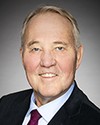
Bill Blair Liberal Scarborough Southwest, ON
Thank you very much, Mr. Chair.
I also want to pivot, Mr. Sinclair, because one of the first things you said was that the first pillar of our Arctic strategy is “asserting our sovereignty”. I think there's a tendency among many of us that when it comes to sovereignty, we think about fighter planes and submarines and military capabilities and our ability to defend the Arctic. However, when we travel to the north, what they talk about is infrastructure. Sovereignty is infrastructure. It's investment.
Although the general has kindly shared with us some of the investments in multi-use infrastructure at our northern operational support hubs and improved domain awareness with such things as the Arctic over-the-horizon radar, I think there also needs to be important discussions on the investment in infrastructure in the north. That includes things like deepwater ports. The Russians have 17 of them. We're still working on ours. We've heard that there's been discussion about a rail and road network most recently. Our critical minerals strategy would be facilitated by such an investment. It also includes investment in things like communication networks, power generation, water treatment plants and, as you've already mentioned, icebreaking capabilities.
You also mentioned, Mr. Sinclair, the importance of accessing international markets and attracting foreign international investment. I think there is opportunity in that, but perhaps you could share with us how we're going to pursue that international investment. As well, what precautions might we take to make sure that we are not in any way compromising our sovereignty as we attract other people's money?
Director General, Arctic, Eurasian and European Affairs, Department of Foreign Affairs, Trade and Development
Thank you for the question.
Our trade commissioner service is very well positioned to assist Canada in its efforts to diversify our trade and economic relations. There's a big role for us to play in attracting the investments that could underpin major projects that would make a very real difference in Canada's Arctic. Whether it's the redevelopment of the Port of Churchill, Grays Bay port and road, and so forth, there's a big role for us to play.
There's interest and potential there. As the Prime Minister has noted, Canada has much of what the world wants and needs, critical minerals in particular. As to how we can help our Arctic territorial and northern governments—I include indigenous governments in that—sustainably develop those resources, Global Affairs Canada has a real role to play in highlighting the potential and the opportunities there. Whether it's the Norwegian sovereign wealth fund or elsewhere, there's lots of potential, all of which would be run through the Investment Canada Act as well to ensure that we protect our interests.
Liberal
Bill Blair Liberal Scarborough Southwest, ON
Thank you, sir.
I'd also make the observation that the accession of Finland and Sweden into NATO created a real opportunity. It opened up a line of discussion at NATO and among our closest allies about the importance of Arctic security and the defence of the Arctic.
We know that the Russians have a significant capability, with over 50 icebreaking facilities and 17 deepwater ports, as I had mentioned, and they have a strong interest in the Arctic. We're also seeing China acting quite adversarially in the Arctic and considering themselves a near-Arctic nation. I think that's the terminology they use.
I believe the accession of Finland and Sweden, as well as that of Norway, Denmark, ourselves and the Americans, has created a real opportunity to even bring in additional partners like Iceland, the Faeroe Islands and Greenland for broader discussions.
You've already alluded to some of those discussions taking place. Perhaps you could expand on Finland and Sweden. I think Brigadier-General Rivière would also share with us that in Operation Nanook, we have a great deal to learn, particularly from our friends in Finland, who have been operating quite effectively in their Arctic for a considerable period of time. Could you speak about the opportunities that change has allowed?
Director General, Arctic, Eurasian and European Affairs, Department of Foreign Affairs, Trade and Development
Thank you for the question.
Briefly, our Nordic partners in particular, who are the most proximate to Russia and have the history of the Winter War, etc., understand the threat. There's a lot we could learn from our Nordic partners on how they engage their citizenry on the breadth and depth of that threat. It's not just a war against Ukraine. There's a broader threat there.
There's significant interest in the Canadian Rangers program amongst our Nordic partners. We recently brought some Sami representatives over to Canada to learn about the rangers model and how indigenous knowledge can be used to greater effect.
Liberal
Bloc

Patrick Bonin Bloc Repentigny, QC
Thank you, Mr. Chair.
I want to go back to my honourable colleague's question about your recommendations for the committee's study.
Regarding the dynamic security situation and Canada's sovereignty in the Arctic, you said that climate change was a concern. Can you go back to that concern and its impacts? Do you have any recommendations for the committee?
Executive Director, Regional Security and Defence Relations Division, Department of Foreign Affairs, Trade and Development
I'd like to thank the member for his question.
I can start, and then I'll invite my colleagues to weigh in.
People's biggest climate-change concern is the ice that's melting and the release of water. However, that isn't actually the case yet. The shipping season is still quite limited, and shipping is more difficult when the waters are released, especially for vessels that aren't equipped to break ice, because there are many more pieces of ice. For that reason, it may be appropriate to consider the impact of climate change on northern shipping based on the timeline of forecasts.
We're also concerned about melting permafrost and the impact that could have on infrastructure.
I invite my colleagues to add their comments.
Director General, Arctic, Eurasian and European Affairs, Department of Foreign Affairs, Trade and Development
Thank you.
I suggest that you base your recommendations on empirical data as much as possible. There is talk that the Arctic is open and that other countries, such as China, are moving in, but that isn't the case right now.
It's important to stay vigilant, but it's also important not to panic about this.
We've got it.
Bloc