Evidence of meeting #36 for Justice and Human Rights in the 45th Parliament, 1st session. (The original version is on Parliament’s site, as are the minutes.) The winning word was candidates.

A video is available from Parliament.

On the agenda

Members speaking

Before the committee

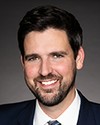
Sean Fraser  Minister of Justice and Attorney General of Canada
A. McTeer  Chairperson, Independent Advisory Board for Supreme Court of Canada Judicial Appointments
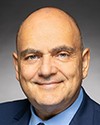
Giroux  Commissioner, Office of the Commissioner for Federal Judicial Affairs

10 a.m.

Liberal

The Chair Liberal Iqra Khalid

Good morning, everyone.

I call this meeting to order.

Welcome to meeting number 36 of the House of Commons Standing Committee on Justice and Human Rights.

Pursuant to Standing Order 108(2), the committee will study the nomination of the Honourable Glenn D. Joyal to the Supreme Court of Canada.

Today's meeting is taking place in a hybrid format, pursuant to the Standing Orders. Members are attending in person in the room and remotely using the Zoom app. I'd like to confirm that sound tests were conducted and were successful.

I would like to make a few comments for the benefit of witnesses and members. Before speaking, please wait until I recognize you by name. For those participating by video conference, click on the microphone icon to activate your mic. Please mute yourself when you are not speaking. For those on Zoom, at the bottom of your screen you can select the appropriate channel for interpretation: floor, English or French. For those in the room, you can use your earpiece and select the desired channel.

All comments should be addressed through the chair. For members in the room, if you wish to speak, please raise your hand. For members on Zoom, please use the “raise hand” function. The clerk and I will manage the speaking order as best we can. We appreciate your patience and understanding in this regard.

With us today is the Honourable Sean Fraser, Minister of Justice and the Attorney General of Canada.

Welcome, Minister Fraser.

We have Maureen McTeer from the Independent Advisory Board for Supreme Court of Canada Judicial Appointments.

Welcome. We really appreciate your taking the time to be here as chairperson.

We also have, from the Office of the Commissioner for Federal Judicial Affairs, Marc Giroux.

Merci, Commissioner, for being here today. We appreciate that.

We'll start with five minutes each for your opening remarks.

Minister Fraser, please go ahead.

10 a.m.

Central Nova Nova Scotia

Liberal

Sean Fraser LiberalMinister of Justice and Attorney General of Canada

Thank you very much, Madam Chair.

Thank you so much, everyone.

Before I begin, let me thank Ms. McTeer and Monsieur Giroux for their participation in the process that has led to today, where I am honoured to be here before you in support of the Honourable Glenn Joyal, who has been nominated to the Supreme Court of Canada.

Chief Justice Joyal is an exceptional jurist. I'm confident in his capacity to uphold the highest of standards in all facets of the position. It includes thoughtful contributions to the evolution of law, exceptional service to our country, dedication, professionalism and ethical excellence.

I offer my heartfelt congratulations to Chief Justice Joyal, and I look forward to his appearance before parliamentarians later today.

The purpose of the appointment of Chief Justice Joyal is to fill the position that became vacant following the retirement of the Honourable Sheilah Martin.

Justice Martin, if you're listening, thank you for an incredible run of service to our country. Canada is better for your many varied contributions.

The timely appointment of outstanding candidates is essential to the proper functioning of our highest court, and I continue to strive to ensure that these two essential aspects are upheld.

The Supreme Court appointment process has two main components: the selection process and the Independent Advisory Board on Supreme Court of Canada Judicial Appointments.

I will begin by providing an overview of the two components, after which we will hear from Maureen McTeer, chairperson of the advisory board, who has agreed to share her perspective with us.

I want to begin by highlighting the importance of the Supreme Court appointment process generally and our unique role. Today we're taking part in the crucial work of upholding public confidence in the administration of justice. Trust in our judges is essential, as is confidence in the integrity of the process by which they are selected.

This is now the seventh time this process has been used following its introduction in 2016. The Prime Minister launched the current process on March 30 of this year, with the application period closed in late April. Suitable candidates would be jurists of the highest calibre who not only demonstrate superior knowledge of law and analytical skills but are also aware of and sensitive to the social context in which legal disputes arise. Commitment to public service, respect and consideration for others, and irreproachable personal and professional integrity are key.

The independent advisory board was also charged with ensuring that recommended candidates were functionally bilingual and reflective of the diversity of Canadian society. In accordance with the well-established custom of regional representation on the Supreme Court, this selection process was advertised as open to all qualified applicants from western and northern Canada.

Charged with rigorously assessing candidates based on public qualifications and assessment criteria, the non-partisan independent advisory board is at the heart of the selection process. The board's eight members, including the chair, reflect Canada's diversity and bring their varied backgrounds and viewpoints to the ultimate goal of identifying the best candidates. This esteemed group of Canadians includes government nominees as well as those put forward by a range of other organizations committed to serving Canadians by upholding the rule of law.

Madam Chair, I had some additional time that I was contemplating, but I do want to save space for others.

Is it five minutes for each? Okay.

Perhaps I will take the opportunity to give the floor to Ms. McTeer. To the extent that there is a moment at the end to conclude, I would be grateful for the opportunity.

The Chair Liberal Iqra Khalid

Thank you very much.

Please go ahead, Ms. McTeer.

Maureen A. McTeer Chairperson, Independent Advisory Board for Supreme Court of Canada Judicial Appointments

Thank you, Madam Chair, members of the committee, Minister and Mr. Giroux.

Good morning, all.

It is a great privilege to serve as chairperson of the Independent Advisory Board for Supreme Court of Canada Judicial Appointments and to address you this morning.

I was fortunate in my work to be joined by seven colleagues, namely Riel Bellegarde, a lay member nominated by the Minister of Justice; Aimée Craft, nominated by the Indigenous Bar Association; Justin E. Kingston, nominated by the Canadian Bar Association; Justin Robichaud, King's Counsel, nominated by the Federation of Law Societies of Canada; the Honourable J. Michael MacDonald, former chief justice of Nova Scotia superior court, nominated by the Canadian Judicial Council; and Dean Laura Spitz from the University of Calgary's law school, nominated by the Council of Canadian Law Deans.

Each member has brought to our work a career path full of accomplishments, a wide range of experiences, as well as regional, community and national perspectives. We all share a deep commitment to the rule of law, the institutional importance of the Supreme Court of Canada and what is in the best interests of our country, Canada.

The advisory board's mandate was to identify candidates from applications received who would be suitable for appointment to the Supreme Court of Canada for the western region to fill the vacancy created by the retirement of Justice Sheilah Martin of Alberta. I will add my comments to those of the minister. I've known Justice Martin since I taught at the law school at the University of Calgary, and she was dean, and she was indeed an exceptional jurist.

The process was launched on March 30 of this year and was open to candidates from western Canada, namely Manitoba, Saskatchewan, Alberta, British Columbia, Yukon, Northwest Territories and Nunavut. The western region has two justices on the Supreme Court of Canada.

Following the launch of the process in March, the commissioner for federal judicial affairs reached out to Canadian legal and judicial organizations to ask them to tap into their networks and knowledge of the judicial and legal community to identify qualified candidates and encourage them to apply.

Candidates were invited to submit their applications by April 27 of this year. In all, nine applications were received. In order to be considered, each applicant was required to fill out an extensive questionnaire. A copy of such questionnaire is available on the website of the Commissioner for Federal Judicial Affairs. Relevant portions of Chief Justice Joyal's application are also available on that website.

The members of the advisory board were appointed by order in council on May 13, and we all got together on a Teams meeting to immediately begin our work. In the following days, each member of the advisory board reviewed all of the applications on their own and in depth. The advisory committee then met in person in Ottawa for an intense four days, from May 20 to May 23.

The board's mandate, as set out by the Prime Minister, was to identify candidates who are jurists of the highest calibre, who are bilingual in both of Canada's official languages and representative of the diversity of our country and who possess the experience and the judgment required to serve on our highest court. In carrying out this mandate, the advisory board was guided by its terms of reference, section 8(e) of which required it to consider the institutional needs of the court in order to evaluate how each candidate could best meet the court's current and future needs. To ascertain this, we met with Chief Justice Richard Wagner at the beginning of our deliberations.

In his advice, the chief justice emphasized the importance of the selected candidate having extensive legal and judicial experience in various areas of law, being collegial in their relations with their colleagues, being willing and able to take on an intense workload, as well as being able to represent the court in domestic and international proceedings.

Board members reviewed all applications exhaustively. The questionnaire, as you will see when you read it, goes well beyond a traditional curriculum vitae, and it is very thorough. In addition to addressing personal skills, experience and professional qualities, it delves into professional and non-legal experience, community involvement and written work.

Following its deliberations, the advisory board decided to establish a list of candidates to be called for an interview. Together, we prepared a list of questions to ask each of them and began contacting people, both in the judicial and non-judicial fields, who could provide references and were familiar with the work and personalities of the candidates, including chief justices.

The advisory board members conducted the interviews directly by phone, with a two-person team on each call, following a consistent and structured approach to ensure fairness and comparability among candidates.

After careful review, four candidates were invited to participate in personal interviews in Ottawa, which were conducted here on May 23. The advisory board assessed these final four candidates against well-established criteria, including extensive and superior knowledge of the law, intellectual contributions as witnessed by their legal writing and judicial opinions, analytical ability, integrity, collegiality, judgment, and the capacity to begin immediately to perform the work of a justice of the Supreme Court of Canada.

Following the individual interviews, each candidate took a language test, administered professionally by the Office of the Commissioner for Federal Judicial Affairs, to verify that the candidate is functionally bilingual. Bilingualism is defined as the ability to understand written and oral texts and arguments in English and French, as well as the ability to converse with colleagues and litigants in Canada's two official languages, English and French.

Following a comprehensive review and extensive deliberation, the advisory board reached unanimous consensus that it should recommend only two candidates for the Prime Minister's consideration. A report of our decision was then provided to the Prime Minister and to the Minister of Justice for their consideration and decision.

I am pleased that Chief Justice Joyal from Manitoba was selected from the names we submitted to the Prime Minister. The advisory board considered Chief Justice Joyal to be an exceptional candidate, distinguished by his deep legal expertise, his wealth of professional and judicial experience, and his interpersonal qualities.

We were particularly impressed by Justice Joyal's thoughtful, articulate and forward-looking perspective on the role of the Supreme Court of Canada and its many challenges, as well as by his strong commitment to public service.

I would be remiss to not mention here that all of our board members are deeply grateful for the exceptional support we received from the commissioner for federal judicial affairs and his highly skilled and dedicated staff—I'm going to take one of your secretaries, if I can, to help my husband—whose contributions were invaluable to the successful completion of our mandate.

Thank you, Mr. Giroux.

I've enjoyed the challenge of acting as chair of this independent advisory board and working alongside such dedicated and thoughtful colleagues throughout this process. Their spirit of collaboration, professionalism and shared commitment guided our work throughout and made this entire process a success.

If you have any questions afterwards, I will be pleased to answer them.

The Chair Liberal Iqra Khalid

Thank you very much, Ms. McTeer. I know that you went way over your time, but we appreciate the process.

Monsieur Giroux, do you have opening remarks to make also?

Marc Giroux Commissioner, Office of the Commissioner for Federal Judicial Affairs

This will assist you, perhaps, Madam Chair.

I hadn't planned to make an opening statement. Rather, I am here to assist the minister and Ms. McTeer as needed.

I'll take one moment to say that it was again an honour for me and my officials to administer this process, the sixth for me, and to assist the independent advisory board in the proposed nomination of an exceptional candidate in the person of the Honourable Glenn Joyal.

The Chair Liberal Iqra Khalid

Thank you very much.

Minister Fraser, did you want to take 30 seconds out of what's left?

Sean Fraser Liberal Central Nova, NS

I would only say that his résumé is publicly available. We are very lucky to have individuals of Chief Justice Joyal's character and professional record step up and put their name forward to serve in this capacity. I'm looking forward to seeing the difference he will make. I'm here without reservation about the quality of the individual we are seeking to have appointed to the Supreme Court of Canada.

Thank you.

The Chair Liberal Iqra Khalid

Thank you very much, Minister Fraser, Ms. McTeer and Monsieur Giroux for being here today.

We'll start our first round of questions. Members will have six minutes each.

Mr. Brock, please go ahead for six minutes.

10:15 a.m.

Conservative

Larry Brock Conservative Brantford—Brant South—Six Nations, ON

Thank you, Madam Chair.

Good morning and thank you to Monsieur Giroux and Madam McTeer for their appearance today and their assistance in this process.

It's always good to see you again, Minister Fraser.

I'd like to start by echoing the comments of both Ms. McTeer and the minister with respect to retired Justice Sheilah Martin.

I wasn't aware, Ms. McTeer, that you had actually taught at my alma mater. It must have been after I left.

10:15 a.m.

Chairperson, Independent Advisory Board for Supreme Court of Canada Judicial Appointments

Voices

Oh, oh!

10:15 a.m.

Conservative

Larry Brock Conservative Brantford—Brant South—Six Nations, ON

Before, maybe? Okay. I graduated in 1990. I don't know when you sat and taught.

Nevertheless, Justice Martin taught me torts. I have very much an affinity toward that particular justice, so I thank you for those comments.

Thank you, Ms. McTeer. I know that you went beyond the five minutes allotted, but I think it was helpful for all of us to understand the process. As a result of your thorough explanation, a lot of the questions I was going to put to you have been answered, but there are a couple of loose ends.

On the application itself, the qualifications on the website speak about current sitting judges in various courts and across provinces and territories, but they also provide criteria for simply a lawyer with 10 years' experience in a particular province or territory. I hearken to your comments about Prime Minister Carney, whose mandate was to choose a jurist of the highest calibre. Did that preclude any consideration of the nine applicants who made application for this vacancy? Were any of those applicants simply lawyers with at least 10 years' experience?

10:20 a.m.

Chairperson, Independent Advisory Board for Supreme Court of Canada Judicial Appointments

10:20 a.m.

Conservative

Larry Brock Conservative Brantford—Brant South—Six Nations, ON

Have there ever been applications that you were aware of during your tenure of lawyers with 10 years' experience or more applying without being a judge?

10:20 a.m.

Chairperson, Independent Advisory Board for Supreme Court of Canada Judicial Appointments

Maureen A. McTeer

Madam Justice Côté, for instance, on the Supreme Court now, came directly from practice. The court needed at that particular moment someone who had extensive experience in corporate and commercial law. She had an outstanding reputation and was chosen. That's one. Obviously, Chief Justice Bora Laskin came directly from academia. There have been others. Maybe Monsieur Giroux can provide other names.

For me, anyway, it's something we might think about. This is the Supreme Court of Canada. I always liken this to a medical interview, in a sense. If you're on a medical board or a hospital board and you're looking for a chief of surgery, you would assume at least two things—one, that it's a doctor who applies, but more importantly, that it's someone who has done surgery.

I think it's invaluable to have the judicial background. That's not to disqualify others, but this is the highest court. Whoever is chosen has to hit the ground running, because....

I'm sorry. I'm taking up your time.

10:20 a.m.

Conservative

Larry Brock Conservative Brantford—Brant South—Six Nations, ON

I'm sorry to cut you off. My time is very limited.

You also referenced, or perhaps Minister Fraser did, that parts of Justice Joyal's application are accessible to the public. Were there any aspects of his application that would not be accessible to the public?

10:20 a.m.

Chairperson, Independent Advisory Board for Supreme Court of Canada Judicial Appointments

Maureen A. McTeer

Monsieur Giroux.

June 29th, 2026 / 10:20 a.m.

Commissioner, Office of the Commissioner for Federal Judicial Affairs

Marc Giroux

Yes, Mr. Brock, essentially any very personal information related to the candidate would not be accessible. Otherwise, it's rather complete.

10:20 a.m.

Conservative

Larry Brock Conservative Brantford—Brant South—Six Nations, ON

This is for the minister.

In 2021, as chief justice of the Manitoba Court of Queen's Bench, Chief Justice Joyal issued a practice direction compelling that province's lawyers to state their pronouns in court at the start of proceedings. It was not optional.

As a lawyer, Minister, you will surely remember that it always has been customary and the practice for justices across this country to refer to lawyers appearing in courts as simply counsel. Is this Liberal government expecting that identity politics will extend into the Supreme Court of Canada as a new practice direction?

Sean Fraser Liberal Central Nova, NS

Thanks very much, Mr. Brock, for the question.

The short answer to your question is no, but more specifically, it's a matter of independence for the courts, in my view, not only to determine the substantive legal decisions that they make but also to control their own processes as they see fit to administer justice in the most appropriate way. To the extent that there are actors who are empowered to make rules about the processes that courts ought to follow, I think it's best for those who are actually on the ground in the courtroom to be able to make those decisions free of influence from the federal government.

10:20 a.m.

Conservative

Larry Brock Conservative Brantford—Brant South—Six Nations, ON

I have one last question, Minister.

In 2019, Chief Justice Joyal was rejected as a potential Supreme Court pick despite being recommended by then justice minister Jody Wilson-Raybould. We all know this wasn't the first time that former prime minister Justin Trudeau disagreed with a decision by his justice minister. Trudeau objected to a speech given by Chief Justice Joyal in which he decried the constitutionalizing of more and more political and social issues into fundamental rights.

Is that position problematic for this Liberal government?

Sean Fraser Liberal Central Nova, NS

I have considered, in depth, the record of service that the chief justice has offered to Canadians in its totality. Between me and my team, we have reviewed every one of the decisions that he's authored and a number of different speeches. The sum total of that review, including public speeches he has given, gives me a great sense of confidence that we are making a top-tier pick for the Supreme Court of Canada, and I say that with no hesitation.

The Chair Liberal Iqra Khalid

Thanks very much.

I will now move on to Ms. Lattanzio for six minutes.

Please go ahead.

Patricia Lattanzio Liberal Saint-Léonard—Saint-Michel, QC

Thank you, Madam Chair.

Can you please signal to me when I have one minute left as I will cede one minute to Ms. Begum. Thank you.

Mr. Giroux, Minister Fraser and Ms. McTeer, thank you so much for being with us this morning and, of course, for partaking in this very important exercise.

Public confidence rests partly on Canadians trusting that the selection process is fair and free of partisan influence. What safeguards are present in the appointment process that give Canadians that assurance?