Thank you very much. That concludes your time, Mr. Baber.
We'll move on to Mr. Maloney for five minutes.
Please go ahead.

Evidence of meeting #36 for Justice and Human Rights in the 45th Parliament, 1st session. (The original version is on Parliament’s site, as are the minutes.) The winning word was candidates.
A video is available from Parliament.
Liberal

The Chair Liberal Iqra Khalid
Thank you very much. That concludes your time, Mr. Baber.
We'll move on to Mr. Maloney for five minutes.
Please go ahead.
Liberal

James Maloney Liberal Etobicoke—Lakeshore, ON
Thank you, Madam Chair.
I want to add my thanks to the panel of witnesses today.
Minister, Ms. McTeer and Mr. Giroux, thank you for all the work you've done in getting us here today, because this is an incredibly important process. It's an apolitical process, and we all owe you a debt of gratitude for doing what you do, so thank you.
I also want to add my thanks to outgoing Justice Martin, who served the court and the country with grace and an excellent display of legal knowledge, so thank you to her.
We've come a long way in terms of this process. Just so we're clear for the public, this is not a confirmation hearing like you might see in the United States. This is an opportunity for the Canadian public to become aware of what the process looks like behind the scenes in terms of appointing people to these critically important positions.
We started back in 2005. The government of the day started the hearing process, which we're going to see again this afternoon. In 2016, we started with the process that you headed up this time, Ms. McTeer. All of this is an effort so that the people in Canada can see how the process works and come to have further respect for our court system, which is above reproach, in my opinion. I practised in Ontario for 20 years before going into politics and just to briefly address Mr. Baber's point, not once did I walk into a courtroom and wonder who appointed the judge or what he or she did politically before. To suggest that is a factor in decision-making or by judges is outrageous, frankly, and I want to get that on the record. That's why these hearings are so important and what we're going to do this afternoon is so important.
Maybe I'll just open the floor to all three of you to address that issue, because we've come a long way in this transparency process. There's a big upside to it from the public but, as we've just witnessed, there can be a downside too, because it opens judges to commentary and criticism that is political, unfair and outrageous, in my opinion. Judges are not in a position like we are as politicians to stand in front of a microphone or put out a statement defending themselves. We have the greatest justice system in the world, in my opinion. I would just like you to comment on the process on its pros and perhaps cons in light of what we just heard.
Liberal
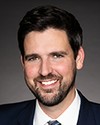
Sean Fraser Liberal Central Nova, NS
If I may, Chair, I'll offer an initial response.
I do find the line of questioning that we just heard deeply concerning. I don't want to make assumptions about motivation, but it seems clear that there's at least some attempt to try to have Canadians question the independence in the judiciary based on their political affiliation. Just so Canadians at home have some comfort, for more than a decade, the process for all judicial appointments—not only at the Supreme Court but every superior court appointment, including every one that I've made over the course of the past year—there has been an independent judicial advisory committee that has been struck, and they are forbidden from considering the political activities of the applicants.
They independently come up with a recommendation. They either recommend against an appointment or give advice that they're highly recommended. In my experience over the past 10 years, there have been zero cases of a judge appointed who was not recommended or highly recommended by a group who was forbidden from considering political activity.
The independence of the process is essential to public confidence. Confidence is essential to faith in our democracy. It doesn't get more serious than this, and I really must draw attention to and critique forcefully any attempt by any parliamentarian to call into question the integrity of the justice system. That is not a healthy thing for this committee to be digging into and, frankly, is so far removed from the process and the facts on the ground that I think you're right to provide the platform for us to correct that and add perspective.
Liberal
James Maloney Liberal Etobicoke—Lakeshore, ON
Thank you.
With the limited time left, not only would I say that it's unhealthy; it's irresponsible.
Ms. McTeer or Mr. Giroux, do you have any comments on the issue?
Commissioner, Office of the Commissioner for Federal Judicial Affairs
I would only reiterate the comments that have already been made that we have a judicial system that is the envy of the world. People look to us. My office conducts some international work, and people do come to us to see how things are done, the appointment process and how it works.
While there may never be a perfect appointment process, the one we have is pretty solid. Never have I seen in my 20 years now in the office, I must admit, any appointment being made that is not from a recommended or highly recommended list.
Liberal
The Chair Liberal Iqra Khalid
Thank you. That concludes your time, Mr. Maloney.
Mr. Fortin, you have the floor for two and a half minutes.
Bloc

Rhéal Fortin Bloc Rivière-du-Nord, QC
Thank you, Madam Chair.
Here we are at the next time.
There's one thing I want to explore with you. We understand that this is currently the seventh process since the 2016 reform. Furthermore, we understand that the process means that the Prime Minister ultimately makes pretty much all the decisions. I don't mean to be grossly partisan. He will appoint people to the advisory board or ask the minister to appoint them. From the list of selected candidates, he will choose the person he thinks he should appoint. Whether that's right or wrong, the Prime Minister has a lot of power.
This is the seventh time the process has been launched. Do you think the process should be reviewed or does it adequately meet our needs?
Chairperson, Independent Advisory Board for Supreme Court of Canada Judicial Appointments
It is part of our mandate to prepare a public report, which will include recommendations. I'm sure that, on the whole issue of process, there will certainly be recommendations to make.
I think it's absolutely essential not to wait until the last minute. The contrast to the way things used to be is there was always a search for highly competent people across the country who should be remembered when the time came to appoint judges. Things have changed: Now people apply.
This is something we will certainly be going to—
Bloc
Rhéal Fortin Bloc Rivière-du-Nord, QC
I'm going to interrupt you, because I have about 30 seconds left. I'm sorry, Ms. McTeer. I'm being really rude, but I have no choice.
Minister, you were in Parliament when, at one point, we discussed the problem related to what your party called the Liberalist, a list of people who had previously contributed to the Liberal Party or who had worked for the Liberal Party during elections, in particular. Let's just say they were good Liberal friends. According to what one of your predecessors told me, the list was used only after an appointment, to ensure that there wouldn't be any nasty surprises.
Can you confirm whether or not that list is still being used?
Liberal
Sean Fraser Liberal Central Nova, NS
Liberalist as a database is in use by the Liberal Party of Canada. I have never used it during my process of making appointments. I will occasionally receive a note about a candidate after they've come through as being recommended or highly recommended. If they have a particular engagement we're aware of from any political party, I'm not always certain where that information would come from.
For example, if someone made a donation to the NDP or a provincial Conservative Party, that would not be in Liberalist. I'm not sure where the information would come from, but I will on occasion have a candidate's political activities flagged before a final appointment is made.
Liberal
The Chair Liberal Iqra Khalid
Thank you very much. Mr. Fortin. That was an extra minute for you.
Mr. Lawton, please go ahead for five minutes, sir.
Conservative

Andrew Lawton Conservative Elgin—St. Thomas—London South, ON
Thank you very much, Madam Chair.
Thank you to all of you for your work and for appearing here today.
Ms. McTeer, I'll start with you.
You mentioned in your opening remarks the importance of diversity for judges. I was hoping you could drill into what exactly that means. What diversity are you referring to when you talk about your process?
Chairperson, Independent Advisory Board for Supreme Court of Canada Judicial Appointments
We probably all wish we did know whether it's just a check mark that this person fills a certain category or cultural identity or gender or whatever or whether it's someone who has an inherent understanding through their life experience and their professional experience of what in fact is the diverse nature of the country. Diversity can go well beyond the things we traditionally think of as being diverse in terms of an individual. Do they understand the nation? Do they understand their role as a justice? That kind of diversity I don't think we've delved into as deeply as we have what I sometimes call the check mark notion of diversity. In a country like Canada, I think we do ourselves a disservice.
The Supreme Court, especially under this chief justice and previously Justice McLachlin, has really worked hard to make a reality of diversity. We have people from not just different areas of the country but different types of background. I mean, the candidates we proposed were not just bilingual; they were trilingual. You have people who are still trying to work that out, but I think it's important that we have the visual of diversity and the reality of diversity across all kinds of different scales.
Conservative
Andrew Lawton Conservative Elgin—St. Thomas—London South, ON
Are diversity of thought and diversity of perspective considerations as well?
Chairperson, Independent Advisory Board for Supreme Court of Canada Judicial Appointments
I think they're essential. Of course, yes.
Conservative
Andrew Lawton Conservative Elgin—St. Thomas—London South, ON
Were they part of your review process specifically around legal thought? We know there's a range of legal perspectives and ways in which people approach the law. One of the concerns raised by a number of scholars was that when Beverley McLachlin was chief justice of the Supreme Court, the court had a very elevated level of unanimous decisions. I think it was somewhere over 60%. It means that even on the bench, you weren't having sometimes that really strong dissent that could form the foundation of a future decision. Ironically, McLachlin herself saw that with the Rodriguez decision and then the Carter decision.
Was there an active desire to seek different legal approaches in the candidates you were searching where we might not currently have someone on the bench right now embodying and viewing the law that certain way?
Chairperson, Independent Advisory Board for Supreme Court of Canada Judicial Appointments
I don't think we had that kind of discussion, no. Whether or not it's important.... I think it's always important to have a broad understanding of what your role is. I think Justice McLachlin spent a great deal of her time trying to herd the cats, as we say, because independence among the judiciary is their number one point.
To your point, that's why it is important that collegiality, for instance, be a part of it.
Conservative
Andrew Lawton Conservative Elgin—St. Thomas—London South, ON
If I can, Minister, I'd like to get to the role of the court and the role of judges. One of the outstanding legal questions, or at least one of the sources of debate, is who should have the final say. Is it the court or is it Parliament? Is it democracy or is it the judiciary? Is that a consideration that you had looked at in terms of how the judge that you were going to support being on the Supreme Court would view that question?
Liberal
Sean Fraser Liberal Central Nova, NS
With respect to your preamble, Mr. Lawton, my own view is that we're very lucky to be in Canada, where the powers and constraints on those powers are actually outlined in the Constitution itself. We can take our lessons not from saying there is one arbiter in one circumstance who has the final say and another in a different one. There's a constitutional framework that spells it out with a high degree of certainty. On occasion, there may be reasonable people who disagree.
To be clear, on this appointment, there was not a single legal issue or perspective that determined or contributed to the selection of Chief Justice Joyal. To be clear, what is far more important to me than any particular opinion they may issue is whether they have character and integrity and an understanding of how the courts can offer public services to Canadians. I think it would be very dangerous for a political actor to be seeking a judge who would make a decision in a given instance, when in fact we're dealing with people who have many years of service who will be dealing with issues to cover a range of different subjects that may possibly be beyond our imagination today. We are picking for character, for integrity and for a deep understanding of the law and the country in which the courts sit.
Liberal
The Chair Liberal Iqra Khalid
Thank you very much.
That concludes your time, Mr. Lawton.
We are now moving on to Mr. Housefather for five minutes.
Please go ahead.
Liberal

Anthony Housefather Liberal Mount Royal, QC
Thank you very much, Madam Chair.
Thank you very much to all of you for being here.
Ms. McTeer, to you and your committee, thank you for your work.
To Justice Martin, I appreciate her service to the court. I had the pleasure of being on the committee and asking her questions when she was appointed. I am a McGill grad, of course.
I just want to say how much I appreciate this process, and I appreciate as well the lack of politicization that goes into appointments in Canada. For example, in the United States, we all know that in both 2016 and 2020, President Trump said he would only appoint justices from a list selected by The Federalist Society. That is true politicization of the court.
Here we have an independent process where a selection committee appointed by various different distinguished bodies across the country is able to ascertain, of anyone who wishes to apply, whether or not they merit being submitted to the Minister of Justice and then to the Prime Minister on a short list. I think that is an incredibly good process.
Ms. McTeer, in terms of the process itself, in the past, if I remember correctly, there have been three or four candidates that have been submitted to the Minister of Justice by the committee. Can you explain to us why there were two this time versus the normal three or four?
Chairperson, Independent Advisory Board for Supreme Court of Canada Judicial Appointments
Yes, I can. We had extensive discussions, and we decided that the two we were going to present were so exceptional, it was the decision, our consensus, that we would only nominate two. It wasn't a precedent. That was set the last time when Justice McLachlin made it clear, for the same reasons we had, that while the requirement was for three, there were really two so exceptional that they were the ones who would be best presented to the Prime Minister.
The Prime Minister, of course, as Mr. Fortin has mentioned, has the ultimate authority. He could have returned to us and said that he wanted three to five. We would then have to give it some thought, which would be very difficult for us given we had already made our choice, but that didn't happen, as you know.
Liberal
Anthony Housefather Liberal Mount Royal, QC
I understand.
The only reason I raise this is that the committee could one day say there's one candidate who is so distinguished and so much above everybody else that they are going to propose only one. That's why I look at that and I'm concerned, but I understand the point.
Were you concerned about the fact that there were only nine applications, given that in the past there have been times when there have been significantly more applications?
Chairperson, Independent Advisory Board for Supreme Court of Canada Judicial Appointments
It seemed low to me, given the vastness of the region that we were choosing from.
Anyone who has looked at the questionnaire would realize that it would take time to put together such a questionnaire. Time.... We're not saying anything new. Other groups have said it in the past. The more time you can provide for this process, the better it is, not just for our work but also for the applications.
One of the things I hope we can do is continuously look to see who are the best and the brightest in Canada. Who are the people who would be qualified? The application process allows anyone, given a narrow...but still anyone, basically. If you've practised law or even have been a member of the bar for 10 years, you can apply to be a justice of the Supreme Court of Canada.
Maybe in terms of the application process, we need more time. We need perhaps more education across the bar. We could keep more on the lookout. Those kinds of things.
Liberal
Anthony Housefather Liberal Mount Royal, QC
I understand that you proactively interviewed the four final candidates in terms of in-person interviews. You did enormous diligence based on their questionnaires. Did you also do heightened levels of diligence with respect to things that they may not have disclosed in the questionnaire? I'm sure they were subject to credit and criminal checks and other similar types of publicly available, open source information.
Can you assure us that, whoever would be chosen—and I'm not speaking of Chief Justice Joyal in particular—would have been screened as much as a green light committee would screen a candidate for any of our political parties?