Evidence of meeting #36 for Justice and Human Rights in the 45th Parliament, 1st session. (The original version is on Parliament’s site, as are the minutes.) The winning word was candidates.

A video is available from Parliament.

On the agenda

Members speaking

Before the committee

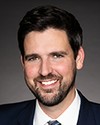
Sean Fraser  Minister of Justice and Attorney General of Canada
A. McTeer  Chairperson, Independent Advisory Board for Supreme Court of Canada Judicial Appointments
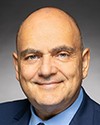
Giroux  Commissioner, Office of the Commissioner for Federal Judicial Affairs

10 a.m.

Liberal

The Chair Liberal Iqra Khalid

Good morning, everyone.

I call this meeting to order.

Welcome to meeting number 36 of the House of Commons Standing Committee on Justice and Human Rights.

Pursuant to Standing Order 108(2), the committee will study the nomination of the Honourable Glenn D. Joyal to the Supreme Court of Canada.

Today's meeting is taking place in a hybrid format, pursuant to the Standing Orders. Members are attending in person in the room and remotely using the Zoom app. I'd like to confirm that sound tests were conducted and were successful.

I would like to make a few comments for the benefit of witnesses and members. Before speaking, please wait until I recognize you by name. For those participating by video conference, click on the microphone icon to activate your mic. Please mute yourself when you are not speaking. For those on Zoom, at the bottom of your screen you can select the appropriate channel for interpretation: floor, English or French. For those in the room, you can use your earpiece and select the desired channel.

All comments should be addressed through the chair. For members in the room, if you wish to speak, please raise your hand. For members on Zoom, please use the “raise hand” function. The clerk and I will manage the speaking order as best we can. We appreciate your patience and understanding in this regard.

With us today is the Honourable Sean Fraser, Minister of Justice and the Attorney General of Canada.

Welcome, Minister Fraser.

We have Maureen McTeer from the Independent Advisory Board for Supreme Court of Canada Judicial Appointments.

Welcome. We really appreciate your taking the time to be here as chairperson.

We also have, from the Office of the Commissioner for Federal Judicial Affairs, Marc Giroux.

Merci, Commissioner, for being here today. We appreciate that.

We'll start with five minutes each for your opening remarks.

Minister Fraser, please go ahead.

10 a.m.

Central Nova Nova Scotia

Liberal

Sean Fraser LiberalMinister of Justice and Attorney General of Canada

Thank you very much, Madam Chair.

Thank you so much, everyone.

Before I begin, let me thank Ms. McTeer and Monsieur Giroux for their participation in the process that has led to today, where I am honoured to be here before you in support of the Honourable Glenn Joyal, who has been nominated to the Supreme Court of Canada.

Chief Justice Joyal is an exceptional jurist. I'm confident in his capacity to uphold the highest of standards in all facets of the position. It includes thoughtful contributions to the evolution of law, exceptional service to our country, dedication, professionalism and ethical excellence.

I offer my heartfelt congratulations to Chief Justice Joyal, and I look forward to his appearance before parliamentarians later today.

The purpose of the appointment of Chief Justice Joyal is to fill the position that became vacant following the retirement of the Honourable Sheilah Martin.

Justice Martin, if you're listening, thank you for an incredible run of service to our country. Canada is better for your many varied contributions.

The timely appointment of outstanding candidates is essential to the proper functioning of our highest court, and I continue to strive to ensure that these two essential aspects are upheld.

The Supreme Court appointment process has two main components: the selection process and the Independent Advisory Board on Supreme Court of Canada Judicial Appointments.

I will begin by providing an overview of the two components, after which we will hear from Maureen McTeer, chairperson of the advisory board, who has agreed to share her perspective with us.

I want to begin by highlighting the importance of the Supreme Court appointment process generally and our unique role. Today we're taking part in the crucial work of upholding public confidence in the administration of justice. Trust in our judges is essential, as is confidence in the integrity of the process by which they are selected.

This is now the seventh time this process has been used following its introduction in 2016. The Prime Minister launched the current process on March 30 of this year, with the application period closed in late April. Suitable candidates would be jurists of the highest calibre who not only demonstrate superior knowledge of law and analytical skills but are also aware of and sensitive to the social context in which legal disputes arise. Commitment to public service, respect and consideration for others, and irreproachable personal and professional integrity are key.

The independent advisory board was also charged with ensuring that recommended candidates were functionally bilingual and reflective of the diversity of Canadian society. In accordance with the well-established custom of regional representation on the Supreme Court, this selection process was advertised as open to all qualified applicants from western and northern Canada.

Charged with rigorously assessing candidates based on public qualifications and assessment criteria, the non-partisan independent advisory board is at the heart of the selection process. The board's eight members, including the chair, reflect Canada's diversity and bring their varied backgrounds and viewpoints to the ultimate goal of identifying the best candidates. This esteemed group of Canadians includes government nominees as well as those put forward by a range of other organizations committed to serving Canadians by upholding the rule of law.

Madam Chair, I had some additional time that I was contemplating, but I do want to save space for others.

Is it five minutes for each? Okay.

Perhaps I will take the opportunity to give the floor to Ms. McTeer. To the extent that there is a moment at the end to conclude, I would be grateful for the opportunity.

The Chair Liberal Iqra Khalid

Thank you very much.

Please go ahead, Ms. McTeer.

Maureen A. McTeer Chairperson, Independent Advisory Board for Supreme Court of Canada Judicial Appointments

Thank you, Madam Chair, members of the committee, Minister and Mr. Giroux.

Good morning, all.

It is a great privilege to serve as chairperson of the Independent Advisory Board for Supreme Court of Canada Judicial Appointments and to address you this morning.

I was fortunate in my work to be joined by seven colleagues, namely Riel Bellegarde, a lay member nominated by the Minister of Justice; Aimée Craft, nominated by the Indigenous Bar Association; Justin E. Kingston, nominated by the Canadian Bar Association; Justin Robichaud, King's Counsel, nominated by the Federation of Law Societies of Canada; the Honourable J. Michael MacDonald, former chief justice of Nova Scotia superior court, nominated by the Canadian Judicial Council; and Dean Laura Spitz from the University of Calgary's law school, nominated by the Council of Canadian Law Deans.

Each member has brought to our work a career path full of accomplishments, a wide range of experiences, as well as regional, community and national perspectives. We all share a deep commitment to the rule of law, the institutional importance of the Supreme Court of Canada and what is in the best interests of our country, Canada.

The advisory board's mandate was to identify candidates from applications received who would be suitable for appointment to the Supreme Court of Canada for the western region to fill the vacancy created by the retirement of Justice Sheilah Martin of Alberta. I will add my comments to those of the minister. I've known Justice Martin since I taught at the law school at the University of Calgary, and she was dean, and she was indeed an exceptional jurist.

The process was launched on March 30 of this year and was open to candidates from western Canada, namely Manitoba, Saskatchewan, Alberta, British Columbia, Yukon, Northwest Territories and Nunavut. The western region has two justices on the Supreme Court of Canada.

Following the launch of the process in March, the commissioner for federal judicial affairs reached out to Canadian legal and judicial organizations to ask them to tap into their networks and knowledge of the judicial and legal community to identify qualified candidates and encourage them to apply.

Candidates were invited to submit their applications by April 27 of this year. In all, nine applications were received. In order to be considered, each applicant was required to fill out an extensive questionnaire. A copy of such questionnaire is available on the website of the Commissioner for Federal Judicial Affairs. Relevant portions of Chief Justice Joyal's application are also available on that website.

The members of the advisory board were appointed by order in council on May 13, and we all got together on a Teams meeting to immediately begin our work. In the following days, each member of the advisory board reviewed all of the applications on their own and in depth. The advisory committee then met in person in Ottawa for an intense four days, from May 20 to May 23.

The board's mandate, as set out by the Prime Minister, was to identify candidates who are jurists of the highest calibre, who are bilingual in both of Canada's official languages and representative of the diversity of our country and who possess the experience and the judgment required to serve on our highest court. In carrying out this mandate, the advisory board was guided by its terms of reference, section 8(e) of which required it to consider the institutional needs of the court in order to evaluate how each candidate could best meet the court's current and future needs. To ascertain this, we met with Chief Justice Richard Wagner at the beginning of our deliberations.

In his advice, the chief justice emphasized the importance of the selected candidate having extensive legal and judicial experience in various areas of law, being collegial in their relations with their colleagues, being willing and able to take on an intense workload, as well as being able to represent the court in domestic and international proceedings.

Board members reviewed all applications exhaustively. The questionnaire, as you will see when you read it, goes well beyond a traditional curriculum vitae, and it is very thorough. In addition to addressing personal skills, experience and professional qualities, it delves into professional and non-legal experience, community involvement and written work.

Following its deliberations, the advisory board decided to establish a list of candidates to be called for an interview. Together, we prepared a list of questions to ask each of them and began contacting people, both in the judicial and non-judicial fields, who could provide references and were familiar with the work and personalities of the candidates, including chief justices.

The advisory board members conducted the interviews directly by phone, with a two-person team on each call, following a consistent and structured approach to ensure fairness and comparability among candidates.

After careful review, four candidates were invited to participate in personal interviews in Ottawa, which were conducted here on May 23. The advisory board assessed these final four candidates against well-established criteria, including extensive and superior knowledge of the law, intellectual contributions as witnessed by their legal writing and judicial opinions, analytical ability, integrity, collegiality, judgment, and the capacity to begin immediately to perform the work of a justice of the Supreme Court of Canada.

Following the individual interviews, each candidate took a language test, administered professionally by the Office of the Commissioner for Federal Judicial Affairs, to verify that the candidate is functionally bilingual. Bilingualism is defined as the ability to understand written and oral texts and arguments in English and French, as well as the ability to converse with colleagues and litigants in Canada's two official languages, English and French.

Following a comprehensive review and extensive deliberation, the advisory board reached unanimous consensus that it should recommend only two candidates for the Prime Minister's consideration. A report of our decision was then provided to the Prime Minister and to the Minister of Justice for their consideration and decision.

I am pleased that Chief Justice Joyal from Manitoba was selected from the names we submitted to the Prime Minister. The advisory board considered Chief Justice Joyal to be an exceptional candidate, distinguished by his deep legal expertise, his wealth of professional and judicial experience, and his interpersonal qualities.

We were particularly impressed by Justice Joyal's thoughtful, articulate and forward-looking perspective on the role of the Supreme Court of Canada and its many challenges, as well as by his strong commitment to public service.

I would be remiss to not mention here that all of our board members are deeply grateful for the exceptional support we received from the commissioner for federal judicial affairs and his highly skilled and dedicated staff—I'm going to take one of your secretaries, if I can, to help my husband—whose contributions were invaluable to the successful completion of our mandate.

Thank you, Mr. Giroux.

I've enjoyed the challenge of acting as chair of this independent advisory board and working alongside such dedicated and thoughtful colleagues throughout this process. Their spirit of collaboration, professionalism and shared commitment guided our work throughout and made this entire process a success.

If you have any questions afterwards, I will be pleased to answer them.

The Chair Liberal Iqra Khalid

Thank you very much, Ms. McTeer. I know that you went way over your time, but we appreciate the process.

Monsieur Giroux, do you have opening remarks to make also?

Marc Giroux Commissioner, Office of the Commissioner for Federal Judicial Affairs

This will assist you, perhaps, Madam Chair.

I hadn't planned to make an opening statement. Rather, I am here to assist the minister and Ms. McTeer as needed.

I'll take one moment to say that it was again an honour for me and my officials to administer this process, the sixth for me, and to assist the independent advisory board in the proposed nomination of an exceptional candidate in the person of the Honourable Glenn Joyal.

The Chair Liberal Iqra Khalid

Thank you very much.

Minister Fraser, did you want to take 30 seconds out of what's left?

Sean Fraser Liberal Central Nova, NS

I would only say that his résumé is publicly available. We are very lucky to have individuals of Chief Justice Joyal's character and professional record step up and put their name forward to serve in this capacity. I'm looking forward to seeing the difference he will make. I'm here without reservation about the quality of the individual we are seeking to have appointed to the Supreme Court of Canada.

Thank you.

The Chair Liberal Iqra Khalid

Thank you very much, Minister Fraser, Ms. McTeer and Monsieur Giroux for being here today.

We'll start our first round of questions. Members will have six minutes each.

Mr. Brock, please go ahead for six minutes.

10:15 a.m.

Conservative

Larry Brock Conservative Brantford—Brant South—Six Nations, ON

Thank you, Madam Chair.

Good morning and thank you to Monsieur Giroux and Madam McTeer for their appearance today and their assistance in this process.

It's always good to see you again, Minister Fraser.

I'd like to start by echoing the comments of both Ms. McTeer and the minister with respect to retired Justice Sheilah Martin.

I wasn't aware, Ms. McTeer, that you had actually taught at my alma mater. It must have been after I left.

10:15 a.m.

Chairperson, Independent Advisory Board for Supreme Court of Canada Judicial Appointments

Voices

Oh, oh!

10:15 a.m.

Conservative

Larry Brock Conservative Brantford—Brant South—Six Nations, ON

Before, maybe? Okay. I graduated in 1990. I don't know when you sat and taught.

Nevertheless, Justice Martin taught me torts. I have very much an affinity toward that particular justice, so I thank you for those comments.

Thank you, Ms. McTeer. I know that you went beyond the five minutes allotted, but I think it was helpful for all of us to understand the process. As a result of your thorough explanation, a lot of the questions I was going to put to you have been answered, but there are a couple of loose ends.

On the application itself, the qualifications on the website speak about current sitting judges in various courts and across provinces and territories, but they also provide criteria for simply a lawyer with 10 years' experience in a particular province or territory. I hearken to your comments about Prime Minister Carney, whose mandate was to choose a jurist of the highest calibre. Did that preclude any consideration of the nine applicants who made application for this vacancy? Were any of those applicants simply lawyers with at least 10 years' experience?

10:20 a.m.

Chairperson, Independent Advisory Board for Supreme Court of Canada Judicial Appointments

10:20 a.m.

Conservative

Larry Brock Conservative Brantford—Brant South—Six Nations, ON

Have there ever been applications that you were aware of during your tenure of lawyers with 10 years' experience or more applying without being a judge?

10:20 a.m.

Chairperson, Independent Advisory Board for Supreme Court of Canada Judicial Appointments

Maureen A. McTeer

Madam Justice Côté, for instance, on the Supreme Court now, came directly from practice. The court needed at that particular moment someone who had extensive experience in corporate and commercial law. She had an outstanding reputation and was chosen. That's one. Obviously, Chief Justice Bora Laskin came directly from academia. There have been others. Maybe Monsieur Giroux can provide other names.

For me, anyway, it's something we might think about. This is the Supreme Court of Canada. I always liken this to a medical interview, in a sense. If you're on a medical board or a hospital board and you're looking for a chief of surgery, you would assume at least two things—one, that it's a doctor who applies, but more importantly, that it's someone who has done surgery.

I think it's invaluable to have the judicial background. That's not to disqualify others, but this is the highest court. Whoever is chosen has to hit the ground running, because....

I'm sorry. I'm taking up your time.

10:20 a.m.

Conservative

Larry Brock Conservative Brantford—Brant South—Six Nations, ON

I'm sorry to cut you off. My time is very limited.

You also referenced, or perhaps Minister Fraser did, that parts of Justice Joyal's application are accessible to the public. Were there any aspects of his application that would not be accessible to the public?

10:20 a.m.

Chairperson, Independent Advisory Board for Supreme Court of Canada Judicial Appointments

Maureen A. McTeer

Monsieur Giroux.

10:20 a.m.

Commissioner, Office of the Commissioner for Federal Judicial Affairs

Marc Giroux

Yes, Mr. Brock, essentially any very personal information related to the candidate would not be accessible. Otherwise, it's rather complete.

10:20 a.m.

Conservative

Larry Brock Conservative Brantford—Brant South—Six Nations, ON

This is for the minister.

In 2021, as chief justice of the Manitoba Court of Queen's Bench, Chief Justice Joyal issued a practice direction compelling that province's lawyers to state their pronouns in court at the start of proceedings. It was not optional.

As a lawyer, Minister, you will surely remember that it always has been customary and the practice for justices across this country to refer to lawyers appearing in courts as simply counsel. Is this Liberal government expecting that identity politics will extend into the Supreme Court of Canada as a new practice direction?

Sean Fraser Liberal Central Nova, NS

Thanks very much, Mr. Brock, for the question.

The short answer to your question is no, but more specifically, it's a matter of independence for the courts, in my view, not only to determine the substantive legal decisions that they make but also to control their own processes as they see fit to administer justice in the most appropriate way. To the extent that there are actors who are empowered to make rules about the processes that courts ought to follow, I think it's best for those who are actually on the ground in the courtroom to be able to make those decisions free of influence from the federal government.

10:20 a.m.

Conservative

Larry Brock Conservative Brantford—Brant South—Six Nations, ON

I have one last question, Minister.

In 2019, Chief Justice Joyal was rejected as a potential Supreme Court pick despite being recommended by then justice minister Jody Wilson-Raybould. We all know this wasn't the first time that former prime minister Justin Trudeau disagreed with a decision by his justice minister. Trudeau objected to a speech given by Chief Justice Joyal in which he decried the constitutionalizing of more and more political and social issues into fundamental rights.

Is that position problematic for this Liberal government?

Sean Fraser Liberal Central Nova, NS

I have considered, in depth, the record of service that the chief justice has offered to Canadians in its totality. Between me and my team, we have reviewed every one of the decisions that he's authored and a number of different speeches. The sum total of that review, including public speeches he has given, gives me a great sense of confidence that we are making a top-tier pick for the Supreme Court of Canada, and I say that with no hesitation.

The Chair Liberal Iqra Khalid

Thanks very much.

I will now move on to Ms. Lattanzio for six minutes.

Please go ahead.

Patricia Lattanzio Liberal Saint-Léonard—Saint-Michel, QC

Thank you, Madam Chair.

Can you please signal to me when I have one minute left as I will cede one minute to Ms. Begum. Thank you.

Mr. Giroux, Minister Fraser and Ms. McTeer, thank you so much for being with us this morning and, of course, for partaking in this very important exercise.

Public confidence rests partly on Canadians trusting that the selection process is fair and free of partisan influence. What safeguards are present in the appointment process that give Canadians that assurance?

Sean Fraser Liberal Central Nova, NS

Who would you like to take the question?

Patricia Lattanzio Liberal Saint-Léonard—Saint-Michel, QC

Ms. McTeer.

10:20 a.m.

Chairperson, Independent Advisory Board for Supreme Court of Canada Judicial Appointments

Maureen A. McTeer

I feel that the system actually is very transparent. Anyone who qualifies within the application process can apply. It is available online to any person who is practising law and is a member of the bar for 10 years in any of the provinces and territories that in fact are open, say, in this case, western Canada.

However, also, we have an independent group. Our group is independent. We don't carry a brief for anyone. In fact, one of the first things we did was to inquire whether anyone had a personal relation with any of the applicants or was carrying a brief, if you will, for any of the applicants, and of course the answer was no, so we proceeded. That's, I think, pretty strong evidence that the process itself is very transparent.

Patricia Lattanzio Liberal Saint-Léonard—Saint-Michel, QC

Confidentiality is also a key part of the selection process, and one that both protects candidates and encourages applicants to come forward. How does the board balance that confidentiality while still giving Canadians enough visibility to have trust in the process?

10:25 a.m.

Chairperson, Independent Advisory Board for Supreme Court of Canada Judicial Appointments

Maureen A. McTeer

The confidentiality element, I think, is absolutely essential to the process. I took an oath, as did my colleagues on the board, of confidentiality, and I must say here how concerned I was when that confidentiality and respect for the applicants, which to me is absolutely essential, was breached by unknown, apparently anonymous people who had access to some of the information and who decided to share it with the media.

The questionnaires you will see are very intense, and they contain personal information that someone will include on the assumption that it is confidential. The transparency issue, I think, handles the concern between the public's interest in knowing information and the actual need, if you will, for confidential information to be kept confidential.

Patricia Lattanzio Liberal Saint-Léonard—Saint-Michel, QC

The appointment, the process and assessment criteria are public, as you mentioned. The candidates' moral courage and open-mindedness are among the criteria. How would you go about assessing these more abstract qualities of the candidates? How is that done?

10:25 a.m.

Chairperson, Independent Advisory Board for Supreme Court of Canada Judicial Appointments

Maureen A. McTeer

We tried very much through not just the written material and the phone calls to various references.... Those who were going to be on the so-called short list had the opportunity to come before us. Together, as a team, we had 10 questions, which we asked each of the candidates. From there, you get a pretty good idea of combinations.

We were working under time pressures, which were very intensive. We were working very intensively. I believe that is achievable, and it was achieved. Obviously, if someone has a problem, if you will, with anything, we would have been able to ferret it out during our various discussions and research that we were doing.

Patricia Lattanzio Liberal Saint-Léonard—Saint-Michel, QC

If a candidate's prior expression of an opinion on an issue likely to be heard by the Supreme Court of Canada is not a disqualifying factor, how do you assess their ability to remain open-minded and render fair, impartial decisions?

10:25 a.m.

Chairperson, Independent Advisory Board for Supreme Court of Canada Judicial Appointments

Maureen A. McTeer

That's usually based on their past actions and their past experience.

Mr. Justice MacDonald, in particular, having served as a chief justice, always had a focus on collegiality. How do they, in fact, work with other people? Can their opinions be moulded, or are they so set in stone that no matter what happens and no matter what the case or facts are, they will refuse to change?

I believe that sometimes it is the luck of the draw, if you will. On the other hand, I think we had a pretty thorough investigation of all of these things, and I'm quite pleased that we were able to accomplish what we did.

The Chair Liberal Iqra Khalid

Thank you.

That brings you to the one minute you asked me to give you.

Patricia Lattanzio Liberal Saint-Léonard—Saint-Michel, QC

Thank you.

The Chair Liberal Iqra Khalid

Ms. Begum, please go ahead.

Doly Begum Liberal Scarborough Southwest, ON

Thank you, Madam Chair.

Good morning, everyone. Thank you so much for being here this morning.

Ms. McTeer, you spoke very thoroughly in your explanation of the process. One of the things you mentioned, along with it being an important role of the highest calibre, is that it must reflect Canada. We know Justice Martin is from the west, and obviously the preference was there.

Can you speak to the importance of that reflection and why we must have a justice from western Canada? Why was that necessary?

10:30 a.m.

Chairperson, Independent Advisory Board for Supreme Court of Canada Judicial Appointments

Maureen A. McTeer

It's required under the Supreme Court Act. That's why it was open only to people who were members of the bar or judges in western Canada. That's an extensive piece of geography, as I've noted, in terms of the number of provinces.

If you're asking a question specifically, I'm not sure. Is your question about diversity?

Doly Begum Liberal Scarborough Southwest, ON

Yes.

10:30 a.m.

Chairperson, Independent Advisory Board for Supreme Court of Canada Judicial Appointments

Maureen A. McTeer

It's about diversity.

It was interesting. Among the nine applicants, there was great diversity. I think that whole language of diversity is under discussion again about its broader meaning. There are some who interpret it narrowly, and there are others who, as I am sure Mr. Joyal will show this afternoon, have a sensitivity to and an understanding of the diversity of the country.

Of course, we will be having a public report, but I'll just add that if you look at the law schools.... It's one thing to stop at the Supreme Court level and say we have to have diversity, but if you look at the law schools now across Canada, you'll see that the student population represents the modern face of Canada. When Madam Justice McLachlin was asked the same question with respect to women on the court, her answer was clear. She said the same thing. She said to look to the schools. At that point, almost half of the students in law schools were women. We will trickle up. That was her point. We will trickle up to the point where we will be not just on the Supreme Court of Canada, but perhaps even the majority, which was a wish at the time.

I'm not as concerned, and I have no doubt that in terms of the notion of diversity and an understanding of the country, Mr. Joyal is going to be an excellent jurist.

The Chair Liberal Iqra Khalid

Thank you very much. That was way over time, but I didn't want to interrupt there.

Mr. Fortin, you have the floor for six minutes.

Rhéal Fortin Bloc Rivière-du-Nord, QC

Thank you, Madam Chair.

Madam Chairperson of the advisory committee, Minister and Mr. Giroux, thank you for being with us this morning.

I'll tell you right now that, after everything I've read about Justice Joyal, I probably would have made the same choice in your place. I am therefore not opposed to his appointment, at least not as we speak.

That said, some questions come to mind in terms of the process. On that note, Ms. McTeer, if I may, I'll turn to you.

We hear that a total of nine applications were submitted. I understand that's the exact number. Can you tell me whether any of these applications came from members of the bar or judges from Saskatchewan?

10:30 a.m.

Chairperson, Independent Advisory Board for Supreme Court of Canada Judicial Appointments

Rhéal Fortin Bloc Rivière-du-Nord, QC

How many were there?

10:30 a.m.

Chairperson, Independent Advisory Board for Supreme Court of Canada Judicial Appointments

Maureen A. McTeer

I don't know.

Do you know, Mr. Giroux?

10:30 a.m.

Commissioner, Office of the Commissioner for Federal Judicial Affairs

Marc Giroux

The advisory board will publish a report within a month of the appointment. It will contain a bit of personal information about the candidates.

Rhéal Fortin Bloc Rivière-du-Nord, QC

Thank you.

Ms. McTeer, as part of the selection process, I understand that you did what was asked, which was to do proactive outreach in the legal community. Did you approach the governments of the provinces concerned to get their opinion on the applications or to elicit applications?

10:30 a.m.

Chairperson, Independent Advisory Board for Supreme Court of Canada Judicial Appointments

Maureen A. McTeer

The names of the people we called for references had been provided to us by the candidates themselves. In one case, a person who was not included for references was added.

Previously, Mr. Giroux had reached out to all the western provinces that were involved and asked them to try to spread the information to increase the number of applications from qualified individuals.

In terms of the people my team, my colleagues and I contacted for referrals, there were definitely all kinds of people. There were, for example, members of the same tribunal—

Rhéal Fortin Bloc Rivière-du-Nord, QC

I appreciate your answer, because it helps me understand, but what I would especially like to know is whether you consulted the provinces to ask them what they think the essential criteria are for a province to be well represented on the Supreme Court. Was that kind of approach taken? Were the provinces asked to submit candidates that they thought would be appropriate for the Supreme Court? Was anything like that done?

10:35 a.m.

Chairperson, Independent Advisory Board for Supreme Court of Canada Judicial Appointments

Sean Fraser Liberal Central Nova, NS

I'd like to clarify something.

The advisory board was constituted only after the application process closed. When we had the benefit of some of the work of the advisory board, which operated completely independently of our team, my office engaged in some consultation with attorneys general in the western and northern provinces as well as the chief justices of those jurisdictions from which an applicant would be eligible to be appointed. There was engagement at a level other than a national level with specific focus on the western and northern regions. That was not to generate applications but to get feedback on some of the potential appointees.

Rhéal Fortin Bloc Rivière-du-Nord, QC

When you say that it was to get feedback, does that mean that you submitted names and asked for a reaction, or rather that you asked the provinces to give you suggestions? What was your process?

Sean Fraser Liberal Central Nova, NS

I've also left out the chief justice of the Supreme Court of Canada.

It was to understand if they had experience working with some of the individuals and if they had characteristics that would be important for a person who could be chosen. It was not with a view to have them come up with new names to go find people in the community but instead to ensure that the choice that we're going to be making would be informed by the characteristics that those other players in the consultation process expressed. My recommendation, independent of the advisory board, would have gone to the Prime Minister, and he would have the benefit of the duality of that process.

10:35 a.m.

Commissioner, Office of the Commissioner for Federal Judicial Affairs

Marc Giroux

If I may, Mr. Fortin and Madam Chair, I would simply add that, at the beginning of the process, there is a long list of organizations that are involved in awareness raising and in the consultations that are held to encourage applications and generate interest.

Rhéal Fortin Bloc Rivière-du-Nord, QC

Thank you, Mr. Giroux. I apologize for rushing you, but, like earlier, we are in a time crunch. I have just over a minute left.

Minister, did some provinces or governments object to certain candidates, or were all the candidates suitable from the outset?

Sean Fraser Liberal Central Nova, NS

I'm not aware of any objections to specific applications. Not every one of these conversations was with me personally. However, based on my review of the materials and the conversations I did have, there was no suggestion that there was one candidate who should not be named. The conversations, frankly, more often revolved around the characteristics that would make a good appointee rather than people ranking their choices as one might normally when—

Rhéal Fortin Bloc Rivière-du-Nord, QC

If I understand correctly, you did not ask to be sent a list of characteristics or names. That is not something that was done.

Sean Fraser Liberal Central Nova, NS

No.

Rhéal Fortin Bloc Rivière-du-Nord, QC

Do you think that should be done?

The Chair Liberal Iqra Khalid

Mr. Fortin, that concludes your time, unfortunately, but we'll come back to the same line of questioning.

Thank you.

Rhéal Fortin Bloc Rivière-du-Nord, QC

It's always put off until the next time. I'm used to it, Minister.

Thank you.

The Chair Liberal Iqra Khalid

Thank you.

We'll move on to our second round of questions.

We'll start off with Mr. Baber for five minutes.

Please go ahead.

10:35 a.m.

Conservative

Roman Baber Conservative York Centre, ON

Good morning, Attorney General. I welcome the opportunity to discuss judicial appointments. Are you familiar with the appointment of Justice Mathieu Piché-Messier to the Superior Court of Quebec, yes or no?

Sean Fraser Liberal Central Nova, NS

Do I remember when the appointment was made? Not off the top of my head.

10:35 a.m.

Conservative

Roman Baber Conservative York Centre, ON

Justice Piché-Messier was a repeat donor to the Liberal Party of Canada. His last donation of $1,250 was in spring 2024, and he was appointed to the bench in the fall of 2024. Do you believe that is appropriate, yes or no?

Sean Fraser Liberal Central Nova, NS

I believe that it should not influence one way or the other someone's appointment to the bench. Since I've held this position, there have been a number of appointments where appointees have been involved with different political parties. I don't think the fact that someone has made a donation to one particular political party should serve as either an obligation or something that bars someone from being appointed.

10:35 a.m.

Conservative

Roman Baber Conservative York Centre, ON

In fact, four judges, or 20% of all judges appointed in 2024 to the Superior Court of Quebec, donated either to the Liberal Party of Canada or to an electoral district association of the Liberal Party. Does that not concern you?

Sean Fraser Liberal Central Nova, NS

If the allegation were proven that we were making appointments on the basis of people's making donations, that would be concerning. As I've mentioned, there are judges who have been engaged with various different parties and who've made donations to different parties at different levels. That is not something I seek information about before making appointments.

10:40 a.m.

Conservative

Roman Baber Conservative York Centre, ON

Attorney General, judges appointed to the bench must be above reproach. That means they must be devoid of any apprehension of bias. A donation to a political party is reflective of one's political ideology; therefore, it gives rise to an apprehension of bias. Lady Justice wears a blindfold for a reason. She doesn't favour red or blue.

Will you commit to not name any past Liberal donors to the bench during your remaining time as attorney general?

Sean Fraser Liberal Central Nova, NS

Look, it's essential that people are able to operate independently, but I think it's important that we don't exclude people from opportunities to serve Canada just because they've engaged in our political process. With respect to Chief Justice Joyal, I believe he was appointed initially by a Progressive Conservative government at the provincial level. I think casting aspersions upon appointees on the basis of their participation in our democracy may well violate their opportunity to take part in that democracy, including their freedom of speech. More broadly, I would commit to not appointing people because they have made those donations. However, I'm certainly not going to commit today to excluding people on the basis that they've made a donation to the party to which I belong or, for that matter, to a party of a different affiliation.

10:40 a.m.

Conservative

Roman Baber Conservative York Centre, ON

The justice minister has significant influence over every judicial advisory committee. You appoint the three public members, and you also select one out of the three choices given to you. At the same time, the judicial application form includes a question requiring applicants to express their views on the role of judges in a constitutional democracy. I actually believe that the previous version was about the role of judges in society. This is a leading question, Attorney General, that inevitably favours candidates with progressive leanings.

Is it appropriate for the attorney general to make judicial appointments based on political leanings?

Sean Fraser Liberal Central Nova, NS

Let's not divorce this from the current facts. We are nominating a superior candidate who cannot be stuck neatly into a corner based on an affiliation with one party or another. What's important to me is understanding the character of the person. Do they have integrity? Do they have an understanding of the law and experience in the law? Do they understand the role that the courts ought to play within a country like Canada?

When I see criticisms of a reference to constitutional democracy.... I don't know how that suddenly makes someone a partisan hack. My view is that someone, whatever their opinion is, having thoughtfully engaged on the philosophy behind how courts can engage in our democracy is actually a very healthy part of the exercise that informs appointments that we can make.

10:40 a.m.

Conservative

Roman Baber Conservative York Centre, ON

Minister, my comment was not with respect to the appointment before this committee but to the question asked generally. The question is this: What is the role of judges in society? I submit to you respectfully that it is not uncommon for governments to seek candidates that reflect their political ideology. That would be a question that could be derived and, in fact, allude to one's political ideology. I'm wondering if you think that's appropriate.

Sean Fraser Liberal Central Nova, NS

I'm sorry; I don't share your concern, frankly, that a judge being able to discuss their role either in a constitutional democracy or in society more broadly is somehow leading to the appointment of judges who favour one political party over another.

With respect, you said that your question is not really pertinent to the conversation about the appointment of Chief Justice Joyal to the Supreme Court. That is why we are here. I question the relevance of your question if you're not able to stick to the very purpose for which this committee has gathered.

In any event, I don't share your concern. I believe that ministers of justice and governments of different partisan affiliations are able to consider a person's perspective before their appointment as to the role of courts and judges in society or a constitutional democracy.

The Chair Liberal Iqra Khalid

Thank you very much. That concludes your time, Mr. Baber.

We'll move on to Mr. Maloney for five minutes.

Please go ahead.

James Maloney Liberal Etobicoke—Lakeshore, ON

Thank you, Madam Chair.

I want to add my thanks to the panel of witnesses today.

Minister, Ms. McTeer and Mr. Giroux, thank you for all the work you've done in getting us here today, because this is an incredibly important process. It's an apolitical process, and we all owe you a debt of gratitude for doing what you do, so thank you.

I also want to add my thanks to outgoing Justice Martin, who served the court and the country with grace and an excellent display of legal knowledge, so thank you to her.

We've come a long way in terms of this process. Just so we're clear for the public, this is not a confirmation hearing like you might see in the United States. This is an opportunity for the Canadian public to become aware of what the process looks like behind the scenes in terms of appointing people to these critically important positions.

We started back in 2005. The government of the day started the hearing process, which we're going to see again this afternoon. In 2016, we started with the process that you headed up this time, Ms. McTeer. All of this is an effort so that the people in Canada can see how the process works and come to have further respect for our court system, which is above reproach, in my opinion. I practised in Ontario for 20 years before going into politics and just to briefly address Mr. Baber's point, not once did I walk into a courtroom and wonder who appointed the judge or what he or she did politically before. To suggest that is a factor in decision-making or by judges is outrageous, frankly, and I want to get that on the record. That's why these hearings are so important and what we're going to do this afternoon is so important.

Maybe I'll just open the floor to all three of you to address that issue, because we've come a long way in this transparency process. There's a big upside to it from the public but, as we've just witnessed, there can be a downside too, because it opens judges to commentary and criticism that is political, unfair and outrageous, in my opinion. Judges are not in a position like we are as politicians to stand in front of a microphone or put out a statement defending themselves. We have the greatest justice system in the world, in my opinion. I would just like you to comment on the process on its pros and perhaps cons in light of what we just heard.

Sean Fraser Liberal Central Nova, NS

If I may, Chair, I'll offer an initial response.

I do find the line of questioning that we just heard deeply concerning. I don't want to make assumptions about motivation, but it seems clear that there's at least some attempt to try to have Canadians question the independence in the judiciary based on their political affiliation. Just so Canadians at home have some comfort, for more than a decade, the process for all judicial appointments—not only at the Supreme Court but every superior court appointment, including every one that I've made over the course of the past year—there has been an independent judicial advisory committee that has been struck, and they are forbidden from considering the political activities of the applicants.

They independently come up with a recommendation. They either recommend against an appointment or give advice that they're highly recommended. In my experience over the past 10 years, there have been zero cases of a judge appointed who was not recommended or highly recommended by a group who was forbidden from considering political activity.

The independence of the process is essential to public confidence. Confidence is essential to faith in our democracy. It doesn't get more serious than this, and I really must draw attention to and critique forcefully any attempt by any parliamentarian to call into question the integrity of the justice system. That is not a healthy thing for this committee to be digging into and, frankly, is so far removed from the process and the facts on the ground that I think you're right to provide the platform for us to correct that and add perspective.

James Maloney Liberal Etobicoke—Lakeshore, ON

Thank you.

With the limited time left, not only would I say that it's unhealthy; it's irresponsible.

Ms. McTeer or Mr. Giroux, do you have any comments on the issue?

10:45 a.m.

Commissioner, Office of the Commissioner for Federal Judicial Affairs

Marc Giroux

I would only reiterate the comments that have already been made that we have a judicial system that is the envy of the world. People look to us. My office conducts some international work, and people do come to us to see how things are done, the appointment process and how it works.

While there may never be a perfect appointment process, the one we have is pretty solid. Never have I seen in my 20 years now in the office, I must admit, any appointment being made that is not from a recommended or highly recommended list.

The Chair Liberal Iqra Khalid

Thank you. That concludes your time, Mr. Maloney.

Mr. Fortin, you have the floor for two and a half minutes.

Rhéal Fortin Bloc Rivière-du-Nord, QC

Thank you, Madam Chair.

Here we are at the next time.

There's one thing I want to explore with you. We understand that this is currently the seventh process since the 2016 reform. Furthermore, we understand that the process means that the Prime Minister ultimately makes pretty much all the decisions. I don't mean to be grossly partisan. He will appoint people to the advisory board or ask the minister to appoint them. From the list of selected candidates, he will choose the person he thinks he should appoint. Whether that's right or wrong, the Prime Minister has a lot of power.

This is the seventh time the process has been launched. Do you think the process should be reviewed or does it adequately meet our needs?

10:50 a.m.

Chairperson, Independent Advisory Board for Supreme Court of Canada Judicial Appointments

Maureen A. McTeer

It is part of our mandate to prepare a public report, which will include recommendations. I'm sure that, on the whole issue of process, there will certainly be recommendations to make.

I think it's absolutely essential not to wait until the last minute. The contrast to the way things used to be is there was always a search for highly competent people across the country who should be remembered when the time came to appoint judges. Things have changed: Now people apply.

This is something we will certainly be going to—

Rhéal Fortin Bloc Rivière-du-Nord, QC

I'm going to interrupt you, because I have about 30 seconds left. I'm sorry, Ms. McTeer. I'm being really rude, but I have no choice.

Minister, you were in Parliament when, at one point, we discussed the problem related to what your party called the Liberalist, a list of people who had previously contributed to the Liberal Party or who had worked for the Liberal Party during elections, in particular. Let's just say they were good Liberal friends. According to what one of your predecessors told me, the list was used only after an appointment, to ensure that there wouldn't be any nasty surprises.

Can you confirm whether or not that list is still being used?

Sean Fraser Liberal Central Nova, NS

Liberalist as a database is in use by the Liberal Party of Canada. I have never used it during my process of making appointments. I will occasionally receive a note about a candidate after they've come through as being recommended or highly recommended. If they have a particular engagement we're aware of from any political party, I'm not always certain where that information would come from.

For example, if someone made a donation to the NDP or a provincial Conservative Party, that would not be in Liberalist. I'm not sure where the information would come from, but I will on occasion have a candidate's political activities flagged before a final appointment is made.

The Chair Liberal Iqra Khalid

Thank you very much. Mr. Fortin. That was an extra minute for you.

Mr. Lawton, please go ahead for five minutes, sir.

10:50 a.m.

Conservative

Andrew Lawton Conservative Elgin—St. Thomas—London South, ON

Thank you very much, Madam Chair.

Thank you to all of you for your work and for appearing here today.

Ms. McTeer, I'll start with you.

You mentioned in your opening remarks the importance of diversity for judges. I was hoping you could drill into what exactly that means. What diversity are you referring to when you talk about your process?

10:50 a.m.

Chairperson, Independent Advisory Board for Supreme Court of Canada Judicial Appointments

Maureen A. McTeer

We probably all wish we did know whether it's just a check mark that this person fills a certain category or cultural identity or gender or whatever or whether it's someone who has an inherent understanding through their life experience and their professional experience of what in fact is the diverse nature of the country. Diversity can go well beyond the things we traditionally think of as being diverse in terms of an individual. Do they understand the nation? Do they understand their role as a justice? That kind of diversity I don't think we've delved into as deeply as we have what I sometimes call the check mark notion of diversity. In a country like Canada, I think we do ourselves a disservice.

The Supreme Court, especially under this chief justice and previously Justice McLachlin, has really worked hard to make a reality of diversity. We have people from not just different areas of the country but different types of background. I mean, the candidates we proposed were not just bilingual; they were trilingual. You have people who are still trying to work that out, but I think it's important that we have the visual of diversity and the reality of diversity across all kinds of different scales.

10:55 a.m.

Conservative

Andrew Lawton Conservative Elgin—St. Thomas—London South, ON

Are diversity of thought and diversity of perspective considerations as well?

10:55 a.m.

Chairperson, Independent Advisory Board for Supreme Court of Canada Judicial Appointments

Maureen A. McTeer

I think they're essential. Of course, yes.

10:55 a.m.

Conservative

Andrew Lawton Conservative Elgin—St. Thomas—London South, ON

Were they part of your review process specifically around legal thought? We know there's a range of legal perspectives and ways in which people approach the law. One of the concerns raised by a number of scholars was that when Beverley McLachlin was chief justice of the Supreme Court, the court had a very elevated level of unanimous decisions. I think it was somewhere over 60%. It means that even on the bench, you weren't having sometimes that really strong dissent that could form the foundation of a future decision. Ironically, McLachlin herself saw that with the Rodriguez decision and then the Carter decision.

Was there an active desire to seek different legal approaches in the candidates you were searching where we might not currently have someone on the bench right now embodying and viewing the law that certain way?

10:55 a.m.

Chairperson, Independent Advisory Board for Supreme Court of Canada Judicial Appointments

Maureen A. McTeer

I don't think we had that kind of discussion, no. Whether or not it's important.... I think it's always important to have a broad understanding of what your role is. I think Justice McLachlin spent a great deal of her time trying to herd the cats, as we say, because independence among the judiciary is their number one point.

To your point, that's why it is important that collegiality, for instance, be a part of it.

10:55 a.m.

Conservative

Andrew Lawton Conservative Elgin—St. Thomas—London South, ON

If I can, Minister, I'd like to get to the role of the court and the role of judges. One of the outstanding legal questions, or at least one of the sources of debate, is who should have the final say. Is it the court or is it Parliament? Is it democracy or is it the judiciary? Is that a consideration that you had looked at in terms of how the judge that you were going to support being on the Supreme Court would view that question?

Sean Fraser Liberal Central Nova, NS

With respect to your preamble, Mr. Lawton, my own view is that we're very lucky to be in Canada, where the powers and constraints on those powers are actually outlined in the Constitution itself. We can take our lessons not from saying there is one arbiter in one circumstance who has the final say and another in a different one. There's a constitutional framework that spells it out with a high degree of certainty. On occasion, there may be reasonable people who disagree.

To be clear, on this appointment, there was not a single legal issue or perspective that determined or contributed to the selection of Chief Justice Joyal. To be clear, what is far more important to me than any particular opinion they may issue is whether they have character and integrity and an understanding of how the courts can offer public services to Canadians. I think it would be very dangerous for a political actor to be seeking a judge who would make a decision in a given instance, when in fact we're dealing with people who have many years of service who will be dealing with issues to cover a range of different subjects that may possibly be beyond our imagination today. We are picking for character, for integrity and for a deep understanding of the law and the country in which the courts sit.

The Chair Liberal Iqra Khalid

Thank you very much.

That concludes your time, Mr. Lawton.

We are now moving on to Mr. Housefather for five minutes.

Please go ahead.

Anthony Housefather Liberal Mount Royal, QC

Thank you very much, Madam Chair.

Thank you very much to all of you for being here.

Ms. McTeer, to you and your committee, thank you for your work.

To Justice Martin, I appreciate her service to the court. I had the pleasure of being on the committee and asking her questions when she was appointed. I am a McGill grad, of course.

I just want to say how much I appreciate this process, and I appreciate as well the lack of politicization that goes into appointments in Canada. For example, in the United States, we all know that in both 2016 and 2020, President Trump said he would only appoint justices from a list selected by The Federalist Society. That is true politicization of the court.

Here we have an independent process where a selection committee appointed by various different distinguished bodies across the country is able to ascertain, of anyone who wishes to apply, whether or not they merit being submitted to the Minister of Justice and then to the Prime Minister on a short list. I think that is an incredibly good process.

Ms. McTeer, in terms of the process itself, in the past, if I remember correctly, there have been three or four candidates that have been submitted to the Minister of Justice by the committee. Can you explain to us why there were two this time versus the normal three or four?

11 a.m.

Chairperson, Independent Advisory Board for Supreme Court of Canada Judicial Appointments

Maureen A. McTeer

Yes, I can. We had extensive discussions, and we decided that the two we were going to present were so exceptional, it was the decision, our consensus, that we would only nominate two. It wasn't a precedent. That was set the last time when Justice McLachlin made it clear, for the same reasons we had, that while the requirement was for three, there were really two so exceptional that they were the ones who would be best presented to the Prime Minister.

The Prime Minister, of course, as Mr. Fortin has mentioned, has the ultimate authority. He could have returned to us and said that he wanted three to five. We would then have to give it some thought, which would be very difficult for us given we had already made our choice, but that didn't happen, as you know.

11 a.m.

Liberal

Anthony Housefather Liberal Mount Royal, QC

I understand.

The only reason I raise this is that the committee could one day say there's one candidate who is so distinguished and so much above everybody else that they are going to propose only one. That's why I look at that and I'm concerned, but I understand the point.

Were you concerned about the fact that there were only nine applications, given that in the past there have been times when there have been significantly more applications?

11 a.m.

Chairperson, Independent Advisory Board for Supreme Court of Canada Judicial Appointments

Maureen A. McTeer

It seemed low to me, given the vastness of the region that we were choosing from.

Anyone who has looked at the questionnaire would realize that it would take time to put together such a questionnaire. Time.... We're not saying anything new. Other groups have said it in the past. The more time you can provide for this process, the better it is, not just for our work but also for the applications.

One of the things I hope we can do is continuously look to see who are the best and the brightest in Canada. Who are the people who would be qualified? The application process allows anyone, given a narrow...but still anyone, basically. If you've practised law or even have been a member of the bar for 10 years, you can apply to be a justice of the Supreme Court of Canada.

Maybe in terms of the application process, we need more time. We need perhaps more education across the bar. We could keep more on the lookout. Those kinds of things.

11 a.m.

Liberal

Anthony Housefather Liberal Mount Royal, QC

I understand that you proactively interviewed the four final candidates in terms of in-person interviews. You did enormous diligence based on their questionnaires. Did you also do heightened levels of diligence with respect to things that they may not have disclosed in the questionnaire? I'm sure they were subject to credit and criminal checks and other similar types of publicly available, open source information.

Can you assure us that, whoever would be chosen—and I'm not speaking of Chief Justice Joyal in particular—would have been screened as much as a green light committee would screen a candidate for any of our political parties?

11 a.m.

Chairperson, Independent Advisory Board for Supreme Court of Canada Judicial Appointments

Maureen A. McTeer

We do that element based on the applications, our reading and our question and answer session. The rest of it is done by the Mounties. It's done by those who have authority to do that kind of check.

11 a.m.

Liberal

Anthony Housefather Liberal Mount Royal, QC

I have one final question, if I may, Madam Chair. It's very short.

Mr. Minister, again, in the United States, there are often presidents who say that they must have an originalist, or there is a prime minister that might say they need somebody who embraces the living tree doctrine, or they must have a strict constructionist.

Can you assure us that you did not put any kind of litmus test on the philosophy of the judge whom you would have recommended?

11 a.m.

Liberal

Sean Fraser Liberal Central Nova, NS

I will entirely endorse that perspective. I've put no such pressure on anyone through the process.

I will just make a comment to complete the answer. Some of the most beautiful things about the country in which we live are invisible to those of us who call it home, but when you start talking to people from around the world and they look at the protections that we have in place for our democracy, for our courts, for the independence of the judiciary and the rule of law more broadly, they blush with envy. Try attracting investment to a country where the judges are in the government's back pocket. It's not going to happen.

We are very, very lucky to call Canada home, sometimes in ways we don't appreciate day to day.

11 a.m.

Liberal

Anthony Housefather Liberal Mount Royal, QC

Thank you, Madam Chair.

11 a.m.

Liberal

The Chair Liberal Iqra Khalid

Thank you very much, Mr. Housefather.

We're going into our third round of five minutes, starting with Mr. Gill.

11:05 a.m.

Conservative

Amarjeet Gill Conservative Brampton West, ON

Thank you, Chair, and good morning, everyone.

Thank you, Madam McTeer and the entire panel, and my thanks to Justice Martin for her service as well.

Minister, you have acknowledged the alienation of both Quebec and Alberta before. Do you think the judiciary reflects the values and wants of those provinces?

Sean Fraser Liberal Central Nova, NS

Do you mean the judiciary more broadly or the Supreme Court of Canada? Because the answer is different.

11:05 a.m.

Conservative

Amarjeet Gill Conservative Brampton West, ON

Do you think the judiciary reflects the values and wants of those provinces in the Supreme Court of Canada?

Sean Fraser Liberal Central Nova, NS

Yes, but I think we can always improve. Look, I've been on record in the House of Commons talking about the importance of regional representation on the Supreme Court of Canada since my very first year as an MP, now more than a decade ago. This is something that I care about.

I think it's essential, when we deal not only with Alberta but with western Canada, that different parts of western Canada see themselves represented on the court. I'm thrilled for Manitoba to be seeing this appointment, but we can't assume just because we have a person sitting on a bench that the values of an entire province or region, which are not monolithic in nature, by the way, are going to be represented perfectly in any one individual.

We have to be vigilant as Canadians to make sure that we consistently consider the perspectives of people who live in different parts of the country and, wherever we can, move forward with policy decisions that are going to serve their interests. I think the court has a role to play in that regard as well.

11:05 a.m.

Conservative

Amarjeet Gill Conservative Brampton West, ON

Will you work with the provinces to give them greater say over judicial appointments?

Sean Fraser Liberal Central Nova, NS

With the two provinces you mentioned, I've had some significant conversations about what role the provincial government may play. I'm not interested in pursuing a constitutional amendment today during Mr. Joyal's nomination hearing. However, if there is a deeper degree of consultation that we can work with, that's something that I have been engaged with, and I would happily continue those conversations with my counterparts in each province.

11:05 a.m.

Conservative

Amarjeet Gill Conservative Brampton West, ON

Mr. Joyal seems committed to ensuring that Parliament has a greater say on constitutional issues. Are you committed to that too?

Sean Fraser Liberal Central Nova, NS

Parliament obviously has a significant say on matters of constitutional importance. I wouldn't suggest that Parliament has a diminished role today. That is the only issue I take with the way you framed the question.

11:05 a.m.

Chairperson, Independent Advisory Board for Supreme Court of Canada Judicial Appointments

Maureen A. McTeer

I just want to quote the chief justice here because this concern between the political and the judicial is, I find, almost sometimes a non-argument. He said, “Ultimately, Parliament is sovereign. They make the law—judges and the courts interpret the law”, and they are required, with respect to the Constitution, to interpret it. That mandate was given to the courts by Parliament, so you can agree or disagree, or you can change the law. There are elements.... Parliament remains sovereign.

11:05 a.m.

Conservative

Amarjeet Gill Conservative Brampton West, ON

Minister, do you think the judiciary accurately reflects the views of Canadians?

Sean Fraser Liberal Central Nova, NS

I wouldn't say the views of Canadians are unanimous on any given issue, but I think over the course of our history, the Supreme Court has played an important role that largely aligns with the values of the vast majority of Canadians I've met over the course of my life.

11:05 a.m.

Conservative

Amarjeet Gill Conservative Brampton West, ON

I have another question for Madam McTeer.

Canadians must have complete confidence that Supreme Court appointments are based on merit, not politics. Can you state confidently that the Prime Minister's Office had no influence over the recommendations?

11:05 a.m.

Chairperson, Independent Advisory Board for Supreme Court of Canada Judicial Appointments

Maureen A. McTeer

I think people would be hard-pressed to call me a Liberal Party hack. Also, in terms of our independence, we had no discussion whatsoever with the minister or with the Prime Minister or any member of any political party, quite frankly. We were independent. We were an advisory group, and that's how we acted.

11:05 a.m.

Conservative

Amarjeet Gill Conservative Brampton West, ON

You just mentioned that merit was the only criterion. What measurable qualities made Justice Joyal the outstanding candidate over every other candidate?

11:05 a.m.

Chairperson, Independent Advisory Board for Supreme Court of Canada Judicial Appointments

Maureen A. McTeer

In a judicial sense, those merits are the longevity and the importance of the cases that he had, in fact, heard and presided over in Manitoba as chief justice, his knowledge of the law and his in-depth and really far-reaching understanding of the role of the court as it relates to the needs of Canadians but also respecting, if you will, the sovereignty of Parliament. He is fluently bilingual. He has travelled the world. He is a knowledgeable person. He is a good guy. I guess that is how they refer now to a man of integrity. Those bases alone are enough, I should think.

11:10 a.m.

Conservative

Amarjeet Gill Conservative Brampton West, ON

Have you ever received indirect or direct guidance from ministers, political staff or the Prime Minister's Office regarding the type of candidate they wanted, yes or no?

11:10 a.m.

Chairperson, Independent Advisory Board for Supreme Court of Canada Judicial Appointments

The Chair Liberal Iqra Khalid

All right. That was a wonderful exchange right there.

11:10 a.m.

Chairperson, Independent Advisory Board for Supreme Court of Canada Judicial Appointments

Maureen A. McTeer

Aren't you proud of me?

The Chair Liberal Iqra Khalid

I am so proud of you.

Now we'll move on to Madam Gladu for five minutes.

Marilyn Gladu Liberal Sarnia—Lambton—Bkejwanong, ON

Thank you, Chair.

Thank you to our witnesses for being here today.

I think that you have a very robust process that is independent and as transparent as it can be. You've definitely brought forward an exceptional candidate, so congratulations to you on that.

One thing I want to talk about is with respect to the process.

Ms. McTeer, you spoke of time constraints. I see that the application process was opened up for only 28 days. How does somebody who's a judge or a lawyer with 10 years of experience find out that the application process is open?

11:10 a.m.

Chairperson, Independent Advisory Board for Supreme Court of Canada Judicial Appointments

Maureen A. McTeer

Through the media, in a sense, you would have learned that Madam Justice Martin was stepping down, and then you'd get your computers organized to put together the long, extensive pieces of information that you would need. Some people, perhaps, had even begun that process long before.

We also know that, when you reach 75, you're going to have to step down. It also gives you an idea of when the next process, if you will, will be happening. You can begin to get your ducks in a row if you're considering an application.

Regardless, I still think more time is very important. That's one element of it. The other element, I think, is also seeking out and knowing beforehand that there are qualified people from that region who are intriguing, and perhaps not the committee itself but others who are involved in the process encourage them to apply.

Marilyn Gladu Liberal Sarnia—Lambton—Bkejwanong, ON

That's excellent.

I heard a concern from Saskatchewan that they haven't had a Supreme Court justice in, I think, 53 years. Were they open for these applications in the west?

11:10 a.m.

Chairperson, Independent Advisory Board for Supreme Court of Canada Judicial Appointments

Maureen A. McTeer

Yes, anyone who lived in the regions called west—as defined, the western provinces and the north—could apply. That's basically, I think, really how it should be, but again, if there is more time for people and more encouragement, I think that the Canadian Bar and the various associations should have a responsibility to encourage their members who are qualified to be applying for this.

Marilyn Gladu Liberal Sarnia—Lambton—Bkejwanong, ON

This was exactly my thought. There's an opportunity to do a better job when the applications are open of letting candidates who would be worthy know that it is. I'd be interested in your perspective on what kinds of improvements you'd like to see. How much time would you recommend for the process to take? Do you have any other recommendations having gone through this?

I would ask the same question of Mr. Giroux, who's been here for 20 years.

11:10 a.m.

Chairperson, Independent Advisory Board for Supreme Court of Canada Judicial Appointments

Maureen A. McTeer

We have a mandate to prepare a public report. You will have that before Parliament resumes in the fall.

I obviously have some ideas, some views, and it would startle people if I didn't, but I think, out of respect for my colleagues, that once we've had an opportunity to speak, it would be much better if those recommendations—and there will be recommendations—are part of that process once we've had a chance to discuss them. We operate by consensus, so I would prefer to respect that consensus.

Marilyn Gladu Liberal Sarnia—Lambton—Bkejwanong, ON

Absolutely.

Mr. Giroux.

11:10 a.m.

Commissioner, Office of the Commissioner for Federal Judicial Affairs

Marc Giroux

Thank you, Madam Gladu.

I would simply state that as soon as the application process was started, as soon as the announcement was made, I personally wrote to 73 legal and judicial organizations throughout the country, including out west and up north, inciting and inviting them to encourage candidates from their various organizations to apply.

Obviously, some people may have reasons that they don't want to apply. They may not want to move to Ottawa. They may enjoy what they're doing. Out of the nine candidates that did apply.... It's not a very different number than for previous processes, and in consideration of the fact that there was one only three years ago, as well, from the same region.... People were given 28 days, which is, again, pretty much within the average of time allotted, for the most part, for previous processes.

Marilyn Gladu Liberal Sarnia—Lambton—Bkejwanong, ON

That's excellent.

Just quickly, from a diversity perspective.... You spoke of how the checkboxes work. You spoke of how we need to have a diversity of experience in different areas of the law. Are there any guidelines for the advisory councils to use to make sure that we do have a balanced Supreme Court?

11:15 a.m.

Chairperson, Independent Advisory Board for Supreme Court of Canada Judicial Appointments

Maureen A. McTeer

Not that I'm aware of.

Do you know, Mr. Giroux?

11:15 a.m.

Commissioner, Office of the Commissioner for Federal Judicial Affairs

Marc Giroux

I would simply state that the appointments are, first of all, made on the basis of merit. However, within the criteria that are set for the independent advisory board, diversity is one. Obviously, the court should reflect, as much as it may, Canadian society—not only the Supreme Court but all of the superior courts across the country. Steps have been made, and that is more of a reality now.

The Chair Liberal Iqra Khalid

Thank you.

Thanks very much, Madam Gladu.

Mr. Fortin, please go ahead for two and a half minutes, sir.

Rhéal Fortin Bloc Rivière-du-Nord, QC

Thank you, Madam Chair.

Minister, as I was saying earlier, we saw that the choice of candidate ultimately rests with the Prime Minister, who will also appoint the members of the advisory board. It seems that the process happens behind closed doors.

However, as our colleague Mr. Maloney said earlier, I agree on the importance of the credibility of the justice system. It is important for people to trust the courts. I've often said that, in my opinion, the justice system is the backbone of any society. One thing I deplore is the debate that is currently before the courts on judicial compensation. In my opinion, it does a disservice to everyone, but that is not what I am trying to get at.

Given the importance that must be given to the judicial system, and given that the system is behind closed doors and that there isn't really any debate, don't you feel it would be appropriate, Minister, to proceed differently? After seven years of using the current system, couldn't it be reviewed? We could hold debates in Parliament beforehand or consult the provincial governments, but we need to find a way to bring it into the open and involve more people in the selection process.

Sean Fraser Liberal Central Nova, NS

In my opinion, the process works and produces excellent candidates. That's a good thing.

You also touched on another issue.

In English, the phrase is “closed doors”. The exercise that we're going through now—keep in mind that the appointment hasn't been made—is an act of public accountability and transparency in the decision-making process, which is a far cry from having the process completely finished before there's an opportunity for anyone to raise concern. I would always entertain ideas on how processes could be improved. I worry sometimes that taking things to a debate that must be adopted in the House could potentially turn what has historically been an independent process into a very political one. However, if there are other ideas, I would not suggest that the process can't be further improved.

Rhéal Fortin Bloc Rivière-du-Nord, QC

With the few seconds I have left, I want to turn to Ms. McTeer, if I may.

Ms. McTeer, regarding the report you were talking about earlier, do you have an idea of when it should be released?

11:15 a.m.

Chairperson, Independent Advisory Board for Supreme Court of Canada Judicial Appointments

Maureen A. McTeer

Apparently, it will be within a month or six weeks.

We all have super busy summer schedules, as you can see.

Rhéal Fortin Bloc Rivière-du-Nord, QC

I have no doubt about that.

Thank you.

The Chair Liberal Iqra Khalid

Thank you, Mr. Fortin.

We'll now move on to Mr. Brock for our last five minutes.

Please go ahead.

11:15 a.m.

Conservative

Larry Brock Conservative Brantford—Brant South—Six Nations, ON

Thank you, Madam Chair. I'll be sharing my last two and a half minutes with Mr. Lawton.

Minister, were you and the Prime Ministerad idem with respect to this justice who has been chosen?

Sean Fraser Liberal Central Nova, NS

When I give advice to the Prime Minister, I view that to be his information to share or not share. I can tell you that I'm very comfortable with the selection that he's made in this process.

11:15 a.m.

Conservative

Larry Brock Conservative Brantford—Brant South—Six Nations, ON

Thank you.

Ms. McTeer, in the example I previously provided to the minister, Justice Joyal's application in 2019 was ultimately rejected because Justin Trudeau found something offensive in a public statement. What would have happened in this particular case if the Attorney General had made a recommendation for Justice Joyal and Prime Minister Carney rejected it? Would that have ended that particular candidacy?

11:20 a.m.

Chairperson, Independent Advisory Board for Supreme Court of Canada Judicial Appointments

Maureen A. McTeer

I don't see why not. The Prime Minister, as it has been stated by many of you, is the final arbiter in this. Our job was to present the best options.

11:20 a.m.

Conservative

Larry Brock Conservative Brantford—Brant South—Six Nations, ON

He has the right to veto.

11:20 a.m.

Chairperson, Independent Advisory Board for Supreme Court of Canada Judicial Appointments

Maureen A. McTeer

I should think so. Yes, he has the right to do it, even if he doesn't like what we have done.

11:20 a.m.

Conservative

Larry Brock Conservative Brantford—Brant South—Six Nations, ON

This is the last question for you, Ms. McTeer.

I often lament the forced retirement of Justice Michael Moldaver, whom I have always viewed as the dean of criminal law in this country. When I was a practising Crown attorney, I routinely referred to some of his decisions at various levels of court.

Was there a specific need during the consultation process to find a candidate with superior criminal law and constitutional experience? It would appear, according to the bio of this particular justice, that he certainly fit that bill.

11:20 a.m.

Chairperson, Independent Advisory Board for Supreme Court of Canada Judicial Appointments

Maureen A. McTeer

Definitely. We heard from the chief justice that it was one of the essential criteria. The court needs to have this. I don't think anybody can substitute for Justice Moldaver, but that was actually very important in the consideration.

11:20 a.m.

Conservative

Larry Brock Conservative Brantford—Brant South—Six Nations, ON

Thank you very much.

Mr. Lawton.

11:20 a.m.

Conservative

Andrew Lawton Conservative Elgin—St. Thomas—London South, ON

Thank you.

It has come up in the conversations we're having today that there's this idea that the judiciary and judges need to be above reproach. However, as we know, there also needs to be the perception and vision that they are above reproach.

I want to ask about expectations when it comes to recusal and how judges are to navigate conflicts or perceived conflicts. Is this in the screening process and the interview process? Is it broached with candidates how they will navigate issues where they may have a conflict or a perceived conflict?

11:20 a.m.

Chairperson, Independent Advisory Board for Supreme Court of Canada Judicial Appointments

Maureen A. McTeer

That was not raised in these.

11:20 a.m.

Conservative

Andrew Lawton Conservative Elgin—St. Thomas—London South, ON

Should it be, in your view? This has actually come up quite recently in public discourse surrounding the chief justice and how he is to reconcile public statements he's made on an issue with a case coming before the court.

Is that not a relevant barometer of how a judge would approach the office?

11:20 a.m.

Chairperson, Independent Advisory Board for Supreme Court of Canada Judicial Appointments

Maureen A. McTeer

I really don't think so. I think we are looking at people of the highest moral character. We have to trust their own judgment and decision-making. There seems to have been an attempt to politicize the courts. We have to be careful. The courts are not there to basically do what politicians want. Parliament is sovereign. Parliament makes the laws. All the judges do is interpret the laws.

With respect to recusing yourself, if it's so outlandish, then of course there should be objections made, but generally speaking, the members of the Supreme Court are not eunuchs. They have opinions and views. Especially if it's something that was said before they even became... I think it's even more unlikely that they should be tempered or affected by that.

11:20 a.m.

Conservative

Andrew Lawton Conservative Elgin—St. Thomas—London South, ON

Do you share that view, Minister, that how a judge will approach potential ethical questions or conflicts of interest is not a relevant consideration in the interview process or the vetting process of a potential Supreme Court justice?

Sean Fraser Liberal Central Nova, NS

I think the issue of a reasonable apprehension of bias would be so heavily fact-dependent that you wouldn't necessarily be able to uncover it in a general way through a process that's considering a person's character and integrity more broadly.

11:20 a.m.

Conservative

Andrew Lawton Conservative Elgin—St. Thomas—London South, ON

How they navigate those issues.... You don't think it could be done without a fact scenario?

Sean Fraser Liberal Central Nova, NS

In the absence of a fact scenario to drop on, with respect to Monsieur Joyal, for example, I can't think of an item other than judgments he may have issued that are currently in an appeal period, which would obviously be a very different set of facts from those you're thinking of. I struggle to see.... Without a huge objection to recognizing that you should make sure that there's not an apprehension of bias when you're taking a decision, I have trouble figuring out how that would fit into the consultation process, given the very fact-specific nature of any claim of bias.

The Chair Liberal Iqra Khalid

Thank you very much, Mr. Lawton.

11:20 a.m.

Chairperson, Independent Advisory Board for Supreme Court of Canada Judicial Appointments

Maureen A. McTeer

Madam Chair, perhaps I can add to that.

If in fact that is going to be something that the committee feels is important, it is certainly something that in our public report we will give some thought to.

11:20 a.m.

Conservative

Andrew Lawton Conservative Elgin—St. Thomas—London South, ON

Thank you.

The Chair Liberal Iqra Khalid

Thanks very much.

We will now move to our last five minutes.

Ms. Dhillon, please go ahead.

Anju Dhillon Liberal Dorval—Lachine—LaSalle, QC

Thank you, Madam Chair. I'll be sharing my time with Ms. Begum.

Ms. McTeer and Mr. Giroux, we know that confidentiality is a large part of this process. The question is, with this confidentiality, how can we reconcile disclosing also to Canadians what goes on behind the process of selecting a judge in order to have transparency? Can you please tell us about this balance a little bit?

11:25 a.m.

Chairperson, Independent Advisory Board for Supreme Court of Canada Judicial Appointments

Maureen A. McTeer

Well, I believe confidentiality is not just important; I believe it is at the heart of the process. Respect for the confidentiality, I think, will also affect the number of people who are willing to apply, because these questionnaires are very specific. They contain a lot of personal information for which no one has given permission to be in the public domain.

There's that element, but I also think that because we're an independent group, you reach a point where, if confidentiality is at the heart of what we're doing, there has to be an understanding by the public that we are free, if you will, of political bias or other biases. I think that's probably why we were chosen. It's not the government that chooses us. It's the Canadian Bar. It's the Indigenous Bar. It's the federation. It's a series of groups. The Canadian Judicial Council presents the names.

I just feel that you can go only so far. The right to know, if you will, or the interest in knowing.... I don't call it a “right”. I think we use that term willy-nilly all the time now. The interest of the public, the interest in knowing, is in being able to trust that it is an independent process. The best we can offer is to make that commitment.

Anju Dhillon Liberal Dorval—Lachine—LaSalle, QC

Thank you so much.

The Chair Liberal Iqra Khalid

Ms. Begum, please go ahead.

Doly Begum Liberal Scarborough Southwest, ON

Thank you very much.

I'm glad I have an opportunity to follow up on some of the conversation. As someone who wears many hats as a member with a diverse background, I think true diversity of thought really transcends more than tokenism or the check mark that Ms. McTeer spoke about. I think it really relies on deep, meaningful experiences. Given the track record of Justice Joyal and what we've heard this morning, it really shows that depth. Learning about Justice Joyal's experience and his work, whether it's in francophone or....

Actually, I'll take a moment to quote the remarks of the Assembly of Manitoba Chiefs in their news release: “For many years, he has demonstrated that the administration of justice is strengthened when courts are prepared to listen, to learn, and to build respectful relationships with First Nations.” That's just one of the many validators who spoke so highly about Justice Joyal's experience and his balanced approach, his wisdom and his open-mindedness.

I'm wondering if one of you could speak to that depth of knowledge, diversity of experience and thought.

Sean Fraser Liberal Central Nova, NS

Very quickly, since we have very limited time left, we're dealing with somebody who has experience as a Crown prosecutor in the private sector and three decades on the court dealing with matters of criminal law and constitutional law. In addition to his experience sitting in a role as judge, we're dealing with someone who has given so much of his personal time towards the profession and towards the judiciary more broadly, serving on committees with the Canadian Judicial Council and serving in a capacity, in my experience, on the courts modernization committee to help improve the processes for all Canadians.

You pick up a lot of life experience along the way, working not only with the Assembly of Manitoba Chiefs, as you referenced. There is a list as long as my arm—and I am six feet, seven inches—

Voices

Oh, oh!

Sean Fraser Liberal Central Nova, NS

—of people who are willing to endorse Chief Justice Joyal to be the next Supreme Court justice in Canada. It's that depth of experience that justifies his appointment. I think we're moving in the right direction. I take it from the comments from different members today that there's widespread agreement on that point.

The Chair Liberal Iqra Khalid

Thank you very much.

Thank you for your participation in today's discussion.

You have helped us and Canadians understand the process.

Ms. McTeer, thank you so much for your hard work.

Monsieur Giroux, thank you.

Mr. Fraser, as always, it's a pleasure to have you at this committee.

Members, I thank you for your engagement today. I will remind you that at 1:30 p.m., we will be having a question and answer session with the Honourable Justice Joyal, which I'm really excited to participate in with all of you. The Senate committee, as well as our justice committee, will be participating, and I will see you then.

The meeting is adjourned.