Not by me.
Evidence of meeting #36 for Justice and Human Rights in the 45th Parliament, 1st session. (The original version is on Parliament’s site, as are the minutes.) The winning word was candidates.
A video is available from Parliament.

Evidence of meeting #36 for Justice and Human Rights in the 45th Parliament, 1st session. (The original version is on Parliament’s site, as are the minutes.) The winning word was candidates.
A video is available from Parliament.
Chairperson, Independent Advisory Board for Supreme Court of Canada Judicial Appointments
Not by me.
Liberal
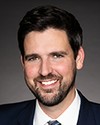
Sean Fraser Liberal Central Nova, NS
I'd like to clarify something.
The advisory board was constituted only after the application process closed. When we had the benefit of some of the work of the advisory board, which operated completely independently of our team, my office engaged in some consultation with attorneys general in the western and northern provinces as well as the chief justices of those jurisdictions from which an applicant would be eligible to be appointed. There was engagement at a level other than a national level with specific focus on the western and northern regions. That was not to generate applications but to get feedback on some of the potential appointees.
Bloc
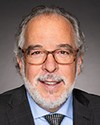
Rhéal Fortin Bloc Rivière-du-Nord, QC
When you say that it was to get feedback, does that mean that you submitted names and asked for a reaction, or rather that you asked the provinces to give you suggestions? What was your process?
Liberal
Sean Fraser Liberal Central Nova, NS
I've also left out the chief justice of the Supreme Court of Canada.
It was to understand if they had experience working with some of the individuals and if they had characteristics that would be important for a person who could be chosen. It was not with a view to have them come up with new names to go find people in the community but instead to ensure that the choice that we're going to be making would be informed by the characteristics that those other players in the consultation process expressed. My recommendation, independent of the advisory board, would have gone to the Prime Minister, and he would have the benefit of the duality of that process.
Commissioner, Office of the Commissioner for Federal Judicial Affairs
If I may, Mr. Fortin and Madam Chair, I would simply add that, at the beginning of the process, there is a long list of organizations that are involved in awareness raising and in the consultations that are held to encourage applications and generate interest.
Bloc
Rhéal Fortin Bloc Rivière-du-Nord, QC
Thank you, Mr. Giroux. I apologize for rushing you, but, like earlier, we are in a time crunch. I have just over a minute left.
Minister, did some provinces or governments object to certain candidates, or were all the candidates suitable from the outset?
Liberal
Sean Fraser Liberal Central Nova, NS
I'm not aware of any objections to specific applications. Not every one of these conversations was with me personally. However, based on my review of the materials and the conversations I did have, there was no suggestion that there was one candidate who should not be named. The conversations, frankly, more often revolved around the characteristics that would make a good appointee rather than people ranking their choices as one might normally when—
Bloc
Rhéal Fortin Bloc Rivière-du-Nord, QC
If I understand correctly, you did not ask to be sent a list of characteristics or names. That is not something that was done.
Liberal

The Chair Liberal Iqra Khalid
Mr. Fortin, that concludes your time, unfortunately, but we'll come back to the same line of questioning.
Thank you.
Bloc
Rhéal Fortin Bloc Rivière-du-Nord, QC
It's always put off until the next time. I'm used to it, Minister.
Thank you.
Liberal
The Chair Liberal Iqra Khalid
Thank you.
We'll move on to our second round of questions.
We'll start off with Mr. Baber for five minutes.
Please go ahead.
Conservative

Roman Baber Conservative York Centre, ON
Good morning, Attorney General. I welcome the opportunity to discuss judicial appointments. Are you familiar with the appointment of Justice Mathieu Piché-Messier to the Superior Court of Quebec, yes or no?
Liberal
Sean Fraser Liberal Central Nova, NS
Do I remember when the appointment was made? Not off the top of my head.
Conservative
Roman Baber Conservative York Centre, ON
Justice Piché-Messier was a repeat donor to the Liberal Party of Canada. His last donation of $1,250 was in spring 2024, and he was appointed to the bench in the fall of 2024. Do you believe that is appropriate, yes or no?
Liberal
Sean Fraser Liberal Central Nova, NS
I believe that it should not influence one way or the other someone's appointment to the bench. Since I've held this position, there have been a number of appointments where appointees have been involved with different political parties. I don't think the fact that someone has made a donation to one particular political party should serve as either an obligation or something that bars someone from being appointed.
Conservative
Roman Baber Conservative York Centre, ON
In fact, four judges, or 20% of all judges appointed in 2024 to the Superior Court of Quebec, donated either to the Liberal Party of Canada or to an electoral district association of the Liberal Party. Does that not concern you?
Liberal
Sean Fraser Liberal Central Nova, NS
If the allegation were proven that we were making appointments on the basis of people's making donations, that would be concerning. As I've mentioned, there are judges who have been engaged with various different parties and who've made donations to different parties at different levels. That is not something I seek information about before making appointments.
Conservative
Roman Baber Conservative York Centre, ON
Attorney General, judges appointed to the bench must be above reproach. That means they must be devoid of any apprehension of bias. A donation to a political party is reflective of one's political ideology; therefore, it gives rise to an apprehension of bias. Lady Justice wears a blindfold for a reason. She doesn't favour red or blue.
Will you commit to not name any past Liberal donors to the bench during your remaining time as attorney general?
Liberal
Sean Fraser Liberal Central Nova, NS
Look, it's essential that people are able to operate independently, but I think it's important that we don't exclude people from opportunities to serve Canada just because they've engaged in our political process. With respect to Chief Justice Joyal, I believe he was appointed initially by a Progressive Conservative government at the provincial level. I think casting aspersions upon appointees on the basis of their participation in our democracy may well violate their opportunity to take part in that democracy, including their freedom of speech. More broadly, I would commit to not appointing people because they have made those donations. However, I'm certainly not going to commit today to excluding people on the basis that they've made a donation to the party to which I belong or, for that matter, to a party of a different affiliation.
Conservative
Roman Baber Conservative York Centre, ON
The justice minister has significant influence over every judicial advisory committee. You appoint the three public members, and you also select one out of the three choices given to you. At the same time, the judicial application form includes a question requiring applicants to express their views on the role of judges in a constitutional democracy. I actually believe that the previous version was about the role of judges in society. This is a leading question, Attorney General, that inevitably favours candidates with progressive leanings.
Is it appropriate for the attorney general to make judicial appointments based on political leanings?
Liberal
Sean Fraser Liberal Central Nova, NS
Let's not divorce this from the current facts. We are nominating a superior candidate who cannot be stuck neatly into a corner based on an affiliation with one party or another. What's important to me is understanding the character of the person. Do they have integrity? Do they have an understanding of the law and experience in the law? Do they understand the role that the courts ought to play within a country like Canada?
When I see criticisms of a reference to constitutional democracy.... I don't know how that suddenly makes someone a partisan hack. My view is that someone, whatever their opinion is, having thoughtfully engaged on the philosophy behind how courts can engage in our democracy is actually a very healthy part of the exercise that informs appointments that we can make.
Conservative
Roman Baber Conservative York Centre, ON
Minister, my comment was not with respect to the appointment before this committee but to the question asked generally. The question is this: What is the role of judges in society? I submit to you respectfully that it is not uncommon for governments to seek candidates that reflect their political ideology. That would be a question that could be derived and, in fact, allude to one's political ideology. I'm wondering if you think that's appropriate.
Liberal
Sean Fraser Liberal Central Nova, NS
I'm sorry; I don't share your concern, frankly, that a judge being able to discuss their role either in a constitutional democracy or in society more broadly is somehow leading to the appointment of judges who favour one political party over another.
With respect, you said that your question is not really pertinent to the conversation about the appointment of Chief Justice Joyal to the Supreme Court. That is why we are here. I question the relevance of your question if you're not able to stick to the very purpose for which this committee has gathered.
In any event, I don't share your concern. I believe that ministers of justice and governments of different partisan affiliations are able to consider a person's perspective before their appointment as to the role of courts and judges in society or a constitutional democracy.