
Evidence of meeting #4 for National Defence in the 45th Parliament, 1st session. (The original version is on Parliament’s site, as are the minutes.) The winning word was ombudsperson.

A recording is available from Parliament.

On the agenda

Members speaking

Before the committee

Baril  Ombudsman, National Defence and Canadian Armed Forces Ombudsman
Hynes  Director General, Operations, National Defence and Canadian Armed Forces Ombudsman

4:10 p.m.

Ombudsman, National Defence and Canadian Armed Forces Ombudsman

Mario Baril

No, not necessarily. That’s why, as soon as I took office, I thought about international standards of practice relating to, among other things, openness, transparency and accessibility. In fact, according to the Venice Principles, to which I refer, one of the aspects that must be measured is accessibility to the ombudsperson, free of charge, without cost or barriers.

That being said, our office still receives a very large number of people who come to us with their concerns. Last year, more than 2,500 people contacted our office for all kinds of reasons. Based on this information, our team can determine whether a trend in a certain direction warrants investigation.

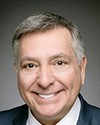
Simon-Pierre Savard-Tremblay Bloc Saint-Hyacinthe—Bagot—Acton, QC

What are your powers, in the aftermath? Do you have the power to compel individuals to testify?

4:10 p.m.

Ombudsman, National Defence and Canadian Armed Forces Ombudsman

Mario Baril

The directive is very clear: Any document that is necessary for the ombudsperson’s office investigations must be provided within a reasonable time frame. Without this, we would not be able to do our job properly. The directive is very clear in this regard.

Simon-Pierre Savard-Tremblay Bloc Saint-Hyacinthe—Bagot—Acton, QC

I assume that an oral report can be considered like a document.

4:10 p.m.

Ombudsman, National Defence and Canadian Armed Forces Ombudsman

Mario Baril

We interview people who are responsible for policies or guidelines, and yes, investigators have the authority to conduct interviews.

Simon-Pierre Savard-Tremblay Bloc Saint-Hyacinthe—Bagot—Acton, QC

Are the current powers sufficient?

4:10 p.m.

Ombudsman, National Defence and Canadian Armed Forces Ombudsman

Mario Baril

Personally, I don’t see a problem.

Robyn, what do you think?

4:10 p.m.

Director General, Operations, National Defence and Canadian Armed Forces Ombudsman

Robyn Hynes

There have been a couple of circumstances in the past where we have requested information or we have requested to talk to somebody specific about an investigation we were doing, and we faced push-back. Generally speaking, when that happens, we provide the ministerial directives or we go up the chain of command a little bit further, and we tend to get co-operation.

Simon-Pierre Savard-Tremblay Bloc Saint-Hyacinthe—Bagot—Acton, QC

What consequences would someone face if they refused to comply?

4:10 p.m.

Ombudsman, National Defence and Canadian Armed Forces Ombudsman

Mario Baril

Penalties are provided for in the directive. Everything is covered.

Simon-Pierre Savard-Tremblay Bloc Saint-Hyacinthe—Bagot—Acton, QC

Thank you.

How much time do I have left, Mr. Chair?

The Chair Liberal Charles Sousa

That's it. I'm going over to Mr. Kibble.

Simon-Pierre Savard-Tremblay Bloc Saint-Hyacinthe—Bagot—Acton, QC

I shouldn’t have asked you that question.

Jeff Kibble Conservative Cowichan—Malahat—Langford, BC

Thank you to the panel.

Congratulations, Mr. Baril, on taking this important role. I agree with your comment that your office is an important barometer. I thank you for the excellent work you've done in the past and going forward. My questions are taken from that framework.

First, there were 2,500-plus requests to your office in 2024-25. What is the most prevalent type of request?

4:10 p.m.

Ombudsman, National Defence and Canadian Armed Forces Ombudsman

Mario Baril

They're segmented into five different categories. If I'm not mistaken, the one ranked first is related to benefits that are available to the Canadian Armed Forces. If they do feel that there are any barriers, there's going to be either an individual or a systemic investigation into those matters.

This one has been ranked number one for many years.

4:10 p.m.

Conservative

Jeff Kibble Conservative Cowichan—Malahat—Langford, BC

That is for the largest number of calls. What is number two?

4:10 p.m.

Director General, Operations, National Defence and Canadian Armed Forces Ombudsman

Robyn Hynes

The top five stay the same year over year. They sometimes switch order—other than benefits, which is always number one. The other categories in the top five tend to be release, medical, harassment and recruitment. Like I said, it depends on the year. They may change places, with the exception of benefits.

4:10 p.m.

Conservative

Jeff Kibble Conservative Cowichan—Malahat—Langford, BC

Thank you. That's a good barometer, to use the term again.

You mentioned benefits. The recently announced pay increase has an uneven distribution, between 20% and 8%, depending on rank level. Have you received comments or complaints on that? I'm going to assume yes, based on its being the number one topic.

4:10 p.m.

Ombudsman, National Defence and Canadian Armed Forces Ombudsman

Mario Baril

I've asked this question—if we received any calls or not—just to be able to monitor this in terms of compensation. We have not at this stage.

The benefits would be related to other areas by which Canadian Armed Forces members are affected, but it's not compensation at this stage, if I'm not mistaken.

Robyn.

4:15 p.m.

Director General, Operations, National Defence and Canadian Armed Forces Ombudsman

Robyn Hynes

It's early for us to have received any complaints on the new compensation and benefits package just yet. This is just because, generally speaking, if people have concerns, they will raise it first through their chain of command.

We haven't received formal complaints on this yet. Generally speaking, what we have heard through the engagements we've had is that, overall, the benefits package has been well received, although I understand that there are a couple of places I expect we may hear more from in the coming months.

4:15 p.m.

Conservative

Jeff Kibble Conservative Cowichan—Malahat—Langford, BC

Thank you for that.

I'm going to move on to a slightly different topic.

As a veteran, I'm very well aware of the mental health challenges faced. Have you heard or are you aware of resiliency training that's done to prepare members' mental health in advance of deployment to help mitigate challenges?

4:15 p.m.

Ombudsman, National Defence and Canadian Armed Forces Ombudsman

Mario Baril

I'll pass that over to you, Robyn.

4:15 p.m.

Director General, Operations, National Defence and Canadian Armed Forces Ombudsman

Robyn Hynes

I understand that the surgeon general and the health services group have developed several tools for before and after people are deployed on both domestic and international deployments and operations.

Our office has been monitoring this pretty closely over the past few years. Specifically, Mr. Bezan raised the report we did last year, which was focused on mental health for reserve force members on domestic operations. We're keeping a close eye on things to see what the impacts of these initiatives will be.

4:15 p.m.

Conservative

Jeff Kibble Conservative Cowichan—Malahat—Langford, BC

Thank you.

To confirm, it is happening for predeployment, and you're monitoring but there are no results yet. Is that fair to say?

4:15 p.m.

Director General, Operations, National Defence and Canadian Armed Forces Ombudsman

Robyn Hynes

There has been predeployment training for international operations; that's existed for quite some time. There has been some for post-deployment, but yes, we're keeping an eye on what that's going to look like in terms of some of the changes that they've made over the past few years to update what that training looks like.