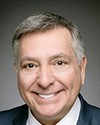
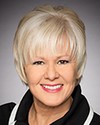
Evidence of meeting #4 for National Defence in the 45th Parliament, 1st session. (The original version is on Parliament’s site, as are the minutes.) The winning word was ombudsperson.

A recording is available from Parliament.

On the agenda

Members speaking

Before the committee

Baril  Ombudsman, National Defence and Canadian Armed Forces Ombudsman
Hynes  Director General, Operations, National Defence and Canadian Armed Forces Ombudsman

Simon-Pierre Savard-Tremblay Bloc Saint-Hyacinthe—Bagot—Acton, QC

Very well.

In addition, our committee has agreed to conduct a study on the issue of recruitment and retention. This will undoubtedly involve the treatment of francophones and indigenous people. You may be invited to return here to discuss this with us, but I would like you to tell us one thing. Do a significant number of your audits focus on the treatment of francophones and indigenous people, whether these audits are conducted in response to complaints or on your own initiative?

4:25 p.m.

Director General, Operations, National Defence and Canadian Armed Forces Ombudsman

Robyn Hynes

With almost every investigation that we do, we do see complaints from people who are unable to access benefits and services in their first language, whether that is French or English, depending on the area they are in.

We don't get a lot of complaints from the indigenous population in terms of the traditional way we receive complaints, which is through our 1-800 line. A lot of the time when we are working with indigenous communities—we deal mostly with them in the Rangers, to be honest—we get them when we visit. We really hear the concerns coming from that area when we are on the ground. It is going to be part of our travel plan with the new ombudsman.

The Chair Liberal Charles Sousa

Thank you, Mr. Savard-Tremblay.

Cheryl Gallant, you have five minutes.

4:25 p.m.

Conservative

Cheryl Gallant Conservative Algonquin—Renfrew—Pembroke, ON

Thank you.

Congratulations to you, first of all, for taking on this important role.

It may be that it's too early to receive feedback on that compensation program because, despite being promised for April 1, they still haven't received their raises.

How did your predecessor, Mr. Gregory Lick, convey to you, upon taking the position, the biggest challenge that your office must overcome when overseeing DND and CAF?

4:25 p.m.

Ombudsman, National Defence and Canadian Armed Forces Ombudsman

Mario Baril

Thank you for the question.

I did meet with Greg a month or a month and a half ago. We spoke generally about the office, and he didn't have any concerns about how we're set up or how we are responding to the mandate. It was more about sharing his own experience, but there was nothing related to specific challenges that he would have shared with me.

4:25 p.m.

Conservative

Cheryl Gallant Conservative Algonquin—Renfrew—Pembroke, ON

In Mr. Lick's previous appearance at this committee, he repeatedly advocated for the ombudsman's office to act separately from DND and CAF.

Would this still be your initiative now that you are the ombudsman?

4:25 p.m.

Ombudsman, National Defence and Canadian Armed Forces Ombudsman

Mario Baril

I'm sorry; can you repeat that question?

4:25 p.m.

Conservative

Cheryl Gallant Conservative Algonquin—Renfrew—Pembroke, ON

Mr. Lick wanted the ombudsman's office to act separately from DND and CAF. Would that be your initiative as ombudsman?

I noted a nod from the ombudsman.

Since taking office as ombudsman, have you seen any actions from DND or CAF that might influence or impair your office from carrying out its mission?

4:30 p.m.

Ombudsman, National Defence and Canadian Armed Forces Ombudsman

Mario Baril

Not at all.

4:30 p.m.

Conservative

Cheryl Gallant Conservative Algonquin—Renfrew—Pembroke, ON

Okay.

Has Mr. Lick conveyed to you any attempts from DND or CAF that might impair your office's function, and how did he advise you to ensure the office's integrity?

4:30 p.m.

Ombudsman, National Defence and Canadian Armed Forces Ombudsman

Mario Baril

I didn't ask him any questions related to this. I did share my thoughts based on my own experience, because in his case he had probably started five or six years ago and I started seven years ago. In terms of the challenges, he never actually expressed concerns directly to me with regard to independence.

4:30 p.m.

Conservative

Cheryl Gallant Conservative Algonquin—Renfrew—Pembroke, ON

As ombudsman, what would you like to see rectified at DND and CAF in regard to the issue of the backlog of ATIP requests, first, and then the issue of the backlog of grievances filed by the members of CAF?

4:30 p.m.

Ombudsman, National Defence and Canadian Armed Forces Ombudsman

Mario Baril

I would certainly appreciate it if the department would look at how they could address this. What I hear from various people is that it's not specific to DND, as there are other departments that have the same types of challenges. It may be worth looking into a long-term solution to address these concerns. At the end of the day, it is about the legislation, and the legislation does provide some very precise timelines as to when to respond to these requests.

4:30 p.m.

Conservative

Cheryl Gallant Conservative Algonquin—Renfrew—Pembroke, ON

In 2015, the previous government launched Operation Honour to address sexual misconduct and harassment in our military. Former Supreme Court justice Marie Deschamps released 10 recommendations for CAF to fulfill. A decade later, many of those 10 recommendations have maybe not been fulfilled.

How many have been completed?

4:30 p.m.

Director General, Operations, National Defence and Canadian Armed Forces Ombudsman

Robyn Hynes

I'm not sure how many of the 10 recommendations have been implemented. I expect the SMSRC, when they're here later, will be able to answer this question. We can also put the question to the department later.

4:30 p.m.

Conservative

Cheryl Gallant Conservative Algonquin—Renfrew—Pembroke, ON

Is it the same thing for the 48 recommendations from Justice Louise Arbour's report?

4:30 p.m.

Director General, Operations, National Defence and Canadian Armed Forces Ombudsman

Robyn Hynes

It's my understanding that they are reporting on these on a cyclical basis online.

4:30 p.m.

Conservative

Cheryl Gallant Conservative Algonquin—Renfrew—Pembroke, ON

How did Mr. Lick view the decision to fold the Canadian Coast Guard into the Department of National Defence?

4:30 p.m.

Ombudsman, National Defence and Canadian Armed Forces Ombudsman

Mario Baril

I did ask him this question because of his background and knowledge, and he knew about the organization. He also thought it was a very positive thing.

4:30 p.m.

Conservative

Cheryl Gallant Conservative Algonquin—Renfrew—Pembroke, ON

What did he advise you when the government made the decision to include the Coast Guard's expenditures in our defence budget as a means to reach our previous NATO commitment of 2% of GDP?

4:30 p.m.

Ombudsman, National Defence and Canadian Armed Forces Ombudsman

Mario Baril

We haven't discussed this point specifically.

The Chair Liberal Charles Sousa

We'll go over to you, Mr. Watchorn. You have five minutes.

Tim Watchorn Liberal Les Pays-d'en-Haut, QC

Good afternoon.

I would like to thank you both for being here today and for the good work you do for the members of the Canadian Armed Forces. Your service is essential to their well-being.

Mr. Baril, I have heard you speak several times about what are known as the Venice Principles. Could you list them for us and explain how these principles help make your work more effective?

4:30 p.m.

Ombudsman, National Defence and Canadian Armed Forces Ombudsman

Mario Baril

Thank you for your question.

The Venice Principles include 20 or 25 criteria that provide a specific method of assessing whether each existing ombudsperson office complies with the principles of independence, impartiality, autonomy, ability to deliver its mandate without interference, and so on.

These principles relate in particular to accessibility to services. They also aim to verify that an ombudsperson has full autonomy and authority in terms of their needs and budget, as well as to determine their budget and needs, which is another extremely important criterion. They also cover the process of appointing the ombudsperson, including the selection of individuals to serve on the selection committee responsible for this appointment and the appropriateness of this process.

They also deal with everything related to autonomy in governance. There are parliamentary ombudsperson offices across Canada, including one in each province. These offices are completely independent. Each office is able to determine its own mandate and needs. It also reports directly to the legislature.

If I had to summarize the Venice Principles in simple terms, I would say that they aim to ensure that every client of an ombudsperson’s office feels that, if they have access to services, those services will be provided to them completely independently. This prevents the creation of false barriers or false perceptions among the people to whom the ombudsperson reports. For example, it would be unfortunate if an ombudsperson were perceived as part of the bureaucracy, because this could result in the loss of extremely relevant information from a member who fears that the office is not fully impartial or independent.

Established by the European Commission for Democracy through Law, the Venice Principles set out very rigorous standards for the establishment of ombudsperson offices.

At this time, my office is working with an expert in the field of ombudsperson services to review potential candidates who are capable of conducting a proper review of my office, so that an appropriate recommendation can be made to the minister on how the office of the ombudsperson for national defence and the Canadian Armed Forces should be governed in the future. This could result in very significant changes for the office.


Tim Watchorn Liberal Les Pays-d'en-Haut, QC

Thank you very much for your answer.

Your comments shed a great deal of light on how you will be carrying out your work in the future.

For my part, I would like to discuss the French fact with you.

Quebec members of Parliament are very concerned that members of the Canadian Armed Forces be served in both official languages. The armed forces have been officially bilingual for 50 years.

Do francophones who wish to access the services of the office of the ombudsperson for national defence and the Canadian Armed Forces face systemic barriers?