Thank you, Minister.
Let me just read standard 16 for you: “Entry Level Training (Class 1)”. It's what drivers must be trained in, such as vehicle inspection and driving practices. At least you're aware now.
My next question is for Minister Hajdu—

Evidence of meeting #14 for Transport, Infrastructure and Communities in the 45th Parliament, 1st session. (The original version is on Parliament’s site, as are the minutes.) The winning word was misclassification.
A video is available from Parliament.
Conservative
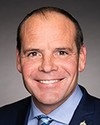
Chris Lewis Conservative Essex, ON
Thank you, Minister.
Let me just read standard 16 for you: “Entry Level Training (Class 1)”. It's what drivers must be trained in, such as vehicle inspection and driving practices. At least you're aware now.
My next question is for Minister Hajdu—
Liberal

Steven MacKinnon Liberal Gatineau, QC
Mr. Lewis, you would agree that driver certification is a provincial responsibility, surely.
Conservative
Chris Lewis Conservative Essex, ON
Well, I would suggest that because it's interprovincial...which is why my next question is for Minister Hajdu.
Liberal
Steven MacKinnon Liberal Gatineau, QC
Would you like us to federalize that issue? Has Mr. Sarkaria signed off on that?
Conservative
Chris Lewis Conservative Essex, ON
By the way, I've heard you speak about Highway 11/17. I know that area very well. I spend a lot of time up in that area.
Minister, we had some testimony a couple of weeks back from Johanne Couture, executive director of the Women's Trucking Federation of Canada,. She testified before committee that she didn't feel safe and she didn't want to use route 11/17.
In light of this testimony and similar concerns raised by other women who appeared before this committee, do you have a response that you would like to share with Ms. Couture and the women who expressed fear for their safety on these routes?
Liberal

Patty Hajdu Liberal Thunder Bay—Superior North, ON
Well, I would echo that fear. I'm driving down that road this weekend for an event in my very large riding. I will tell you that I'm very glad there's no snow on the road. There are times when, as a member of Parliament, I actually cancel visits to small communities in my riding, because the only route in is 11/17. Portions of that road are extremely treacherous.
Now, the good news is that Ontario and Canada have invested in widening the road and increasing lanes. In those parts, the safety obviously has increased, but that work has to continue. I would suggest that the federal government can be a strong partner in those infrastructure priorities that provinces are setting, not just for safety, obviously, which I think should be our primary concern, but also for the economy of our country. You will know, having travelled those roads, that actually there are ports to them. If that shuts down, it shuts down the trade for the entire country.
Liberal
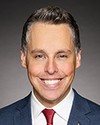
The Chair Liberal Peter Schiefke
Thank you, Minister Hajdu. I just want to make sure I give the final slot to Mr. Kelloway.
Mr. Kelloway, the floor is yours. You have five minutes.
Liberal

Mike Kelloway Liberal Sydney—Glace Bay, NS
Thank you, Mr. Chair.
Thanks to the ministers and to everyone here today.
This study has been pretty illuminating on many different fronts. As you stated, it's a very serious study that fundamentally focuses on safety.
You talked about the weaponization of certain things. I think we need to get back to the basics of this meeting and its focus, which is the safety and security of Canadians and what the government is doing. Clearly, the government has been focused on this.
Let's talk about some facts for a second. If we really want to talk about facts, it was the Harper government that cut transport, security and safety, aviation, safe transportation of goods and the Motor Vehicle Safety Act. If only we could go back and change that...but we can't, so here we are discussing what we're going to do to rectify this situation.
Minister Hajdu, regarding the announcement made last night and into today—for people at home, in particular—can you break down, in layman's terms, what this means in terms of our efforts and funding? What is it going to do in terms of playing a role in those two things—keeping people safe and secure?
Liberal
Patty Hajdu Liberal Thunder Bay—Superior North, ON
Today we're talking about misclassification, which, at the end of the day, is about fraud. That's why it's illegal. It's about defrauding workers who, in some cases, are promised a rate of pay and a return on all their hard work that never comes to pass. We've recovered wages for people who have been defrauded of those wages. Often, they are the most vulnerable people in the workforce.
I can tell you that, having known a number of people in the trucking industry, these are very hard jobs. Hopefully, everyone in this room knows someone who's either worked in the industry or is working in the industry. These are really long hours, really gruelling experiences and a long time away from home. That's partly why we have such a hard time recruiting people into these jobs, quite frankly. There's huge personal sacrifice in doing this kind of work—trucking goods across the country, sleeping in your truck and eating on the road. There are tons of studies on health and outcomes for drivers that, from my previous job, I can tell you are serious.
You asked me to break it down in two ways.
One, we are strengthening the ability to talk to each other, whether it's provinces or federal departments, so we can root out the bad actors and protect companies that are doing the right thing by their workers and following safety standards. How many hours do you need to sleep? Are your logs kept? It's these kinds of things, so we can then ensure workers are getting the right sleep and only working the number of hours they're entitled to work. Each province has somewhat different rules around that, but we need to be able to talk to each other to make sure that is what's happening.
Two, we're going to increase those monetary penalties so that bad actors really feel the sting. That work is starting immediately. It's a process. Obviously, these are regulations. They go through a series of consultations. The ultimate goal is to make sure we send an even stronger message to the cheaters out there that we're going to find them and protect the good actors. We're going to protect the industry and those very vulnerable workers who deserve to work in safe environments. A legitimate trucking company that's being run properly, in accordance with the law, guards the safety of the worker, which ultimately guards the safety of everybody else on the road.
October 30th, 2025 / 9:15 a.m.
Liberal
Mike Kelloway Liberal Sydney—Glace Bay, NS
Thank you.
Minister MacKinnon, I talked about this in the last session we had. Clearly, we have challenges. We have problems. We're talking about them here. With Prime Minister Carney's focus on major projects, we're going to have more development and traffic on the roads.
In the time we have, what do you think are core tenets in terms of federal responsibilities for transport under that safety and security aspect, as compared to, say, the provinces?
Liberal
Steven MacKinnon Liberal Gatineau, QC
That's a great question.
The first priority is, and will always remain, safety in all modes—air safety, rail safety, highway safety and marine safety. This is the first and most solemn responsibility of any regulator and any minister of transport. Every fatality or injury suffered in the transportation world is a tragedy. It's a tragedy that we share and that we all bear as a society, and we all try to do better. That's why we have agencies that look after these things.
I find weaponizing these things and capitalizing on people's grief to try to attribute blame and score political points particularly unhelpful, when a lot of good people wake up every day, put on their boots, go to work and try to make the roads safer for Canadians.
Liberal
The Chair Liberal Peter Schiefke
Thank you very much, Mr. Kelloway.
Thank you, Minister.
On behalf of all of the members of this committee, I want to thank our ministers for appearing before us early this morning, as well as the department officials who joined them. I wish you all a wonderful day.
Colleagues, we're going to suspend for a couple minutes to allow the clerk to prepare for our next round of witnesses.
I'll end off, before I suspend, by saying, “Go, Jays, go!"
Liberal
The Chair Liberal Peter Schiefke
I call this meeting back to order.
Colleagues, I'd like to now welcome our next set of witnesses for today.
From the Department of Employment and Social Development, we have Sandra Hassan, deputy minister of labour and associate deputy minister of employment and social development; Gary Robertson, senior assistant deputy minister; Brenda Baxter, assistant deputy minister; and Michael MacPhee, assistant deputy minister, temporary foreign workers program.
From the Department of Transport, we have Melanie Vanstone, director general, multi-modal and road safety programs.
Thank you, once again, for appearing before us today. We begin our line of questioning for this second round with Ms. Cody.
Ms. Cody, the floor is yours. You have six minutes, please.
Conservative

Connie Cody Conservative Cambridge, ON
Thank you, Mr. Chair.
As we've all heard, trucking is the wheels of our nation that keep us moving.
I come from the riding of Cambridge. We have very many reputable carriers as well as many concerns that I'd like to address today.
My questions are going to be for Melanie Vanstone. Thank you for coming here today.
We're hearing about inexperienced drivers, who are often new to Canada. They're being sent on long-haul interprovincial routes in winter driving conditions without adequate training or the equipment required to operate safely, such as tire chains, winter tires and emergency gear. Many lack the practical knowledge to handle snow, ice and extreme cold, and are unfamiliar with how to use winter equipment effectively.
These concerns point to gaps in training standards and oversight, particularly in fast-tracked licensing programs. What risk does this pose to public safety and to experienced carriers sharing the road? Do you support an extra-provincial framework for commercial driver training, particularly to address fast-tracked licensing programs in unregulated training centres linked to the Driver Inc. model?
Melanie Vanstone Director General, Multi-Modal and Road Safety Programs, Department of Transport
First of all, as we've heard today, driver licensing and training is an area that falls under provincial jurisdiction. We don't have any authorities at the federal level to mandate programs related to driver training.
I'm happy to say—and just to inform the committee—that I am the board member for the federal government at the Canadian Council of Motor Transport Administrators. I work very closely with my federal-provincial colleagues there to update and maintain the national safety code, which includes NSC standard 16, which is the mandatory entry-level training for drivers, which is the latest addition to the safety code, a very important addition.
We work there to continue to share information, share best practices and promote continuous improvement in all aspects of trucking safety.
Conservative
Connie Cody Conservative Cambridge, ON
Could I ask you about the reputable carriers who are facing unfair competition from Driver Inc.-style operations that avoid the taxes, skip the inspections and undercut safety standards? These practices distort the market and undermine legitimate businesses.
What is the economic impact of these unregulated operations on responsible carriers, particularly those operating on interprovincial trade routes? Would you support stronger federal enforcement, like regulatory reform, in your department, to crack down on the shadow economy created by Driver Inc.-style models and restore the fairness in our industry?
Director General, Multi-Modal and Road Safety Programs, Department of Transport
With respect to fraud in the transportation industry, obviously as a safety regulator, we take any non-compliance with rules and regulations very seriously.
From a safety perspective, we are concerned about companies, so-called chameleon carriers, who may be trying to move from province to province to avoid sanctioning. We are discussing and working toward trying to close any loopholes that would allow that, through working with provinces and territories.
Enforcement of federal regulations—as well as, of course, provincial regulations—for local trucking is carried out by provinces and territories.
Conservative
Connie Cody Conservative Cambridge, ON
I thank you for that, but, as we've noticed, there are, especially on Highway 11/17.... They are actually two roads that go to Highway 1, which runs the truck drivers from coast to coast. I think we need to work a lot more closely with our provincial partners, especially when it comes to the insurance factors.
Legitimate carriers are facing rising insurance costs, partly due to high-risk drivers insured through facility insurance, often linked to Driver Inc.-style operations.
How are responsible operators being impacted by the system, especially when accidents occur on federally significant routes like Highway 11/17? What federal measures could help ensure that insurance schemes don't unfairly penalize responsible carriers due to the actions of unqualified or unvetted drivers?
Director General, Multi-Modal and Road Safety Programs, Department of Transport
I would just note that insurance is also an area that falls under provincial and territorial jurisdiction, as well as the maintenance of highway infrastructure.
Conservative
Connie Cody Conservative Cambridge, ON
Thank you, but insurance is impacting negatively on the trucking companies that are federal-related.
Highway 11/17 is part of the Trans-Canada Highway system and serves as vital interprovincial trade corridors. Many are calling this route a death trap.
Do you believe the federal government has adequately fulfilled its responsibility to ensure these national trade routes meet basic safety and infrastructure standards, such as passing lanes, regulated rest stops and safe off-road parking? What specific federal actions would you recommend to improve safety and reliability on these interprovincial corridors?
Director General, Multi-Modal and Road Safety Programs, Department of Transport
Obviously, safety is a tremendous priority, and something that is very important to us at Transport Canada. We do not have direct authority, or responsibility, with respect to the maintenance of highways and highway infrastructure.
I do understand, though, that this is something our minister has discussed and will continue to discuss with his counterparts, the ministers of transportation at the provincial level.
Conservative
Connie Cody Conservative Cambridge, ON
Trucks don't just stay in one province. They go across our country. If it's a security and safety priority, the federal government should be involved and work with our provincial partners.
We have heard of trucks sold in Ontario receiving Manitoba plates and safety certificates without ever being inspected in that province. What does this say about the integrity of our interprovincial licensing and inspection system?
Do you support a federal framework to close licensing loopholes and ensure commercial vehicle certifications are traceable and legitimate, especially in cases tied to Driver Inc.-style operations?