I call this meeting back to order.
Mr. Lauzon, you have the floor.

Evidence of meeting #16 for Transport, Infrastructure and Communities in the 45th Parliament, 1st session. (The original version is on Parliament’s site, as are the minutes.) The winning word was lauzon.
A recording is available from Parliament.
Liberal
Liberal

Stéphane Lauzon Liberal Argenteuil—La Petite-Nation, QC
After some lengthy discussions, I think we have an agreement, Mr. Chair.
I'd like to ask for the committee's unanimous consent so that Xavier Barsalou‑Duval, of the Bloc Québécois, can amend his own motion with an amendment.
Liberal
Stéphane Lauzon Liberal Argenteuil—La Petite-Nation, QC
That's for the clerk and the chair, first of all. We have to ask for unanimous consent. We have to follow the rules first.
Liberal
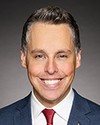
The Chair Liberal Peter Schiefke
I'm going to check the proper procedure. I think the motion currently under debate should be withdrawn first.
Liberal
Stéphane Lauzon Liberal Argenteuil—La Petite-Nation, QC
I think we can keep the motion currently being debated and ask for unanimous consent so that Mr. Barsalou‑Duval can amend his own motion.
Liberal
The Chair Liberal Peter Schiefke
Technically, colleagues, the way forward would be unanimous consent to withdraw the motion that's on the table; we would then have to reintroduce two separate motions. Regardless, we see very clearly that we do not have the unanimous consent of the Conservatives to pass this motion.
Unfortunately, we do not have unanimous consent to do so, Monsieur Lauzon.
Mr. Lauzon, you have the floor.
Liberal
Stéphane Lauzon Liberal Argenteuil—La Petite-Nation, QC
There was an attempt. I now have to decide whether I have to move the amendment so that we can move forward. I don't think that's a bad idea. I have always said that we need to move forward and meet with the witnesses and the bereaved families.
Mr. Chair, given that, according to procedure, a member can't move an amendment to their own motion, I'd like to move an amendment.
I propose to divide the motion into two parts. The part of the motion asking the government to provide documents to the committee can stay as it is so that we can return to it later.
I propose to amend the other part of the motion so that it reads as follows:
That the committee add two additional meetings of two hours each as part of the study of the changing landscape of truck drivers in Canada, so that in the first meeting, it can hear testimony from victims of heavy trucks in camera, if witnesses would prefer, and representatives of Justice for Truck Drivers, the Caledon Community Road Safety Advocacy Group (CCRSA), and The Joy Smith Foundation, and in the second meeting, testimony from representatives of 6S Trinity Transport, J+R Hall Trucking, Dan Express, Carmen Transportation, Ludwig Transport Limited, Ontario Trucking Association, BC Trucking Association, the Association des professionnels du dépannage du Québec, and Canada Post; and that drafting instructions to enable the development of a comprehensive report to the House of Commons be provided by the committee immediately after this testimony.
Conservative

Dan Albas Conservative Okanagan Lake West—South Kelowna, BC
I have a point of order. This is totally out of scope. Not only is it out of scope, such that it should be ruled out of order, but this is dealing with previous changes that they've already proposed and that the committee has dealt with conclusively.
Mr. Chair, on both the addition of a port study and the fact that they're continually raising.... There are two very good reasons you should rule this as out of order.
Liberal
The Chair Liberal Peter Schiefke
Thank you, Mr. Albas.
I'm just going to confer with the clerk to see whether these items have been previously introduced.
Liberal
The Chair Liberal Peter Schiefke
Colleagues, I've just conferred with the clerk. I'm going to rule that those are not in order, because either they've been previously introduced or they're outside the scope of the committee—what we're looking at right now.
Monsieur Lauzon, I'll let you continue, but based on my ruling, those are not within the scope.
Mr. Lauzon, you have the floor.
Liberal
Stéphane Lauzon Liberal Argenteuil—La Petite-Nation, QC
Thank you very much, Mr. Chair.
We tried. We tried to conclude this study by two means. First, we tried to obtain unanimous consent to give the Bloc Québécois member the right to amend his own motion through an amendment. The Conservatives refused. I then tried to move an amendment myself. That was refused.
Conservative
Liberal
November 25th, 2025 / 9:15 a.m.
Conservative
Dan Albas Conservative Okanagan Lake West—South Kelowna, BC
We've already dealt with this business, Mr. Chair. He has to start speaking to the motion with new material, so I would suggest that you, Mr. Chair, enforce the rules of this place.
Liberal
The Chair Liberal Peter Schiefke
Thank you very much, Mr. Albas.
I believe he is speaking to it, but I will remind all members to try to make reference, as much as possible, to the motion at hand that we're discussing.
Mr. Lauzon, you have the floor.
Liberal
Stéphane Lauzon Liberal Argenteuil—La Petite-Nation, QC
That was just an introduction, a preamble. Before the Bloc Québécois member came up with his wonderful idea of moving forward and hearing from witnesses, we were discussing the other part of the motion and the high costs for various departments should we adopt the motion. Before being interrupted, I was talking about the costs of sorting out the requested documents and verifying the information to protect the sensitive or confidential information they may contain. I was saying that it's hard to estimate how much this work would cost, but that it would be in the millions of dollars and take public servants hundreds of hours to accomplish.
If the motion is adopted, every document will have to be located, verified, analyzed and, in many cases, redacted. This means a decision will have to be made as to which documents can be disclosed publicly and which ones must remain confidential. However, opposition leaders often say they can't read and interpret the documents provided because they're redacted. We see this time and time again, but documents are redacted to protect those concerned, to protect their personal assets, their family or their business.
In short, a lot of energy would go into this request. Hundreds of public servants would have to be mobilized for this request, working thousands of man-hours and several weeks, making them unavailable for other tasks.
As I said earlier, I've worked as the Parliamentary Secretary to the Minister of Citizens' Services. This allowed me to see what frontline public servants do for the public. I participated in a Canada-wide study to improve Service Canada's citizen services. I held consultations across the country to produce a report and, today, I can speak for public servants when I say that the vast majority of them are very dedicated to their work, that they are conscientious, and that they already have a full work week. They have a lot to do to meet our needs and ensure road safety in all departments.
We know that it's not just a matter of public safety. This request will affect many departments. Apparently, this falls under the purview of provinces, but the federal government still has an important role to play when it comes to tax policy, administration and regulation. This means that if the motion is adopted, employees won't be able to do their regular tasks, and they're working on compliance programs. They are also working on implementing new measures announced in the budget, which the Conservatives and the Bloc Québécois rejected. In all, $77 million has been invested in relation to the “Driver Inc.” file. Officials are trying to update safety standards and establish new rules to catch the offenders cheating the system.
At the same time, highly sensitive personal and commercial information could be exposed, so you have to be very careful. We're talking about business non-compliance information. I am against this request, not because I want to protect non-compliant businesses, but because such disclosure could compromise investigations and be harmful to those being caught. Besides these workers' personal information, there's also the personal information of good workers who are not at fault and who work for good companies.
We don't know what the investigation strategy is. No one on this committee is an expert in this field. However, I'm convinced that disclosure of the requested information can compromise the investigations to find the offenders in the “Driver Inc.” file.
Without going in too much detail, there may also have been discussions with provinces and territories, so details on the work of traffic controllers may have been shared. We heard from a Quebec traffic controller, an extremely nice man, who invited me to one of his checkpoints. He even gave me a traffic controller badge as a souvenir. I learned a lot from him. I don't want to interfere with his work, obviously, but he told us that the federal and provincial governments would need to co-operate to improve the information-sharing process. We don't want to compromise the system or cause any harm to road traffic controllers, but the proposed request for information could affect communications between the federal, provincial and territorial governments, and undermine the current system.
You can either mobilize the staff for a bureaucratic exercise or mobilize them to ensure road safety. For us, the choice is simple. We choose road safety. We choose not to undermine the public service and to let public servants do their job instead of mobilizing them for an unnecessary bureaucratic exercise. Furthermore, I talked about the risk associated with disclosure for clients, but there's also a risk for the staff because of commercially sensitive information. The targeted communications involve people who have also had communications about Canada's ambitious plan to further develop its economy. However, the motion targets all correspondence, and that includes exchanges related to Canada's strategic plan for economic development and the plan for a better Canada. Therefore, asking for all existing documents can be harmful, given the details they may contain about how organizations operate.
During my Canada-wide tour, I realized that each department has specialized staff at many levels. Depending on their level, some public servants have a lot of responsibilities, as they make decisions concerning frontline workers. This motion would mean mobilizing these specialized employees to do some serious redaction to protect the integrity of the trucking ecosystem. However, we're not just talking about trucking, since we're asking for every document and correspondence since 2018. This means we'd be asking these specialists to put their regular work aside and protect the integrity of the system by redacting documents.
There's a risk of being sued if you ask for that. Disclosing information to the committee could be harmful to honest companies. These companies already feel a lot of pressure. They've said so. They already have to deal with the pressure associated with the Driver Inc. situation, which adds to the pressure brought on by other factors in the trucking ecosystem since 2011. Administration costs, for example, are increasing. Imagine, then, if a company had its information disclosed. It could hurt them, and that's not what the committee wants to do. If an honest company contacted public servants to give them examples of good behaviour, we wouldn't want their information to be made public. We don't want the names of collaborating companies to be made public.
Those who came before the committee did so to help us, so asking for all the information and correspondence since 2018 is unacceptable. We're asking for trade secrets. During my cross-country visits, I had the chance to listen to conversations between frontline workers. Obviously, I can't repeat what was said or divulge names or any specific information as it is very sensitive, but I heard some horror stories. We're talking about frontline workers. Imagine if correspondence containing confidential information were published, and I'm only talking about frontline workers. We're also asking for correspondence between departments, which could have a snowball effect on other departments.
Bloc
Bloc

Xavier Barsalou-Duval Bloc Pierre-Boucher—Les Patriotes—Verchères, QC
Until what time does the committee have staff available to help today?
Liberal
The Chair Liberal Peter Schiefke
We suspended the meeting for half an hour, so I think we'll have people available until 10:45.