
Evidence of meeting #18 for Transport, Infrastructure and Communities in the 45th Parliament, 1st session. (The original version is on Parliament’s site, as are the minutes.) The winning word was drivers.

A video is available from Parliament.

On the agenda

Members speaking

Before the committee

Horlings  Owner, 6S Trinity Transport Ltd.
Ludwig  Operations Manager, Ludwig Transport Limited
Hall  President, J&R Hall Transport Inc.
Breton  Chief Executive Officer, Association des professionnels du dépannage du Québec
Tarantini  President, Carmen Transportation Solutions Ltd.
Burstall  Vice-President, Association des professionnels du dépannage du Québec

Dominique O'Rourke Liberal Guelph, ON

Okay.

We will speak in French for a moment.

The witnesses are asking us to intervene in an area of provincial jurisdiction: training, law enforcement, increasing the hours of operation for weigh stations, inspections, data collection and oversight of driving schools.

How do you envision an optimal system that will respect provincial jurisdictions and not be too burdensome in terms of regulation, which concerns some members of this committee?

How do you envision a system that will react quickly? We’ve heard witnesses say that they would cease their activities in 2027 if the situation did not improve.

What is urgent? What needs to be done in the medium term?
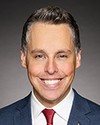
6:50 p.m.

Chief Executive Officer, Association des professionnels du dépannage du Québec

Réjean Breton

We believe that not only can people from the transport departments of Ontario, Quebec and across Canada come together, but so can those from all public safety ministries in the provinces and Canada, because public safety is the primary concern.

It is not only partners from the tax field who should be included in the national committee. Partners in public safety are also needed, as well as partners in the environmental sector. You can’t even imagine how many litres of diesel spilled along the roads in Canada have not been recovered following accidents involving a heavy vehicle driven by a Driver Inc. driver. This figure is exponential.

As mentioned earlier, when representatives from the Quebec or Canadian environment department intervene at a collision scene involving a heavy vehicle and find that the vehicle belongs to a company that subscribes to the Driver Inc. model, I believe they take the easier route. Yes, they warn the truck driver at the scene and read him his rights, for example, they tell him that he must recover the contaminants and call a decontamination company, but that’s it. A few days or a few weeks later, you can go to the scene and notice that there are small lakes of contaminants. It’s like this everywhere in Canada right now, and it’s very unfortunate.

Dominique O'Rourke Liberal Guelph, ON

Mr. Tarantini, do you want to weigh in on what you think an optimal system would be so that the federal government doesn't move into provincial jurisdictions, or become overly regulatory...in a way that we can move quickly? We're hearing that people's livelihoods are imminently at risk. What do you think the system should look like?

6:50 p.m.

President, Carmen Transportation Solutions Ltd.

Vince Tarantini

Very specifically, what area are you talking about? We're talking about a wide array of issues that we cover, from driver training to compliance. I even mentioned that some of the safety certifications Ontario has adopted through the DriveON program still have resistance within the industry. There's still some fraud going on with that.

We have fragmentation. We all have vehicles crossing jurisdictions. We're expected to comply in multiple jurisdictions. The geography across Canada is vast. It's not the same in B.C. as it is in Saskatchewan or Quebec and so on and so forth. There has to be an alignment. Agencies have to work together on all matters.

There was testimony earlier about Driver Inc. being a bad branch. It's actually in the roots. Driver Inc. is a gateway to some of the other practices we're talking about. It has to be aligned provincially and nationally.

Dominique O'Rourke Liberal Guelph, ON

What is the Insurance Bureau of Canada's position on facility for commercial vehicles? Are they at the table? I used to work in insurance. I'm quite stunned that they're not thinking of their broader risk exposure.

6:50 p.m.

Chief Executive Officer, Association des professionnels du dépannage du Québec

Réjean Breton

I mentioned the Insurance Bureau of Canada earlier. I think we could reach out to them to suggest some solutions.

Will it be with the automobile insurers’ group from the respective provinces? Maybe it would be, but the Insurance Bureau of Canada certainly has the tools to help us.

If all the stakeholders are acting in good faith, we’ll eventually find solutions to address this phenomenon, which causes fiscal and economic issues, undermines fair competition and, above all, has consequences on human lives, and this happens every day in Canada.

The Chair Liberal Peter Schiefke

Thank you, Ms. O'Rourke.

Thank you very much, Mr. Breton.

Thanks to you as well, Mr. Tarantini and Mr. Burstall. Thanks to all of you for your time here today and for sharing your expertise and your testimony with us in this important study.

Before we adjourn for the day, colleagues, there was some housekeeping that we had to take care of that we couldn't get to at the last meeting: setting a deadline for the submission of witnesses for the port study. I've just conferred with a couple of you, and it looks as though next Friday, February 6, is the date that works for everyone. Do I have consent for that?

Some hon. members

Agreed.

The Chair Liberal Peter Schiefke

Fantastic. Thank you, everyone.

Have a wonderful evening.

The meeting is adjourned.