Evidence of meeting #19 for Transport, Infrastructure and Communities in the 45th Parliament, 1st session. (The original version is on Parliament’s site, as are the minutes.) The winning word was enforcement.

A recording is available from Parliament.

On the agenda

Members speaking

Before the committee

Harper  President, Alberta Motor Transport Association
McAusland  President and Chief Executive Officer, Canadian Council of Motor Transport Administrators
Earle  President and Chief Executive Officer, British Columbia Trucking Association
Bylsma  Chairman, Ontario Trucking Association
Wood  Senior Vice-President, Policy, Ontario Trucking Association

12:45 p.m.

Senior Vice-President, Policy, Ontario Trucking Association

Geoffrey Wood

Again, federally, support the ministers responsible for transportation and highway safety and all of the programs that are under their purview, namely CCMTA. That support needs to be there. The boots on the ground enforcement needs to be there. An overhaul of the training needs to be there, with particular emphasis on the real-time availability of all of the data points that are in the national safety code, including insurance, which is critical.

12:45 p.m.

Conservative

Jason Groleau Conservative Beauce, QC

Thank you very much.

The Chair Liberal Peter Schiefke

Thank you, Mr. Groleau.

Finally, for today, we'll go to Mr. Grant.

Mr. Grant, the floor is yours, sir. You have five minutes, please.

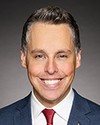
Wade Grant Liberal Vancouver Quadra, BC

Thank you, Mr. Chair.

Thank you to the witnesses.

It's rare that we have 33% of MPs around a committee table from British Columbia, so I thought I'd take advantage of that today. I'm not a regular member here, but I have been listening, and I'm very concerned. I was thinking about the safety, as was mentioned earlier.

Mr. Bylsma, you talked about sending your kids on a school bus and worrying about them. My children have started to get their driver's licences. I always worry about my son. I always say to him, “I'm not worried about your driving. I'm worried about what's happening elsewhere.”

Being from British Columbia, I just wanted to ask Mr. Earle if there are existing provincial tools that could be used to aggressively discourage the Driver Inc. practices in our province.

12:45 p.m.

President and Chief Executive Officer, British Columbia Trucking Association

Dave Earle

Yes, there are, and to a large degree, the province is doing what it can on that file, because a lot of that does rest federally.

Provincially, though, what sticks out to me is the combined roadside check effort we ran back in May. We had two different checks on a couple of major highways of the Coquihalla network. What was fascinating was how nice it was to have seven different agencies and 107 inspectors present. As I was driving back, I thought, “Wow. With seven agencies and 107 inspectors present, we still have the issues that we have.”

It's more than just doing the work; it's the messaging behind the work. I know I've said that a couple of times, but I can't stress how important that is. That messaging to the industry is so important, and then the follow through.

Yes, there are things that are being done at a provincial level, but so much of it rests federally. There's only so much they can do.

Wade Grant Liberal Vancouver Quadra, BC

Speaking of coordination, I want to know how important the coordination is with the British Columbia Ministry of Transportation, WorkSafeBC and federal agencies in addressing a misclassification.

12:50 p.m.

President and Chief Executive Officer, British Columbia Trucking Association

Dave Earle

It is very important. They all have different lenses, and they all have different social purposes behind their statutes and their regulations, but yes, the information sharing is a little less transparent than we believe it should be and can be.

In particular, WorkSafeBC takes a very narrow interpretation of what they can and can't release. We're currently in discussions to get information that our counterparts regularly get from other compensation systems in Canada.

That sharing of information is incredibly important in terms of creating some level of consistency and veracity throughout all of the enforcement schemes.

Wade Grant Liberal Vancouver Quadra, BC

Where do you see the gaps in information sharing that allow non-compliant carriers to continue operating?

12:50 p.m.

President and Chief Executive Officer, British Columbia Trucking Association

Dave Earle

We just don't know who they are and where they are. It sounds silly, but we administered a program on behalf of the province, and it was one of my staff who, through good work and diligence, found that three companies that were notionally completely separate were actually the same ownership structure. They simply changed directors, changed addresses, changed physical work locations, but he recognized the addresses. It's that type of thing.

If we have a staff member in my shop who recognizes the addresses, we can do a lot better with data sharing and data mining. It's just a matter of making that happen.

Wade Grant Liberal Vancouver Quadra, BC

Should B.C. consider tying carrier licensing or safety rating more closely to labour and employment compliance?

12:50 p.m.

President and Chief Executive Officer, British Columbia Trucking Association

Dave Earle

There has to be an evaluation in terms of where we're going when we talk about compliance.

When we talk about compliance, we've talked a lot about the LMIAs and temporary foreign workers, but it's really important to recognize that not everybody who was involved in that system was problematic. We have a member in particular who did amazing work in terms of providing surrounding services when drivers came into the country. He did some really good work in that circumstance. He was audited by CIC every year. However, when we had a referral to CIC of a company that had 20 approved positions and had a declared fleet of two trucks, they were never visited. That's astoundingly ludicrous, and it's because with one member, you can go and have a nice cup of coffee in an office, and the other one's a P.O. box in the middle of the Fraser Valley.

We can do better. We have to do better.

Wade Grant Liberal Vancouver Quadra, BC

I have less than a minute so this is just an open question to anybody who can answer.

What would meaningful progress on this issue look like within the next year?

I'll allow anyone to answer that question.

12:50 p.m.

Senior Vice-President, Policy, Ontario Trucking Association

Geoffrey Wood

Again, our two main asks are get the scales open 24-7 and make sure everybody gets inspected. It's easy to do.

Wade Grant Liberal Vancouver Quadra, BC

Great.

Thank you, Mr. Chair.

The Chair Liberal Peter Schiefke

Thank you very much, Mr. Grant.

I see that we're five minutes ahead of time, and if you'll permit, members, I'd like to ask a question as well before we conclude.

Witnesses, in a previous meeting, we had some very emotional testimony delivered by three parents who lost their children in trucking accidents. One of the proposals that was put forward by one of the mothers was the idea that if there's a trucking accident that involves a fatality, the driver of that truck should automatically be suspended pending an investigation into the driving history of that truck driver, but also that the company itself should have an inspection done before that truck driver, and perhaps the company, can still have some trucks on the road. She was shocked to realize that the day after the accident, the same trucker who took the life of her child was perhaps on the road again and that was allowable.

The question I have for you is, would you support the proposal put forward by that mother to make it so that a suspension is mandatory until an investigation has been concluded into that driver's driving history and an audit has been done of that company and the equipment of that company? Would you support that?

12:55 p.m.

President and Chief Executive Officer, British Columbia Trucking Association

Dave Earle

If I could, we have a similar issue in terms of suspending. We've tried this in British Columbia around overpass incidents. We've had this again and again and again.

More regulation doesn't get better results; it's the enforcement of that regulation. What we saw with the bad players who were hitting overpasses is they had their operating certifications suspended. They had all these different things suspended and they were operating the next day with impunity.

More regulation doesn't necessarily get us to where we want to be. We have to have effective enforcement and that's really what we're looking at. I'll defer to my colleagues in terms of that, but I can speak from the British Columbia experience on that type of regulation. Without effective enforcement, you don't change behaviour, and that's what we really need to see.

The Chair Liberal Peter Schiefke

Okay.

Mr. Wood.

12:55 p.m.

Senior Vice-President, Policy, Ontario Trucking Association

Geoffrey Wood

It's an excellent question. For the company piece, there's no question. Anytime there was a fatality in Ontario in the past, it was automatic. MTO was in there ripping the place apart. We have to get back to that, but I think if MTO is in there all the time, we're de-risking the situation.

With respect to individual incidents, the police have a process to do their investigations. We can't circumvent that. We learn from these—and there's a method to my madness here—if we learn from the investigations, we can do better. Right now, we don't get any information from the police, for the most part, on lessons learned. It's not like the NTSB which produces detailed reports. We don't get that information. We've tried to intervene in that process with the NTSB unsuccessfully.

As your committee writes its recommendations, I think if we can get those two pieces in there and put some parameters around them. We need to figure out what the information from the collision is telling us, what the data's telling us, but there's no question we have to look at everything.

The Chair Liberal Peter Schiefke

We need more inspections before and afterwards.

12:55 p.m.

Senior Vice-President, Policy, Ontario Trucking Association

Geoffrey Wood

One hundred per cent.

We need to be proactive and learn from our mistakes.

The Chair Liberal Peter Schiefke

On behalf of all members, thank you very much for your testimony today. This is a very important study, which we've extended, as you know.

We appreciate it, and if you ever want to come back or share anything else with us, by all means, feel free to do so.

Colleagues, the meeting is adjourned.