Thank you very much, Mr. Bourgeois. You can answer questions in the language of your choice, either English or French.
Next we'll go to Mr. Adams.
Mr. Adams, the floor is yours. You have five minutes, sir.

Evidence of meeting #9 for Transport, Infrastructure and Communities in the 45th Parliament, 1st session. (The original version is on Parliament’s site, as are the minutes.) The winning word was training.
A recording is available from Parliament.
Liberal
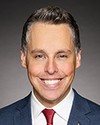
The Chair Liberal Peter Schiefke
Thank you very much, Mr. Bourgeois. You can answer questions in the language of your choice, either English or French.
Next we'll go to Mr. Adams.
Mr. Adams, the floor is yours. You have five minutes, sir.
Ken Adams Chairman of the Board, Truck Training Schools Association of Ontario
Thank you for inviting me today, Mr. Chair and committee members.
My name is Ken Adams, and I am chairman of the board for the Truck Training Schools Association of Ontario. We represent over 40 independent regulated schools committed to safety, compliance and excellence and have done so for the last 30 years.
While I've only been in this industry the past 11 years, I've seen a great decline in the quality and the treatment of drivers. I served as a member of the Toronto Police Service and spent my first eight years of duty in a traffic unit, and this is where my passion for road safety comes from.
I currently own and operate a truck training school right here in Ottawa, Crossroads Truck and Career Academy. I sit on various committees with the Ontario government and participate in stakeholder consultations with the Ministry of Transportation.
We're here because Driver Inc. misclassification didn't start on the highway; it began in the classroom. We've seen carriers buy or influence schools to fast-track them through bare-bones programs, undermine the provincial licensing standards and shift the training liability away from these carriers. This isn't theory. Our members lose revenue, accreditation and staff to these corner-cutting outfits while public safety and the students' well-being are all suffering. Good schools are closing their doors and even more non-compliant schools enter through those doors.
It's a systematic threat to training schools. There is a conflict of interest: Carrier-owned or affiliated schools exist to feed cheap, unprotected “contractors” into fleets, never to produce a qualified or safe driver. They compress their curriculums. Key modules—hours of service, vehicle inspection protocols, emergency response and air brake certification—are all truncated or completely skipped.
There is document fraud and bribery. Records are falsified, examiners are being bribed and unqualified graduates emerge with full licenses to operate 80,000-pound trucks on our city streets and highways. I address every single one of my classes to let them know that they are driving killing machines. What they hit, they destroy. This is a serious job, and we can't have under-trained or fast-tracked people out on the roads.
Offshore payments and exploitation of the students are happening. Students will wire tuition via WhatsApp to anonymous accounts, and they'll find themselves trapped in labour trafficking conditions. Make no mistake about it: Labour trafficking is happening in trucking.
There are real-world consequences, like safety risks. Under-trained drivers mean more incidents, including, unfortunately, fatalities; roadside defects and compliance violations; rising costs for the honest carriers; and the endangerment of every single road user.
We have erosion of quality providers. Reputable schools cannot compete on price or speed, and we're risking losing our best instructors and our best schools.
This affects workforce integrity. Newcomers who drive our industry growth are misclassified, underpaid, not paid overtime and told that they owe the company for their immigration costs and training. They are being pushed to work well over the hours of service that they should be working—again, endangering everybody's lives—and they're too fearful to speak up. Also, they're stripped of any kind of health benefits, or any benefits, for that matter.
What are the solutions? One is ownership transparency. Require all licensed schools to publicly disclose any controlling interest and related party ties to carriers. Mandate unannounced provincial audits of curriculum delivery, equipment condition, instructor credentials and student files. Partner with the CRA to trace irregular tuition flows and offshore payments.
A national trucking credential was mentioned before. We need to adopt a harmonized curriculum with an embedded eight-hour labour trafficking response module to protect our newcomers. Issue a blockchain-secured safety passport linking verified hours, audit history and real-time verification and trainee protections. Mandate orientation on labour rights, tax laws and compliant mechanisms to support these newcomers. Form a joint federal-provincial industry body including labour programs the CRA, Transport Canada, WTFC, TTSAO and CTA to share data on these repeat offenders and emerging risks.
This committee has a rare opportunity to end the upstream enablers of Driver Inc. Implement these measures to help protect the students, and we can have safe roads.
Liberal
The Chair Liberal Peter Schiefke
Thank you very much, Mr. Adams.
Next we will go to Mr. Seymour.
Mr. Seymour, the floor is yours for your opening remarks. You have five minutes, please, sir.
Mark Seymour Chief Executive Officer, Kriska Transportation Group
Thank you for this opportunity to address the committee.
My name is Mark Seymour, as introduced. I'm the chief executive officer of the Kriska Group based in Prescott, Ontario, and I'm former chair of the Ontario Trucking Association and the Canadian Trucking Alliance.
I started as a truck driver at 18 years of age. I'm 61 now. I've had the privilege of spending 40-plus years in the industry. With my extended time and experience, I can honestly say that the Driver Inc. model has significantly weakened our industry in many ways.
Certainly safety has been mentioned a number of times. Other issues are labour, respect, public perception and, of particular concern to me, the competitive standpoint by which we've really been presented a liability.
Our industry has been taken over by the underground economy at many levels. If you don't act fast, fleets like mine with 47 years in business—I'm a second-generation proud trucking company owner—simply won't be around. We follow the rules. We have grown our business from three trucks to 800 trucks by following the rules. Our people pay their taxes. We deduct the taxes. We provide holidays and benefits, and we do all those things properly, and that all costs money. Those costs are very important to our industry and to our country.
We simply won't exist because we can't compete. We have intentionally had to shrink our business in the last three years by upwards of 25% because we simply cannot compete, and we can't attract new people to our business and, frankly, to our industry.
We operate about 800 trucks, and we have a very low turnover relative to industry standards, less than 20%. That's still approximately 160 truck drivers a year that we need to hire. Well over 50% of those who apply are only interested in driving as contractors and not as employees. It's a widespread situation that has made its way into recruiting and made it incredibly difficult for us to grow.
The situation has really stifled our ability to continue to invest, as we traditionally have, in new equipment. I'm certainly not going to suggest that we will not maintain our equipment or that we will not continue to replace equipment, but we certainly can't replace it at the rate and pace that we would like to and the way we have in the past.
The impact of the 10 paid sick days is a tremendous cost to our business and to our industry, particularly for those who respect the law and adhere to it. That in itself is incredibly punitive to us, respecting the law and providing those 10 paid sick days.
Let me make it clear: I support competition. I've been in this business for over 40 years, and we've survived. In fact, we've grown considerably.
The competition must be based on service and price, where price is from the same foundation of all who compete, and that is in a regulatory way and an administrative way where there are no corners cut and no shortcuts made. We simply do the right thing the right way all the time.
I'm certainly not here looking for help to run my business. I'm here to help support making it right for all those who are simply not doing it the right way.
Thank you.
Liberal
The Chair Liberal Peter Schiefke
Thank you very much, Mr. Seymour.
Mr. Groleau, you have the floor for six minutes.
Conservative

Jason Groleau Conservative Beauce, QC
Thank you, Mr. Chair.
Witnesses, thank you for being here to talk about the problem of illegal drivers, the phenomenon called “Driver Inc.”
Mr. Bourgeois, you've been a consultant and trainer for several years. One witness said earlier that, in less than two days, someone could get a driver's licence and go on the road.
Are you aware of that?
Consultant, As an Individual
I also offered training for a number of years.
I'll tell you that two days is even a long time. Some are able to get a licence in two or four hours. It's like a song you have to learn. Once the truckers have learned it, they go around the truck. They start with a small truck with just one axle and a trailer with just one axle that they put in automatic mode. All they have to do is drive down the street, not on the sidewalk, and obey the law as much as possible to get a permit. The next day, they'll be able to board a double-trailer truck carrying a 62,500 kilogram load and drive on Route 389. Right now, that's how things are done.
Conservative
Jason Groleau Conservative Beauce, QC
It doesn't make sense.
How long do you think rigorous training should last if we want to ensure the safety of our citizens?
You're an expert in that area. How long do you think it takes to train someone and make sure they're driving safely?
Consultant, As an Individual
In Quebec, there's a Diploma of Vocation Studies, or DVS, which has been around for several years. In addition, companies are being asked to continue training people who receive a DVS, to ensure that they've fully understood. It's an intensive five-month training course, where you see all the regulations, Standard 10, hours of service, and so on.
Businesses must continue to help young people who drive trucks to make sure they're working safely. A number of companies will even keep them in Quebec before removing them from the province, but that's a decision made by companies that have a good conscience.
Earlier, I was talking about Route 389. I always wanted to go there when I was young, but I was always told that there was no way I'd drive on it until I'd driven for at least three years. Today, unlicensed drivers are driving on Route 389, which is a dangerous road.
Conservative
Jason Groleau Conservative Beauce, QC
Many people don't have a licence and drive on Route 389.
Is that correct?
Consultant, As an Individual
Yes, some people don't have licences. You can check this with Contrôle routier Québec. A number of interventions targeted people who didn't have licences or insurance.
They're just in a truck.
Conservative
Jason Groleau Conservative Beauce, QC
What are the standards of the Liberal government?
What action is it taking to verify those licences?
Is there a way to verify them effectively?
Consultant, As an Individual
The federal government has introduced Standard 16, which is mandatory training.
That said, I'll talk about Quebec because I'm from Quebec. This standard still isn't in effect. It should be in December, but again, it's a bit ambiguous. We're waiting to see what will happen.
Conservative
Jason Groleau Conservative Beauce, QC
Regarding the Driver Inc. phenomenon, a witness told us earlier that drivers were threatened, that they had to deliver the load or else they wouldn't be paid.
Are you aware of that?
Consultant, As an Individual
I could send you a copy of reports that have been published, particularly in Alberta. They're available and public.
People bring in people of the same nationality and say, for example, that it costs $10,000 to come to Canada. Once those people are here, as Ms. Couture said earlier, their passports are taken away and they're detained in Canada. They're told that they now have to pay $40,000. So they have to drive and work. The contract stipulates that delivery must be done, whether it's done safely or not, for drivers who are accompanied by two or three people in the truck. There are lots of similar examples.
Conservative
Jason Groleau Conservative Beauce, QC
A month ago, one person drove 57 hours straight, taking just a few breaks. It's normal for them to be tired.
What are the standards for that?
Consultant, As an Individual
According to the standards, drivers are allowed to drive for 13 hours a day and must have eight consecutive hours of sleep before returning to work. They're also required to take a two-hour break during the day. In total, this represents 10 hours of breaks per 24 hours.
However, some people don't respect that at all, and they drive without keeping a log. Yet Canada has had a law on electronic logging devices for quite some time.
Conservative
Jason Groleau Conservative Beauce, QC
There's no follow-up or rigour regarding that, and anyone can do anything.
Is that what you're telling us?
Consultant, As an Individual
Currently, the system can be easily circumvented.
Consultant, As an Individual
That's why we're here today. We talk about all the problems in transportation. I raised the issue of security, but I didn't even talk about money and technology. We could talk about that for hours. I think I don't have that much time today, but I'd be happy to come back and explain to you what's going on.
Right now, all it takes to get a new log is changing a letter.
Consultant, As an Individual
My driver's licence starts with B, since my name is Bourgeois. I might make a mistake by putting an A, but I'm getting an electronic log that's going to work perfectly. The controller isn't going to see anything.
It's for that reason that one of the conditions put forward by the Bloc Québécois is to require that a driver be taken out of service whenever there's evidence that key information hasn't been entered correctly. Highway traffic control officers, OPP or Ministry of Transportation officers don't have the tools to do that. So changes have to be made.
It's stricter in the United States. A computer system, not a person, checks drivers' records.
Conservative
Jason Groleau Conservative Beauce, QC
Thank you, Mr. Bourgeois.
Mr. Adams, you're the president of an association of training schools for truck drivers in Ontario. I saw a documentary on CBC's Marketplace about MELT schools. They don't seem to be serious at all.
Could you tell me more about that?
Chairman of the Board, Truck Training Schools Association of Ontario
Unfortunately, there are more and more of these schools popping up all over the place. It is because of just that. Marketplace was not just a fabrication. That's what's happening out there in the world.
You talked about what we think is a good number of hours for training. At my school, the minimum is 200. The minimum in this province is 103. A lot of schools aren't even doing 103.5. That is a big problem.