Thank you very much, Mr. Adams and Mr. Groleau.
Mr. Lauzon, you have the floor for six minutes.

Evidence of meeting #9 for Transport, Infrastructure and Communities in the 45th Parliament, 1st session. (The original version is on Parliament’s site, as are the minutes.) The winning word was training.
A recording is available from Parliament.
Liberal
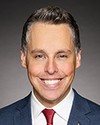
The Chair Liberal Peter Schiefke
Thank you very much, Mr. Adams and Mr. Groleau.
Mr. Lauzon, you have the floor for six minutes.
Liberal

Stéphane Lauzon Liberal Argenteuil—La Petite-Nation, QC
Thank you, Mr. Chair.
I'd like to thank all the witnesses who are here today to discuss an issue that's important to us all. It's important for the safety of our fellow citizens and the good of the industry.
I was a vocational teacher for 21 years, and I lived near a truck driving school. I was able to sense how rigorous the training of young people was and how well prepared they were. They spent a lot of hours in the field.
That said, the federal government has always worked with the provinces. Until 1980, driver training was under federal jurisdiction and then it was transferred to the provinces.
Mr. Bourgeois, in light of everything you've told us today, do you think the federal government should take up the torch and again assume responsibility for road transportation and training, or should we let the provinces take care of it, as they're doing right now?
Consultant, As an Individual
If we leave that to the provinces, perhaps there should be some oversight. Soon, there will be mandatory training in Quebec. I'm anxious to know who will monitor that.
We saw the results of the MELT program in Ontario by watching the Marketplace report on CBC. I hope it won't be the same in all provinces, otherwise we'll see each other here again in two years. That would require more rigorous monitoring.
Liberal
Stéphane Lauzon Liberal Argenteuil—La Petite-Nation, QC
Could you give me some details on the training that's being given in Quebec? Who gives it? How are the permits drafted in Quebec, for example?
I believe you work only in Quebec, don't you?
Liberal
Stéphane Lauzon Liberal Argenteuil—La Petite-Nation, QC
That might be a good question for Mr. Adams and Mr. Seymour as well, but tell me a little bit about the current process with respect to licensing, regulations, and so on. I'm not talking about immigration, but only about the exact process that a Canadian from Quebec must follow to obtain a permit and become a driver in his province.
Consultant, As an Individual
Currently, in Quebec, there's no mandatory training. First, individuals must complete a form on their medical condition to determine if they're fit to operate a heavy vehicle. Then they get a temporary permit to learn the ropes, as I was saying earlier, in terms of the security round. That's all there is right now.
There are small schools all over the place that improvise as such to give people tips for passing the SAAQ exam. Once people have learned the safety part, they'll take the SAAQ exam. Then they're going to drive with a small truck to make sure it's easy, and they get their licence.
Liberal
Stéphane Lauzon Liberal Argenteuil—La Petite-Nation, QC
Should we go after the government, which has made permits too easy to obtain, as you say? For example, in your case, should we go after the Government of Quebec and the SAAQ and require that the process for obtaining a Class 1 licence be more consistent or standardized compared to the current process?
When I got my Class 3 licence, my friends told me that I should have gotten my Class 1 licence right away because it would already be done. However, I didn't have the training related to the Class 1 licence.
Should the provinces change those regulations?
Liberal
Stéphane Lauzon Liberal Argenteuil—La Petite-Nation, QC
Mr. Seymour, earlier, a witness told us not to trust entrepreneurs because they don't take responsibility. We were a little surprised by that. You're an exemplary entrepreneur and you've evolved by partnering with several companies, always in a straight line.
Tell us a bit about the comment made by that witness, who told us not to trust the entrepreneurs his organization represented because they're the ones at fault.
What is a government supposed to do when it hears that?
Chief Executive Officer, Kriska Transportation Group
I would like to add that it's really important to trust and verify. I think what would be best said is, simply, that we have too much of an honour system right now, and the honour system has found its way into abuse. We have enough regulation, but not enough with teeth. We have enough regulation without enforcement. What we have done is extended the benefit of trust to all when not all deserve it. It's very clear that not all people who cross the border have been given FAST or NEXUS cards: There's a trust and verify.... The piece that's missing, very much so, is verifying, through enforcement, audit and verification. That would be my best expansion of “Do not trust anyone”.
Liberal
Stéphane Lauzon Liberal Argenteuil—La Petite-Nation, QC
Thank you.
My question is again for you, Mr. Seymour, but Mr. Adams could also answer it.
The current Canada Labour Code prohibits misclassification. There's a whole system in place: We have regulations, we have traffic monitors, we have police and we have a licensing process. In other words, there's a structure to prevent wrongdoing.
Why is the code not applicable on the ground, as it must be according to existing regulations?
Chairman of the Board, Truck Training Schools Association of Ontario
The reason is that we don't have enough. We do not have enough investigators and police officers on the roads. We've allowed this to get out of control. This didn't happen overnight, it's not going to get fixed overnight, but together, with all of us, and with all of my fellow industry leaders who are here today, we can get this fixed.
Liberal
Liberal
The Chair Liberal Peter Schiefke
Thank you very much, Mr. Lauzon.
Thank you very much, Mr. Adams.
We'll now go to Mr. Barsalou‑Duval for six minutes.
Bloc

Xavier Barsalou-Duval Bloc Pierre-Boucher—Les Patriotes—Verchères, QC
Thank you, Mr. Chair.
I'd like to thank the three witnesses for being with us today.
This really is an important topic. I'm repeating myself, but I don't think we can repeat it enough when it comes to lives. Lives have been cut short on the road. I think we can never overstate the importance of saving lives, which are put at risk by poorly trained and exploited drivers.
Mr. Bourgeois, you're a safety, compliance and training consultant. In your experience, what are the main signs that a driver in front of us, for example, isn't following the regulations, that he's non-compliant?
Consultant, As an Individual
On the road, we're able to identify those drivers easily, not because we're better, but because they're easy to see.
Drivers are speeding and aren't following the regulations requiring their vehicles to travel at a maximum speed of 105 km per hour. They're going to wander and they won't stay between the lines. In the towns, they don't know how to turn street corners properly. They'll drive up the curbs and tear down trees.
Yesterday, one of them was on the Victoria Bridge in Montreal. Trucks aren't allowed on that bridge because it's too fragile. The driver went onto the bridge, because he didn't read the signs. Drivers can't read the signs. So there's a lot of training to be done in that area.
We have to verify whether they understand our languages. We've seen people take driving tests with a microphone and a camera so that someone can whisper answers to them. With a phone, you can even take a picture of the questions, translate them into your language, and then check the right boxes. Come on, it's illogical and we're wondering why people die on our roads.
Some provinces, like Ontario, Manitoba and Alberta have begun publishing studies. I'm not talking about Quebec, because nothing has been done yet, but it's coming. Every week, we try to talk to Quebec representatives. We have to move forward, and quickly, because illegal drivers are on the roads a lot faster than we are. Furthermore, this situation has nothing to do with immigration.
Those drivers must abide by the same laws as we do. In Quebec, for example, it takes 36 months of road experience with a Class 5 vehicle to get a licence to drive a heavy vehicle. After two months, they get a licence.
How does that happen? My son is 18 years old, and he drives trucks with me. He already knows how to drive a manual car, and he only has a Class 5 licence because we're in a closed system. He's eager to get his licence to drive heavy vehicles, but he won't be able to until he completes this 36-month period.
That's how Quebec had a lot of professional drivers, because the trade was passed on from generation to generation. It's certainly the same principle for Mr. Seymour.
Bloc
Xavier Barsalou-Duval Bloc Pierre-Boucher—Les Patriotes—Verchères, QC
Thank you.
You know many professional drivers. I think you have a good network in the industry.
How do professional drivers see their future in the industry right now?
Consultant, As an Individual
They see it in a very negative way. As was said earlier, some people are thinking about leaving the profession to work in another field. Some have gone back to school. There are job openings for bus drivers in Montreal. In addition, many of them no longer want to use Routes 11 and 17. They don't want to go there any more.
This winter, we'll see what happens on Route 389, the road to Fermont, Quebec. It's a “very dangerous” road. A professional can go down that road without a problem, but inexperienced drivers go down that road, without ever having driven in the snow.
I'm going to target India again, even though I know it's not right—sorry. However, CBC's Marketplace and Brampton investigations showed that accidents were caused by Indian immigrants. They go down Route 389 with unsafe trucks, which have very worn tires, and they walk around in the snow. This is how many accidents happen. Yes, professional drivers are afraid. They want to get out of the business.
Bloc
Xavier Barsalou-Duval Bloc Pierre-Boucher—Les Patriotes—Verchères, QC
In your opinion, is a temporary immigrant who just set foot in the country and only got a few hours of training ready to go into business for himself and travel all over Canada?
Consultant, As an Individual
No, it's impossible. He can't do that. It takes a lot more training to drive heavy vehicles. Just think about securing the load on a flatbed truck. You have to comply with Standard 10 concerning the 50% limit of the load’s mass, the panels, and the cargo length. On the 401 and everywhere, I see trucks missing two or three chains. Sometimes farm tractors are strapped to the back and front, whereas chains are supposed to be tied to all four corners.
Bloc
Xavier Barsalou-Duval Bloc Pierre-Boucher—Les Patriotes—Verchères, QC
Do you think those people are ill-intentioned, or the victims of a system?
Consultant, As an Individual
They're clearly victims. We bring them here and tell them that this is how things work in Canada when it's not true and there are standards to follow.
The people who bring them here make them believe that this is how it works. The drivers are going to incorporate themselves to avoid paying taxes, and they're going to take a key and get into a truck. They don't know anything. They come here and they're not trained. Yes, they're victims.
Bloc
Xavier Barsalou-Duval Bloc Pierre-Boucher—Les Patriotes—Verchères, QC
Mr. Seymour, how do you feel about the situation in your company?
You said that you had reduced your activities and staff by 25%. How do you manage to survive and remain competitive in a market where competitors don't play by the rules?
Chief Executive Officer, Kriska Transportation Group
It's a real challenge. You have to pivot and adjust.
One thing our industry is known for is its resiliency. We are just doing what we have to do, in order to do the best we can. I'm not here to look for a life preserver, by any means. It's just not fair and it's really hurting the hard-working men and women.
I want to expand on something that was said earlier. I don't blame the hard-working men and women who are doing what they're doing, because they don't know any better. They haven't been properly trained. They just want to work. They want to earn and they want to provide for their families. It's not intentional, I don't think. It's simply a matter of training, auditing and compliance.