House of Commons Hansard #162 of the 45th Parliament, 1st session. (The original version is on Parliament's site.) The word of the day was illness.

Topics

line drawing of robot

This summary is computer-generated. Usually it’s accurate, but every now and then it’ll contain inaccuracies or total fabrications.

Statements by Members

Question Period

The Conservatives focus on affordability, calling for gas-tax cuts and criticizing the government over food insecurity and rising food-bank use. They press for fiscal restraint ahead of the budget, question the government’s trade strategy, and demand transparency over corporate influence in the Major Projects Office and alleged insider benefits from Cohere funding and Telesat contracts. They also raise concerns about industrial competitiveness and support for injured soldiers.
The Liberals promote tomorrow’s budget as a plan to build a resilient economy, create jobs and improve affordability, while defending supports for families and children. They champion major infrastructure and energy projects, Canadian industries and sovereign technology, including satellites and AI, and emphasize trade diversification and support for workers facing tariffs. They also highlight housing construction and homebuyer measures.
The Bloc argues Ottawa is serving American interests at Quebec’s expense, citing concessions on culture and dairy and fossil-fuel spending over housing and affordability. It demands repayment of Quebec’s asylum-seeker costs and higher health transfers, and opposes Bill C-39 over its limits on strike rights and Indigenous rights.
The NDP criticize pipeline spending's climate and Indigenous impacts and demand community housing to build one million non-market homes.

Veterans' Week Members mark Veterans’ Week and Remembrance Day by honouring veterans, serving members and military families, including those affected by the recent deaths and injuries at CFB Wainwright. They reflect on the human costs of war and call for remembrance through ceremonies and storytelling, alongside better care and support for veterans. 2800 words, 25 minutes.

Canada Pension Plan Investment Board Act First reading of Bill C-295. The bill requires the Canada Pension Plan Investment Board to avoid investments in entities linked to serious human, labour or environmental rights violations, prohibited weapons, or certain forms of corruption. 300 words.

Petitions

Budget 2025 Implementation Act, No. 2 Report stage of Bill C-31. The bill implements budget measures, including major-project approvals, Canadian procurement, defence investment, trade diversification, business tax incentives and clean-economy support. Conservatives criticize its defence procurement powers and the government’s spending and debt, while Liberals argue it supports economic growth, workers and households. The Bloc raises concerns about pesticide re-evaluations and public-service immunity. 9200 words, 1 hour.

Wartime Service Recognition Act Second reading of Bill S-246. The bill requires a transparent national framework and objective criteria for recognizing wartime service, applied to past and future conflicts. Members across parties support updating recognition for veterans of conflicts such as the Persian Gulf War and Afghanistan, and the bill passes unanimously for committee study. 6000 words, 45 minutes.

Medical Assistance in Dying Safeguards Act Second reading of Bill C-41. The bill would permanently exclude MAID where mental illness is the sole underlying condition and allow advance requests for people with capacity-limiting illnesses. Liberal and Bloc members emphasize autonomy and respecting prior wishes, while Conservatives question consent and safeguards and call for the measures to be separated for further study. Provinces and territories would decide whether to implement advance requests. 53500 words, 6 hours.

Adjournment Debates

Parental leave flexibility Garnett Genuis urges the government to adopt five Conservative proposals: pausable parental leave, learning while on leave, a caregiving-income exemption, CPP child-rearing credits for both parents, and continued benefits if a parent dies. Daniel Gobeil highlights child care, school food and EI measures but does not directly address the proposals; Genuis criticizes the response.
Agricultural research centre closures John Barlow condemns Agriculture and Agri-Food Canada’s planned research-centre closures, arguing that the sale of the Nappan beef herd destroys generations of region-specific research and worsens a scientific brain drain. Daniel Gobeil says the cuts reduce overhead while research continues elsewhere and through broader partnerships. Barlow argues the closures undermine essential regional research.
Was this summary helpful and accurate?

Bill C-31 Budget 2025 Implementation Act, No. 2Government Orders

4:35 p.m.

Liberal

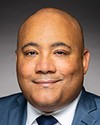
Michael Coteau Liberal Scarborough—Woburn, ON

Mr. Speaker, it is a pleasure to speak today.

There are many reasons why MPs decide to run for office and are here today. We have different pathways and different motivations, things that have happened to us in our life that have led us here to the House of Commons. I have said this many times: I believe that every single member of the House has the intention to build a better country, a better Canada. I have never moved away from that. Some of our decisions come from so many different things. Our pathway in life and our trajectory can change based on just one simple incident. It could be anything that happens to us that brings us here.

I remember when I was about 19 years old, standing in front of the House of Commons and saying to myself that one day I would like to be in the House of Commons as a member of Parliament to speak on behalf of my community. I was from a neighbourhood called Flemingdon Park, a small neighbourhood in Toronto. It is one of the suburbs. It was a neighbourhood that was very challenging. There was poverty, youth incarceration, youth violence, and youth gun violence that caused murder. It was a really challenging place to grow up for many people. A lot of people felt disconnected from the element of change.

However, at 15 years old, something happened to me that was remarkable. There was a pool outside my apartment building. The pool had several buildings around it. It was full, and it was the end of winter. There was a hole in the fence, and kids were playing on the ice. I was afraid that some kid was going to fall through, so I told the superintendent that someone was going to get hurt. No one listened to me. Then I spoke to the manager a week later. No one listened to me. Then I picked up the phone and called the member of the provincial parliament, who was a Conservative, I have to say. Within one hour, the MPP fixed the hole in the fence.

I was shocked. How could a 15-year-old just pick up the phone after a week of trying, and have that fence fixed? It changed my whole perspective on how we get things done. I was just amazed. I was very interested in politics because of that experience I went through. That simple experience sparked an interest in me. Over time, it became a passion. In my neighbourhood, often people felt like they were discounted, pushed aside and not listened to. That phone call gave me a completely different understanding of how we could actually help people.

In my neighbourhood, there were so many young, talented people. I saw intelligence, creativity, ambition and potential. I went to elementary school with many of these young people. By the time we ended up in high school, or even junior high school, we started to see people go off on different pathways. There were a lot of young people I knew in my neighbourhood who were incarcerated. I was once interviewed when I was a school board trustee, and I said that I knew more young people from my neighbourhood, my community, who had been murdered than had gone off to university. People did not believe that, but it was the absolute truth.

These were not statistics to me. They were people I grew up with. It always created a sense of sadness in me. I decided when I was a kid, after I saw that change with respect to the swimming pool and after I made these observations, that one day I would grow up to make changes to balance the playing field, open up opportunities and make things a bit more fair.

I thought about going off to university. The next-door neighbour told me that I should really try. He had been a teacher in the Caribbean. He gave me the $50 to apply to go to university. I got in and got involved in politics. I did not know a single person involved in politics. I went to the public library. I decided that I was a Liberal, based on all the different information I read about multiculturalism, the creation of these great national programs, and the change in immigration policies that allowed my family to come to this country. I read about Louis St. Laurent's bringing forward old age security in 1952, and about the Canada pension plan by a Liberal government in 1966 and the guaranteed income supplement in 1967.

The philosophy of the Liberal Party really aligned with the observations that I experienced in my life. I went to the Liberal headquarters and I asked if I could volunteer. They opened the door, and I got involved.

This brings me to this budget debate. When I look at a federal budget, it is not just the numbers I see. It is the opportunity that presents itself for Canadians. The decisions that families in Scarborough and the rest of the country have to make based on finances are tough decisions, and people are looking for ways to remove barriers in order to provide more opportunities. We have been able to create new national programs over the last decade, such as $10-a-day child care, the Canada child benefit, the dental plan, the pharmacare plan and the disability benefit.

These are pieces that really resonated with me, to add to those national plans I talked about. It made me feel as though the principles behind what we were doing as a government, these good Canadian values, were aligned with the whole point of what equity and inclusion are.

When I see parents struggling to afford child care, someone with a disability struggling, a child arriving at school hungry or a person who cannot get a certain prescription, I see that building these types of programs is about equity. It is about removing barriers so people have the opportunity to reach their full potential without encountering those types of barriers that are so challenging. Inclusion means ensuring that everyone has the opportunity to participate fully in our communities, workplaces and our country. It means that a parent has a better chance of accepting a job offer, because they can get to work because there are affordable opportunities for child care.

My entire life in politics has been about taking items such as a budget and looking for ways to make sure opportunities are there for Canadians. I often think about being 19 years old, standing in front of the House of Commons, looking at this institution and imagining that one day I could serve as a member of Parliament. I think about being 15 years old and figuring out that someone could pick up the phone, engage with their representative and get some change done. I think about the young people I grew up with and their missed opportunities. Those experiences shaped my entire perspective on what public service meant. They taught me that a person's circumstance should never define their potential. It taught me that the government can actually make a meaningful difference in the lives of people. Governments can create opportunity for people who might otherwise be left behind.

The experiences reinforce my beliefs that a person's income, disability or postal code should never determine or limit their future, and that is what equity and inclusion mean to me. This is where the opportunities come through a budget. I believe that a budget should be about seeing more than just a financial commitment or trajectory. I see an opportunity to build a country where more people have a chance to succeed, where families have the support they need, where children can realize their potential and where no one is left behind because of the circumstances they were born into.

This is the Canada I believe in, and this is what has brought me here today. I believe that this budget would provide an opportunity to remove barriers, set people up for success and allow people to reach their full potential. That is why I am a Liberal, that is why I support this budget, and that is why I support the government.


Bill C-31 Budget 2025 Implementation Act, No. 2Government Orders

4:45 p.m.

Bloc

Maxime Blanchette-Joncas Bloc Rimouski-Neigette—Mitis—Matapédia—Les Basques, QC

Mr. Speaker, I salute my colleague.

He raised a rather important point. A budget contains more than just budgetary promises. That is true. Under Bill C-31, the government wants to suspend the re-evaluation of pesticides, which was normally required every 15 years. However, members know that Quebeckers are strongly opposed to the use of pesticides in Quebec. A recent poll shows that over 70% of Quebeckers oppose the government reintroducing pesticides that were banned because they were dangerous to humans and harmful to our environment.

I would like our colleague to comment on this today. Does he believe that it is in the interest of science, in the interest of protecting public health and protecting the environment for his government to stop evaluating pesticides and to reintroduce some that were previously banned?

Bill C-31 Budget 2025 Implementation Act, No. 2Government Orders

4:45 p.m.

Liberal

Michael Coteau Liberal Scarborough—Woburn, ON

Mr. Speaker, any question that is about the environment and protecting the spaces around us is a very valid question with a very valid point.

If we look at the history of the Liberal Party and the Liberal government with respect to their commitment to the environment, we will not find another political party or government in the history of this country that has done more to protect and embrace the Canadian environment.

A budget is really about finding a balance. This budget is about many things, and that is why I support it.

Bill C-31 Budget 2025 Implementation Act, No. 2Government Orders

4:50 p.m.

Liberal

Ben Carr Liberal Winnipeg South Centre, MB

Mr. Speaker, I really enjoyed my colleague's speech. As I have talked about many times in the House, I spent well over a decade in the public education system, so his reference to young people was one I appreciated.

I am wondering if the member can offer some commentary further to what he gave in his remarks a moment ago about how the budget process and this exercise we undertake here in Parliament can be used as an educational tool for those he represents in his riding.

Bill C-31 Budget 2025 Implementation Act, No. 2Government Orders

4:50 p.m.

Liberal

Michael Coteau Liberal Scarborough—Woburn, ON

Mr. Speaker, I thank the hon. member for his commitment to young people, to families and to education.

There is no question that education is the best tool we can use for success and to build a strong Canadian individual and family. That is the best investment, I believe, we can make.

I try every single Friday to go to at least one elementary school. Last week I was at a school, and we talked about Bill C-34 and the impact the bill would have on the school. In fact, a high school has invited me to come talk about the bill.

That type of engagement, that type of consultation, is important. I always leave the classroom telling students not to let people make decisions on their behalf without their paying attention, because throughout their lifetime, there will be people in rooms such as this, at city halls and in provincial governments, who will be making decisions on their behalf, and their political literacy has to be at such a level where they can figure these things out and challenge the people who are making decisions if they are bad decisions.

Bill C-31 Budget 2025 Implementation Act, No. 2Government Orders

4:50 p.m.

Conservative

Dave Epp Conservative Chatham-Kent—Leamington, ON

Mr. Speaker, the member for Wellington—Halton Hills North has tried for the last several days to get an indication from the government as to its commitment to its stated goals of relying on fiscal anchors. A number of good things the member spoke to are covered in budget 2025, but it has to be done in the overall context of fiscal responsibility.

Due to the lack of responses the House received during question period, I wonder if the member would opine on his view of whether the government should be held to fiscal anchors that it states, and whether they should be carried forward, let us say, even into the budget tomorrow.

Bill C-31 Budget 2025 Implementation Act, No. 2Government Orders

4:50 p.m.

Liberal

Michael Coteau Liberal Scarborough—Woburn, ON

Mr. Speaker, as the member knows, Canada is in a good position when it comes to its financial rating. We have budgets, so we project what is to come, and we look for ways to balance that.

Ultimately, the voters will decide who leads this country. It is our responsibility, as MPs, to hold ourselves accountable by communicating with our community and having people agree or disagree with the approach we have taken.

Bill C-31 Budget 2025 Implementation Act, No. 2Government Orders

4:50 p.m.

Liberal

Steeve Lavoie Liberal Beauport—Limoilou, QC

Mr. Speaker, it is a pleasure to speak to Bill C‑31. The bill contains a number of new measures, and it would also amend several existing laws. Changes will be made to the income tax regulations, the Excise Tax Act, the Air Travellers Security Charge Act, the Income Tax Act and the Global Minimum Tax Act, among others.

Today, I want to focus more on the part that will help us build Canada strong and build it faster. As I have often said in my speeches in the House, over the past few years, we have been building less and less and, in some cases, we have been building little or nothing at all. How can we build faster?

I often wonder why it is so difficult for a nation as developed, innovative and educated as Canada to build housing, energy infrastructure and other essential assets.

We did it before. Just consider the St. Lawrence Seaway. Major construction work was carried out between 1954 and 1959. In barely five years, a 300-kilometre stretch of water became a navigable waterway, which developed into a navigable system connecting the St. Lawrence River to the heart of the Great Lakes, covering more than 2,000 kilometres. I will let that sink in.

There is hope. Canada's new government is building one Canadian economy through major nation-building projects that will connect our regions and create hundreds of thousands of high-paying career jobs in fields ranging from skilled trades to advanced technology.

We are moving forward, protecting our sovereignty and diversifying our markets. In my region alone, the greater Quebec City area, important commitments have been made. These include the construction of six icebreakers valued at $11 billion, built by Davie. This project represents 5,000 jobs but, most of all, it represents predictability for the workers and for businesses and suppliers in the greater Quebec City area.

My remarks will focus on six aspects of the bill, and I will give a few examples to help everyone grasp the scope of each measure.

First, as I mentioned earlier, the bill seeks to fast-track nation-building projects in close partnership with the provinces, territories, indigenous peoples and private investors. For example, consider the creation of the Major Projects Office, which serves as a one-stop shop to speed up the approval and construction of major projects of national interest. Another example is Bill C-5, the one Canadian economy act, which serves as a legislative framework to fast-track projects of national interest, particularly in the energy, transportation and critical minerals sectors. I could also talk about the trade and energy corridors we are developing. Priority is being given to port infrastructure, including in my riding of Beauport—Limoilou, as well as to rail and energy links, to make it easier for Canadian businesses to access international markets.

Second, we need to launch the first buy Canadian policy, ensuring that public funds are used to strengthen our supply chains and support local innovation. Let us look at the buy Canadian policy. This is a commitment to leverage federal procurement as a tool to support Canadian businesses, workers and suppliers. I am also thinking about how public funds are invested in infrastructure. This approach is about prioritizing Canadian steel, aluminum and other materials in federally funded projects.

Third, we are currently witnessing Canada's largest defence investment in decades. I am thinking of the launch of the defence industrial strategy to build out our defence sector and increase the competitiveness of our local suppliers. Here are some more examples. Defence spending officially reached 2% of gross domestic product on March 26. We made a concrete commitment to significantly increase investments in the Canadian Armed Forces in order to modernize its equipment and operational capacities. Our approach to defence procurement reflects our desire to strengthen Canadian businesses' participation in military contracts and supply chains.

I spoke here in the House last week about the strategic importance of Bill C-40, which will allow an investment corporation to support companies that want to contribute to the defence sector in any number of ways, whether through loans, guarantees or insurance. We are investing in and supporting the modernization of our Canadian Armed Forces while developing a stronger Canadian defence industry and creating good jobs, all with a view to strengthening our sovereignty.

Fourth, we must seize new opportunities in a changing world by launching a trade diversification strategy that will double our overseas exports within a decade. For instance, take our target of doubling exports to Europe and markets other than our neighbour to the south over the next 10 years. This represents about $300 billion in new trade opportunities. Over 20 new trade agreements have been signed in the past year, opening up markets for Canadian producers and manufacturers. We are also creating the strategic exports office, which was announced this year, to support Canadian businesses in the aerospace, defence, energy and infrastructure sectors.

Fifth, we must stimulate growth and innovation by lowering investment costs for Canadian businesses through a new productivity superdeduction. The benefits are estimated at more than $9 billion per year. Canada has the most favourable tax system in the G7 for new business investment. Here is a concrete example. Imagine a business that wants to invest in modernizing its production line. It wants to invest in robots to automate its assembly line. For these major purchases and equipment, the business will need cash and will need to take out loans. From now on, that business will be able to deduct its capital cost in the first year. The same goes for Brûlerie Vieux-Limoilou, where I like to get my morning coffee in my riding of Beauport—Limoilou. If this coffee roaster needs to replace a coffee machine, it will be able to write off its purchase. The important thing to understand is that this applies to both large and small businesses.

As the October 2026 Monetary Policy Report states, “Rising business investment—bolstered by federal tax incentives such as the Productivity Mega Deduction—and increased adoption of artificial intelligence (AI) support production and labour productivity.”

Sixth, we must support a clean economy through Canada's new climate competitiveness strategy, which involves strengthening industrial carbon pricing, streamlining regulations and introducing tax incentives to attract investments in clean technology. Clean economy investment tax credits provide tax support for eligible investments in clean electricity, clean technology and other decarbonization activities. Fast-tracking clean energy and critical mineral projects will help to develop strategic sectors for the energy transition and improve Canada's industrial competitiveness.

Thanks to Canada's position as a world leader in clean technology and clean energy, we will be able to create jobs while reducing industrial emissions. Through our climate competitiveness strategy, we want to make Canada a world leader in clean energy and clean technology, while attracting investments, creating jobs and reducing our emissions. The time has come to build our economy bigger and faster than ever, so that Canada can become less dependent on others, more independent and better prepared for the future.

Bill C-31 Budget 2025 Implementation Act, No. 2Government Orders

5 p.m.

Liberal

Angelo Iacono Liberal Alfred-Pellan, QC

Mr. Speaker, how does Bill C-31 fit in with our objective of building a stronger Canadian economy while supporting workers and households?

Bill C-31 Budget 2025 Implementation Act, No. 2Government Orders

November 4th, 2026 / 5 p.m.

Liberal

Steeve Lavoie Liberal Beauport—Limoilou, QC

Mr. Speaker, we are indeed at a pivotal moment, a crucial juncture. The cost of living is a major concern for our constituents, and we must be there to help them. That is why we brought in measures such as the tax cut for more than 22 million Canadians, the Canada groceries and essentials benefit, tax incentives for young people buying their first home, and the Canadian dental care plan, which has been an incredible success. It is brought up every time I talk to people in my riding. We are here for our constituents in these difficult times.

Bill C-31 Budget 2025 Implementation Act, No. 2Government Orders

5 p.m.

Bloc

Maxime Blanchette-Joncas Bloc Rimouski-Neigette—Mitis—Matapédia—Les Basques, QC

Mr. Speaker, I would like my colleague to clarify these economic sovereignty concepts for us. The government wants to propose major projects. I just mentioned LNG Canada as an example. This project is owned by foreign interests, including Shell, in the United Kingdom, Petronas, in Malaysia, PetroChina, in China, Mitsubishi, in Japan and Kogas, in South Korea. It is wholly financed by foreign capital.

I would therefore like my colleague to clarify how we can be masters in our own home, as he proposes, and strengthen our economic sovereignty, when the major projects of national interest that we are building are owned by foreign interests. The decisions that these companies make will be based not on our interests, but on theirs, which are not the interests of people here, in Quebec or in Canada.

Considering my colleague's expertise in investment and his professional experience in the financial field, can he shed some light on this issue, in the public interest?

Bill C-31 Budget 2025 Implementation Act, No. 2Government Orders

5:05 p.m.

Liberal

Steeve Lavoie Liberal Beauport—Limoilou, QC

Mr. Speaker, my colleague is right: Canada's economic sovereignty is important. Everyone knows what is happening with our neighbours to the south when it comes to the tariffs we are facing. We are supporting our businesses.

As for Quebec, my colleague knows full well how we support the Churchill Falls project, which will double electricity production. These are concrete actions. I also spoke earlier about Davie in Lévis, not far from his riding. That is an $11‑billion investment in our region. I remember that when I visited the Davie shipyard, there was talk of creating predictability for more than 600 suppliers within the region alone.

When we talk about economic sovereignty, helping SMEs and making decisions about the direction we want to take our economy, that is how we do it: by supporting our local SMEs.

Bill C-31 Budget 2025 Implementation Act, No. 2Government Orders

5:05 p.m.

Conservative

Ted Falk Conservative Provencher, MB

Mr. Speaker, I have a question about the minister who would be responsible for the Defence Investment Agency. The minister would be able, for no reason, to disqualify a company for procurement purposes without explanation or justification and with no avenue for appeal. The minister would also have the ability to sole-source contracts without any accountability.

Does the member have a good understanding of why the Liberals have abandoned basic fairness in tendering? Why have they chosen to not be transparent in the process?

Bill C-31 Budget 2025 Implementation Act, No. 2Government Orders

5:05 p.m.

Liberal

Steeve Lavoie Liberal Beauport—Limoilou, QC

Mr. Speaker, I thank my colleague for his question about the investment agency and defence. I gave a speech on this issue because it is so important. I worked in banking for 20 years helping businesses secure funding.

Often, when there are new investments or new calls for tenders like these, businesses are unable to adapt. Banks also have a hard time adapting. By setting up this investment agency, which will be able to grant loans, offer insurance and provide guarantees to banks, we will help this sector grow. We are talking about companies that would like to contribute but that are unable to because they lack the liquidity, agility or time to do all that.

This agency will enable SMEs to grow and contribute to the defence sector. This is where we need to step in to help the defence sector.

Bill C-31 Budget 2025 Implementation Act, No. 2Government Orders

5:05 p.m.

Conservative

Connie Cody Conservative Cambridge, ON

Mr. Speaker, it is really fitting that we should be here today discussing budgetary matters the day before the Liberal government tables its 2026 budget. This is a budget implementation act, so it is an opportunity to talk about the state of federal finances, to have a look at where we are, how we got here and what the road ahead looks like. We should all buckle up because it looks like it is going to be a bumpy ride.

Let us start with where we are now. Well, for starters, we are in the red. There is a lot of debt. Even the Prime Minister's own economists confirm it. The Parliamentary Budget Officer, a non-partisan finance and accounting expert appointed by the government itself, just came out with a scathing report card saying exactly that. She said that our deficit now is more than double the size of the one left behind by Justin Trudeau just 18 months ago. Canadians already watched Justin Trudeau spend unprecedented amounts of money. Can members imagine just how much someone would have to spend to double that? Somehow, the Prime Minister and his finance minister found a way.

The Parliamentary Budget Officer warned that borrowing is backloaded and will get even worse before the end of this decade. What happens when someone spends more money than they earn? Anyone who has ever taken out a mortgage or carried a balance on a credit card knows the answer. Eventually, they have to pay for that borrowing. That is exactly what is happening here in Ottawa. The bankers and bondholders are not donating this money out of kindness. Every dollar of deficit the government borrows must be repaid, complete with interest. The Liberal government may run up the tab, but the bill always arrives in the mailbox of Canadian taxpayers, and that bill is becoming increasingly expensive. The federal government could take every single dollar it collects in GST from everything bought and sold across Canada for an entire year and it still would not be enough to cover 12 months of interest payments on our national debt.

The Parliamentary Budget Officer's calculations show that interest on the debt now costs Canadians more than the Canada health transfer. Ottawa is spending approximately $59 billion a year on debt charges, compared with about $57 billion for health transfers to provinces. Let us think about what that means. We have reached a point where the interest of past borrowing exceeds the federal government's largest transfer for health care. That should concern every Canadian, regardless of political stripe. Every single year, tens of billions of taxpayer dollars leave the federal treasury before a single hospital bed is added, before a single doctor is hired and before a single Canadian receives faster access to care.

We can imagine what $59 billion could do if it remained available for Canadian priorities. It could help reduce wait times in our health care system. It could provide meaningful tax relief to families struggling with the cost of living. It could strengthen the Canadian Armed Forces and support our brave men and women in uniform. Instead, that money is being consumed by debt charges while Canadians see no improvement in services, no shorter wait times and no direct benefit in their daily lives.

We all know the Prime Minister used to be the governor of the Bank of Canada. Given that background, Canadians could reasonably expect fiscal discipline from the government. In fact, David Dodge, another former governor of the Bank of Canada, offered a simple rule of thumb. The federal government should keep debt servicing costs below 10% of its total revenues. Beyond that point, borrowing becomes increasingly expensive as lenders demand compensation for the greater risk. When too much of the government's income is being consumed by interest payments, it becomes a warning sign that the country's finances are heading in the wrong direction.

The Liberal government crossed that threshold, and the problem has only gotten worse since. With more people and an aging population, there is a greater demand for services, so people might expect the fastest-growing federal expense to be health care, old age security or the Canada child benefit, but it is not. In fact, it is not even a service provided to Canadians. The fastest-growing line item is the interest on our debt. Just a few years ago, every Canadian owed about $600 in interest on the government debt. Right now, that stands at nearly $1,500. In five years, it will be nearly $2,000, or more than three times what Canadians were paying only a few years ago.

I want to speak directly to the people at home in Cambridge and North Dumfries who are watching today. They can think about what $2,000 could do for them right now. That is a month or two of groceries to help feed their family. It could cover a month's rent or help make a mortgage payment to keep a roof over their head. It could help pay down student loans, cover rising utility bills, replace a broken appliance or put a little money aside toward a down payment on a first home.

For most Canadians, $2,000 is not a small amount of money. It is the difference between getting ahead and falling further behind. That is the real cost of the Liberal government's reckless spending. Money that could be helping Canadian families build a better future for themselves is instead being used to pay interest on the government's debt.

That brings us to the next bump in the road. How did we get here? Deficits and debt do not appear overnight. They are the result of choices. The Liberal government repeatedly assured Canadians that there was a plan to keep the country's finances on track. It told Canadians that it could be trusted with a national credit card. The Prime Minister pointed to a series of so-called fiscal anchors that were meant to guide spending decisions and limit borrowing. The problem is that what he says and what he does are two very different things.

This week, the Parliamentary Budget Officer was clear. She said those anchors provide very little fiscal discipline when it comes to spending. Specifically, the Liberal government set out two fiscal anchors: a declining debt-to-GDP ratio and a declining deficit-to-GDP ratio. However, instead of going down, both of those ratios are going up. The government's problem is not that it missed its targets. The government's problem is that its targets are moving in the wrong direction. By its own metrics and standards, the government is failing.

It is perfectly clear that the government cannot be trusted to self-regulate when it can simply sit back and spend someone else's money, and that is why Conservatives are here: to hold the government accountable when it goes too far, to ask the tough questions Canadians deserve to have answered and to be the voice of reason and responsibility in this place.

The question is not whether there is a problem. The numbers make that perfectly clear. The real question is whether the government is prepared to change course before the situation gets worse.

More importantly, where do we go from here? The government is set to table another budget tomorrow, and Conservatives have some suggestions. To start, the government needs to rein in reckless spending and start living within its means. Fiscal responsibility does not mean abandoning priorities. We are not talking about cutting important social programs. We want to always be able to afford these programs, but in order to do so, we need to cut back on wasteful spending.

Conservatives have identified $150 billion in wasteful spending on foreign aid, consultants, bureaucracy and pointless projects that could be cancelled tomorrow to save Canadians money. If the Prime Minister does not want to do that, then we at least want him to keep his word and stick to the so-called fiscal anchors that he himself laid out. They are insufficient, but they are a start. More importantly, they are something the Prime Minister promised Canadians. Promises are easy to make. Fiscal discipline means keeping them when it counts.

Finally, we want the Prime Minister to save Canadians money on gas, groceries and everything else. He can do so by eliminating punitive taxes like the GST on fuel, the industrial carbon tax and the fuel standard. At the end of the day, this really is not all that complicated. Every person understands that one cannot spend money one does not have. They know that when the credit card bill comes due, somebody has to pay it.

Every dollar the Liberal government spends ultimately comes out of a hard-working Canadian's pocket. That is why we expect the government to exercise a little common sense, to prioritize the things that matter, to make responsible decisions and to recognize there is a limit to what taxpayers can afford. However, that is not what we are seeing from the government. Instead, we are seeing a government that wants to spend more, borrow more and tax more, while asking Canadians to simply have faith that everything will work out in the end. Canadians have heard that story before, and they are paying the price for it today.

Tomorrow, the Prime Minister will have another opportunity to demonstrate that he understands the seriousness of the situation. He can present a budget that gets spending under control, restores fiscal discipline and gives Canadians some much-needed relief, or he can double down on the same approach that got us here in the first place. Conservatives will be watching very closely, because our job is not to give the government a blank cheque. It is to make sure that every dollar of taxpayer money is spent responsibly, that families get a break wherever possible and that the next generation is not left holding the bill for today's decisions. If the Prime Minister cannot do that tomorrow, then Canadians should know exactly why.

Bill C-31 Budget 2025 Implementation Act, No. 2Government Orders

5:15 p.m.

Liberal

Angelo Iacono Liberal Alfred-Pellan, QC

Mr. Speaker, I would like to ask my colleague on the opposite side a question. The bill also aims to strengthen Canada's defence and national security capabilities. Do the Conservatives support the development of a Canadian defence industry capable of supporting our armed forces and our workers?

Bill C-31 Budget 2025 Implementation Act, No. 2Government Orders

5:15 p.m.

Conservative

Connie Cody Conservative Cambridge, ON

Mr. Speaker, I agree that our defence program should be supported. Our men and women in uniform are definitely in need, but that shows the failures of what the government has been doing. These are things that should have been done years ago.

Currently, I am looking at businesses shutting down and investors leaving Canada. Manufacturers are telling me they can no longer wait for the supplies they need to fulfill their contracts. Jobs are being lost, and that is not building a stronger Canada. It is making a weaker economy and making life more unaffordable for Canadians.

Bill C-31 Budget 2025 Implementation Act, No. 2Government Orders

5:15 p.m.

Bloc

Gabriel Ste-Marie Bloc Joliette—Manawan, QC

Mr. Speaker, my colleague's speech addressed this government's debt load. For 10 years, we denounced the policies of Justin Trudeau's government, which relied on massive borrowing.

In light of last year's budget and what will be announced tomorrow, the current Prime Minister and his Minister of Finance, after incurring twice the debt and spending twice as much as their predecessors, make the Trudeau government look positively frugal. Are these spending choices really worth the level of debt they are producing?

The government takes pride in saying that we are in the best or in one of the best positions in the G7 or in the western world, yet it fritters away this advantage from one budget to the next. What does my hon. colleague think about that?

Bill C-31 Budget 2025 Implementation Act, No. 2Government Orders

5:20 p.m.

Conservative

Connie Cody Conservative Cambridge, ON

Mr. Speaker, I agree. The Parliamentary Budget Officer gave a scathing report. Spending is unprecedented. The government is spending more money than Justin Trudeau ever did, double the amount, and debt charges are now the fastest-growing piece of federal spending. This is leaving our children and future generations with generational debt, and that is not a sign of success. It is a complete signal of failure by the government.

Bill C-31 Budget 2025 Implementation Act, No. 2Government Orders

5:20 p.m.

Conservative

Kerry Diotte Conservative Edmonton Griesbach, AB

Mr. Speaker, why is it that Liberal government overspending makes life unaffordable for Canadians? It makes life more expensive for everybody.

Bill C-31 Budget 2025 Implementation Act, No. 2Government Orders

5:20 p.m.

Conservative

Connie Cody Conservative Cambridge, ON

Mr. Speaker, right now over four million visits to the food bank in Toronto are happening. There is a senior in my community who is 71 years old. The amount of money she makes does not cover her rent, food and bills. She is on a wait-list for affordable housing, but the wait-list is 10 years long, and she is looking for a part-time job. At 71 years old, she is trying to get back to work. She cannot find a job and cannot pay her expenses. She reached out to ask me what I can do for her, what we can do for her or what government can do for her.

This amount of spending is not making life affordable. Seeing our seniors struggle after a lifetime of hard work is shameful.

Bill C-31 Budget 2025 Implementation Act, No. 2Government Orders

5:20 p.m.

Liberal

Dominique O'Rourke Liberal Guelph, ON

Mr. Speaker, it was interesting this summer that I saw the member opposite post about announcements of regional tariff relief in her riding, and yet the members opposite voted against the budget, which had large liquidity supports to help businesses affected by the tariff war, the strategic response fund and the regional tariff relief that is keeping people employed.

Is the member opposite also opposed to infrastructure spending, housing and helping these industries pivot to defence? Those are jobs that are important in her riding and mine.

Bill C-31 Budget 2025 Implementation Act, No. 2Government Orders

5:20 p.m.

Conservative

Connie Cody Conservative Cambridge, ON

Mr. Speaker, being the tallest in a short room is not much of a plan. The measure that the Liberals like to quote is net debt, which counts the assets in our pension plan against what Ottawa owes. Those pension plans belong to Canadian workers and retirees and not to the government. This budget needs to focus on the concerns we are hearing from Canadians, and those are about making life affordable.

Bill C-31 Budget 2025 Implementation Act, No. 2Government Orders

5:20 p.m.

Conservative

Todd Doherty Conservative Cariboo—Prince George—Omineca, BC

Mr. Speaker, if you will indulge me, I will note that just a short while ago, the member for Prince George—Peace River—Northern Rockies and I were notified that there was a mass casualty event impacting our ridings. As a matter of fact, a code orange has been declared by the hospital in Prince George as well as in Mackenzie due to a large bus accident. We are sending our thoughts and prayers to all those who are injured. Our thoughts and prayers are with all those involved, including the first responders who have attended this incident and the doctors, nurses and health care workers who are treating the injured. The extent of the injuries and casualties is not known at this point. It is not public knowledge, but I want to let everyone back home know that we are praying for them. I know that my colleague from Prince George—Peace River—Northern Rockies echoes my sentiments.

Canadians were promised a government focused on economic growth, investment and affordability. We were told that the Prime Minister was the man with the plan and the adult in the room, and that he had all this experience that was going to lead Canadians and our country to the promised land. Canadians made a choice, and they took it hook, line and sinker.

What we have seen over the last year is that food bank visits have more than doubled under the Liberal government. We have seen our debt more than double as well, and more than what the previous prime minister did in 10 years. In one year, the Prime Minister has more than doubled the debt. We now spend more money servicing the debt than we do on health care transfers to our provinces, which is absolutely shameful given the mental health and addictions crisis we have in this country.

We have more Canadians and working poor having to use a food bank just to put food on their table, yet day after day, the Prime Minister, the Liberal front bench and others stand up and say that Canadians have never had it so good. When we raise the issue, they say we are talking down projects and Canadians, but I disagree. We are fighting for Canadians. On this side, the Conservatives, the official opposition, are fighting for Canadians.

When a Canadian wakes up in the morning, the first thing on their mind is not the war overseas. It is the fact that they cannot put food on their table. They are worried if they are going to be able to make rent, make their mortgage payments or pay their bills. At the end of the month, there is far less of their paycheque left. In my riding of Cariboo—Prince George—Omineca, we have been hit so hard with job losses due to the forestry crisis. The government, like the previous Liberal government, has been unable to secure a softwood lumber agreement or put the hard-working families and communities that depend on forestry dollars first. It should care about them and make them a priority.

We have veterans who are struggling to make ends meet. I know there are some in the audience today. They are phoning Veterans Affairs to get help, and when pleading for help, they are being offered MAID.

Bill C-31 Budget 2025 Implementation Act, No. 2Government Orders

5:20 p.m.

An hon. member

Oh, oh!