It being Wednesday, the hon. member for Elgin—St. Thomas—London South will be leading us in the singing of the national anthem.
[Members sang the national anthem]

House of Commons Hansard #162 of the 45th Parliament, 1st session. (The original version is on Parliament's site.) The word of the day was illness.

This summary is computer-generated. Usually it’s accurate, but every now and then it’ll contain inaccuracies or total fabrications.
Veterans' Week Members mark Veterans’ Week and Remembrance Day by honouring veterans, serving members and military families, including those affected by the recent deaths and injuries at CFB Wainwright. They reflect on the human costs of war and call for remembrance through ceremonies and storytelling, alongside better care and support for veterans. 2800 words, 25 minutes.
Canada Pension Plan Investment Board Act First reading of Bill C-295. The bill requires the Canada Pension Plan Investment Board to avoid investments in entities linked to serious human, labour or environmental rights violations, prohibited weapons, or certain forms of corruption. 300 words.
Budget 2025 Implementation Act, No. 2 Report stage of Bill C-31. The bill implements budget measures, including major-project approvals, Canadian procurement, defence investment, trade diversification, business tax incentives and clean-economy support. Conservatives criticize its defence procurement powers and the government’s spending and debt, while Liberals argue it supports economic growth, workers and households. The Bloc raises concerns about pesticide re-evaluations and public-service immunity. 9200 words, 1 hour.
Wartime Service Recognition Act Second reading of Bill S-246. The bill requires a transparent national framework and objective criteria for recognizing wartime service, applied to past and future conflicts. Members across parties support updating recognition for veterans of conflicts such as the Persian Gulf War and Afghanistan, and the bill passes unanimously for committee study. 6000 words, 45 minutes.
Medical Assistance in Dying Safeguards Act Second reading of Bill C-41. The bill would permanently exclude MAID where mental illness is the sole underlying condition and allow advance requests for people with capacity-limiting illnesses. Liberal and Bloc members emphasize autonomy and respecting prior wishes, while Conservatives question consent and safeguards and call for the measures to be separated for further study. Provinces and territories would decide whether to implement advance requests. 53500 words, 6 hours.

The Speaker Francis Scarpaleggia
It being Wednesday, the hon. member for Elgin—St. Thomas—London South will be leading us in the singing of the national anthem.
[Members sang the national anthem]

Heather McPherson NDP Edmonton Strathcona, AB
Mr. Speaker, the Canadian dental care plan exists because New Democrats fought for it. We pushed the government to deliver this benefit to millions of Canadians, many of whom could not afford to see a dentist before, and now Danielle Smith wants to take this program away from Albertans. She wants to pull Alberta out and have the federal government hand the money directly to her. This comes mere days after Albertans voted “no” to this in the referendum. They voted for better access to federal programs, not worse.
Let us be clear. The Canadian dental care plan is a fully federally funded and administered insurance plan, so the very idea of an opt-out should be absurd. The Prime Minister must refuse to hand over federal funding in a way that would allow Smith to dismantle the programs that New Democrats fought so hard for. All Canadians deserve dental care. New Democrats will continue to fight for it.

Zoe Royer Liberal Port Moody—Coquitlam, BC
Mr. Speaker, our community is grieving the loss of a dear friend and an extraordinary Canadian. Ruth Foster passed away September 28.
Ruth and fellow teacher Rod MacVicar brought eight students to a neglected creek in Port Moody, 50 years ago. Together, they transformed Mossom Creek into a thriving salmon habitat, world-class hatchery and education centre. For half a century, Ruth Foster inspired generations of young people to care for our environment. Many became scientists, educators and conservation leaders themselves. Her shoes will be impossible to fill, but because of her, thousands will walk in her footsteps.
To her husband John, her family, Rod and the entire Mossom Creek community, our deepest condolences. I thank Ruth. Her legacy lives on.

Harb Gill Conservative Windsor West, ON
Mr. Speaker,
Tomorrow we will hear the same old song, the same refrain.
“We have good news”, and you will say, “Here we go again”.
Strip away the malarkey, the spin and the show,
the numbers tell a story Canadians already know:
jobs on the run, investments taking flight,
groceries through the roof and debts out of sight,
more taxes, less pay, more bills on the way.
And now, another budget with more billions to blow.
Just how much deeper in the hole can this government go?
Mr. Speaker, is your robe waterproof?
Because all of us are about to get hosed again, and you know that's the truth.
Halloween has come and gone. The tricks must end.
It's time to spend responsibly, not just pretend.
Show some respect to the taxpayers who foot the bill.
They deserve accountability, not another spending thrill.

Sukh Dhaliwal Liberal Surrey Newton, BC
Mr. Speaker, as Remembrance Day approaches, I rise to recognize the retired master corporal Matthew Logan, who served with the Seaforth Highlanders of Canada. Together with his daughters, Juliette and Alexandra, he helps organize Newton's annual Remembrance Day gathering. They share memorial cards that tell the stories of fallen service members. These cards help us remember the people behind the names.
This year, Matthew is sharing the stories of Canadians who died in the Korean War. Their efforts encourage younger generations to learn about these stories and keep their memory alive. On November 11, residents will gather at Newton Seniors Centre to honour those who served and remember those who never returned.
We thank Matthew, Juliette and Alexandra for their dedication.

Sukhman Gill Conservative Abbotsford—South Langley, BC
Mr. Speaker, at the 11th hour on the 11th day of the 11th month, we pause to remember those who sacrificed so much for the country we call home. Each year we stand in a moment of silence, and this year, new names are carried within that silence, because on October 17, four Canadian soldiers lost their lives during training at CFB Wainwright.
Among them was Private Hayden Lykkemark from Langley, British Columbia. He was only 19 years old, a young man with dreams for his future and an entire life ahead of him. The tragic loss reminds us why we gather every November 11 to honour the great generations of Canadians who served us, those who made the ultimate sacrifice and those who returned forever changed.
As we gather in remembrance across Abbotsford—South Langley and across Canada, we stand with every veteran and every Canadian family that carries the weight of loss. We will remember them. Lest we forget.

Sophie Chatel Liberal Pontiac—Kitigan Zibi, QC
Mr. Speaker, as Remembrance Day approaches, I rise to honour Pilot Officer Gordon James Strutt from Shawville, Quebec, who made the ultimate sacrifice during the Second World War.
Born in Shawville, Gordon enlisted in the Royal Canadian Air Force and served with the 58th Squadron. On August 6, 1942, he and five fellow airmen took off from Wick, Scotland on a patrol over the North Sea. Their aircraft never returned, and the crew members were never found.
Gordon's story reminds us all that behind every name on a cenotaph was a person, a family and a community forever changed by their sacrifice.
We will remember Gordon James Strutt and all those who served and sacrificed for our country and for freedom.
Lest we forget.

Ted Falk Conservative Provencher, MB
Mr. Speaker, Canadians used to make grocery lists, but now they are making grocery sacrifices. They are no longer choosing what goes in their carts, but what they have to leave out.
Half of surveyed Canadians say they are using their savings for basic necessities, and nearly one in three Canadians surveyed are skipping meals or eating less because they cannot afford groceries. Toronto food banks record over four million visits per year, which is over a 300% increase since 2019. In my home province of Manitoba, food banks recorded more than 71,000 visits in March alone, with nearly 25,000 households seeking help every single month.
Canadians are cutting back at the checkout while the government keeps running up the bill. My constituents do not need another Liberal handout. They need honest tax relief so that they do not need to go to food banks, but can, once more, afford to go to grocery stores.

Salma Zahid Liberal Scarborough Centre—Don Valley East, ON
Mr. Speaker, in 2015, Canada welcomed Syrian refugees fleeing the civil war, and many settled in Scarborough Centre—Don Valley East. Some 11 years later, they have become citizens and integrated into the community. They have opened businesses, become professionals and are contributing to all aspects of life, yet their hearts still ache for their homeland of Syria and those left behind.
While the civil war has ended, the suffering has not. I recently joined a delegation of parliamentarians and aid organizations and visited Syria. We saw a country still recovering from conflict. We saw rubble and destruction. We also met resilient people determined to rebuild their lives and their country.
I thank everyone who welcomed us and shared their stories. I also thank the Union of Medical Care & Relief Organizations and all the aid organizations for the work they are doing on the ground in Syria.
Canada stepped up to welcome Syrian refugees a decade ago. Let us—
SyriaStatements by Members

Kerry Diotte Conservative Edmonton Griesbach, AB
Mr. Speaker, Canadians are working harder, paying more and getting less. The Salvation Army reports one in three Canadians is skipping meals because they cannot afford groceries. This is Canada under the Liberals.
The Prime Minister promised affordability. Instead, he is doubling deficits while Canadians struggle to put food on the table. Canadians do not need more empty Liberal promises. They need results.
Conservatives are demanding a federal budget that cuts spending and reduces the debt and deficits. We are calling for the elimination of gas taxes until Canada Day and the suspension of the GST on gas until summer.
Canadians work hard, follow the rules and deserve an affordable life. The Liberal government is out of touch, its spending is out of control and Canadians are out of money.

Jean-Denis Garon Bloc Mirabel, QC
Mr. Speaker, on October 29, 38 firefighters from the city of Mirabel were honoured for their years of service. Although I do not have enough time to name them all, I want to pay tribute to them for their dedication to serving and protecting our community over the course of their careers.
Being a firefighter means choosing to answer the call in an emergency. It means showing courage, dedication and solidarity. It means accepting a responsibility that goes far beyond oneself and being able to act quickly under difficult circumstances, always keeping in mind that the only priority is the safety of others.
Among those honoured were firefighters, lieutenants, captains, department chiefs, a district chief and a director, with 20, 30, 40 and even 50 years of service. Every decade represents thousands of hours on call, countless hours of training and an unwavering commitment to the community of Mirabel.
On behalf of myself and my fellow citizens, I want to thank each and every one of them for their work. Most of all, I thank them for continuing to keep our communities safe.

Kent MacDonald Liberal Cardigan, PE
Mr. Speaker, I rise today to recognize the thousands of Islanders who exercised their democratic right on Monday in our municipal elections. Strong communities start at the local level, and I want to acknowledge the dedication shown by everyone who stepped forward to put their name on the ballot and those who volunteered over the last few weeks. Above all, I want to congratulate the new and returning councillors and mayors across eastern P.E.I.
Whether in our larger towns or our rural municipalities, local leadership handles the daily services that make Cardigan such an incredible place to live, to work and to raise a family. From maintaining vital infrastructure to supporting recreation and community life, municipal leaders play an essential role in the well-being of Islanders every day.
I look forward to working collaboratively with all our new and returning municipal leaders in P.E.I.
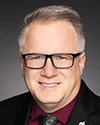
Marc Dalton Conservative Pitt Meadows—Maple Ridge, BC
Mr. Speaker, when I go grocery shopping, I am always shocked at the prices. My heart breaks for those millions of Canadians who can barely make ends meet. A new Dalhousie University survey found that one in three Canadians is drawing from their savings or borrowing money just to buy food. After years of Liberal spending, inflationary budgets and economic mismanagement, Canadians are paying the price. The numbers are staggering. Canadian food banks recorded 2.5 million visits in a single month, more than double since 2019, and one-third involved children.
In B.C., food bank visits have also doubled. Seniors on a fixed income, single parents and working families are increasingly turning to food banks because they simply cannot make ends meet. Canadians deserve a government that makes life more affordable, not Liberal budgets that make putting food on the table increasingly difficult.

Caroline Desrochers Liberal Trois-Rivières, QC
Mr. Speaker, single-use plastics are one of the greatest environmental challenges of our time. A team of researchers in Trois-Rivières is trying to come up with solutions to address this issue.
Today, the Natural Sciences and Engineering Research Council of Canada will present a Synergy Award for Innovation to Julien Bley, Martin Dubé and Tarik Jabrane of Innofibre at the CEGEP de Trois-Rivières, as well as Simon Barnabé and Bruno Chabot of the Université du Québec à Trois‑Rivières, alongside their industrial partner, Kruger. Together, they are transforming our forest resources into packaging to replace single-use plastics. This includes recyclable and compostable paper, cellulose film and packaging that keeps food fresh longer. Their partnership illustrates what can be achieved when colleges, universities and industry work together.
On behalf of the people of Trois‑Rivières, I would like to thank them and offer my congratulations.
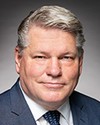
Randy Hoback Conservative Prince Albert, SK
Mr. Speaker, I rise today to honour Private Shaun Farrell of the Princess Patricia's Canadian Light Infantry, who lost his life in the recent CFB Wainwright training accident. Today, Shaun's family, friends and comrades, and members of the community, gather to pay their respects at a military service with full honours at the Prince Albert Armoury. I stand with them in their grief.
Born in South Africa, Shaun made Canada and Prince Albert his home. As a new Canadian, Shaun answered the call to duty with courage and professionalism. Training accidents remind us of the real risks our soldiers accept every day, even when they are far from the battlefield.
Shaun leaves behind his loving parents Roland and Patricia, his brother Byran, his grandmother Lynette, his extended family and his friends. On behalf of the House, I offer my deepest condolences to Shaun's family and to those who served with him. His sacrifice will not be forgotten. We will remember him.

Jessica Fancy-Landry Liberal South Shore—St. Margarets, NS
Mr. Speaker, as a former educator, I know that teaching civics is about more than explaining how our institutions work. It is also about inspiring young people to participate in our democracy. That is why I rise today to recognize the Teachers Institute on Canadian Parliamentary Democracy, which brings outstanding teachers from across Canada this week to Parliament Hill to experience our democratic institutions first-hand.
These 80 educators return to their classrooms with a deeper understanding of Parliament and a renewed ability to engage students in the democratic process. At a time when misinformation and political polarization can undermine our trust in public institutions, civic education has never been more important.
I want to thank the people participating this week, as well as the House of Commons staff who make this program possible every single year. Together we are helping to build a more informed, engaged and democratic Canada.

Ned Kuruc Conservative Hamilton East—Stoney Creek, ON
Mr. Speaker, just days before Remembrance Day, a 59-year-old member of the Canadian Armed Forces was assaulted while supervising young cadets at a poppy drive in Hamilton. The attack left him with life-altering injuries. I am absolutely disgusted by this violent attack, especially given the significance of the Remembrance Day poppy drive.
Every year, Canadians proudly wear their poppy to honour the brave men and women who served and sacrificed for our country. For a CAF member to be violently attacked while volunteering his time to support our veterans is heartbreaking and completely unacceptable. I can confidently speak for every member of the House when I say our thoughts and prayers are with the victim, his family and the young cadets who witnessed this horrific act.
Our veterans fought to protect the freedoms and values we hold dear. There is no place for this kind of violence in Canada.

Leslie Church Liberal Toronto—St. Paul's, ON
Mr. Speaker, Rick Hansen turned an extraordinary journey 40 years ago into a movement that changed Canada and the world: over 26 months, 34 countries and 40,000 kilometres, powered by his own physical strength and the strength of his belief. He challenged all of us to think bigger about disability, about opportunity and about the country we can build together.
Tonight we welcome this great Canadian to Ottawa for a screening of Man in Motion: The Rick Hansen Story right here on Parliament Hill. Four decades on, the Rick Hansen Foundation's work continues to break down barriers, champion accessibility and open doors. Rick's example calls on members of the House to build a Canada where everyone can participate, contribute and belong.
We thank Rick for helping Canada dream bigger and for shattering what we thought were the limits of disability. His journey around the world may have ended, but what he set in motion never will.

Pierre Poilievre ConservativeLeader of the Opposition
Mr. Speaker, it is all well and good to watch the results south of the border, but we also have to look at the real problems real people are having here, at home. People are really suffering, and things have only gotten worse after two years of this Prime Minister and his grand theatrical gestures. People cannot afford groceries, housing or gas.
Will the Prime Minister do his job here at home? Will he stand up in the House and announce that he will take action to save Canadians money by eliminating all gas taxes?

Steven MacKinnon LiberalMinister of Transport and Leader of the Government in the House of Commons
Mr. Speaker, of course, we have repeatedly taken action to support Canadians who have—
TaxationOral Questions
The Speaker Francis Scarpaleggia
The hon. Leader of the Government in the House of Commons may start his answer from the beginning.
Steven MacKinnon Liberal Gatineau, QC
Mr. Speaker, of course, this Prime Minister has repeatedly taken action to support Canadians who are suffering because of rising prices, wars in the Middle East and Europe, and factors outside our country. We will always take action. However, we are taking note of the Conservative Party's systemic opposition to any initiative designed to support Canadians in need.
Pierre Poilievre ConservativeLeader of the Opposition
Mr. Speaker, the question was for the Prime Minister and concerned the rising price of gas due to Liberal taxes.
There are two economies: one for the Prime Minister's friends and another for everyone else. Under the Conflict of Interest Act, it is illegal for the Prime Minister to intervene in the awarding of contracts to companies connected to friends. Mr. Goldberg of Telesat belongs to both a book club and a running club with the Prime Minister. He has also attended two of the Prime Minister's swearing-in ceremonies.
Did the Prime Minister discuss the $2-billion contract awarded to Telesat with his staff?

Mélanie Joly LiberalMinister of Industry and Minister responsible for Canada Economic Development for Quebec Regions
Mr. Speaker, for years, Canadians have been able to take pride in the fact that we have a company capable of operating satellites in Canada. Successive governments have supported this company because we believe it is important for Canada not to rely on foreign companies, but rather to rely on companies that manufacture here at home. That is why Telesat is such an important company.
Pierre Poilievre ConservativeLeader of the Opposition
Mr. Speaker, it is all well and good to watch the results south of the border, but we have real problems as well here in Canada, real problems in the real lives of real people who cannot afford eat, heat, or house themselves, real problems that have gotten much worse since the Prime Minister took office.
Meanwhile, the Prime Minister distracts with grand theatrical gestures, so my question is, will he actually stand up and do his job in the House, in our country, to save Canadians money by taking all taxes off gas and diesel so Canadians can afford to eat, heat, and house themselves?
Steven MacKinnon LiberalMinister of Transport and Leader of the Government in the House of Commons
Mr. Speaker, the Prime Minister and the government have and will continue to, and I note that the budget is tomorrow, support Canadians who are feeling pinched by foreign wars, wars in the Middle East and a number of external factors, including trade wars, that have affected their quality of life and affordability.
I have to also note the systematic opposition of the Conservative leader and party to every single possible initiative that we put forward to help Canadians in need.
Pierre Poilievre ConservativeLeader of the Opposition
Mr. Speaker, if the Prime Minister actually believed that, he would stand up and say it himself. The question was about the 20¢ a litre he adds to the price of gas, including with a tax that takes money out of the pockets of hard-working Canadians to subsidize American biodiesel and biogas firms.
In the middle of a trade dispute that the Prime Minister has been unable to solve here at home, he drives up the costs for single moms, seniors and small business people to subsidize the Americans. Enough is enough. There are real problems here at home.
Will the Prime Minister take his taxes off gas so Canadians can afford to eat?

Julie Dabrusin LiberalMinister of the Environment
Mr. Speaker, we take affordability very seriously. That is why, in fact, many people in the Leader of the Opposition's community and, frankly, in communities right across the country, are going to be able to, with this heating season, take advantage of the heat pump rebates we have put in place. That is going to be a very tangible way to save Canadians, on average, over $1,000 every single year. These are true savings.
If the Leader of the Opposition wants to talk about clean fuel regulations, I am sure he might like to have a conversation with Imperial in Strathcona. It is right outside his riding.
Pierre Poilievre ConservativeLeader of the Opposition
Mr. Speaker, the question was not about how much Brookfield can get in heat pump subsidies from the Prime Minister. The question was about the cost of living.
There are two economies right now: the economy for those who follow the rules and one for those who make the rules. It is illegal for the Prime Minister to discuss matters that affect the financial interests of a friend, under section 9 of the ethics act. Dan Goldberg, from Telesat, is in two clubs with the Prime Minister, travelled to see him in London and attended both of his swearing-in ceremonies.
Did the Prime Minister ever discuss with any of his staff the $2.3 billion in contracts that went from the government to that company?
Mélanie Joly LiberalMinister of Industry and Minister responsible for Canada Economic Development for Quebec Regions
Mr. Speaker, in the House, there are two philosophies that are contradicting themselves. First, the Conservatives are never talking about the American tariffs. Then there is us dealing with the impacts of a trade war, knowing that Canadian companies are key to our sovereignty and the protection of our people. That is Telesat. That is a company we need to protect. Why? It is because we need to have sovereign capability when it comes to satellites in this country.
Pierre Poilievre ConservativeLeader of the Opposition
Mr. Speaker, there we go. There we have it. Every time they get caught with their hands in the cookie jar, they raise grand theatrical distractions. It is illegal under the ethics act for the Prime Minister to be in any way involved with a company with which he has a friendship.
Dan Goldberg, the CEO of Telesat, is in a book club and a jogging club with the Prime Minister and attended two of his swearing-in ceremonies. He even flew over to London to see the Prime Minister.
Given that it is illegal to help a friend, did the Prime Minister ever discuss this contract with anyone in the government?
Mélanie Joly LiberalMinister of Industry and Minister responsible for Canada Economic Development for Quebec Regions
Mr. Speaker, it has been constant industrial policy for decades now to support being able to have companies operating telecommunication and satellite services. The Harper government, the Trudeau government and this government have all supported Telesat. We believe that thousands of jobs in this country are linked to the company.
I would like to know what the Leader of the Opposition suggests. Is it more Telesat, or more of an American company?

Christine Normandin Bloc Saint-Jean, QC
Mr. Speaker, today is November 4 and tomorrow, a budget named “Masters of Our Destiny” is going to be tabled. The real question, however, is who is going to end up master of whose house.
The Liberals caved to Donald Trump by sacrificing our culture. They used our own money to buy a pipeline for American oil company owners. They want to sell our airports to foreign interests. We even found out this summer that they are toying with the idea of allowing more U.S. dairy products onto our shelves to make Donald Trump happy.
Why does it seem like, under the Liberals, it is the Americans who are becoming masters in Quebec's house, instead of Quebeckers?

Joël Lightbound LiberalMinister of Government Transformation
Mr. Speaker, would anyone like to know what being masters of our destiny means? It means doubling our hydroelectric generating capacity. It means major projects like the one at Churchill Falls. The CEO of Hydro‑Québec says that project will ensure prosperity for generations of Quebeckers.
For once, will the Bloc Québécois show it is capable of supporting a project that is building Quebec?
Christine Normandin Bloc Saint-Jean, QC
Mr. Speaker, Quebeckers would feel a little more like masters in their own home if their money were used to meet their needs. That means Ottawa would need to reverse all its environmental rollbacks and fossil fuel subsidies and invest here instead. It would need to reverse its cultural concessions and make American tech giants contribute to our creative industries. It would need to invest in housing, in combatting homelessness, and in lowering the cost of living, instead of investing $40 billion in dirty oil pipelines.
Will the government meet Quebeckers' real needs?
Joël Lightbound LiberalMinister of Government Transformation
Mr. Speaker, if my colleague wants to talk about addressing Quebeckers' real priorities, we can talk about the Canada child benefit, which has reduced child poverty by nearly 40% in Quebec. We can talk about Canada's national school food program, which helps 100,000 young people in Quebec. We can talk about the Canada groceries and essentials benefit. We can talk about the Canadian dental care plan, which helps millions of Quebeckers.
It would be nice if, for once, the Bloc Québécois would rally behind initiatives that truly help our community.
Jean-Denis Garon Bloc Mirabel, QC
Mr. Speaker, tomorrow is budget day, and Quebec's finance minister, Nicolas Marceau, has outlined his expectations. He is calling on the federal government to finally pay back the debt it has owed Quebec since 2024 for costs related to taking in asylum seekers.
Quebec is also calling for an increase in health transfers, as the Liberals are about to cut the growth rate from 5% to 3% beginning in 2028. That rate needs to be locked in at 6% annually for a minimum of five years.
Will the government listen to these two reasonable demands from Quebec?
Joël Lightbound LiberalMinister of Government Transformation
Mr. Speaker, it goes without saying that all 44 members from Quebec on this side of the House will always want to work with Quebec. Take, for example, what we have done in the past 11 months: $11 billion for the Davie shipyard, 5,000 jobs, the biggest contract—
FinanceOral Questions
The Speaker Francis Scarpaleggia
I am not in the habit of rising to respond, but I am hearing a lot of noise at the back of the room.
The hon. minister can continue his answer.
Joël Lightbound Liberal Louis-Hébert, QC
Mr. Speaker, I thank my colleagues for their enthusiasm. It is true that what we have done for Quebec is impressive. I spoke about the Davie shipyard, but I could have also mentioned the $10 billion we are investing in infrastructure, including $1 billion for health care infrastructure at Quebec's request. We will continue to work with Quebec to build Canada strong.

Michael Chong Conservative Wellington—Halton Hills North, ON
Mr. Speaker, four times I have asked a question about the government's fiscal targets and four times there has been no answer. Here is why the question is important. Here is what economist Christopher Ragan said in today's Globe:
...our governments are suffering from “fiscal complacency.”...
They are doing what is easy and painless in the short run, but avoiding the tougher decisions that would better prepare them for an uncertain and risk-filled future.
For the fifth time, will the Prime Minister and the government meet fiscal targets to reduce the deficit and debt in tomorrow's budget?

Wayne Long LiberalSecretary of State (Canada Revenue Agency and Financial Institutions)
Mr. Speaker, I have good news for the member and all members across the House. Tomorrow, we will table budget 2026. On this side of the House, we are serious about building a strong economy and the most resilient and diversified economy in the G7. We are going to continue to attract outside investment. We are going to bring down barriers. We are going to invest coast to coast in infrastructure, major projects and housing. Also, as something that party would never do, we are going to make sure we address affordability for Canadians who are struggling.
Michael Chong Conservative Wellington—Halton Hills North, ON
Mr. Speaker, the Prime Minister's new national security framework states that Canada needs to “Prepare for all contingencies up to and including war and other worst-case scenarios.” It puts economic security at the heart of that plan. Canada had the fiscal capacity to deal with the 2008 financial crisis and the 2020 pandemic, but the government's rising debt and interest are reducing the capacity of the federal government to deal with the future crisis that the Prime Minister says is coming in his upcoming framework.
For the sixth time, will the government hit its fiscal targets in tomorrow's budget?
Wayne Long LiberalSecretary of State (Canada Revenue Agency and Financial Institutions)
Mr. Speaker, we are going to continue the work of building a strong economy, the most resilient economy in the G7, for all Canadians. We are going to invest in our country. We are going to continue to bring down impediments to investment. We are going to develop and double our non-U.S. investments.
We believe that we can build the strongest economy in the G7 while looking after those who need support. That party has voted against every affordability measure we have ever brought forward.
We stand with Canadians. Tomorrow, we will be proud to table budget 2026, another step to becoming—

Melissa Lantsman Conservative Thornhill, ON
Mr. Speaker, the evidence is impossible to ignore. Yesterday, The Salvation Army reported that one-third of Canadians are skipping meals or cutting their portions, up almost 30% from just last year. Food bank visits have hit 2.35 million in a month, and that is double from 2019. This is not just some rough patch caused by something somewhere else far away. It is a slow and consistent leak in every household budget. The Liberal government has offered absolutely nothing to fix it. It has an affordability problem. Will Thursday's budget fix it?
Leslie Church LiberalParliamentary Secretary to the Secretaries of State for Labour
Mr. Speaker, any time a child or family in Canada is hungry, it should stop us all. It is why this government made the national school food program permanent. It is why we tied the Canada child benefit to inflation. It is why we introduced the Canada disability benefit. It is why we are not finished.
I would invite the member opposite to stay tuned tomorrow, when we introduce budget 2026. Those guys talk about spending in the budget and they talk about inflation, but they leave to the rest of our imaginations what they would cut. We know that and Canadians know that, because they vote against all of these measures time and again.
Melissa Lantsman Conservative Thornhill, ON
Mr. Speaker, if any of those programs worked, then food bank use in Toronto would not be up 333% since 2019.
On Monday, I asked if the government would cut taxes on gas. There was no answer. On Tuesday, I asked whether Canadian tax dollars would stay here instead of going to Europe. There was no answer. The government has an affordability problem and it looks like it does not care.
Once more, will the budget offer anything, one word, one sentence, to help save Canadians money?
Leslie Church LiberalParliamentary Secretary to the Secretaries of State for Labour
Mr. Speaker, if we look at the report from The Salvation Army, it notes that 83% of respondents say that support services improved their family's well-being, and 53% say that it improved their access to food. That is why our government is funding these services through things like the national food security strategy.
When we look at these reports, they talk about services like the groceries and essentials benefit, the Canada child benefit, the school food program and even the work that we are doing through Build Canada Homes to create affordable housing. These are the ways we bring about affordability for Canadians. We are focused on it and they are not.
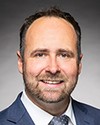
Philip Lawrence Conservative Northumberland—Clarke, ON
Mr. Speaker, there has been one consistent theme over the past 10 Liberal budgets: reckless spending. Each budget has delivered record-breaking expenditures. The results have been deficit-fuelled inflation, high interest rates and a crushing cost of living crisis.
Tomorrow, will the government finally reverse course, meet its own financial targets and restrain spending so Canadians can afford to live?

Ryan Turnbull LiberalParliamentary Secretary to the Minister of Finance and National Revenue and to the Secretary of State (Canada Revenue Agency and Financial Institutions)
Mr. Speaker, tomorrow's budget is named, for good reason, “Masters of Our Destiny”. Why? It is because in a moment when our economic security and our sovereignty are being tested at all levels, our government is standing up to protect the country we love to build industries, support families, diversify trade and move quickly to get shovels in the ground and create tens of thousands of new jobs.
If the Conservatives wrote the budget, it would be called “Servants of Surrender”. Why? It is because they waved the white flag before the battle even started.

Éric Lefebvre Conservative Richmond—Arthabaska—des-Sources, QC
Mr. Speaker, here is a riddle. Which former Quebec Liberal finance minister said, “Balancing the budget is not an obsession.... It is a basic requirement so that we can move forward with all of our other public policies”? Which finance minister said that? I cannot name him, because he is currently serving as a Liberal MP and as a member of the Standing Committee on Finance. He is someone I hold in high regard, and I agree with him on the importance of balancing the budget.
Does the Prime Minister agree with his MP?
Mélanie Joly LiberalMinister of Industry and Minister responsible for Canada Economic Development for Quebec Regions
Mr. Speaker, I thank the member for giving me the opportunity to pay tribute to my colleague, the Parliamentary Secretary to the Minister of Industry.
He did a great job when he served as Quebec's finance minister, and he is also doing a great job as parliamentary secretary. We are working together every day to manage the tariff crisis. When I hear my colleagues talking about all the crises that Canada has faced in recent years, I do not understand why they do not think that we are in a crisis right now, given that we are in the midst of a trade war, dealing with job losses and trying to create economic growth, when the U.S. administration wants to—
FinanceOral Questions
Éric Lefebvre Conservative Richmond—Arthabaska—des-Sources, QC
Mr. Speaker, let me try a second riddle. Who said during the election campaign that we must “ensure that government debt-to-GDP declines over the budget horizon”? Who said that? It was the Prime Minister, on page 55 of his election platform. The Prime Minister made a formal commitment to reduce Canada's debt-to-GDP ratio.
What measures will be taken to keep his promise, so he can keep his word, given that the government is announcing a $63‑billion deficit?
Steven MacKinnon LiberalMinister of Transport and Leader of the Government in the House of Commons
Mr. Speaker, when my friend across the way started his question, I already knew that he was not talking about Brian Mulroney or Stephen Harper, who drove the country into debt in a way that had never been done before.
I would like to remind members that we will have the documents and budget numbers here in the House tomorrow. I encourage my colleague to join us here and stay tuned for the economic plan to build a very strong Canada.

Gabriel Ste-Marie Bloc Joliette—Manawan, QC
Mr. Speaker, Bill C-39 is so bad that even the National Women's Liberal Commission is against it. These courageous women are speaking out against the way the current crisis is being exploited to give the Prime Minister excessive powers. They want accelerated authorities to be reported to Parliament and subject to independent review, as well as being time-limited. These women are being sorely let down by their representatives in the government caucus, because no one has had the courage to criticize the overreach in Bill C-39.
Will any minister have the courage to do that today?
Julie Dabrusin LiberalMinister of the Environment
Mr. Speaker, I am going to say this again, because I think it is very important to reiterate it for everyone here. We will work to improve the effectiveness of our regulations, but we will not change the environmental standards under those regulations. We will continue to protect the environment, but we will build major projects. These major projects, such as large-scale power generation projects, will actually help us reduce our emissions.
Gabriel Ste-Marie Bloc Joliette—Manawan, QC
Mr. Speaker, they are not doing a very good job.
Speaking of strong women who oppose Bill C-39, on Monday, Magali Picard, of the Fédération des travailleurs et travailleuses du Québec, criticized the restrictions on the right to strike. She announced that she would challenge Bill C-39 all the way to the Supreme Court, arguing that it is unconstitutional and would impose the most restrictive labour regime in the G7. Yesterday, AFN National Chief Cindy Woodhouse Nepinak likewise called for Bill C-39 to be withdrawn, because it is unsalvageably flawed and violates the United Nations Declaration on the Rights of Indigenous Peoples.
When will the government finally realize that Bill C-39 belongs in the dumpster?
Steven MacKinnon LiberalMinister of Transport and Leader of the Government in the House of Commons
Mr. Speaker, Ms. Picard and I agree that the Government of Canada must invest more to prevent labour disputes, lockouts and strikes. That is why Bill C-39 proposes introducing special measures, special mediation, new techniques and new approaches. The goal is to ensure that not just 95%, but a much higher proportion of labour disputes are definitively resolved through collective agreements, rather than through strike action.

Shuv Majumdar Conservative Calgary Heritage, AB
Mr. Speaker, the Prime Minister called this the greatest crisis since the Second World War. Then he said Trump is a transformational president. He said integration is subordination and then wanted more integration to “make America great again.”
He decried a world of fortresses and then “fortress North America”. He said that we are “at war” and the U.S. wants to break us to own us.
Now he has a chat with the President about T-shirts and dress shirts. There is a new deal, the best deal, then no deal beats a bad deal, and now a bad deal beats no deal at all.
Every position changes except for one: whatever helps Liberals in December's by-elections.
What is the actual plan, or is it just putting his party ahead of the country?

Dominic LeBlanc LiberalPresident of the King’s Privy Council for Canada and Minister responsible for Canada-U.S. Trade
Mr. Speaker, speaking of some positions that never change, there are the attempts of the Conservative Party to connect a series of dots that do not exist.
I am surprised the Conservatives continually talk about by-elections. I am not sure it is going to be something they will like to talk about in a few weeks. Some of them, in fact, were caused by members of their own party evacuating the caucus.
I understand our friends on the other side want to connect a series of dots. They know very well our government is hard at work to defend workers and businesses in Canada, and we will continue to do that.
Shuv Majumdar Conservative Calgary Heritage, AB
Mr. Speaker, “defend workers”? Last month, economist Trevor Tombe told the foreign affairs committee there is no evidence the Liberal countertariffs changed American behaviour, none. What they did was raise prices across the board and slash the income of Canadians earning under $30,000. Liberals are taxing our most vulnerable to punish Washington, and Washington could not be bothered.
Beyond the domestic Liberal politics designed to control our national debate, what is the plan beyond “elbows up” to actually level up?
Dominic LeBlanc LiberalPresident of the King’s Privy Council for Canada and Minister responsible for Canada-U.S. Trade
Mr. Speaker, again, we see members of the Conservative Party attempt to attribute a series of motivations in circumstances that do not exist. They know very well. Our government was very clear. When the Americans increased unjustified and illegal tariffs on Canadian businesses and workers, Canadians expected our government to take a strong position, something the opposition would never have done, because they continually find excuses as to why Canada should not have stood up to the Americans and done the right thing to defend workers.

Jacques Gourde Conservative Lévis—Lotbinière, QC
Mr. Speaker, while businesses are shutting down, workers are losing their jobs and families are struggling to make ends meet, the Prime Minister would rather play his Trump card. He said last week that he could wait two and a half years to secure a trade agreement. Conveniently, after calling by-elections, he suddenly picked up the phone and called the U.S. President. Canadians do not want theatrics. They want results.
When will the Prime Minister finally deliver the major trade deal he promised?
Dominic LeBlanc LiberalPresident of the King’s Privy Council for Canada and Minister responsible for Canada-U.S. Trade
Mr. Speaker, I am not sure whether my colleagues would agree, but hearing the member talk about theatrics seems a bit ironic, considering his behaviour in this place. Once again, the Conservatives are trying to connect a series of events that they know full well are completely unrelated.
Yes, we called by-elections, because those ridings deserve to be represented in the House of Commons by strong members of Parliament. Yes, we will stand up for Canadian workers and businesses. We will stand up to the Americans. These are things the Conservatives would never do.

Shannon Stubbs Conservative Lakeland, AB
Mr. Speaker, after 11 years of Liberals, there are two worlds: one where Canadians follow the rules and count every dollar but cannot get ahead, and another where political and business insiders get a seat at the big table and make up their own rules. Companies pay staff in the Liberal Major Projects Office, which makes decisions worth billions of private and public dollars. I questioned it six months ago and last night, but the minister will not even say which sectors the staff are from. So much for accountability and transparency for taxpayers.
How many MPO staff are paid by companies whose projects the office reviews, and will the minister name the companies?
Dominic LeBlanc LiberalPresident of the King’s Privy Council for Canada and Minister responsible for Canada-U.S. Trade
Mr. Speaker, I had the opportunity to have this conversation with our colleague on the other side last evening at the building Canada committee. She just asserted that we did not talk about which sectors these interchange employees come from. Last night I said, and I am happy to repeat it again, the transportation sector, financial services sectors and agriculture sectors.
Many of these interchange positions, something that has existed in government for well over 50 years, include other orders of government, and they also allow public servants to work in the private sector and for non-profit organizations as well.
Shannon Stubbs Conservative Lakeland, AB
Mr. Speaker, last night the minister actually called disclosure a “gotcha moment“ when accountability is literally his job.
Companies help pay staff inside the Major Projects Office, but conflicts are reviewed internally without independent ethics oversight. The Liberals want Canadians to trust the safeguards but hide how and to whom those safeguards apply. The minister should release the rules, name the companies and say how many staff have been recused.
If the safeguards are so strong, why is the secrecy even stronger, and what does the minister have to hide?

Tim Hodgson LiberalMinister of Energy and Natural Resources
Mr. Speaker, while the Conservatives want to think about conspiracy, what we do at the MPO is create jobs, like the 5,000 new jobs at Churchill Falls, the 8,000 new jobs at Contrecoeur, the 1,000 new jobs at Nouveau Monde Graphite, the 5,000 new jobs at LNG Canada and the 7,000 new jobs at Ksi Lisims.
Instead of talking down the MPO, why do they not help us build jobs?

Doug Eyolfson Liberal Winnipeg West, MB
Mr. Speaker, as part of the alliance for the future, the new partnership of nations that will leverage the strategic capabilities of Canada and the EU, our government is making a historic investment of up to $2.5 billion in financing for Alberta-based De Havilland to dramatically increase water bombing production capacity.
Can the Minister of Emergency Management and Community Resilience tell the House how this financing will help European partners and Canada fight wildfires and support thousands of jobs across Canada?

Eleanor Olszewski LiberalMinister of Emergency Management and Community Resilience and Minister responsible for Prairies Economic Development Canada
Mr. Speaker, this is an investment in Canadian workers, Canadian aerospace ingenuity and community safety. It will help Alberta-based De Havilland double production of its iconic 515 water bombers, supporting thousands of great jobs in Alberta. This investment will get more of these life-saving aircraft where they are needed sooner.
The Leader of the Opposition called the EU-Canada summit “political theatre”. I doubt the workers benefiting in Alberta, the province he represents, would agree.

Carol Anstey Conservative Long Range Mountains, NL
Mr. Speaker, after 11 years of the Liberals, one thing is clear. There are now two Canadas, one for hard-working Canadians who play by all the rules and one for the Liberal club. While Canadian families struggle to put food on the table, private corporations are paying employees who work inside the Major Projects Office, and the Prime Minister refuses to reveal who they are. Imagine an employer having their own employees working inside the very office responsible for advancing the projects the employer's company wants approved.
Can the Prime Minister tell Canadians exactly how many corporate-paid employees are working inside his MPO and which companies are paying for that?

Joanne Thompson LiberalMinister of Fisheries
Mr. Speaker, I actually have some very good news for the member opposite. Today we were proud to announce the removal of China's tariffs for two years—
Major Projects OfficeOral Questions
The Speaker Francis Scarpaleggia
We need it to be a little quieter so the minister can answer.
The hon. Minister of Fisheries and Oceans has the floor.
Joanne Thompson Liberal St. John's East, NL
Mr. Speaker, I would like to take it from the top, if I could, because this is such important, good news for the province I share with the member opposite.
There is a two-year removal of the Chinese tariffs on lobster and crab, which is so significant for Atlantic Canada. On top of that, there is over $300 million over five years for AFF funding.
Instead of reading prepared notes, let us get together and do something that actually makes sense.
Carol Anstey Conservative Long Range Mountains, NL
Mr. Speaker, I would not want to talk about the Major Projects Office either.
Last year, the Prime Minister told Canadians to prepare to make sacrifices. Well, guess what. They are already making them. Food bank visits have reached a record 2.35 million in a single month, with 776,000 of those visits being made by children.
Canadians are being made to make sacrifices, yet private corporations are paying employees working inside of the Prime Minister's Major Projects Office, and the government refuses to disclose which companies are involved. Again, Canadians deserve transparency.
How many employees working inside the Major Projects Office are being paid by—
Major Projects OfficeOral Questions
Tim Hodgson LiberalMinister of Energy and Natural Resources
Mr. Speaker, rather than come up with conspiracy theories, why does the member not talk about what the MPO did at Churchill Falls? It is the largest renewable energy—
Major Projects OfficeOral Questions
Tim Hodgson Liberal Markham—Thornhill, ON
Mr. Speaker, rather than come up with conspiracy theories about the MPO, the member might recognize that the MPO helped make Churchill Falls happen. It is the largest renewable energy project in the history of North America, with 5,000 new jobs in her province, new mines in her province. Instead of coming up with conspiracies, why does she not help the MPO get—
Major Projects OfficeOral Questions

Connie Cody Conservative Cambridge, ON
Mr. Speaker, the Prime Minister promised lots of things about his new Major Projects Office, but he forgot to mention that it would be done with unprecedented secrecy. It could be up to one-third corporate-sponsored employees working inside the office, and we do not know which private corporations are paying them. Canadians have a right to know who has a seat at the table. These insiders have direct access to government decisions that could benefit their employers.
Yesterday at committee, I asked a simple question. Which companies do they work for? The minister refused to answer, so I will ask again.
Will the minister be transparent and release the list of corporations, yes or no?
Tim Hodgson LiberalMinister of Energy and Natural Resources
Mr. Speaker, just as with the last member, I would invite the member, rather than focusing on conspiracy theories about the MPO, to focus on the 18,000 jobs at the Darlington nuclear reactor. It is one of the most important renewable energy projects in the world, the first SMRs in the world, and the Conservatives are talking down the office that made that happen. Maybe they should get with the program.
Connie Cody Conservative Cambridge, ON
Mr. Speaker, there is clearly something to hide. The minister refused to identify the corporations that are paying their employees to work inside the Major Projects Office.
This is the same Liberal government that has been found guilty of ethics violations time and time again, and now Canadians are supposed to trust them. Why should they? How can Canadians be expected to believe that large corporations are paying employees to work inside the Major Projects Office simply out of generosity? Canadians do not know who these companies are, how conflicts are being screened or whether those companies stand to benefit from government decisions.
If the government has nothing to hide, why is it hiding?
Steven MacKinnon LiberalMinister of Transport and Leader of the Government in the House of Commons
Mr. Speaker, we have talked about Atlantic Canada, we have talked about Quebec, and we have talked about Ontario. Now it is time to talk about British Columbia, where I was last Friday to announce, with the help of the MPO, it must be said, the listing of Roberts Bank Terminal 2. It is a megaproject for all of Canada, with $6 billion and 17,000 jobs for British Columbians and Canadians, to export our goods, our farm goods and the products of our ingeniosity over to Asia and create—
Major Projects OfficeOral Questions

Gabriel Hardy Conservative Montmorency—Charlevoix, QC
Mr. Speaker, the way the Prime Minister is managing taxpayers' money is starting to become extremely worrisome. On one side, we have ordinary citizens who are affected by those decisions on a daily basis and who are paying the price every day. On the other, we have the people who make the rules and the friends of the people who make the rules. They are the ones reaping the benefits.
We have learned that many of the employees of the Major Projects Office are there on loan from private companies and banks. These are the people who are responsible for deciding which companies will receive billions of dollars from the Liberals. They get to choose the winners, and their boss might be one of them.
How can we expect Canadians to have confidence in our institutions when transparency—
Major Projects OfficeOral Questions
Joël Lightbound LiberalMinister of Government Transformation
Mr. Speaker, what I do not understand about the Conservatives is the way they talk about helping ordinary people and then systematically vote against those people's interests. That member specifically voted against 19,223 children who are receiving an average of $5,000 through the Canada child benefit, in addition to the 19,000 people in his riding who are benefiting from the Canadian dental care plan.
The confusion and hypocrisy across the way do not stop there. Yesterday, the member for Bellechasse—Les Etchemins—Lévis accused us of helping businesses too much. However, when we were in her riding, visiting Prevost and helping businesses deal with the trade war, they were quite happy to be there on the sidelines and applaud the announcements we were making to support Canadian businesses.
Gabriel Hardy Conservative Montmorency—Charlevoix, QC
Mr. Speaker, the most alarming thing about all this is that these employees' potential conflict of interest is not subject to any independent oversight. The Privy Council Office is staffed by employees who work directly for the Prime Minister. The Major Projects Office is the Prime Minister's creation and tool. They are the ones who decide whether or not there is a conflict. When we asked for the names of the companies involved in all that, they responded that the information is confidential and that revealing it could cause embarrassment.
Since when is transparency something to be embarrassed about?
Are the Liberals going to reveal which businesses are paying employees to pick the winners, yes or no?
Steven MacKinnon LiberalMinister of Transport and Leader of the Government in the House of Commons
Mr. Speaker, the Major Projects Office has selected Quebec winners as well.
I implore the member to support this side of the House, because we revealed the investment and the start of construction on the Contrecoeur project, which will increase the Port of Montreal's container capacity by 50%. What is that going to accomplish? It is going to create wealth, opportunities and supply chains for Quebec manufacturers, farmers and producers to reach the entire world. It is creating jobs in Quebec.

Aaron Gunn Conservative North Island—Powell River, BC
Mr. Speaker, at a time when many Canadian families are feeling the pinch of the cost of living crisis, how can the Liberal government justify taking $1.6 billion out of the pockets of Canadians and giving it to Cohere, an AI company valued at more than $36 billion?
Is this AI company so strapped for cash that it has to take it from taxpayers who are struggling to put food on their tables and gas in their tanks, or is this just another example of the Liberals giving taxpayer-funded handouts to big corporations and their Liberal friends?

Evan Solomon LiberalMinister of Artificial Intelligence and Digital Innovation and Minister responsible for the Federal Economic Development Agency for Southern Ontario
Mr. Speaker, we have a choice. We can either build this strategically important technology here in Canada, or we can buy it from someone else. We choose to build in Canada, support Canadian champions and build safe, sovereign AI.
With this company, we are taking an equity position so all Canadians can benefit. This company will create 1,000 jobs and invest $1.7 billion in computing here. This is what it means to build Canada strong and build sovereign, safe Canadian AI.

Blaine Calkins Conservative Ponoka—Didsbury, AB
Mr. Speaker, the federal government recently announced that it purchased a $1.6-billion stake in the artificial intelligence firm Cohere. We soon found out this money was being funnelled to well-connected Liberal insiders. Dominic Barton, the chair of Invest in Canada, and Patrick Pichette, the head of digital transformation Canada, were early investors in Cohere. They also have long-standing ties to the Prime Minister. Having been promoted to these high-profile government roles, they now stand to gain from the Liberal government's so-called investment in Cohere.
Why is it that every time the Prime Minister spends millions or billions, a Liberal insider is so easy to find?
Evan Solomon LiberalMinister of Artificial Intelligence and Digital Innovation and Minister responsible for the Federal Economic Development Agency for Southern Ontario
Mr. Speaker, we are not going to wait for others to build AI. We are going to build safe Canadian AI. We are going to invest in Canadian companies. We are going to keep the jobs here in Canada. We are going to keep the intellectual property here in Canada. We are going to make sure that Canada has a seat at the table with this safe, sovereign technology.
We will not do what the Conservatives would like us to do, which is nothing. We are building in Canada, because that is how we have control over the future.
Blaine Calkins Conservative Ponoka—Didsbury, AB
Mr. Speaker, this AI scandal perfectly illustrates why the government should not be in the business of picking winners and losers. It is a masquerade that is simply about using taxpayer dollars to reward their friends in the Liberal club. It is a hallmark of virtually every Liberal government.
Let us take Dominic Barton, for example. As a former global managing director at McKinsey, he benefited from hundreds of millions of dollars in Liberal government contracts. Now, as an early investor in Cohere, he stands to gain once again.
Can the Prime Minister please explain why his Liberal friends are doing so well, while so many other Canadians are just barely hanging on?
Evan Solomon LiberalMinister of Artificial Intelligence and Digital Innovation and Minister responsible for the Federal Economic Development Agency for Southern Ontario
Mr. Speaker, this is not about what the Conservatives say, picking winners or losers. This is about investing in Canadians. They should try it for a while.
Canadians are winners because they build here in Canada. We are one of the few middle powers. There are only four countries that have the capacity to build safe, sovereign companies. Cohere is a Canadian champion. It will put 1,000 jobs here in the next three years. It will invest $1.7 billion, and Canadians now can benefit from this company staying Canadian. The Conservatives should try to build Canada strong for a change.

Stéphane Lauzon Liberal Argenteuil—Papineau—Des Collines, QC
Mr. Speaker, I have had the opportunity to speak with families, businesses and workers in my riding. They all understand the importance of rising to the challenges of this unique moment and seizing the opportunities before us. They understand that being “masters in our own home” means building a better future, that being “masters in our own home” means a stronger and more resilient Canada.
With just over 24 hours to go before budget 2026 is introduced, can the minister tell us how we will become masters in our own home?
Dominic LeBlanc LiberalPresident of the King’s Privy Council for Canada and Minister responsible for Canada-U.S. Trade
Mr. Speaker, I thank our colleague for his excellent question. He knows very well that our government was elected to strengthen the Canadian economy, diversify our trade, rely on partners who want to invest in and trade more with Canada, and strengthen the armed forces through Canada's industrial strategy. Whether in natural resources or manufacturing, we are here to support Canadian industries. Tomorrow will already be—
FinanceOral Questions
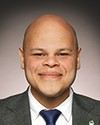
Jamil Jivani Conservative Bowmanville—Oshawa North, ON
Mr. Speaker, Canadians have questions about the $2.3-billion contract given out to Telesat. Its CEO, Dan Goldberg, is close personal friends with the Prime Minister. Liberals were deflecting questions about this earlier today, but the core question is this: Why is the AI minister including Dan Goldberg in his ethics screen but the Prime Minister is unwilling to do the exact same? Canadians want to know why the Prime Minister's ethics screen is incomplete, and when it is going to be fixed.
Steven MacKinnon LiberalMinister of Transport and Leader of the Government in the House of Commons
Mr. Speaker, the Prime Minister, like all ministers, all members of the House and all senior officials throughout the government, must live under some of the most stringent ethics rules in the world. Declarations are filed regularly. Much attention is paid to making sure of the exactitude of all of these documents, and I would encourage all members of the House and all senior members of the government to continue to rigorously adhere to these very high standards.

Michael Guglielmin Conservative Vaughan—Woodbridge, ON
Mr. Speaker, it is another week, another letter sent to Cleveland-Cliffs, yet workers are still facing layoffs.
Now, on October 26, the industry minister said she would provide the House with the demand letter that outlines the numerous breaches Cleveland-Cliffs made in its contract, yet she has not followed through. I have asked for that letter repeatedly in the House, yet parliamentarians still have not seen it, but I did learn that the media has a copy. Therefore, if she is willing to provide it to reporters, certainly she could provide it here for members of the House. Will she table it today, yes or no?
Mélanie Joly LiberalMinister of Industry and Minister responsible for Canada Economic Development for Quebec Regions
Mr. Speaker, when it comes to Stelco, our position is clear. We want the workers to be back working, period. That is why we are waiting for Stelco and we are waiting for Cleveland-Cliffs. There are three days left. If not, we are suing.
Michael Guglielmin Conservative Vaughan—Woodbridge, ON
Mr. Speaker, the minister keeps sending letters and moving deadlines, but what workers really need is a more competitive industry. Conservatives have offered some concrete solutions, like pre-approving LNG projects so we can signal demand to industry for Canadian steel and getting rid of the industrial carbon tax. We have also argued for regulatory and tax reform.
Will the Liberals today commit to advancing our proposals and work with us to make Canada the most competitive place to do business in the world, yes or no?
Mélanie Joly LiberalMinister of Industry and Minister responsible for Canada Economic Development for Quebec Regions
Mr. Speaker, I have a lot of respect for my colleague, and I am always willing to work with him. We know that together we need to deal with the American tariffs, we need to protect our steel sector and we need to make sure that, when it comes to Stelco, the workers are back.
At the same time, I must say that my colleague needs to look at the budget tomorrow. I am convinced that he will be convinced by our plan to build Canada strong.

Viviane LaPointe Liberal Sudbury, ON
Mr. Speaker, in a rapidly changing world, one thing is clear. Meeting this moment gives us all the opportunity, as well as the duty, to build a stronger, more independent and resilient Canada. We have what the world wants. That means new jobs, new investments and new opportunities for all Canadians. It means we are masters of our own destiny.
With budget 2026 just over 24 hours away, can the Secretary of State for Financial Institutions give us a sneak peek of what Canadians can expect tomorrow afternoon?
Wayne Long LiberalSecretary of State (Canada Revenue Agency and Financial Institutions)
Mr. Speaker, the member for Sudbury asked an amazing question. Indeed, this Thursday, we will table budget 2026.
Unlike the Conservatives, who continue to talk down the economy, our workers, our unions and our country, we will build on Canada's strengths. We will unlock investment. We will move projects forward and create good jobs at home. We will strengthen our economy and support small and medium-sized businesses. Unlike the Conservatives, we will make life more affordable for Canadians. Join us for budget 2026—
FinanceOral Questions

James Bezan Conservative Selkirk—Interlake—Eastman, MB
Mr. Speaker, the tragedy at CFB Wainwright took four precious lives, left 39 soldiers hospitalized and countless others exposed to heavy smoke. For many, their recoveries will not be quick. Some will have health challenges for the rest of their lives. Unfortunately, the long-term benefits are different between reserve force and regular force members based on their terms of service. This could result in one survivor receiving adequate support, while another slips through the cracks.
Will the government ensure every soldier with an injury attributable to service receives the same benefits?

David McGuinty LiberalMinister of National Defence
Mr. Speaker, there are 27 Canadians now still in the hospital. We are with them. We are providing all the support we can. We have brought in personnel from Ontario. We are providing surgical help. I would ask all members to stick together as we provide the support that they need.
I take due note of the member's question. We will look at it and come back with an answer.

Jenny Kwan NDP Vancouver East, BC
Mr. Speaker, the Prime Minister is willing to spend $50 billion on a pipeline, a decision that guts Canada's climate strategy and tramples on indigenous rights, but we do not see the same ambition when it comes to his so-called wartime housing program.
With Canadians facing mounting bills, higher interest rates and skyrocketing housing costs, will the Prime Minister declare building community housing a national interest and increase the housing budget to build one million non-market housing units for Canadians?

Jennifer McKelvie LiberalParliamentary Secretary to the Minister of Housing and Infrastructure
Mr. Speaker, I thank the member for the question because it gives us the opportunity to reflect on the hard work we have done over the last year. Over the last year, we have worked with provinces to reduce red tape and fees. We have reduced GST for new homes for first-time homebuyers. We have invested in housing-enabling infrastructure so that we can build more homes.
Here are the results. Let us talk about them. RBC confirmed improved housing affordability. Rent prices are down 24 months in a row. PwC says optimism in housing is back. According to Canadian real estate, housing starts are up in Vancouver and Montreal and, listen to this, up 65% in Saskatchewan—
Presence in GalleryOral Questions
The Speaker Francis Scarpaleggia
I wish to draw the attention of members to the presence in the gallery of the 2026 Natural Sciences and Engineering Research Council award recipients.
With us is the 2026 Gerhard Hertzberg Canada Gold Medal for Science and Engineering prize winner, Dr. Linda Nazar.
Also with us are the winners of NSERC's John C. Polanyi Award and the Brockhouse Canada Prize for Interdisciplinary Research in Science and Engineering.
Also with us are the winners of the Synergy Awards for Innovation and the Arthur B. McDonald Fellowships.
The House resumed from November 2 consideration of the motion.
Justice and Human RightsCommittees of the HouseRoutine Proceedings
The Speaker Francis Scarpaleggia
It being 3:15 p.m., the House will now proceed to the taking of the deferred recorded division on the motion to concur in the ninth report of the Standing Committee on Justice and Human Rights concerning the extension of time to consider Bill S‑233.
Call in the members.
Committees of the HouseRoutine Proceedings
The House resumed from November 2 consideration of the motion that Bill C-269, An Act to amend the Income Tax Act (heat recovery tax credit), be read the second time and referred to a committee.
Bill C-269 Income Tax ActPrivate Members' Business
The Speaker Francis Scarpaleggia
The House will now proceed to the taking of the deferred recorded division on the motion at second reading stage of Bill C-269 under Private Members' Business.
Bill C-269 Income Tax ActPrivate Members' Business
The Speaker Francis Scarpaleggia
I declare the motion lost.
I wish to inform the House that because of the deferred recorded divisions, the time provided for Government Orders will be extended by 24 minutes.

Kevin Lamoureux LiberalParliamentary Secretary to the Leader of the Government in the House of Commons
Mr. Speaker, pursuant to Standing Order 36(8)(a), I have the honour to table, in both official languages, the government's responses to nine petitions. These returns will be tabled in an electronic format.
Veterans' WeekRoutine Proceedings
The Speaker Francis Scarpaleggia
To mark Veterans' Week and commemorate our war veterans, I invite the House to rise and observe a moment of silence.
[A moment of silence observed]

Jill McKnight LiberalMinister of Veterans Affairs and Associate Minister of National Defence
Mr. Speaker, as Veterans' Week begins and Canadians prepare to gather on Remembrance Day, we are reminded of a simple truth: Remembrance matters.
Today, we remember.
Across our country, Canadians will gather in communities large and small. They will stand at cenotaphs and memorials, wear a poppy, observe a moment of silence and remember. They will remember generations of Canadians who answered the call to serve in times of peace, war, conflict and uncertainty. They will reflect on those who never returned home and on those whose lives were forever changed by service. Their courage helped protect the freedoms we enjoy today. Their sacrifices helped safeguard the democratic institutions that define our country. The Canada we know today was shaped not only by the service they gave, but by the sacrifices they made.
However, remembrance is not only about those who served in the past. It is also about recognizing service that continues today. We see it in those who continue to serve Canada in uniform. We see it in veterans, whose commitment to our country continues long after their service has ended.
As we begin Veterans' Week, we do so carrying heavy hearts following the recent loss of four members of the Canadian Armed Forces at CFB Wainwright: Sergeant Morgan Wong, Private Shaun Farrell, Private Aidan Goulding and Private Hayden Lykkemark. Our hearts are with their families, friends and fellow service members. We see the profound impact of this loss on all who knew and loved them. Canadians share in their sorrow.
We will remember those we have lost, those injured and those still recovering, and we recognize the grief being felt across the Canadian Armed Forces among military families, throughout the veteran community and by Canadians from coast to coast to coast.
The deaths of those military personnel, along with other losses suffered in Wainwright, remind us that this is not just part of our history; it is also part of our present, in times of peace as well as in times of war.
Canada sees every veteran, every serving member and the families who stand beside them. Canada is grateful for their service, and Canada will always honour their contributions to our country.
No one serves alone. Behind every veteran and every serving member are families who share the realities of military life, families who endure separation, relocation, uncertainty and sacrifice in service. In a country as diverse as Canada, remembrance remains one of the moments that bring us together.
Canadians come from different backgrounds, live in different regions and hold different perspectives, yet during Veterans' Week, we are united in gratitude for those who have worn Canada's uniform. We are also privileged to serve in this House alongside colleagues who have worn Canada's uniform and continue their service to Canada in public life.
Every generation has a responsibility to remember them.
It is a responsibility shared by all Canadians. Remembrance is not passive; it is an active responsibility to learn the stories of those who served, to remember them and to ensure that their sacrifices are never forgotten. As November 11 approaches, Canadians can fulfill that responsibility through simple but meaningful actions. Wear a poppy, attend a ceremony or thank a veteran or serving member. These actions may seem small, but they are how remembrance endures: through a conversation, a handshake, a young person learning a veteran's story or a community gathering together.
These are the ways in which we ensure that memories live on. Remembering must be a choice. Each of us must choose to remember.
Veterans Week is a time of reflection, a time of gratitude and a time to recommit ourselves to remembering, so let us choose remembrance. Let us honour those who served by ensuring that their stories continue to be told. Let us honour their sacrifices, not only in words but through actions.
It is now our turn to carry the torch.
Lest we forget.

Michael Barrett Conservative Leeds—Grenville—Thousand Islands—Rideau Lakes, ON
Mr. Speaker, today we pay tribute to our veterans.
As a former member of the armed forces, I know that serving our country requires courage, but it also requires sacrifices for the whole family. Canada will always be grateful to our veterans and their families. Their service and sacrifices will never be forgotten.
We will remember them: the Canadians who have served and continue to serve our country. It is a tradition of service that men and women, and in fact those who we would say are boys and girls, have engaged in selflessly for as long as we have been a country and before we became one.
We will remember them: those in the First World War and the Second World War, and those who answered the calls to Korea and Afghanistan. We honour those who served in the Persian Gulf and those who kept the peace in Cyprus and the Balkans.
We must recognize the men and women who continue to serve today, including those deployed at this moment in Latvia with our NATO partners and allies in defence of freedom and security.
We remember those who serve at home in disasters, emergencies and training. This point hits home especially hard this year as we reflect on the tragedy that recently took place at CFB Wainwright. Private Shaun Farrell, Private Aidan Goulding, Private Hayden Lykkemark and Sergeant Morgan Wong fell in service to our country on our own soil, while training to mitigate risk while abroad but knowing that their service here at home carried risk as well. Thirty-nine of their brothers and sisters were also injured, including more than two dozen who are still in hospital. Their families are preparing for a life of, in the case of the four who perished, grief and loss, and for the families of those injured, a life of finding ways to support them.
I would also like to note the veterans and members of the Canadian Armed Forces whom we have lost to suicide. Their deaths do not diminish their service. They do not diminish their sacrifice. We need to look on those members with dignity and compassion and to thank them for their service.
As the rolls of the fallen continue to grow, in this very building we have the Books of Remembrance. I encourage anyone who has the privilege to join us here for a tour of this great place, and all my colleagues who serve here, to take a moment to visit the Room of Remembrance to see the names of our fallen, the men and women, some of whom were just boys and girls, who signed up to serve our country selflessly.
The act of remembrance is so important. It is wonderful to look across the House and see everyone wearing a poppy, and to see that in our streets. I encourage everyone to buy a poppy and to wear it proudly, to visit a cenotaph service on Remembrance Day, to visit the grave of a veteran, to thank a serving member and to thank a former member of our Canadian Armed Forces.
Members who have served know how important a buddy check is, to check in to ask how someone is doing. They do not have to give us any details or a response beyond an acknowledgement, but checking in on them counts, as does thanking them for their service. It is not something anyone joins to receive bouquets of roses thrown to them. They do it selflessly, so please thank them.
The number of names continues to grow, of those we lose every year, those who have served, but we are blessed to live in a country where men and women continue to sign up to serve, protect and defend what we are so blessed to enjoy here.
Our gratitude cannot be measured simply by our words of remembrance but must also be measured by our deeds. We collectively need to do better every single day in delivering on our obligations to the men and women who have served Canada. They serve us with unlimited liability. We need to repay that by making sure we take care of them when their service concludes. It is something we all need to put our shoulder to the wheel to do for them, just as they did for us.
We will remember them.

Claude DeBellefeuille Bloc Vallée-du-Haut-Saint-Laurent, QC
Mr. Speaker, in Quebec, where I live, the sound of jackboots is just an expression for most people, and the sound of gunshots can be mistaken for fireworks, not the other way around. For most of us, war is something distant, something that happens elsewhere. However, that is not the case for veterans and their families.
Remembrance Day is a time to remember all the soldiers who bravely gave their lives in war so we could have peace. We remember the soldiers who died during the war that was supposed to be “the war to end all wars”, which clearly it was not, as we can see today from the fact that our world is in turmoil. We remember the soldiers who died in all the conflicts that unfortunately followed: the Second World War, the Korean War and the war in Afghanistan, as well as the peacekeeping missions, particularly in the Balkans. Time may go on, but the memory of our heroes never fades.
It is also an opportunity to thank all those who have served, have put their lives on the line and are still with us today. Their courage does them honour and will forever honour us as well. It is now our turn to honour our obligation to them. We need to send a message to the federal government: Our veterans deserve treatment that lives up to their dedication. That is not the case when struggling veterans have to wrestle with the federal government for the right to keep their own psychologist, with whom they have developed a deep relationship. That is not the case when francophone veterans face discrimination from service delays that are completely disproportionate to those experienced by their anglophone counterparts. It does not honour the memory of the Quebeckers, Acadians and French Canadians who served to erase the French language from the Canadian military, as the current government is condoning. We are currently witnessing a decline in the way veterans are treated. That needs to be said, and it needs to stop.
As Remembrance Day approaches, I also want to honour and thank the men and women who are currently deployed. They can be found on every continent, in hot spots, such as the Russian border, the Congo and the Middle East. They play all sorts of roles in all sorts of circumstances, but one thing remains constant: Their families miss them and worry about them. They deserve our full support.
Let us also take a moment to reflect on the role that the armed forces play in Quebec. They are on the ground helping during devastating spring floods and out-of-control wildfires. We owe them a debt of gratitude.
In the coming days, ceremonies will take place across Quebec to honour our fallen. I encourage people to come out in force to attend. From now until November 11, let us proudly wear a poppy over our hearts. Let us not forget that the money collected goes directly to veterans and their families.
In closing, on behalf of the Bloc Québécois, I would like tell all those who gave their lives in the line of duty, all those who served and all those who are serving today that we remember them and that we will continue to remember them.
Veterans' WeekRoutine Proceedings

The Assistant Deputy Speaker John Nater
The hon. member for Vancouver Kingsway is rising.
Is there unanimous consent to allow the member to speak?
Don Davies NDP Vancouver Kingsway, BC
Mr. Speaker, I am honoured to rise to offer Remembrance Day remarks on behalf of the New Democratic Party of Canada and our leader, Avi Lewis. As Veterans Week begins and communities across Canada prepare to gather for Remembrance Day, we come together to honour all those who have served our country in uniform. We remember those who never came home; we remember those who returned carrying wounds, both visible and invisible; and we honour the families whose love, strength and sacrifice sustained those who served and who serve.
This year, Remembrance Day is made even more poignant by the recent loss of four Canadian Armed Forces members during a training exercise at CFB Wainwright: Sergeant Morgan Wong, Private Shaun Farrell, Private Aidan Goulding and Private Hayden Lykkemark. Many more were injured, some gravely. As their loved ones grapple with this unfathomable, heartbreaking loss, we stand with them today in their grief.
Behind every uniform is a human being: a son or daughter, a brother or sister, a partner, a parent, a friend. When tragedy strikes, it is not just military families that mourn, but entire communities and a grateful nation. That is why we wear a poppy, not as a symbol of military glory but as a symbol of remembrance and gratitude; a reminder of lives interrupted, of futures never realized and of the profound human cost of war.
The history of military service in Canada is not one story but many, each bound by the same willingness to sacrifice for their country. One of the most remarkable chapters in this history is the service of indigenous veterans. Even when they were denied the rights of their fellow citizens, first nations, Inuit and Métis peoples answered our nation's call. They served with courage and distinction, fighting for freedom overseas even while facing injustice at home.
As I hail from Vancouver, I must also recount to this House the many moving ceremonies I have experienced at the Chinatown Memorial Monument in historic Chinatown, along with my colleague from Vancouver East. Like their indigenous comrades, Chinese Canadian soldiers also bravely served overseas while facing discrimination and denial of their own civil rights by the society they valiantly defended. Their contributions, sacrifices and resilience must never be forgotten.
Canada stands proud of the oversized contributions that we have made in the cause of freedom. In the First World War, over 600,000 people served, out of a population of eight million. From daring exploits in the air to their unbelievable courage at places like Ypres and Vimy Ridge, Canadian soldiers helped birth the independent country we know today. More than one million Canadians took up arms to defeat fascism during the Second World War, one of humanity's darkest chapters. They stormed the beaches of Normandy, fought through Italy, sailed dangerous Atlantic convoys, liberated occupied peoples and helped defeat the Nazi regime and its machinery of genocide. As fewer veterans of those generations remain with us, the responsibility to carry forward their stories now belongs to all of us. That sacred duty extends to Canadians who served in Korea, the Balkans, Afghanistan, on peacekeeping missions and countless operations undertaken in the service of all of us.
In honouring this service, we must also recognize the brutal reality of war. Those who have witnessed it first-hand understand, like no others, that beneath the language of strategy, of victory and of national interest lies something far more profound. War's true cost is measured in shattered families, lifelong trauma and lives that can never be restored. It invariably kills and wounds the innocent as well as the enemy. It destroys property, cities and cultural monuments. Its consequences outlive the conflicts themselves. That is why remembrance is not about celebrating war. It is about understanding its tragedy and renewing our commitment to peace.
It also calls us to action. The greatest tribute we can pay our veterans lies in how we treat them when they return home. To fully honour veterans, we must ensure timely access to health care; provide robust support for mental health and operational stress injuries; and ensure that no veteran is ever left homeless, isolated or living in poverty.
We must keep the promises made when they answered our country's call. Remembrance requires more than gratitude. It demands respect and resources. Most importantly to veterans, it demands that we work for a world in which our children are never again asked to bear the brutal burdens of war.
As we all gather in our communities this week, let us reach out and do something simple but meaningful, such as wear a poppy, attend a ceremony, thank a veteran, listen to their stories and share those stories with the next generation. In the end, we remember because democracy, freedom and human rights have never come without sacrifice. We remember because the most fitting way to honour those who served is to build a country worthy of their sacrifice, and a country that cares for its veterans, rejects the forces of hatred and strives always for a more just, compassionate and peaceful world for all.
Lest we forget.
Veterans' WeekRoutine Proceedings
The Assistant Deputy Speaker John Nater
I thank the hon. Minister of Veterans Affairs, the hon. member for Leeds—Grenville—Thousand Islands—Rideau Lakes, the hon. member for Vallée-du-Haut-Saint-Laurent and the hon. member for Vancouver Kingsway for their words in honour of Veterans' Week and Remembrance Day.
Lest we forget.
I wish to inform the House that because of the ministerial statement, the time provided for Government Orders will be extended by an additional 22 minutes, for a total of 46 minutes.

Ben Carr Liberal Winnipeg South Centre, MB
Mr. Speaker, I have the honour to present, in both official languages, the following three reports of the Standing Committee on Industry and Technology: the sixth report, entitled “Driving Canada's Electric Vehicle (EV) Future: A Study of the Federal Government's EV Policies”; the seventh report, entitled “Understanding and Preventing Digital and Financial Fraud and Scams in Canada”; and the eighth report, entitled “Bill C-267, An Act to establish a national framework to promote the durability of electronic products and essential home appliances”.
Pursuant to Standing Order 109, the committee requests that the government table a comprehensive response to its sixth and seventh reports.
Harb Gill Conservative Windsor West, ON
Mr. Speaker, I will be presenting a dissenting report to the sixth report to make a simple point. Canada's automotive future cannot be dictated by political deadlines and government mandates.
I would like to take a moment to thank the witnesses who appeared before the committee and provided valuable testimony. Many submitted briefing materials. We are also grateful for the hard-working clerks, analysts and other support staff who helped us during the deliberations.
Conservatives support cleaner vehicles, innovation and reducing emissions, but Canadians should have the freedom to choose what works for their families and their wallets. In Windsor, this is not an academic debate. It is about paycheques, manufacturing jobs, our tool and die industry, and thousands of workers whose livelihoods depend on a competitive automotive sector. The government cannot force transition faster than consumers can afford it. Infrastructure and support have to be there. We most certainly oppose the admission of Chinese-made EVs into our country. The CCP is known to weaponize EV investment across the globe and engage in unfair trade practices. Reports from international agencies suggest they use slave labour. Is that what we are looking for here?
More importantly, we need to remind our American neighbours that they run a trade surplus with us when it comes to automobiles, and we will remain each other's primary customer. We need to get back to the negotiating table and work on a good deal that works for workers and taxpayers in Canada and the U.S.A.
Competitiveness cannot be legislated. It is earned by building things, creating jobs and giving Canadians and Canadian workers a fighting chance.
Michael Coteau Liberal Scarborough—Woburn, ON
Mr. Speaker, I have the honour to present, in both official languages, the fifth report of the Standing Committee on Agriculture and Agri-Food in relation to Bill C-226, an act to establish a national framework to improve food price transparency.
The committee has studied the bill and has decided to report the bill back to the House with amendments.

Lisa Hepfner Liberal Hamilton Mountain, ON
Mr. Speaker, I have the honour to present, in both official languages, the ninth report of the Standing Committee on Canadian Heritage regarding Bill S-211, an act respecting a national framework on sports betting advertising.
The committee has studied the bill and has decided to report the bill back to the House with amendments.
Jenny Kwan NDP Vancouver East, BC
moved for leave to introduce Bill C-295, An Act to amend the Canada Pension Plan Investment Board Act (investments).
Mr. Speaker, I am pleased to reintroduce an NDP bill brought forward in the last session by my former colleague, Alistair MacGregor, that would ensure investments made on behalf of Canadians through the Canada pension plan reflect our country's commitment to human rights, workers' rights and environmental responsibility.
I want to thank my colleague, the member for Courtenay—Alberni, for seconding this bill. He is always a champion for the people and for justice.
The Canada pension plan is a cornerstone of retirement security for millions of Canadians. The Canada Pension Plan Investment Board manages hundreds of billions of dollars on behalf of contributors and beneficiaries. Canadians should be able to have confidence that their retirement savings are not being invested in entities that engage in serious violations of human, labour or environmental rights.
This legislation would require the investment policy, standards and procedures of the Canada Pension Plan Investment Board to provide that investments could not be made or held in entities where there are reasons to believe the entity has committed human, labour or environmental rights violations.
The bill would also prohibit investment in entities involved in the production of arms, ammunition or other implements of war prohibited under international law, as well as entities responsible for directing certain forms of corruption prohibited under Canadian law.
This is fundamentally about accountability and responsible investments, and with that scale comes responsibility. Our pension investments should not contribute to practices that violate fundamental human rights, undermine workers or damage the environment. I hope members of the House will support this important bill.
(Motions deemed adopted, bill read the first time and printed)

Rosemarie Falk Conservative Battlefords—Lloydminster—Meadow Lake, SK
Mr. Speaker, I rise today to present a petition signed by Canadians opposed to the Liberal government's firearm buyback and confiscation program.
The petitioners note that the program targets law-abiding, licensed firearms owners and does nothing to address gun smuggling or gang violence, which is responsible for the sharp rise in violent crime. This program diverts resources from measures that would actually reduce violent crime, and the public safety minister has also admitted that it is costly and ineffective.
Therefore, the petitioners call on the government to end the buyback program and prioritize public safety through real reforms, including stricter bail for dangerous and repeat offenders.

Terry Dowdall Conservative Simcoe—Grey, ON
Mr. Speaker, it is an honour once again to rise on behalf of the great people in Simcoe—Grey and, more specifically, those in Clearview Township.
This has been mentioned before in the House many times, but this is a new petition about the over-the-horizon radar system that is going forward. Phase one was the purchase of 711 acres. It was a simple buy because all of the land was bought from one farmer. The project has already started, with the moving of the earth, and it is moving forward.
The petitioners in the area are really upset. The township is opposed to it. The residents are opposed to it. There is also big fear about phase two, which is another roughly 3,000 acres that may face expropriation. This is prime farm agricultural land that we will not get back. They understand that there is always a balance between food security and national security, but there are other options out there.
The petitioners are calling for three things: Number one, halt construction activities associated with the proposed over-the-horizon infrastructure in Clearview Township until environmental and alternative analysis have been completed; number two, make public all documents relating to alternative locations and conduct a transparent review of existing federal Crown and defence lands; and number three, ensure the defence infrastructure is not sited on prime agricultural lands and ecologically connected lands, including those associated with the Minesing Wetlands. There are a lot of concerns here.

Eric St-Pierre Liberal Honoré-Mercier, QC
Mr. Speaker, I have the honour to present a petition signed by members of the Cambodian community in the riding of Honoré‑Mercier in Montreal.
The 20th Francophonie Summit will be held in Phnom Penh in November. The petitioners note that this event will draw international attention to Cambodia. They believe that this is an opportunity for member states of the Organisation internationale de la Francophonie to tangibly advance human rights and democracy.
They call upon the Government of Canada to use its participation in the summit, as well as its discussions with Cambodian authorities, to pursue four objectives: secure the release of political prisoners and prisoners of conscience; encourage the protection of civil society and freedom of the press; promote the restoration of genuine political pluralism; and combat transnational crime and ensure accountability.
Gord Johns NDP Courtenay—Alberni, BC
Mr. Speaker, it is an honour and privilege to table a petition on behalf of the residents of Tofino and Ucluelet.
The Pacific coast feeding group of gray whales is an ecologically and culturally significant population of whales that feed in the coastal waters of British Columbia. The Committee on the Status of Endangered Wildlife in Canada assessed the Pacific coast feeding group as endangered in November 2017. The committee recognized its small population and vulnerability to threats, including oil spills. Nearly nine years has passed since that assessment without the population being listed as endangered under schedule 1 of the Species at Risk Act.
Gray whales face growing pressures from changing ocean conditions, reduced food availability, vessel strikes, entanglement, underwater noise and noise pollution. Recent reports of malnourished and gray whales along the Pacific coast have heightened concern about the survival of these animals. Increased marine traffic and industrial activity on the Pacific coast underscores the need for timely, science-based protection of these gray whales and their habitat.
Petitioners are calling on the government to immediately, under the Species at Risk Act, list the Pacific coast feeding group of gray whales under schedule 1 as endangered. This would be consistent with the 2017 COSEWIC assessment. The government should identify and protect habitats essential to the survival and recovery of this population; strengthen measures to reduce preventable threats to these gray whales, including vessel strikes, entanglement, underwater noise, pollution and oil spills; and work in partnership with indigenous nations, scientists and coastal communities to develop and implement effective measures for the long-term recovery of gray whales in Pacific waters.
Frank Caputo Conservative Kamloops—Thompson—Nicola, BC
Mr. Speaker, it is always a pleasure to rise on behalf of the people from Kamloops—Thompson—Nicola.
I rise for the sixth time to bring forward a petition to help with the funding and fast-tracking of the rebuilding of the Red Bridge by the federal government. The Red Bridge was destroyed by arson in 2024. It was a cultural landmark and a vital link between Tk'emlúps te Secwépemc territory and mainland Kamloops.
I encourage the government to stop leaving Kamloops—Thompson—Nicola out when it comes to funding announcements. Let us fund Red Bridge in tomorrow's budget.

Dominique O'Rourke Liberal Guelph, ON
Mr. Speaker, it is always an honour to rise on behalf of the people of Guelph. I have two petitions today.
The first petition I present is on behalf of 40 constituents who are calling for the establishment of a Canadian centre for peace and justice. They recognize that lasting security requires not only strong national defence but also meaningful investments in diplomacy, conflict prevention and peacebuilding.
They call on the government to establish and fund an independent national centre dedicated to research, policy development, peace education and training for civilians, police and military personnel. Petitioners believe that such a centre would strengthen Canada's capacity to address the root causes of conflict and contribute to lasting peace, both at home and abroad.
Dominique O'Rourke Liberal Guelph, ON
Mr. Speaker, the second petition I present is on behalf of 85 constituents concerning Canada's immigration system. They express concerns about immigration processing delays and recent changes to immigration policies, emphasizing the importance of fairness, dignity and inclusion.
They are calling on the government to increase resources for IRCC and CBSA, maintain or increase immigration levels, and strengthen the interim federal health program. They also call for a special pathway to permanent residency for Ukrainians who arrived under the CUAET program and urge everyone to avoid rhetoric that unfairly blames immigrants for Canada's housing challenges.

William Stevenson Conservative Yellowhead, AB
Mr. Speaker, it is always an honour to stand for the people of Yellowhead. Today I rise to present a petition, signed by more than 11,000 Canadians, calling on the government to immediately reverse Parks Canada's decision to end the search and rescue dog program in Banff National Park. This decision sparked widespread public outrage and attracted attention locally, nationally and in international media. For decades, these highly trained dogs have saved lives, located missing people and supported avalanche rescues.
One dog, Leroy, alone located 57 missing people in just seven years and has received three different commendation medals of bravery. With the avalanche season approaching, Canadians are rightly concerned about the consequences of eliminating this life-saving program.
I have also sent letters urging the Minister of Environment to reverse this decision. I hope the minister acts on the letters faster than it takes for the government to formally respond to the petition. The petitioners call on the government to immediately reverse this decision and restore canine search and rescue capabilities in Canadian national parks.
Jenny Kwan NDP Vancouver East, BC
Mr. Speaker, I rise to table three petitions. The first petition is signed by 20,634 people who are calling on the Minister of Immigration, Refugees and Citizenship to increase the annual permanent residence admissions target for 2027 onward from the current 380,000 to approximately 415,000, representing 1% of Canada's population, and, with this increase, to allocate sufficient annual quota to the humanitarian pathways for Hong Kong, Sudanese and Ukrainian PR applicants and to clear the backlog of the 62,000 pending applications within three years.
The petitioners also say that Canada has a long-standing humanitarian tradition of assisting people affected by crises through special immigration pathways, yet applicants in these humanitarian pathways face processing wait times of over 10 years, with only 4,000 admissions allocated for 2027-28. These are applicants who are already living, working and studying in Canada.
Granting PR now would reduce the temporary residence population and would not create significant new demand for housing, education or health care. I urge the minister to heed the call.
Jenny Kwan NDP Vancouver East, BC
Mr. Speaker, the second petition is signed by 38,455 people and was initiated by Vancouver residents who are concerned that AI data centres are being built with high secrecy and low community involvement. The petitioners agree that AI data centres are known for noise and water pollution and for straining water reservoirs and energy grids. They are concerned about AI's impact on jobs, digital sovereignty and other negative social implications.
They call on the Government of Canada to stop all incentives, subsidies and expedited permits for AI data centres, as well as revoke permits and supports for any AI data centres not sought out by the local community and not put through a rigorous vetting and transparent and democratic local approval process. They call for a public study on the unintended negative impacts associated with AI data centres in Canada and elsewhere and call for AI products to be subject to genuine taxes and enforceable regulations of safety, transparency, and power and water use.
Jenny Kwan NDP Vancouver East, BC
Mr. Speaker, the third petition, signed by 1,048 people, is about the tragic attack on the Shajareh Tayyebeh Primary School in Iran. They know that the February 28, 2026, missile attacks on the elementary school killed at least 165 school children and constituted a grave violation of international humanitarian law. They call on the Government of Canada to issue a formal and unambiguous condemnation of the attack. They call on the government to suspend military aid and related assistance to the U.S. and Israel during the current conflict pending a full and independent investigation, and to table in Parliament a full accounting of Canada's relationship with the United States and Israel regarding this conflict.
They further call on the Government of Canada to work with the UN, the ICC and relevant bodies to ensure accountability, and for the Minister of Foreign Affairs to publish a formal compliance assessment of current and pending arms transfers to the U.S. and Israel.
Aaron Gunn Conservative North Island—Powell River, BC
Mr. Speaker, I rise today on behalf of thousands of petitioners in my riding of North Island—Powell River who are calling on the Liberal government, now that there is a new Conservative provincial government in B.C., to abandon their condo billionaire bailout, a $1.5-billion plan to use taxpayer money in British Columbia to purchase unsold condos, instead of their developer friends having to lower prices and sell at a loss.
The petitioners are especially concerned that this plan would essentially use their money to artificially inflate what is already one of the least affordable housing markets in the world while lining the pockets of billionaires, many of whom have close ties to the Liberal Party and the current Minister of Housing.
They also express their frustration that these condos are already built and that this plan would therefore create zero new units of housing. A lack of transparency remains as to who lobbied for the policy, where it came from and who exactly stands to benefit the most.
Kevin Lamoureux LiberalParliamentary Secretary to the Leader of the Government in the House of Commons
Questions Passed as Orders for ReturnRoutine Proceedings
Kevin Lamoureux Liberal Winnipeg North, MB
Mr. Speaker, I ask that all other questions be allowed to stand.
Questions Passed as Orders for ReturnRoutine Proceedings
Kevin Lamoureux LiberalParliamentary Secretary to the Leader of the Government in the House of Commons
Mr. Speaker, I would ask that all notices of motions for the production of papers be allowed to stand.
Motions for PapersRoutine Proceedings
Motions for PapersRoutine Proceedings
The Assistant Deputy Speaker John Nater
It is my duty pursuant to Standing Order 38, to inform the House that the questions to be raised tonight at the time of adjournment are as follows: the hon. member for Sherwood Park—Fort Saskatchewan, Families, Children and Social Services Development; the hon. member for Regina—Lewvan, the Economy; and the hon. member for Foothills, Agriculture and Agri-Food.
The House resumed from November 3 consideration of Bill C-31, A second Act to implement certain provisions of the budget tabled in Parliament on November 4, 2025, as reported (with amendments) from the committee, and of the motions in Group No. 1.

Mike Dawson Conservative Miramichi—Grand Lake, NB
Mr. Speaker, it is always an honour and a pleasure to stand in the House and speak on behalf of the people of Miramichi—Grand Lake.
The Prime Minister fancies himself as an economist. He has the degrees. He has spent years telling Canadians that he understands how money works. Since being elected, many Canadians actually think he is a travel blogger, apparently. He loves the way bubbles from champagne tickle his nose, and he has a very refined palate for caviar and fine foods, but as he is a man who apparently understands money, I have a simple question for him: Has he ever read Milton Friedman?
Friedman had a straightforward way of explaining why governments so often waste money. He said there are four ways to spend it. First, if we spend our own money on ourselves, we care equally about the price and the quality. Second, if we spend our own money on someone else, we care about the price but not so much about the quality. Third, if we spend someone else's money on ourselves, we care about the quality but not so much about the price. Fourth, if we spend someone else's money on someone else, we do not care much about the price and do not care much about the quality. That last one is the government. When it comes to defence procurement in this country, that is exactly what we have been watching with the Liberal government.
Canada is known for a lot of things, like hockey, maple syrup and politeness that sometimes goes too far. We are not known for the success of our bureaucratic defence procurement. If we asked any contractor who has ever tried to get a job done on time and on budget, we would learn pretty quickly that the more layers of people we have spending other people's money, the more things go wrong.
In this country, Liberals have spent 11 years proving that point. Fighter jets are still not settled, helicopters have become a national punchline and submarines do not exist. Even the Snowbirds were flying aircraft older than most of the people watching them, and they are now grounded until sometime in 2030.
This is not news; this is the Liberal record. Now the Liberals want to fix it by creating another agency and another minister, with broader powers to sole-source contracts and skip competitions. They want to take the most inefficient way to spend money and give it a new name and a bigger chequebook.
Division 16 of the bill would hand that unnamed minister the authority to sole-source almost anything that can be tied to national defence or national security. The list of exceptions is long. It includes urgent operational requirements; supporting a sector of the economy; sensitive technology; research and innovation; agreements with other governments, probably the countries where our Prime Minister also holds citizenship; and a catch-all that lets regulations add still more reasons. Once these powers are in place, the competition can be skipped and the supplier can be excluded on security grounds without a full explanation or a real appeal.
The bill would also remove the ordinary consequences if a competition that should have been run is not run. At the same time, it would allow the government to buy shares in corporations and replace directors and officers. This is not a minor technical change. This is power to take control of a company when it suits the government of the day. It sounds like socialism to me. There would be no serious requirement to report back to the House on how the powers are used, no clear obligation to tell Parliament when a national security exception is invoked and no meaningful check on loans, advance payments, guarantees or grants.
I am sure the Prime Minister's friends over at Brookfield Asset Management are grinning like the butcher's dog. I can just imagine the world of opportunities that the bill would open for those who are fortunate enough to be in business with the Prime Minister.
There is an old line attributed to Churchill: “Gentlemen, we have run out of money. Now we have to think.” Under the Liberal government, we ran out of taxpayers' money a long time ago, but the difference is that the government is still not thinking. It is just adding more people to spend other people's money on other people and calling it a success.
The Defence Investment Agency has already been operating for over a year. It has held signing ceremonies. It has announced preferred partners. It has not delivered a single piece of equipment to the Canadian Armed Forces. When its own CEO reportedly considered stepping down because the bureaucracy was still too slow, that should have been the end of the argument. We do not fix bureaucracy by giving it a new letterhead and a larger budget.
In my experience as a construction worker and a contractor, in my line of work, if a job keeps going over budget and past deadline, we do not solve it by hiring more project managers who have never swung a hammer. We put on our work boots, roll up our sleeves, figure out what is broken and fix it. We lead by example.
The Canadian Armed Forces do not need another layer of bureaucracy deciding what they get, when they get it and what the company affiliated with Brookfield gets in the contract. Our men and women in the military need equipment on time and at a price that makes sense, with someone who can be held accountable when it does not happen. This bill would not do that. It would build a department around a problem and make it official.
There was a famous line spoken by an American sailor at Pearl Harbor, spoken by our allies, I might add. Aboard the USS New Orleans, a man said, “Praise the Lord and pass the ammunition.” The line was celebrated throughout World War II and soldiers sang songs about it, because it rang true. In 2026, under the Liberal government, our soldiers now have neither of the two things that success in battle requires.
I asked a question in the House yesterday about the forced closure of St. Luke's Chapel at CFB Gagetown. Canadians and veterans' groups have been told that there is no room for the Lord or for prayer in our military. Now the Liberals are keeping the ammunition from them as well. If the Liberal government keeps going, we are going to have to train our military on fighting with rocks and sticks. I can only speak for myself, but let me tell the House that I am ashamed of sitting in the House while we treat the brave men and women who serve this nation and put themselves in harm's way with such disrespect.
Conservatives have been clear about what we support: one point of accountability for defence procurement and a special secretariat in the Privy Council Office so that military contracts are treated as the priority they are, not another agency, not another minister with a new title and not a CEO paid more than the Prime Minister with no background in national defence who is secretly shuffling contracts to Liberal insiders. Conservatives will fight to get the sailors, soldiers and aviators of the Canadian Armed Forces the equipment they need, with efficiency and accountability and consistent with the interests of Canadian security, not Liberal insider advantage.
This bill fails the test. It would expand control. It would reduce transparency. It would treat the Canadian Armed Forces as a problem to be managed by another bureaucracy rather than a force to be properly equipped and deserving of the respect and thanks of a grateful nation.
The first duty of any government is defence of the realm. That duty is not fulfilled by creating more agencies; it is fulfilled by equipping the people who stand on the wall. That duty would not be fulfilled by this bill, so Conservatives will not support it. We will stand with the men and women who have to use this equipment, not the system that keeps failing to deliver it to them.
Kevin Lamoureux LiberalParliamentary Secretary to the Leader of the Government in the House of Commons
Mr. Speaker, that speech failed to meet reality, quite frankly. It was off on so many points, and I wish I had the time to legitimately critique the member's comments.
The member started off by talking about credentials. I will compare the credentials of our Prime Minister to the credentials of the leader of the Conservative Party any day, as Canadians did in the last federal election. Then he went on to talk about our men and women in the forces. Is he serious? The Prime Minister, in his first six months, achieved the 2% target. We have seen more people putting in applications to be members of the forces this last year than in the last 30 years.
In many ways, we are moving forward. The Crown corporation he was referring to would ensure more accountability, more efficiency and more transparency.
The member needs to get outside of the Conservative—
Mike Dawson Conservative Miramichi—Grand Lake, NB
Mr. Speaker, the member opposite asked about accountability. Let us talk about accountability and what this bill would do. It would hand an unnamed minister the power to sole-source almost anything tied to defence and national security, 13 different reasons to skip a competition and the ability to exclude a bidder on security grounds without a full explanation, with no serious requirements to come back to the House and report how those powers are used. At the same time, it would allow the government to buy shares in corporations and replace directors and officers. That is not a minor technical change. That is the power to take control of a company when it suits the government of the day. It sounds like socialism to me.
In my line of work, if someone wants to spend other people's money with almost no questions asked, we do not call that efficiency; we call that a problem. The Canadian Armed Forces do not need more unaccountable power in the hands of one minister. They need equipment that arrives on time, with someone to hold—
The Assistant Deputy Speaker John Nater
Questions and comments, the hon. member for Gaspésie—Les Îles-de-la-Madeleine—Listuguj.

Alexis Deschênes Bloc Gaspésie—Les Îles-de-la-Madeleine—Listuguj, QC
Mr. Speaker, I have a question for my colleague. We can agree that Bill C‑31 covers a great many things. There is one part that particularly bothers me. It is that public servants will be allowed to make mistakes. One of the divisions of Bill C‑31 introduces a new form of immunity. What does that immunity mean? It means that if a citizen has been wronged, they cannot sue a public servant, an official or an employee if the mistake was made in good faith. That means it allows incompetence, it allows mediocrity, and citizens are being stripped of their rights.
What does my colleague think about that?
Mike Dawson Conservative Miramichi—Grand Lake, NB
Mr. Speaker, the member wants to know why we oppose this agency. He should look at the Liberal record. Fighter jets took decades and are still not settled. The Snowbirds are grounded until the 2030s.
Canada is known for a lot of things. We are not known for success in Liberal defence procurement. The Defence Investment Agency has been operating for over a year, with signing ceremonies and preferred partner announcements, but not a single new piece of equipment has been delivered to the Canadian Armed Forces.
Kevin Lamoureux Liberal Winnipeg North, MB
Mr. Speaker, we have one more sleep until the November budget. It is coming up tomorrow, and I believe Canadians will see a continuation of what the Prime Minister and every member of the Liberal caucus have been pushing forward: dealing first-hand with affordability, supporting the Canadian Forces and building a stronger and healthier Canadian economy, one that works for all Canadians. Bill C-31 is a good example of the types of things the government can do.
Does the member believe there is anything the government can do to support the Canadian economy outside of stepping aside and doing nothing?
Mike Dawson Conservative Miramichi—Grand Lake, NB
Mr. Speaker, this bill would not improve value for money. Let us go back to the basics. The Liberals do not care much about price. They do not care much about quality. That is the Liberal mentality. That is exactly what this bill would expand, with more powers to sole-source, more ability to skip competitions, more people in the middle spending other people's money on other people, and almost no reporting back to Parliament. They are just adding more people to spend more of other people's money and calling it reform. That is not a plan. That is a problem.
Michael Coteau Liberal Scarborough—Woburn, ON
Mr. Speaker, it is a pleasure to speak today.
There are many reasons why MPs decide to run for office and are here today. We have different pathways and different motivations, things that have happened to us in our life that have led us here to the House of Commons. I have said this many times: I believe that every single member of the House has the intention to build a better country, a better Canada. I have never moved away from that. Some of our decisions come from so many different things. Our pathway in life and our trajectory can change based on just one simple incident. It could be anything that happens to us that brings us here.
I remember when I was about 19 years old, standing in front of the House of Commons and saying to myself that one day I would like to be in the House of Commons as a member of Parliament to speak on behalf of my community. I was from a neighbourhood called Flemingdon Park, a small neighbourhood in Toronto. It is one of the suburbs. It was a neighbourhood that was very challenging. There was poverty, youth incarceration, youth violence, and youth gun violence that caused murder. It was a really challenging place to grow up for many people. A lot of people felt disconnected from the element of change.
However, at 15 years old, something happened to me that was remarkable. There was a pool outside my apartment building. The pool had several buildings around it. It was full, and it was the end of winter. There was a hole in the fence, and kids were playing on the ice. I was afraid that some kid was going to fall through, so I told the superintendent that someone was going to get hurt. No one listened to me. Then I spoke to the manager a week later. No one listened to me. Then I picked up the phone and called the member of the provincial parliament, who was a Conservative, I have to say. Within one hour, the MPP fixed the hole in the fence.
I was shocked. How could a 15-year-old just pick up the phone after a week of trying, and have that fence fixed? It changed my whole perspective on how we get things done. I was just amazed. I was very interested in politics because of that experience I went through. That simple experience sparked an interest in me. Over time, it became a passion. In my neighbourhood, often people felt like they were discounted, pushed aside and not listened to. That phone call gave me a completely different understanding of how we could actually help people.
In my neighbourhood, there were so many young, talented people. I saw intelligence, creativity, ambition and potential. I went to elementary school with many of these young people. By the time we ended up in high school, or even junior high school, we started to see people go off on different pathways. There were a lot of young people I knew in my neighbourhood who were incarcerated. I was once interviewed when I was a school board trustee, and I said that I knew more young people from my neighbourhood, my community, who had been murdered than had gone off to university. People did not believe that, but it was the absolute truth.
These were not statistics to me. They were people I grew up with. It always created a sense of sadness in me. I decided when I was a kid, after I saw that change with respect to the swimming pool and after I made these observations, that one day I would grow up to make changes to balance the playing field, open up opportunities and make things a bit more fair.
I thought about going off to university. The next-door neighbour told me that I should really try. He had been a teacher in the Caribbean. He gave me the $50 to apply to go to university. I got in and got involved in politics. I did not know a single person involved in politics. I went to the public library. I decided that I was a Liberal, based on all the different information I read about multiculturalism, the creation of these great national programs, and the change in immigration policies that allowed my family to come to this country. I read about Louis St. Laurent's bringing forward old age security in 1952, and about the Canada pension plan by a Liberal government in 1966 and the guaranteed income supplement in 1967.
The philosophy of the Liberal Party really aligned with the observations that I experienced in my life. I went to the Liberal headquarters and I asked if I could volunteer. They opened the door, and I got involved.
This brings me to this budget debate. When I look at a federal budget, it is not just the numbers I see. It is the opportunity that presents itself for Canadians. The decisions that families in Scarborough and the rest of the country have to make based on finances are tough decisions, and people are looking for ways to remove barriers in order to provide more opportunities. We have been able to create new national programs over the last decade, such as $10-a-day child care, the Canada child benefit, the dental plan, the pharmacare plan and the disability benefit.
These are pieces that really resonated with me, to add to those national plans I talked about. It made me feel as though the principles behind what we were doing as a government, these good Canadian values, were aligned with the whole point of what equity and inclusion are.
When I see parents struggling to afford child care, someone with a disability struggling, a child arriving at school hungry or a person who cannot get a certain prescription, I see that building these types of programs is about equity. It is about removing barriers so people have the opportunity to reach their full potential without encountering those types of barriers that are so challenging. Inclusion means ensuring that everyone has the opportunity to participate fully in our communities, workplaces and our country. It means that a parent has a better chance of accepting a job offer, because they can get to work because there are affordable opportunities for child care.
My entire life in politics has been about taking items such as a budget and looking for ways to make sure opportunities are there for Canadians. I often think about being 19 years old, standing in front of the House of Commons, looking at this institution and imagining that one day I could serve as a member of Parliament. I think about being 15 years old and figuring out that someone could pick up the phone, engage with their representative and get some change done. I think about the young people I grew up with and their missed opportunities. Those experiences shaped my entire perspective on what public service meant. They taught me that a person's circumstance should never define their potential. It taught me that the government can actually make a meaningful difference in the lives of people. Governments can create opportunity for people who might otherwise be left behind.
The experiences reinforce my beliefs that a person's income, disability or postal code should never determine or limit their future, and that is what equity and inclusion mean to me. This is where the opportunities come through a budget. I believe that a budget should be about seeing more than just a financial commitment or trajectory. I see an opportunity to build a country where more people have a chance to succeed, where families have the support they need, where children can realize their potential and where no one is left behind because of the circumstances they were born into.
This is the Canada I believe in, and this is what has brought me here today. I believe that this budget would provide an opportunity to remove barriers, set people up for success and allow people to reach their full potential. That is why I am a Liberal, that is why I support this budget, and that is why I support the government.

Maxime Blanchette-Joncas Bloc Rimouski-Neigette—Mitis—Matapédia—Les Basques, QC
Mr. Speaker, I salute my colleague.
He raised a rather important point. A budget contains more than just budgetary promises. That is true. Under Bill C-31, the government wants to suspend the re-evaluation of pesticides, which was normally required every 15 years. However, members know that Quebeckers are strongly opposed to the use of pesticides in Quebec. A recent poll shows that over 70% of Quebeckers oppose the government reintroducing pesticides that were banned because they were dangerous to humans and harmful to our environment.
I would like our colleague to comment on this today. Does he believe that it is in the interest of science, in the interest of protecting public health and protecting the environment for his government to stop evaluating pesticides and to reintroduce some that were previously banned?
Michael Coteau Liberal Scarborough—Woburn, ON
Mr. Speaker, any question that is about the environment and protecting the spaces around us is a very valid question with a very valid point.
If we look at the history of the Liberal Party and the Liberal government with respect to their commitment to the environment, we will not find another political party or government in the history of this country that has done more to protect and embrace the Canadian environment.
A budget is really about finding a balance. This budget is about many things, and that is why I support it.
Ben Carr Liberal Winnipeg South Centre, MB
Mr. Speaker, I really enjoyed my colleague's speech. As I have talked about many times in the House, I spent well over a decade in the public education system, so his reference to young people was one I appreciated.
I am wondering if the member can offer some commentary further to what he gave in his remarks a moment ago about how the budget process and this exercise we undertake here in Parliament can be used as an educational tool for those he represents in his riding.
Michael Coteau Liberal Scarborough—Woburn, ON
Mr. Speaker, I thank the hon. member for his commitment to young people, to families and to education.
There is no question that education is the best tool we can use for success and to build a strong Canadian individual and family. That is the best investment, I believe, we can make.
I try every single Friday to go to at least one elementary school. Last week I was at a school, and we talked about Bill C-34 and the impact the bill would have on the school. In fact, a high school has invited me to come talk about the bill.
That type of engagement, that type of consultation, is important. I always leave the classroom telling students not to let people make decisions on their behalf without their paying attention, because throughout their lifetime, there will be people in rooms such as this, at city halls and in provincial governments, who will be making decisions on their behalf, and their political literacy has to be at such a level where they can figure these things out and challenge the people who are making decisions if they are bad decisions.

Dave Epp Conservative Chatham-Kent—Leamington, ON
Mr. Speaker, the member for Wellington—Halton Hills North has tried for the last several days to get an indication from the government as to its commitment to its stated goals of relying on fiscal anchors. A number of good things the member spoke to are covered in budget 2025, but it has to be done in the overall context of fiscal responsibility.
Due to the lack of responses the House received during question period, I wonder if the member would opine on his view of whether the government should be held to fiscal anchors that it states, and whether they should be carried forward, let us say, even into the budget tomorrow.
Michael Coteau Liberal Scarborough—Woburn, ON
Mr. Speaker, as the member knows, Canada is in a good position when it comes to its financial rating. We have budgets, so we project what is to come, and we look for ways to balance that.
Ultimately, the voters will decide who leads this country. It is our responsibility, as MPs, to hold ourselves accountable by communicating with our community and having people agree or disagree with the approach we have taken.

Steeve Lavoie Liberal Beauport—Limoilou, QC
Mr. Speaker, it is a pleasure to speak to Bill C‑31. The bill contains a number of new measures, and it would also amend several existing laws. Changes will be made to the income tax regulations, the Excise Tax Act, the Air Travellers Security Charge Act, the Income Tax Act and the Global Minimum Tax Act, among others.
Today, I want to focus more on the part that will help us build Canada strong and build it faster. As I have often said in my speeches in the House, over the past few years, we have been building less and less and, in some cases, we have been building little or nothing at all. How can we build faster?
I often wonder why it is so difficult for a nation as developed, innovative and educated as Canada to build housing, energy infrastructure and other essential assets.
We did it before. Just consider the St. Lawrence Seaway. Major construction work was carried out between 1954 and 1959. In barely five years, a 300-kilometre stretch of water became a navigable waterway, which developed into a navigable system connecting the St. Lawrence River to the heart of the Great Lakes, covering more than 2,000 kilometres. I will let that sink in.
There is hope. Canada's new government is building one Canadian economy through major nation-building projects that will connect our regions and create hundreds of thousands of high-paying career jobs in fields ranging from skilled trades to advanced technology.
We are moving forward, protecting our sovereignty and diversifying our markets. In my region alone, the greater Quebec City area, important commitments have been made. These include the construction of six icebreakers valued at $11 billion, built by Davie. This project represents 5,000 jobs but, most of all, it represents predictability for the workers and for businesses and suppliers in the greater Quebec City area.
My remarks will focus on six aspects of the bill, and I will give a few examples to help everyone grasp the scope of each measure.
First, as I mentioned earlier, the bill seeks to fast-track nation-building projects in close partnership with the provinces, territories, indigenous peoples and private investors. For example, consider the creation of the Major Projects Office, which serves as a one-stop shop to speed up the approval and construction of major projects of national interest. Another example is Bill C-5, the one Canadian economy act, which serves as a legislative framework to fast-track projects of national interest, particularly in the energy, transportation and critical minerals sectors. I could also talk about the trade and energy corridors we are developing. Priority is being given to port infrastructure, including in my riding of Beauport—Limoilou, as well as to rail and energy links, to make it easier for Canadian businesses to access international markets.
Second, we need to launch the first buy Canadian policy, ensuring that public funds are used to strengthen our supply chains and support local innovation. Let us look at the buy Canadian policy. This is a commitment to leverage federal procurement as a tool to support Canadian businesses, workers and suppliers. I am also thinking about how public funds are invested in infrastructure. This approach is about prioritizing Canadian steel, aluminum and other materials in federally funded projects.
Third, we are currently witnessing Canada's largest defence investment in decades. I am thinking of the launch of the defence industrial strategy to build out our defence sector and increase the competitiveness of our local suppliers. Here are some more examples. Defence spending officially reached 2% of gross domestic product on March 26. We made a concrete commitment to significantly increase investments in the Canadian Armed Forces in order to modernize its equipment and operational capacities. Our approach to defence procurement reflects our desire to strengthen Canadian businesses' participation in military contracts and supply chains.
I spoke here in the House last week about the strategic importance of Bill C-40, which will allow an investment corporation to support companies that want to contribute to the defence sector in any number of ways, whether through loans, guarantees or insurance. We are investing in and supporting the modernization of our Canadian Armed Forces while developing a stronger Canadian defence industry and creating good jobs, all with a view to strengthening our sovereignty.
Fourth, we must seize new opportunities in a changing world by launching a trade diversification strategy that will double our overseas exports within a decade. For instance, take our target of doubling exports to Europe and markets other than our neighbour to the south over the next 10 years. This represents about $300 billion in new trade opportunities. Over 20 new trade agreements have been signed in the past year, opening up markets for Canadian producers and manufacturers. We are also creating the strategic exports office, which was announced this year, to support Canadian businesses in the aerospace, defence, energy and infrastructure sectors.
Fifth, we must stimulate growth and innovation by lowering investment costs for Canadian businesses through a new productivity superdeduction. The benefits are estimated at more than $9 billion per year. Canada has the most favourable tax system in the G7 for new business investment. Here is a concrete example. Imagine a business that wants to invest in modernizing its production line. It wants to invest in robots to automate its assembly line. For these major purchases and equipment, the business will need cash and will need to take out loans. From now on, that business will be able to deduct its capital cost in the first year. The same goes for Brûlerie Vieux-Limoilou, where I like to get my morning coffee in my riding of Beauport—Limoilou. If this coffee roaster needs to replace a coffee machine, it will be able to write off its purchase. The important thing to understand is that this applies to both large and small businesses.
As the October 2026 Monetary Policy Report states, “Rising business investment—bolstered by federal tax incentives such as the Productivity Mega Deduction—and increased adoption of artificial intelligence (AI) support production and labour productivity.”
Sixth, we must support a clean economy through Canada's new climate competitiveness strategy, which involves strengthening industrial carbon pricing, streamlining regulations and introducing tax incentives to attract investments in clean technology. Clean economy investment tax credits provide tax support for eligible investments in clean electricity, clean technology and other decarbonization activities. Fast-tracking clean energy and critical mineral projects will help to develop strategic sectors for the energy transition and improve Canada's industrial competitiveness.
Thanks to Canada's position as a world leader in clean technology and clean energy, we will be able to create jobs while reducing industrial emissions. Through our climate competitiveness strategy, we want to make Canada a world leader in clean energy and clean technology, while attracting investments, creating jobs and reducing our emissions. The time has come to build our economy bigger and faster than ever, so that Canada can become less dependent on others, more independent and better prepared for the future.
Angelo Iacono Liberal Alfred-Pellan, QC
Mr. Speaker, how does Bill C-31 fit in with our objective of building a stronger Canadian economy while supporting workers and households?
Steeve Lavoie Liberal Beauport—Limoilou, QC
Mr. Speaker, we are indeed at a pivotal moment, a crucial juncture. The cost of living is a major concern for our constituents, and we must be there to help them. That is why we brought in measures such as the tax cut for more than 22 million Canadians, the Canada groceries and essentials benefit, tax incentives for young people buying their first home, and the Canadian dental care plan, which has been an incredible success. It is brought up every time I talk to people in my riding. We are here for our constituents in these difficult times.
Maxime Blanchette-Joncas Bloc Rimouski-Neigette—Mitis—Matapédia—Les Basques, QC
Mr. Speaker, I would like my colleague to clarify these economic sovereignty concepts for us. The government wants to propose major projects. I just mentioned LNG Canada as an example. This project is owned by foreign interests, including Shell, in the United Kingdom, Petronas, in Malaysia, PetroChina, in China, Mitsubishi, in Japan and Kogas, in South Korea. It is wholly financed by foreign capital.
I would therefore like my colleague to clarify how we can be masters in our own home, as he proposes, and strengthen our economic sovereignty, when the major projects of national interest that we are building are owned by foreign interests. The decisions that these companies make will be based not on our interests, but on theirs, which are not the interests of people here, in Quebec or in Canada.
Considering my colleague's expertise in investment and his professional experience in the financial field, can he shed some light on this issue, in the public interest?
Steeve Lavoie Liberal Beauport—Limoilou, QC
Mr. Speaker, my colleague is right: Canada's economic sovereignty is important. Everyone knows what is happening with our neighbours to the south when it comes to the tariffs we are facing. We are supporting our businesses.
As for Quebec, my colleague knows full well how we support the Churchill Falls project, which will double electricity production. These are concrete actions. I also spoke earlier about Davie in Lévis, not far from his riding. That is an $11‑billion investment in our region. I remember that when I visited the Davie shipyard, there was talk of creating predictability for more than 600 suppliers within the region alone.
When we talk about economic sovereignty, helping SMEs and making decisions about the direction we want to take our economy, that is how we do it: by supporting our local SMEs.
Ted Falk Conservative Provencher, MB
Mr. Speaker, I have a question about the minister who would be responsible for the Defence Investment Agency. The minister would be able, for no reason, to disqualify a company for procurement purposes without explanation or justification and with no avenue for appeal. The minister would also have the ability to sole-source contracts without any accountability.
Does the member have a good understanding of why the Liberals have abandoned basic fairness in tendering? Why have they chosen to not be transparent in the process?
Steeve Lavoie Liberal Beauport—Limoilou, QC
Mr. Speaker, I thank my colleague for his question about the investment agency and defence. I gave a speech on this issue because it is so important. I worked in banking for 20 years helping businesses secure funding.
Often, when there are new investments or new calls for tenders like these, businesses are unable to adapt. Banks also have a hard time adapting. By setting up this investment agency, which will be able to grant loans, offer insurance and provide guarantees to banks, we will help this sector grow. We are talking about companies that would like to contribute but that are unable to because they lack the liquidity, agility or time to do all that.
This agency will enable SMEs to grow and contribute to the defence sector. This is where we need to step in to help the defence sector.
Connie Cody Conservative Cambridge, ON
Mr. Speaker, it is really fitting that we should be here today discussing budgetary matters the day before the Liberal government tables its 2026 budget. This is a budget implementation act, so it is an opportunity to talk about the state of federal finances, to have a look at where we are, how we got here and what the road ahead looks like. We should all buckle up because it looks like it is going to be a bumpy ride.
Let us start with where we are now. Well, for starters, we are in the red. There is a lot of debt. Even the Prime Minister's own economists confirm it. The Parliamentary Budget Officer, a non-partisan finance and accounting expert appointed by the government itself, just came out with a scathing report card saying exactly that. She said that our deficit now is more than double the size of the one left behind by Justin Trudeau just 18 months ago. Canadians already watched Justin Trudeau spend unprecedented amounts of money. Can members imagine just how much someone would have to spend to double that? Somehow, the Prime Minister and his finance minister found a way.
The Parliamentary Budget Officer warned that borrowing is backloaded and will get even worse before the end of this decade. What happens when someone spends more money than they earn? Anyone who has ever taken out a mortgage or carried a balance on a credit card knows the answer. Eventually, they have to pay for that borrowing. That is exactly what is happening here in Ottawa. The bankers and bondholders are not donating this money out of kindness. Every dollar of deficit the government borrows must be repaid, complete with interest. The Liberal government may run up the tab, but the bill always arrives in the mailbox of Canadian taxpayers, and that bill is becoming increasingly expensive. The federal government could take every single dollar it collects in GST from everything bought and sold across Canada for an entire year and it still would not be enough to cover 12 months of interest payments on our national debt.
The Parliamentary Budget Officer's calculations show that interest on the debt now costs Canadians more than the Canada health transfer. Ottawa is spending approximately $59 billion a year on debt charges, compared with about $57 billion for health transfers to provinces. Let us think about what that means. We have reached a point where the interest of past borrowing exceeds the federal government's largest transfer for health care. That should concern every Canadian, regardless of political stripe. Every single year, tens of billions of taxpayer dollars leave the federal treasury before a single hospital bed is added, before a single doctor is hired and before a single Canadian receives faster access to care.
We can imagine what $59 billion could do if it remained available for Canadian priorities. It could help reduce wait times in our health care system. It could provide meaningful tax relief to families struggling with the cost of living. It could strengthen the Canadian Armed Forces and support our brave men and women in uniform. Instead, that money is being consumed by debt charges while Canadians see no improvement in services, no shorter wait times and no direct benefit in their daily lives.
We all know the Prime Minister used to be the governor of the Bank of Canada. Given that background, Canadians could reasonably expect fiscal discipline from the government. In fact, David Dodge, another former governor of the Bank of Canada, offered a simple rule of thumb. The federal government should keep debt servicing costs below 10% of its total revenues. Beyond that point, borrowing becomes increasingly expensive as lenders demand compensation for the greater risk. When too much of the government's income is being consumed by interest payments, it becomes a warning sign that the country's finances are heading in the wrong direction.
The Liberal government crossed that threshold, and the problem has only gotten worse since. With more people and an aging population, there is a greater demand for services, so people might expect the fastest-growing federal expense to be health care, old age security or the Canada child benefit, but it is not. In fact, it is not even a service provided to Canadians. The fastest-growing line item is the interest on our debt. Just a few years ago, every Canadian owed about $600 in interest on the government debt. Right now, that stands at nearly $1,500. In five years, it will be nearly $2,000, or more than three times what Canadians were paying only a few years ago.
I want to speak directly to the people at home in Cambridge and North Dumfries who are watching today. They can think about what $2,000 could do for them right now. That is a month or two of groceries to help feed their family. It could cover a month's rent or help make a mortgage payment to keep a roof over their head. It could help pay down student loans, cover rising utility bills, replace a broken appliance or put a little money aside toward a down payment on a first home.
For most Canadians, $2,000 is not a small amount of money. It is the difference between getting ahead and falling further behind. That is the real cost of the Liberal government's reckless spending. Money that could be helping Canadian families build a better future for themselves is instead being used to pay interest on the government's debt.
That brings us to the next bump in the road. How did we get here? Deficits and debt do not appear overnight. They are the result of choices. The Liberal government repeatedly assured Canadians that there was a plan to keep the country's finances on track. It told Canadians that it could be trusted with a national credit card. The Prime Minister pointed to a series of so-called fiscal anchors that were meant to guide spending decisions and limit borrowing. The problem is that what he says and what he does are two very different things.
This week, the Parliamentary Budget Officer was clear. She said those anchors provide very little fiscal discipline when it comes to spending. Specifically, the Liberal government set out two fiscal anchors: a declining debt-to-GDP ratio and a declining deficit-to-GDP ratio. However, instead of going down, both of those ratios are going up. The government's problem is not that it missed its targets. The government's problem is that its targets are moving in the wrong direction. By its own metrics and standards, the government is failing.
It is perfectly clear that the government cannot be trusted to self-regulate when it can simply sit back and spend someone else's money, and that is why Conservatives are here: to hold the government accountable when it goes too far, to ask the tough questions Canadians deserve to have answered and to be the voice of reason and responsibility in this place.
The question is not whether there is a problem. The numbers make that perfectly clear. The real question is whether the government is prepared to change course before the situation gets worse.
More importantly, where do we go from here? The government is set to table another budget tomorrow, and Conservatives have some suggestions. To start, the government needs to rein in reckless spending and start living within its means. Fiscal responsibility does not mean abandoning priorities. We are not talking about cutting important social programs. We want to always be able to afford these programs, but in order to do so, we need to cut back on wasteful spending.
Conservatives have identified $150 billion in wasteful spending on foreign aid, consultants, bureaucracy and pointless projects that could be cancelled tomorrow to save Canadians money. If the Prime Minister does not want to do that, then we at least want him to keep his word and stick to the so-called fiscal anchors that he himself laid out. They are insufficient, but they are a start. More importantly, they are something the Prime Minister promised Canadians. Promises are easy to make. Fiscal discipline means keeping them when it counts.
Finally, we want the Prime Minister to save Canadians money on gas, groceries and everything else. He can do so by eliminating punitive taxes like the GST on fuel, the industrial carbon tax and the fuel standard. At the end of the day, this really is not all that complicated. Every person understands that one cannot spend money one does not have. They know that when the credit card bill comes due, somebody has to pay it.
Every dollar the Liberal government spends ultimately comes out of a hard-working Canadian's pocket. That is why we expect the government to exercise a little common sense, to prioritize the things that matter, to make responsible decisions and to recognize there is a limit to what taxpayers can afford. However, that is not what we are seeing from the government. Instead, we are seeing a government that wants to spend more, borrow more and tax more, while asking Canadians to simply have faith that everything will work out in the end. Canadians have heard that story before, and they are paying the price for it today.
Tomorrow, the Prime Minister will have another opportunity to demonstrate that he understands the seriousness of the situation. He can present a budget that gets spending under control, restores fiscal discipline and gives Canadians some much-needed relief, or he can double down on the same approach that got us here in the first place. Conservatives will be watching very closely, because our job is not to give the government a blank cheque. It is to make sure that every dollar of taxpayer money is spent responsibly, that families get a break wherever possible and that the next generation is not left holding the bill for today's decisions. If the Prime Minister cannot do that tomorrow, then Canadians should know exactly why.
Angelo Iacono Liberal Alfred-Pellan, QC
Mr. Speaker, I would like to ask my colleague on the opposite side a question. The bill also aims to strengthen Canada's defence and national security capabilities. Do the Conservatives support the development of a Canadian defence industry capable of supporting our armed forces and our workers?
Connie Cody Conservative Cambridge, ON
Mr. Speaker, I agree that our defence program should be supported. Our men and women in uniform are definitely in need, but that shows the failures of what the government has been doing. These are things that should have been done years ago.
Currently, I am looking at businesses shutting down and investors leaving Canada. Manufacturers are telling me they can no longer wait for the supplies they need to fulfill their contracts. Jobs are being lost, and that is not building a stronger Canada. It is making a weaker economy and making life more unaffordable for Canadians.
Gabriel Ste-Marie Bloc Joliette—Manawan, QC
Mr. Speaker, my colleague's speech addressed this government's debt load. For 10 years, we denounced the policies of Justin Trudeau's government, which relied on massive borrowing.
In light of last year's budget and what will be announced tomorrow, the current Prime Minister and his Minister of Finance, after incurring twice the debt and spending twice as much as their predecessors, make the Trudeau government look positively frugal. Are these spending choices really worth the level of debt they are producing?
The government takes pride in saying that we are in the best or in one of the best positions in the G7 or in the western world, yet it fritters away this advantage from one budget to the next. What does my hon. colleague think about that?
Connie Cody Conservative Cambridge, ON
Mr. Speaker, I agree. The Parliamentary Budget Officer gave a scathing report. Spending is unprecedented. The government is spending more money than Justin Trudeau ever did, double the amount, and debt charges are now the fastest-growing piece of federal spending. This is leaving our children and future generations with generational debt, and that is not a sign of success. It is a complete signal of failure by the government.
Kerry Diotte Conservative Edmonton Griesbach, AB
Mr. Speaker, why is it that Liberal government overspending makes life unaffordable for Canadians? It makes life more expensive for everybody.
Connie Cody Conservative Cambridge, ON
Mr. Speaker, right now over four million visits to the food bank in Toronto are happening. There is a senior in my community who is 71 years old. The amount of money she makes does not cover her rent, food and bills. She is on a wait-list for affordable housing, but the wait-list is 10 years long, and she is looking for a part-time job. At 71 years old, she is trying to get back to work. She cannot find a job and cannot pay her expenses. She reached out to ask me what I can do for her, what we can do for her or what government can do for her.
This amount of spending is not making life affordable. Seeing our seniors struggle after a lifetime of hard work is shameful.
Dominique O'Rourke Liberal Guelph, ON
Mr. Speaker, it was interesting this summer that I saw the member opposite post about announcements of regional tariff relief in her riding, and yet the members opposite voted against the budget, which had large liquidity supports to help businesses affected by the tariff war, the strategic response fund and the regional tariff relief that is keeping people employed.
Is the member opposite also opposed to infrastructure spending, housing and helping these industries pivot to defence? Those are jobs that are important in her riding and mine.
Connie Cody Conservative Cambridge, ON
Mr. Speaker, being the tallest in a short room is not much of a plan. The measure that the Liberals like to quote is net debt, which counts the assets in our pension plan against what Ottawa owes. Those pension plans belong to Canadian workers and retirees and not to the government. This budget needs to focus on the concerns we are hearing from Canadians, and those are about making life affordable.

Todd Doherty Conservative Cariboo—Prince George—Omineca, BC
Mr. Speaker, if you will indulge me, I will note that just a short while ago, the member for Prince George—Peace River—Northern Rockies and I were notified that there was a mass casualty event impacting our ridings. As a matter of fact, a code orange has been declared by the hospital in Prince George as well as in Mackenzie due to a large bus accident. We are sending our thoughts and prayers to all those who are injured. Our thoughts and prayers are with all those involved, including the first responders who have attended this incident and the doctors, nurses and health care workers who are treating the injured. The extent of the injuries and casualties is not known at this point. It is not public knowledge, but I want to let everyone back home know that we are praying for them. I know that my colleague from Prince George—Peace River—Northern Rockies echoes my sentiments.
Canadians were promised a government focused on economic growth, investment and affordability. We were told that the Prime Minister was the man with the plan and the adult in the room, and that he had all this experience that was going to lead Canadians and our country to the promised land. Canadians made a choice, and they took it hook, line and sinker.
What we have seen over the last year is that food bank visits have more than doubled under the Liberal government. We have seen our debt more than double as well, and more than what the previous prime minister did in 10 years. In one year, the Prime Minister has more than doubled the debt. We now spend more money servicing the debt than we do on health care transfers to our provinces, which is absolutely shameful given the mental health and addictions crisis we have in this country.
We have more Canadians and working poor having to use a food bank just to put food on their table, yet day after day, the Prime Minister, the Liberal front bench and others stand up and say that Canadians have never had it so good. When we raise the issue, they say we are talking down projects and Canadians, but I disagree. We are fighting for Canadians. On this side, the Conservatives, the official opposition, are fighting for Canadians.
When a Canadian wakes up in the morning, the first thing on their mind is not the war overseas. It is the fact that they cannot put food on their table. They are worried if they are going to be able to make rent, make their mortgage payments or pay their bills. At the end of the month, there is far less of their paycheque left. In my riding of Cariboo—Prince George—Omineca, we have been hit so hard with job losses due to the forestry crisis. The government, like the previous Liberal government, has been unable to secure a softwood lumber agreement or put the hard-working families and communities that depend on forestry dollars first. It should care about them and make them a priority.
We have veterans who are struggling to make ends meet. I know there are some in the audience today. They are phoning Veterans Affairs to get help, and when pleading for help, they are being offered MAID.
Todd Doherty Conservative Cariboo—Prince George—Omineca, BC
Mr. Speaker, to my colleague heckling me across the way, I will say it is true. If she would like the information and the proof of it, she can come see me or any of my colleagues who have sat on the veterans affairs committee previously or sat on the MAID committee through the summer and heard the testimony. It is absolutely true, and it is shameful. The colleague across the way, who has been here for a minute, is doubting what I am saying. She should check my record of standing up for veterans and standing up for those who fight for our communities and fight for our country yet have been forgotten by the Liberal government. It is shameful.
Tomorrow is another day, and tomorrow the government has an opportunity to provide more hope and provide real action that will make life more affordable for Canadians. What are we going to see? I hope it is not more band-aids. I know the people in my riding are not looking for handouts. They are looking for an opportunity to work. They are looking for the government to stand up for them when they are at the negotiating table, but it is absent. The government likes to talk a big game, but it is not there.
Debt interest is projected to reach $83 billion a year. Food bank visits, as I mentioned, have doubled. Grocery prices are 33% higher now than they were in 2020. Canadians are working harder and paying more, yet too many are struggling to afford the basics. Conservatives believe the government should respect taxpayers, control spending and put affordability first. How about putting Canadians first? The Prime Minister spends more time in the air collecting air miles than he does in this House.
Canadians deserve a government that makes life more affordable, not one that leaves them paying the price for its fiscal mismanagement. I hope tomorrow brings more sunny ways and not more dark days.
The Assistant Deputy Speaker John Nater
The member will have about three minutes the next time the House considers this matter. I will also caution that it is not proper to make reference to the absence of members in the House.

Anita Vandenbeld Liberal Ottawa West—Nepean, ON
moved that Bill S-246, An Act respecting the recognition of wartime service, be read the second time and referred to a committee.
Mr. Speaker, it is a tremendous honour to be here in this House today as the sponsor of Bill S-246, the wartime service recognition act.
What this bill would do is simple. It asks National Defence to set a national framework that would have objective and transparent criteria on what is considered wartime service within 12 months, and then to apply that criteria to every conflict since 1943 and to future conflicts.
I do not think most Canadians know that Canada has not officially recognized any military operation as wartime service since the end of the Korean War. In fact, Korean War veterans had to fight for 27 years to get it recognized as a war. Persian Gulf War veterans are still fighting after 36 years, for decades, just for their own recognition. Also, veterans of the war in Afghanistan are only now just starting to realize that the government officially, legally, does not consider them to be war veterans.
I know this matters, because a few months ago I was door knocking in my riding, and I met a woman at the door who had served in Afghanistan. When I told her about the bill and she realized that she was not a war veteran, she had to hold back tears. That is because words matter and labels matter. That is why this bill is so incredibly important.
The bill is very simple. It is about correcting the disconnect between what veterans experienced and what we all know. We all note the war in Afghanistan and the Persian Gulf War. Veterans know what they went through. The bill is about correcting the disconnect between that and the label the Government of Canada applies to their service. It is about telling the truth about their service. It is about respect. It is about recognizing veterans, and it is about validating their service.
Bill S‑246 will require the government to introduce a national framework for the recognition of wartime service within 12 months. This framework will have to include objective criteria for designating military service as wartime service based on the level of risk, the nature and intensity of the service, exposure to conditions capable of causing physical or psychological injury, and the existence of armed conflict.
The bill would not specify which conflicts are or are not wartime service. It asks for a criteria. The bill would also not impact benefits or compensation. Why does the bill matter, then? I asked veterans that question myself.
About six years ago, I was at an event at the Canadian War Museum, and we had the Kuwaiti ambassador there. We were celebrating the 30th anniversary of the end of the Persian Gulf War, the first Gulf War, the one that liberated Kuwait. I met several Persian Gulf War veterans. Many of them are here today. I met Harold Davis, Mike McGlennon and others. I heard them say that they felt the Kuwaiti government was recognizing what they went through in ways that the Canadian government was not. That was very disturbing to me.
I asked Mike McGlennon why this mattered so much to him. His answer has always stayed with me. His answer that day was that he just wanted his grandchildren to know that their grandfather was a war veteran. That term, war veteran, is an incredibly powerful term.
A few months later, the Persian Gulf War veterans had a documentary. They said that very few people had seen this documentary, so I hosted a screening here on Parliament Hill. I was not expecting veterans from across the country to come to that screening with parliamentarians. I will never forget that one Persian Gulf War veteran came with a box full of mementos, things he had brought home 30 years ago. He told us that he had not opened the box in 30 years, but that because he was on Parliament Hill, he felt that he could open it and share what was in it for the first time.
I also heard from veterans who said they did not wear their medals because, often, the way we recognize or not recognize veterans is something that gets internalized. Today, I would like to share the words that Mike McGlennon shared earlier. He said, “Please restore our pride that has been stripped from our service.” This bill is about restoring that pride.
I would like to quote from retired Colonel Mark Gasparotto, who said, about the war in Afghanistan, “The Afghan mission was a war by every metric, and the current terminology of special duty area rings hollow when judged against the life and death realities we faced on the ground.” This bill is about those realities. It does not matter if there was an actual declared state of war. It does not matter what the war was called. It is about the lived experience, realities and conditions that the veterans faced.
My parents were liberated in World War II by Canadian soldiers in the Netherlands. My father got his first candy in 1945, when he was five years old, from a Canadian soldier. Growing up, I remember my parents would be walking down the street and they would point to somebody and say, “Do you see that man over there? That man is a war veteran.” Even as a little girl, I knew from the hushed tone and the reverence that that meant the man or woman had done something very important, very special, because those words, the words “war veteran”, matter.
When Canadian military personnel or others return from war, often they do not talk about it. If we acknowledge it by calling them war veterans, by giving them a nod of respect, a handshake or a quiet thank you for their service, that lets them know that we see them, we understand what they went through and we acknowledge them. That is a respect that is so needed, especially by veterans who come home with invisible or visible injuries, and the veterans need to have that validation and recognition from the Canadian government itself.
This is also a very important bill because it is not just about how veterans feel, how they see their service or how Canadians see their service. It is about who we are as a country. It is about understanding the history of Canada as a country. Of course, it is true that Canada is a peaceful country. Canada is a country that will always put diplomacy, conflict prevention and peacebuilding first. However, Canada, historically and today, is a country that has been willing to fight when it was necessary. Canadians have stepped up. We will fight when it is just. We will fight against oppressors. We will liberate. We will fight when it is necessary to restore peace, freedom and democracy around the world, including our own freedom. That is a part of history.
I sometimes hear young people and others ask, “Why do we have a military? We have not had a war since our grandparents' time.” Can members imagine what that sounds like to the veterans who served in war, the living veterans and modern veterans today? Making sure we understand and say that we have sent our Canadian Armed Forces into war is something that will also help young people understand.
This is about the future veterans and the future young people, like a young cadet thinking they may want to serve. The young people who are thinking of serving their country are watching. They are watching how we treat the veterans of today. They are thinking about whether or not they are going to serve as well. This bill would show them that we would provide the right recognition if, God forbid, we ever have to send them into a war.
This bill is also extremely important for women veterans. It was not until 1991 that women in Canada were permitted to participate in combat roles, and 1991 was the Persian Gulf War. For women veterans, for their valour and for their sacrifice, this is an incredibly important recognition of their service.
It is also very important for families. As we know, anybody who serves does not serve alone. Their families are there alongside them. We lost 158 Canadian military personnel in Afghanistan. I would like to read some words we heard earlier today from an incredible young woman who I just met, Olivia Vernelli.
Olivia's father, Master Corporal Scott Francis Vernelli, was killed in action in Afghanistan when she was only six months old. Today, she said, “I grew up without a father. Father's Day meant visiting the National Military Cemetery”. She continued, “For years, Canada's involvement in Afghanistan has been referred to as a mission. However, the word mission does not accurately represent the years of combat, the Canadian soldiers killed in action or the families who lost their loved ones. These are the realities of a war. Calling it a war is about giving that service the recognition it deserves.”
This bill does not amend the Veterans Well-being Act or the Pension Act. It does not make any changes to benefits or financial compensation. Its purpose is to acknowledge what these veterans have gone through and pay tribute to them. It tells the truth about their experiences, about the physical and psychological injuries they are still suffering from today and about the pain and loss experienced by the families of those who died in the line of duty.
I speak of families like Olivia's.
I would like to thank all the parties for their support and encouragement for this bill. It is inspiring to see so many of us supporting our veterans.
I am so pleased that this bill has all-party support in the House. It passed in the other place by Senator Yussuff with a unanimous vote. I am encouraging our colleagues to do no less in the House. There is urgency. We need to pass the bill quickly. It is already 70 years late. We have thousands of living veterans today. With every week that passes, they are getting older. We are losing some of them without them ever knowing their government was going to recognize their service properly. That is why I am asking everyone in the House to please pass Bill S-246 quickly, so we can recognize, see and validate their service.
James Bezan Conservative Selkirk—Interlake—Eastman, MB
Mr. Speaker, I want to thank my colleague for sponsoring the Senate bill here, and for her kind words about our veterans, especially now. Here we are leading up to Veterans' Week and Remembrance Day. It is important that we recognize the service and sacrifice made by so many of our veterans, including those who were in the Persian Gulf War and Afghanistan. I think about Canada's contributions to Libya as well. That was a hot war. Canada was in there kinetically. It was the first time a Canadian warship came under fire, back in 2011.
Conservatives have always stood with our veterans. We have stood with the Canadian Armed Forces. Recognition is important, as is making sure people are properly given the honour, as well as the supports, for their service. I would ask the member this: Could she tell us, from the government's perspective, how quickly we can expect it to do this analysis to ensure that, with respect to those operations of war and conflict, we are properly recognizing the great service of those Canadian veterans.
Anita Vandenbeld Liberal Ottawa West—Nepean, ON
Mr. Speaker, I want to thank my colleague from Selkirk—Interlake—Eastman also for all of the work he does for veterans and those who are still serving.
There are timelines in the bill. This was very important to the veterans. It states that, within 12 months, there needs to be transparent and public criteria, a national framework that includes those criteria, and that it needs to be published. It also sets a timeline. They need to go back and make a list of all of the operations since 1953, and then apply the criteria backward. If there is a future conflict, there is six months, 180 days, in which the government must take that criteria and apply it to that conflict, because we do not want other veterans to do what some of the veterans who are here today had to do and fight for decades for their own recognition. In the future, that will be done within six months of the end of the conflict.
Claude DeBellefeuille Bloc Vallée-du-Haut-Saint-Laurent, QC
Mr. Speaker, I would like to congratulate my colleague from Ottawa West—Nepean for her initiative and leadership. She has succeeded in bringing together all members of the House, from every party, in support Bill of S-246 and in securing an expedited path through the legislative process. I attended the all-party press conference she organized and heard veterans speak about how important this bill is to them.
The purpose of this bill is to modernize the criteria for military recognition, but there is also a group of veterans who would like to establish an advisory committee to review medals awarded in the past and make adjustments.
Does my colleague think that moving quickly to establish such a committee could also help veterans receive medals that they may have earned but never received?
Anita Vandenbeld Liberal Ottawa West—Nepean, ON
Mr. Speaker, I am very pleased that all parties, including the Bloc Québécois, support this bill.
To answer my colleague's question, I think it is truly something that must be taken into consideration. First we need to pass Bill S-246. If we are going to award medals related to wartime service, that service must first be recognized.
They need to have, almost as a prerequisite, recognized wartime service, not for all medals, but for many of them, such as Victoria Cross and others. I do believe that they need to be able to have wartime service recognized in order to have those medals.
Lisa Hepfner Liberal Hamilton Mountain, ON
Mr. Speaker, I want to thank my colleague for all her hard work. When she takes on an issue, she puts her whole heart into it. Perhaps she can just tell us one story. I also sat on the veterans affairs committee when we studied this issue, and there were just so many stories from veterans who are here today. Perhaps there was one story that really stuck with my colleague and made her realize that this effort was worth her time. Maybe she can talk about that a bit.
Anita Vandenbeld Liberal Ottawa West—Nepean, ON
Mr. Speaker, I would say it is when Mike McGlennon looked at me and asked why veterans have to fight for their own recognition. They should not have to. We will do it for them.

Alex Ruff Conservative Bruce—Grey—Owen Sound, ON
Mr. Speaker, first off, I want to thank Senator Yussuff in the other place for sponsoring this bill and bringing it forward in the House. I want to thank the Persian Gulf War veterans, in particular Mike McGlennon and Harold Davis for their incredible leadership, persistence and unrelenting push for Canada's Parliament to recognize the incredible service of so many Canadian Forces members and police officers who have served here in Canada. I want to thank all my colleagues across all the parties as well for the collaboration. There are many joint seconders of this bill from every single party, I believe, represented here in the House of Commons.
This is something that is important. As I said, I was talking about the Persian Gulf War veterans. Going back to 2022, even the late Right Honourable Brian Mulroney was pushing the government to recognize the incredible contributions of the Gulf War veterans. He was our prime minister at the time during that war.
The angle I am going to go with on this is that I am just going to tell a story. Let us picture it is early May, just after dawn. There is a Canadian combat team made up of a couple of hundred Canadian soldiers, infantry, armoured soldiers in tanks with mine rollers, engineers, sappers in support and an artillery troop ready to provide close, direct fire support. We have intelligence assessments. We have close air and fast air on standby in the air. Everybody is ready to go. There is even embedded national media travelling with this Canadian formation. They cross the line of departure. Within literally minutes, the enemy combatants open fire and there is a full-fledged fire-on-fire contact going on between the Canadians and the enemy combatants. Intelligence reports indicate that this operation is likely going to result in full combat. Mines are blocking the routes. For many of these soldiers, it is their first time in combat. They have never experienced this yet on deployment to an overseas country. Needless to say, there is chaos. There are snipers. There are rocket-propelled grenades. It does not take long for the Canadian formation to have attack helicopters and support coming in. This goes on for the next three to four hours.
What war am I talking about? Am I talking about the Second World War? Am I talking about Vietnam? No, I am talking about Afghanistan, which according to our Canadian regulations and government was just a special duty area. I do not think so. That conflict, that battle on May 7, 2007, went on for many hours that day. The next morning, on May 8, we were back at it again. It did not take long to come in with different tactics, approach the objective area, but on the way in, let us guess what happened. Another improvised explosive device disabled a tank. Luckily, there were no friendly casualties. As we were dismounted, moving into position to hit this objective area, again, the enemy, the Taliban, open fired.
The Taliban is back in control in Afghanistan. That is something I am not going to talk about at length, but needless to say, they were not the brightest at the time. Our position, our combat team was in what I would call a perfect right flanking position. After about an hour and a half, the Taliban was on the losing end of that conflict. Luckily, no Canadian soldiers were killed that day, but there were incredible examples of heroicism that morning, especially on that second day.
I can remember the squadron's second-in-command having to shoot his tank to take out an enemy RPG position right over the heads of Canadian-friendly soldiers in order to save their lives. I believe what we did in Afghanistan was absolute war, and I do not know why we do not recognize it as such.
There are bigger aspects to this, too. Afghanistan is just one example. I again thank the member for Ottawa West—Nepean for her leadership in sponsoring this bill in the House. We just had a press conference. We heard from the Persian Gulf War veterans. We heard from the Afghan war veterans. We heard from women veterans, indigenous veterans, families and, in particular, a Silver Cross daughter who lost her father when I believe she was only six months old. The sacrifices that families make in combat are incredible.
In Afghanistan, 158 Canadian Forces members lost their lives, but, in reality, that number is not even close. We have lost hundreds and, arguably, 1,000 due to post-traumatic stress, suicide, unfortunately, and other factors that make it so difficult for our veterans who serve in these conflicts to carry on and get up every morning. We owe them. As a Parliament and a country, we need to make sure they are recognized for what they did.
One other aspect came to my mind within the last hour at the press conference when the retired assistant commissioner from the RCMP spoke, and that is police. I have served in Bosnia, Afghanistan and Iraq. Who was on every one of those deployments? It was Canadian police. I am not just talking about the RCMP. I am talking about the Toronto Police Service, the OPP, the Sûreté du Québec and many other community police forces. The importance of this bill alone, once this framework is established, is that these individuals would be formally recognized as veterans. Right now, the way Veterans Affairs Canada is set up, it is only members of the Canadian Armed Forces and the Royal Canadian Mounted Police who have that recognition. We need to fix that.
As the member for Ottawa West—Nepean highlighted, this is about setting up that framework into the future as well. Right now, I do not know the exact numbers off the top of my head, but I think approximately 3,000 Canadian Armed Forces members and, I guarantee, police and other aspects of the Canadian government are in Operation Reassurance, on the front lines in Latvia, in an ongoing mission. I will use that word now. It has the potential to be triggered into an all-out war with Russia at the snap of fingers. We need to make sure we have a framework established to recognize our men and women, when they put on a uniform, for the service they do. I believe Bill S-246 is a step in the right direction.
In closing, I want to take this opportunity to remember six fallen heroes from my deployment in 2007: Sergeant Donnie Lucas, Corporal Aaron Williams, Corporal Brent Poland, Corporal Christopher Stannix, Private David Greenslade and Private Kevin Kennedy. They made the ultimate sacrifice that day in Kandahar province. I again want to pay tribute to the four fallen Canadian Armed Forces members from the tragedy in Wainwright that just happened a few weeks ago.
God bless. Pro patria. Lest we forget.
Claude DeBellefeuille Bloc Vallée-du-Haut-Saint-Laurent, QC
Mr. Speaker, it is with great pride that I rise today to inform veterans that the Bloc Québécois will be supporting Bill S-246, along with every other party represented in this House. Bill S-246, an act respecting the recognition of wartime service, is sponsored in the House by my dear colleague, the member for Ottawa West—Nepean
The bill would establish a transparent national framework for modernizing the criteria used to recognize military service, taking into account both risk level and intensity. It draws on the study from the 44th Parliament entitled “The Persian Gulf War was a war”, an initiative that the Bloc Québécois proudly championed.
The reality is that Canada has not officially recognized a conflict as a war since the Korean War, which took place from 1950 to 1953. Even then, however, Canada was not formally at war with North Korea or China. Our participation was carried out under a United Nations resolution, during what was considered a time of peace. This distinction matters because Veterans Affairs Canada generally divides military service into two categories: peacetime, or special duty service, and wartime service.
The purpose of the bill is to remove soldiers who have fought in modern wars from the administrative category of “peacetime” and officially grant them the title of “wartime” veterans.
Today, veterans of Afghanistan or the Gulf are classified under “special duty service”. On paper, they are entitled to the same amounts. In reality, they face a bureaucratic wall. Under the status of special duty service, it is up to the injured soldier to prove that their trauma or illness is directly due to service. Unfortunately for veterans, that is no recognition of their loyal service to their country. For a long time, they have rightly called for symbolic parity with their predecessors from the two world wars and the Korean War.
It is time for us to fully honour our veterans by giving them the honours that they deserve. Special duty veterans form a huge category in which Veterans Affairs Canada technically includes soldiers sent to Afghanistan, Bosnia and the Gulf, for example.
This would help cut the red tape and ensure proper support for veterans who have served in more than one conflict, veterans like the legendary Léo Major, for whom managing injuries sustained both in wartime and peacetime would have been a bureaucratic nightmare.
With the signing of the Briand-Kellogg pact in 1928, the signatory states, including Canada, agreed that they would no longer use war as an instrument of national policy. The pact laid the legal foundations for declaring acts of aggression between two countries to be illegal. In 1945, the UN charter added a blanket prohibition on the use of force. Only two legal exceptions exist today, namely self-defence and authorization from the UN Security Council for the purpose of maintaining or restoring international peace. The Korean War therefore falls the second exception.
The world has changed. Nations no longer formally declare war on one another. It is illegal to do so. However, our troops are still being sent to the front lines. Think of the Gulf War or Afghanistan, the deadliest conflict for Canada since Korea. Some claim that the bill is merely symbolic, especially since it is explicit about not granting any new financial benefits that do not already exist in federal legislation. The reality on the ground is quite different.
We have seen appalling cases where Persian Gulf veterans who inhaled toxic and carcinogenic substances had to fight with Veterans Affairs Canada to have their cancer recognized. It was not until 2025 that the government began to right these wrongs and address them.
The passage of Bill S-246 will finally make it possible to apply the insurance principle to these modern conflicts. The burden of proof is reversed, which puts an end to the government's administrative harassment of those who served the country. This legislation frees veterans from the administrative burdens imposed by the government.
By refusing to modernize its definitions, Canada has gotten itself into absurd situations. Are my colleagues aware that the Canadian Victoria Cross, our highest military honour, established in 1993, has never been awarded? Canada is the only major allied country that participated in the war in Afghanistan that has never awarded its highest military decoration to one of its soldiers.
Many elected officials and veterans' groups are currently lobbying the government to establish a military honours review board. Take, for example, the case of Jess Larochelle, who volunteered to man an observation post in Pashmul, west of Kandahar City on October 14, 2006. His company was targeted in an initial assault by Taliban forces armed with rocket-propelled grenades. Two of his fellow soldiers were killed, while three others were seriously injured. Despite briefly losing consciousness and sustaining severe injuries to his back and one eye, Jess Larochelle managed to hold back the enemy's advance with his machine gun. When he ran out of ammunition, he fired the post's M-72 rocket launchers repelling a force of 20 to 40 Taliban insurgents. After suffering from poor health due to his injuries in Afghanistan, he died on August 31, 2023.
While he was alive, Private Larochelle was awarded the Star of Military Valour, Canada's second-highest honour for bravery in combat. Former chief of defence staff Rick Hillier later acknowledged that he had made a mistake and requested that the honour be upgraded to a Victoria Cross, but that has still not been done.
Meanwhile, our allies do not hesitate to honour the exceptional bravery of their soldiers, as they have adapted their practices to the realities of the 21st century.
Bill S‑246 would require the government to create an evaluation framework based on modern, measurable criteria: combat intensity, level of actual risk, and exposure to life-threatening conditions. These new benchmarks would allow the new military honours review board to determine whether a military feat finally qualifies for the Victoria Cross.
This bill is simple, fair and necessary. It deserves to be voted on in a non-partisan manner and sent to committee quickly so that we can study it and refine it as needed.
Let us finally give our veterans back the dignity and protection they fought so hard to earn.
Gord Johns NDP Courtenay—Alberni, BC
Mr. Speaker, it is an honour to rise on behalf of the New Democratic Party in support of Bill S-246, the wartime service recognition act.
Before I get started, I want to thank all veterans and currently serving members of our military, RCMP and all police services, as well as their families, for their service. I thank the senator who brought the bill forward. I thank my colleague for Ottawa West—Nepean for her advocacy and the work she has done to bring us all together across party lines on something that should not be partisan. I thank my colleague for Bruce—Grey—Owen Sound for such a powerful speech and for his incredible service to our country. He is a true hero, and the people he served with, including those who never came home, are heroes. I also thank my colleague for Vallée-du-Haut-Saint-Laurent for her very powerful speech. It demonstrates how we can work together on something of such importance, supporting our veterans.
At the heart of the bill is a simple principle: When Canadians put their life on the line for our country, then their courage and sacrifices deserve to be properly recognized. This should not be controversial, yet for far too many Canadian veterans, securing that recognition has been a long and frustrating battle. We heard about that tonight, and we heard about it in the press conference.
I have met with veterans who served in the Persian Gulf, Afghanistan and the former Yugoslavia, women and men who have spent years, sometimes decades, fighting to have that service properly acknowledged. For some Persian Gulf veterans, that fight has lasted 35 years. Mike McGlennon and Harold Davis from the Persian Gulf Veterans of Canada have been relentless. They stood with us today. We owe it to them. Just think about it for a moment. It has been 35 years of trying to convince their own government, our government, that the dangers they faced and the conditions in which they served deserve recognition.
These veterans did not choose the conflicts they were sent into. They answered the call of duty, faced life-threatening situations and did everything their country asked of them, yet after all these years, they are still waiting for their country, our country, to fully acknowledge what they went through. This simply is not good enough, and it is the injustice that Bill S-246 seeks to address.
The legislation before us would require the minister of national defence to establish a national framework for recognizing wartime service based on clear, objective criteria and a transparent and accountable process. Whether a veteran's service is recognized should not depend on an outdated definition, an arbitrary distinction or the label that a government happened to attach to a military operation. It should depend on what actually happened. Were our service members exposed to hostile fire or life-threatening conditions? What was the nature, duration and intensity of their operations? Did they face circumstances that could cause lasting physical or psychological harm? These are the questions that should guide the recognition of wartime service.
Importantly, the bill acknowledges something that should be obvious: Wars do not become less dangerous simply because governments choose not to formally declare them. A bullet does not distinguish between a declared war and an undeclared conflict, and neither does an explosive device or the trauma that follows a veteran home, often for the rest of their life.
Bill S-246 would also require the government to consult veterans and their representatives in developing this framework. This is critical, because if we want to understand what military service was really like, we should start by listening to the people who were actually there, as we heard from our colleague for Bruce—Grey—Owen Sound tonight. It should not just be government officials reviewing files in Ottawa but the women and men who lived through these experiences, the ones who served. Their voices have to be at the centre of this process.
The legislation also presents the Liberal government with an opportunity to honour its own commitments. In its 2025 platform, the Liberal Party promised specifically to expand recognition of military service, including reviewing the designation of missions in the Persian Gulf. That promise was made to Canadian veterans, but they are still waiting. Here is an opportunity for the government to deliver, for all of us. The government has already acknowledged there is a problem. Now it needs to do something about it.
Let us be clear about why this matters. Recognition is not simply a designation on a service record. It is about dignity and respect. We heard that at the press conference today. We heard, specifically from the indigenous veterans association, that this is about respect. It is about ensuring that veterans and their families know that their country understands what they have been through and has not forgotten them.
Although this bill is about recognition, it would not, on its own, establish new financial benefits for veterans, but New Democrats believe that recognition needs to be accompanied by meaningful support. Veterans who return home with physical injuries, psychological trauma or other service-related hardships should never have to fight their government to get the care and benefits they have earned. We cannot thank veterans for their service with one hand and put bureaucratic obstacles in the way with another. That is why we need a veterans system that reflects the realities of modern military service, one that is fair, accessible and grounded in respect for the people who have served. Bill S-246 is an important step in that direction.
Every November, as earlier today in the House of Commons, members of this place stand together to honour the courage and sacrifice of Canada's veterans. We wear a poppy, we attend ceremonies and we speak solemnly about the debt of gratitude our country owes to those who served. Those traditions matter, but gratitude cannot end when ceremonies are over. If we truly believe that we owe our veterans a debt of gratitude, then surely the very least we can do is acknowledge what they have done for our country. When someone puts their life on the line in service to our country, the very least we can do is to make sure their service is properly recognized.
Veterans who have served in dangerous and demanding circumstances deserve recognition that reflects the risks they took and the sacrifices they have made. Far too many veterans have spent years fighting for this recognition, but they should not have to ask for it. This bill is an important step to correcting that. It is about making sure veterans who face the dangers of wartime service receive the recognition that they deserve, along with the benefits that should come with it.
Again, New Democrats fully support this initiative. Canada's veterans should never have to fight for recognition after everything they have already done for our country. We owe them more than words of gratitude. We owe them fairness, dignity and meaningful action. It is time we got this right. Our veterans should not have to spend decades fighting for this recognition. They have already done their duty. Now it is time for us to do ours. The Senate moved the bill through rapidly. It moved it through committee. I hope the House can move things through quickly and that the bill can move through committee quickly.
I want to thank my colleague from Manitoba who is leading on the Conservative side. He has been pushing for that. He is pushing for it to move through committee rapidly. We wholly support that. This is an opportunity for us to move the bill fast and for the minister to support it. New Democrats are proud to support the bill, and I urge all members of the House to do the same and to help do everything they can to move the bill fast into law.
Bill S-246 Wartime Service Recognition ActPrivate Members' Business

The Deputy Speaker Tom Kmiec
Normally the Standing Orders would call for the member for Ottawa West—Nepean to have the right of reply, but I see that the member wishes not to take it. The House, therefore, is ready for the question.
The question is on the motion.
If a member participating in person wishes that the motion be carried or carried on division, or if a member of a recognized party participating in person wishes to request a recorded division, I would invite them to rise and indicate it to the Chair.
Anita Vandenbeld Liberal Ottawa West—Nepean, ON
Mr. Speaker, I think you will find that it is the will of the House that the bill pass unanimously.
Bill S-246 Wartime Service Recognition ActPrivate Members' Business
The Deputy Speaker Tom Kmiec
I declare the motion carried. Accordingly, the bill stands referred to the Standing Committee on National Defence.
(Motion agreed to, bill read the second time and referred to a committee)
Kevin Lamoureux Liberal Winnipeg North, MB
Mr. Speaker, I suspect if you were to canvass the House, you would find unanimous consent at this time to call it 6:30 p.m. so we could begin Government Orders.
Bill S-246 Wartime Service Recognition ActPrivate Members' Business
The House resumed from October 30 consideration of the motion that Bill C-41, An Act to amend the Criminal Code and An Act to amend the Criminal Code (medical assistance in dying) and to make related amendments to other Acts, be read the second time and referred to a committee.

Emmanuella Lambropoulos Liberal Saint-Laurent, QC
Mr. Speaker, I will be sharing my time with the member for Etobicoke—Lakeshore.
Today, I rise to speak in support of Bill C‑41, the medical assistance in dying safeguards act. This is a bill that is particularly close to my heart and to which I am deeply committed.
This bill would prevent the planned expansion of MAID for mental illness and would allow for advance requests, subject to strict conditions and safeguards. I believe it takes a careful, compassionate and balanced approach that respects the will of individuals while recognizing our responsibility to protect those who are most vulnerable.
This is a deeply personal issue for me, as it is for many Canadians in this country. This is an issue that asks us to consider some very difficult questions about suffering, dignity and protecting people when they are at their most vulnerable.
I approach the subject knowing very well that we all have different experiences and beliefs when it comes to such a sensitive subject, and I respect that. Whatever our views, as politicians we have a responsibility to listen carefully and remember that every decision we make here affects real people and their families.
Today, I want to explain why this bill matters to me and why I advocated for caution in expanding MAID to people whose sole underlying condition is mental illness. I commend the Minister of Justice and Minister of Health for proposing reforms that would maintain this exclusion, would allow people diagnosed with conditions such as Alzheimer's to make advance requests, where permitted by provinces and territories, and would strengthen the national oversight of MAID.
Let us begin with the first pillar: preventing the scheduled expansion of MAID on the basis of a mental illness. March 17, 2024, was the original date that MAID was to extend to people suffering from mental illness alone. This followed a Senate amendment to the original bill, an amendment that introduced a provision that would expand MAID to mental illness. This would have given people suffering from a mental illness, including depression, the right to apply for assisted death.
Having a background in psychology, I was particularly concerned about what this expansion could mean. Mental illness can cause profound suffering. It can affect so many aspects of our lives, such as our relationships, work or physical health, and our ability to get through the day. For some, this suffering can go on for years. Symptoms can change over time, and recovery can be difficult to predict. People can respond differently to treatments, and finding the right balance of care and treatment can take time.
This left me with some serious questions about how we could determine that a person's condition would not improve and about how to ensure that people had meaningful access to treatment and support before they ever reached the point of applying for MAID. These apprehensions did not sit well with me at all. They led me to speak up and express my concern with my caucus colleagues in order to ensure that these difficult questions received the attention they deserved. I felt compelled to contribute to this discussion and explain why I believed more time was needed and why we needed a more cautious approach.
As the date approached, I felt a responsibility to my constituents in Saint-Laurent and to all Canadians to raise my concerns and sound the alarm. I kept thinking about the people and families who could be affected by this decision, people experiencing profound suffering, some of whom might still be struggling to find the right treatment or supports. I wanted us to take the time to work through these difficult questions and be confident that we could protect those at risk.
Ahead of the vote on a private member's bill addressing this issue, two of my colleagues and I voiced our concerns and worked within our caucus to advocate for the expansion to be postponed. These were constructive discussions about a deeply sensitive issue, and although these conversations were very difficult, I honestly did not believe that going ahead with the legislation as it was proposed with the extension was the right move.
My concern was whether we could move forward safely, whether our health care system was prepared and whether people living with mental illness had access to the treatment and support they needed. Most of all, if it is possible for people to recover from their mental illness and live functional and peaceful lives, would this legislation take this possibility away prematurely? As those important discussions continued, other colleagues shared their perspectives and concerns, contributing to a growing recognition that more time was needed before this legislation could be adopted.
The government decided to create the Special Joint Committee on Medical Assistance in Dying specifically to study whether it should be expanded to individuals suffering solely from a mental illness. That committee found that Canada was not ready to offer MAID for mental illness, and the government subsequently introduced Bill C-62, which received royal assent on February 29, 2024. The legislation postponed the expansion of MAID to people whose sole underlying medical condition is a mental illness until March 17, 2027. It also required a parliamentary committee review of the health care system's readiness.
Bill C-41 would prevent this expansion from happening. Today, I will share some of the main concerns that I raised with my caucus and that have shaped my position on this piece of legislation.
Originally, medical assistance in dying was allowable only in cases where a patient had an irremediable health condition. To have an irremediable condition means that the condition has become permanent and cannot be reversed. According to witnesses at the MAID committee, there is a lack of established criteria to determine if a mental illness is irremediable, as well as a lack of consensus among psychiatrists for if and when a mental illness should be considered irremediable. Furthermore, we are still learning about the brain and continue to do so every day. The brain is neuroplastic, meaning it continuously changes and grows in response to a person's environment and experiences. This does not mean it always changes for the better or that it improves, but it does mean that it can be difficult to predict if a mental illness will be irremediable or if it can be healed.
According to Sharon Reynolds in an article published in the National Institutes of Health journal, there are some properties in some types of psychedelic drugs that have shown promise as therapies for treatment-resistant depression and PTSD. They encourage growth of new neural connections in the brain, so it might be possible to develop related drugs that can promote brain plasticity without causing harmful and hallucinogenic effects. This would be a very promising development.
Another concern that I had with expanding MAID to individuals suffering solely from mental illness is the fact that we do not have adequate mental health care services in Canada. Therefore, people would be applying for MAID without trying other treatments for a lack of accessibility to them. According to the Canadian Institute for Health Information, there are several factors that contribute to unmet mental health needs across the country, and these include cost, as many services are not fully covered by public health insurance; caregiving or work responsibilities; a lack of support in navigating existing services; a lack of trust in the health care system; and the fear of what others may think for needing help in the first place, due to the stigma associated with mental health issues.
The second pillar speaks to another group of Canadians, those living with Alzheimer's or another form of dementia and the families who walk beside them. For these Canadians, there may come a day when they can no longer tell the people they love what they want at the end of their life. Today, under the Criminal Code, they cannot say it in advance. Advance requests are prohibited.
An advance request allows a person who has been diagnosed with a capacity-limiting disease like Alzheimer's to set out the circumstances under which they would want to receive MAID in the future after they have lost the capacity to consent. Canadians living with dementia have told us clearly that they want their wishes respected. Bill C-41 would permit advance requests so that a person diagnosed with a capacity-limiting disease can set one out while they still can. It does so with care, by setting minimum national safeguards in the Criminal Code for the lawful provision of MAID based on advance requests.
Over the past few weeks, people in my riding have put it better than I ever could: People struggling with mental illness deserve care that is compassionate, hopeful, and focused on suicide prevention, not medical assistance in dying. They told me that many people living with mental illness will reach such a low point that they will come to see MAID as the only way to escape their suffering. Furthermore, they asked me a question that has stayed with me: When that person is at their lowest point, what do we, as a society, say to them? Do we reinforce their sense of despair, or do we protect, support and care for them?
If we do not take action, the current exclusion will end on March 17, 2027. Bill C-41 addresses this. It takes a cautious approach, as there is still no clinical consensus and too many Canadians still cannot access the mental health care they need. A parliamentary committee composed of senators and members of Parliament from various parties heard from experts and stakeholders and recommended not moving forward. The bill follows through on that recommendation.
The bill is the result of listening. We heard from parliamentary committees, clinicians, the provinces and territories, disability groups and academics, and this decision follows the evidence so that people get the support they need. To those who are struggling, the bill offers hope and is a promise—
The Deputy Speaker Tom Kmiec
I need to interrupt the member. The time has elapsed for debate.
Questions and comments, the hon. member for Oxford.

Arpan Khanna Conservative Oxford, ON
Mr. Speaker, I think we all agree on the mental illness component of the bill, and my colleague highlighted that there have been great discussions and great studies at committees, both at the Senate and in this chamber. However, on advance requests, there have been no studies, no debates and no conversations that we have seen in the House, and it seems that the government is rushing through something that should not be rushed, especially when it comes to matters of life or death.
Can the member stand up and tell us why the government is trying to ram something through instead of working with us, passing the mental illness component to satisfy the time restriction we have of March 2027 and listening to experts before it puts policy forward?
Emmanuella Lambropoulos Liberal Saint-Laurent, QC
Mr. Speaker, of course, the minister consulted with Canadians. Someone who suffers from Alzheimer's disease suffers tremendously, especially toward the end of their life. They lose capacity in many functions in their body, and it is only fair that they get the right to decide to die with dignity if they so choose.
Gabriel Ste-Marie Bloc Joliette—Manawan, QC
Mr. Speaker, I would like to ask my colleague about people living with mental health issues.
It is all well and good if certain psychedelic drugs, taken in low doses, may eventually cure these individuals. Under no circumstances should medical assistance in dying become a way out for those who are unable to access care. When I talk to my colleague from Montcalm, who is an expert on this issue, he tells me that this is not at all intended for such people. They would never be granted access to end-of-life care. Rather, we are talking about people who have been struggling with mental health issues for 20 years, who have tried every available treatment and consulted every possible specialist.
What the court has told the government and us, as legislators, is that we must respect the rights and freedoms of people who, after decades of trying everything, have found no relief. We must recognize that mental illness is a health condition, just like physical illness, and respect the rights and freedoms guaranteed to these individuals under the charter.
Is there not a risk that the bill, as it stands, could be challenged before the Supreme Court, forcing the government and legislators to go back to the drawing board in a few years' time?
Emmanuella Lambropoulos Liberal Saint-Laurent, QC
Mr. Speaker, based on our discussions in caucus, the proposed bill was not necessarily intended only for people who have been living with a mental illness for 20 years. We also know that our health care system is stretched to the limit. I think that doctors need to make informed decisions and verify whether a condition has truly persisted for 20 years.
I think that some people are going to die before their chosen time simply because we lack the supports needed to implement this kind of legislation.
Bill C-41 Medical Assistance in Dying Safeguards ActGovernment Orders
Winnipeg North Manitoba
Liberal
Kevin Lamoureux LiberalParliamentary Secretary to the Leader of the Government in the House of Commons
Mr. Speaker, I am hoping that throughout the debate this evening, we will hear more discussion on home care services, hospice care and palliative care. These are all essential services, and we need to look at ways to continue to expand and support them. Much of this is provincial responsibility, but it is important to recognize that the legislation would have an impact on different levels of government in terms of their responsibility. That is one of the reasons it is critical that we work collaboratively with other jurisdictions.
I wonder if the member could provide her thoughts in regard to the issue of hospice care in particular.
Emmanuella Lambropoulos Liberal Saint-Laurent, QC
Mr. Speaker, it should always depend on what the person who is suffering wants, especially with a disorder like Alzheimer's. Of course, hospice care and end-of-life care are extremely important, and a person dying should always die with dignity, but at the end of the day, it is ultimately up to them how they choose to end their days of suffering.

James Maloney Liberal Etobicoke—Lakeshore, ON
Mr. Speaker, it is an honour to stand up and speak to Bill C-41 for reasons that will become apparent as I move forward.
MAID is, frankly, one of the more difficult issues that I have had to deal with in my 11 years here as an MP. It is an issue that deals with people at the most vulnerable time in their life, making one of the most difficult decisions they will ever make. We have a great responsibility in getting this right. It is a discussion, of course, that people wish they never had to have, but it is a conversation that is necessary, and that is why this piece of legislation is so important.
MAID provides Canadians with the ability to make a choice about how they wish to live out their last days and to exercise some control over the most inevitable parts of human existence, and it brings comfort to their family members. It is also something that generates a lot of questions and concerns from Canadians, and rightly so.
People across the country are struggling with these personal issues. When family members are ill, sick and dying, they are dealing with medical professionals, and they need to know that this is a top priority for us. I know this because I, like every other member of Parliament in this chamber, have received phone calls and emails from constituents and people sharing these deeply personal stories.
The most recent iteration of the special MAID committee, which I had the honour of sitting on, completed its work in June. I see one of my colleagues across the way. She was on the committee with me, so she understands the great angst that we all experienced in dealing with these deeply personal issues. We heard from witnesses. We listened to testimony. We heard from professionals. We heard from families with lived experience. I think we got it right. It was a tough decision to make, and anybody who thinks that committee did not take its job seriously was not paying attention.
Bill C-41 would get us to where we need to be, in my opinion, and I am honoured to stand up here and speak to it. Firstly, the bill would conclusively halt the scheduled expansion of MAID on the basis of mental illness. Secondly, it would legalize the provision of MAID on the basis of an advance request. An adult diagnosed with a capacity-limiting illness could make a request while they still have the capacity to do so, in anticipation of a future loss of capacity.
I want to speak first about the mental illness decision. As I said, I was on this committee most recently. I was on the committee immediately prior to that, when we reviewed the issue. I was on the committee the first time there was a joint committee. I was also on the justice committee when the legislation was first considered and, ultimately, was introduced.
I have heard from all of the witnesses time and time again. I know how troubling this issue is. I struggled with it myself. Mental illness is a real issue. It is a real medical condition. However, we have to get this right. Until we have concurrence among the medical community, we as legislators would be irresponsible to do anything but introduce this bill and stop the law from coming into effect on March 17 of next year.
All three times, we heard from experts from across the country, people who practise in this area, people who are specialized and have particular knowledge. We heard from family members. The overwhelming majority view was that the system is not ready, the country is not ready, and we cannot responsibly and safely introduce MAID for people whose sole underlying condition is mental illness.
There is no consensus among the doctors. If we cannot get consensus among the doctors on a diagnosis, how can we possibly get consensus among the doctors on whether we should proceed? That is a very important distinction. This is not a value judgment. We have to listen to these experts, but if 10 doctors examine the same patient and cannot agree on the diagnosis, how can we possibly responsibly proceed and allow this to take effect? We cannot. That is where we are today.
An irremediable mental health condition is something the medical community can simply not agree on, full stop. That is why we are here talking about this today. This is not to say that mental illness is not a serious or grievous condition. We all know it is. We have talked about it many times. We all have people in our families who experience these challenges. Nobody makes light of this, I can assure members. It does not matter. It does not mean people cannot be helped. It does not mean there is not help out there for these people in their darkest moment to have something to look forward to. That is why this is so important.
The committee heard from experts about the insufficient mental health services available in this country. Let us call it what it is. We know that. That is something we have to address here. It is something the provinces have to address. It is something that I am proud to say this government, and in fact all parliamentarians as it is not a partisan issue, can agree on and something we have made great strides on.
This first part of the bill is not only important but urgent. If we do not pass it immediately, the law takes effect on March 17, 2027, so I am asking every member of this House to vote in favour of Bill C-41 for that reason and the reasons I have outlined.
The second part of the bill deals with creating a framework for baseline safeguards for the provinces and territories to be able to introduce their own legislation to allow MAID to be provided on the basis of an advance request. An advance request lets a person decide now, after diagnosis of a disease that in the future would strip them of the ability to consent to MAID, to make decisions about their end-of-life care while they still can. This generates great debate too.
The crux of the concern that I have heard is that people lose their ability to make the decision, which means we do not know if they have possibly changed their mind. Here is the thing about that. We know when we are making that decision that that is part of the equation. If I am presented with that scenario, and I know the action is going to be carried out after I have lost my ability to make that decision, I make that decision myself, and I know that going in. That is consent. I think people need to give that serious consideration.
I know my friend across the way is going to raise the issue of a perceived lack of study. It has been studied. I have been on all three iterations of this committee. Members can look at the report from the first one. The matter of advance requests was part of our discussion. We reviewed it thoroughly. We heard from experts. We gave it detailed consideration. This is not something the government just decided to do. This debate has been going on for several years. Not only that, but when this bill gets through the House, it will go to committee and we will have the opportunity to scrutinize it again. Members can rest assured that this will be done responsibly. I have great confidence that that is a fact.
Under Bill C-41, in order to qualify or make the decision for an advance request, the requester must be an adult, 18 years old or older; live in Canada and be eligible for publicly funded health care; have a diagnosis of an incurable, capacity-limiting disease; and have the capacity to make the decision about their own health care. I emphasize that again.
The advance request must be drafted with the assistance of a physician or a nurse practitioner and in consultation with an expert in this disease. The request reflects the person's voluntary and informed decision. I cannot put enough emphasis on this. It is an informed decision, when one has the ability and the capacity to make that decision. Is that not what we want? I say the answer to that is yes.
I know I am running out of time. I think this legislation would put our country where it needs to be. I feel very strongly about it. It is an issue I have been committed to for many years now, and I am very proud to be standing here in support of this bill.
Rosemarie Falk Conservative Battlefords—Lloydminster—Meadow Lake, SK
Mr. Speaker, I felt the weightiness of what the member across the way spoke about. I also felt the weightiness in his voice as he delivered his remarks. I want to thank him for that, for taking this so seriously.
In the majority of his remarks, he spoke about mental illness. He did say this is not a partisan issue, but I wonder why the Liberals voted against Bill C-218. This would have immediately moved on, and we would have been well under way to ensuring that the mental illness component would be looked at right away. How come they voted against that?
James Maloney Liberal Etobicoke—Lakeshore, ON
Mr. Speaker, that is a great question. The simple answer is that the language used in that bill did not accurately reflect the language used in the Criminal Code, and we have to get this right.
The member is right; I feel strongly about this. Mental disease and mental illness are two different things from a legal perspective, and this piece of legislation addresses that with the language that is appropriate and would get us the result we need. Not voting for that bill was not a reflection of my attitude or anybody else's attitude, but as I said during my remarks, I want to get this right. I do not want to have to do this again.
Alexis Deschênes Bloc Gaspésie—Les Îles-de-la-Madeleine—Listuguj, QC
Mr. Speaker, I want to thank my colleague for his contribution to this debate. I would like him to tell us more about excluding MAID altogether as an option for people whose sole medical condition is a mental illness. Even if we asked 10 different doctors, each of them might well come up with a different diagnosis. I get a sense that this can happen with any diagnosis.
By closing the door on medical assistance in dying for people living with a mental illness, are we not moving too quickly and failing to take seriously a health condition that can cause immense suffering?
James Maloney Liberal Etobicoke—Lakeshore, ON
Mr. Speaker, I alluded to that as well. Let me give an example. If an individual is diagnosed with terminal cancer and that person goes to see 10 physicians, all 10 of them are going to agree on that diagnosis. Some of them may disagree on life expectancy, some might disagree on the type of treatment, but they would agree on the core issue, which qualifies the individual to apply for MAID. A mental illness is entirely different. In my previous life, I dealt with this quite a bit.
If somebody with a mental illness goes to 10 doctors, six of them might say yes, there is a serious mental illness; two of them might say no, there is no mental illness; and the other two might just say yes, there is, but it is going to get better. How in that scenario can a person possibly be granted access to MAID? Four of those doctors are saying they do not know whether the illness is irremediable. That is the difference. Until we can get that right, until we can design a system that those people do not slip through, I will never be comfortable supporting it.
Lisa Hepfner Liberal Hamilton Mountain, ON
Mr. Speaker, I just have a comment. I want to thank my colleague for all the years of work he has put into this issue. As we heard in his speech, he has put everything he has into this issue. He studied it for years on end, and those were difficult conversations. Those were difficult committees to sit on.
I have heard stories from my friend over the years. I know he has put a lot into it and it has taken a lot out of him. I want to thank him for his service.
James Maloney Liberal Etobicoke—Lakeshore, ON
Mr. Speaker, that was very kind. I do not need thanks. I am just grateful to be in a position to do this, as any one of us would be. I mean, we all sit on committees. We all participate in different activities here every day. I can say without hesitation that this was the most weighty issue and process I have ever been through, but I am proud I was there to participate in all of it.
Arpan Khanna Conservative Oxford, ON
Mr. Speaker, I will be splitting my time with my great colleague from Cloverdale—Langley City.
In hearing the debates and discussions, I would say we all know this is a tough topic to talk about. It is an issue that affects everyone deeply. I am not here to change anyone's mind; I am here to raise concerns that I see on this issue.
I want to start by first sharing a story with the House. In 2014, my uncle was admitted to the hospital and then was moved to the ICU. He was not breathing on his own and had internal bleeding. The doctors said to us that his time was up and that he was not going to make it. We were told to make the funeral arrangements. My cousin and I went to the funeral home, booked the funeral, blew his picture up for the ceremony and called our family in the U.K. We were by his side for what we thought were his last moments.
The doctor then asked us if the family was done spending time with the patient, and we said no. She said she wanted us to witness his transition into his new life. My aunt asked what the doctor meant by “new life”. The doctor said he was not going to make it. He had internal bleeding in his brain, he was not breathing and he was in the ICU. My aunt said that God brought him in and God would take him out. Thankfully she said that, because he was alive for 12 years after that. He just passed away in August. He got to see his children's wedding, and he got to play with his grandkids. Those are moments with him that we will never forget. Had we taken the doctor's advice back then, he would not have been with us for them.
I was in the emergency room of another hospital, where people go to get help, and on the wall was a massive TV that asked, “Have you considered MAID?” Patients go to hospitals to get help and support, yet the hospital was pushing MAID.
This is a very touchy topic for everyone. I understand that the Liberals are now having conversations on this topic, and that is fine, but in this bill, there are two main components. One is the mental illness side and the other is advance requests. All parliamentarians have said that mental illness should not be the sole illness when it comes to MAID. We all agreed to it, yet the Liberals decided to vote that down a few weeks ago. They had the opportunity to have a bill that would satisfy the Supreme Court's requirements and meet the deadline for 2027, but they voted it down.
We all agree on the mental illness component in this bill. The Conservatives are united on that. That is why we have asked the government to work with us. We should work together and pass the bill. We should also split the bill. We all agree on the mental illness side, which would take care of the time constraint being put on us and would save lives, but the Liberals said, no, they would not do that. They have added the advance request to the equation. They are two separate issues that require two separate discussions.
I understand that the Liberals want to rush this bill through, but Canadians want an open, honest discussion. We want to bring in medical experts, provincial leaders, researchers, families, veterans and folks from indigenous communities to share opinions. The member opposite said that we have to get this right. Absolutely, we do. Let us put the mental illness side to rest. We all support it, and we would pass it tomorrow if the Liberals had a desire to do that. We would pass it at all stages tomorrow so we could focus on the issues that are still outstanding on advance requests. That seems like a common-sense idea. That seems like the right thing to do.
The statistics on MAID are insane. In Canada, 5% of all deaths are by MAID. Over 5% is one in 20. One in 10 people has said they know someone who has been offered MAID for a treatable condition. Safeguards have to be in place. We need to make sure there are safeguards protecting the most vulnerable.
I have talked to provincial leaders and spoken to doctors about the bill who are saying to hold on and are asking what the rush is. They ask, “Why are they combining these two issues into one vote?” They are confused. I understand that my colleague was talking about the studies the Liberals have done, so they should not be afraid to get back to the table and have a lengthy debate about this and call in the experts. There are two separate issues, and there are provincial jurisdictional concerns as well.
When I have conversations with members of the party opposite, they tell me that there might be some patchwork. Some provinces might buy into it and some might not, and that is a problem as well. We want to have a unified approach when it comes to these issues.
The other challenge we have is that MAID cannot be a substitute for bad health care. I understand that it is a provincial responsibility, but we have to make sure that any legislation we put forward can handle the current system. Sixty-three per cent of Canadians believe we are in a state of crisis when it comes to our health care. Canada has one of the worst wait times in the world for surgeries. We do not want people to feel so pressured and burdened when looking at the state of health care that they decide to end their lives. We have heard stories of that already, and it is a huge concern for us. MAID cannot be a substitute for bad health care.
I also believe that the language being used in this legislation could be tightened up. There is lots of room for amendments, but it has to go back to the drawing board. We have to have these conversations. We have to have these discussions. Again, we have offered the Liberals that solution. We have told them we will work with them. We made it very clear that this is not about party politics. Let us not make it about party politics. Let us make it about the lives of people, the innocent and vulnerable, who need that support. That will be my request going forward in this debate.
Conservatives are united on this: please, split the bill. Give us the time we need to study it. If we get this wrong, lives will be lost. This is a matter of life and death. I know my colleagues across the aisle agree that we have to get this right. They have the opportunity to do what is right to get this bill done. We have a responsibility as parliamentarians to protect the most vulnerable. It is our responsibility. We have to look at all options on this.
If someone needs help, we should have a health care system that supports them. We should be giving them care. We should be giving them the tools they need to get their lives back. If those do not exist, people will be pushed toward something they do not want to do. We do not want to be in a situation where we are taking away lives.
I always say that a person's worth should never be measured by their illness, their disability, their age or their need for care. I generally believe in that. I believe in the sanctity of human life. I believe that when someone is struggling, we should be there for them. We should be a country that is united in providing that care.
As we progress, as we have conversations and debates, my only ask, again, of the Liberal government is to split the bill. Lives are at stake. Let us slow down. Irrespective of what side someone is on, whether they support advance requests or not, there are legitimate concerns with this bill the way it is written. We need the time and the expertise from across the board to analyze this so we do not lose any lives. Every single day that I stand in this House, that I have the honour of serving our country, I will fight for that.
Bill C-41 Medical Assistance in Dying Safeguards ActGovernment Orders
Winnipeg North Manitoba
Liberal
Kevin Lamoureux LiberalParliamentary Secretary to the Leader of the Government in the House of Commons
Mr. Speaker, I want to quote Stefanie Green, who is a practitioner, on the issue of MAID. This goes back to the case of Ms. Rodriguez, which dates back to 1991, when the debate was ongoing in Canada. “After learning what lay ahead for her, she wanted a doctor to be able to give her medication to end her life when she felt the time was right, so that her death could be quick and certain.” She then goes on to quote Ms. Rodriguez: “If I cannot give consent to my own death, whose body is this? Who owns my life?”
I note that because it is important that we recognize that the debate on this in Canada has been going on since the early 1990s.
Arpan Khanna Conservative Oxford, ON
Mr. Speaker, I did not hear a question, but I can say that doctors have reached out who are sharing legitimate concerns about this bill. Again, we as Conservatives agree on the mental illness stuff. We have been leading the charge on that. My colleague sitting right beside me, with Bill C-218, has led the charge on that, so there is no debate regarding that. The debate is regarding the safeguards that are needed. Irrespective of what members' beliefs are and what side they are on, it is our duty as parliamentarians to make sure that safeguards are in place to protect the most vulnerable. That is where we stand.

Garnett Genuis Conservative Sherwood Park—Fort Saskatchewan, AB
Mr. Speaker, as my colleague has pointed out well, the bill is fundamentally about the idea of advance directives for MAID. We could fix the mental health issue in 48 hours. We have already proposed splitting the bill and expediting the mental health section. It could move forward very quickly, so that is not the issue in tonight's debate. The issue is that the government is proposing a radical change to our MAID laws to allow a person today to sign a document that would allow someone to kill them at some point in the future. The law would not even require that they be told at that future point in time. Someone could be killed without even being told what is about to happen to them, simply on the basis of a document that they signed years ago before they even had any lived experience with their illness. They might receive a diagnosis, be terrified about what that means, sign a document based on what somebody tells them and then years later have someone take their life as a result of that document. This is gravely concerning, and it is something that I strongly oppose and that we should strongly oppose.
Arpan Khanna Conservative Oxford, ON
Mr. Speaker, as I said in my speech, the Liberal government needs to slow down on advance requests. They have to slow down. There is deep concern among medical professionals, provincial leaders, community organizations, advocacy groups, hospices and others raising concerns.
It is in the best interests of Canadians that we pass the mental illness component as soon as possible. We could pass it tomorrow. We are ready to support the Liberals' initiatives. That would take care of the time crunch that they claim they are under. We would support that, but let us take the time to find a solution for vulnerable Canadians who may end up losing their lives without proper safeguards. Let us study this, let us spend time on it and let us get it right, because this is a matter of life and death.
Luc Thériault Bloc Montcalm, QC
Mr. Speaker, I heard my colleague say that, when it comes to mental illness, moving forward while the health care system is not equipped to treat people would be catastrophic. However, I did not hear my colleague call for a 35% increase in health transfers, as the Bloc Québécois has done. Not wanting people to face discrimination indefinitely because they have been resistant to treatment for decades, and wanting to wait until our system is effective, while also not transferring the funds needed to make it so, seems rather illogical to me.
Arpan Khanna Conservative Oxford, ON
Mr. Speaker, I strongly believe that health care in Canada should be better than what it is right now. I believe the current government should stop its reckless spending on other pet projects outside of the country, bring that money home and invest it in health care services. For example, the debt the government has increased in this country is from interest payments. We are paying more for interest payments than we are for health care transfers. Let us bring that money back home, and let us fix our health care system.

Tamara Jansen Conservative Cloverdale—Langley City, BC
Mr. Speaker, there is a cruel kind of thief that enters a home without breaking a window or turning a lock. It does not steal the family's silver or the money tucked away for a rainy day. The thief takes something far more precious. It steals memories, familiar faces and little pieces of a lifetime lovingly built together. About 10 years ago, that thief came for my auntie Grace.
She arrived in Canada from Holland in her early twenties, stepping off a ship in Halifax with a whole new life ahead of her. She found work as a maid at 24 Sussex Drive for Prime Minister John Diefenbaker, where she even served tea to President Kennedy. Each morning, as she brought Mr. Diefenbaker his tea, he would hand her the newspaper and ask her to read aloud. She was in Canada now, he told her, and learning English was important, and learn she did. She married my uncle John, raised a family and together they built a successful pest control business. When they were not working, they would hitch up their little tent trailer and explore the beautiful country they had made their home. It was a good life, filled with hard work, adventure and love, but Alzheimer's has a terrible way of unravelling even the most beautiful stories.
My uncle cared for her at home until about five years ago, when her needs became more than he could manage alone. Today, at 92, he drives from Langley to Surrey every single day to sit beside his wife, make sure she is eating and see that she is being cared for. I remember him sending me a little video. There she was, happily sorting a tray of mismatched socks into pairs, only to mix them up and begin again. My uncle was so excited to show me how happy she was.
These days, she does not recognize the man who has loved her for a lifetime or the children they raised together, but sometimes, when the family sings old, familiar hymns, she quietly hums along. Every once in a while, the faintest glimmer of recognition sparkles in her eyes. How precious those moments are to a husband who has devoted his life to loving his wife. Imagine another scenario.
Imagine that, years ago, while my aunt was still the capable woman who had built the business, raised her children and travelled across Canada, she had written down a simple instruction, that if the day ever came when she no longer recognized her husband or children, she did not want to go on living. Perhaps she could not imagine there might still be happiness in a familiar song or contentment in sorting mismatched socks or love in the quiet presence of a husband she could no longer name. Imagine that day has come and someone must decide whether the time has come to act upon her words.
There is something deeply troubling about asking someone to predict years in advance what will make their life worth living. When we are healthy and independent, we imagine all things we could not possibly bear. We tell ourselves we could never live without our memories and our independence, but something remarkable happens when people actually live through circumstances they once feared. Researchers call it the disability paradox.
In a study of people with disabilities, more than half of those with moderate to serious disabilities described their quality of life as good or excellent. Lives that others might look upon with pity were lives the people living them still very much enjoyed. Researchers in the Netherlands studying advance euthanasia requests among people with Huntington's disease also found that people making those requests recognized that their wishes might change as their illness progressed. The person writing an advance request is imagining a future they have never lived, but the person living that future may have discovered reasons to treasure it. When the decision is irreversible, that difference matters.
I think about my aunt sitting contentedly with her mismatched socks and my uncle watching her, grateful for every smile. What if she had signed an advance request? Who would speak for the woman she is today? Who would notice that she was happy? Who would ask whether the suffering she once feared had actually become the suffering she was experiencing? Who would stop it if someone got that decision terribly wrong? When I turn to Bill C-41, I do not find the protections that would give me confidence that those questions have been answered. There is no requirement to tell a person their life is about to be ended or consult the family who knows them best, or have a dementia specialist examine them when that final decision is made. When the family disagrees, there is no independent court or tribunal required to review the decision before it proceeds.
Then, there is the question of intolerable suffering. How can we be certain someone is suffering intolerably when they can no longer tell us what they are feeling? Researchers have spent years developing ways to recognize pain in advanced dementia, yet there is no gold standard assessment tool. A grimace might mean pain. Agitation might mean infection or an unfamiliar environment. These are things we should be trying to understand and treat, yet Bill C-41 would ask practitioners to determine not simply whether someone is suffering, but whether someone is suffering intolerably. How can we ask someone who cannot tell us what they are feeling to bear the consequences of another person's judgment about whether their life is still worth living?
I want to take us now into an Ontario care home on a summer morning this past July. An 83-year-old grandmother named Brigitte Stegemann was lying in her bed. She was someone's mother and grandmother, and a woman whose family had loved her for a lifetime, but this was the morning she had scheduled to die. According to her granddaughter, just two days earlier, Brigitte had broken down in tears when she learned the date had been set. She said she had made a mistake, but now the day had arrived. Her granddaughter describes a nurse struggling to insert an IV, leaving blood on Brigitte's nightgown and bedding.
When the doctor arrived, Brigitte lay quietly with her eyes closed and her hands clasped tightly together, almost as though she was praying. Perhaps she was praying. Her family does not know. When the doctor asked whether they could proceed, Brigitte gave no answer. She did not open her eyes. She did not nod. She did not speak. Her granddaughter says she felt a wave of relief, believing the procedure would stop without confirmation of her grandmother's wishes, but it did not, and within minutes, Brigitte was gone.
This happened under existing MAID laws, before Parliament had even authorized this new expansion. A granddaughter is left wondering whether their grandmother's wishes were respected and whether the safeguards meant to protect her worked at all. Now, Parliament is being asked to allow advance requests to be carried out when someone cannot consent nor confirm that they still want to die. If we cannot be certain that consent is being properly respected under today's system, how can we be confident we will recognize a change of heart in someone who can no longer tell us what they want?
The government has chosen to call Bill C-41 the medical assistance in dying safeguards act. What a remarkable name for a bill that purports to protect one group of vulnerable Canadians while opening the door to an entirely new expansion for people who can no longer consent.
What troubles me most is what the government chose not to include. When I introduced Bill C-218 to protect Canadians suffering from mental illness, people asked why I had not included more mental health supports. I would have loved to, but as a private member, I was limited to what I could do in my bill. The government has no excuse. Instead of including the treatment, counselling and compassionate care vulnerable Canadians desperately need, the Liberals chose to attach an entirely different expansion of assisted dying. The only reason these two decisions are tied together is for political spite. The government could protect Canadians struggling with mental illness right now by splitting the bill and passing the mental illness exclusion today and then give Parliament the time to properly scrutinize the rest of the bill. With the looming March deadline, the Liberals have made the protection of one vulnerable group conditional on expanding assisted dying to another.
As I stand here today, I keep thinking about my uncle John. Tomorrow morning, at 92 years old, he will get into his car and make that familiar drive from Langley to Surrey. He will find his wife and sit beside the woman he has loved for a lifetime. Perhaps she will recognize him. More likely, she will not. Perhaps they will sing an old hymn and she will happily sort her little pile of mismatched socks. My uncle will treasure every minute, because while Alzheimer's has stolen so much from my aunt, it has not stolen her ability to experience happiness and it has not stolen my uncle's love for her. Who among us has the wisdom to decide that those moments no longer matter? The thief has already taken her memories. Let us be careful that the law does not take away her tomorrows.
Bill C-41 Medical Assistance in Dying Safeguards ActGovernment Orders
Winnipeg North Manitoba
Liberal
Kevin Lamoureux LiberalParliamentary Secretary to the Leader of the Government in the House of Commons
Mr. Speaker, as I tried to allude to earlier, the discussions and debates on this issue have been around for decades, starting in the early nineties. It is good that we have personal opinions and we want to share those personal opinions.
Does the member have any sense of whether the constituents she represents reflect her opinion? Does she have any indication of what her constituents would have to say on this legislation?
Tamara Jansen Conservative Cloverdale—Langley City, BC
Mr. Speaker, the political gamesmanship here is absolutely shameful. The government knows full well that Parliament has to act before March 17 to prevent MAID from expanding to mental illness alone.
However, instead of introducing a straightforward bill to do exactly that, the Liberals have tied it to an entirely separate expansion of assisted dying. They are using an approaching deadline to pressure Parliament into accepting something it has not properly studied. They are holding the protection of one vulnerable group hostage against the expansion of MAID for another.
If the government genuinely wants to protect Canadians struggling with mental illness, there is a very simple solution: split the bill and pass that protection immediately.
Luc Thériault Bloc Montcalm, QC
Mr. Speaker, I have a question for my colleague. The bill stipulates that the matter of how to administer advance requests falls under provincial legislation. Quebec has its own law.
I listened to the example she gave. What makes her think that the Quebec law would have done to her aunt what she claims?
Tamara Jansen Conservative Cloverdale—Langley City, BC
Mr. Speaker, the translation was a bit cut off, so I am not totally sure I understood his question.
The challenge, as my other colleague spoke about, is we are going to have a patchwork of law. Every province can have its own bill. People will be able to travel from province to province. It is an absolute dog's breakfast. We need to say no to this bill.
Garnett Genuis Conservative Sherwood Park—Fort Saskatchewan, AB
Mr. Speaker, I thank my colleague for her excellent speech tonight. My friend across the way pointed out that this debate has been going on for a very long time. He said since the 1990s. I would say versions of this debate have been going on since the dawn of time, actually.
It is notable that in 10 years, and through multiple phases of expansion, Prime Minister Justin Trudeau chose not to bring in advance directives. There were people in this House and elsewhere pushing for it at the time, but there were also grave concerns about how advance directives would lead to somebody in the future choosing to kill someone based on a document they signed in the past that may be ambiguous, may not be clear, or may not relate to their present lived experience or present preferences. Justin Trudeau thought that was a bridge too far.
Now we have a Prime Minister who actually wants to go further in the expansion than Justin Trudeau did. Further, he is trying to deviously tie it to another issue. The core point on advance directives is this was considered for 10 years by a previous Liberal government, and Justin Trudeau was not exactly a moderate on these issues. It was too far, yet the Prime Minister has chosen to go even further.
Why is that?
Tamara Jansen Conservative Cloverdale—Langley City, BC
Mr. Speaker, let us talk about the government's record here. Bill C-218 would have permanently prevented MAID from expanding to people whose sole underlying condition is mental illness. The Liberals voted it down on October 7. Twenty days later, they introduced their own legislation containing the same protection, but attached an entirely different expansion of MAID.
The parliamentary committee had already recommended the permanent exclusion in June. The Liberals cannot pretend this is some new sudden revelation that requires an entirely new legislative package. They had the evidence. They had the recommendation. They had the bill before them. We could have addressed all the issues. They chose to defeat it and now they want to dictate the terms of protecting the very people they refused to protect three weeks ago.
Luc Thériault Bloc Montcalm, QC
Mr. Speaker, in this debate, which can get quite emotional, I am going to try to live up to my riding's name, and I will remain calm.
The bill before us today is really two bills in one. The government proposed that the vote at second reading be split. In fact, I expected the Conservatives to support that proposal, but that does not appear to be the case. Later, at third reading, we can discuss whether it is appropriate to split the vote or even split the bill. However, for now, it seems to me that it would have been wise for everyone to agree to hold separate votes at second reading. The reason is that mental illness raises a distinct set of issues, while advance requests raise a different set of issues altogether. In my opinion, there should have been two separate bills.
As I have said many times, when it comes to a human being determining the conditions of their end of life and determining what they consider to be the threshold of what is tolerable in this process, the law recognizes the principle of self-determination. The Baudouin ruling, which is an interpretation of the Carter decision, makes it clear that, in matters relating to mental illness, a blanket prohibition is discriminatory. What bothers me a great deal today is that, from the very first Special Joint Committee on Medical Assistance in Dying, the question was not whether we should move forward on the issue of mental illness. On the contrary, we said that we would wait and see whether the network, the providers and the system were capable of proceeding safely. That was the issue. It was not about whether we should move forward with it or not. Why were we so convinced of that as soon as we saw the first report from the late Marc Garneau, who was the chair of the committee? It was precisely because a blanket prohibition is discriminatory in nature.
I heard all sorts of things about mental illness: astonishing intellectual shortcuts, horror stories and anecdotes. People are basing their positions on absolutely nothing. If what some are describing is actually happening today in the context of mental illness, that is, if people are being encouraged under the current law to choose medical assistance in dying, or if it is being suggested to people with mental illness, that is a criminal offence. It is that simple. One calls the police and reports it, because the Criminal Code already governs such situations. When witnesses come before committee and tell us anecdotal stories of that nature, I ask them whether they reported the matter to the police, because those cases are already covered by the Criminal Code.
However, if we have legislation that sets out all the safeguards needed to ensure that things are done properly, that is quite a different matter. I heard all sorts of claims. The point, here, is not to suddenly allow a suicidal or depressed minor access to MAID. Such a person would not even be assessed for that purpose. Simply making a request does not make someone eligible. Some witnesses came and told us that if the bill had been passed, they would not have been there, in front of us. What basis do these people have for making such claims, given that the assessment process is precise and rigorous?
The unfortunate thing about this debate is that very few lawmakers here have carefully read the experts' report laying out all of the safeguards that would be needed to safely provide medical assistance in dying for people with mental disorders.
Some will tell me that psychiatrists cannot assess irremediability. Fine, but they assess people's decision-making capacity every day. There are people with mental disorders who also have cancer, and their capacity to consent, or not consent, to MAID based on their cancer can be assessed. Everyone is capable of doing that. Psychiatrists do this regularly, but if a mental disorder is the sole condition, suddenly opponents say they cannot do that. They say that psychiatrists cannot accurately determine a prognosis or a diagnosis and that this justifies a blanket prohibition for all individuals who are unresponsive to all the available treatments for their mental disorder. These are individuals who have never refused a treatment that could improve their condition and who, after several decades, sometimes 25 or 30 years, have come to the conclusion that they would like to end their lives with dignity, following a proper assessment, and certainly not when they are in distress or experiencing a suicidal crisis.
A suicidal crisis is actually sometimes part of the expression of a mental illness or disorder. The fact remains that irremediability is a chronic condition established over time. That is a far cry from the scenario of a young man suffering from a broken heart who decides to put up his hand and say that he wants MAID. If the law were to pass, what would happen? By raising his hand, he would be raising a red flag, and instead of attempting suicide, thinking he is entitled to access MAID, he could be treated. He could be taken care of. However, right now, with a blanket prohibition, there is no preventive aspect in terms of there being a law to deal with the issue of mental disorders. As I said, this is unconstitutional.
Going back to my first point, the government had five years, since the first Special Joint Committee on Medical Assistance in Dying, to ask the Supreme Court for an opinion. The government could have clarified whether the blanket prohibition imposed in the Carter decision unconstitutionally infringes on the rights of patients with a mental disorder and is therefore unconstitutional discrimination. However, it did not do that. It did not summon the courage to do so, and right now, if we decide to uphold the indefinite exclusion, it means there will be no more debate on this matter here. No future government would reopen the debate on this.
What is happening? The burden is being placed on vulnerable patients. The government says it wants to protect vulnerable patients, yet there is a contradiction there. The government says that these patients are vulnerable and lack the capacity to make decisions about their own end of life in the circumstances I have described, even after a comprehensive and rigorous assessment. However, the government expects them to navigate the legal system and take their case all the way to the Supreme Court to defend their rights. To me, that shows disregard for human dignity. To me, that shows cowardice, parliamentary cowardice. It is cowardice because Parliament has never been proactive throughout this entire debate on MAID. Now, suddenly, when it comes to mental illness and advance requests, Parliament has decided to be proactive. I will come back to that, but colleagues can surely understand why I find this somewhat surprising.
All the regulatory bodies told us that they were ready. The Special Joint Committee on Medical Assistance in Dying refused to hear from the Canadian Psychiatric Association, which had established standards of practice. The government paid a committee to set standards of practice. All the practitioners told us that everyone was ready to move forward. In the end, the answer is no because there are some who oppose all forms of medical assistance in dying and who will seize on any anecdote to say that it will become a horror show, that it will be awful, that it will cause harm, and that the system is unable to deliver proper care.
There are indeed mental health challenges. However, when someone has been dealing with a mental disorder for 30 years, in keeping with the definition, I do not want to hear anyone claim that the system is incapable of treating that person and that this is why we have to wait for the system to be able to treat or cure them, especially when some psychiatrists say that no cure is even possible. People are effectively being told to continue suffering within reason. If this constitutes discrimination, does the first clause save the blanket prohibition? Absolutely not. What is really happening is that people are being told to continue suffering until a treatment is found that will finally cure them. These people are being told to be patient, after a lifetime of stigma and discrimination.
Only a small minority of people are likely to request MAID, and the assessment would ensure that they meet the criteria. On top of that, there was an additional safeguard in place for people with mental disorders. Prospective monitoring was advised. During the assessment, when it was time to intervene, a panel would be asked to review the process to see whether it had been properly implemented, which is not currently the case for other scenarios involving MAID. The bill has continued to move forward with regard to advance requests. This was a key recommendation of the first special joint committee. We agreed that while we should delay the decision to see whether the necessary provisions for mental disorders could eventually be implemented in practice, there were no reservations about advance requests five years ago.
It took the government five years to show some courage and do what had been proposed. If it felt that advance requests were a more delicate process, given that the person is assessed when they are incapacitated, all it had to do was set up an additional safeguard, an additional requirement. It was told that since the provinces are responsible for health care, it should require them to develop a “how to” procedure so that this is done by the book, and, that way, debates will take place in each provincial legislature. This could even become an election issue. If, for example, a province decides not to go ahead at all, someone will surely go to the Supreme Court and have the ban struck down or change the government so that the legislature passes a law.
Quebec has implemented a process based on a very interesting approach. First of all, a person is not told that MAID is an option before first undergoing an evaluation. An advance request is made based on a diagnosis, and once care begins following that diagnosis, the patient is given an explanation of the stages of the disease's progression. At some point during these stages, when the person is of sound mind, they sit down with the care team and establish the criteria that correspond to their personal threshold of what is tolerable.
A person might say that they would like to receive MAID when they become doubly incontinent, when they start playing with their own feces, when they resist being fed, when they are no longer able to recognize their own family or even interact with other human beings. There is no automatic threshold. In fact, at a certain point in the progression of the illness, in other words, when the patient has reached a certain level of incapacity, a third person is responsible for informing the care team that they believe the patient should be evaluated. The care team will evaluate the patient and may inform the third party that the patient in question has not yet reached that stage. The process would then continue.
This process is based on the clinical judgment of physicians or other professionals. The Quebec law states that, at the time medical assistance in dying is administered, the person must be “incapable of giving consent to care due to their illness”, they must be “exhibiting, on a recurring basis, the clinical manifestations related to their illness” and they must be in a medical state “of advanced, irreversible decline in capability...that gives a competent professional cause to believe, based on the information at their disposal and according to their clinical judgment, that the patient is experiencing enduring and unbearable physical or psychological suffering that cannot be relieved under conditions considered tolerable.” There is no mention of reasonable means.
My colleague, who was a social worker, told me about a lady who had what is known as “quiet dementia” or “happy dementia”. Incidentally, this is a transitional phase that leads the person towards the end of their life. It is a transitory state. It is not permanent. People with Alzheimer's often die from a secondary condition, because they are no longer mobile, because they are bedridden or because they are confined to a wheelchair. That is why the concept of what is considered tolerable is important. However, in the government's bill, instead of trusting provincial legislatures, it proposes a whole bunch of criteria and the aim is to set aside the criteria that the individual may have put in place, on the pretext that it would lead to MAID being granted in cases of happy dementia.
Let us imagine a woman with an illness who reaches a point where she is no longer aware of her actions and is no longer in her right mind. Let us imagine that she repeatedly undresses in public and smiles while throwing herself at men. She appears happy. Who was this woman? It is very important to understand that someone who reaches that stage of the disease and that stage of cognitive decline is not the same person anymore. This woman was a nun who had spent her entire life observing the strictest standards of modesty. Does anyone think that if this woman had set out her wishes in advance, she would have put up with this situation simply because she seems relatively bothered and even seems happy? The Supreme Court has been very clear. The whole question of dementia, whether or not the person appears happy, should be discussed at the formal meeting where the patient establishes their personal criteria.
A person could very well say at that meeting that if they reach that stage and wish to continue living in that condition, they should be allowed to do so.
I will end here. No one would be forced to make an advance request if they have a degenerative disease such as Alzheimer's or dementia. The Conservatives always make it seem as though it would be mandatory for everyone. It is not a requirement, but merely an option.

Élisabeth Brière Liberal Sherbrooke, QC
Madam Speaker, I really want to thank our colleague from Montcalm, who has championed this issue and advanced it with great rigour. He has done a lot of work. I had the great pleasure of serving on the special committee, and I really want to point out how passionate the member is about this subject. We heard it in his speech.
Advance requests are already a big step forward. We hear about the need for advance requests in our communities, although our Conservative colleague was unable to tell us what she was hearing from her constituents on the matter. I can speak to this from my own experience. I worked as a notary for nearly 30 years at a time when MAID did not exist, and people would ask me to include something about it in their living will. They said that, if MAID ever became legal, then they wanted to have something in writing.
Since this bill directly addresses a need that has been expressed by our loved ones, our seniors and people who are suffering, as our colleague so rightly pointed out, why is the Bloc Québécois opposed to Bill C-41 as it now stands? Does the Bloc not believe that it would be a good idea to pass this step forward and continue the debate on certain aspects of the bill?
Luc Thériault Bloc Montcalm, QC
Mr. Speaker, the main reason is that the bill introduces the concept of “reasonable means” of alleviating suffering when a person no longer has capacity. It is version 2.0 of the phrase “reasonably foreseeable natural death”. In practice, this will create confusion in clinical settings. That is what the practitioners I have consulted are telling me. That is why I believe that, if the government truly intends to model this legislation on Quebec's law, then it should adopt the wording used in Quebec rather than inventing new concepts, especially concepts that could create uncertainty in clinical practice. That is the main reason. That is why I talk about ordinary means.
The lady I was referring to will be given some sort of medication, and she will no longer be a nuisance. Does that constitute conditions considered tolerable in the eyes of someone who made an advance request and who, under this bill, is being told that their wishes will be set aside? This goes to the very principle of advance requests. The Quebec law is subtle. It refers to clinical judgment and does not refer to “reasonable means”.
Rosemarie Falk Conservative Battlefords—Lloydminster—Meadow Lake, SK
Madam Speaker, we have heard more than once this evening and throughout the day that Conservatives would like to see the bill split in two. We believe there are two separate issues. There is the mental illness component and there is the advance request component.
I am wondering what my colleague thinks about this. Would he agree that there are two separate issues and that both deserve a fulsome debate, specifically the advance requests?
Luc Thériault Bloc Montcalm, QC
Madam Speaker, as I already said at the start of my speech, or during a question a while ago, this bill has two components. I had hoped that we could hold separate votes, I mean, that we could divide the vote at second reading stage.
Following our work in committee, we could have considered whether to request that the bill be divided and that separate votes be held. At this stage, I would like the Conservatives to consider the possibility of holding two votes at second reading stage.

Marie-Hélène Gaudreau Bloc Laurentides—Labelle, QC
Madam Speaker, I was in the House five years ago, but I was not involved in the entire process. My father was ill for many years. Experiencing something like that first‑hand makes someone see things differently. I am not telling this story just so I can say that this is what I went through, so here is how it should be.
However, why has there been such a big shift in five years? What does my colleague think happened, and what does he make of the direction that we appear to be taking in the votes ahead?
Luc Thériault Bloc Montcalm, QC
Madam Speaker, as I said, I do not understand why the government is doing a complete about-face when it comes to mental disorders. As for advance requests, it has accepted the Bloc Québécois's position that the provinces are responsible for health care. Since we are talking about end-of-life care, it is reasonable to say that if additional safeguards are warranted, then a province may proceed as long as it has enacted legislation and meets certain conditions.
However, since the only law currently in place is in Quebec, and since the minister claims that it should be modelled on Quebec's experience, I would have preferred to see the same wording, more importantly to avoid introducing a concept that could create confusion in clinical practice. That is what I would say.
Garnett Genuis Conservative Sherwood Park—Fort Saskatchewan, AB
Madam Speaker, in the “Sixth Annual Report on Medical Assistance in Dying in Canada”, from Health Canada, detailed data was gathered on MAID requests and on the number of requests that were carried out. Strikingly, in one year, 692 people made and then withdrew a request for MAID. This is interesting. These are people who, because of where they were at and because of whatever aspects of their circumstances, made that request and then decided they did not want it. That is 692 people in one year.
Very clearly, if we had a system of advance requests, a person could be killed later based on a document they signed before, without being asked about that contemporaneously at the time they are being killed. That is in this bill. The bill would not require that they be asked anything at the time their life is ended. Someone could carry that out based on what they said before. Where would that leave the 692 people in one year who, using their autonomy, made one decision but later, also using their autonomy, made a different decision to undo their previous decision?
Luc Thériault Bloc Montcalm, QC
Madam Speaker, with all due respect, I think that my colleague is comparing apples and oranges. I also think that he misunderstands the very principle of an advance request. An advance request is made while a person is still of sound mind, after being diagnosed with a degenerative illness that progresses in stages.
At the formal meeting where the patient's criteria for what is tolerable are officially determined, the patient may even receive an explanation of what their will be like and what they will experience up to the end. Out of respect for the patient's dignity and self-determination—in health matters, the law always gives precedence to the individual's personal integrity—a person has a right to say they want to receive MAID when they become incapacitated and their tolerance threshold is met, if this is truly what they wanted and if their decision was based on an informed choice.
I fail to see any moral issue there, unless a person is religious.
Bill C-41 Medical Assistance in Dying Safeguards ActGovernment Orders
Winnipeg North Manitoba
Liberal
Kevin Lamoureux LiberalParliamentary Secretary to the Leader of the Government in the House of Commons
Madam Speaker, I want to pick up on the issue of end-of-life care, because it varies, from what I have found. When I was the health critic in the province of Manitoba, there were individuals in hospitals getting panelled and almost classified as needing end-of-life care, and they went to other institutions. It really varies.
I am hoping that we will see more debate on the type of care in our communities today. It is important that we have a sense of co-operation when dealing with things such as palliative care and hospice care. These are all important elements that should be taken into consideration.
Luc Thériault Bloc Montcalm, QC
Madam Speaker, I want to remind my colleague that this was the mandate of the first special joint committee, which submitted a highly detailed report on the matter, along with a host of recommendations confirming the need to strengthen palliative care.
I urge my colleague to persuade the Minister of Finance to transfer more money to the provinces, which deliver end-of-life care, so they can finally do their work properly. The federal government must co-operate. It cannot introduce exemptions or generalized restrictions without providing the resources to implement them.

Cheryl Gallant Conservative Algonquin—Renfrew—Pembroke, ON
Madam Speaker, I am sharing my time with the member for Battlefords—Lloydminster—Meadow Lake.
I rise today on behalf of the caring Canadians in the compassionate riding of Algonquin—Renfrew—Pembroke to speak to Bill C-41, the medical assistance in dying safeguards act.
I want to begin by thanking the co-chairs and the elected members of the Special Joint Committee on Medical Assistance in Dying for their work in reviewing calls to expand medical assistance in dying to those who are not dying but instead suffering from mental illness. The committee is bipartisan. It recommended to permanently exclude mental illness as a sole condition for receiving medical assistance in dying, which is welcomed by my constituents and the vast majority of Canadians who have survived mental illness or who are currently living with severe mental illness.
My Conservative colleagues on the special joint committee included a number of supplementary recommendations that I believe should be highlighted before the bill is brought to committee.
The first recommendation was to call on the government to support the member for Cloverdale—Langley City's private member's bill to permanently exclude mental illness as a condition to access medical assistance in dying. Sadly, the government rejected the recommendation and voted down the bill. Instead, the government brought forward a bill expanding medical assistance in dying to allow advance requests, which had not been studied by the special joint committee. While the bill does include the permanent repeal of mental illness as an eligible condition by including it in the legislation to expand access to MAID and voting against a clean bill, the government has politicized this sensitive issue. This was a regrettable decision by the government, but I truly hope we can return to a more collegial approach when it goes to committee.
While the government has given this bill the short title of it being the medical assistance in dying safeguards act, its purpose is not to create safeguards but to allow advance requests. In setting out the criteria for advance requests, the government reveals how difficult any safeguards for advance requests would be.
The bill states:
if, by virtue of subsection (6), medical assistance in dying on the basis of the advance request was previously not provided because there was doubt as to whether the person’s words, sounds or gestures constituted a demonstration of refusal or resistance, ensure that there are at least 30 clear days between the day on which the words, sounds or gestures were observed by a medical practitioner or nurse practitioner and the day on which the medical assistance in dying on the basis of that request is provided;
What the bill is saying is that anyone who has given an advance request on the basis of having an illness where death is reasonably foreseeable can later refuse to go through with it. If there is any subjective doubt felt by the medical practitioner as to whether their patient has refused, the medical practitioner must wait 30 days before trying to administer a substance that would cause death. This alone calls into question any diagnosis that death was reasonably foreseeable. It creates that perverse incentive where a medical practitioner must decide if they doubt the patient's attempt at refusal or they doubt their own medical judgment. No Canadian's life should be lost to confirmation bias.
Even the criteria for administering MAID following an advance request includes a subjective opinion by the medical practitioner that the person who has lost the capacity to consent is experiencing intolerable physical or psychological suffering. If a person has lost the capacity to consent, how can their psychological suffering be assessed? Not only are the limited measures in the bill an insufficient safeguard, the government is downloading the job onto the provinces.
That the government would take this approach so soon after the Ontario government gutted its own MAID review panel is all the more troubling. The fact that Ontario's MAID review panel is run by the coroner's office only highlights the lack of safeguards.
This is why Conservatives made a different recommendation, which states:
The government should work with provinces and territories to establish minimum national standards for MAID oversight to ensure the effectiveness and enforceability of MAID safeguards.
Those standards should include prospective review mechanisms capable of pausing or stopping a provision where serious compliance concerns arise before death, stronger review of prior records and assessments, clear referral pathways for potential Criminal Code violations, and greater independence of oversight bodies from MAID delivery systems.
Given the irreversibility of MAID, genuine safeguards would ensure a case could be stopped before proceeding. Families should not be forced to go to court to protect their loved ones. Doctors should not be assessing patients for MAID in a Tim Hortons parking lot, then driving the patient to the clinic to be killed, as Dr. James MacLean did. Dr. MacLean only received a slap on the wrist from the College of Physicians and Surgeons of Ontario for his drive-through MAID.
The bill provides no safeguards for the kind of doctor shopping that saw an Ontario man denied MAID in this province seek out Ellen Wiebe in B.C., who assisted in his suicide for irritable bowel syndrome. That man's family was not as lucky as the family of an Alberta woman who also was denied MAID in her province but was approved for MAID after a zoom call with Ellen Wiebe. That family secured a court injunction, and the woman stopped seeking MAID.
Those are just two examples of cases where the current safeguards failed to stop a doctor and MAID activist like Ellen Wiebe. That a court found Dr. Wiebe to be mistaken in granting a track 2 MAID approval called into question the current lack of safeguards. That no criminal charges have followed the court findings proves the safeguards are insufficient. Does anyone believe that doctors such as Ellen Wiebe or James MacLean would have any doubts if a patient who gave an advance request unclearly indicates a refusal?
Conservatives recommended a full review of the effectiveness and enforceability of current MAID safeguards to prevent vulnerable Canadians from being assisted in committing suicide, but instead of listening to our recommendations, the bill would expand MAID to advance requests. Fortunately, it is not too late. We can delete the clauses expanding MAID and turn the bill into a real set of nationally enforceable safeguards. While the government was playing politics and voting down my colleague's clean bill earlier, we can put that aside to transform this bill from one that would expand MAID to one that would provide real safeguards.
Elected parliamentarians from the Liberal Party and the Conservative Party worked together on the special joint committee to find common ground in rejecting the expansion of MAID to people solely suffering from mental illness. While we may disagree on expanding MAID to include advance requests, the majority of people on both sides of this debate are motivated by compassion, yet when it comes to mental illness, or it comes to those who are suffering but whose deaths are not reasonably foreseeable, offering MAID is not compassion, but an admission of our failure to provide the compassion required to live a life of meaning and purpose.
Tomorrow, the government will undoubtedly table a budget filled with more compassion for investors and corporations than for those suffering in silence, and while the government gives hundreds of millions of dollars to fake spaceports and fraudulent electric buses, Canadians linger in hospital hallways. We do not need half measures like five-year funding formulas that add marginal capacity to mental health services. We need bold moves like the Manhattan Project to fight mental illness. If we are not successful in eradicating mental illness, the effort alone could be the hope so many people need.
Killing is not compassion. Fighting for everyone to enjoy a life of meaning and purpose is compassion. If we do not take this opportunity to increase the safeguards and effectively roll back track 2 for all but the most extreme cases, then all we would be doing is greasing the slippery slope. Ever since the Supreme Court overturned precedent and invented a right to death, we have witnessed exactly what so many predicted would happen. Advocates keep on pushing to expand it. First it was those without terminal illness. Then it was those with only mental illness. Now we have doctors asking for the power to decide if an infant's life is worth living. They will not stop pushing it until they find a court to allow it. Nine unelected judges should never decide whose life has value and whose does not. It falls to Parliament to fight for life.
Do not go gentle into that good night.
Rage, rage against the dying of the light.
Bill C-41 Medical Assistance in Dying Safeguards ActGovernment Orders
Winnipeg North Manitoba
Liberal
Kevin Lamoureux LiberalParliamentary Secretary to the Leader of the Government in the House of Commons
Madam Speaker, I posed a question to the member's colleague in regard to the whole issue of advance directives, which has actually been in the public for many years. We can go back to the 1990s, when we had courts dealing with a different form of MAID.
However, the question I have for the member is this: Does she believe that her position on the issue reflects what a majority of her constituents would want her say about MAID? Does she believe that she has provided balance, at the very least, or recognized what her own constituents, and it might even be a majority, have to say about this very sensitive issue?
Cheryl Gallant Conservative Algonquin—Renfrew—Pembroke, ON
Madam Speaker, the overwhelming majority of people who have contacted me do not want MAID to go forward. Quite frankly, the discussion on advance requests has really not been fully discussed. In fact, it has not been discussed at all. Very few people have raised the issue of advance requests and the whole issue of safeguards has never been put into place. That is what their concern is, that the safeguards will not be there for those who are not ready, do not want it or want to change their mind, are in place.
Luc Thériault Bloc Montcalm, QC
Madam Speaker, I am going to quote the Carter decision, and I would like my colleague to tell me whether she agrees with this statement.
This said, we do not agree that the existential formulation of the right to life requires an absolute prohibition on assistance in dying, or that individuals cannot “waive” their right to life. This would create a “duty to live”, rather than a “right to life”, and would call into question the legality of any consent to the withdrawal or refusal of lifesaving or life-sustaining treatment. The sanctity of life is one of our most fundamental societal values. Section 7 is rooted in a profound respect for the value of human life. But s. 7 also encompasses life, liberty and security of the person during the passage to death. It is for this reason that the sanctity of life “is no longer seen to require that all human life be preserved at all costs”.
What does my colleague think about that?
Cheryl Gallant Conservative Algonquin—Renfrew—Pembroke, ON
Madam Speaker, extreme procedures for extending life do not have to be performed if people do not want them to be performed. It is not a sin to reject special treatment to extend life.
Now, in terms of the other topic, I would say the vast majority of people in my riding value life and compassion to the point of, instead of even thinking about MAID, they would rather put their money, their time and their volunteer hours into hospices to make sure that, when somebody passes, they do so in comfort rather than having the process sped up. That is because people from where I come from, including myself, believe in miracles.
Tamara Jansen Conservative Cloverdale—Langley City, BC
Madam Speaker, we have heard the Liberals argue that anyone who does not support this bill is putting vulnerable Canadians at risk, but Conservatives have already put forward legislation to permanently exclude mental illness, and the Liberals voted against it.
Could my colleague explain why the government is now insisting that protecting Canadians struggling with mental illness must come at the price of expanding assisted dying, when Parliament could deal with these two issues separately?
Cheryl Gallant Conservative Algonquin—Renfrew—Pembroke, ON
Madam Speaker, I cannot get my head into the brain of a Liberal. It is quite diabolical what they are doing. It sounds like they would rather save money and deal with mental illness by having MAID.
Rosemarie Falk Conservative Battlefords—Lloydminster—Meadow Lake, SK
Madam Speaker, when considering legislation, we have a responsibility as parliamentarians to think carefully about the decisions we make in this place and the real-life impacts they have on Canadians. That responsibility is even greater when we are dealing with matters of life and death.
Medical assistance in dying is not an ordinary policy issue. The decisions made under this legislation have final and irreversible consequences. There is no opportunity to change course or undo what has been done.
I approach this legislation with a deep respect for the inherent value of human life and with the conviction that our laws must offer protection to those who are most vulnerable. That responsibility is particularly important when we consider the changes to Canada's MAID framework before us today.
One area where these concerns have been particularly evident is the question of MAID for individuals whose sole underlying medical condition is mental illness. Previous Liberal legislation amended the Criminal Code to include a two-year prohibition on the availability of MAID for mental illness. The legislation included a sunset clause that would allow the exclusion to expire, opening the door to this expansion of MAID eligibility.
Including a sunset clause on such a significant change was reckless. Mental health experts and advocates have continuously raised serious concerns about expanding MAID eligibility to include mental illness, and a mental illness should not be treated as irremediable. Recovery is possible even for those experiencing severe and prolonged suffering. A person's circumstances and response to treatment can change over time. Someone experiencing severe suffering today may find relief through treatment and support tomorrow.
The most important message we can send to those struggling with their mental health is that there is always hope for recovery. Offering someone MAID when they are experiencing hopelessness risks taking away the opportunity for that recovery. That is why the Special Joint Committee on MAID recommended making the exclusion for mental illness permanent in the Criminal Code. This recommendation followed testimony from medical experts, researchers, advocates and Canadians with lived experience.
The chief medical officer at the Centre for Addiction and Mental Health told the committee that there is currently no established criteria or consensus among psychiatrists about whether or when a mental illness should be considered irremediable. He also pointed to the difficulty of distinguishing a request for MAID from a suicidal intent, explaining that researchers found no reliable way to make that distinction.
Professor Brian Mishara, an expert in suicide prevention, also spoke to the uncertainty of predicting whether someone will recover. His testimony reinforced the importance of recognizing that even when someone is experiencing severe and prolonged suffering, their circumstances and outlook can change. We cannot lose sight of that possibility when considering legislation with such irreversible consequences.
Another important concern raised before the committee was the lack of access to mental health treatment and support. The chief medical officer also acknowledged there may be individuals who have not had the opportunity to access treatments that could help them. There is something deeply troubling about offering someone an irreversible end to their life when they may not have had a real opportunity to access the treatment and care they need.
We cannot say someone has truly exhausted all their options when all options have not been made available to them. For someone struggling with mental illness, access to treatment should not be out of reach. They deserve the opportunity to receive care, explore treatment options and find a path forward. We cannot allow gaps in our health care system to become a reason why somebody is offered MAID.
A system that offers MAID without ensuring access to appropriate care is failing the very Canadians it should be protecting. Permanently excluding MAID for people whose sole underlying condition is a mental illness is the right decision. This is a recognition of the serious concerns Conservatives have been raising all along. Expanding MAID to include mental illness would undoubtedly lead to the death of someone who still has a chance to recover. With the right treatment, care and support, their future would be very different. We should never rob someone of the opportunity to get better, or, in fact, rob their families and friends of the opportunity to see them recover.
This makes the Liberal government's handling of MAID all the more troubling. The government had an opportunity to take a clear and direct step to protect Canadians with mental illness. If the Liberals were serious about protecting those affected, they would have supported Bill C-218. That Conservative private member's bill would have addressed the issue directly and provided an opportunity to work together on a measure that has broader support.
Instead, the Liberals voted down Bill C-218 and then brought forward their own legislation. Bill C-41 would go beyond permanently excluding MAID for mental illness. It would also include further expansion to Canada's MAID regime. These are separate issues. Each deserves its own debate and careful consideration. The recent committee study focused on MAID for mental illness. It did not examine these further expansions to the regime. This is why these issues should not have been combined in one bill. The recent committee study focused on MAID for mental illness. It did not focus on or scrutinize further expansions of the regime, but the committee did hear testimony from witnesses who raised serious concerns about vulnerabilities within the existing MAID framework. Those included gaps in access to care, social and economic pressures and questions about whether the current safeguards are working as intended.
Beyond these broader concerns, there have also been several public accounts of Canadians being offered MAID when they had not asked for it. Miriam Lancaster, an 83-year-old woman in British Columbia, has spoken about being offered MAID when she went to the hospital with severe pain. She had not yet even been diagnosed. Ultimately, doctors later found a fracture and she went on to recover. The death of Brigitte Stegemann, an 83-year-old grandmother who died by MAID in July, is now under investigation. Her family says she had made it clear that she did not want MAID and that she did not give final consent before the procedure.
These are just a few recent cases that have received media attention, and they raise serious concerns about consent, pressure and the protection of vulnerable people. These cases have occurred under the current MAID framework. These concerns become even more serious when we consider the Liberal government's proposal to expand MAID. If we are still struggling to ensure consent and to protect vulnerable people under the current framework, there are serious questions about whether the proposed safeguards will be enough. This is particularly concerning when someone can no longer speak for themselves.
Bill C-41 raises serious questions about the direction of Canada's MAID framework and the protections in place for vulnerable Canadians. The exclusion for MAID where mental illness is the sole underlying condition must be made permanent. Expanding eligibility to those with mental illness should never have been a consideration to begin with. The Liberals had an opportunity to work with Conservatives on targeted legislation to permanently address this issue. Instead, they put forward this bill that combines this important measure with further expansions to the MAID framework. These are separate issues, and they should have been dealt with separately. It is reckless to further expand MAID when serious issues remain around consent, pressure and coercion under the current system.
We have a responsibility to ensure that the law protects those who are most vulnerable. When it comes to the decision about someone's life, getting it wrong even once is one time too many.
Luc Thériault Bloc Montcalm, QC
Madam Speaker, my colleague spoke about suicidal crises. A suicidal crisis is reversible and does not make someone eligible for MAID. She talked about the gaps in the health care system, but that has nothing to do with eligibility for MAID.
If she has read the expert panel's report, she must know that for someone to be assessed—without necessarily getting a positive decision at the end of the process—the guidelines state that all available treatments must have been tried. The available treatments will span a number of years, if not decades. This is not a matter of whether or not health care is accessible. People cannot apply for MAID if they have not received care. If a person has not tried every possible treatment over a number of years and has refused one that could have improved their condition, they are no longer eligible for MAID.
There are guidelines in the expert report. I suggest that my colleague read it.
Rosemarie Falk Conservative Battlefords—Lloydminster—Meadow Lake, SK
Madam Speaker, I humbly disagree. There are Canadians who have been suggested and coerced. I spoke of Miriam Lancaster, who went to the hospital with pain. It was suggested that she should have MAID. It happened that she had a fracture, and she ended up getting treatment and going home. The problem is that the current framework is not working. Canadians are still being coerced and pressured into ending their life without asking for it and, in some cases, without consent.
Bill C-41 Medical Assistance in Dying Safeguards ActGovernment Orders
Winnipeg North Manitoba
Liberal
Kevin Lamoureux LiberalParliamentary Secretary to the Leader of the Government in the House of Commons
Madam Speaker, I think that the minister has been fairly clear in terms of working with provinces and territories to ensure that we have a rigorous process that has safeguards to protect people. I think that is an important thing to say. In my canvassing, I have had people talk to me about this issue. Where I disagree is that it seems to me that a majority do seem to want to see the legislation. I am not talking about knocking on doors and things of that nature.
I am wondering if the member could provide her thoughts on whether she believes that the Conservative Party's positioning on this issue, because that is what it seems to be, is reflective of what a majority of Canadians would want to see.
Rosemarie Falk Conservative Battlefords—Lloydminster—Meadow Lake, SK
Madam Speaker, I will just say, to the first part of my colleague's remarks, that the current framework is not working. I referred to the death of Brigitte Stegemann, here in Ontario, who did not want and did not consent to MAID. Her death is under investigation because the current framework's safeguards are not working. If we add the mishmash of different provinces and territories, we then could end up with MAID tourism, where people are shopping around to get what they want if one doctor says no, that they do not think that the situation fits into that framework. This is a problem.
I will say, regarding hearing from constituents, I have received many petitions, specifically on Bill C-218. Many of my constituents wanted to see that passed. I have received many letters and phone calls regarding the importance of this and not wanting to see MAID expanded at all in any area.
Dave Epp Conservative Chatham-Kent—Leamington, ON
Madam Speaker, why? This place has arrived at a consensus, albeit it took some time, on the first part of the bill. All the disabled groups, mental illness groups and everyone else recognized that the path the government was going down was the wrong one, in allowing mental illness to be the sole driver for MAID.
Why combine it with an expansion process that needs far more study, irrespective of where one is on the spectrum? Why combine it, with the deadline that the House is facing? What is the logical path for combining those two issues?
Rosemarie Falk Conservative Battlefords—Lloydminster—Meadow Lake, SK
Madam Speaker, I believe it is just for political gain. I believe the Liberals wanted to wedge and thought they could wedge us on this. At the end of the day, less than a month ago, that party voted against Bill C-218. It could have already been in committee. I heard a Liberal member say they had an issue with some of the verbiage. That could have been amended in committee. This could have been moved along, and we—

The Assistant Deputy Speaker (Alexandra Mendès) Alexandra Mendes
We have to move to another speech.
The hon. member for Milton East—Halton Hills South.

Kristina Tesser Derksen Liberal Milton East—Halton Hills South, ON
Madam Speaker, my remarks today seek to contribute to the discussion we have had in this House since 2016 regarding medical assistance in dying, commonly referred to as MAID, and particularly with respect to Bill C-41, the MAID safeguards act, which proposes to amend the Criminal Code and make two important updates. The first one is to end the expansion of MAID for mental illness as a sole condition, and the second is to allow Canadians to request MAID in advance for a time later in an illness.
MAID is a controversial topic, and it has generated much constitutional debate. For all the nuances, though, the main arguments are divided into two general opinions. From one perspective, providing legal access to MAID enhances the personal autonomy and dignity of people with serious illnesses, giving them control over the manner of their death. From another perspective, it could be a precarious medical advancement that could impact the lives of people who may already be vulnerable. This legislation would provide safeguards so that all Canadians can be assured of their rights and protections, specifically with respect to MAID for mental illness and MAID for advance requests.
Regarding the first change in Bill C-41, MAID for mental illness, MAID will not be available for those suffering with mental illness as a sole condition. The planned expansion for MAID to those with mental illness as a sole condition has been delayed twice to allow more time to consider questions around readiness and safeguards from the provinces and territories.
Most recently, a parliamentary committee made up of senators and MPs from different parties studied the issue, heard from experts and stakeholders and recommended that the expansion for mental illness not move ahead. I was a member of that committee, and the result of extensive discussions found that we cannot be assured that the provinces and territories are ready to safely and consistently assess and provide MAID for Canadians with mental illness as their sole condition. I will say that there was not necessarily consensus around the committee on all underlying issues and definitions, and that just indicates the variety of perspectives that were considered.
Without legislative action, the current exclusion for mental illness would expire on March 17, 2027, and this would have allowed MAID to be provided to eligible individuals on the basis of mental illness only. Given the lack of clinical consensus, Bill C-41 takes a precautionary approach and would maintain the exclusion.
I will make an important point here. Several people have contacted my office about this. The eligibility for people with other eligible conditions is unchanged. A person who has a mental illness may still be eligible if they meet all other legislative criteria. For example, someone with an advanced stage of terminal cancer who also has, for example, diagnosed clinical depression as a mental illness may still be eligible to access MAID on the basis of their cancer, so long as they meet all the other eligibility criteria. I will also note here that Bill C-41 uses the term “mental illness”, not “mental disorder”, so people with serious degenerative neurological disorders who are eligible today keep their access. We are talking about conditions like Parkinson's disease.
Mental illness can cause suffering just like the suffering experienced by a physical illness. Canadians living with mental illness deserve to have their suffering taken seriously, and our government takes it very seriously. We are working with provinces and territories to determine how we can best support Canadians living with mental illness in strengthening our public health care system. That is why we announced a $1.2-billion investment to extend the mental health and substance use agreements and home and community care agreements as we work with provinces and territories toward long-term solutions to prevent and treat mental illness. In addition, in 2023, we announced the working together to improve health care in Canada plan, which provides $200 billion over 10 years to provinces and territories, including $25 billion for shared priorities such as mental health.
Regarding MAID for advance requests, Bill C-41 would allow adults to make an advance request for MAID following an early-stage diagnosis of an incurable illness that is expected to take away their ability to make decisions. This would allow an individual to make an informed decision about their care while they still have capacity and would set out the circumstances in which they would want to receive MAID later in their illness. For example, someone diagnosed with early-stage Alzheimer's could make an advance request so that their wishes could be respected if they later lost the ability to make the decision for themselves. An advance request would not mean MAID is provided automatically. Eligibility requirements and safeguards would still need to be satisfied.
The role for the federal government relates to the Criminal Code. To implement this change, provinces and territories would still have to make advance requests available in their respective jurisdictions. Under the current law, a person must be able to give informed consent to receive MAID. They must understand their condition, their options and the consequences of their decision, and they must generally confirm their consent immediately made before MAID is provided.
Some illnesses, such as Alzheimer's disease and dementia, gradually take away a person's ability to make these decisions. As the illness advances, a person may no longer be capable of giving informed consent by the time they would want MAID. Under the existing law, this means they cannot receive MAID, even if they were clear about their wishes while they were still capable. Many Canadians feel this is inherently unfair.
Importantly, this is about respecting the wishes expressed by an individual while they are capable of making decisions about their own care. Importantly, a family member would not be able to make an advance request for MAID on someone else's behalf.
Provinces and territories would decide whether to make advance requests available in their jurisdictions, and our government will continue working closely with them as we move forward. This is because MAID eligibility is a shared federal-provincial matter. The provincial role in the MAID framework is crucial to the fair and consistent delivery of care to Canadians.
Individual provinces and territories have their own customized approaches to MAID to best serve their populations. Provinces and territories provide services, coordinate care and regulate providers so that Canadians in their respective provinces and territories have consistency and certainty. This must be done in deference to the autonomous choice of an individual as they approach the end of their life with a grievous and irremediable medical condition. In short, Canadians rely on their provincial and territorial governments to provide access to their charter right of security of the person in the context of MAID.
If the House will indulge me, I will provide a short legal and historical context for this discussion. I will take members way back.
A discussion about MAID became necessary in 2015 after the Supreme Court decision in the Carter case. Carter decriminalized medically assisted death. In that decision, our Supreme Court held that the criminal laws prohibiting assistance in dying limited the rights to life, liberty and security of the person under section 7 of the charter in a manner that was not demonstrably justified under section 1. As a result of the Supreme Court's decision, the Criminal Code provisions prohibiting assisted suicide and providing that no person may consent to death being inflicted on them were deemed to be in violation of Canadians' rights under the charter.
Responding to the Carter decision via Bill C-14 in 2015, MAID was legalized for competent adults whose natural death was reasonably foreseeable. The Criminal Code established eligibility criteria and safeguards for MAID, as well as made exemptions to criminal offences, including murder and aiding someone to die by suicide.
A subsequent case, Truchon, was heard at the Quebec Superior Court in March 2021, and the court's decision in Truchon expanded eligibility for MAID to adults whose natural death was not reasonably foreseeable. This created two tracks in the Criminal Code: one where natural death is reasonably foreseeable, track 1, and one where it is not, track 2.
In addition to eligibility criteria for those receiving MAID, notably that an individual must have a grievous and irremediable medical condition, the Criminal Code set out additional procedural safeguards that health care providers must follow before providing MAID where death is not reasonably foreseeable. The same legislation temporarily excluded persons from eligibility if their sole underlying medical condition was a mental illness. That exclusion for mental illness was originally set to end on March 17, 2027. Bill C-41 would permanently end the extensions.
I would hazard that this issue of expansion for mental illness has perhaps been one of the most contentious and complex issues we have grappled with in the development of MAID legislation. In the joint committee's third report, it was noted that although MAID is governed by federal law, health care regulations and medical standards fall within provincial jurisdiction. The division of authority introduces some added legal and administrative complexity in aligning federal policy with provincial implementation. With the benefit of the special joint committee's findings, we have determined that the provinces and territories simply are not ready to administer an expansion of MAID for mental illness.
I speak with some experience on end-of-life issues. Prior to entering politics, I worked in long-term care, I worked as a licensed funeral director and I worked as an estate planning lawyer. I have also sat as a board director of our local North Halton Hospice foundation. This is an organization seeking to build a palliative care hospice residence in my riding of Milton East—Halton Hills South.
In these professional activities, discussing death became a fairly innocuous exercise. Death is, most simply, a fact of life that when possible, is best planned for and discussed with loved ones and trusted professionals. It is my opinion that those discussions are best had without the pressure of prying eyes or proselytization from the outside world, and free from those who contend they know better about how an individual should move through this life and how they should move on to the next. Choosing a medically assisted death is a fundamentally personal decision and a very fundamentally personal right.
How MAID is delivered has become a main focus of the debate since 2015. Some of the concerns I have heard from people in my riding include the fear that vulnerable people will turn to MAID as a first option because they feel that other care or health services are too difficult to access or simply do not exist. Also, there is a concern that people could be coerced or influenced to opt for MAID, and this may be more likely for people who could already be vulnerable due to other socio-economic factors. It is important that Canadians are properly informed on the process to access MAID and the safeguards that exist to ensure that vulnerable persons do not improperly access MAID.
First, at least 90 days must pass between the day the MAID eligibility assessment begins and the day the person receives MAID. Second, two health care practitioners, independent of one another, must conduct assessments and confirm that the person is actually eligible for MAID. Third, these assessors must inform the person of all reasonable and available options for relieving their suffering and offer the person consultations with people who provide those services. Fourth, the person and the assessors must have discussed all of the options for relieving the person's suffering and agree that the person has seriously considered those options. Last, immediately before the person is to receive MAID, the MAID provider must give them the opportunity to withdraw the request for the procedure. If the person wants to proceed, the MAID provider must ensure that the person gives final consent.
In Bill C-41, which we are discussing here today, there would be additional requirements in the case of an advance request. First, generally, we would implement minimal national safeguards that would set out Criminal Code requirements for the lawful provision of MAID based on advance requests. Second, the implementation of provincial and territorial frameworks would have to be developed and would have to state that any province or territory wishing to permit advance requests must first enact its own legislative framework. Advance requests would remain prohibited in jurisdictions that do not have this framework. Third, operational rules and participating jurisdictions would be responsible for rules on making, validating, amending, storing and withdrawing requests, including a reliable storage mechanism to verify that a request remains valid. Fourth, the requirement for two independent assessments would be enhanced so that the two physicians or nurse practitioners must confirm that the circumstances in the request have occurred, that the person is in an advanced and irreversible decline, and that they are experiencing intolerable suffering. Fifth, as in any MAID case, refusal would end the process. MAID could not be provided to a person who refuses, and their advance request would then be invalidated.
When it comes to Quebec, Quebec's existing framework would be incorporated into the federal criminal law regime without the need to amend Quebec's legislation.
I want to note here the tremendous responsibility that frontline care providers would shoulder in fulfilling these criteria. Their expertise, training, compassion and courage in providing this service really cannot be understated. These safeguards show that the analysis in providing MAID in each unique case would be a process of some burden, and it should be.
I note the historical position of our Conservative opposition colleagues. They have been vocal on this, urging the government to scrap the expansion of MAID for what they call a mental disorder, most recently in a private member's bill, Bill C-218. Bill C-218 was premature at the time of its tabling, as the special joint committee had not yet had time to consider evidence or hear from witnesses, and the bill ultimately failed in this House.
In any event, our government's Bill C-41, currently before this House, aligns with the request in the Conservatives' private member's bill, Bill C-218, to end the expansion of MAID for someone with a mental illness as a sole condition. On that, we have agreement, although perhaps for different reasons. I am not sure of my Conservative colleagues' position on Bill C-41, but I cannot imagine on what grounds they would oppose it, since in one instance, it would provide what Bill C-218 asked for in ending the expansion for mental illness, and in the second, it would provide greater freedom and autonomy for Canadians in determining their own treatment and end of life through advance requests, a principle that is very popular, especially among older Canadians.
It is hard to deny that MAID can be a contentious topic, because for all the legalities, science, regulations and debate, we are essentially discussing an issue that is the most profound experience of being human. We are all going to die. Dying is still a great mystery, one that we must continue to navigate and explore together with conversations like this one that embrace mutual respect, empathy and understanding for the emotion and fundamental humanity of contemplating how we leave this world.
During my time working as a funeral director, I had the privilege of hearing the unfiltered experiences and stories of families as they found themselves as observers and helpers during the death journey of their loved ones. This is where the importance of individual autonomy and choosing the care and form of dying really became real for me. In the years that I have been serving on the hospice foundation board, a discussion has proceeded about how health care should address the experience, needs, beliefs and requests of each unique individual as they move through their own unique, individual death.
Not all of us will be able to plan for our death or have control over the circumstances and timing of our transition from this world, but many of us will. When that time comes, I want to have the autonomy to make the choice that is best for me, in consultation with my family, my health care provider and my own conscience. We all deserve that. I would argue that it is the role of legislators to work with experts to achieve this for Canadians, not only because of the moral imperative to do so but because security of the person is enshrined in our charter, which contains protections for individuals, allowing them to maintain control of their bodily integrity, personal integrity and basic freedom of choice.
Conversations such as the one we are having here in the House work to expand minds, address misinformation, open the dialogue and provide space for each of us to learn and share. These debates are absolutely imperative in bringing the best care to our citizens and helping government move toward legislation that will serve all Canadians.
Garnett Genuis Conservative Sherwood Park—Fort Saskatchewan, AB
Madam Speaker, I am opposed to this bill on the grounds of the advance directives proposal. There is nothing in the bill that would even require that a person who had previously, maybe years before, signed an advance directive be consulted or told what is about to happen to them.
The bill would allow a person to be killed based on a piece of paper they signed perhaps years before, without informing them what is about to happen to them. It is obviously a bit of a stretch to say, in the name of autonomy, that somebody can delegate the power of life and death for them to someone else. It means that somebody else would make that decision for them, again, without asking them or without telling them, potentially, and would have to assess, external to them, what is or is not intolerable in the particular circumstances.
The person signing the advance directive would do so before they even have the lived experience of that condition. If I get a diagnosis today and am asked to sign a document about something in the future that I have never experienced, I am obviously doing that in relative ignorance of that experience.
Does the member share these concerns at all about how this would work in practice? Even if she likes the idea of advance directives in theory, what would it mean in practice when somebody else has the power of life and death over a patient on the basis of something they signed years before?
Kristina Tesser Derksen Liberal Milton East—Halton Hills South, ON
Madam Speaker, this is a perfect example of how complex the issue really is.
First of all, no one would be offered a document to sign. People would take the initiative, once they have received a diagnosis, in consultation with their medical provider, and they would decide. They would have to do the research. In fact, the legislation would protect people from having this offered to them or forced upon them. I know that is a concern of our Conservative colleagues, and it is one that is addressed in this legislation. Again, we are getting back to how much faith we put in individual Canadians to make autonomous decisions for their own care.
For something in the future that they would have to deliberate, it would be a discussion they would have with their doctor, with their family and, if they are a person of faith, with their creator, and they would ultimately make the decision for themselves.
At any point in time in the process after someone decides to sign an advance directive, they could withdraw it. In fact, they would not have to formally withdraw it. They could just say to the provider of MAID in the moment, or prior, that they are not willing to move forward. In fact the legislation even says if they make sounds or gestures that indicate they may not want it administered, then the provider could not administer it.
Luc Thériault Bloc Montcalm, QC
Madam Speaker, my colleague talked about the history of MAID in Canada. I hope my colleague knows that Bill C-14 did not respond to the Carter decision, because Ms. Carter and Ms. Taylor were not terminally ill, and Bill C‑14 enshrined a flawed Quebec law. Essentially, that legislation should have addressed the cases of Mr. Truchon and Ms. Gladu. However, the onus once again fell on Ms. Gladu and Mr. Truchon to assert their constitutional rights and to invoke the Carter decision in the Baudouin case. Neither of them was terminally ill, and natural death was not reasonably foreseeable.
With respect to mental disorders, is my colleague aware that all the experts said that this blanket exclusion is discriminatory and that, if we postpone the debate indefinitely, we will never again be able to have this debate here? This means that vulnerable people with mental disorders who have been suffering for decades will still have the burden of taking their cases all the way to the Supreme Court to assert their constitutional rights.
Kristina Tesser Derksen Liberal Milton East—Halton Hills South, ON
Madam Speaker, I thank my colleague for that good question.
In my remarks, I mentioned that I was on the joint committee with the hon. member, and there was vigorous debate and certainly difference of opinion on a number of factors. I take his point with respect to what he is saying for folks who are experiencing mental illness as the sole underlying condition. I had an experience of talking to someone in my riding who was very disappointed that as someone with mental illness, they would not be able to access MAID, given the recommendations of the committee. As I mentioned, it was primarily because the provinces and territories had shown they were not ready to assess and consistently and safely administer MAID in those situations.
My colleague also referenced the extensive case law and the legal history. I am sure the law will continue to develop, as it has over the past 10 years, but right now we find ourselves here with this very important comprehensive piece of legislation that I hope we can have his support on.
Tamara Jansen Conservative Cloverdale—Langley City, BC
Madam Speaker, I wonder if my Liberal colleague could provide us with a definition of intolerable suffering. A doctor would have to somehow decide that somebody has intolerable suffering. That person is not able to communicate with them, but they have made an advance request. As far as I understand, there is no definition at this time of the actual wording “intolerable suffering”.
Kristina Tesser Derksen Liberal Milton East—Halton Hills South, ON
Madam Speaker, sometimes in law, definitions are left broad on purpose. We want to ensure that the provinces that would choose to come on board with this would have their own requirements, their own regulations. Again, we want to ensure that medical providers and the people who go to them seeking care and perhaps choosing MAID have a discussion about what that means. It is impossible to define it in black and white in any sensible way, because there are so many vastly different ways that people can experience intolerable suffering.
Bill C-41 Medical Assistance in Dying Safeguards ActGovernment Orders
Winnipeg North Manitoba
Liberal
Kevin Lamoureux LiberalParliamentary Secretary to the Leader of the Government in the House of Commons
Madam Speaker, I want to address the issue of courts and of public discussion and debates that have taken place over the years. I remember, from the early 1990s, the late Sue Rodriguez and what she ultimately had to go through. Her case went all the way to the Supreme Court. I believe it was a split decision, 5-4 or something of that nature, and she lost.
The point is that we have been debating this issue for decades now. When I reflect back, I think it is important that Parliament address the issue head-on, which is what I see Parliament continuing to do, and hopefully there will be progress.
I wonder if the member could provide her thoughts on the importance of public opinion, courts and so forth?
Kristina Tesser Derksen Liberal Milton East—Halton Hills South, ON
Madam Speaker, as I said, the split decision in Rodriguez actually exemplifies how complex the debate is, because it is a very personal choice. It is a very personal decision. Each of us brings value lenses to this discussion. In fact, that is precisely why we need to let individual Canadians make these decisions for themselves. They have to be properly informed, and they can be in consultation with whomever they choose, such as their family, but it is a choice we give to Canadians. In fact, the Supreme Court has told us that it is enshrined in the charter under Canadians' section 7 rights of liberty and security of the person.

Andrew Lawton Conservative Elgin—St. Thomas—London South, ON
Madam Speaker, I did appreciate the opportunity to work with my colleague opposite on the special joint committee. She is very passionate about this issue. She actually has co-hosted an event with Dying With Dignity Canada. The CEO of Dying With Dignity said the following: “Dying With Dignity Canada envisions a world where everyone who wishes to consider a MAID death can do so.” There is no acknowledgement in that line of any medical condition or any suffering whatsoever. Does my colleague agree or disagree with that vision?
Kristina Tesser Derksen Liberal Milton East—Halton Hills South, ON
Madam Speaker, in the House and around the committee table, we had the great benefit of hearing from so many people from a variety of backgrounds and with differing perspectives. In fact, it was a journey for me, too, to listen, because I came to the table with my own perspectives as well. Opening up one's mind, as we are doing here today in debating this bill, is so crucially important.
What I am envisioning for Canadians is what I have been talking about all along: the right to determine their own decisions with respect to their bodily autonomy and how they want to, if they choose to, leave this life in the way they choose is best for them.
Garnett Genuis Conservative Sherwood Park—Fort Saskatchewan, AB
Madam Speaker, the member pointed out that this legislation says that if a person were to resist, then the act of ending their life should stop, but what she does not acknowledge and should, I think, is that the legislation would not require that the person be informed before their life is taken. Very likely what would happen, based on an advance directive, is that someone would have something put in them without—
The Assistant Deputy Speaker (Alexandra Mendès) Alexandra Mendes
I have to allow the hon. member to provide a very brief answer.
Kristina Tesser Derksen Liberal Milton East—Halton Hills South, ON
Madam Speaker, I am without the benefit of hearing the entire question. However, no medical practitioner is going to want to put themselves in a position where they have administered MAID without informing the person ahead of time.

Michael Cooper Conservative St. Albert—Sturgeon River, AB
Madam Speaker, I will be splitting my time with the Leader of the Opposition.
The Liberals have learned absolutely nothing over the past five years from their disastrous planned expansion of MAID for mental illness. They decided to move ahead with this planned expansion before studying the issue. They did so by accepting an eleventh-hour Senate amendment to Bill C-7, legislation that had nothing to do with MAID and mental illness, until of course they accepted the amendment. They then proceeded to shut down debate and ram through the bill without any meaningful debate, consultation or study, thus setting the train in motion for MAID for mental illness.
Had they studied the issue first, rather than recklessly moving ahead with it, they would have heard what has been now made loud and clear by leading experts, including psychiatrists, namely that MAID for mental illness cannot be implemented appropriately and safely. The Liberals, because they did not do their homework, had to bring in two emergency bills to delay implementation. Here we are, five years and four bills later, and they have finally admitted they got it wrong all along and are now bringing forward legislation to put an indefinite pause on MAID for mental illness.
At the same time, here we are again, with the Liberals' recklessly seeking to ram through a new expansion of MAID, this time advance requests, by shoehorning advance requests into a bill to put an indefinite pause on MAID for mental illness, an expansion that will take place unless a bill is passed by March of next year. What the Liberals are doing is shutting down parliamentary debate and parliamentary scrutiny of the complex issue of advance requests. If there ever was an issue that deserves careful scrutiny, it is advance requests, because there are profound legal, ethical and practical issues at play, and there are significant risks.
The most significant risk identified in its 2018 report by the expert panel the Council of Canadian Academies, which is appointed by the government, by the way, is that in the case of advance requests, MAID could be administered against a patient's wishes. That is not an isolated or remote risk. It is a very real risk underscored by Health Canada's data in its annual reports on MAID, which show that each year, anywhere between 10% and 20% of patients who withdraw their consent withdraw it immediately before the administration of MAID.
The possibility that MAID could be administered against a patient's request really gets to the heart of the central issue around advance requests, and that is the issue of consent. On the question of consent, the Supreme Court of Canada, in the Carter decision, said that in order to qualify for MAID, a patient must clearly consent. The court used those words multiple times in that decision, “clearly consents”, which arguably implies that such consent must be contemporaneous. Hence, advance requests raise serious legal questions about whether they fall outside the parameters for MAID set by the Supreme Court, and whether explicit contemporaneous consent is constitutionally required.
Not only are there issues that are legal in nature, but there are also profound ethical concerns involving consent, because when consent is made in advance, it can never be fully informed consent. That is because it is made based upon future assumptions about one's circumstances, capacities or preference, not upon one's lived experience.
There is abundant research into effective forecasting that demonstrates that when a person is diagnosed with an illness or a condition, they are often poor predictors of what the future will look like. As Dr. Romayne Gallagher, a clinical professor in palliative medicine, told the Special Joint Committee on MAID:
...medical and social science literature reminds us that people are poor at anticipating what life would be like with a life-changing illness or disability. People adapt to illness and disability and adjust their needs for a decent quality of life. Many medical conditions have long and unpredictable courses.
If consent cannot be contemporaneous and therefore cannot be fully informed, it raises the question, can there be true consent? If there cannot be true patient consent, then how can we ethically proceed with an advance request regime?
Now, proponents of advance requests often cite individual autonomy, but I would submit that individual autonomy in the context of advance requests is illusory. That is because advance requests necessarily result in not patient consent but third party consent, based upon observations that are often highly subjective in nature. After all, how does a MAID assessor confidently and accurately determine if a patient is suffering intolerably, which is a prerequisite for MAID to be administered, if the patient cannot communicate the degree to which they are suffering? That is what we invite with advance requests, namely, the administration of death based upon third party, often highly subjective observations of patients who cannot communicate and often have no ability to withdraw their consent.
Then there are other issues that need to be considered, including legitimate concerns that advance requests will lead to abuse and coercion resulting in vulnerable persons having their lives ended. There are concerns from a human rights perspective that advance requests undermine human dignity and will lead to discrimination against persons with cognitive disabilities, that a message is being sent that their lives are not worth living and that they are lesser human beings, completely undermining a fundamental principle of human rights: the universal and equal value of all human beings.
All of this underscores the need for careful study and meaningful consultation, none of which has happened, by the way. The Liberals have not done any meaningful consultation since the 2018 expert review, which recommended against moving ahead with advance requests, but instead the Liberals have learned nothing. Here we are again with the Liberals recklessly trying to ram through a complicated expansion of MAID. Canadians deserve better.
Bill C-41 Medical Assistance in Dying Safeguards ActGovernment Orders
Winnipeg North Manitoba
Liberal
Kevin Lamoureux LiberalParliamentary Secretary to the Leader of the Government in the House of Commons
Madam Speaker, I am going to go back to a question I have asked some of the member's colleagues. I think it is an important question. What I am hearing from the Conservatives, I believe, is not necessarily a fair reflection of the overall opinions of Canadians as a whole.
Does the member have any sense, in terms of the positioning by the Conservative members who have spoken so far, of whether it is truly reflective of what he believes a majority of Canadians might feel about the issue?
Michael Cooper Conservative St. Albert—Sturgeon River, AB
Madam Speaker, on a question of life and death involving an advance request regime, we need to proceed with caution. If the last five years is an illustration of the need for caution and the need to consult, it is precisely that. Yes, public opinion is one thing, but we need to look at how the regime could be rolled out, the risks involved, whether it is appropriate and, if it is appropriate, what safeguards need to be put in place.
Instead of doing that work, the Liberals are trying, yet again, to shut down debate and just ram it through under the deadline with respect to the expansion of MAID for mental illness, with the need to pass that bill to put an indefinite pause on that completely ill-advised and reckless planned expansion.
Luc Thériault Bloc Montcalm, QC
Madam Speaker, I would like to point out to my colleague that advance requests were the flagship recommendation of the first joint special committee. No one opposed them except, of course, my colleague and the Conservatives.
I would like to point out to him that the very principle of an advance request is to be able to work with a health care team to establish the threshold of what is tolerable, in other words, the criteria beyond which a person does not wish to continue their end-of-life in a state of deterioration that can ultimately lead to a level of stiffness akin to rigor mortis. Often, people do not die from Alzheimer's. They die from a host of concomitant illnesses. The bill states that all of this must be assessed in accordance with best practices.
Does my colleague fully understand that, in a sense, his reasoning is not ethical and his objections are not ethical, but rather purely legalistic, based on a theological foundation?
Michael Cooper Conservative St. Albert—Sturgeon River, AB
Madam Speaker, contemporaneous consent and issues around the ability to withdraw, or the inability to withdraw in the case of advance requests, which are fundamental to fully informed consent, are not legalistic issues. Yes, there is a legal element to it, but these are profound ethical questions around whether advance requests can be implemented safely.
The member spoke of the Special Joint Committee on MAID. All I can say is that there was a very limited, cursory review of the issue of advance requests at that committee, which studied multiple issues.
Andrew Lawton Conservative Elgin—St. Thomas—London South, ON
Madam Speaker, I thank my colleague for his work on the Special Joint Committee on Medical Assistance in Dying.
I note that several of the members of the Liberal government who have spoken in favour of stopping the expansion of MAID to people with mental illness were, a few years ago, speaking in favour of expanding MAID to mental illness. The difference of a couple of years was enough for people to realize that this expansion should not be allowed to proceed.
In that context, I wonder if my colleague could offer his thoughts on why we should accept the government's artificial timeline to ram through advance requests when it is more than likely that in a few years, we will reach the same conclusion that we are reaching now on mental health, which is that the safeguards are failing and that can never be adequately woven into our MAID system.
Michael Cooper Conservative St. Albert—Sturgeon River, AB
Madam Speaker, I completely concur with the member for Elgin—St. Thomas—London South. There is absolutely no reason the provision for an advance request regime needs to be shoehorned into this bill. For years, the Liberals did nothing around advance directives. They did no studies, they had no consultation, and now, all of a sudden, they drop it into a bill in the face of a deadline to pass a bill by March.
It is completely unacceptable, it is cynical, and it is really just an attempt to ram this through, just as they did with mental illness, without any of the scrutiny that comes with careful study and review.
Bill C-41 Medical Assistance in Dying Safeguards ActGovernment Orders
Battle River—Crowfoot Alberta
Conservative
Pierre Poilievre ConservativeLeader of the Opposition
Madam Speaker, imagine someone's phone rings and the voice on the other end of the line, a stranger, gives them the surprise request that they need to pick up their 26-year-old son at the morgue because of medical assistance in dying. He had no life-threatening illness. He had type 1 diabetes and some vision problems, but other than that, it was just depression. He had been denied medical assistance in dying because he was not eligible.
That was the story recounted to me by Margaret Marsilla, who came to visit me in this building. Kiano was only 26 years old, and although he struggled with diabetes and depression, he was not facing any end-of-life medical emergency. In fact, in Ontario, medical professionals had said he was not eligible. He shopped around for a different opinion and got one from a British Columbia doctor. I met his heartbroken mother in March, and her story is all too common.
In the last few years, we have seen the predictable consequences of a medical assistance in dying regime that fails to protect the vulnerable and even preys on them. Canada has become famous around the world as a cautionary tale for abuses in a system that too often sees death not as a last resort for patients suffering but as a first option for an overburdened health care system.
The statistics are stark. More than one in 20 Canadian deaths are by MAID. If we dig in, the numbers get even worse. One in 10 Canadians knows somebody who was offered medical assistance in dying even though they had no life-threatening condition and all of their conditions were treatable. Almost half of those who died by MAID in 2024 had reported feeling like a burden on family, friends and caregivers, raising the risk of induced death by guilt. Then there are individual horror stories, such as the Canadian Armed Forces veteran who contacted veterans affairs agents asking for government support for his ailments and was instantly offered MAID, or Father Larry Holland, a Catholic priest who went into the hospital for a fractured hip and was offered MAID not once but twice.
These are not isolated cases. Even the BC Civil Liberties Association, which was one of the interveners that sued the government to legalize euthanasia in the first place, now believes the procedure has gone too far. Last year, it was “aware of 'concerning reports' of people being offered MAID in circumstances that may not legally qualify” as well as people accessing MAID as a result of intolerable social conditions, not medical conditions but people living in misery, poverty or loneliness and being told that the best option for them is to die.
The organization called for safeguards to protect the more vulnerable patients so that they do not feel pressured to end their lives. Under these circumstances, the government had no choice but to pause its planned expansion of MAID for mental illness. I am pleased that the Liberals have once again reversed themselves on yet another radical experiment they had planned to impose on the Canadian people. Just as with net zero, mass immigration, catch-and-release criminal justice, legalized drugs and the carbon tax, they have been forced to reverse themselves yet again.
The committee that studied the question heard from doctors who were worried about allowing patients to make a decision in a moment of personal crisis and despair that can and often does get reversed later on. The close link between mental illness and suicide also raises a practical problem. One psychiatrist actually testified that there is a problem, an incoherence, in that “Psychiatry claims it can both prevent suicide in one patient and help finalize suicide in another with [both of them having] the same suffering.”
While I am glad the Liberals reversed themselves on one bad idea, I am disgusted that they have gone forward in the very same bill with another bad idea. In the same bill we are debating, which bans MAID for mental illness, the government would also legalize it for advance directives. These would allow persons to request MAID, at a time when they would not be eligible for it, for a future moment when they become eligible.
Doctors have sounded the alarm at the impossible situation in which this may put them and the family members of the suffering person. Imagine the case of a patient suffering with dementia. They have signed an advance directive, but now they are smiling. They are happy. They enjoy sitting outside with the sun shining on their face. Their grandkids are sitting on their lap, enjoying an ice cream after dinner. However, they have signed an advance directive. Everyone knows that this person, though they have lost their faculties, is happy going on living. What does a doctor do at that point? Do they administer MAID to a patient who looks happy and who everyone knows wants to live on, or do they refuse the directive the government says they have to follow and consider the family?
Most members would be aware of the story of Lisa Raitt, a former member of the House. She recently wrote online about her husband, who has been suffering with dementia for the last 11 years:
“If Bruce had signed an advanced directive, would I have been left to make the decision on when to apply MAiD?
“Even after 11 years, yesterday I saw him smile, laugh, interact and enjoy his meals while being non-mobile, incontinent and non verbal.
“I can promise you, I would ignore any advanced directive. Yes, he is a different man with a different life now but subjectively and objectively he is comfortable and content. I would not believe this Bruce would want to stop living.
“In this case, would the ‘state’ step in to provide MAiD over my objections and experience? We are rushing to a set of really complex entanglements. So much room for harm.”
Instead of looking for more ways to end life, we should be looking for ways to allow people to live the fullest life, with better care, more support, pain treatment, love and compassion.
We also know there is the fundamental problem that advance directives may not be accurate measures of what a patient would actually want in future circumstances. We have all said to ourselves that if such and such were to happen, we would want X or Y. Then when that eventuality comes about, we change our mind because the experience was different than what we thought. The attitude of a young person to death, for example, may be very different from an older person's and may be different from that of the person they become. It would be easy to say that someone would not want to live that or live under those circumstances, but when they find themselves in those conditions, it can turn out to be that life is better than they thought and they no longer desire death.
Many Canadians who are suffering serious health conditions can tell us from personal experience that there is hope they find and comfort they reach in the loved ones who surround them. Assuming that the conditions they live with would be reasons for someone else not to live ignores the experience and risks here, devaluing the lives of people in those circumstances.
I am not prepared to take away from doctors or from family members like Lisa Raitt the ability to act for their loved ones when no one else really knows what the loved one wants and no one else has a greater interest in the well-being of that loved one. These are painful decisions for doctors and families at the best of times. We should not make harder by rushing through dangerous legislation.
Unfortunately, the government has forced me and many others in this room into an impossible dilemma, those of us who want to ban MAID for mental illness and give people hope that they can have a brighter future and can come out of the bottom of the valley and get back to the mountain top. We want to vote to save their lives, but we do not want to vote to introduce new dangers that could end other lives that people would believe are worth living.
That is why we are calling for the government to split this bill. There is no reason to rely on the arbitrary deadline that is necessary to repeal MAID for a mental illness in order to avoid it coming into effect in March, to also then apply it to the swift passage of an extremely complex and highly dangerous new practice that is done almost nowhere in the world and that is fraught with serious risks.
This is literally a matter of life and death. I ask the government to split this bill to allow Canadians and their parliamentarians to express their conscience by voting on each section separately so that we can stand in this place and offer hope, compassion and love to the people who need it most.
Ben Carr Liberal Winnipeg South Centre, MB
Madam Speaker, I respect a number of the things the Leader of the Opposition raised. I know it is a very difficult topic for many Canadians. I can remember my father, in the final stages of his cancer battle, struggling with what he wanted to do in terms of his directions.
As we know, the bill would decriminalize advance directives. It would not set the framework. It would put forward the conversation, of course, that would take place between the provinces, but really, in this chamber it is about decriminalization. Does the Leader of the Opposition see a path in which, if he were satisfied with a framework that alleviated the concerns he raised in his speech, he would accept the decriminalized element of the process that this bill tries to achieve?
Pierre Poilievre Conservative Battle River—Crowfoot, AB
Madam Speaker, no I do not, because I do not believe that someone can grant pre-emptive consent for a subsequent death. There is a very serious risk no matter what we do.
Let us assume that I had answered the question with “yes”. That framework would take time. Serious and deadly risks would come with creating a system of rules for people to grant permission to die much later on once their ability to consent is gone, and that would require immense study and surgical precision, which cannot be done with a bill that would be rammed through before Christmas. This bill needs to be split so that we can ban MAID for mental illness and give hope to these people, but at the same time not make the deadly mistake of expanding into the unknown without doing our research.
Marie-Hélène Gaudreau Bloc Laurentides—Labelle, QC
Madam Speaker, the first thing I want to say is that there is no rush. We have been talking about this for five years, and Quebec has spent years working on it. Let us look at the models in place. They should not be dismissed just because they come from Quebec.
I want to make an analogy. I know someone who has been in politics his entire life. Image matters. Let us imagine that he unfortunately develops Alzheimer's. He makes a request to his loved ones in case there comes a day when he starts to behave completely differently, when they no longer recognize him, when he stops being able to feed himself and when he no longer behaves the way he did when he was in politics. I am not making a link here. When he arrives arrive at a long-term care facility, he keeps wanting to take his clothes off and starts flirting with all the women.
An advance request gives a person a way to say that, if they get dementia or any other disease, they never want their loved ones to let them go through this.
Is that not legitimate in terms of human dignity?
Pierre Poilievre Conservative Battle River—Crowfoot, AB
Madam Speaker, first of all, just because a person has finished one phase of their life and is beginning another does not mean that their life is over. A person may get sick, but their life still has value. Perhaps they want to continue living, but they are unable to communicate their will to live. I would not want such a person to lose their life.
I think that, in situations like this, we need to provide the best care, the best support and the most love for that person, whether they are a former politician or anyone else.
Andrew Lawton Conservative Elgin—St. Thomas—London South, ON
Madam Speaker, I thank the Leader of the Opposition for his tremendous intervention and for his leadership on this.
He alluded in his speech to a very important point, which is that Conservatives won the argument on stopping MAID for mental illness. Everything that my colleagues who were in the previous Parliaments warned against has happened. I note that on the Liberal side, just eight members supported a bill from our former colleague Ed Fast to stop the mental health expansion, and now they are putting it in government legislation.
Does the Leader of the Opposition agree that this is exactly why none of this, certainly not advance requests, should be rushed into on an artificial timeline? Even the Liberal government's own record acknowledges that the Liberals' minds were changed on this.
Pierre Poilievre Conservative Battle River—Crowfoot, AB
Madam Speaker, let us remember that it was the Liberal government that first legalized MAID for mental illness, which was set to come into effect in March of next year. The Liberals have all changed their minds, apparently, which proves that people change their minds.
Bill C-41 Medical Assistance in Dying Safeguards ActGovernment Orders
Winnipeg North Manitoba
Liberal
Kevin Lamoureux LiberalParliamentary Secretary to the Leader of the Government in the House of Commons
Madam Speaker, there are mixed emotions when approaching this particular debate because it is very much an emotional type of debate. I have had the opportunity to witness it first-hand for many years. In fact, when I look at its origins, I go back to just prior to the 2015 election, when a Supreme Court of Canada decision was made that ultimately put it on the agenda after Justin Trudeau was elected as Prime Minister. Under a new government, we had to deal with the issue. There was time for the Conservatives, even back in 2015, to attempt to bring forward legislation, but they did not do that.
If I reflect on the number of comments I have heard thus far, a lot of those comments are related to members wanting more debate. They want to have more discussion. It is not that often that I agree with a member from the Bloc, but I can tell members that I believe there has been a great deal of discussion and debate for decades now. One only needs to turn to the province of Quebec, where we see strong leadership on this debate.
It is a highly personal debate. What could be more intimate than discussions with family? I know this from my limited first-hand experience with the passing of my grandmother, when I was sitting at the St. Boniface Hospital, talking with my uncle and my father at her deathbed and listening to what the professionals had to say. Then a number of years later, and unfortunately the gap was not that great, came the passing of my father at the Riverview Health Centre. It is a bit better environment than St. Boniface Hospital, but the same questions were being asked, in particular with my father, who was scared of dying. Who blames an individual when that bridge comes?
There is a point in time in most lives where for an extended period of time, they reflect on that. When that time comes, I believe it is critically important for family, friends and health care professionals, who play a critical role, along with spiritual leadership quite often, to get engaged in a very real and tangible way. I think we often underestimate the important role that our health care providers and those who support them play when it comes to end-of-life care.
I think of my father's passing. When we got him into the Riverview Health Centre, it did not look very promising. There were some medications that ultimately made him feel a whole lot better. I remember him saying to me, “I'm feeling better today than I was three weeks ago.” I talked to the doctor about it, who said that a lot depended on the medications and that while they had been very successful, we should not build our hopes up because it would be very short term. The doctor was right. It did take place relatively quickly.
My father, in the discussions he was having with me, was talking about the cemetery and where he wanted to be buried. He wanted us to understand that he did not want something prolonged like what he had witnessed, to a certain degree, with his mother, my grandmother, at the St. Boniface Hospital.
We really never know until we are put into that position, but I do believe, at my core, that it is the person who should have the ability to make that decision. When we take a look at what has taken place over the last few decades, I go to Sue Rodriguez who, during the early 1990s, had Lou Gehrig’s disease. She raised the discussion, not only on a national level, but back then it was taken into consideration around the world.
When it came to MAID back in 1993, our Supreme Court of Canada made the decision, 5-4, not to move ahead, no doubt for all sorts of reasons. However, the debate has evolved significantly since then. I would like to read what Sue, apparently sometime in December 1992, stated. She said, “I want to be in charge of my life and my death.”
I was a parliamentarian back then and I followed the news quite closely. I can tell members that it ignited a fierce discussion, and it was not just in Manitoba. I believe that discussion has never ended. When we take a look at the Carter decision, which was made prior to the 2015 election, maybe it was at the end of 2014 or 2015, but if we take a look at the arguments, I suspect that the world had changed, because even when the decision was made about Carter by the Supreme Court, there were actually a number of countries that had already put MAID into place, or some form of MAID.
Public opinion has changed on the issue of MAID, even in the last decade since we passed the original legislation, which is why I was posing the question to members opposite. I was not trying to be mischievous. I believe that opinions have changed. If we canvassed Canadians as a whole, we would find that a majority of Canadians want us to move in this direction.
When I think of the individuals who show up at my discussions at McDonald's or in other environments, it seems to reinforce the public opinion that we need to look at moving in the direction that this legislation is bringing us. It is why I highlighted that it is important when we look at legislation, in good part, that we reflect on what a majority of Canadians would want us to be saying.
We can still have our strong personal beliefs, and that is why I asked one member what they felt their constituents would have to say. Is there not a responsibility at least to have more of a balanced approach in debating the legislation? I have not seen that balance coming from the Conservative members thus far in the debate. That even includes the leader of the Conservative Party.
I do believe we need to have a perspective that deals outside our personal opinions. This is why I think it was important for me to talk about a bit of the history and how it has been evolving. As I said, with the Carter decision, there were countries that had MAID. Since that decision, we have seen many other countries explore MAID and I suspect some of those countries are even looking at what Canada has been doing with MAID, because Canada does matter, not only on economic issues, but on social issues also.
We talk about establishing a framework that would allow provinces to put into place a process that protects the integrity of the system. I can appreciate that there are examples that are going to be brought forward during this debate and even previously where there might have been very strong allegations, some of them no doubt proven to be true, which cause a great deal of concern to every member of the House, no matter what side of the debate they are on. For example, when I hear about a veteran who has been instructed, that concerns me greatly, as it would for any Canadian who has been hoodwinked or made to believe they do not have any other options. That does disgust me, but it does not mean we get rid of the opportunity for the thousands of people who have accessed MAID because they believed it was important for them. This is why I say that this has been evolving.
When we talk about establishing the framework with strong guardrails, the debate does not end here. The debate will continue on in provincial and territorial regimes in Canada. Members across the way will say they want one standard practice across the nation. It does not work that way. We have provincial jurisdiction. They are constitutionally given jurisdictions that we have to be sensitive to and respect. This means we have to work with provincial and territorial governments in hopes that the provinces that want to continue to provide MAID are in a position to do so.
I would expect those provinces and territories to add to the very basic guardrails we would be putting into place, and I believe they will. I believe that just as I believe that every member in the House of Commons is genuinely concerned about the subject matter. After all, we are talking about life. I believe the provinces and territories will also take the issue as seriously as members of Parliament do. As we, the Supreme Court and other courts have recognized, it is time that we see the charter, understand what a right is and bring forward laws that would enable MAID not only to exist, but to be supported and, at the same time, protect the individual.
That is something that is within this legislation. There is no need to divide the legislation, as the Conservatives are arguing for. In my opinion, we cannot justify it. If someone says that they want more debate time, what they are really saying is that they do not want it to pass, because we have had decades of commentary and debate, inside the House and outside the House. The public has weighed in. Our courts have weighed in. Parliament has weighed in.
I was here through the many debates that we have had inside the chamber over the last decade since we actually decriminalized it in 2016. I witnessed members of all political entities cry, share their stories and talk about what had taken place in the committees, which was gut-wrenching, no doubt, at times. We have had the opportunity, and we are going to have still more debate and more committee meetings on the issue. However, let us say, for the sake of argument, that we were able to pass the legislation with the its principles still intact. I do not want to preclude what could happen at the committee stage.
We should be able to pass this, hopefully before Christmas. I believe that is a reasonable request, but one of the ways we can ensure that, and have time at the committee stage, would be for the House leadership teams to work on a way that we could actually pass this legislation to committee stage.
Why oppose its going to the committee stage? At committee stage, there would be ample opportunities for stakeholders and parliamentarians to continue adding comments, issues, concerns and so much more. The opportunity is there, but I believe that we need to move forward with the principles of the legislation, as I would ask of those individuals who want to continue debate.
I unfortunately do not have enough time. I would have loved to talk about the issue of hospice care. I would have loved to talk about the issue of palliative care. It is not just money. It is an important aspect, but the greatest threat to health care is not just financial resources, but it is how we manage the changes that are necessary so that we can have the type of quality health care that Canadians want and expect. There needs to be more financial accountability in that area. We need to look at personal care facilities, hospice care facilities and how our hospital institutions administer and provide palliative care, as an example.
I look forward to seeing provinces and territories enter into the debate and discussions, and to taking a look at what the province of Quebec already has on the table. There are already things in place that other jurisdictions can look at. I suspect, over the coming weeks and months as the bill leaves Parliament, that we are going to see more debates on it at the provincial and territorial level, where they will no doubt be expanding on the issue of safeguards and protecting the rights of the individual.
I see my time has expired. I appreciate the opportunity to share a few words.
Tako Van Popta Conservative Langley Township—Fraser Heights, BC
Madam Speaker, my colleague from Winnipeg North is suggesting that Conservatives should look at polls more, and I am suggesting that we should be debating these very deep, ethical, complex issues a whole lot more. Would he agree that we cannot just escape our duty as parliamentarians by looking at the polls, but that we need to do a deep dive and study this, like we did with MAID for mental illness?
I would remind the member that, after six years, all the people on that side of the House changed their mind on that issue because of the deep debate that we had on that. Would my colleague agree with me that we need to have a similar debate on this very complex issue of advance medical directives?
Kevin Lamoureux Liberal Winnipeg North, MB
Madam Speaker, I would not suggest that Parliament has to follow polls. I would suggest that it is imperative, when we talk about an issue like this, that we ensure that we represent the different sides. It should not be all one-sided. For example, I posed a question to one of his colleagues and the remark was that the majority of all the people who contacted that member do not like it, or something of that nature. That is the essence of it.
I think we have seen an evolution. I say “evolution” because it really has not been all that fast. We are going back to the nineties. The legislation that the government has put forward is, ultimately, a reflection of today's times. We do need to move forward, and there is still the opportunity for the provinces and territories to administer it.
Luc Thériault Bloc Montcalm, QC
Madam Speaker, my colleague from Winnipeg North spoke about Quebec's approach to advance requests. It was a long and rigorous process, but we came up with legislation. He says that process should be respected, but when it comes to administering medical assistance in dying, rather than introducing the notion of reasonable means to relieve intolerable suffering, as his bill does, why not use the wording in the Quebec legislation, which refers to determining whether an individual is experiencing suffering that cannot be relieved under conditions the patient considers tolerable?
A person's conditions could be completely intolerable and yet, through what might be considered reasonable means, such as chemical restraint, it could become impossible to respect that individual's criteria. That is my first point.
Second, how can an experienced legislator vote in favour of the principle of a bill that is unconstitutional and discriminates against people with mental illness?
Kevin Lamoureux Liberal Winnipeg North, MB
Madam Speaker, I know the member has been a very strong leader on the whole debate around MAID for a number of years, and I have appreciated his contributions, as the minister expressed to me his appreciation of the member's comments. I know he gives a lot of thought to it.
I would encourage the member to take advantage of what he brings to this Parliament on the issue. The depth of his knowledge of what is happening in Quebec could be of great benefit to Parliament. I trust and hope he will be one of the committee members, but he might want to consider bringing some of his thoughts and ideas, even before bringing them to committee, to the minister.
Andrew Lawton Conservative Elgin—St. Thomas—London South, ON
Madam Speaker, I am glad to see my colleague from Winnipeg North supporting, in principle, anyway, a halt to the forthcoming expansion of MAID for people with mental illness. However, the member has voted three times against stopping that expansion. He voted for adding mental illness to the MAID regime in Bill C-7. He voted against Bill C-314 in the previous Parliament, and a couple of weeks ago, he voted against Bill C-218.
To what do we attribute the change of heart?
Kevin Lamoureux Liberal Winnipeg North, MB
Madam Speaker, for one of the private members' bills that the member referenced, there was already discussions of the government bringing in legislation. The member knows that. After all, there is a court order, and if we do not respect that court order, it will cause a great deal of problems. We need to be able to make changes.
At the end of the day, I would suggest to the member, as I tried to do in my comments, that as we have seen the debate evolve, we have seen significant changes. Some of those changes are brought upon us through courts and others were through lived experiences. We have had more people provide their thoughts on it since we have now had it over a decade.
One thing I made reference to earlier, which the member would no doubt be aware of, is there are many more countries today that have MAID legislation. I think it is becoming better understood, not only here in Canada, but abroad as well.
Élisabeth Brière Liberal Sherbrooke, QC
Madam Speaker, how does the government plan to work with the medical community and the provinces to make sure that advance requests are implemented smoothly and surely?
Kevin Lamoureux Liberal Winnipeg North, MB
Madam Speaker, I really appreciate the member's question because it amplifies the importance of recognizing that the provinces and territories play an absolutely critical role. The province of Quebec is the one in the best position.
The minister and the Government of Canada are very open to working with provinces and territories if there are ways we can be supportive in those guardrails. We are obviously very concerned in that regard. I have faith and confidence in our provinces and territories to bring in the legislation and the regulations necessary to provide that high sense of comfort for all.
Garnett Genuis Conservative Sherwood Park—Fort Saskatchewan, AB
Madam Speaker, the nature of autonomy is that people change their minds. They might think that some future circumstance is intolerable to them. Then, under those circumstances, they have a different experience or an adaptation to those circumstances that they were not expecting. This is why, generally speaking, we do not allow our present selves to bind our future selves.
As it relates to MAID specifically, the latest numbers show 692 people in 2024 made requests for MAID and then changed their minds. Obviously, there are going to be a lot of people who are thinking about this, so they make the request and then decide not to do it. However, with the advance directives framework in this bill, a person would be killed based on a previous expression of their desires without even being asked in the moment. This is clear in the legislation. There is no requirement that the person be told what is about to happen to them before it happens.
What does the member think this would mean for the 692 people who thought they wanted MAID and decided they did not? Would those people be alive today under this framework?
Kevin Lamoureux Liberal Winnipeg North, MB
Madam Speaker, the short answer to that is yes, they would be able to say no up until the very end. I will look a bit more into the issue.
At the end of the day, as the member himself pointed out, there are 600 and some people who said yes at one point, but changed their minds. To me, that says the system worked for those individuals because they changed their minds, unless I am missing—
The Assistant Deputy Speaker (Alexandra Mendès) Alexandra Mendes
Resuming debate, the hon. member for Langley Township—Fraser Heights.
Tako Van Popta Conservative Langley Township—Fraser Heights, BC
Madam Speaker, at the outset, I would like to note that I will be sharing my time with my colleague, the member for Elgin—St. Thomas—London South.
Tonight, we are debating Bill C-41, the medical assistance in dying safeguard act. This bill would do two substantially different things. First, it would permanently cancel the expansion of MAID for those who are suffering from mental illness. Second, it would introduce a framework for advance medical directives allowing individuals to make decisions in advance about receiving MAID if they later lose the capacity to consent. I support the first measure. I cannot support the second.
The permanent exclusion of mental illness as the sole underlying condition for MAID is a necessary and long overdue correction. It reflects what many medical experts have been saying, including mental health professionals and disability advocates, which is that our health care system cannot reliably distinguish between a treatable mental illness and an irremediable one. The risks are simply too great. I am happy that the Liberals have finally come to that conclusion as well.
Advance medical directives, on the other hand, raise a very different and a far more complex set of ethical and legal questions. They touch on issues of consent, autonomy and the value of human life at the moment when a person may no longer be capable of expressing their wishes. These two issues should never have been bundled together in one single bill. One requires urgent legislative action before a deadline that is only six months away. The other demands careful study and thoughtful consideration.
To understand why the government is finally reversing course on the first issue, medical assistance in dying for those who are suffering from mental illness, it is useful to explore how we arrived at this point. It all started with the Sue Rodriguez case in 1993, where the Supreme Court of Canada upheld the Criminal Code provision that prohibited assisting somebody to die, to commit suicide. Twenty years later, the Carter case came along, and the Supreme Court of Canada changed its mind. It came to quite a different conclusion.
Faced with the circumstances of Ms. Kay Carter, who suffered from ALS, a progressive and incurable neurodegenerative disease, the court found that an absolute prohibition of physician-assisted dying was a breach of section 7 of the charter. The court stated that MAID could be available for people in Ms. Carter's condition as long as that adult was one who clearly consented to the termination of life and it was a grievous and irremediable condition causing enduring and intolerable suffering. It was those two things: clear consent and an irremediable condition. Importantly, the court also emphasized that it really was limited to those specific facts, which is exactly what courts usually do. It was making no pronouncement over any other situation where physician assistance might be sought, for example, for mental illness.
Parliament responded to that Carter decision with Bill C-14, establishing a MAID framework that included a further requirement, that natural death had to be reasonably foreseeable. We thought that was going to be our MAID regime going forward into the future. Unfortunately, that proved to not be the end of the story.
For the next chapter in how the Liberals have mismanaged this whole MAID file, we turn to the Truchon decision in Quebec, where two individuals successfully challenged the “reasonable foreseeability of natural death” provision. What happened next was remarkable. Rather than appealing a lower court decision that struck down an act of Parliament, the Liberal government, the attorney general, chose not to defend the legislation that had been adopted in the House after one of the most significant ethical debates in modern Canadian history. The result was Bill C-7. The legislation created two tracks, one for those whose death was reasonably foreseeable and the other for those who were not in a situation of dying. Significantly, Bill C-7 expressly stated that mental illness alone would not qualify a person for MAID.
After Bill C-7 passed in the House of Commons, the Senate, shockingly in my opinion, proposed amending the bill. It proposed removing the mental illness exclusion after a sunset period of two years. Instead of rejecting the amendment, which the Liberals should have done, the Attorney General, who also should have done it as it is his job to defend the laws of Parliament, accepted it. They caved to the MAID activists. That decision launched Canada down a path that many experts have said is dangerous.
For example, in November 2023, the chairs and heads of numerous psychiatric departments across Canada said that there is “no...accepted definition of irremediability” in mental illness and “no reliable way to distinguish a MAID request from suicidal ideation.” That is what the experts were saying. I am happy that the Liberals finally listened to that and are convinced. They cautioned against expanding MAID in these circumstances, saying that it would risk facilitating preventable deaths and undermine suicide prevention efforts.
The Liberal government did the right thing, sort of. It postponed the implementation date, at first by one year and then later by three more years. Here we are, after six years of uncertainty. The government has finally arrived at where many experts and Canadians believed it should have been all along: MAID for mental illness alone is not sound public policy. The government made the right decision in the bill that is before us, and we agree with that part of it.
However, while retreating from one problematic expansion of MAID, the government would now advance another that is even more problematic. Advance medical directives would allow individuals to specify in advance the circumstances under which they would wish to receive MAID if they later lose the capacity to consent. Now, at first glance, many Canadians might think, well, that makes sense. We write wills. We write powers of attorney. We write health directives. Why should we not write advance medical directives for MAID?
MAID is substantially and fundamentally a different matter. Advance directives concerning MAID authorize an irreversible act that results in death, with someone else, a third party, being tasked with making the ultimate decision. The Liberals talk a lot about the importance of the autonomy of the person. Well, someone has lost autonomy when somebody else is making the decision. That is why many experts urge caution.
For example, Dr. Pageau of Université Laval told the Special Joint Committee on MAID that it is simply not ethical to permit MAID for persons with dementia through advance requests. He posed this question: As the disease progresses, are we honouring the wishes of the person who exists today, or the wishes of someone who existed years earlier? People change their mind. That question deserves much deeper examination before Parliament accedes. We should not be rushing through this very complex ethical question.
The strongest concern with advance medical directives is the issue of consent. The Supreme Court's decision in Carter began with the simple and essential principle that an individual “clearly consents to the termination of life”. Advance directives risk undermining that basic principle.
Dr. Alice Chung appeared before the special joint committee and posed an important question. She asked this: What right does the 60-year-old version of ourselves have to determine the quality of life experienced by the 80- or 90-year-old version of ourselves? She went on to note that medical evidence demonstrates that many individuals adapt to their severe illness, to their disability or to their cognitive decline in ways that they had not anticipated when they might have signed advance directives. What once to them seemed intolerable looking into the future, being uncertain of the future, may later become meaningful and a worthwhile life.
These are not abstract scenarios. They are real-world examples that we received from experts, which raised difficult questions about autonomy, dignity and the risk of ending the life of someone who may no longer share the wishes they had expressed years earlier.
In conclusion, we applaud the government for proposing to stop the expansion of MAID, but we say that it must not—
The Deputy Speaker Tom Kmiec
Questions and comments, the hon. parliamentary secretary to the government House leader.
Bill C-41 Medical Assistance in Dying Safeguards ActGovernment Orders
Winnipeg North Manitoba
Liberal
Kevin Lamoureux LiberalParliamentary Secretary to the Leader of the Government in the House of Commons
Mr. Speaker, if we take the other side, what about individuals who feel very passionate about the fact that they want to be able to make that decision? Does the member feel any sense of obligation to those individuals? After all, they know they can always reverse the decision. Why does the member feel that person should not have the right to make the decision?
Tako Van Popta Conservative Langley Township—Fraser Heights, BC
Mr. Speaker, I will go back to the Carter decision, which said that consent is at the centre of MAID, and the autonomy of the human being to make that decision. A person cannot change their mind anymore after they become incapable. Somebody else has to make that decision for them, and that undermines the autonomy of that person and undermines the very central principle of consent to receiving MAID. That is why I object to it.
Garnett Genuis Conservative Sherwood Park—Fort Saskatchewan, AB
Mr. Speaker, there has been some confusion in the debate tonight around the issue of whether a person could withdraw consent if they make an advance directive. Let us clear it up.
If I sign an advance directive today but three weeks later, still having capacity, think I actually do not want to do this anymore, could I withdraw my advance directive? Yes, I could. However, if a person signs an advance directive and then loses capacity, they are not in a position to withdraw it. In addition, if a person does not want MAID at the time they are about to receive it, they could still be given MAID, because there would be no requirement to tell them what is about to happen to them. Yes, if the person resists physically in the moment, the legislation would require that the process of MAID stop, but if a person is simply told—
An hon. member
Oh, oh!
Garnett Genuis Conservative Sherwood Park—Fort Saskatchewan, AB
Mr. Speaker, I hear the member saying, “needle in the skin”. There does not have to be a needle in the skin to administer MAID. Someone could already be on an IV, and the content of the IV could be changed. There would be no requirement to tell someone what is about to happen, which is clearly concerning in terms of the right to withdraw consent, is it not?
Tako Van Popta Conservative Langley Township—Fraser Heights, BC
Mr. Speaker, my colleague's question is central to the issue of medical assistance in dying, MAID. The Carter case said that MAID can be applied only when the person clearly consents. Being able to change their mind is part of that autonomy. If a patient cannot withdraw their consent, there is no longer autonomy. I think it goes against the Carter case. It certainly goes against ethics and moral law.

Andréanne Larouche Bloc Shefford, QC
Mr. Speaker, this evening, I cannot help but feel that there is a great deal of hypocrisy in this House. On the one hand, we know exactly where the Conservatives stand. On the other, the Liberals' position is far less clear.
In Quebec, however, things are clear. In fact, this morning I heard on the news that Quebec reached an objective decision through a non-partisan commission that examined the issue of the right to die with dignity.
Do my colleagues understand what it means, from a clinical perspective, to administer MAID? This morning, I saw a video produced by Santé Québec Montérégie-Est, which explained that, at every stage, the doctor asks the patient whether this is still what they want.
My point is simple. In Quebec, it has been clearly established that MAID is not available to just anyone and that there is a specific procedure to follow. Are my colleagues familiar with the clinical procedures that govern MAID?
Tako Van Popta Conservative Langley Township—Fraser Heights, BC
Mr. Speaker, I realize there are differences of opinion on this very important ethical and legal question, and I respect that. We are not all going to be of the same mind on these issues, but what I am saying is that the evidence we have so far from the MAID committee suggests very clearly that this requires a much deeper dive. We need to have a study. The bill should be split so we can advance with one issue and put the other to committee for a deep-dive study.
Andrew Lawton Conservative Elgin—St. Thomas—London South, ON
Mr. Speaker, it is always a great honour to rise in the House, and, I will say, especially so to speak to this legislation.
One of the reasons I got into politics, one of the planks of my campaign for the nomination for my party, was to put an end to MAID for mental illness. That is a position that up until a few months ago, the Liberal government was dead set opposed to. For years, the Liberals have argued that MAID must expand to include people with mental illness. Even when concerns were being raised about the lack of readiness and the lack of willingness by provinces and physicians, they would not abandon this. They instead kept kicking the can down the road.
It was a great privilege to serve on the Special Joint Committee on Medical Assistance in Dying, a committee that was assembled by Parliament and was tasked very specifically and narrowly to explore the issue of whether MAID could ever be safely or reasonably expanded to people with mental illness. The committee turned back a single recommendation, which Liberal and Conservative members on the committee were united on: that the expansion of MAID to people with only a mental illness not proceed.
To have Liberals and Conservatives in alignment on a matter of conscience, on a matter such as that, is so important, especially on something that just a couple of years ago, just in the previous Parliament, the majority of the Liberal caucus voted against doing.
When Bill C-314 was put forward, a bill to stop the expansion of MAID to mental illness, only eight Liberal members supported it. That is a huge problem. I am grateful they have now come around to the conclusion that Conservatives were warning about for years: that we must protect the vulnerable. People struggling with mental illness need our support.
Yes, we need services and treatment. More importantly, we need to be instilling hope, not sending a message that someone is better off dead than alive. I have said in the House many times, and I will reiterate it so everyone knows, this is an issue that is very personal to me. I nearly lost my life to suicide just under 16 years ago, and I very likely would not be here today if MAID for mental illness had been available in 2010, when I was in my darkest days. I can say that with a level of confidence, seeing how existing safeguards have not worked, how existing safeguards in the MAID regime have not prevented people who do not meet the legal criteria from accessing MAID.
Earlier today, the leader of the official opposition mentioned in his speech the case of Kiano Vafaeian, a 26-year-old who dealt with diabetes and partial blindness, and, more importantly, had a range of mental health issues. He was denied MAID in Ontario, but he went doctor shopping. He went to another province, found one of the most prolific purveyors of MAID in Canada and received it. His family got the call that he had died at the hands of a doctor.
There have been other cases that we heard about at the special joint committee, and others that we have heard in the media. People have also reached out to me with their stories. There are stories of people who have been offered MAID who do not want it and stories of people who do not meet anything resembling the legal criteria right now but who have nonetheless been found eligible or told they would be.
There is a very fundamental question facing parliamentarians right now: If existing safeguards on the current MAID regime right now are not working, how would it be anything other than reckless and irresponsible to expand the system in any way?
This brings us to Bill C-41. Despite the singular recommendation that Liberals and Conservatives agreed on to stop the expansion of MAID to people with mental illness, Bill C-41 is not a bill about that. In fact, the 12 pages of Bill C-41 contain three sentences dealing with MAID for mental illness. Two and a half clauses, but three sentences, of the 12-page bill would stop the expansion of MAID that would allow people with depression, schizophrenia or an eating disorder access to this regime, to a medically guided, medically directed death.
The rest of the bill, the rest of the 12 pages of Bill C-41, proposes an expansion of MAID called advance requests, MAID for people who would not be able to consent because they will have lost the capacity, but who wish to consent ahead of time. This would be people with very real, very serious degenerative neurological conditions such as Alzheimer's and other dementias.
This is something we find deeply concerning, if we have been following the lack of safeguards already. When I look at this bill, I see a range of issues, some of which we have heard mentioned in debate tonight, such as the fact that one does not need to be told that MAID is about to be administered before it is; that a doctor or nurse practitioner has tremendous latitude to make, in their own opinion, a determination as to whether someone's suffering is sufficiently intolerable for the request to be actioned, a request that might have been made a decade earlier; and that if the person says no but the practitioner believes there is sufficient doubt as to whether they were really saying no, the practitioner can simply try again in 30 days. That is what the bill says: They can try again in 30 days if there is doubt as to whether the person was refusing it.
Some of the MAID practitioners in Canada who have become quite well known talked about this issue before Bill C-41 was tabled. Some of these physicians have said that if someone who has an advance request is screaming “no” and flailing their arms around, doctors would disregard that, as they do not believe that is legitimate because they have made a determination that this person does not know what they are saying or doing. Doctors have already said they intend to ignore what I think are already quite lax guidelines and stipulations set out in Bill C-41. If existing safeguards are not working, how can we ever expect an expansion to not lead to many more problems?
At every step of the journey, as we have discussed MAID in Canada, there have been those warning of the slippery slope. If we expand it to this, then there is going to be something else next. At times, many on the Liberal benches have said they are fearmongering. We are barrelling down the slippery slope right now. Every single prediction that has been made about where this is going has come to pass.
I would note that the Liberals have done something very cynical. By marrying the provisions stopping the mental health expansion with advance requests, they are holding a gun to the heads of members of Parliament, forcing us to put a complicated and divisive bill forward on a timeline that is not necessary, because we are all committed on the Conservative benches to ensuring that the mental health expansion does not kick in in March of next year.
If we do nothing, if no legislation is passed, people with a mental illness as a sole underlying condition will be eligible for MAID. That is why Liberals could have done the right thing two weeks ago and voted for Bill C-218, legislation that I was proud to cosponsor and that was put forward by my colleague from Cloverdale—Langley City, legislation supported by the Green Party leader, New Democrats, a couple on the Liberal benches and huge numbers of Canadians, including disability rights advocates and mental health organizations. If the Liberals had supported that bill, we would have been off to the races. We could have had the time necessary to debate and discuss advance requests, hear witness testimony and ensure that all sides and many Canadians had the opportunity to have a say. Instead, we have comments like those from the member for Etobicoke—Lakeshore, who said that the first part of the bill is not only important but urgent, because if we do not pass this bill immediately, this law will take effect on March 17, 2027. He asked every member of this House to vote in favour of Bill C-41 for that reason.
The Liberals are already saying that we are the ones who have to force this bill through to meet a timeline that they are setting by their refusal to separate these two fundamentally distinct provisions. They refuse to allow separate bills or even separate votes on whether to expand MAID to people with mental illness and whether to expand MAID to people who wish to make an advance request. That is a tremendously reasonable response from us to the Liberals, if the Liberals are serious about, as they keep saying, getting this complicated issue right. They should split the bill and dispense with these cynical, divisive politics that are gambling with people's lives.
Bill C-41 Medical Assistance in Dying Safeguards ActGovernment Orders
Winnipeg North Manitoba
Liberal
Kevin Lamoureux LiberalParliamentary Secretary to the Leader of the Government in the House of Commons
Mr. Speaker, I am going to start off by giving a quote directly from the legislation. Under clause 5, it states:
A medical practitioner or nurse practitioner must not administer a substance to a person to cause their death on the basis of an advance request if the person demonstrates, by words, sounds or gestures, refusal or resistance to have the substance administered to them. Once the person demonstrates such refusal or resistance, medical assistance in dying can no longer be provided to them on the basis of that request.
We need to think about what the legislation says. A number of members of the Conservative Party have stood in their place and said something completely opposite to that. I suggest that that is what we have to guard against: misinformation on such a serious debate.
Andrew Lawton Conservative Elgin—St. Thomas—London South, ON
Mr. Speaker, I would ask the member to read the next paragraph:
If the medical practitioner or nurse practitioner is in doubt as to whether the person's words, sounds or gestures constitute a demonstration of refusal or resistance to having the substance administered to them, they must not, at that time or at any time within the following 30 clear days, administer the substance to the person.
If the government cannot even get its own legislation right, why is it forcing us to pass it through on an expedited timeline?
Luc Thériault Bloc Montcalm, QC
Mr. Speaker, my colleague knows full well that the role of the state is not to presume it knows better than the person who is suffering what is best for that individual in a matter as intimate as their own death. The role of the state is to ensure the conditions necessary for a free and informed choice.
This is what I would ask my colleague: On what basis should the state infringe upon or restrict the right to self-determination of a person whose mental illness is resistant to treatment, as long as their decision-making capacity remains intact? On what grounds should chronic suffering that has become intolerable be considered reasonable? On what grounds would discrimination be reasonable?
Andrew Lawton Conservative Elgin—St. Thomas—London South, ON
Mr. Speaker, I am never going to argue with someone who is advocating for smaller government, but I know there is a very inconsistent way in which the member is pushing for that.
The role of the state, at its core, is to protect those who cannot protect themselves, to protect the vulnerable. What we have seen in the current MAID regime, as evidenced by the litany of cases I could and have referenced about the lack of safeguards, is that the system is in many ways preying on people who do not have the capacity or independence to resist it. That is exactly why it is important to get legislation like this right. It is why I believe advance requests can never properly account for all of the issues that have been raised in the course of the debate this evening, which I do not believe can be rectified.
Luc Thériault Bloc Montcalm, QC
Mr. Speaker, I rise on a point of order. My colleague need not show any contempt for my position here in the House. I was democratically elected.
We pay taxes to the Canadian government, and as long as we pay taxes to the Canadian government, we will be represented in this Parliament. I would therefore ask the member to apologize for his contempt for me.
Bill C-41 Medical Assistance in Dying Safeguards ActGovernment Orders
The Deputy Speaker Tom Kmiec
I did not hear the rules being broken. Could the member for Montcalm briefly clarify that?
Luc Thériault Bloc Montcalm, QC
Mr. Speaker, he would not answer my question because my presence here is not legitimate, since I am not a federalist.
Bill C-41 Medical Assistance in Dying Safeguards ActGovernment Orders
The Deputy Speaker Tom Kmiec
That is a matter of debate, and I will not intervene in the debate. I will leave it to the members to discuss it outside the House. I did not hear anything during the exchange, although I did listen carefully to the remarks that were made. I do not have the ability to listen to the interpretation provided to us by the interpreters. As such, I did not hear anything that violated the Standing Orders of the House or caused a breach of a member's privilege.
The member can check the blues or Hansard once what was said has been transcribed. If he then deems it necessary, he may raise another point of order.
Questions and comments, the hon. member for Sherwood Park—Fort Saskatchewan.
Garnett Genuis Conservative Sherwood Park—Fort Saskatchewan, AB
Mr. Speaker, I want to thank my friend and colleague for his excellent work on this important issue.
He has spoken a lot in the context of this issue about hope, about people finding hope, about people recovering and about people being able to continue their lives under new circumstances. I think that relates to the point about advance requests. In the last report on MAID in Canada, 692 people made a request for MAID and then changed their mind. That can happen in the absence of advance directives, but under an advance directives framework, if someone signs an advance directive and then loses capacity or is simply not told before a health care practitioner takes their life, then there is no opportunity for them to change their mind.
It is clear in the legislation that if a person actively resists, the process is supposed to stop, but a health care practitioner is not required to inform them of what they are about to do. There is no such requirement. How does that take into consideration the almost 700 people who changed their mind?
Andrew Lawton Conservative Elgin—St. Thomas—London South, ON
Mr. Speaker, that is exactly the problem here. Because so much is being left to how this system would be implemented, we do not actually know what safeguards in practice, if any, would exist. I will note as well that the lack of an expiration for advance requests is a key problem. Conceivably, someone could live with a diagnosis for 10 to 15 years, which means an advance request could collect dust on a shelf for that long as well. I know there have been cases where people had signed up at one point to be organ donors and later regretted it.
There is a litany of problems with this that need to be dealt with.
Jenny Kwan NDP Vancouver East, BC
Mr. Speaker, I rise to speak to Bill C-41, the medical assistance in dying safeguards act. This is one of the most profound questions Parliament can consider. It touches on life, death, dignity, autonomy, compassion, equality and our responsibilities to one another. It is deeply personal, affecting individuals confronting serious illness, their families, caregivers and medical professionals. There are deeply held differences of opinion on this issue shaped by personal experience, ethical traditions, religious beliefs and understandings of human dignity. For that reason, this is a matter of conscience and a free vote for the New Democratic caucus.
At the heart of this debate is a fundamental human rights question: How do we respect individual dignity, autonomy and rights while protecting those who may be vulnerable? Every person deserves to live and die with dignity. That means respecting the right to make deeply personal decisions about one's body, health and end-of-life care. It also means ensuring that people are not abandoned by the systems and institutions meant to support them.
Canada's debate about assisted dying has been shaped by decades of advocacy, legal challenges and difficult ethical questions. We all remember the case of Sue Rodriguez in 1993. Former NDP MP Svend Robinson stood by her. It was a difficult moral issue then, and it remains difficult today. Living with ALS, Rodriguez challenged Canada's prohibition on assisted dying. She argued that she should have the right to seek assistance in ending her life before her illness took away her ability to do so. The Supreme Court rejected her challenge in a narrow 5-4 decision, but her struggle brought questions about autonomy, equality, security of the person and dignity into the national conversation.
More than two decades later, the Supreme Court revisited those questions in Carter v. Canada. In February 2015, the court unanimously found that the Criminal Code prohibitions on physician-assisted dying violated the charter rights of certain competent adults experiencing grievous and irremediable medical conditions causing enduring and intolerable suffering. That decision was a landmark moment in Canadian human rights law.
Parliament responded with Bill C-14 in 2016, establishing Canada's first federal framework for medical assistance in dying. In 2021, Bill C-7 expanded eligibility for certain individuals whose natural death was not reasonably foreseeable, while introducing different safeguards. Subsequent legislation, including Bill C-39 and Bill C-62, delayed the proposed expansion to people whose sole underlying medical condition is a mental illness. Now Bill C-41 is before us to respond to the courts, and Parliament is addressing two critical questions: one, the issue of advance requests and, two, those whose sole underlying medical condition is mental illness.
On the first question, what Bill C-41 would do is establish a framework for advance requests for MAID, and it would only be permitted in provinces and territories that have the required legislative regime in force. Because Bill C-41 stipulates that an advance request is permitted only in provinces or territories that have the required legislative regime in force, it raises serious concerns about unequal access. Canadians should not have different rights depending on where they live, yet this is where we are at with Bill C-41. I will have more to say about that.
On the second point, the bill would maintain the exclusion of people whose sole underlying medical condition is a mental illness. There are different human rights perspectives on that question. Excluding people solely because of a mental illness raises serious charter equality concerns. There is an argument that people should not be denied access to a legal medical procedure simply because of their diagnosis and that eligibility should be considered through appropriate individualized assessments and safeguards.
At the same time, mental health experts and disability rights organizations have raised concerns about the ability to determine when a mental illness is irremediable, the availability of appropriate treatment, and profound disparities in access to care. There is no question that these concerns deserve serious consideration. For example, end-of-life advocacy groups view the exclusion of mental illness as discriminatory and unconstitutional, emphasizing bodily autonomy and equity under the law.
Dying With Dignity Canada expressed deep disappointment over legislative barriers, stating that preventing a group of people from having access to a legal medical procedure simply because of their diagnosis violates charter rights. The organization maintains that individuals should have equal rights to apply based on rigorous individualized assessments.
On the flip side, Inclusion Canada, a leading disability rights group, argued that expanded eligibility perpetuates dangerous ableist assumptions that life with a disability is not worth living. Meanwhile, the Centre for Addiction and Mental Health notes that there is a lack of established criteria and consensus among psychiatrists for if and when a mental illness should be considered irremediable, alongside stark disparities in access to care.
To that end, there is another dimension to this debate that we cannot ignore. The right to make a choice is meaningful only when people have real choices available to them. Experts, disability advocates and health care organizations have raised concerns about whether people experiencing profound suffering always have access to the care and support they need. Some warn that assisted dying risks becoming an answer to suffering that could be alleviated through better access to health care, affordable housing, disability supports and community services. The government's own report has identified inadequate funding for mental health services.
A person living with a disability should not have to fight for basic services, appropriate housing or the resources required to live independently. A person experiencing mental health challenges should not face inaccessible treatment, long wait-lists or a shortage of community-based supports. Someone approaching the end of life should not be denied quality palliative care because of where they live or their financial circumstances. Telling someone that a service exists is not the same as ensuring they can access it.
Palliative care, counselling, disability services and mental health treatment must be timely, affordable and appropriate. This is not an argument against individual autonomy. It is an argument that autonomy must be supported by the social and economic conditions that allow people to exercise it meaningfully. The federal government has a responsibility to work with the provinces and territories to address these gaps. Dignity cannot be separated from the material conditions in which people live.
In June, the Special Joint Committee on Medical Assistance in Dying recommended that the federal government indefinitely exclude people whose sole underlying medical condition is a mental illness. The committee also identified a pressing need for increased and more equitable access to adequate mental health services. People deserve timely access to treatment, counselling, psychiatrists, psychologists and community-based services. The committee's call for more equitable mental health services must not be lost in this debate. Maintaining an exclusion in the Criminal Code cannot substitute for the government's responsibility to invest in mental health care.
We must also consider how this legislation would affect people differently. People living in poverty, experiencing homelessness, living with disabilities or living in remote communities can face significant barriers to accessing health care. First nations, Inuit and Métis communities have experienced generations of inequities in health care, including inadequate access to culturally safe services and palliative care.
The government must engage indigenous governments and organizations meaningfully in implementation, respecting indigenous self-determination and the diversity of perspectives within indigenous communities. We must ask whether every person can make an informed and voluntary decision without pressure, discrimination or the absence of meaningful alternatives. This is a fundamental human rights question.
I began by noting that Canada's debate about assisted dying has been shaped by decades of advocacy, legal challenges and difficult ethical questions. I suspect that this is not the end to legal challenges on this question. There are people who believe that the right to die with dignity is inseparable from the right to make decisions about one's own body and the circumstances of their death. There are others who approach this question through concerns for the sanctity of life, the protection of the vulnerable, disability rights and the responsibilities of society. We must make room for these differences and chart a path forward.
Regardless of which party one belongs to in the House, we can all agree that every person deserves dignity, compassion and access to appropriate health care and support. No one should be made to feel that their life is less valuable because they live with a disability, an illness, poverty or circumstances that make life more difficult. The right to make decisions about one's own life and death cannot become an excuse for the government's own withdrawal from its responsibility to provide care.
There is the important work of the parliamentary committee. People with lived experiences, families, disability advocates, indigenous organizations, medical professionals and other experts must have the opportunity to contribute and be heard. We must not rush the bill through committee. We owe Canadians a process that is thoughtful, transparent and grounded in human rights, and we must respect the dignity of people at the end of life, protect those who may be vulnerable to coercion or who have inadequate support, and build a health care system that gives everyone the opportunity to live and die with dignity.

Guillaume Deschênes-Thériault Liberal Madawaska—Restigouche, NB
Mr. Speaker, as my colleague said, tonight's debate deals with fundamental issues of dignity and autonomy regarding the options available to people suffering from incurable illnesses. We have heard various accounts from people suffering from diseases such as Alzheimer's, a condition that robs them of the choice to die with dignity.
I would like to ask my colleague why it is important to listen to the experiences of these individuals and to establish a framework that will allow them to make a free and informed choice while they are still able to do so.
Jenny Kwan NDP Vancouver East, BC
Mr. Speaker, the member raises the issue of advance requests, and that is an important issue we are debating today as part of this piece of legislation. With advance requests, there is a set of eligibility rules and safeguards prescribed in the bill, and people would have to meet all of those requirements in order for the advance request to be valid. With that being said, of course, people experience illness and later on, in different stages of the illness, it is possible that they might have a different viewpoint. They might express that in a different way, or maybe sometimes they do not. That is the essence of the question that needs to be resolved.
Through the committee process, it would be absolutely critical for the government not to rush through but to invite different witnesses with different perspectives, for them to be heard and for the committee members to ask important questions in order to arrive at the correct decision in moving forward.
Luc Thériault Bloc Montcalm, QC
Mr. Speaker, my colleague is right to point out that Svend Robinson and Sue Rodriguez advanced the discussion on MAID in 1993 in British Columbia.
I would like to say something about the constitutional nature of equitable access to advance requests throughout the country whether or not a parliament passes legislation. I would say that this could be a reasonable infringement, according to the Supreme Court, given that the provinces are responsible for providing end-of-life care. A debate could take place in provincial legislatures that do not have a law. It could even become an election issue, in which case there would surely be an appeal to the Supreme Court if a government ever opted for a total prohibition.
As for structural vulnerabilities, I agree that it is absolutely essential to improve people's living conditions, whatever those living conditions may be. If we are talking about structural vulnerabilities in relation to mental illness, a scientific study conducted by Downar and Quinn says that structural marginalization is not a key factor in requests for MAID.
Here is a quote:
...according to all available indicators....they clearly refute the notion that medical assistance in dying is driven by marginalization or inadequate service delivery on a significant scale in Canada. While there may be exceptions, the anecdotal cases cited to support this claim rarely stand up to scrutiny.
We are therefore in favour of better living conditions, but in the case of someone who has been suffering from mental illness for decades and who does not respond to treatment, I have a problem with someone like that being told to simply carry on suffering.
Jenny Kwan NDP Vancouver East, BC
Mr. Speaker, two important issues were raised in that question. One is a constitutional question. I note that in the special committee's report, there were dissenting opinions that called for the government, in fact, to raise a reference question to the courts on the constitutionality of denying people with mental illness access to MAID. The government decided not to exercise that right, and I think that is an important question that should be raised at committee and explored.
On the other issue, with respect to the lack of support and services for people, there is one study that the member referenced. There are also a lot of other lived experiences, most certainly, of advocates, people who are advocates for disability, for mental health, for people living in palliative care, etc., who say it is absolutely critical that services be made available. Otherwise, it is possible that some people might opt for MAID. That is the thing we do not want to allow to happen.
Hence, I hope that in the upcoming budget to be tabled tomorrow, the government steps it up and matches its words with action, particularly in support of mental health, and provides the needed support across the country for people who need to access treatment.
Garnett Genuis Conservative Sherwood Park—Fort Saskatchewan, AB
Mr. Speaker, it has become evident to me, spending some time in other parts of the world talking to legislators elsewhere, how much Canada has become an international pariah. A source of its international shame relates to the protection of the rights of people with disabilities. There has been high-level criticism of Canada, and in particular, the MAID regime, in terms of how it treats people living with disabilities.
I have spoken to disability rights organizations that are deeply concerned about how, on a regular basis, people with disabilities live with unprompted proposals for MAID from people who are supposed to be supporting them, essentially sending them the message that people in authority think they would be better off dead. This is a source of shame for our country and something we need to take seriously and change. Meanwhile, the government wants to further push MAID in spite of all of these concerns.
Why do we not take this criticism seriously and listen to people with disabilities who are raising these concerns?
Jenny Kwan NDP Vancouver East, BC
Mr. Speaker, I think the important issue here is this. At the nub of the issue, what I want to see is for the government to step up in providing the necessary supports for people who face difficulties and people who have mental health challenges, all the way from early diagnosis to prevention to treatment. That is not happening right now across the country, and most certainly is not happening in British Columbia and in Vancouver East. That was the case when the Conservatives were in government, and it is the case now with the Liberals in government, so I would say to everybody, step it up for the community so that people are not faced with impossible choices and decisions.
Élisabeth Brière Liberal Sherbrooke, QC
Mr. Speaker, medical assistance in dying and health care are matters of shared jurisdiction. Criminal law is defined at the federal level, while the provinces are responsible for delivering health care.
I would like to hear my colleague's thoughts on how the provinces are prepared to manage the transition to advance requests.
Are they adequately equipped to supervise health care professionals to ensure that it is carried out safely?
Jenny Kwan NDP Vancouver East, BC
Mr. Speaker, that is exactly the issue. The fact is, this would now be subject to the provinces, and I think there would be different approaches, different infrastructure, with respect to that.
It does raise the question, again, around the federal health care transfers and the dollars that are necessary to support provinces and territories in order to put the framework together and support the medical practitioners in getting the job done. I would urge the member to say to the Prime Minister and the Minister of Finance that in this upcoming budget, they must properly resource provinces and territories in health care funding and in the transfer, and live up to what the Liberals promised when they were in opposition and when they were in government in terms of the necessary increases in funding to support provinces and territories to do the job right for all Canadians.
Bill C-41 Medical Assistance in Dying Safeguards ActGovernment Orders
Andréanne Larouche Bloc Shefford, QC
Mr. Speaker, I am hearing some interesting things this evening. There is a problem here. I wonder whether my colleague fully appreciates the clinical approach that underpins all of this. Right up until the very end, physicians support patients and ask whether this is still what they want. Quebec is prepared when it comes to advance requests.
I have two—
Bill C-41 Medical Assistance in Dying Safeguards ActGovernment Orders
The Deputy Speaker Tom Kmiec
I must interrupt the member. I had specifically asked for a quick question.
The hon. member for Vancouver East has 30 seconds to reply.
Jenny Kwan NDP Vancouver East, BC
Mr. Speaker, Quebec is always further ahead than the rest of the country. On this issue and on child care, it has always led, and so the rest of the country is always following. There is no question about it.
However, this is a really important debate to raise some of the issues that have surfaced about whether it is right or wrong. It is an individual choice in terms of exercising MAID. It is fundamental that the government ensure that those who are suffering are supported in every way, and if they exercise their autonomy to have MAID, we need to support them in that process as well.
Bill C-41 Medical Assistance in Dying Safeguards ActGovernment Orders
The Deputy Speaker Tom Kmiec
Before I go to debate, I would remind members that we have reached five hours of debate. According to Standing Order 74(1), members no longer need to indicate to the Chair that they are splitting their time. They will all be 10-minute and five-minute questions and comments.
The hon. member for Bow River.

David Bexte Conservative Bow River, AB
Mr. Speaker, it is always an honour to stand in this House and speak for the constituents of Bow River. This is a deeply held and personal issue for so many people across the country. I am often skeptical of government intervention in the economy, on the farm and in the private lives of Canadians. I believe the government should respect the freedom of people in their own decisions.
I also believe Parliament has the duty to protect life, especially when the law puts vulnerable people at risk of irreversible harm. That duty brings us to Bill C-41 with respect to medical assistance in dying, and to a straightforward request to split the bill, pass the permanent exclusion where mental illness is the sole underlying medical condition and give the issue of advance requests the separate scrutiny that it deserves.
On October 7, the Liberals voted against Bill C-218. Introduced by my colleague, the member for Cloverdale—Langley City, that bill would have permanently prevented MAID eligibility where a person's sole underlying medical condition was a mental illness. Twenty days later, the government has now introduced Bill C-41 with provisions to maintain that exclusion, but attached them to a separate proposal on advance requests. They have deliberately turned this into a moral paradox. The Liberals rejected the Conservative solution, then returned with the protection we had sought tied to a much broader change in the law, a change that would expand the availability of MAID. The first part of this bill is necessary because we cannot ensure that someone suffering from a mental illness is competent to make a final and binding decision to engage in MAID. This bill then goes on in the second part to do just that and enable MAID when a person is unable to give competent consent or competent refusal by design. The Liberals owe Canadians an explanation. If we agree that people whose sole underlying condition is mental illness must be protected, why make that protection dependent on settling a separate debate?
Conservatives are united on the way forward. Let us split the legislation. We are prepared to work with the government to pass the mental illness provisions through all stages of this House without delay and send them to the upper house. The current exclusion expires on March 17, 2027. Unless Parliament acts, the scheduled expansion will take effect. The Liberals have already delayed the expansion of MAID for mental illness more than once, which is exactly why they should not rush a separate and complex change through Parliament at the same time. They are going to make the same mistakes. There is no corresponding federal deadline requiring Parliament to authorize advance requests. The government should not use the deadline on the issue of mental illness to rush a different and complex change through this House.
The Special Joint Committee on Medical Assistance in Dying recommended that people whose sole underlying medical condition is a mental illness be excluded indefinitely. Our proposal would have provided a lasting protection without another expiry date. The committee heard warnings about two fundamental problems that remain unresolved. First, doctors and nurse practitioners warned that they cannot reliably determine when there is no possible recovery from a mental illness. Put plainly, they cannot reliably predict that a person will never improve. Severe, prolonged suffering does not itself settle that question. Second, witnesses warned that clinicians cannot reliably distinguish a request for MAID from a desire for suicide in this context. There are different clinical views on these questions. When the consequence of an error is death, Parliament must take those warnings seriously. A person whose condition could have improved with treatment must never lose that chance because the law moved ahead of the evidence.
The committee also heard serious concerns about whether existing safeguards and oversight are working in practice. Before Parliament extends the law further, Canadians deserve answers about how those protections are enforced and what happens when they fail. Bill C-41 acknowledges significant unresolved concerns about the safe provision of MAID on the basis of mental illness. Ministers should act on that acknowledgement and work with us to put this protection into law, now. People living with mental illness deserve to have their suffering taken seriously. They deserve care that is available when they need it and a country that remains committed to their recovery.
I recognize that this debate raises questions about autonomy and equality. The Canadian Civil Liberties Association has raised those concerns about the exclusion. Those arguments deserve a serious response. Section 7 of the charter protects life, liberty and security of the person. Section 15 guarantees legal equality, including protection against discrimination. Parliament must consider all of those rights. Protecting people from the irreversible consequences of a mistaken assessment is a legitimate and necessary responsibility of government. We can respect the dignity of people living with mental illness while insisting that the law protect their chance to recover.
The second part of Bill C-41 raises a very different question. Herein is the paradox. It would permit an adult to make an advance request after a diagnosis of a serious incurable illness expected to permanently take away their capacity to consent. This is important on the “expected” part, which I will get to in a moment. By the time MAID was administered, that person would no longer be able to give informed consent to the procedure. Families facing dementia and other devastating conditions deserve a careful hearing, and so do people who fear that a past request could be acted on in circumstances that they never understood or anticipated.
The bill contains safeguards, including two independent assessments and rules about refusal and resistance. Parliament must examine whether those rules can reliably protect someone who is no longer lucid. A clear refusal would prevent MAID under that request. Where a practitioner is unsure whether a reaction means refusal or resistance, the bill would require a pause of at least 30 clear days.
The legislation proposed already anticipates uncertainty in the practitioner. How would that uncertainty be resolved after the waiting period? Who would review the decision? How would the conditions distinguish an involuntary reaction from a person trying to resist? More importantly, the real question here is can the practitioner understand what a person is trying to communicate at the last moment? I submit this is the crux of the problem. It is not so much whether the patient is able to communicate. Is the practitioner equipped to understand what they are communicating?
We have all heard examples of locked-in syndrome, where there is complete consciousness and lucidity, but the inability to move or communicate. How would suffering be assessed when a person cannot really describe it? What would happen when a request is many years old and the treatment circumstances or preferences have changed?
These questions concern the moment when someone is least able to speak for themselves. They require evidence, clear legal rules and enforceable accountability. When ambiguity exists, we must err on the side of caution and prevent advance requests.
The advance request provisions would also depend on provincial legislation. Alberta and other provinces must be heard on their responsibilities, on the safeguards they would administer and on how the federal framework would operate in practice.
Doctors, legal experts, families, veterans and people living with disabilities must have a meaningful opportunity to testify. Members of Parliament should be able to assess the proposal to allow MAID by advance request on its own merits, separately from the urgent mental illness protection.
As Remembrance Day approaches, we should reflect on our particular responsibility to veterans. Veterans Affairs' own investigation confirmed four incidents in which a single employee inappropriately raised MAID with veterans. That was shameful. It was a shameful failure toward people who served our country. The government must ensure it never happens again.
Veterans living with trauma, chronic pain or physical injuries deserve timely treatment and comprehensive support. When a veteran needs help, Canada's response must demonstrate that their life and service matter.
That responsibility extends to every vulnerable Canadian. People must have meaningful access to health care, mental health support services, disability supports and palliative care. If someone feels MAID is their only realistic option because adequate care is unavailable, Parliament has a duty to confront that failure. A list of services on paper means little to a person who cannot actually get them.
We have common ground before us. The government now proposes to prevent the expansion of MAID for mental illness. Conservatives are ready to pass that protection immediately. Members of the House may reach different conclusions about advance requests after hearing the evidence. The government should give them the opportunity to consider that question separately with the care it demands.
The Liberals keep asking for co-operation. The Minister of Justice can put aside petty politics and work with us today. Separate the two measures. Let us pass the protection on which we agree. Parliament can examine the rest. Canadians living with mental illness should not have to watch their protection evaporate.
Conservatives will continue to fight to ensure vulnerable Canadians are met with help to live, not a pathway to state-facilitated death. Split the bill, pass the exclusion and give advance requests to the study they need.
Guillaume Deschênes-Thériault Liberal Madawaska—Restigouche, NB
Mr. Speaker, through Bill C-41, we are establishing a framework that would allow people living with conditions such as Alzheimer's to make a free and informed decision about their end-of-life care while they are still capable of doing so. This decision was not taken lightly. We heard deeply moving testimony from many individuals living with these conditions, and they expressed a desire to be able to make that choice while they still have capacity.
I would like to ask my colleague this: What does he say to those individuals who came forward to give testimony and who are asking for the right to make that choice?
David Bexte Conservative Bow River, AB
Mr. Speaker, it is quite simple. I would like to thank the member across the way for the question, because it is important. This issue is a matter of conscience, and we all have different perspectives on it, which is quite evident, but it comes down to the point that I made earlier that this is a final decision. If we get it wrong and we cannot communicate properly and evidence the refusal at the last moment, we cannot risk making a mistake in this case.
Marie-Hélène Gaudreau Bloc Laurentides—Labelle, QC
Mr. Speaker, I am outraged this evening. We have the right to have different opinions. We have the right to hold certain beliefs and to disregard general statements or science. However, what we do not have the right to do is to disregard human dignity. I am hearing so much oversimplification right now. I am not saying that what I went through with my father, who had ALS, is right for everyone.
That is not the case. We are asking if we can let people make their own end-of-life choices with dignity.
David Bexte Conservative Bow River, AB
Mr. Speaker, it is important. This is extraordinarily contentious. It is absolutely a matter of conscience. We have different perspectives, but this transcends that. The role of the House of Commons transcends the individual opinion, in that we have to err on the side of caution until we collectively understand the impact.
We cannot take the risk of making a mistake. We cannot take the risk of not understanding the context. Science and the perception and reality of all of the things we study change over time. They are always a moving target. In this instance with this legislation, the consequences are literally fatal, and we cannot take the risk of making a mistake.
Dominique O'Rourke Liberal Guelph, ON
Mr. Speaker, I want to thank the Homewood Research Institute, which is based in Guelph and is a global leader in mental health research, for the really incredible webinar it did outlining why it was important not to proceed with permitting medical assistance in dying for folks who have a chronic mental illness. Part of that is to continue to give them hope and to make sure that nationally we provide access to care.
What I am concerned about when listening to the debate tonight is that I feel like there is some level of disparagement toward the palliative care practitioners in this country and the people who administer MAID, who absolutely seek the consent of people and accompany them with dignity in their final moments. I just want to make sure that we are not straying into that space.
I would also point out that if we sign a “do not resuscitate” order, that order is respected should it come to that in a hospital. An advance directive is essentially the same thing.
David Bexte Conservative Bow River, AB
Mr. Speaker, I am thankful for the genuine question from the member opposite.
I have been through the palliative care process with my father and other members of my family, and I understand completely the compassion of health care providers and their desire to provide the standard of care that we have come to expect. However, that does not take away from the circumstance that we find ourselves contemplating, where long periods of time can transpire between the order and the action, with a changing in circumstances and a changing in the understanding of the patient and how well the practitioner can understand what the patient wants. We cannot make a mistake.
Guillaume Deschênes-Thériault Liberal Madawaska—Restigouche, NB
Mr. Speaker, tonight, we have gathered to discuss a particularly sensitive issue that raises legal, ethical and social questions affecting patients suffering from an incurable disease, their families and health care professionals. I believe this is a topic we all take very seriously.
Let us take a step back. The law on medical assistance in dying came into effect in Canada in 2016. That marked a significant change in Canadian society's approach to end-of-life care. MAID provides eligible individuals with an additional choice regarding their care by allowing them to end their suffering with dignity. There are certainly strict guidelines in place. Medical assistance in dying is reserved for adults who meet strict eligibility criteria. We are talking, for example, about people living with an incurable illness who are approaching the end of life, such as cancer patients, or individuals with an incurable condition that causes irreversible physical decline and significant suffering, such as certain neurodegenerative disorders.
There are guidelines that must be followed. The consent must be informed. The person has the right to withdraw consent at any point in the process. The passage of the bill in 2016 was not the end of the debate. I would say that it was the beginning and the continuation of an ongoing societal discussion on the subject of MAID. Over the past decade alone, we have pondered substantive questions about MAID, such as whether a person has a right to set the conditions for their end of life. This led to questions about dignity and suffering. As we know, the law was expanded in 2021. Initially, it was for naturally foreseeable death. The law was amended in 2021 to include people suffering from an irreversible illness that causes significant suffering. At the time, as a citizen, I heard very touching testimony from people who asked that their situation be taken into consideration so that they could have the right to make this choice for themselves.
This also raises questions about the protection of vulnerable individuals, consent, and the ability to make a free and informed decision, as well as what to do when an illness deprives a person of that ability. With Bill C-41, we aim to update Canada's legislative framework on medical assistance in dying, particularly with regard to people with mental illness and advance requests. We are therefore clarifying matters with respect to these two elements. I would say that this is another step in a collective reflection that began more than a decade ago.
One key component of Bill C-41 seeks to allow for advance MAID requests. Under the current legislation, a person must be able to give informed consent to receive this care. They must understand their medical condition, their options, and the consequences of their decision. As a general rule, they must also confirm their consent immediately before MAID is administered. Very strict guidelines are in place. However, some diseases, such as Alzheimer's disease and other forms of dementia, can lead to a gradual loss of decision-making capacity. As the disease progresses, a person may lose the ability to make an informed choice at the time they wish to receive MAID. Under the current rules, they cannot access this option, even if they had clearly expressed their wishes earlier in life when they were still capable of making that decision.
Our government believes that Canadians with terminal illnesses should be able to make informed decisions about their future care while they still have the capacity to do so. That is why, with this bill, we intend to allow eligible adults who receive an early diagnosis of a terminal illness that is likely to cause them to lose their decision-making capacity to make an advance request for MAID. For example, an adult diagnosed with early-stage Alzheimer's disease could specify in advance the conditions and circumstances under which they would want to receive MAID at a more advanced stage of their illness, when they would no longer be able to make that decision for themselves.
The underlying objective is to respect the person's wishes and their individual end-of-life choices, which I believe are based on deep and careful reflection. We heard some very moving testimony. Loved ones of people with Alzheimer's said that MAID should be expanded to allow people in these situations to make informed choices while they still can.
An advance request does not necessarily mean that MAID will automatically be administered at a later time. The eligibility criteria must be met and the strict guidelines must be followed. For example, two independent assessments will always be required for advance requests to ensure that the conditions described in the request are met. There must be confirmation that the person is in an advanced and irreversible state of decline and experiencing profound suffering, so the independent assessments still need to be carried out.
The person may also signify, through sounds or gestures, that they withdraw their consent when MAID is about to be administered. If the person does not appear to consent to MAID, the procedure will be stopped. Obviously, a family member cannot submit an advance request on behalf of someone else. The aim is really to respect the choice of the person who made the request while they still had the capacity to do so.
In our discussions tonight, it is important to understand the key role that the provinces and territories will play in this matter. At the federal level, we can amend the criminal framework, including the Criminal Code, since this falls under our jurisdiction. However, the delivery of health care services is a provincial responsibility. The federal government alone cannot oversee the implementation of advance requests for MAID. Even if Parliament were to amend the Criminal Code for this, the provinces would also have to take steps to ensure that advance requests would be available in their health care systems. As I mentioned, the provinces are responsible for the organization and delivery of health care in their jurisdictions, and it will be up to them to decide whether they want to implement this option and how it will be carried out. What I mean is that, even if the federal law changes, it does not become automatic across Canada. The provinces will have to decide whether to implement the framework within their borders. Co‑operation with the provinces and territories will therefore be critical so that everyone who is eligible can have access. As the federal government, we will continue to work with the provinces as we make progress on this matter.
I will now discuss the second part. Through Bill C-41, we will maintain the exclusion for cases when mental illness is the sole underlying health condition. After careful consideration, following committee deliberations, and after hearing from numerous experts, we came to an agreement that MAID should not be expanded to cover individuals for whom mental illness is the sole underlying health condition. That said, we recognize that mental illness can cause profound suffering, even when it is not necessarily as visible as in the case of other physical health conditions. Canadians living with mental health issues deserve to have their suffering taken seriously.
In the context of MAID, however, serious concerns remain regarding the ability to assess these situations safely and consistently. For these reasons, we decided not to expand MAID eligibility to individuals whose sole underlying medical condition is a mental illness. As I mentioned, this decision was not taken lightly. A parliamentary committee made up of senators and MPs from the various political parties examined the issue. Health experts and stakeholders also gave evidence. Finally, following all these consultations, the Special Joint Committee on Medical Assistance in Dying recommended against expanding medical assistance in dying. At the same time, other consultations took place. The conclusion was that uncertainty remains as to whether these situations can be assessed reliably and consistently. In light of that, our government believes that the current exclusion is the most appropriate approach.
In closing, we are debating substantive issues tonight, issues that affect the choices people make when they are considering their end of life. I think it is important that legislators put a framework in place, particularly for people suffering from conditions such as dementia or Alzheimer's. It is important to give these individuals the opportunity to make a free and informed choice about their end-of-life care.
Luc Thériault Bloc Montcalm, QC
Mr. Speaker, the member believes, as I do, that the role of the state is to ensure that the conditions are in place for a person to make a free and informed choice, not to impose what it thinks is best on a person who is suffering. However, when it comes to mental illness, on what grounds should the state restrict or undermine the right to self-determination of a person with a mental disorder who has been resistant to treatment for decades, as long as their decision-making capacity is not affected?
Decision-making capacity can be assessed. Psychiatrists are already able to assess it when a mental illness exists alongside another condition, such as cancer. Why is it more complicated when the person just has a mental disorder? On what grounds should suffering that has become intolerable be considered reasonable under section 1 of the charter? On what basis, then, can discrimination be considered reasonable, when all of the experts told us that a blanket prohibition is discriminatory?
Guillaume Deschênes-Thériault Liberal Madawaska—Restigouche, NB
Mr. Speaker, I want to mention that this decision was not taken lightly. Various experts were heard. Consultations were held. Work was done in committee. Of course, my colleague is well aware of that. The conclusion was that, in the case of individuals living with mental illness, there remained concerns about whether these situations could be assessed in a safe and consistent manner in the context of medical assistance in dying. Therefore, the most responsible course of action is not to proceed with the expansion at this time.
I want to mention that Bill C‑41 is consistent with Quebec legislation. In Quebec, advance requests are already in use. With the bill, Quebec medical staff who administer MAID are protected. In terms of the mental health issue, Bill C‑41 is consistent with Quebec's current legislation.
Garnett Genuis Conservative Sherwood Park—Fort Saskatchewan, AB
Mr. Speaker, I want to ask my colleague just a simple question about the process around an advance directive. Does he think that a person who has signed an advance directive and then would be about to be killed on the basis of that advance directive should have it explained to them before they are killed what is about to happen? In the moment when their life would be ended, should the person be told what is about to happen to them?
Guillaume Deschênes-Thériault Liberal Madawaska—Restigouche, NB
Mr. Speaker, I sincerely believe that people suffering from diseases such as Alzheimer's must be able to make free and informed decisions about their end-of-life care. People suffering from illnesses such as cancer or neurodegenerative disorders are able to make that decision immediately before MAID is provided.
For people with Alzheimer's, that choice is taken away from them by the disease. An advance request would allow a person diagnosed at an early stage to specify the conditions under which they would wish to receive MAID once they reach a later stage of the disease and are no longer capable of making that decision on their own. Two independent health care professionals would assess whether the conditions set out in this request are met. If at the time that MAID is to be provided, the person appears, through sounds or gestures, to be resisting or refusing the procedure, it would be stopped.
Rigorous safeguards remain in place while also allowing people with illnesses such as Alzheimer's to make a free and informed choice.
Élisabeth Brière Liberal Sherbrooke, QC
Mr. Speaker, this evening, we are discussing an issue that is really very emotional and far-reaching. In a debate such as this, I believe the words we choose matter.
Following his very thoughtful speech, I would ask my colleague to speak to the importance of personal autonomy, individual choice and the fact that medical assistance in dying must always remain an option, never an obligation.
Guillaume Deschênes-Thériault Liberal Madawaska—Restigouche, NB
Mr. Speaker, choosing our words carefully in a debate like this is a matter of respect. There were moving accounts from people who courageously testified about their health conditions and how they envisioned their end-of-life care. I think the least we can do is show some respect for these people and be mindful of the words we use in the debate.
The idea behind this is not to create an obligation, but to give people another choice.
Jamil Jivani Conservative Bowmanville—Oshawa North, ON
Mr. Speaker, I would like to begin my comments today by reiterating a request that has been made by many of my colleagues here in the House of Commons, which is to split the bill.
Bill C-41 is a real moral dilemma. The way it has been politically manipulated is of great concern. It is only by splitting the bill into two separate decisions, two separate votes by members of the House, that I think it could be fairly presented to the public as an appropriate examination of the very serious medical and moral issues that are embedded within it.
I was trying to explain to one of my constituents earlier what the moral dilemma is exactly. What I found to be helpful was a reference to the movie The Dark Knight. There is a scene in which the Joker calls Batman and tells him that his girlfriend, Rachel Dawes, has been left in one room. On the other side of Gotham, the DA, Harvey Dent, has been left in the other room. The Joker tells Batman that he has to make a choice and that it is going to suck regardless. It is going to be a really hard, horrible decision. He only gets to make one decision on who he gets to save.
That is what has been presented to us with Bill C-41. Every member of the House, from all parties, is being put in this situation by the Prime Minister and whomever in the government is making the decision to combine these two elements of a very complicated and dense issue into one bill. Whoever is making that decision is putting every single one of us in the exact same situation that the Joker put Batman in.
We are not going to feel good about the decision we make at the end of the day. Either we are going to vote against the bill, which has a very important and needed element in it, to further protect people with mental illness from euthanasia, or we are going to vote against the bill, because it also expands euthanasia to include people with dementia and other illnesses. These are really two things that should not be combined.
I feel obligated to point out the cynical, cold and callous nature in which these two things have been combined into one bill. Every member of the House had an opportunity to vote on a Conservative private member's bill that would have only addressed the expansion of MAID to those facing mental illness. All members of the Conservative Party voted for that bill. All members of the NDP voted for that bill. In fact, we even had one bold, brave soul on the other side of the aisle, in the Liberal ranks, vote for that bill. The remainder of that party voted against it. Why? What would possibly be the reason, other than the cold and cynical ploy to wedge those of us, with a heavy heart and a heavy conscience on this issue, into combining our very well-intentioned opposition to the expansion of euthanasia to those with mental illness and forcing us to also reconcile that with the expansion to more Canadians?
That is not the way this place should work. I will be honest. I appreciate that politics is an ugly and dirty game. I can appreciate that a lot of this is about wedging people constantly. On something so heavy, on something that is such a matter of conscience, I really do hope that the government will reconsider and split the bill when it comes time to vote.
How I would like to use the remainder of my time is to address why this is such a concern for people. I think a good place to start is to capture the fact that since 2016, MAID, or as I call it, euthanasia, has become a very common form of death for people in this country. In 2016, it was slightly over 1,000 people that were killed by euthanasia. In 2024, it was 16,499, which is the most recent statistic, in one year. In total, over an eight-year period, over 76,000 Canadians have had their lives ended through the practice of euthanasia.
I raise this because I think that there are two ways that people look at that information. Some people might look at that and think that this is a sign of progress. I shudder at that thought, as do many Canadians. I look at that number and my heart breaks. I know many people who have been in very serious situations, facing very serious illnesses.
I am a stage 4 cancer survivor. There was a time in my life when my mother and I sat in a room and a doctor said to me that I might not live. I know what that is like. I know what it is like to sit in a cancer ward and see people who are on their third, fourth or fifth year of chemotherapy. I know what it is like to sit in a hospital waiting room and see people lined up waiting to go through radiation, hoping that maybe this time it is going to work. I have seen people face death. I have faced death, so when I see numbers like this, my heart breaks, because I wonder how many of those people made the decision to end their life based on fear and because they were scared. I have been there, and I have seen people there.
When we talk about advance directives and a medical professional approaching a sick person saying that they should make a decision now about how their life is going to end, it is very concerning. The emotional roller coaster of a serious illness is very real. There are times when a person may be depressed. There are times when their spirit may be broken, and they might consider it a good decision to end their life at some point on their own terms. However, we never know what life is going to throw at us, and we never know how our life is going to change. We do not know how it is going to feel in the moment. Opposing advance directives is about saying that at minimum, people deserve the dignity to make such a choice of great finality in the moment, and that we should not have a system designed such that potential coercion or the exploitation of a very emotional and difficult situation leads to a decision that a person may pay the ultimate price for.
We have heard from families on the other side of this debate. We have heard from people with loved ones in very extreme situations on the other side of this debate. I do not want to pretend that this is simple. I am not trying to diminish another point of view. I get that this is complicated. I am not trying to point a finger at anyone and say there is a bad guy in this story. What I am trying to do is point out that these are very serious things we are debating in the House of Commons, both from a moral perspective and from a health care perspective. I am trying to point out that people come to their conclusions on these issues for very good reasons, whether that is their personal life, family life or religious or philosophical convictions, whatever they may be.
Wherever we wind up on this debate, I believe, humbly, that it is a cheapening of the issue to combine both of these very complicated questions into one bill. If I could leave anyone listening to my words with one message, it would be to please consider the weight of this. If we are taking this as seriously as we should, then it should not be something that gets lumped into some kind of omnibus euthanasia discussion. Every single way we decide which Canadians become vulnerable to the practice of euthanasia and which ones do not should be treated with the weight of significant individual policies and legislative decisions in mind, as it should be.
I would also like to elaborate on why I think it is very important that we consider the difficulty of asking an ill person to make this decision in an advance request context.
I remember when I was first told that I might pass away from stage 4 cancer. The hardest part of the entire ordeal for the year and a half that I was a hospital patient, in the hospital every day, was seeing my mom go through it. I can absolutely understand why a sick person might say, “I do not want to put the responsibility on my family to have to make a difficult decision about my life one day.” I can absolutely understand why someone would say, “The moral thing to do is to take that responsibility onto myself.” To anyone who feels that way, my word of encouragement would be that if they talk to the relatives of people who have been in those situations, they will find that many of them were very happy to have taken care of their ill loved ones and were very happy to have been by their side even when it was difficult.

Natilien Joseph Liberal Longueuil—Saint-Hubert, QC
Mr. Speaker, my colleague may have lost it. Since when do members impose their personal beliefs on someone who wants to end their suffering? I am shocked.
Can my colleague explain to the House the difference between therapeutic obstinacy and dying with dignity?
Jamil Jivani Conservative Bowmanville—Oshawa North, ON
Mr. Speaker, with all due respect, the member opposite has asked a very silly question. We have been very clear in saying people should make the choice in the moment that death is being presented to them as an option by their government through the health care system. We are not taking the choice away. We are saying do not hold them to a decision they may have made years prior under different circumstances. Make sure that they can make the decision in an informed capacity in the moment.
Luc Thériault Bloc Montcalm, QC
Mr. Speaker, I understand that my colleague would prefer to see this bill split and for there to be two votes. If the bill is not split, would he at least agree to a split vote at second reading stage?
Jamil Jivani Conservative Bowmanville—Oshawa North, ON
Mr. Speaker, I do think, ideally, the legislation would be split. If not, a vote split would be a great idea. Anything that we can do to highlight the weight of every part of this legislation, the moral and medical significance of it, would be welcomed.
Garnett Genuis Conservative Sherwood Park—Fort Saskatchewan, AB
Mr. Speaker, I think it is important for us to, as my colleague has, drill into the practical aspects of advance directives, not just the theoretical questions around it. Some people who think, in theory, that advance consent makes sense, I think would maybe be chastened by some of these practical realities.
A person can get a diagnosis for something that is very frightening and also something that they have not yet experienced. They do not have any lived experience with having that illness, but they know it is coming or they know it is on the way. They are potentially presented with a worst-case scenario. There are many cases of this where people kind of catastrophize what has been presented to them in the process of encouraging them to sign something or accept facilitated death.
Hypothetically, based not on someone's lived experience but fear of the future, they sign a document and their real experience of living with that condition may be very different from that expectation. However, it is others in their life, like doctors or family members, who have to decide whether what a person signed a year ago fits with their present expressed experience.
Do these practical realities not raise serious problems for the implementation of something like advance directives?
Jamil Jivani Conservative Bowmanville—Oshawa North, ON
Mr. Speaker, there are a lot of concerns, as he accurately raised. We hear from the government terms like “safeguards” to give the impression that there are appropriate safeguards already in place in the euthanasia regime in this country.
I would never cite the United Nations in almost any other circumstance but since we have a government that likes to appeal to international organizations like it, the United Nations has said these safeguards are not appropriate. Track 2 euthanasia is already wreaking havoc on people in very different circumstances than the government initially intended it to target. The safeguards do not work and believing that an expansion of euthanasia is going to be controlled by pre-existing failed safeguards makes absolutely no sense.
Guillaume Deschênes-Thériault Liberal Madawaska—Restigouche, NB
Mr. Speaker, in such a sensitive debate, I would like to ask my colleague why it is important to ensure that we use precise language. In Canada, the term used is medical assistance in dying. We have precise terms that we have been using for nearly a decade now. Why is it important to ensure we use the correct language when debating such a sensitive issue? In what way does this also constitute a matter of respect for the people concerned?
Jamil Jivani Conservative Bowmanville—Oshawa North, ON
Mr. Speaker, I agree that using language is important, which is why I call it euthanasia. MAID is an acronym and a term made to sanitize something that is morally very consequential. I think it was used by the government to take something that is very disturbing to many Canadians and make it sound innocuous. It is not innocuous. It is euthanasia. It is about people's lives being ended. This is serious. We do not need government acronyms in order to talk about this.
Marc Dalton Conservative Pitt Meadows—Maple Ridge, BC
Mr. Speaker, there are few debates in Parliament that are more consequential and more deeply impactful than when we are called to debate life-and-death legislation. Issues of this importance require us to look beyond being partisan, and this is not the first time the chamber has had to grapple with such profound moral weight. We just have to look at our history.
I am thinking of capital punishment. A private member's bill was introduced to abolish it in 1914. For decades, in the 1950s, 1960s, 1970s, 1980s and 1990s, parliamentarians in this chamber grappled with that issue. They debated whether deterrence prevented murders, the morality of a state taking a human life, whether life imprisonment was a sufficient punishment and the irreversible possibility of making a mistake. We fast-forward to today. Medical assistance in dying is, without question, one of the most consequential public policy decisions this Parliament has ever made. It is a matter of life and death, literally, and that is precisely why we cannot afford to get this wrong.
When Canada first introduced medical assistance in dying in 2016, Canadians were assured by the government that it would be a carefully controlled, exceptional measure built on very clear limitations and uncompromising safeguards. We were told it was strictly an end-of-life compassionate option for those facing a reasonably foreseeable natural death. That is what we were told, but look at where we are today.
The data tells us a staggering story. In 2024 alone, 16,499 Canadians received MAID. Since its introduction, more than 76,000 Canadians have died through this program. It is approaching 100,000 now, in 2026. In 2024, MAID accounted for approximately 5.1% of all deaths across Canada. This is an extraordinary number. To put this in perspective, let us look across the border at California. It is a jurisdiction with about the same population size as Canada. Medical assistance in dying was legalized in both Canada and California at exactly the same time, yet we can look at the comparison of numbers: in Canada, 76,475 deaths, versus just 5,423 in California. In 2024, as I mentioned, there were 16,499 in this country versus 1,032 in California.
I think about how dramatically our legislation has evolved. In 2021, through Bill C-7, the government expanded eligibility far beyond those whose natural deaths were reasonably foreseeable. We created two distinct tracks, including a track for individuals who are not approaching the end of life. In so doing, Canada became one of the most permissive jurisdictions in the entire world when it came to assisted dying. By removing the requirement of natural death to be reasonably foreseeable, the government extended MAID to people with disabilities and chronic illnesses who were not otherwise dying. This approach is far outside the traditional, globally recognized end-of-life care model.
Mental illness was initially excluded from this expansion, but only temporarily. Ever since, Parliament has repeatedly had to step in to extend that exclusion as a matter of crisis management. Bill C-39 kicked the deadline down the road. Bill C-62 extended it again, to March 17, 2027, a date that we are now quickly approaching.
We must ask ourselves why MAID for mental illness was delayed in the first place. It was delayed because committees heard testimony after testimony from the front lines stating that this was an incredibly dangerous direction to go in. There was substantial, overwhelming agreement among mental health advocates, disability advocates, psychiatric professionals and academic experts. The special joint committee's recommendation was clear, to permanently exclude mental illness as a sole underlying condition for MAID, and Conservatives agree entirely with this.
We believe that someone suffering from depression, PTSD or another severe mental illness should be met with access to treatment, support and hope, not a path to assisted death. Mental illness can be utterly devastating. It distorts how a person sees themselves, how they view their current circumstances and how they perceive the future. However, we know that circumstances can change. Treatment can work. People can recover. People who once saw absolutely no hope can go on to live incredibly meaningful, beautiful lives.
I have shared this before, but it bears repeating. In my early twenties, I went through a clinical depression. It was a very dark period of time in my life. I had suicidal thoughts. Thankfully, I never made any attempts, but in that darkness I received vital support from health care professionals and those closest to me. I came out of it. Today, that dark period is a very distant memory. I feel no pain from it, but at the time I felt utterly incapacitated. With time and support, I recovered. I went on to go to university, become a teacher, an MLA in British Columbia, a member of Parliament, a father and a grandfather. I have lived a full and rich life and I am thankful. If MAID for mental illness had been legal and readily marketed for people like me at that time, how many would have gone that route?
The government itself has recognized these serious concerns, which is why it repeatedly extended the exclusion. However, with the current exclusion set to expire on March 17, 2027, there is an urgent need to act, and Conservatives have acted. The member for Cloverdale—Langley City introduced a private member's bill, Bill C-218, which would have permanently and cleanly excluded mental illness as a sole underlying condition for MAID. What happened? The Liberals voted against it. On October 7, this House had a clear opportunity to advance that protective legislation and the government voted it down. Now, just weeks later, the government has introduced its own legislation, Bill C-41, which we are debating right now as we approach midnight. What has it done? It has taken the exact permanent exclusion for mental illness and attached it to a completely separate, massive and entirely undebated element, the advance request for MAID. Let us call it what it is. The Liberals do not want to subject their new expansion of MAID to the raw public scrutiny that the mental illness expansion faced. The more the expert witnesses, physicians, psychiatrists and professional organizations spoke out about mental illness, the more the general public became concerned. They do not want to go in that direction. By chaining these two issues together in Bill C-41, it is trying to sneak a massive new policy under the radar. I say, shame.
The political dynamic in this House has shifted. Following the by-elections and floor crossings earlier this year, the Liberal government now holds a majority. It no longer needs collaboration with the opposition. It no longer needs to seek multipartisan consensus on matters of life and death. Because of this, it has the raw numbers to pass legislation independently, and it is using that power to ram this through. It is rushing this bill through the House, cutting off the thorough, isolated scrutiny that each one of these profound issues desperately deserves.
Conservatives are deeply concerned with the safeguards in this bill, particularly with the sudden expansion to advance directives. The cold, hard fact is that there is already widespread abuse and inappropriate promotion with our current MAID regime. Time and again, I talk with residents in my community who tell me horror stories about family members having MAID actively promoted and suggested to their loved ones. One of my own staff members was offered MAID three separate times because of the migraines he suffered from a fall a decade ago. Another man told me how his father was offered MAID because of a hip injury. The son had to step in and tell providers that his father needed exercises and stretching, not MAID. He helped his father get the proper rehabilitation and guess what. He is out of the hospital. He is not dead.
Guillaume Deschênes-Thériault Liberal Madawaska—Restigouche, NB
Mr. Speaker, in 2016, the adoption of Canada's MAID legislation marked a significant change in Canadian society. It gave people living with an incurable illness and experiencing intolerable suffering an additional option in their end-of-life care: medical assistance in dying.
My colleague cited a number of statistics and shared several anecdotes in his speech, but I would like a clear answer. Is he for or against allowing individuals to make a free and informed choice about MAID based on their own circumstances?
Marc Dalton Conservative Pitt Meadows—Maple Ridge, BC
Mr. Speaker, I am opposed to the abuse we are currently seeing in the system, with people being encouraged to pursue medical assistance in dying. Now there is an effort to introduce yet another element. There are a great many concerns that still need to be discussed.
Luc Thériault Bloc Montcalm, QC
Mr. Speaker, in his speech, my colleague said that he thought it was immoral for a person who is not terminally ill to have access to MAID. However, Bill C-14 was inconsistent with the Carter decision. Ms. Carter and Ms. Taylor were not terminally ill. They were approaching the terminal phase of their illness. Being terminally ill does not mean that death is imminent or that a person is not already experiencing intolerable and irremediable suffering.
The Supreme Court is of the opinion that creating a blanket exclusion for people who are not terminally ill but who are suffering infringes on the right to life because it forces them to cut their life short rather than allowing them to determine when their suffering has become intolerable. What people want is to live as long as possible, up to the limit of what they can tolerate. That is what MAID allows for in cases that are not related to a reasonably foreseeable natural death.
As a legislator, how can my colleague promote a bill that is unconstitutional?
Marc Dalton Conservative Pitt Meadows—Maple Ridge, BC
Mr. Speaker, the member is talking about what is already the law. What we are discussing now is whether MAID should be available to people whose sole underlying condition is a mental illness, and there is broad agreement in this House that it should not be. However, the debate primarily focuses on end-of-life decisions for persons with Alzheimer's disease, for example, or other similar health problems.
Natilien Joseph Liberal Longueuil—Saint-Hubert, QC
Mr. Speaker, I am not challenging my colleague's right to his personal convictions. I am challenging his possible intention to put his rights above the rights and autonomy of others. Can my colleague explain to the House the difference between therapeutic obstinacy and the right to die with dignity?
Marc Dalton Conservative Pitt Meadows—Maple Ridge, BC
Mr. Speaker, what we are saying is that there needs to be a debate about this. This is not something we should be rushing through. We are talking about life and death.
The Liberals made a lot of mistakes. As a matter of fact, that is the reason they delayed it once, twice and I believe three times. Now they realize that they got it wrong. They got it wrong before, and they are going to get it wrong again.
This is serious. It is very complex. There are a lot of different pieces that we need to look at, not have rushed debates in the middle of the night that have to be done by a certain period. This is not good for Canada. No matter what the member may think, we need to make sure it works.
Marie-Hélène Gaudreau Bloc Laurentides—Labelle, QC
Mr. Speaker, it is late, but it is never too late to talk about what life is all about.
In fact, death is a fact of life. That is what we are discussing tonight. Let me begin with my conclusion. We have heard our colleagues repeatedly point out that Quebec was ahead of the curve, that it conducted multiparty consultations and that it even took the time to examine each step of the process. Today, we are saying that Quebec is not only ready, but that it also needs the latitude, insofar as the Criminal Code is concerned, to fully implement its legislation.
Here, we began studying medical assistance in dying five years ago, looking in particular at what took place in Quebec. That work yielded a wealth of findings that now allow us to clearly distinguish between two situations: advance requests and individuals who have been suffering from unbearable mental illnesses for decades.
What I am beginning to realize is that we are not going to make it happen. Some people want to divide the bill, others want to have two votes. Basically, I cannot even keep up. There is one thing I do understand, though. Can we take action together and agree that if certain provinces and territories are not ready, that is their business? If we in Quebec are ready, because we have been talking about it for years, then please let us implement what we believe is right for us. This would illustrate that such a sensitive bill was drafted through a collaborative process. I do not think we will achieve that here in the House. We have perfectly legitimate differences of opinion, but when it comes to end-of-life care, human dignity is being set aside when the individual should come first regarding decisions about their own life.
When someone is making a decision for themselves, I would feel very uncomfortable doing or saying anything that might influence that person. It is not up to me to tell them, no, they cannot die, or yes, they can die. It is up to the individual.
I am saying this because I have been through it myself. I am talking about it, but I am certainly not trying to oversimplify things and suggest that the law should be based on my experience. I want that to be clear. I have lived experience. In 2017, my father was diagnosed with ALS. People who were here more than a decade ago knew the MP Mauril Bélanger. ALS is a devastating disease. It causes tremendous suffering. It can reach a point where a person is no longer able to endure that suffering, which in this case is both physical and psychological because the person is trapped in their own body.
In 2017, my father participated in several research studies. At the time, even I, as his young daughter, would tell him that he could not possibly be thinking about death. He told me that death is just part of life. However, after discussing his case with researchers and scientists, he chose to die with his illness rather than from it. In the final stages of ALS, swallowing and breathing become increasingly difficult. The heart does not stop, but people generally end up suffocating. Because my father was eligible for MAID, he chose to die without having to endure that suffering. No one wants their parents to leave them, but he made me understand something.
It was only afterwards that I realized how understandable it is not to want to lose a loved one. It is out of love. What I am hearing in these discussions is, above all, a fear that the person might miss out on something, that there could still be moments of happiness. I could have a colleague tell me that a person with dementia has experienced 24 hours of complete lucidity over the course of three months. Ultimately, it is up to the person who is caring for their loved one. We are unable to come to an agreement about the role of loved ones this evening.
I am thinking back to when my father told me he was going to die from his illness. Of course, there was the possibility of intervention, but no one was ever able to intervene. I experienced it myself. How many times did we have to reaffirm the legitimacy of my father's right to refuse treatment, to ask that he not be allowed to suffer, and to have his end-of-life wishes respected?
He had been trapped in his body for 20 years. He told me one day that he had been using a ventilator, a BiPAP, for eight years, that he never took it off and wore it 24 hours a day, seven days a week. He could not take it anymore. The ventilator had replaced his lungs. I told him it was a natural reaction.
That is what this is all about. Let nature take its course and let us not try to save lives. If we are sick, let us die. That is what I hear, and it troubles me. In my father's case, he lived for eight years with a device that prolonged his life, but on the day he could no longer bear having that machine on his face all the time, we respected his wishes. It may have been that way from the start, eight years earlier, but he would have missed my wedding, he would not have seen my children grow up. Is it not selfish to want more time with our loved one?
Essentially, today we are debating and talking about other people. When we are talking about others, perhaps we should ask the person who is making the choice what they want, particularly in the case of advance requests. That is also what worries me. Some say that people can live a whole other life.
Earlier, I shared an analogy, or rather a story, about a colleague. I asked him what an advance request was. Simply put, sometimes we know somebody for 50, 60 or 90 years, and then they are diagnosed with Alzheimer's. This person gets to say what they will and will not endure. They may not want their personality to change completely. They may not want to have to be fed. They may not want to be confined to a chair because they tend to wander around the building. I suggested a scenario where a person who has been in politics his entire life undergoes a 180-degree personality change, causing him to strip off his clothes and flirt with everyone he encounters. If this person acted happy, people would see it in a positive light. They would think he had certain wishes that he expressed when he still had the capacity to choose. Now that he no longer has the capacity to say that this is not the end of life he wanted, however, his wishes are no longer valid. That is what I am having a hard time understanding.
As long as our discussions do not focus strictly on ethics and the protection of each individual's right to choose, simply saying that we are going to hold more meetings and conduct more analyses will only prolong the debate.
We will never see the end of it in the House.
What I want is for every individual to be able to make their own decisions about how their life ends.
Todd Doherty Conservative Cariboo—Prince George—Omineca, BC
Mr. Speaker, I have listened to this debate at length. I think my hon. colleague knows that my record stands in the House as one fighting against suicide. As I said in my speech and my comments, we are seeing a number of concerns already with the legislation as it stands. The medical community, those who have to deliver those lethal doses, those end-of-life medications, have concerns. We are asking on this side if, perhaps, this should be studied a little bit more, if we should hear from those professionals, because none of us in the House are doing that. There is nothing to prepare any of us to be able to vote on this. I do not think there has been enough study of this bill.
I think it is out of compassion that we are pushing back and fighting for those who are perhaps considering this.
Marie-Hélène Gaudreau Bloc Laurentides—Labelle, QC
Mr. Speaker, I did not have time to expand on prevention and the potential to save lives. Many of my colleagues have said that, when it comes to mental health in particular, we should start by putting all our efforts and energy into the service delivery networks. Yes, there are shortcomings.
Imagine a loved one saying that they are going through an unbearable situation and they are going to request MAID. That person is sending a cry for help in the face of suffering. I am very sensitive to the issue of suicide. It may sound crazy to say, but if the person makes that request, rather than committing an irreversible act, that is, killing themselves, they have a better chance of getting through the crisis. That person will be cared for, because they will obviously not be eligible for MAID, and they will not fall through the cracks.
Guillaume Deschênes-Thériault Liberal Madawaska—Restigouche, NB
Mr. Speaker, my colleague gave a great presentation on the importance of respecting the wishes of others. It should be perfectly clear that this is a choice, not an obligation. Every individual decides whether medical assistance in dying is right for them or not.
We have heard all sorts of things tonight. I would like my colleague to elaborate on what we have heard, especially the fact that MAID is still a choice and that strict guidelines are in place. It is not automatic. A person who requests MAID does not automatically get it.
I would like my colleague to tell us more about that, in light of what we have heard during this evening's debate.
Marie-Hélène Gaudreau Bloc Laurentides—Labelle, QC
Mr. Speaker, I would like to clear something up. If I am diagnosed with Alzheimer's disease, I will not directly receive MAID. If I do not want it and never will, I will never receive it. I am under no obligation. If I decide today that I want MAID, but I change my mind tomorrow, my most recent decision takes precedence. What is there to be afraid of?
Does my colleague agree that this bill could be split? We could move ahead on advance requests, and the committee could take some time to explore the mental health component a little more.
Andréanne Larouche Bloc Shefford, QC
Mr. Speaker, my question is simple. We heard that there was a lack of data and that there was no basis for it. Can my colleague, a member from Quebec, give us more details about the data and the serious approach undertaken by the Select Committee on Dying with Dignity? A report was published on this issue in Quebec.
Marie-Hélène Gaudreau Bloc Laurentides—Labelle, QC
Mr. Speaker, I am so proud of that. Canada should take inspiration from the approach taken by the Quebec National Assembly. If that is too complicated, Canada should either let us be or let us leave, in which case we will take care of our own affairs.
Todd Doherty Conservative Cariboo—Prince George—Omineca, BC
Mr. Speaker, it has been said before, and I said it in the original debate in 2016, that nothing in our lifetime prepares a member of Parliament to vote on such a consequential piece of legislation. There really is not. It truly is life or death. This legislation, as it stands today, raises serious questions about how Canada approaches medical assistance in dying, how we protect vulnerable people and what responsibilities the government has to Canadians who are suffering.
From the moment I landed as a member of Parliament, I have fought every day for those who serve our country and our community and for those who are struggling and suffering silently. For over 1,000 days, I pushed the previous government to launch a national suicide hotline, 988. I believe life is so precious that we should be doing everything to fight for every breath we have in us.
Since 2016, when I really struggled with that vote, I have contacted my pastor a number of times. It went against everything in my faith, in my fibre, everything that I had fought for in the 30 years leading up to my being elected as a member of Parliament. How could I vote with that? Since 2016, I have spoken with probably hundreds if not thousands of Canadians who had loved ones who suffered from cancer or ALS and chose MAID.
In December 2023, my mother, from whom I was estranged, was diagnosed with acute leukemia. It was going to attack her brain. It was a painful disease. She chose MAID, and she set a death date. Whatever background we had, I put it aside and sat by her bedside for probably about four months as we marched toward that death date. I was tasked with making her a mixtape, as a matter of fact, to play on that day.
Imagine my surprise and my brother's surprise, as we had mentally prepared for that day, regardless of what our background was with our mother, when we arrived to be told by the doctors that when they were preparing her, she said no. We were frustrated because we knew what was lying ahead for my mom, but that was her choice. We met with the doctors, the medical team, the MAID team, and they said they could not in good conscience administer the final dose of the medication to end her life. That is my story, so I understand where families are.
I am troubled by the number of Canadians, such as veterans, who are being offered MAID because they are struggling with PTSD or a mental illness. One in 10 Canadians knows someone who has been offered MAID. Approximately 13 Canadians die by suicide every day. Approximately 100,000 Canadians attempt suicide every year. That is 250 per day. About 20,0000 Canadians are hospitalized every year for self-harm. The MAID numbers are staggering. We are approaching 100,000 Canadians who have chosen to die by MAID. We are seeing commercials for end of life on TV and on social media.
I sat with a veteran who was offered MAID. He phoned Veterans Affairs and was offered MAID. Not once, not twice, but three times he was asked if he had considered MAID. I have sat with people who have gone to their doctor for injuries that were causing them unbelievable pain.
Our concern is with advance directives, and experts in the medical community have these same concerns. We are asking to split the bill to deal with mental illness and the advance directive separately to give us time to get this as close to right as possible, to put those further safeguards in place.
I come at this with the purest of intentions. There was a time when I was consumed with death. It was for about five years. My best friend had died by suicide, and I did not see a way forward. My childhood had been filled with dysfunction and abuse. I was struggling, and I attempted suicide numerous times. I have thought about this, and if MAID had been available at that time, I would have taken it.
Then I think about all the things I would have missed. Here I am so many years later, 38 years later, and I love life. I am so thankful I am here. I think of watching my four beautiful children grow up to be amazing adults; of my grandchildren, Ren and Meyer; and of finding the love of my life just at the end of that period of darkness.
As Conservatives, we believe that we have to do everything in our power to offer opportunities for getting better, getting the supports people need. We believe in hope. We are in a mental health crisis and an addiction crisis in this country, yet time and again we hear empty promises from the other side. Tomorrow is budget day, and I hope there will be supports in place for mental health. We now spend more money in servicing our debt than we do in health care transfers. The health care transfers that go to our provinces for mental health are pennies on the dollar. We do not view mental health in parity with physical health. If we did that, as a country, we would be healthier and happier, and we would see the numbers go further down.
This debate requires Parliament to think carefully about what kind of country we want to be. We must approach suffering people with compassion, respect and dignity, but compassion cannot simply mean offering another option at the end of someone's suffering. It must mean doing everything we reasonably can to help that person live, to provide treatment, to offer support and to ensure that they are not left alone.
On the question of MAID for mental illness, we are clear that we do not support it. I do not support it. We do not believe it should ever be permitted where mental illness is the sole underlying medical condition. Mental illness should be met with treatment, care and hope.
Canadians deserve a health care system that gives them a genuine opportunity to recover and a government that works to make care accessible. I truly understand that there are Canadians who are suffering with unbelievable illnesses for whom MAID is perhaps the right choice for them, but as parliamentarians, we must do everything in our power to make sure those safeguards are in place as we move this legislation forward.
Bill C-41 Medical Assistance in Dying Safeguards ActGovernment Orders
Liberal
Guillaume Deschênes-Thériault Liberal Madawaska—Restigouche, NB
Mr. Speaker, in a debate as sensitive as the one surrounding medical assistance in dying, I urge members to be thorough, to raise the standard of the debate and to ensure that we do not resort to oversimplifications that could hinder the public's understanding of the discussions taking place this evening.
At one point in my colleague's speech, he seemed to draw a parallel between suicide and medical assistance in dying, even though we know these are two fundamentally different things. Medical assistance in dying is an option available to people living with incurable illnesses that cause significant suffering.
There was also a point where my colleague spoke of commercial aspects related to medical assistance in dying. I must say I did not really understand that part. I believe we must be rigorous and ensure that we do not recount anecdotes or make false equivalencies that could hinder understanding of the debate.
Bill C-41 Medical Assistance in Dying Safeguards ActGovernment Orders
Conservative
Todd Doherty Conservative Cariboo—Prince George—Omineca, BC
Mr. Speaker, I am not going to really dignify that with an answer. The member essentially said I have dumbed down this debate. I am going to keep my words parliamentary and not dignify that stupid statement with an answer.
Bill C-41 Medical Assistance in Dying Safeguards ActGovernment Orders
The Assistant Deputy Speaker John Nater
I am going to deal with that. I understand what the point of order is.
That was very much on the verge of being unparliamentary. It did not imply the member was that, so it did not cross that line, but we should be trying to keep our comments above board.
Questions and comments, the hon. member for Montcalm.
Luc Thériault Bloc Montcalm, QC
Mr. Speaker, I served on the Standing Committee on Health with my colleague. I am very familiar with, and deeply appreciative of, his personal commitment and all the efforts he makes to support suicide prevention. I think it is very generous of him to share these personal stories during tonight's debate. I wanted to reassure him.
As for eligibility and MAID for mental illness, I do not know what makes him say that he would have been eligible. I do not think he would have been. The proof is that he is here and that suicidality is reversible. It is only in a situation of irreversibility that we begin to assess the issue.
Suicidality is reversible and is not inevitable. The experts' report helped establish guidelines, as did the standards of practice established by the Canadian association of providers. I urge my colleague to review these guidelines. He will see that we are not allowing people who are suicidal to access MAID.
Bill C-41 Medical Assistance in Dying Safeguards ActGovernment Orders
Conservative
Todd Doherty Conservative Cariboo—Prince George—Omineca, BC
Mr. Speaker, I appreciate our hon. colleague. I have a great deal of respect for our colleague all the way down at the far end there.
My comment is only that if this was available to those who are struggling with mental illness, again, we would have to make sure that all those safeguards were in place. I would have likely done whatever I could to access this at that time.
Bill C-41 Medical Assistance in Dying Safeguards ActGovernment Orders
Conservative
Garnett Genuis Conservative Sherwood Park—Fort Saskatchewan, AB
Mr. Speaker, I want to really thank my colleague for a profound and thoughtful speech, for sharing the story about his mother as an example of somebody who changed their mind, who thought they would want one thing and then, in a moment, wanted something else. I suspect that the love and care that the member and others in his family showed may have influenced her decision to change direction at that point.
That story relates to a broader statistic. In the latest reports, 692 Canadians in one year made a request for MAID and then changed their minds. Where does that leave us with advance directives when a person signs a document that allows something to happen to them without them being asked at some future point when their circumstances have changed? Maybe they have adapted, maybe there are new aspects to their life, things they did not think they could deal with that they are dealing with, and they are happy in the midst of them. What should we say to those 692 Canadians in one year who made the choice, like his mother did, to change their minds?
Bill C-41 Medical Assistance in Dying Safeguards ActGovernment Orders
Conservative
Todd Doherty Conservative Cariboo—Prince George—Omineca, BC
Mr. Speaker, I want to thank my hon. colleague for the kind comments.
Our leader brought up our former colleague Lisa Raitt and her husband, who is living with dementia. She wonders what would have happened if he had made that advance directive early on. She knows full well that he is fully content. He would not have wanted to go forward with it.
All we are asking is to make sure that we, as parliamentarians, do our job and make sure we are looking after the most vulnerable of Canadians, putting those safeguards in place, answering and addressing the questions that the medical community and the experts have. That is our job, not rushing something through in the 11th hour.
Bill C-41 Medical Assistance in Dying Safeguards ActGovernment Orders
Conservative

Arnold Viersen Conservative Peace River—Westlock, AB
Mr. Speaker, it is an honour to rise to speak to the issue of medical assistance in dying, or as we call it more often in this country, government-assisted dying.
Canada is a pariah on the international stage when it comes to the way we have implemented this. Here is an interesting story. California and Canada legalized assisted dying, or assisted suicide in the case of California, in the same year at about the exact same time. California has about the same population as Canada. California has a very similar political outlook on the world as Canada. The difference in the application of MAID is profound, just in the raw numbers of it. In Canada, we have over 15,000 people a year ending their lives through MAID. It sounds like it is going to be more this year. In California, there are about 300 people per year. That is a huge difference, and there are lots of reasons for that. We can speculate about all of those reasons, but I just wanted to put that out there.
We are a distinct outlier in the world, in Canada, in terms of the MAID regime. I would point out that both Great Britain and Slovenia have looked at Canada, have had referendums on this issue and, because of the situation in Canada, have rejected the MAID regime entirely. They said they would not poison people to death and would demand that their health care systems promote the health care of their people, not the death of their people.
I remember back in 2016-17 when the first MAID bill came in. I remember saying that it was a radical bill and that this was going to be a slippery slope. I was wrong about that. It has been a cliff, not a slippery slope. We are now on our sixth piece of legislation expanding MAID. We thought Justin Trudeau was a radical prime minister on this file.
I remember being quite skeptical of Jody Wilson-Raybould and Jane Philpott. They kind of led the charge when it came to the Liberals bringing in the bill in the first place. I remember calling them radical and thinking they were radical. It turns out now that they were the voices of restraint when it came to this. I remember there were Liberals at the time who voted against the bill because they did not feel it went far enough. Here we are, once again, with an expansion of MAID in this country. There seems to be no concern or upper limit to the Liberals' desire for Canadians to have the right to end their lives.
Now, I would say that in Canada, the deaths of despair, whether they be drug overdose or whatever they are, continue to increase. We hear constantly, story after story, from family members of somebody who was offered MAID when they did not want it or took MAID when their family was unaware that they were even ill, and there is no recourse. There is no ability for the family to question what went on. They have no ability to get any information about it because the patient is dead, the patient is gone, and there was a discussion between the doctor and the patient.
Now the government wants to expand MAID once again, with advance directives. I would point out that advance directives have been a part of the discussion all the way through, and since 2015-16, they have been rejected all the way through. They have not been studied in depth the same way that MAID for mental illness has, and I would suggest that Canadians have firmly rejected MAID for mental illness.
The government has been supremely cynical by doing the thing that Canadians wanted it to do, by repealing MAID for mental illness, but putting advance directives for MAID in the same bill, pairing one off against the other. That is supremely cynical on behalf of the government. The Liberals had their opportunity to vote for Bill C-218, and they rejected it. I thought they just wanted to take credit for it, and they can take credit for it now that they are bringing the bill forward.
The piece around advance directives is about contemporaneous consent. I remember moving motions and amendments to the original bill, trying to emphasize contemporaneous consent. The California model requires that in the moment that MAID is being administered, a nod must be given or the patient must press the button, essentially.
Back in 2017, I felt the original MAID bill, I think it was Bill C-14 at the time, did not do enough to ensure contemporaneous consent, and here we are with advance directives being so far away from contemporaneous consent, because an advance directive could be signed decades before the situation ever arises. Maybe nobody has had a conversation for years about what advance directives even mean, but suddenly a number of different motivations have come into play. Suddenly, a bunch of people who are not the individual would be making a decision about whether this person should be euthanized or not, with no contemporaneous consent.
We have examples from around the world, such as from the Netherlands, where this kind of thing happens. There is a particularly horrific story about a Dutch lady who had dementia. She was physically very healthy. She was not in pain in any way whatsoever. She was happy and she ate well. She was living in an extended care facility, and her advance directive said that when she could no longer recognize her children, she would like MAID. That was what her advance directive said. She still had her faculties and could still participate in conversation. She knew what was happening day by day, but she did not recognize her children most of the time. That is 100% the truth.
On the day that she was going to be euthanized, she knew she was going to be euthanized, and she pleaded with everybody she came into contact with that day, telling them that she did not want to die. However, because there was an advance directive, her coffee was drugged and she was compelled. The horrific part about it and why it ended up being in the news is that her family had come and gathered around her, and they had to restrain her because the drugs from her coffee wore off. They had to restrain her while they euthanized her. That was a horrific experience for all involved, but it was what the advance directive said.
Despite the fact that she repeatedly said to multiple people that day that she did not want to die, she was euthanized. She was euthanized because her advance directive said that when she could no longer recognize her children, she did not want to live anymore. She was perfectly healthy. There was nothing physically wrong with her. She was eating well and she had joy in her life, but she could not recognize her children any longer.
That is not the case for every dementia patient. Some dementia patients live with a lot of angst, and we need to work to minimize the effects of dementia. Dementia is a horrific disease that I know about. I have experience with family members who had it, and it is a horrific disease. It is tragic to watch a loved one decline in that respect, but offering them MAID or having to compel somebody else to murder them is no solution to the problem.
Bill C-41 Medical Assistance in Dying Safeguards ActGovernment Orders
Liberal
Guillaume Deschênes-Thériault Liberal Madawaska—Restigouche, NB
Mr. Speaker, in his speech, my colleague described medical assistance in dying as radical. He used the term “government-assisted dying” rather than the correct term, “medical assistance in dying”. He described Canada as a pariah when it comes to our current policy. I think that sort of language is detrimental to the quality of the debate we are having this evening and fails to reflect the seriousness of the issues being discussed.
I would like to remind him that a recent Environics Research survey found that 85% of Canadians support medical assistance in dying, so there is a broad consensus. It is not a matter of course. It is about giving people a choice regarding their end-of-life care.
Throughout these debates, we have heard moving testimony from people who came forward to express their desire for us to respect their will. I would like to hear what my colleague has to say to these people who are asking us to respect their desire to have access to MAID.
Bill C-41 Medical Assistance in Dying Safeguards ActGovernment Orders
Conservative
Arnold Viersen Conservative Peace River—Westlock, AB
Mr. Speaker, the reality is that, with the Canadian system, it is a choice to some degree, but somebody else is administering it. This is government-assisted. That is the reality of the system. Whether the member wants to acknowledge that or not does not change that reality.
The world is watching. The United Nations has issued a directive to Canada saying that our MAID regime is not working appropriately and is a detriment to those living with disabilities. The member should read the report from the UN.
Luc Thériault Bloc Montcalm, QC
Mr. Speaker, I would briefly like to mention a minor concern. I have sat on clinical ethics committees before. The last thing we would be allowed to do is make a decision based on reported cases without full and comprehensive knowledge of the situation in question.
That said, I have been listening to the Conservatives since the debate started. They tell us that advance requests are not possible, even if a person is suffering, because that person could have other illnesses. It seems that they even object to advance directives. In a long-term care facility, there are different levels of care. If I have Alzheimer's and I have a heart attack, and I am not resuscitated, I suppose they would object to that.
What I want to know is what solution they have for people in declining health who are suffering, because suffering is part of it. What is the solution?
Bill C-41 Medical Assistance in Dying Safeguards ActGovernment Orders
Conservative
Arnold Viersen Conservative Peace River—Westlock, AB
Mr. Speaker, to the point on advance directives, I am not opposed to advance directives. I would just point out to the member that, in most cases, an advance directive is a refusal of treatment or not compelling somebody to treat a person. This is a completely new world of compelling a doctor to murder someone. That is what an advance directive is.
When a given set of circumstances exists, laid out in an advance directive, we are compelling the health care system, a doctor or a health care practitioner, to kill a person. That is what this advance directive is. It is not a refusal of care.
Bill C-41 Medical Assistance in Dying Safeguards ActGovernment Orders
Conservative
Garnett Genuis Conservative Sherwood Park—Fort Saskatchewan, AB
Mr. Speaker, just to pick up on that, I think that is a very important point about the way advance directives operate now and the proposal for an advance directive for MAID. Advance directives now are essentially negative, saying “Do not do this to me”, or “Do not intervene under certain circumstances”. It is necessary that such a framework exists for indicating non-intervention in certain cases.
That is very different from a person saying, “In a certain set of hypothetical circumstances, I want this thing done to me.” There is no other instance in which we create an advance directive for a positive action against a person, nor would we allow advance consent in other such cases. We can think of many cases of lesser gravity than ending a life where we simply do not allow advance consent. We require contemporaneous consent as a necessary condition of autonomy. This is a radical departure from that in what consent means.
Bill C-41 Medical Assistance in Dying Safeguards ActGovernment Orders
Conservative
Arnold Viersen Conservative Peace River—Westlock, AB
Mr. Speaker, I am not sure if there was a question. I think it was more of a statement.
I agree wholeheartedly with that sentiment. That is the fundamental issue with this. This is an advance directive on MAID. Someone does not come back from that. It is the end of their life, and that decision will be made by somebody other than them.
Bill C-41 Medical Assistance in Dying Safeguards ActGovernment Orders
Conservative
Garnett Genuis Conservative Sherwood Park—Fort Saskatchewan, AB
Mr. Speaker, tonight, I am addressing the House on Bill C-41, the latest attempt to further expand the cases in which a doctor or nurse practitioner is legally permitted to end the life of their patient, a practice which is generally, if euphemistically, called MAID in Canada.
The bill proposes to allow the use of so-called advance directives for MAID. Bill C-41 would allow a patient to sign an advance directive permitting a doctor or nurse practitioner to kill them under certain future circumstances, perhaps years or decades in the future. Necessarily, other people would have to assess and determine whether the conditions in the signed document had been met. The patient would have delegated the power over life and death for themselves to another person. Bill C-41 would eliminate the legal requirement that a person consent to their death when they are dying. It would replace the requirement for contemporaneous consent with advance consent.
Of course, advance consent is inevitably less clear in practice than contemporaneous consent. In the signing of an advance directive, a person would be making a prediction about how they think they would feel under certain future circumstances that they likely have not experienced before. They would be making a prediction about how their future self would feel and what their future self would want. They would be judging the situation from the outside without lived experience.
In practice, people would likely be presented with pro forma advance directives based on a common template and told that typically people in such a situation sign something like this or want something like that, etc. We already know these kinds of proposals to people who are not asking for them are occurring. Perhaps these pro forma advance directives would be given to people right after a new diagnosis is given, when a person is understandably scared about the unknown and about what they would feel under new circumstances, and they would trust authority figures and sign these pro forma documents.
This would then provide those same authority figures with options, but certainly not clarity. They would later look at a patient and compare that pro forma directive with their assessment of the patient's current condition. Do they seem happy, content? Is their life worth living? How does what they wrote or signed on the page compare to what we guess might be going on in their head today?
Certainly in so many cases there would be a variety of different interpretations. Perhaps the burnt-out spouse and caregiver would think the conditions of the advance directive are met, while the adult children would think otherwise. Importantly, the law as written would not require the patient to be asked or informed again once they have written the advance directive. One day the clinician changes the substance of what is in the patient's IV, and the patient dies. “It was her wishes,” says the doctor. “No, it wasn't”, say the grandchildren, but at the end of the day, she is dead, because someone killed her based on their interpretation of a piece of paper that she signed years ago. Welcome to Canada.
Maybe grandmother was a bit of a people pleaser. Maybe she talked about her illness in slightly different ways to different people, depending on what she thought they wanted to hear. This is very normal, of course. All of us are people pleasers to some extent, but Bill C-41 would require other people to interpret her feelings, her sufferings and her wishes, and to turn them into their own judgments about whether she should be killed, again with no obligation to talk to her about it once the initial paper had been signed.
Families would inevitably be deeply divided over who decided to kill Grandma and whether the conditions of the signed document were met. Confusion is inevitable. The ambiguities are legion, involved in assessing someone else's suffering based on a directive made long ago by a person who at the time had no experience of the illness. This means in practice that someone else would decide when and whether someone dies, and they will not ask before they kill them.
Underneath these practical problems is a deeper moral question about advance directives. Can I bind my future self in matters as weighty as life and death? Can I make a choice that would permit someone to kill my future self, especially when that self may not remember or be conscious of the previous decision?
When we allow advance requests today, it is purely in the case of a negative, a person signing an order to not have something done to them. Signing an advance request to not have something done to me is very different from a directive that licenses someone to do something to me when I am not aware of what is happening and under nebulous, difficult-to-define circumstances.
Not only do we not allow this type of definitive advance determination, generally speaking, but we have done painstaking work to correct a grave moral error of the past in this regard, the idea that consent, once given, is given forever.
The most obvious context in which this applies is sexual consent. Recognizing the need for contemporaneous consent in every sexual encounter was a real and important moral development. Previous but clearly flawed legal doctrines of the past regarded consent to marriage as furnishing a definitive future consent to sexual relations, and thus did not prosecute the offence of marital rape. It was a critically important and clearly positive moral development to recognize the importance of contemporaneous consent in every sexual encounter, that receiving consent in the moment is necessary, regardless of a past commitment.
Everyone in the House agrees, I am sure, that marital rape should be prosecuted. It is hard for me to understand, then, why some members would regard advance consent in matters of death as permissible, while rejecting it in matters of sexuality. Introducing the idea of violating a person's autonomy on the basis of a piece of paper signed in the past would seem to be a step in undoing the moral progress that has been made in this regard.
A person also cannot consent to slavery. Some, though certainly not all, systems of slavery are based on the idea that a person can sell themselves, an act through which the present self binds the future self. Today we would understand such systems as grossly immoral and as representing a denial of human dignity and of autonomy, yet death is more final than slavery. If the past self cannot bind the future self in the case of slavery, then why would it be so in the case of death? What began in the name of autonomy has lost the plot by now denying the autonomy of the present self to adapt to new circumstances and to make new choices.
The practical and philosophical problems inherent in the operationalization of advance directives for MAID likely informed the decision of members of the Conservative Party of Canada to explicitly adopt a position opposing advance directives for MAID. I am proud to be part of a party that officially opposes this expansion in its member-driven policy document.
These problems have led virtually every other country in the world to also reject going down this road. Most notably, I think the problems with such advance requests also informed the decision of the Justin Trudeau Liberal government to reject calls to implement a system of advance requests for MAID. In each past stage, there were those who argued for advance directives, yet the Trudeau Liberal government evidently decided, based on the moral and/or practical risks associated with them, that it was not going to go down this road.
However, now we have the new Prime Minister, who is hell-bent on pushing Canada's MAID regime further than Justin Trudeau by pursuing an expansion that even Justin Trudeau rejected. As a fellow Catholic, while not expecting that a shared religious identity would lead us to agree on every issue, I did expect better from the Prime Minister. I expected that he would at least have some sensitivity to the idea of universal human dignity, the need to prevent the devaluing of the lives of people with disabilities and the need to avoid further MAID expansion. It is difficult for me to reconcile his stated convictions with his decision to advance legislation that would allow a patient to be killed in their bed without even being asked for contemporaneous consent.
Canada already has the most radical MAID regime in the world, and the Prime Minister, the Catholic Prime Minister, is now wilfully presiding over the further expansion of a MAID system that is already the most radical in the world. It is frankly hard to tell what the Prime Minister believes at all, even if his frequent reversals of conviction have brought him some measure of political success thus far.
All of these events call to mind the alleged remark of Pope Urban VIII following the death of Cardinal Richelieu. He quipped, “If there is a God, the Cardinal de Richelieu will have much to answer for. If not...well, he had a successful life.” This is worth contrasting with the observation of St. Teresa of Calcutta, who said that we are not called to be successful, but faithful. The point is one of general application, regardless of fundamental beliefs or philosophical commitments; that is, to be a statesman is to stand for something.
Our calling as members of Parliament is to faithfully defend the national interest of Canada and the common good, to defend it from the shame that it already faces as a global pariah and embarrassment when it comes to the fundamental rights of people with disabilities. On that basis, I will fiercely oppose this expansion, as it would turn my country into a place where patients are killed without even being asked, based on a document that they signed years ago.
As a brief final coda, I note that Bill C-41 contains provisions around limiting the application of MAID in the cases of mental health. These provisions on mental health are supported by over 90% of MPs and could easily be proposed separately and adopted rapidly. That debate has thankfully already been won, but it is the height of cynicism for the government to tie those provisions to its radical new expansion of MAID.
We must defeat this bad, cynical bill. Of course, I agree with the mental health provisions in the bill, but those could easily be passed in a separate bill in 48 hours. No one should fall for this devious legislative trick. That is why we must oppose the expansion in Bill C-41.
Bill C-41 Medical Assistance in Dying Safeguards ActGovernment Orders
Liberal
Guillaume Deschênes-Thériault Liberal Madawaska—Restigouche, NB
Mr. Speaker, I really want to make sure I understand my colleague correctly. MAID gives people who are living with an incurable illness and facing significant suffering a choice in their end-of-life care. I emphasize the word “choice” because no one is under any obligation to request MAID. Those who choose to do so make a free and informed decision. They can withdraw their consent at any time, and there is a process, an assessment carried out by two independent medical practitioners.
I would really like to understand whether my colleague is opposed to allowing people who are living with an incurable illness and significant suffering to make this free and informed choice for themselves.
Bill C-41 Medical Assistance in Dying Safeguards ActGovernment Orders
Conservative
Garnett Genuis Conservative Sherwood Park—Fort Saskatchewan, AB
Mr. Speaker, my speech in the debate tonight was about advance requests for MAID, which are not about autonomy. Advance requests deny autonomy because they prevent a person whose condition has deteriorated from having a choice. They would involve the past self making predictions about the future self and binding the future self under conditions in this legislation where, incredibly, it would not be required that they be told what is happening to them when their life is being ended.
That would be a denial of autonomy, a denial of the ability of a present individual to consent. The requirement of contemporaneous consent, as I discussed, is fundamental in law and in practice. This would be a denial of autonomy, of contemporaneous consent. On that basis, as well as others, the bill must be opposed.
Luc Thériault Bloc Montcalm, QC
Mr. Speaker, if I understand correctly, the Conservatives' position on advance requests is that people who become incapacitated and will suffer due to cognitive decline should die after suffering to the very end. That is the Conservatives' solution. I would invite my colleague to meet with Sandra from Montigny and tell her that.
They care about suicide prevention. The Supreme Court said that this infringes on the right to life because people will be forced to shorten their lives. What people do is set a threshold for what they consider tolerable. They want to live for as long as possible, but when they reach that threshold, they are asking us to compassionately prevent them from continuing to suffer through their decline.
The Conservatives' solution is to tell them to keep suffering until the very end. I do not know if my colleague has ever seen someone dying of Alzheimer's disease suffer to the very end. If he wants to see that, I can invite him over.
Bill C-41 Medical Assistance in Dying Safeguards ActGovernment Orders
Conservative
Garnett Genuis Conservative Sherwood Park—Fort Saskatchewan, AB
Mr. Speaker, respectfully, what would be set up in this legislation is ridiculous and unreal. It says, on the one hand, that we must allow a person to live as long as they want, up to the point of intolerable suffering. At the same time, it is saying that somebody else, external to them, would decide, based on an advance directive written years before the suffering has even been experienced, comparing that document to what they perceive the person's experiences are.
The idea that somebody else is going to decide what is intolerable suffering for a person who does not have capacity to consent, and is not even being asked to consent, is ludicrous. It is nonsensical. The only basis on which the framework could plausibly work is with contemporaneous consent, where the person attests to their own suffering. How can a third party attest to the level of suffering a person is experiencing? Again, it is dangerous and nonsensical to have somebody else make decisions for them.
Bill C-41 Medical Assistance in Dying Safeguards ActGovernment Orders
Conservative

John Barlow Conservative Foothills, AB
Mr. Speaker, one of the reasons I am concerned about Bill C-41 is that the Liberals claim it to be the MAID safeguards act. They have had multiple opportunities to adhere to the safeguards they have allegedly put in place in previous MAID legislation, but it is very clear that they have blown by those safeguards. MAID has expanded since the very first bill in 2017. I wonder if my colleague shares those concerns. To say there are safeguards in place is just factually not the case.
Bill C-41 Medical Assistance in Dying Safeguards ActGovernment Orders
Conservative
Garnett Genuis Conservative Sherwood Park—Fort Saskatchewan, AB
Mr. Speaker, clearly there has been a failure with respect to the implementation of the safeguards. A core reason for that is the requirement that it be two doctors who assess, but it could be any two doctors. Thirty doctors could be consulted, and we could find two who have an opinion that is different from that of the other 28, and then it is able to proceed. I do not know how we can implement an advance directive framework within which people can shop for different doctors and then say that a certain two doctors think the conditions of the advance directive have been met, when another two do not think it has been met.
For example, the son has the two doctors he has consulted, but the daughter has the two doctors she has consulted. It is a mess. It is a recipe for conflict. It does not involve safeguards when we can shop around and find two doctors to agree with us, potentially anywhere in the country.
Bill C-41 Medical Assistance in Dying Safeguards ActGovernment Orders
Conservative
John Barlow Conservative Foothills, AB
Mr. Speaker, I am somewhat displeased to have to rise to speak to Bill C-41, as I have risen in the House on a number of occasions since 2017, when the Liberals brought forward the initial MAID bill. I want to go back to that initial MAID bill to show why I am raising some concerns with where we are today.
I held a number of town halls throughout my riding of Foothills when the initial MAID legislation was brought forward. In fact, I brought some of my colleagues who were participants in the MAID committee established by the government to study the initial MAID legislation, because I wanted some experts at the town halls in my riding to discuss the possible implications of this legislation and what it actually meant.
I will say that of all the town halls I have held in my riding over my 11-plus years as a member of Parliament, there was never the kind of attendance and engagement from my constituents as there was on the medical assistance and dying proposal. Hundreds of people attended every town hall of the several I held throughout my riding, and I have to admit that it was very split. Constituents were on both sides of this issue. Many were unclear on what it would mean.
When the time came to stand up in the House and vote on that legislation, I voted against it. The main reason I voted against it is that there was no assurance or confidence from what I heard from the various speeches in the House. I even sat in on the MAID committee on a number of occasions just to learn more about what the implications of this legislation would be. In listening to those experts, to the testimony at the MAID committee and certainly to my constituents, I can say that two things really stood out for me.
As I said, there was no confidence that the safeguards being proposed in that legislation would be adhered to. As my colleague before me mentioned, someone would have had to have two doctors sign off before MAID was implemented and anyone requesting MAID would have had to have a mental health assessment. MAID was only supposed to be available for those with a terminal, incurable disease with a foreseeable end. We have certainly seen over the years that that has not been the case. MAID has grown and expanded well beyond that despite the safeguards that were allegedly in place.
The second thing that stood out for me, especially after participating in the MAID committee several years ago, was the real push, especially from members of the Senate at that time, to expand MAID well beyond those with just a terminal illness. There were discussions about having it for people with mental illness, people with disabilities and even minors at that time. I have to admit that I was stunned by how far some members of that committee wanted to push this legislation.
As a decision of conscience, I voted against MAID at the time. I feel that my vote has been justified with how far MAID has expanded in Canada. We are now seeing exponential growth. In fact, we are leading the world on the issue, which I do not think is something we should be proud of. We have seen what I was concerned about, what I was worried about: MAID being expanded to those with mental health issues and those with disabilities.
One story really stands out, which I want to raise in my speech tonight. I remember a call I received from a constituent who was an army veteran, a peacekeeper, with the Princess Patricia's Canadian Light Infantry in Calgary and who lived in Okotoks. He called me to say that he was a counsellor for other veterans with PTSD. He certainly suffered from PTSD. Mark Meincke was his name. He said he needed to let me know that he was getting calls from veterans who, when they were making calls to Veterans Affairs Canada and talking to their caseworkers, were being offered MAID.
I found this claim to be quite astonishing. A veteran, someone who has put their life on the line for the service of our country, when they were reaching out to their caseworker at Veterans Affairs Canada, asking for access to mental health services, to counselling or even to check the status of their disability claim, was being offered MAID instead of being offered mental health services. In fact, we found these claims to be quite true. He brought us recordings of phone calls with Veterans Affairs and a number of cases of calls he had had with other veterans, and it was astonishing.
In fact, we asked Mr. Meincke to come to the veterans affairs committee to lay out his story, and the testimony that he gave at that committee was astonishing. I want to give a couple of quotes that Mr. Meincke raised at that time. As I said, he served in Croatia. He witnessed some of the most devastating horrors that one would ever want to see.
He said he was devastated by the phone call from Veterans Affairs, saying, “It's called ‘sanctuary trauma’, where the place you go for help steps on your neck. That's what happened here.” He said the comment from the case worker at Veterans Affairs was that, if they have any suicidal thoughts down the road, MAID was an option, that “it's better than blowing your brains out against the wall.” These were the pieces of advice that our veterans were getting from Veterans Affairs.
Our fear right from the beginning was that MAID would be expanded far beyond what it is or what it was intended to be. This is our concern.
The Liberals are talking out of both sides of their mouth on this piece of legislation. On one hand, they are saying that they are going to delay the decision to offer MAID to people with mental illness as the sole underlying factor, which we completely support. However, at the same time, they are offering advance directives, which requires much further study because the history of the Liberals getting this right is one of failure.
Conservatives are united on splitting this bill. We would fast-track the portion about mental health as quickly as possible to ensure those with mental health concerns are protected, but the underlying factor of advance directives deserves much further scrutiny and debate. Canadians deserve this. I do not want the Liberals to play politics on this. This is a matter of life and death, which has clearly been shown with our veterans, and that is not right. Let the Liberals do the right thing and split the bill so Canadians can have their say.
A motion to adjourn the House under Standing Order 38 deemed to have been moved.
Families, Children and Social DevelopmentAdjournment Proceedings
Conservative
Garnett Genuis Conservative Sherwood Park—Fort Saskatchewan, AB
Mr. Speaker, later today, the House will consider the federal budget. Ahead of that, I appreciate the opportunity to highlight the constructive proposals Conservatives have put forward with respect to reforms to make life easier for families, particularly to support families in the context of trying to balance work and family life. We have proposed various reforms, mostly to parental leave in order to offer families more flexibility, choice and control over their own lives. I want to highlight five different proposals we have made over the last few months.
The first is more flexible parental leave, allowing a person to pause and then resume their parental leave. Right now, in Quebec's system, because Quebec has opted out, people can do this, but in every other province, they cannot. Once their parental leave is stopped, they cannot resume it. We are proposing more flexibility within an 18-month period, and with negotiation with an employer, to allow a parent to pause and then resume their leave. We need to get the government out of the way so that people can structure their leave in a way that works best for them and their families.
The second is to allow learning on leave, in every case to say that a person is able to study, take courses, pursue higher education, etc., while they are on their leave.
The third is that we proposed a caregiving exemption for parental leave income, that when parents are on parental leave, they can also earn caregiving income to further supplement their income, and that is completely compatible with caring for a child. If parents on leave are watching their own children, they can also receive an income to watch a neighbour's child at the same time. This is very reasonable and compatible with what parental leave is all about. These were three initial proposals we announced.
Just last week, we proposed a further change to allow both parents to claim the CPP child-rearing dropout for the same period of time. Right now, parents are allowed to increase the average lifetime earnings for their CPP by removing years that they spent outside the workforce raising a child, but only one parent can do that. This does not take into consideration the fact that often there are two parents both making work sacrifices at the same time, so we are proposing that time spent with their children should not negatively impact their retirement income, and that is why we think both parents should be able to claim the child-rearing dropout at the same time.
We have also been championing the extension of leave when a parent dies, so that if a person who has paid into the system is on parental leave and passes away, that leave should continue to be available to their family. We should not cut off that family that has already paid into the system when they are in the midst of dealing with that tragedy.
These are five very constructive proposals, ones that we would like to see the government include in today's budget: more flexible parental leave, learning on leave, a caregiving exemption for parental leave income, allowing both parents to claim the CPP child-rearing dropout and the extension of leave when a parent dies.
On that last proposal, by the way, we just got costing from the Parliamentary Budget Officer. It would cost less than $1 million a year, in total, to protect the leave income when a parent passes away. It is an extremely low cost in the scheme of federal spending and very reasonable.
I am proud that my party is playing a constructive role in putting forward policies that would make life easier for families and support that flexibility and choice in integrating work and family life. We have repeatedly asked the government what it thinks of these proposals and whether it would like to work with us on implementing them, and this budget would be a good time for it to say yes to that. Later today, will the government have good news for us, will it implement all or some of these constructive proposals to make life easier for families balancing work and family life? Will it implement these good ideas?
Families, Children and Social DevelopmentAdjournment Proceedings
Chicoutimi—Le Fjord Québec
Liberal
Daniel Gobeil LiberalParliamentary Secretary to the Minister of Agriculture and Agri-Food
Mr. Speaker, balancing work, family and finances is a tricky business. That is why we have implemented a solid plan to help families. The Government of Canada offers a wide range of supports to help Canadians.
Let us start with young families.
Since 2021, the Government of Canada has announced over $70 billion in funding for the provinces and territories to create and maintain an affordable, inclusive, high-quality early learning and child care system across the country. As a result, the families of approximately 9,000 children nationwide will have access to affordable child care, saving them thousands of dollars every year. All of the provinces and territories have made amazing progress in making child care more affordable. More parents are now able to access affordable child care, which means they no longer have to choose between their careers and their desire to grow their family.
What is more, in 2025, the labour force participation rate of mothers aged 24 to 54 with young children reached an almost record high of over 79.5%. The Canada-wide child care system has helped parents enter and remain in the workforce, while giving their children a good start in life.
The national school food program is another example of a measure that we have taken to support children and families and to reduce food insecurity. Budget 2024 allocated $1 billion in federal funding over five years to improve and expand school food programs across the country and provide meals to thousands of children nationwide to help them learn better.
Furthermore, the program has become permanent thanks to the National School Food Program Act, which had been announced in budget 2025. New investments have also been made in various research partners to ensure the success of school food programs. Improving and expanding access to the program will enable up to 400,000 students to participate, improving their health and helping them reach their full learning potential. Families with two children who participate in the national school food program can save up to $800 a year on their grocery bills.
These are real actions that Canadians expect.
In his question, the member opposite also talked about parental leave. Over the years, we have implemented meaningful and essential measures to modernize maternity benefits and provide more flexibility with respect to EI. In particular, benefits begin earlier, as early as the 12th week of pregnancy.
We have made great strides to make life more affordable and to improve the lives of Canadians. Canadians know that our government is committed to investing in Canadians and our economy as a whole. We will continue to do so every day and, of course, the next budget will once again be a fine example of how we are working for Canadians.
Families, Children and Social DevelopmentAdjournment Proceedings
Conservative
Garnett Genuis Conservative Sherwood Park—Fort Saskatchewan, AB
Mr. Speaker, that is deeply disappointing. I am here this evening, despite the late hour, and yet the government is unwilling to respond directly to the question.
We have put forward five concrete proposals to improve support for families, particularly by offering them more flexibility. The member mentioned one of my proposals, but then went on to discuss other matters. We can talk about other programs and other issues, but tonight we are debating the five concrete proposals that our party has put on the table. Ignoring the concrete proposals we have put forward and instead focusing on unrelated matters is no way to approach this.
Daniel Gobeil Liberal Chicoutimi—Le Fjord, QC
Mr. Speaker, Canadians want a government that works proactively to help them. We do that every day. As I said, we implemented measures to enhance EI benefits, introduced paid sick leave and improved pay equity for women and families.
The early learning and child care agreements and the school food programs are saving Canadian families thousands of dollars. The government is working for Canadians by implementing a range of measures. The budget that will be presented later today will be a great opportunity to show Canadians the many measures we are going to take to improve affordability and help Canadian families. I am sure that the budget will include all the measures.
John Barlow Conservative Foothills, AB
Mr. Speaker, two weeks ago, a critical part of Canada's agriculture history and research was lost. Agriculture and Agri-Food Canada sold a historical beef herd at the Nappan experimental farm near Amherst, Nova Scotia. This was the first step in what is the dismantling of the very heart of Canadian public research, innovation and science at Agriculture and Agri-Food Canada.
AFC is closing down seven research centres and experimental farms right across this country, and it started with the Nappan experimental farm in Nova Scotia. This is 140 years of critical breeding that is helping producers right across Atlantic Canada. This herd was not just about livestock. This program was instrumental in improving the beef herds across Atlantic Canada. It was about genetics. It was about developing new forage methods and forage management. It was about helping the development of the beef herd across Atlantic Canada.
This is a heartbreaking sale. The closure of this farm means that generations of beef breeding and forage research in Atlantic Canada are lost. These closures were not by accident. This has been a priority decision by the government. In fact, 70% of the cuts at Agriculture and Agri-Food Canada came in science and research. More than half of the staffing cuts also came in science, research and innovation. As a result of these cuts, we are losing research centres and experimental farms in Alberta, Saskatchewan, Manitoba, Ontario, Quebec and, of course, the one in Nova Scotia.
These research facilities provided essential crop, soil, forage, health, livestock and productivity research. These research centres were the home of the development of canola, zero-till, beef grading, beef genetics, seed innovation and seed varieties. Ninety per cent of the wheat varieties that Canadian farmers grew and harvested this fall came directly from these research centres.
Without these research centres, it is the dismantling of the very foundation of Canadian agriculture. Shutting down these research centres will impact our productivity, our ability to be competitive and our ability to maintain our best and brightest. Already we have lost some of our best research scientists who have gone to the United States, and one of our top weed and crop protection scientists has gone to Germany. This has been a brain drain not only for Canadian agriculture, but for those who produce our food and grow the food we need as Canadians.
We have given the minister many opportunities to find an off-ramp on this. I do not think the minister wants his legacy to be the destroying of agricultural research in Canada. Every member of the agriculture committee voted in support of keeping these research centres open.
Will the minister listen to his own colleagues? Will he listen to the people who grow and produce our food? Will he listen to the science and researchers who develop that innovation? Will he reverse this decision to close these research centres? Will he make the decision, the right decision, and keep these research centres open?
Agriculture and Agri-FoodAdjournment Proceedings
Chicoutimi—Le Fjord Québec
Liberal
Daniel Gobeil LiberalParliamentary Secretary to the Minister of Agriculture and Agri-Food
Mr. Speaker, of course, in order to deliver on our commitment to Canadians to reduce government operating expenses, we need to reduce overhead and make our operations more efficient.
AAFC regularly reviews its programs to ensure that they remain relevant and effective. That is what our department did by taking the exercise a bit further as part of the comprehensive expenditure review. The subsequent decision to close certain research centres reflects a deliberate shift to prioritize investments in research activities and expertise over investments and spending on aging facilities.
I would like to clarify something my colleague said in his original question. We are not closing experimental farms in every province. In fact, every province will still have at least one Agriculture and Agri-Food Canada research centre, allowing AAFC to maintain a strong presence across the country while addressing both regional and national priorities. AAFC will, of course, continue to carry out scientific research that delivers significant benefits for crops, horticulture, livestock production, food processing, food safety, biodiversity and sustainable development, as my colleague rightly pointed out. The closure of a particular site does not mean that the scientific work that was conducted there will come to an end. Our government has identified measures to maximize the efficiency of our operations, including the relocation of certain key scientific positions and activities to other sites to ensure research continuity.
We are also taking concrete action to strengthen food security and affordability in Canada. Earlier this year, our Prime Minister unveiled the first national food security strategy, backed by an investment of $3.2 billion over the next 10 years. This is a first. It will will help increase the production of food grown here, which will then transported and sold through more efficient and cost-effective supply chains.
In October, we also announced the $1‑billion food-link fund, once again to strengthen food distribution infrastructure and improve connections between producers and markets, with a view to improving affordability. This means more competition in the retail food sector and more choice for consumers and producers. Once again, we are investing $1 billion in the agri-food project finance fund through Farm Credit Canada's agri-food projects to help the processing sectors innovate, grow and strengthen Canada's food system.
Just last week, the Minister of Agriculture and Agri-Food announced a strategy to boost agriculture in controlled environments. This involves more than $750 million, again, in investments over the next seven years to double the year-round production of fruit and vegetables in greenhouses, vertical farms and other spaces across Canada. I would like to point out that AAFC will always continue with scientific activities that strengthen the sector's resilience, sustainability and competitiveness. These values lie at the heart of our government's mandate.
John Barlow Conservative Foothills, AB
Mr. Speaker, I am disappointed with the response from the parliamentary secretary, but he was right. This is a question about priorities, as he said, and the priorities clearly are not research and innovation when 72% of the budget cuts at AAFC are in research, science and innovation. That is a fact.
When he says it is not research centres that are being closed in these provinces, that is simply not true. They are absolutely being closed. As a farmer, he knows these research centres were put in these regions for a reason. Research cannot be moved from one area to another. The soil, the weather, the temperatures, all of those things are the reasons these facilities have been put in those areas.
This is clearly a priority decision by the government, a government that spent $19 billion on consultants last year. That money could have kept these research centres open for decades.
Daniel Gobeil Liberal Chicoutimi—Le Fjord, QC
Mr. Speaker, I would like to add that the vitality of agricultural research in Canada does not depend solely on AAFC. It is supported by broad and diverse ecosystems that include provincial and territorial governments, as well as universities, colleges, indigenous groups, and research organizations led by producers and private sector innovators.
As Canada's largest agricultural science organization, AAFC will continue to play a central role in this ecosystem to ensure that publicly funded scientific research is aligned, complementary, and tailored to current and future needs.
I happened to attend a recent announcement at Céréla. The government was making an announcement about a partnership with the private sector to continue research on grains, oats, malting barley, and wheat. There will be research projects, as well as public-private partnerships.
Agriculture and Agri-FoodAdjournment Proceedings
The Assistant Deputy Speaker John Nater
The hon. member for Regina—Lewvan not being present to raise during Adjournment Proceedings the matter for which notice has been given, the notice is deemed withdrawn.
The motion to adjourn the House is now deemed to have been adopted. Accordingly, the House stands adjourned until later this same day at 10 a.m., pursuant to Standing Order 24(1).
(The House adjourned at 1:06 a.m.)