Thank you very much.
Do you feel that the government is listening to your requests?
Does it understand the importance of your sector for food sovereignty and the risks associated with relying on only two multinationals, as Mr. Vaags mentioned?

Evidence of meeting #21 for Agriculture and Agri-Food in the 45th Parliament, 1st session. (The original version is on Parliament’s site, as are the minutes.) The winning word was industry.
A video is available from Parliament.
Bloc

Gabriel Ste-Marie Bloc Joliette—Manawan, QC
Thank you very much.
Do you feel that the government is listening to your requests?
Does it understand the importance of your sector for food sovereignty and the risks associated with relying on only two multinationals, as Mr. Vaags mentioned?
Chief Executive Officer, Viandes Lafrance
We feel that the government is listening, but that will be even truer when we see real and active measures taken to address our requests. The situation has been going on for a few years. As I said, from 2019 to today, our slaughterhouse has experienced a 35% decline in production. That's not normal, especially when the goal is food sovereignty. The government says it wants to achieve that, but the reality is it's not creating the tools to get there. It's precisely these tools that we're asking for, because that's what the consumer wants.
With respect to labelling, if we indicated everywhere which products were entirely Canadian and which were not, I assure you it would change things. However, that's another topic. Just setting a price to indicate how much a Canadian product costs will bring us additional volume. The price will stabilize, and then we can move forward.
In short, labelling and pricing are issues to consider. It's also important to be able to put products on the shelves for consumers.
Bloc
Gabriel Ste-Marie Bloc Joliette—Manawan, QC
Thank you very much.
In the Front de bœuf podcast, which you referred to, you addressed the issue of traceability in Quebec, where an electronic chip system has been implemented.
In your opinion, is that a path for the future?
Can you provide us with information about consumers' desire to know where products come from?
Chief Executive Officer, Viandes Lafrance
As I mentioned in my presentation, we work with 40 farms. In our plant, we can tell you exactly which farm each animal comes from, what it has eaten, how old it is and so on. We have all the necessary information related to traceability.
What we're asking for is valuable. However, when that same traceability is not required everywhere, the information on these Quebec products, which identify the farm of origin, is diluted. In every way, it's impossible for large slaughterhouses to work with a multitude of farms. Our diversity is therefore the foundation of food sovereignty.
It's important to say that, although traceability has a cost, if we give ourselves the necessary tools and apply it to a large volume, it's absolutely affordable for us Canadians.
Bloc
Gabriel Ste-Marie Bloc Joliette—Manawan, QC
Thank you very much. That's clear.
I would like to revisit the topic of transparency in relation to reference prices. Beef and pork producers tell us that it would be very beneficial to have better transparency. According to them, right now, it seems to be a black box.
You told us that the data were available, but that there was a lack of structure in relation to the mechanisms for accessing the information.
Could you give us more information about that?
Chief Executive Officer, Viandes Lafrance
Okay.
When a farmer asks us to give him a price, we give him a real price. He comes to see us, and then we do the product processing, so we have the cost. I can't pay less than the farmer is asking. When we give this price to major retailers or others, we're told that such and such a producer is offering a different price. However, the price that producer is giving is based on a reference price that doesn't match mine.
If we had a Canadian reference price that took into account the requirements related to specified risk materials, or SRMs, all the Canadian regulatory and transportation factors, we would be comparing apples to apples. It would result in volume and require those who put products on the market to state that such and such a product is entirely Canadian.
Bloc
Gabriel Ste-Marie Bloc Joliette—Manawan, QC
Thank you.
I have a few seconds left.
Could you share a few words on what you think about the concentration of slaughtering capacity among large multinationals in the beef sector?
Chief Executive Officer, Viandes Lafrance
That's dangerous. Currently, we have 13% of slaughtering capacity, and we're not moving toward 20%. Personally, I'll say it: I'm worried about my plant.
As I mentioned in the beginning, our company, which is a century old, remained open 365 days a year during the pandemic. To create a local cushion, continuity has to be ensured, and for that, decision-makers need to pay as much attention as possible to what we are saying.
Thank you.
Liberal
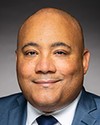
The Chair Liberal Michael Coteau
Thank you so much.
We'll go to the Conservatives now for five minutes.
February 3rd, 2026 / 11:35 a.m.
Conservative

Steven Bonk Conservative Souris—Moose Mountain, SK
Thank you very much.
Like Mr. Vaags and Mr. Beretta, I've also been involved in a vertically integrated system in the cattle business. You almost have to be, nowadays, to really understand the full way the market works.
Do you think that a livestock mandatory reporting act, like the one they have in the United States, would be useful in Canada? We had something similar that has been discontinued. What would be your opinion, Mr. Vaags, on that?
President and Chief Executive Officer, True North Foods
I think it would be very useful. I know we had it in the past through CanFax, but it was never really set up to be all that effective. It always came too late. I'm speaking for myself here. There may be others in the industry who disagree with me, but I really think that if we had a mandatory price reporting system that was robust and up-to-the-minute, just like the USDA system.... It can have its variations, but to get that information at a critical time is very important. If it comes a week late or two weeks late or it's incomplete, then you're almost better off not to have it. I think if we went down that road, we'd want to have it up-to-the-minute.
Conservative
Steven Bonk Conservative Souris—Moose Mountain, SK
Mr. Beretta, I'm sure that, with a mid-sized processing plant in Canada, it's very important for you to hedge your supply. I'm sure that, like Mr. Vaags, you would be in the feeding business, so you'd have your own supply of cattle.
With the Canadian and American cattle industry so integrated, we know we want to stay away from anything that has to do with country of origin labelling, like we're fighting with the States now, because our system is so integrated. For example, the United States plants in the northwest wouldn't operate without Canadian cattle.
What would be your suggestion when it comes to this mandatory pricing? Would you want it to be completely Canadian information or still have a basis off the American report?
General Manager, Beretta Farms
That's a good question. It's a bit complex, in the sense that the U.S. is the index, and it's a safe hedge in a way, but at the same time, when we look at the futures of fed cattle a year out, for example, when you're negotiating with the producer, you're hedging. You have to factor in the exchange rate and where that's going to be in a year's time.
There are a lot of factors that are a little unnecessary. If we have our own economy here, let's be less dependent on the U.S. pricing that way and look just at what's going on in Canada.
Conservative
Steven Bonk Conservative Souris—Moose Mountain, SK
I'm going to stick with you two witnesses, if I can, for the moment.
When it comes to the Prairies, we know we have a real struggle with labour to operate our plants. I'm sure it's the same in Quebec. We know there was a pilot project for processing plants for temporary foreign workers finding a way to permanent residency. That has been discontinued.
Mr. Beretta, could you talk a bit more about your struggles with this program and with labour, and what you would like to see with regard to this?
General Manager, Beretta Farms
The agri-food pilot closed in 2025. They capped it. That was a five-year program, starting in 2020. We benefited greatly from that. We were able to grow our labour force and bring in skilled workers. When I say “skilled”, this isn't regular labour-intensive work; these are people who know how to use a knife and can break down a carcass within fast-paced line expectations.
Currently, there is no federal pathway, so we have to go through provincial nominee programs. Currently, in Alberta, we're facing hurdles with that. Skilled meat cutters are not categorized the same way as, let's say, an employee with a higher education who's going into the health or IT sector. We're constantly being rejected. We're not getting PR applications at all, which means we have to continually, year after year, renew their temporary foreign worker status.
It's also hard on these employees. They come to Canada looking for a new opportunity. These are good, hard-working people. They're not taking away Canadian jobs. I run an ad year-round for meat cutters, and I don't get anyone remotely qualified for the skilled work we need.
Conservative
Steven Bonk Conservative Souris—Moose Mountain, SK
This is something we've heard over and over again.
Maybe I can shift gears really quickly with Mr. Vaags.
Right now in the House, today, we're debating a motion about grocery prices and how we can bring them down in Canada. We hear often from the Liberals that there are imaginary taxes when we talk about the industrial carbon tax, fuel standards and packaging taxes. We know this is not true. As a primary producer, I can tell you that. We see these costs.
Can you bring that up and explain what you see in your operation, since it's vertically integrated?
President and Chief Executive Officer, True North Foods
The secondary cost of goods at the packing plant level is where all of that would come in, through our costs for packaging, freight and all of that stuff. That's where you have those layers of taxes built in. It's huge. One of the hardest things.... You look at that number and ask, “Why in the world does it cost this much money?”
Aside from labour and the cost of the cattle, you look at the pricing increments to get it in a box, and they're a substantial amount. I'm not going to sit here today and tell you I know every level of tax that's embedded in there, but it's a big concern for sure.
Liberal
The Chair Liberal Michael Coteau
We'll go to the Liberals for five minutes.
Mr. Perron, welcome back to the committee. We thought you were gone forever, but here you are. We're all happy that you've returned.
We'll go over to MP Dandurand for five minutes.
Liberal

Marianne Dandurand Liberal Compton—Stanstead, QC
Thank you very much, Mr. Chair.
I want to thank the three witnesses for their remarks, which are very informative.
Being from a region where there's a lot of beef and pork production, I am very aware of this reality. It's important to acknowledge that you are medium-sized players in processing, not major players. One of the issues you mentioned, Ms. Moudi and Mr. Vaags, is reaching a consensus for the publication of the data.
How confident are each of you that a consensus can be reached with respect to processing, slaughtering and all that?
You seem convinced that it's important to do that. Do you think we can reach an industry consensus on establishing a reference price?
Ms. Moudi, what are your observations on this?
Chief Executive Officer, Viandes Lafrance
That's a very good question.
I can confirm that a consensus is possible, but there needs to be a willingness to get there.
First, we have the data. Every farm today is required to have the data. There are also data for the slaughterhouses. We publish the data for each slaughter day, and those data are also shared. We also have most of the data on the structures.
In other words, it can't be done alone. Provincial and federal government actors need to communicate, as well as actors from the private and public sectors. It's about setting up a mechanism to establish the price. In my opinion, it's absolutely doable, but there needs to be a willingness to do it.
President and Chief Executive Officer, True North Foods
I can't speak for others, but I am fairly confident that within the cattle community you'd get full support across the board. From small packers, you'd get full support across the board. Really, the entire value chain, I think, would support this, other than large beef packers and large retailers. I think they would be against it.
General Manager, Beretta Farms
Calvin stole my thunder a little, but I was going to say that I think you would get support from the producers and the small packers. The problem—and it's understandable—is that we have two large packers in Canada, and most of the price setting and data are driven by their production and their results. We'd have to get complete buy-in from the large companies for this to work sustainably.
Liberal
Marianne Dandurand Liberal Compton—Stanstead, QC
If I understand correctly what you're saying, there's a consensus among producers and processors in small businesses. Big players would need to want to disclose their prices for competitive reasons. That's probably the challenge.
Given that there are very few major players, they could have a significant influence on the data published.
In your opinion, how can we address this and alleviate the pressure on the major players?