
Evidence of meeting #21 for Agriculture and Agri-Food in the 45th Parliament, 1st session. (The original version is on Parliament’s site, as are the minutes.) The winning word was industry.

A video is available from Parliament.

On the agenda

Members speaking

Before the committee

Beretta  General Manager, Beretta Farms
Vaags  President and Chief Executive Officer, True North Foods
Moudi  Chief Executive Officer, Viandes Lafrance
Boucher  Director General, Sector Development and Analysis Directorate, Department of Agriculture and Agri‑Food
Allan  Associate Vice-President, Policy and Programs Branch, Canadian Food Inspection Agency

12:25 p.m.

Director General, Sector Development and Analysis Directorate, Department of Agriculture and Agri‑Food

Donald Boucher

In terms of the role, insofar as mandatory price reporting and reference prices are concerned, right now we do not have the same legislative framework as the United States. Since the 1990s, the U.S. has had legislation that makes the disclosing of prices mandatory. We do not have that framework here in Canada. We definitely support efforts in the absence of authorities. We support industry conversations, and we've been funding some reports to look at how best the industry could work within itself to look at prices, to look at a reference price and to increase transparency within the supply chain, but at this point our role in these matters is fairly limited.

We do play a role in collecting information and reporting on some of the information—not on prices—along with our colleagues at Statistics Canada, to make sure that the information that is available and that can be reported on is made available as widely as possible.
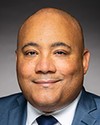

The Chair Liberal Michael Coteau

Thank you very much.

Next, we'll go to Mr. Perron for six minutes.

Yves Perron Bloc Berthier—Maskinongé, QC

Thank you very much, Mr. Chair.

Good afternoon to the witnesses. I'd like to thank them for being with us.

Mr. Boucher, you mentioned earlier that if we were to establish a Canadian reference price, we would definitely need to adjust it according to the region. Well, that's not what Ms. Moudi told us. According to her, a Canadian scale would do the trick.

I'd like you to explain why you talked about adjustments on a regional basis.

Would having a Canadian reference price be an advantage during a crisis, for example?

12:30 p.m.

Director General, Sector Development and Analysis Directorate, Department of Agriculture and Agri‑Food

Donald Boucher

Thank you very much for the question.

My observation was actually based on the report commissioned in 2019 and produced by the AGÉCO group. I believe the complexity within the Canadian pork industry is what led to the proposal that a price should ideally reflect the reality of the regions.

However, the options remain open if there's interest from the industry. It might be a situation where perfection becomes the enemy of the good. Ideally, a flexible and regional reference price is desirable. However, rather than having nothing, a Canadian reference price could be a good choice.

Yves Perron Bloc Berthier—Maskinongé, QC

Would it be useful to have a Canadian reference price during a health crisis?

12:30 p.m.

Director General, Sector Development and Analysis Directorate, Department of Agriculture and Agri‑Food

Donald Boucher

It depends on several scenarios. Some witnesses mentioned, for example, the possibility of an outbreak of African swine fever in the United States. In such a case, the link between Canadian and American prices could harm our industry. That's a possible scenario. Conversely, a crisis could occur in Canada and not in the United States. The link between prices could also play a role in such a case.

We really need to study the situations on a case-by-case basis. The industry should consider all possible cases to determine whether cutting the link between the prices would be to its advantage.

Yves Perron Bloc Berthier—Maskinongé, QC

Let's say there is a crisis and we don't have a Canadian reference price. How long would it take us to establish one, if needed? I can give the example of a sharp drop in price in relation to that in the United States.

12:30 p.m.

Director General, Sector Development and Analysis Directorate, Department of Agriculture and Agri‑Food

Donald Boucher

Thank you for the question.

Unfortunately, I can't give you a very specific answer. I think it really depends on the structure in place. Furthermore, it would be important to know whether the government would play a role, assuming it had the necessary powers to act, which is not the case at present. We would also need to know whether the industry would organize to set its own price.

Yves Perron Bloc Berthier—Maskinongé, QC

Thank you.

Ms. Allan, if it were deemed necessary, would the Canadian Food Inspection Agency be willing to tie financial assistance to the establishment of a Canadian reference price in the event of a crisis?

12:30 p.m.

Associate Vice-President, Policy and Programs Branch, Canadian Food Inspection Agency

Diane Allan

This falls squarely outside of our mandate, but I'm sure we can entertain some sort of support—not financially—vis-à-vis how we support the industry in making sure that we are able to address animal health issues and food safety issues.

Yves Perron Bloc Berthier—Maskinongé, QC

Thank you for trying to answer the question. We'll call it that.

Mr. Boucher, you spoke about establishing prices on a regional basis. If Canada decided not to establish a reference price, would there be anything preventing Quebec or another province from setting a regional reference price?

12:30 p.m.

Director General, Sector Development and Analysis Directorate, Department of Agriculture and Agri‑Food

Donald Boucher

Thank you very much for the question.

Unfortunately, I don't have sufficient knowledge of the legal context of each province to comment on that. The provinces would be best positioned to answer that question.

Yves Perron Bloc Berthier—Maskinongé, QC

In general, does AAFC believe that being transparent about prices could help farmers obtain a fairer price?

Generally speaking, I think so, but I'd like to know your organization's perspective.

12:30 p.m.

Director General, Sector Development and Analysis Directorate, Department of Agriculture and Agri‑Food

Donald Boucher

Thank you very much for the question.

The federal government and AAFC certainly support greater transparency within supply chains. We are aware that this could play a role in the negotiation of prices between producers and processors.

However, we recognize that it's important for this transparency to take into account the positions of key industry players with respect to competition. A balance may need to be struck.

Yves Perron Bloc Berthier—Maskinongé, QC

First, you are favourable to the idea. I'm glad to hear that. I also noted the nuance in your answer.

It reminds me of when we were working on our grocery chain study. We were unable to get any numbers. Witnesses told us that they were in a competitive situation and that they would provide the figures confidentially to the Competition Bureau. Finally, we met with representatives from the bureau, and we realized that the figures had not been sent.

I see a lot of similarities between this situation and what you're talking about. I must admit that it really annoys me when we give in to big industry. I believe it's the government's duty to regulate and intervene in sectors like these by encouraging, among other things, regional slaughterhouses.

Ms. Moudi made an excellent case in that respect. I think everyone—not just producers, but also consumers—would benefit from transparency and knowing where the meat comes from. There's a big problem with respect to labelling in Canada. Once the meat is processed in the grocery store, you can no longer tell where it comes from. You're aware, of course. That's why large companies resist the idea of setting prices. They want to maintain their integration.

Well, I've talked a lot.

The Chair Liberal Michael Coteau

You have 30 seconds.

Yves Perron Bloc Berthier—Maskinongé, QC

Here's my final question, Mr. Chair.

Mr. Boucher, it's been said that the big industry players, Cargill and JBS, are required to provide their prices in the United States, and they do.

We're also told that it's impossible to do that in Canada.

What's your opinion on that?

The Chair Liberal Michael Coteau

Unfortunately, there's no more time. I'm sorry.

If you can give a 15-second answer, go ahead.

12:35 p.m.

Director General, Sector Development and Analysis Directorate, Department of Agriculture and Agri‑Food

Donald Boucher

Thank you for the question.

What's different in the American context is the number of players. We should also consider the privacy rules within the American legal framework.

For example, how can we ensure that the data privacy that exists in the United States is applied to a Canadian context?

The Chair Liberal Michael Coteau

Thank you so much.

We're going to do one more round, but we do have some committee business. We'll go through this, and if we have a bit more time, I think we only need about five to seven minutes for committee business.

We'll go to the Conservatives for five minutes.

Mr. Bonk.

12:35 p.m.

Conservative

Steven Bonk Conservative Souris—Moose Mountain, SK

Our study today is on the reference price for beef and pork supply chains. We're going to talk a bit now about supply chains. That would directly involve CFIA, because they play a very important and valuable role when it comes to protecting our food safety and making sure that our slaughter plants and processing facilities meet the health standards that our domestic and international customers expect from us.

There's been some talk about progress on the SRM file, the specified risk materials. I was wondering if you had any comments on that. Could you tell the committee where you are with that at the moment?

12:35 p.m.

Associate Vice-President, Policy and Programs Branch, Canadian Food Inspection Agency

Diane Allan

We remain committed to advancing these changes as quickly as possible. In fact, we are targeting Canada Gazette, part II, as early as June. That's an update I wanted to share.

We meet regularly with industry as well to make sure that we are taking any issues of feasibility, trade and economic implications across the entire supply chain. We are working actively to try to make sure that we don't lose sight of those particular elements as we move forward on this BSE SRM file.

12:35 p.m.

Conservative

Steven Bonk Conservative Souris—Moose Mountain, SK

Excellent.

As you know, we just completed a study on red tape reduction in CFIA and PMRA. We're wondering, now that there have been some cuts announced for CFIA, how that will affect the inspection and regulation of the plants. Are you expecting there to be any delays or any problems with that?

12:35 p.m.

Associate Vice-President, Policy and Programs Branch, Canadian Food Inspection Agency

Diane Allan

Like every other department across the public service, we did have cuts. At the outset, we tried to protect our front line, and we are trying to make sure that emergency readiness remains focused on our core mandate of food safety and services. The cuts will be more centralized to non-service-oriented areas. We do have cuts projected, but the services and the frontline staff are protected.

12:35 p.m.

Conservative

Steven Bonk Conservative Souris—Moose Mountain, SK

We had witnesses here earlier today from federally inspected medium-sized plants in Canada. We hear a lot about provincially inspected plants that are unable to sell product across Canada. They're not exporting, but they want to sell their product across a provincial border. Maybe a Saskatchewan farm has a farm-to-plate business they would like to promote, and they have customers who want their product.

At the moment, it is legal for them to use a provincially inspected plant. We know that, with the CFTA, the Canadian internal free trade agreement, we're supposed to be breaking down interprovincial trade barriers. The Prime Minister talked in depth about this. We're supposed to have this done by July, I believe.

Can you tell the committee where we are with that? We have a lot of producers who are asking.