Good afternoon, Mr. Chair and committee members. Thank you for the opportunity to be here today to contribute to this important discussion.
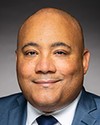
My name is Richard Carey. I'm the general manager of Newfoundland and Labrador Federation of Agriculture.
We're a non-profit organization representing and advocating for farmers and farm groups across our province. Our motto is “farmers for farmers”. Our work focuses on supporting a diverse, successful and sustainable agriculture industry in Newfoundland and Labrador. Our members span a wide range of commodities, both supply managed and non-supply managed. We deliver programs that support public trust, industry growth, education, mental health, farm safety, and climate action funding and research.
I'd like to start by saying that business risk management programs are not just important; they're essential. They provide a safety net that allows farmers to manage uncertainty, invest in their operations and continue producing food in an increasingly unpredictable environment.
That said, from our perspective in Newfoundland and Labrador, there are some real challenges, especially given the size and structure of our industry. We have just over 500 registered farms in the province, many of which are small, diversified operations. Participation in BRM programs has historically been low. That's not because producers don't need support; it's because, in many cases, the programs don't work well for them.
Take AgriInsurance, for example. While there is potential to expand coverage to crops like forage and berries, the cost of premiums is a major barrier. With fewer than 15 participants annually in recent years, the small pool drives premiums higher, making the program unaffordable for many producers. Even with the current 60% federal-provincial contribution, which is appreciated, the remaining 40% cost share is simply too high, especially for vegetable producers facing already tight margins.
We believe there's a need for increased government investment in the insurance fund, particularly for smaller jurisdictions like ours. This would help stabilize premiums and make the program more accessible. Climate change is already impacting our producers. We saw significant drought conditions in 2025, and those risks are only increasing. Farmers need affordable tools to manage that reality.
On AgriStability, we support maintaining the current compensation rate. This level of support makes a meaningful difference in encouraging participation. At the same time, however, the program needs to be simpler and more responsive. Right now, it's often seen as too complex and difficult to navigate.
For AgriInvest, we recommend reintroducing the matching contribution rate from 1% to 1.5% to encourage greater program participation, and increase farmer savings to better enable farmers to manage the smaller but more frequent income fluctuations that are becoming more common. The contribution rate was previously 1.5% in the Growing Forward contribution agreement many years ago.
There are also gaps that need to be addressed. For example, livestock insurance in our province is currently limited to predation. Producers need broader protection against disease and natural events. Compensation rates also need to better reflect the true value of breeding stock. The absence of coverage for our honeybee industry is another gap worth addressing.
AgriRecovery programs have been helpful, but timeliness is critical. When disasters happen, producers need immediate support when it matters most—not months or a year down the line.
At the end of the day, what we're really asking for is flexibility. Programs need to better reflect regional realities and be adaptable to smaller industries like ours. With only a small number of producers participating in each program annually, we need solutions that make these programs viable, accessible, affordable and worth enrolling in.
Producers in Newfoundland and Labrador are resilient, innovative and deeply committed to what they do, but they need the right tools to succeed.
Our goal as a sector is growth—growth in production, participation and in our contribution to food security and self-sufficiency in the province. Strong, responsive and inclusive BRM programs are key to that future.
Thank you again for your time and for the opportunity to share our perspective. I look forward to your questions.