Evidence of meeting #34 for Agriculture and Agri-Food in the 45th Parliament, 1st session. (The original version is on Parliament’s site, as are the minutes.) The winning word was need.

A video is available from Parliament.

On the agenda

Members speaking

Before the committee

Fulton  President, Canadian Cattle Association
Roy  Chair, Canadian Pork Council
Petelle  President and Chief Executive Officer, CropLife Canada
Lee  General Manager, Canadian Cattle Association
Heckbert  President and Chief Executive Director, Canadian Pork Council
Carey  General Manager, Newfoundland and Labrador Federation of Agriculture
Ross  Executive Director, Farmers for Climate Solutions
Porth  Chief Executive Officer, Agi3 Ltd. and Professor, Finance, University of Guelph
Grossenbacher  Director of Policy, Farmers for Climate Solutions

11 a.m.

Liberal

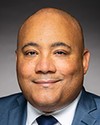
The Chair Liberal Michael Coteau

I'd like to call this meeting to order.

Welcome to meeting number 34 of the House of Commons Standing Committee on Agriculture and Agri-Food.

Today's meeting is taking place in a hybrid format, pursuant to the Standing Orders. Members are attending in person in the room and remotely by using the Zoom application.

Before I continue, I'd like to ask all in-person participants to consult the guidelines written on the back of the cards on the table. These measures are in place to help prevent audio and feedback incidents and to protect the health and safety of all participants, including the interpreters. You'll also notice a QR code on the cards, which links to a short awareness video.

I'd like to make a few comments for the benefit of the witnesses and members. Please wait until I recognize you by name before speaking or before asking a question directly, members. For those participating by teleconference, click the microphone icon to activate your mic, and please mute yourself when you are not speaking.

For those on Zoom, at the bottom of your screen you can select the appropriate channel for interpretation: floor, English or French. For those in the room, you can use the earpiece and select the desired channel. I remind you that all comments must be addressed through the chair.

For members in the room, if you wish to speak, please raise your hand. For members on Zoom, please use the “raise hand” function. The clerk and I will manage the speaking order to the best of our ability. We appreciate your patience.

Pursuant to Standing Order 108(2) and the motion adopted by the committee on Thursday, September 18, 2025, the committee is resuming its study on business risk management programs in Canada's agriculture sector.

I'd like to welcome our witnesses joining us today. We have, from the Canadian Cattle Association, Tyler Fulton and Ryder Lee; from the Canadian Pork Council, René Roy and Stephen Heckbert; and from CropLife Canada, Pierre Petelle.

Welcome, everyone.

You have up to five minutes for your remarks, and then we'll open it up for questions from the members.

I now invite the Canadian Cattle Association to give their opening remarks.

Tyler Fulton President, Canadian Cattle Association

Good morning, everyone. Chair and members, thank you for the opportunity to appear today.

My name is Tyler Fulton. I ranch with my family near Birtle, Manitoba. I'm proud to be the current president of the Canadian Cattle Association. Through our provincial members, CCA represents about 60,000 beef producers across Canada.

Strengthening the Canadian beef industry as a competitive sector for growth is critical to advancing Canada's trade diversification and food security goals. That begins by growing the national cow herd. After several years of contraction, we're beginning to see early signs of rebuilding, up to an estimated 2.5% nationally.

While that's encouraging, it remains fragile. This is why we need to ensure that government policies across departments continue to encourage growth. For example, in the government's current fast-paced trade diversification agenda, we need to ensure that trade outcomes signal growth for the Canadian economy.

Canada's current negotiations with Mercosur illustrate our concern. For Mercosur, beef access is the number one negotiating goal at the negotiating table, which would expose and undermine Canada's domestic market at a time when the Canadian beef herd is rebuilding. For Canadian beef producers, that's not diversification; it's risk without reward.

Rebuilding a cattle herd is a multi-year, capital-intensive decision that depends on policy certainty and effective risk management. Addressing inequities for the cattle sector in the business risk management suite and through the next policy framework will play an important role in whether the herd growth momentum continues or stalls.

With the next framework not starting until 2028, FPT governments should act now. Waiting will delay benefits to cattle producers until the 2029 calf crop.

Market and trade volatility continue to be significant risks. Livestock price insurance is the only program that allows beef producers to proactively manage price risk. It's particularly important for cow-calf producers who are making herd expansion decisions and for young and new producers who are most exposed to price shocks. However, high premium costs driven by increased market volatility are limiting uptake at the very time producers need this tool most. Unlike crop insurance and U.S. cattle producers, Canadian cattle producers do not benefit from a cost-shared premium.

CCA has been a long-time advocate of cost-shared LPI premiums and of making it a permanent program. This would level the playing field while reducing the reliance on other BRM tools. This is the fifth policy framework where governments have had the opportunity to address this gap.

Weather risk and rising input costs remain significant challenges. AgriStability continues to play an important role when producers face major income declines due to market disruptions, cost pressures or climate change challenges like drought. We welcome recent improvements to AgriStability, with the addition of pasture-related feed costs as an allowable expense, to make the program more responsive for cattle producers.

However, the current payment cap still limits effectiveness, particularly for the feedlot sector and other mid-large-scale operations that are driving growth, export capacity and investment across the sector and in their communities.

CCA recommends increasing the payment cap to $15 million, eliminating the cap in the event of a catastrophic disruption such as foreign animal disease outbreaks and enhancing the trigger to 85% of the reference margin. Strengthening the program will ensure that it provides a reliable backstop that supports resilience and reinvestment.

We were also pleased to host AAFC officials at our AGM in March to present their report on the feasibility of whole-farm revenue insurance for the cattle sector. We appreciate the engagement and look forward to exploring this possibility and keeping those lines of communication open.

In closing, growing Canada's cattle herd is essential to advancing shared objectives under the next policy framework. Realizing this potential will depend on a business risk management suite that is not only effective, but also equitable to reflect the realities of Canada's cattle producers.

Thanks. I look forward to your questions.

The Chair Liberal Michael Coteau

Thank you very much.

Next we'll go to the Canadian Pork Council for five minutes.

René Roy Chair, Canadian Pork Council

Thank you, Mr. Chair.

My name is René Roy. I am a pork producer in the Beauce region of Quebec, and I am the president of the Canadian Pork Council. With me today is Stephen Heckbert, who is our president and chief executive officer.

I do not stand here alone. I carry the voices of thousands of farming families who, from coast to coast, work tirelessly to feed our country and the world.

Before addressing the technical details of our business risk management programs, I want to establish a fundamental principle. For us as farmers and for all Canadians, protecting our agricultural sector is not just an economic issue; it is a matter of national security. A country that can no longer guarantee its own subsistence is a vulnerable country, and our country has the advantage of being able to offer that guarantee, should we so choose, to our allies and friends around the world. In a world marked by geopolitical instability and climate change, our farms are the first line of defence for our sovereignty. Supporting our producers ensures that grocery stores remain stocked and that families remain fed.

To ensure this security, we need agile financial tools. The advance payments program is crucial, yet it currently presents major hurdles for our hog finishers. Imagine the producers in my home region of Beauce who fully own their animals. Despite this ownership, they often hit a wall of bureaucracy that struggles to recognize the value of their livestock as collateral. Hogs cannot be stored in a silo like grain; they are units in constant growth. We ask the committee to work with us to find permanent solutions for the recognition of guarantees in the circumstances of finished hogs. Our owner-producers must have seamless access to the APP.

Furthermore, to reflect the reality of skyrocketing input inflation, we are calling for a permanent increase of the interest-free portion of the advance to $350,000. This is not a luxury; it is the working capital required to sustain operations in today's environment.

Another pillar of our security is biosecurity. African swine fever and, frankly, other foreign animal diseases hang over our industry. A single case in this country would halt our exports immediately, threatening the survival of the entire sector if we do not get access to those markets quickly. Current ASF preparedness is a major step forward, but it cannot remain temporary. This type of initiative must become a permanent program. Prevention and preparedness are not expenses; they are investments to avoid an economic catastrophe that would cost billions of dollars.

Finally, I want to emphasize that our best defence is often a good offence. For an industry like ours, which is export-oriented, access to new international markets is, in itself, a risk management strategy. The more diversified our market, the less exposed we are to the whims of any single trading partner. I don't think I have to mention to whom I am referring here. We ask the government to continue to find these new markets and to do so with an eye on fair and free access from both parties so that Canadian pork, recognized globally for its quality, can move freely.

In conclusion, Mr. Chair, we are asking for a long-term vision: simplified BRM programs, an accessible and modern APP, and permanent animal health protections. Treat agriculture for what it truly is: essential infrastructure for the nation.

There are other technical issues that we would like to share, but it will be in a further document that we will share with the committee.

Thank you, Mr. Chair.

I'm willing to answer your questions.

The Chair Liberal Michael Coteau

Thank you very much.

Next we'll go to CropLife Canada for five minutes.

Welcome.

Pierre Petelle President and Chief Executive Officer, CropLife Canada

Thank you, Mr. Chair and members of the committee, for the opportunity to appear before you today.

My name is Pierre Petelle. I'm the president and CEO of CropLife Canada, representing the innovators in plant science committed to helping Canadian farmers grow more food more sustainably and more competitively.

Canada's agriculture and agri-food sector is not only foundational to our food security; it is one of the country's greatest economic engines. This sector contributes nearly $150 billion annually to Canada's GDP and also supports 2.3 million jobs, more than the automotive, forestry, steel, aluminum, and oil and gas sectors combined.

With focused leadership, strategic investment and a policy environment that champions research and innovation, Canada's agri-food sector has the potential to grow by an additional $100 billion annually and becoming a $250-billion industry by 2035.

That opportunity should shape how we think about business risk management. BRM programs are an essential pillar of Canada's agricultural policy framework. In a sector increasingly shaped by climate pressures, market volatility, geopolitical uncertainty and rising production costs, these programs must remain effective and responsive, but if we're serious about resilience and growth, we must also look beyond reactive supports and address the broader policy and regulatory environment that determines whether Canadian agriculture can compete and expand.

For example, ensuring timely access to the latest seed genetics and crop protection tools ensures we stay competitive with other markets. These tools are a form of business risk management in and of themselves. Seed genetics that better withstand drought or flood, and crop protection solutions to address devastating pests all help to minimize reliance on BRM payouts.

As the committee considers modernization of the next federal-provincial-territorial agreement, CropLife Canada encourages a stronger focus on clearly defined policy outcomes, policy coherence and accountability, which are all things that are 100% in our control.

Governments must establish measurable outcomes and timelines for regulatory modernization. Canada's agriculture and food sector has extraordinary growth potential, but that potential is often too constrained by unnecessary red tape, duplication and regulatory delays that hinder innovation and drive investment elsewhere. As you have heard from other witnesses already, there are practical, surgical, no-cost measures that governments can take immediately to reduce administrative burden, improve efficiency and restore Canada’s reputation as a place to invest in agricultural innovation.

Roles and responsibilities within the FPT framework must be clarified to ensure governments work in greater coordination and with greater purpose. Farmers, innovators and value-chain partners need consistency, transparency and timely decision-making. Regulatory reform, policy alignment and implementation discipline must be treated as central components of this BRM, because regulatory uncertainty is itself a significant business risk.

Now is truly the time for Canada to modernize its approach to regulation, to regulate for growth while maintaining the highest standards for health, safety and environmental protection. A world-class regulatory system not only should safeguard Canadians but also should enable innovation, productivity and economic opportunity.

Lastly, in a global environment where the traditional rules-based trading order is increasingly under strain, Canada must play a stronger leadership role in defending science-based decision-making. Canada’s long-term competitiveness depends on maintaining strong, credible, science-based regulatory systems at home and championing those principles internationally.

Thank you very much.

The Chair Liberal Michael Coteau

Thank you very much to each of our witnesses.

Before we start the questions, I want to confirm that Mr. Bexte is subbing in for Mr. Bragdon today.

11:15 a.m.

Conservative

David Bexte Conservative Bow River, AB

Yes.

The Chair Liberal Michael Coteau

I wanted to get that on the record.

We'll go to Mr. Bonk for six minutes.

11:15 a.m.

Conservative

Steven Bonk Conservative Souris—Moose Mountain, SK

Thank you, Mr. Chair.

In this committee, we're talking about business risk management tools in agriculture. I think we've had huge improvements in Canada in the last 20 years when it comes to efficiency, genetics, forage management, pasture management, genetics on the hog side and particularly in the crops we're using. A lot of that has been driven by the scientific research that has been happening in Canada.

Recently, the Liberal government has decided to close down research centres. I'm wondering if any of you could tell me how many members in your organizations have called you to congratulate the government on closing these research centres.

That's open to anyone.

An hon. member

Let the record show....

11:15 a.m.

Conservative

Steven Bonk Conservative Souris—Moose Mountain, SK

Let the record show....

This is exactly what we've been hearing in this committee in all the meetings we've had on this: that research is a very important part of agriculture and agriculture sustainability in Canada. It's something that we should take seriously. I hope the Liberal government will reconsider their decision when it comes to closing these research centres.

I'll address the rest of my comments to the Cattle Association, because this is something I'm very familiar with.

When we talk about business risk management, one of the biggest risks in a long time that I can see coming to the cattle industry is the potential Mercosur deal the government is working on now and its devastating potential effects on the Canadian cattle industry.

I'll open the floor to you to explain a bit more about why there is such fear out there in the cattle industry right now when it comes to this deal.

11:15 a.m.

President, Canadian Cattle Association

Tyler Fulton

I think it has a direct connection to what we're talking about today in terms of business risk management tools broadly, incentives and disincentives.

The cattle industry is in a pivotal time. We need to encourage the next generation of ranchers and beef farmers across Canada to come back to the farm. We really lost a generation after the BSE crisis. It has even increased the need to have youth come back.

When talking about Mercosur, what signal does it send to our young producers now if we're introducing new market access to South American countries that, quite simply, do not produce the same product at the same standard that we do here in Canada? Unequivocally, it represents a big risk from an animal disease standpoint. Also, what is the signal you're sending to the next generation in this context?

Unequivocally, we can't have new market access for South America. If you want to grow the herd, let the market decide, and we are. We're growing it. We grew it by 2.5% last year, in 2025. The expectation is that we'll continue to grow and invest if we have certainty.

11:15 a.m.

Conservative

Steven Bonk Conservative Souris—Moose Mountain, SK

I'll direct the next question to Ryder Lee from the Canadian Cattle Association.

We've had many discussions in the past about the traceability regulations that were proposed in January. They were met with a huge backlash from Canadian cattlemen. Now they're talking about making a trade deal with free trade access for Mercosur countries, where they have traceability standards that aren't even close to those we have in Canada when it comes to disease recording, BSE monitoring, foot-and-mouth, and final sanitary concerns.

Could you talk a bit more about the inequality between what Canadian cattle producers have to do compared to what Mercosur countries producers have to do?

Ryder Lee General Manager, Canadian Cattle Association

You're talking about several countries. It's hard to always lump them together.

In the past, we've seen some discomfort with imports from that part of the world into North America because of reporting differences. What we ended up with for BSE through all those years...we looked, and we found stuff and said, “We found this. We're working on it. We're getting through it.” We have gotten through it. There's some history with some of the countries there taking their time on reporting things.

The trust in North American beef circles is that house isn't put together tightly enough to move forward on something like this. It is a concern for our animal health to move forward on this.

11:20 a.m.

Conservative

Steven Bonk Conservative Souris—Moose Mountain, SK

There has been some reporting that, in Brazil—let's just use them as an example—they've taken up to a year to report any BSE cases. Is that true?

11:20 a.m.

General Manager, Canadian Cattle Association

Ryder Lee

That's our understanding, yes. That's a big red flag.

Are you looking? When you find something, are you reporting it and figuring out what the cause was and what else happened? What else could have come from there?

That's a big concern for Canada and for the U.S. beef sector, too. That's somebody who's watching this conversation and who doesn't want to see beef getting through the back door from Canada into the U.S. That's a consideration here, as well. Our biggest customer is watching.

11:20 a.m.

Conservative

Steven Bonk Conservative Souris—Moose Mountain, SK

I know that was a very big concern at the national cattlemen's convention in the United States, where they were discussing the potential of Mercosur beef coming into the United States through Canada and the health concerns and traceability concerns with that.

Have you been in contact with—

The Chair Liberal Michael Coteau

I'm going to have to stop you there. We've just gone over six minutes.

I'm sorry, Mr. Bonk.

We're going to MP Harrison for six minutes.

Emma Harrison Liberal Peterborough, ON

Thank you to all of the witnesses for being here today.

I think we're facing the perfect storm of issues that are facing producers. We have geopolitical problems, rising input costs and an aging population in the farming industry.

Mr. Fulton, you spoke to how we encourage the next generation to want to keep farming. I've talked about this a lot at this committee. Based on what I experienced growing up on a farm and being in a beef operation, it was a terrible idea to farm, but I still chose to do it. It's hard to understand why a person is so committed to the lifestyle of farming unless you've been in it. With these conversations we're having now and the suite of BRM programs we have within the government, it's a critically important time to get this right.

Would you care to expand a bit more on what you would like to see when it comes to the BRM? You brought up the pasture-related feed costs. That's an incredible addition, but does it go far enough? What do we need to see?

11:20 a.m.

President, Canadian Cattle Association

Tyler Fulton

I can't stress that enough.

The way to look at it is like this: To ensure that the next generation has confidence in—

The Chair Liberal Michael Coteau

I'm going to pause for a second.

We're going to fix the camera. The camera is not moving.

Okay, let's try that again.

I'm sorry I interrupted you, sir. Go ahead.

11:20 a.m.

President, Canadian Cattle Association

Tyler Fulton

That's no problem at all.

With respect to making sure the next generation has the confidence to go to the bank and absolutely leverage their life on their choice to invest in an operation, to purchase the next one or grow an existing one, they need tools to manage the risk. There's a split you can draw.

You can say that some risks are unforeseen and difficult to manage. Quite simply, there needs to be a safety net. Tools like AgriStability are reactive. They don't specifically reference one particular risk. They're a catch-all.

There's also the proactive management of risk. That's where the focus of the next policy framework needs to lie. It's going to differ across all sectors. In the cattle sector, the youth have come back and said, “Livestock price insurance is a very effective tool to manage what we identify as our largest risk. Can we get support through that program the same way crop farmers have crop insurance?”

Emma Harrison Liberal Peterborough, ON

Thank you.

Would any of the other witnesses like to further elaborate on what they'd like to see, especially for our young producers? Where can BRM come in handy for them?

11:25 a.m.

Chair, Canadian Pork Council

René Roy

I can add that I made the choice to feed people, the citizens of the world. For me, it's an honourable choice in life. That being said, it's not an easy one. There are ways our country could make it more accessible to future...because food will be important for our fellow citizens. As mentioned, food security is national security. It's important to have this in mind as we look at BRM.

In the case of hog production, there is a lot of volatility. On everything related to AgriStability, increasing the margin to 90% is something we would look forward to. Increasing the cap would be an additional tool to help in the reality of hog production today. They are just larger operations. It's important that we take this into consideration.

11:25 a.m.

President and Chief Executive Officer, CropLife Canada

Pierre Petelle

Unfortunately, I didn't grow up on a farm, although I wish I had.

On the crop side, as with any business, it's about predictability. As Tyler said, there are many things in Canada's control. For example—I know I sound like a broken record—our regulatory environment is within our control. That can attract investment and innovation.

When a farmer faces the inevitable issue out of their control, like a weather event or drought, at least they'd have a suite of tools to address it. That's really where we're coming from. Keep the tool box full for farmers so it gives them a fighting chance and minimizes their risks.

Emma Harrison Liberal Peterborough, ON

Certainly.

Right before I left, my husband and I were in our driveway, and our waterline split from our pond to our water. We do high-intensity rotational grazing, so we need that waterline working. I looked at him and said, “You know we don't have to do this, right? We could sell everything tomorrow and our life would be, seemingly, so much easier.” However, it goes back to all your points. This is food security for my community. It's food security across our country. I unequivocally agree with you. This is part of national security.

Now we see what we're facing. The spotlight has moved to agriculture and how it needs to be supported. How do we foster an environment in which young people want to continue to carry on the legacy?

How much time do I have?

The Chair Liberal Michael Coteau

You're done.

Emma Harrison Liberal Peterborough, ON

Never mind. I'm sorry.

Thank you.

The Chair Liberal Michael Coteau

I was letting you finish your sentence. Thank you.

Mr. Lemire, you have six minutes, please.

Sébastien Lemire Bloc Abitibi—Témiscamingue, QC

Thank you, Mr. Chair.

Mr. Roy, thank you for your constant commitment to this committee and for being here again today to talk about the reality of your industry and the risks involved. One of the biggest risks, of course, is disease. In the case of your industry, it's swine fever.

How are the programs adapting to that reality? Do you feel that the programs intended to meet the industry's needs are always ad hoc?

What would a program that would actually work for pork producers in Quebec or Canada look like?

11:25 a.m.

Chair, Canadian Pork Council

René Roy

Thank you for the question.

I want to acknowledge that the swine fever preparedness program has been greatly improved in recent years. Action is usually taken after the fact, but in the case of swine fever, the industry as well as the government were proactive. However, the funds that have been set aside are temporary. I'm speaking for our industry, but I know that in agriculture in general, the disease problem is an extremely important issue, and it's poorly addressed in the current risk management programs.

Our proposal is to set up a special program to act in the event of a biosecurity problem, whether it's swine fever or other diseases that we don't even want to name because we don't want to see them here.

Sébastien Lemire Bloc Abitibi—Témiscamingue, QC

I would like to delve a little deeper into that.

How is risk managed in livestock production? In the absence of reliable or predictable programs, you have to take action on a daily basis. What are those actions?

11:30 a.m.

Chair, Canadian Pork Council

René Roy

One of the risks we see on our farms is that, when we don't have the right tools, we reduce our investments, which has a direct impact on the resilience and proactivity of our businesses for the future. This year, we can breathe a little easier, but I have colleagues who told me that, in recent years, they had stopped investing to make sure they weathered the storm. We are prevented from making investments and looking to the future.

Sébastien Lemire Bloc Abitibi—Témiscamingue, QC

That's not good. It's not good for the industry and it's not good for the economy. It's not good for anybody.

11:30 a.m.

Chair, Canadian Pork Council

René Roy

No, it's damaging to all of us, not only to the agricultural sector but to all Canadians.

Sébastien Lemire Bloc Abitibi—Témiscamingue, QC

You often talk about how hard it is to access the advance payments program, particularly for pork producers. In its economic update, the government did mention that it would set the cap at $250,000, but again, temporarily. This is a missed opportunity to provide predictability.

How would you fix that in the long term?

11:30 a.m.

Chair, Canadian Pork Council

René Roy

I'd set it at $350,000 and move forward.

Sébastien Lemire Bloc Abitibi—Témiscamingue, QC

That's simple. Yes, we're still waiting for that news. Once again, this is a band-aid solution instead of a lasting one.

I'd like to hear what you have to say about the impact of the free trade agreement with Mercosur on pork production. The same question was asked earlier about the beef sector. Does such an agreement raise concerns among pork producers?

11:30 a.m.

Chair, Canadian Pork Council

René Roy

Yes, it raises concerns among pork producers, because of the standards. I'll let our president address the problem.

Stephen Heckbert President and Chief Executive Director, Canadian Pork Council

That is actually a very good question. Obviously, we would like to have access to other international markets. Free trade is in our DNA. However, the challenge with Mercosur is that its animal health and biosecurity standards are much lower than ours.

One of the things we're asking for is that the Government of Canada put a lot more emphasis on raising standards in that region to make sure, if these countries are allowed access to our market, that their products meet Canadian standards. We also need to establish a very strong framework that says that, if they aren't able to meet our standards, we won't buy their products. It's a very simple issue.

If they can't guarantee our pork producers that they're going to do it, we'll have another story to tell, which will probably be similar to that of the beef producers. It is essential for us to be sure that the protection of our international markets is based on Canadian standards, so that people know that their pork products meet the best animal health standards in the world.

Sébastien Lemire Bloc Abitibi—Témiscamingue, QC

The idea of standards is interesting, because we get the sense that, when standards elsewhere are not as good as ours, it doesn't prevent us from importing, but when good practices are followed elsewhere, we don't necessarily import.

I'll give you the example of the price transparency index. You know that the committee recently called for such an index to be set up. To what extent would that help minimize the risks for your businesses, particularly for livestock and pork?

11:30 a.m.

Chair, Canadian Pork Council

René Roy

It would be an extremely profitable tool for our industry, not only because of predictability, but also because it would send the right market signals to our value chain, which would make it possible to take the right actions on the ground.

As producers, we see this as an undeniably valuable tool. The United States has used it to grow its industry.

Sébastien Lemire Bloc Abitibi—Témiscamingue, QC

Thank you.

The Chair Liberal Michael Coteau

Thank you so much.

Next we'll go to the Conservatives for five minutes.

Mr. Gourde, go ahead.

11:30 a.m.

Conservative

Jacques Gourde Conservative Lévis—Lotbinière, QC

Thank you, Mr. Chair.

Thank you to the witnesses for being here this morning.

Mr. Roy, we all want to see the risk management programs evolve, but I think it's also important to look at what's happening elsewhere, such as our neighbours to the south. I think our neighbours to the south have built into their risk management programs the ability to work with futures contracts. I don't know if you're aware of that. If so, can you tell us about it?

11:35 a.m.

Chair, Canadian Pork Council

René Roy

I won't go into it in depth, because I'm not a technical expert on all the details. However, what I can tell you today is that in the United States, these tools have made it possible to reassure producers about the future. In addition, the funds that have been invested in market risk management tools have made it possible to expand.

As some of my colleagues said earlier, when you have better predictability, you're able to invest with more confidence and it's also much easier to get the funds that are essential to investments. Therefore, Canada has a competitive disadvantage when it comes to risk management tools compared to the United States.

A number of our colleagues are on both sides of the border, with some operations in Canada and others in the United States. Recently, I've heard a number of producers say that it's currently more profitable to invest in the United States. These are Canadians farmers who are on both sides and who say they're going to invest in the United States. It's unfortunate to hear that, because that's capital that could be used to move our industry forward.

11:35 a.m.

Conservative

Jacques Gourde Conservative Lévis—Lotbinière, QC

Are they investing in the United States because they feel better protected, in terms of their financial health, by the programs in place in the United States?

11:35 a.m.

Chair, Canadian Pork Council

11:35 a.m.

Conservative

Jacques Gourde Conservative Lévis—Lotbinière, QC

I understand that we can't really elaborate on this subject in three or four minutes. However, if you have any information to provide to the committee, we would be very happy to have it so that we can include it in our study report.

Mr. Fulton, I'll ask you the same question. Is there a way to better integrate futures contracts into risk management programs in order to protect the financial security of beef producers?

11:35 a.m.

President, Canadian Cattle Association

Tyler Fulton

To clarify the question, it is how we can improve integration with our American counterparts. It quite simply is a successful model right now.

We have scenarios where there are calves coming up in western Canada to be fed out in southern Alberta. Also, calves from Virginia are coming into even Quebec and Ontario to be fed out because there is an economic advantage in doing that. Those animals are fed out and then sent back to the United States because they have greater processing capacity that is underutilized in this tight herd situation which North America currently is in.

There are opportunities for us to improve that cross-border trade, but quite simply, we are at a stage with CUSMA where we need to focus on the big picture, and that is maintaining the free market reciprocal access, which both sides benefit from.

11:35 a.m.

Conservative

Jacques Gourde Conservative Lévis—Lotbinière, QC

Mr. Heckbert, do you have any comments to add?

11:35 a.m.

President and Chief Executive Director, Canadian Pork Council

Stephen Heckbert

Yes, we find that price insurance programs are really one of the things that would be essential for us to improve our insurance programs. That's what's going to change things. Having price insurance is another tool that will give us a chance to tell producers that, yes, we already know the base price we will receive for our products, which will leave room for investment. All of that would be much more attractive. One of the things we would ask is for this to be included in future government programs.

11:35 a.m.

Conservative

Jacques Gourde Conservative Lévis—Lotbinière, QC

Thank you, gentlemen.

The Chair Liberal Michael Coteau

Thank you very much.

Next we'll go to MP MacDonald for five minutes.

Kent MacDonald Liberal Cardigan, PE

Thank you, Chair, and thank you to the witnesses who came here today.

Mr. Fulton, I'll start with you.

Market access is not lost on me. I come from an industry that gave up market access three times to conclude trade deals. At the time, we were told it was part of the greater good. However, in terms of the market access on the Mercosur deal, I don't know what the current level is, but I will say I have spoken to the Minister of International Trade and I have spoken to the Minister of Agriculture. I think they're both aware of the concerns the Canadian Cattle Association has, so your voices have been heard. The deal isn't final. Where do you think that level should stay? Should it stay where it is today? There is beef coming in from South America now at a tariff rate quota. Could you comment on that?

11:40 a.m.

President, Canadian Cattle Association

Tyler Fulton

I think it would surprise many of you to know that approximately 30% of beef for domestic consumption in Canada is imported, even though our cattle industry exports half of what we produce. There's an acute shortage in a particular product, lean trimmings, where it represents a fit, a need, but the scenario that we currently find ourselves in is that there's not a tariff that is large enough to slow the flow of South American product. In fact, 40,000 metric tons moved from South America into Canada last year alone, with 70% of that paying a 26.5% tariff. Then when you apply a scenario where there's new tariff-free access, it quite simply doesn't address the elephant in the room, which is that they are already accessing the market freely with exceptionally large quantities.

Kent MacDonald Liberal Cardigan, PE

That would only be more enticing with the high domestic prices in Canada today because of the herd decline that happened over the last decade.

11:40 a.m.

President, Canadian Cattle Association

Kent MacDonald Liberal Cardigan, PE

You said producers are trying to work towards growing, so they're taking their dollars and trying to invest, and we have to protect that market in some way.

11:40 a.m.

President, Canadian Cattle Association

Tyler Fulton

Yes, providing South America with new access to Canada is an incentive to producing beef in South America. It obviously has the opposite effect here in Canada.

Kent MacDonald Liberal Cardigan, PE

I have limited time, so I'm going to move quickly here.

You mentioned the livestock and cattle insurance. It's never been a popular program because provinces are rolling it out, and they have to have the premiums so high that producers don't take advantage of it. They self-insure. The younger producers obviously have challenges with self-insuring. For older ones like me, it's not so hard...maybe.

What do you visualize would work? A cost-share program with the federal government obviously on....

11:40 a.m.

President, Canadian Cattle Association

Tyler Fulton

A model that works is one that the crop insurance program uses, and that is a cost-shared premium of equivalent proportions that crop producers have, whereby producers still have the largest amount of skin in the game, but the federal and provincial governments come to the table to really modify that risk and reward scenario. I can't stress enough that it's really impacting land use. There's an incentive to produce crops on much of that marginal land that ideally would be most productive in livestock use.

Kent MacDonald Liberal Cardigan, PE

I'm sorry, but I want to get in another question for the Pork Council. I'm going to go quickly.

In Atlantic Canada, we don't have processing of pork, but there is a young, innovative couple in P.E.I. who have vertically integrated. BRM programs necessarily don't help them on the processing side today. Is there help? Can we modify the BRM program so that they'll address the processing side and the farm side of these vertically integrated operations that are raising pork and processing it?

A lot of this was brought on by the African swine fever virus, so they want to be totally secure.

11:40 a.m.

Chair, Canadian Pork Council

René Roy

I'll start by saying that we believe that there must be programs for every part of the value chain so that we address the inherent risk of the sector. If we mix everything, it becomes hard to address the challenge. Investing in processing is absolutely necessary if we want to keep our ability to export meat.

The Chair Liberal Michael Coteau

Thank you very much.

Next we'll go to the Bloc.

Kent MacDonald Liberal Cardigan, PE

Am I out of time?

The Chair Liberal Michael Coteau

Yes. You're out of time.

Next we'll go to the Bloc for two and a half minutes.

Go ahead, Mr. Lemire.

Sébastien Lemire Bloc Abitibi—Témiscamingue, QC

Thank you, Mr. Chair.

Mr. Fulton, in recent weeks, a number of beef producers have testified before the committee to highlight the extent to which risk management programs are not adapted to their production. For example, they mentioned forage losses, which are not compensated at the same level as other crops. Obviously, transportation costs can be enormous in slightly more remote regions, not to mention slaughter capacity. All of this has a long-term effect on beef producers.

On that issue, what reality are you identifying to help producers in regions that are a little more remote?

11:45 a.m.

President, Canadian Cattle Association

Tyler Fulton

There is an opportunity, in particular in Quebec, to increase beef production through much of the north, as we've seen in recent years, but also within the southern dairy operations, where there's the practice of beef-on-dairy, which is a trend that's meaningful and transformative for the whole cattle industry.

In particular, on the principle of remote farms, I think you need to come from a standpoint that they already have these other challenges, whether they be climatic or logistical, as you mentioned, so meeting the industry where they are is a critical principle. That is, let the industry, the specific commodity even, come up with the risk management solutions that make sense for them.

Sébastien Lemire Bloc Abitibi—Témiscamingue, QC

Thank you.

Mr. Petelle, you often mentioned that the various agencies, such as the Canadian Food Inspection Agency, or CFIA, and the pesticide regulatory directorate, take too long to assess products. The Carney government has announced that it wants to include food security affordability in food security legislation, which it believes could speed that up. However, at the same time, the government is announcing that it wants to cut 500 jobs at the CFIA.

How can we speed up product studies when jobs are being cut? Who can we trust?

11:45 a.m.

President and Chief Executive Officer, CropLife Canada

Pierre Petelle

Thank you for the question.

In this area, there is always a way to regulate more and go further in everything we do. I think what has been somewhat lost in terms of regulation is the promotion of the economy, as well.

The challenge we've seen is that the regulatory environment has just added and added over the years, and there's been no looking back to ask if this burden is too much for the industry. Canada is a small market in the crop protection space. Even though we grow a lot of crops, it's still a small market. The companies that create these new genetics and new crop protection tools for the most part are global companies, and their capital is mobile, so we want to make sure that Canada is at the forefront.

The Chair Liberal Michael Coteau

Thank you.

Next we'll go to the Conservatives for five minutes.

Go ahead, Mr. Bexte.

11:45 a.m.

Conservative

David Bexte Conservative Bow River, AB

Thank you very much, Chair.

Thank you, witnesses, for being here today.

Welcome, colleagues.

This is a very interesting and very important discussion. I'd like to say that maybe the elephant in the room is that the best business risk management program is the one that you don't need because you have a resilient industry. You have an industry that's healthy, profitable and able to withstand the natural shocks and the ebbs and flows of industry. That goes to the broader policy foundation that we have. It's been talked about a little bit.

I tabled Bill C-273, the farm act, to modernize or establish trusted jurisdictions to bring these products that we need into the marketplace to have a resilient industry.

Mr. Petelle, could you comment on what impact that may have?

11:45 a.m.

President and Chief Executive Officer, CropLife Canada

Pierre Petelle

Yes, certainly. As I was saying in answer to the last question, our first objective is to have companies come to Canada first so that we wouldn't need to rely on other countries' approvals. We would have those companies knocking on our door and saying that our system is predictable, timely and it's a good market. We have farmers who are quick to adopt new innovations. That's the number one objective, to make sure, whether it's seed technology or crop protection, that all those new technologies and innovations come to Canada first.

There are cases where, for whatever reason, a product maybe has been approved in another trusted jurisdiction, and the likelihood of it coming here may be low. That's something where the approach that you're proposing might have some merit. You can rely on the regulatory approval of a country like Australia, for example. We've heard that the Prime Minister signed an agreement with Australia to push that even more. We see some promise there that could benefit both jurisdictions.

11:50 a.m.

Conservative

David Bexte Conservative Bow River, AB

Mr. Fulton, would you like to comment on that at all?

11:50 a.m.

President, Canadian Cattle Association

Tyler Fulton

Absolutely.

The analogy is connected directly to animal health products as well. Quite simply, if we don't keep pace with the global innovation that happens, then we're falling behind, and our productivity and therefore our competitiveness will be impacted

From an animal health product standpoint, I would say that we know that, as large and reliant on exports as we are, we're a relatively small player. We've heard from pharmaceutical companies in particular that say the cost of moving through the regulatory process is too large relative to the size of our market. We simply need a mechanism to gain access to those products.

11:50 a.m.

Conservative

David Bexte Conservative Bow River, AB

In one word, would it be fair to say that something like this would meaningfully impact the economic viability of operations today?

11:50 a.m.

President, Canadian Cattle Association

Tyler Fulton

Absolutely. It would make a very meaningful difference in all sectors of the cattle industry.

11:50 a.m.

Conservative

David Bexte Conservative Bow River, AB

Mr. Heckbert, I'll ask you the same.

11:50 a.m.

President and Chief Executive Director, Canadian Pork Council

Stephen Heckbert

Yes, veterinary products, for sure, would lead to an enormous cost savings for pork producers across the country. Animal health products obviously would, but veterinary products.... Frankly, we're at a huge disadvantage because other markets have access to veterinary products that we simply can't access. That saves them from an animal health perspective because they have healthier animals, but it also lets them deal with issues in advance before they become problems.

11:50 a.m.

Conservative

David Bexte Conservative Bow River, AB

With regard to biosecurity issues and stuff like that, we have better control.

11:50 a.m.

President, Canadian Cattle Association

Tyler Fulton

If I may, there's one other aspect to it, and that is really addressing the antimicrobial resistance issue. The more products that we have access to, the more resilient we are and the better practices that we have in being able to address those risks directly.

11:50 a.m.

Conservative

David Bexte Conservative Bow River, AB

It's more tools in the tool box.

I would like to give you the opportunity to comment on how private insurance might play a role in business risk management.

Mr. Petelle.

11:50 a.m.

President and Chief Executive Officer, CropLife Canada

Pierre Petelle

That's not really our area of expertise. I will let the growers....

11:50 a.m.

Conservative

David Bexte Conservative Bow River, AB

Okay.

Mr. Fulton.

11:50 a.m.

President, Canadian Cattle Association

Tyler Fulton

I think it follows the principle that, if you let the industry design the program that addresses their risk, then the private sector can really be a big part of that.

11:50 a.m.

Conservative

David Bexte Conservative Bow River, AB

I just want to make one closing comment. I don't know if there's time to respond.

We've been resistant to moving our products into the EU and the U.K. because of regulatory issues in the U.K. Apparently, we don't meet their standards. Maybe that same model applies to Mercosur, that we're going to let Mercosur come in and not, maybe, address the same standards of care and quality of product. That's a problem.

The Chair Liberal Michael Coteau

We'll stop there. Thank you very much.

Next we'll go to MP Chatel for five minutes.

Sophie Chatel Liberal Pontiac—Kitigan Zibi, QC

Thank you, Mr. Chair.

Thank you to the witnesses for being here today.

Our Prime Minister said in Davos that a country that is unable to feed its population has few options. I think Canadians really feel the same way. They understand very well that agriculture and agri-food is a strategic sector and, as mentioned earlier, a matter of national security.

In defence, we have clear objectives and clear targets. We have a way of measuring success in terms of investments, but also in terms of buying Canadian and using Canadian expertise to become increasingly self-reliant.

My question is for all of you, but I'll start with Mr. Fulton.

How would you describe our ambition for the broader agriculture and agri-food sector? What would your objectives, targets or performance indicators be in this sector? I know that's a big question. If you have any data and indicators to send us in writing, please feel free to do so.

11:55 a.m.

President, Canadian Cattle Association

Tyler Fulton

Broadly, I see the Canadian cattle industry as a bright spot for growth in agriculture in Canada. Specifically, I believe we have advantages as compared to the rest of the global beef exporters, such as phenomenal genetics and the technology that allows us to lever and find insights within the genetics that are there. That's one aspect. However, more broadly, we can move this back to growth in the mother cow herd, because it is profitability, those market signals, that drive that.

We're more than happy to provide targets, based on productivity and innovation, that take us 20 years out. However, we're on a timeline in the cattle cycle, which is a lot longer than an annual cycle for some of the other commodity groups.

Sophie Chatel Liberal Pontiac—Kitigan Zibi, QC

Thank you.

Mr. Petelle, I'll ask you the same question.

11:55 a.m.

President and Chief Executive Officer, CropLife Canada

Pierre Petelle

Thank you for the question.

We would love to see more of an ambitious agricultural agenda. We've heard a lot about becoming an energy superpower or already being there, but maybe expanding that. We talk a lot about becoming the supplier of critical minerals. I think agriculture is a little overlooked. It's that quiet engine that just keeps churning out, year after year. We would love to see some ambition.

We saw the Dominic Barton report from 2016, which talked a lot about setting targets. Canada can be the number two global exporter of crops and livestock products...more processing in Canada. I think there was some ambition that we can get back to, and that's certainly what we would like to see.

Then there's the structure that needs to enable that. That's why we keep talking about this. You have to have the regulatory environment that will attract the innovation, which will then drive some of that growth. There are lots of pieces to the puzzle, but I think that setting some clear, ambitious agricultural targets would be excellent for Canada.

Sophie Chatel Liberal Pontiac—Kitigan Zibi, QC

Mr. Heckbert, go ahead.

11:55 a.m.

President and Chief Executive Director, Canadian Pork Council

Stephen Heckbert

We think we can increase our domestic consumption of pork, replacing some of our imports with more domestic consumption. We think there's a need to do some more marketing of Canadian pork. More important than that, we think we can double exports over the next eight years.

From our perspective, we think we have a huge opportunity for pork in Canada. We think we produce the best pork in the world. We think we can be part of national security arrangements with some of our allies. Korea, Japan and others are becoming more reliant on Canadian pork. We think we can build those trade agreements into defence agreements as well. We think we can have a real power play where, in the kinds of markets where we need those mid-sized markets and where we need stability and predictability, we can come to the table and make our agricultural production part of their security arrangements and vice versa.

Sophie Chatel Liberal Pontiac—Kitigan Zibi, QC

I also want to know this: Why do we need risk management programs? What should they be achieving? What is their main focus and main goal? Can you define it quickly, Mr. Fulton?

11:55 a.m.

President, Canadian Cattle Association

Tyler Fulton

It drives investment. If you manage uncertainty, it drives investment and that's economic growth.

Sophie Chatel Liberal Pontiac—Kitigan Zibi, QC

Thank you.

The Chair Liberal Michael Coteau

Thank you very much.

Thank you to our witnesses for joining us today.

We will suspend for five minutes to change our panel.

Thank you so much.

The Chair Liberal Michael Coteau

I'd like to call the meeting back to order.

I would like to make a few comments for the benefit of our new witnesses.

Please wait until I recognize you by name before speaking or if you are asked a question directly by a member. For those participating by teleconference, click the microphone icon to activate your mic. Please mute yourself when you are not speaking.

For those on Zoom, at the bottom of the screen you can select the appropriate channel: floor, English or French. For those in the room, you can use the earpiece and select the desired channel.

I'd like to ask all in-person participants to consult the guidelines written on the cards on the table to help prevent audio feedback incidents and to protect the health and safety of all participants, including our interpreters.

I would remind you that all comments should be made through the chair.

Pursuant to Standing Order 108(2) and the motion adopted by the committee on Thursday, September 18, 2025, the committee is resuming its study on business risk management programs in Canada's agriculture sector.

I'd like to welcome our witnesses.

Online we have Lysa Porth from Agi3 Limited.

With us in person are Karen Ross, from Farmers for Climate Solutions; and Richard Carey, from the Newfoundland and Labrador Federation of Agriculture.

Welcome to our committee.

We'll start with Mr. Carey for five minutes.

Richard Carey General Manager, Newfoundland and Labrador Federation of Agriculture

Good afternoon, Mr. Chair and committee members. Thank you for the opportunity to be here today to contribute to this important discussion.

My name is Richard Carey. I'm the general manager of Newfoundland and Labrador Federation of Agriculture.

We're a non-profit organization representing and advocating for farmers and farm groups across our province. Our motto is “farmers for farmers”. Our work focuses on supporting a diverse, successful and sustainable agriculture industry in Newfoundland and Labrador. Our members span a wide range of commodities, both supply managed and non-supply managed. We deliver programs that support public trust, industry growth, education, mental health, farm safety, and climate action funding and research.

I'd like to start by saying that business risk management programs are not just important; they're essential. They provide a safety net that allows farmers to manage uncertainty, invest in their operations and continue producing food in an increasingly unpredictable environment.

That said, from our perspective in Newfoundland and Labrador, there are some real challenges, especially given the size and structure of our industry. We have just over 500 registered farms in the province, many of which are small, diversified operations. Participation in BRM programs has historically been low. That's not because producers don't need support; it's because, in many cases, the programs don't work well for them.

Take AgriInsurance, for example. While there is potential to expand coverage to crops like forage and berries, the cost of premiums is a major barrier. With fewer than 15 participants annually in recent years, the small pool drives premiums higher, making the program unaffordable for many producers. Even with the current 60% federal-provincial contribution, which is appreciated, the remaining 40% cost share is simply too high, especially for vegetable producers facing already tight margins.

We believe there's a need for increased government investment in the insurance fund, particularly for smaller jurisdictions like ours. This would help stabilize premiums and make the program more accessible. Climate change is already impacting our producers. We saw significant drought conditions in 2025, and those risks are only increasing. Farmers need affordable tools to manage that reality.

On AgriStability, we support maintaining the current compensation rate. This level of support makes a meaningful difference in encouraging participation. At the same time, however, the program needs to be simpler and more responsive. Right now, it's often seen as too complex and difficult to navigate.

For AgriInvest, we recommend reintroducing the matching contribution rate from 1% to 1.5% to encourage greater program participation, and increase farmer savings to better enable farmers to manage the smaller but more frequent income fluctuations that are becoming more common. The contribution rate was previously 1.5% in the Growing Forward contribution agreement many years ago.

There are also gaps that need to be addressed. For example, livestock insurance in our province is currently limited to predation. Producers need broader protection against disease and natural events. Compensation rates also need to better reflect the true value of breeding stock. The absence of coverage for our honeybee industry is another gap worth addressing.

AgriRecovery programs have been helpful, but timeliness is critical. When disasters happen, producers need immediate support when it matters most—not months or a year down the line.

At the end of the day, what we're really asking for is flexibility. Programs need to better reflect regional realities and be adaptable to smaller industries like ours. With only a small number of producers participating in each program annually, we need solutions that make these programs viable, accessible, affordable and worth enrolling in.

Producers in Newfoundland and Labrador are resilient, innovative and deeply committed to what they do, but they need the right tools to succeed.

Our goal as a sector is growth—growth in production, participation and in our contribution to food security and self-sufficiency in the province. Strong, responsive and inclusive BRM programs are key to that future.

Thank you again for your time and for the opportunity to share our perspective. I look forward to your questions.

The Chair Liberal Michael Coteau

Thank you very much.

Next, we'll go to Karen Ross for five minutes.

Welcome.

Karen Ross Executive Director, Farmers for Climate Solutions

Mr. Chair and members of the standing committee, thanks for the invitation.

Farmers for Climate Solutions is Canada's national organization advancing tools that support farmers and ranchers to improve resilience and stewardship in the face of climate change.

We need a new vision for risk management in Canadian agriculture, one that better balances reactive response with proactive investment that builds resilience. Currently, we are mostly paying for risk after it happens rather than reducing it before it occurs. If we don't find a better balance, we will soon be unable to keep paying the bill.

Today I will offer five recommendations that can help move us from a system that keeps us on our heels, bracing for shocks and spending the majority of our public funds on just barely withstanding them, to one that gets us on our toes in order to help us prepare for, prevent and reduce risk, opening up more space to seize opportunities to grow and innovate.

Let's first take a look at where we are now. Business risk management costs are rising sharply, driven largely by more frequent and severe climate events, while participation is declining. This increasing ratio means we are concentrating more public dollars into fewer operations facing higher levels of risk. Putting more eggs into fewer baskets is both paradoxical and an undesirable trajectory for risk management.

We got here because, while they were thoughtfully designed in the 1980s, our BRM programs have not kept pace with today's risk landscape, which now includes more frequent and severe climate events like droughts, floods and wildfires, volatile input costs, tight and uncertain margins, and growing market expectations around environmental performance. By failing to adapt, our BRM programs have led to skyrocketing costs and unintentionally stifled innovation, including farmer- and rancher-led efforts to diversify and reduce risk at the source.

Across Canada, farmers are already reducing risk, diversifying production, integrating crops and livestock, improving soil health and protecting natural water management systems like wetlands. These practices can improve profitability, stabilize yields and build resilience to market volatility and climate impacts, but current BRM programs do not consistently recognize this. In some cases, they discourage it.

I'll give you three examples.

First, wetlands are critical for managing floods and droughts, yet under current insurance structures, marginal lands are more likely to be brought into production because the public subsidy overcomes profitability risk.

Second, intercropping can reduce production risk, but intercropped acres are subject to lower insurance coverage limits, which hinders adoption.

Third, improving nitrogen fertilizer use can improve profitability in the face of volatile prices, but AgriStability tends to reward higher nitrogen applications.

We need a risk management system where building resilience is not the risky choice, especially when building resilience also drives significant public benefits like cleaner air, better soil and water management, and biodiversity.

What do we do? I have five recommendations.

First, let's make BRM more performance-based and choice-driven. Farmers and ranchers who reduce risk should be rewarded with lower costs for stronger coverage or expanded program access.

Second, ensure that BRM doesn't work against resilience-building practices and outcomes. Risk management should reinforce, not undermine, the practices that make farms and ranches more stable and self-reliant.

Third, recognize investment in research, innovation, and practice adoption as critical scaffolding for BRM, and ramp it up. In a rapidly changing climate, we are only as good as our information. Better science is how we get ahead of risk rather than just responding to it. We are also only as good as our management strategies. Adopting new practices for better risk-reducing outcomes also carries risk for farmers. Strategic initiative programming that supports adoption ensures BRM's long-term viability by reducing risks up front.

Fourth, improve data for modern risk modelling. We need better actuarial evidence on how today’s practice outcomes actually change risk at the farm and ranch level so that programs aren’t based on out-of-date data, benchmarks and risk profiles.

Fifth, create a dedicated fund to de-risk innovation and scale what works. Promising innovations in BRM already exist, but they're not scaling. Public and private risk providers are often unwilling to absorb the uncertainty required to trial and scale new models. A dedicated fund would provide a protected space to experiment before widespread implementation.

I'm going to close with this: In a more risky world, we cannot outspend risk. We have to invest in reducing it. That is the path to the sector’s long-term viability. Getting this right will determine not just how farmers survive but also how they succeed.

Thank you. I look forward to your questions.

The Chair Liberal Michael Coteau

Thank you very much.

Next we'll go to Lysa Porth for five minutes.

Lysa Porth Chief Executive Officer, Agi3 Ltd. and Professor, Finance, University of Guelph

Thank you.

My name is Lysa Porth. I'm a professor of finance at the University of Guelph and a professor of actuarial science at the University of Waterloo. I hold a Ph.D. in actuarial science and agricultural economics. I'm also a co-founder of Agi3, which is a Canadian company focused on agricultural risk intelligence, private insurance innovation and geospatial AI for farm-level risk management.

The message I hope to leave with the committee is that Canada cannot afford to accept the status quo and leave BRM unchanged.

For decades, much of the BRM discussion has focused on program tweaks. While those issues matter, I believe we've been looking in the wrong place, and the deeper issue is structural.

The current BRM suite provides an important foundation for producers, but the risk environment has changed faster than the structure of those programs has. Public spending is also increasing, as we've heard. Producer satisfaction is decreasing, and the protection gap is still widening.

The core challenge is that we're asking a small number of programs to do everything for everyone. A single structure cannot be equally effective across every crop, region, farm type and layer of risk. Canada needs a more modern, layered public-private risk management framework.

That starts with a simple recognition that not all agricultural risk is the same. Some losses are catastrophic or base layers of risk, where public sector BRM programs should maintain their clearest mandates. Public dollars should protect this foundation because broad participation, stability and government support are most needed.

However, above that foundation, there's room to do things differently. At the upper layers—what I call the “performance layer”—losses are often more frequent, farm-specific and are sensitive to management technology and local conditions. That is where underwriting data, pricing and individualization matter most.

Private sector products can help control public costs while improving choice, flexibility and performance for farmers. Now, public spending is spread across multiple layers of coverage, so public programs and private products can compete for the same premium dollars and risk layers. If a farmer lowers public coverage to buy a private product, they may be leaving subsidized dollars on the table, even when the private option may be better suited to their farm and may provide more individualized coverage.

As a result, the current structure can unintentionally block the innovation that farmers need. The answer is not public versus private; it's public and private coordinated by risk layer. Canada does not need to spend more to begin testing this. It needs to place public support in the right part of the risk stack.

A coordinated pilot could do that in a cost-neutral way. A participating farm would still have access to the same overall level of public support, but more subsidy would be pushed into the catastrophic base layer where government has the clearest role. Less subsidy would attach to higher, more individualized layers, putting them on a more even playing field with private sector products.

This is a win for farmers, government and the private sector. Farmers gain real choice and better coverage options without taking anything away. Government can focus public dollars where they buy the greatest value: the lower systemic risk pool. Private capital gains room to invest, compete and innovate in product design, underwriting, claims, technology and producer advice.

This is not a wholesale redesign of BRM overnight. Nothing is taken away. The practical step is a coordinated national pilot in the next policy framework. Run it in parallel with the current system. Give a cohort of farms the choice to test a layered public-private model, and use real farms, real data and real accountability, before making broader reform.

Technology is also essential to making this work. Modernizing BRM can't simply mean digitizing forms, portals or policy documents. Digitizing paperwork is not the same as modernizing risk management. True modernization means modernizing the actuarial engine itself. The good news is that Canada doesn't need to start from scratch. Canadian-built technology already exists. It's being used by farms, and it's ready to be leveraged more broadly.

Agi3 has built a patented and patent-pending geospatial, AI-native agricultural risk platform that supports exposure management, risk classification, pricing, underwriting, in-season monitoring, claims evidence and portfolio learning. It has enabled private crop insurance, grain forward contract default protection, yield and revenue concepts, and coverage from the field level to the whole-farm level.

This technology has been developed in Canada and implemented in Canada. It is ready to be leveraged more broadly. We are also working with Alberta and Manitoba on a project to demonstrate how BRM can be improved for farmers while containing costs for the public sector. Canadian-built technology already exists, and farmers are asking for better tools. What is missing is a structure that allows those tools to scale.

Other jurisdictions, including the United States, show that a stronger public-private ecosystem can drive innovation, claims infrastructure and farmer choice. Canada should build its own version: one that protects the public foundation while giving farmers more choice and government better tools to manage cost, integrity and performance.

Thank you.

The Chair Liberal Michael Coteau

Thank you very much. That was perfect.

We'll go to the Conservatives now for six minutes.

Welcome back.

12:25 p.m.

Conservative

Carol Anstey Conservative Long Range Mountains, NL

Thank you.

Thank you so much to the committee for giving me space to be here today again and to talk about the farmers from my great province of Newfoundland and Labrador.

Mr. Carey, in your opening statement, you made reference to a lot of things that I'm hearing from the farmers over on my side of the island and, in particular, the AgriRecovery framework. There was a very small window of time that our farmers had in order to qualify to receive support.

I'm curious. Is this something you heard from farmers right across the province?

12:25 p.m.

General Manager, Newfoundland and Labrador Federation of Agriculture

Richard Carey

Yes, definitely. We heard about it on the day it happened, February 11. I believe it was a Tuesday, as I remember fondly, and they had until Saturday or Sunday to get everything in order, which wasn't enough time.

The drought ended at the end of October, perhaps, and then we had November, December and January. I don't know if it was done more towards the end of the fiscal year or how it all came around, but there were a lot of farmers who couldn't partake. They never had the arrangements made in the four days that they had. We respect the AgriRecovery program, but more has to be done on the timeliness of what has to happen.

12:25 p.m.

Conservative

Carol Anstey Conservative Long Range Mountains, NL

Yes. Thank you. I think it also impacted some of their cash flow as well, because they had to have the forage paid for.

Another witness talked about another issue they saw. It was a failure around other policies, and specifically around the production insurance. They said that if that was a better program, they wouldn't necessarily need this AgriRecovery framework.

I'm curious to know if you have any thoughts on that or if that's something you hear about.

12:25 p.m.

General Manager, Newfoundland and Labrador Federation of Agriculture

Richard Carey

Well, the AgriInsurance covers six of our vegetables. Right now, we're developing and growing up to 100 vegetables and fruit through research over the years and with innovation throughout the years. Six out of 100 isn't going to do it, we'll say, to maintain the economic viability of farmers. The low uptake is a result of that and also is a result of increased premiums, which further discourage other farmers from partaking. It's one big cycle.

12:25 p.m.

Conservative

Carol Anstey Conservative Long Range Mountains, NL

Yes. Thank you for that.

I'm glad that you mentioned research. In Newfoundland and Labrador, this industry is fairly new. Over on my side we got a lot of new start-up operations.

I'm curious about the value of research, especially for our farmers in our province. Could you speak to that?

12:30 p.m.

General Manager, Newfoundland and Labrador Federation of Agriculture

Richard Carey

Research is so valuable. It's part of the expansion that we're currently undergoing. I had a tour up to the new federal research station in St. John's. It is a marvellous facility. They have big plans this year.

Research is so valuable. The province has their own research division as well. They're doing great work. We're anxious every year to see what's developing and to jump on that and help to grow the industry.

12:30 p.m.

Conservative

Carol Anstey Conservative Long Range Mountains, NL

As a follow-up to that, too, we have harsh weather conditions. We also have a shorter growing season.

Within that context, would you say that the closure of the Nappan research farm would impact us more negatively because of our dynamics? Also, with it being an island, would it have a greater impact on Newfoundland and Labrador farmers?

12:30 p.m.

General Manager, Newfoundland and Labrador Federation of Agriculture

Richard Carey

For sure, yes. Any research is valuable wherever it occurs. We don't depend totally on the St. John's structure to get our data, so it will impact us for sure, but in St. John's, it's a cool climate, and because of the cool climate—we're recognized for that—there are special conditions that I hope the committee will recognize in other parts of this today.

12:30 p.m.

Conservative

Carol Anstey Conservative Long Range Mountains, NL

Thank you.

You also brought up another important point that I hear a lot about from farmers, that it's not the availability but the accessibility of the BRM programs.

I want to give you another opportunity to expand a bit on that for the benefit of the committee's work as it relates to the farmers from Newfoundland and Labrador.

12:30 p.m.

General Manager, Newfoundland and Labrador Federation of Agriculture

Richard Carey

I've heard all the witnesses talk about how valuable it is, and it is valuable, but to a lot of our producers, it's very cumbersome. It's very complicated to get into for a marginal farmer who's just eking by most years. When farmers look at the cost and what the benefits are and are not fully understanding what the program is, I think more needs to be done in one-on-one communication with AAFC and the province.

I was on a call a couple of weeks ago. It is confusing to listen to all of the details. I think more could be done. It's a great program, but I think more has to be done to communicate and to make things easier for producers.

12:30 p.m.

Conservative

Carol Anstey Conservative Long Range Mountains, NL

Yes, and if they're smaller operations, there's something to be said for the operator who's doing all tasks and therefore doesn't always have the same resources that larger operations would.

Would that be a fair statement?

12:30 p.m.

General Manager, Newfoundland and Labrador Federation of Agriculture

Richard Carey

Yes, for sure. They don't have accountants. They don't have CPAs or lawyers. They're a one-person operation, and the only chance to get to do this is in the evenings, and it just becomes overbearing at times to avail of all the programs that are out there.

12:30 p.m.

Conservative

Carol Anstey Conservative Long Range Mountains, NL

Just quickly, I know the Conservatives have been pushing on the livestock insurance issue, and I want to give you a final opportunity to put a fine point on that as well.

12:30 p.m.

General Manager, Newfoundland and Labrador Federation of Agriculture

Richard Carey

The livestock insurance currently covers predation, but there are more things that can happen to an animal other than coyotes or dogs. There could be injury, disease or natural disasters. I think more work could be done and more people would take advantage of it, which would decrease premiums. It would be better for the industry and make the overall economy greater than it is now.

The Chair Liberal Michael Coteau

Thank you.

We'll go to the Liberals for six minutes.

Go ahead, MP Connors.

Paul Connors Liberal Avalon, NL

Thank you.

Mr. Carey, I want to welcome you to our committee. I'm glad to see that you're here representing the Newfoundland and Labrador Federation of Agriculture.

We're not really new, but our agricultural industry is still small in Newfoundland and Labrador. We're still in the growing stages, to use an agricultural pun.

I want to talk a little bit about the AgriRecovery that happened this past February. BRM programs are federal and provincial. Was there a portion of that delay caused by the provincial government and the ongoing...?

12:30 p.m.

General Manager, Newfoundland and Labrador Federation of Agriculture

Richard Carey

I would think it's a combination, for sure.

I had a whole career in provincial government before this—

Paul Connors Liberal Avalon, NL

Yes, I know.

12:30 p.m.

General Manager, Newfoundland and Labrador Federation of Agriculture

Richard Carey

—so I recognize what happens behind the scenes in provincial terms. There are delays, and I think there are lessons to be learned. The farmers need help as soon as this happens, as soon as it ends.

I think that, if we look back on lessons learned, probably more could have been done. Maybe more resources, human resources, could have been put into it to get it out more quickly, but it's complicated, for sure. We are thankful that it did come down. A lot of people couldn't avail because of the short timeline, but it has helped.

Paul Connors Liberal Avalon, NL

I think there were farmers who were not part of AgriRecovery who were allowed to join the program because of the drought situation in Newfoundland and Labrador this year.

12:35 p.m.

General Manager, Newfoundland and Labrador Federation of Agriculture

Richard Carey

Yes, it was an emergency situation, for sure.

Paul Connors Liberal Avalon, NL

In most cases you would need to be part of the program in order to be compensated.

12:35 p.m.

General Manager, Newfoundland and Labrador Federation of Agriculture

Richard Carey

Yes. Again, as I said earlier, it's complicated to people, to small farmers, whether to avail of it or not, and if they didn't, they kind of missed out in some respects.

Paul Connors Liberal Avalon, NL

Seeing that I'm familiar with the industry, I want to go back to when we had a farmer here from Newfoundland last week who spoke about low participation rates in all of the BRM programs in Newfoundland and Labrador.

You mentioned how cumbersome it can be to fill out forms with the information that you have. Most farms in Newfoundland and Labrador are whole-of-farm. We have multiple varieties on farms.

Does that impact the participation rate in the crop insurance?

12:35 p.m.

General Manager, Newfoundland and Labrador Federation of Agriculture

Richard Carey

For sure, yes. A farm that's diverse in different types of vegetables can only insure parts of vegetables, parts of fields. It becomes problematic in that regard, and it's accounting and everything else.

There's more work to be done, I think, on that. We could expand and make things easier, and I think that's where the key is. This is a great start, the committee forming like this, and I'm hoping that many things are going to come out, including changes that are warranted for regional circumstances. We're unique in so many ways in the province. The average farm in Newfoundland is 142 acres, and the average farm in Canada is over 800 acres, so we're at a disadvantage. Our soils are stony, rocky and shallow. We're going uphill all the way in what we're trying to do, so we need some special consideration for—

Paul Connors Liberal Avalon, NL

From your background with the provincial government and now your role with the Newfoundland and Labrador Federation of Agriculture, is it safe to say that one size definitely does not fit all in this situation?

12:35 p.m.

General Manager, Newfoundland and Labrador Federation of Agriculture

Richard Carey

It doesn't. I think we should look into what can help a region. Maybe Newfoundland is not unique—maybe the Atlantic Canada provinces can support the same argument—but we are definitely different in what we're trying to do. We have more struggles and more mitigating factors that we're trying to get around. I hope what comes from all this is that we're looked at regionally.

Paul Connors Liberal Avalon, NL

If there were a couple of things you'd like to point to in terms of what should be improved to help the Newfoundland and Labrador agricultural industry, what would be the key points?

12:35 p.m.

General Manager, Newfoundland and Labrador Federation of Agriculture

Richard Carey

That's a big question. As per my little speech there, I think more investment into AgriInsurance would go a long way and would have an immediate effect. The amount of product insured would in turn put more money into the economy. Right now the industry has more facing it with natural disasters. We're not quite sure how it will work this year. We have tariffs and everything else coming at us. Everything will be more expensive. Everything breaks down when you're dealing with stones and boulders. All the equipment parts are continually coming in. All of that could be more expensive, which will affect the bottom line.

I think some recognition of the uniqueness of our province and more discussions should be had.

Paul Connors Liberal Avalon, NL

I think we're safe to say that climate change is here and it's not going away any time soon.

12:35 p.m.

General Manager, Newfoundland and Labrador Federation of Agriculture

Richard Carey

That's right. It's going to cost us, for sure.

Paul Connors Liberal Avalon, NL

How much time do I have?

The Chair Liberal Michael Coteau

You have 10 seconds.

Paul Connors Liberal Avalon, NL

Okay.

I want to thank you again for coming out to meet with our group. I look forward to having you here again sometime.

The Chair Liberal Michael Coteau

Mr. Lemire, you have six minutes.

Sébastien Lemire Bloc Abitibi—Témiscamingue, QC

Thank you, Mr. Chair.

Ms. Ross and Ms. Grossenbacher, thank you for being here and for sharing further information with us. It may be different, but it needs to be heard today.

You mentioned that promising risk management innovations already exist, but that they're not yet at scale. Could you give us some concrete examples, including pilot projects in Quebec, where programs do not encourage climate change innovations?

12:40 p.m.

Executive Director, Farmers for Climate Solutions

Karen Ross

I'm going to answer you in English because I may lack some vocabulary along the way.

It's a great question. I'll give a few Canadian examples. I'll start in Alberta, maybe pass it to Gen for a bit on Quebec, and then come back for a conclusion, perhaps.

In Alberta we have a new pilot available for producers in one particular region. They get a premium discount based on their soil carbon measurement. It's a fascinating example, because folks like actuaries, such as Lysa online there, who are able to calculate the actual economic risk reduction of soil carbon have determined that it offers additional risk-proofing and merits a discount. Will this on its own encourage more producers to change practices to improve soil carbon? I'm not sure. It likely needs to be supported by broader programs that also support adoption and have practices that encourage these kinds of outcomes, but that's a perfect example of one opportunity that's better balancing reactive and proactive risk management baked within the program.

Alberta was only able to start with a very small region, something like 1,000 producers at the moment, because the amount of new data and modelling that needs to go into that to better understand modern-day risk profiles in a climate-changing world is complex.

I will now ask my colleague Ms. Grossenbacher to talk about Quebec.

Geneviève Grossenbacher Director of Policy, Farmers for Climate Solutions

There have been a lot of innovations, including one program that comes to mind: Agriclimat. I don't know if you're familiar with it. The idea is to connect producers with agronomists not only to get support, but also to come up with a plan for what we could do on the farm to improve things and be more proactive.

We feel it would be very worthwhile to roll out a program like that across the country. The focus should really be on developing a plan to build farmers' resilience. There are a number of on-farm practices that we can use to improve our resilience. It doesn't change everything, because we're never protected from every disaster. However, it can really help us better position ourselves when disaster strikes.

In addition, Quebec has a lot of programs and is doing a lot of work. There is a lot of horticulture, in particular. As in Labrador, the majority of programs are not adapted to this type of diversified agriculture and other types of production.

For example, on my farm, we paid insurance on principle for a number of years. However, for a production of $170,000 or more per hectare, if I had had losses, I might have got $300. It's not at all aligned with needs.

A lot of work has been done in recent years to try to improve the programs. In terms of responsiveness, it's good, but now we have to be much more proactive and help producers adapt to climate change in advance.

Sébastien Lemire Bloc Abitibi—Témiscamingue, QC

When it comes to climate change, we often get the sense that good practices, such as intercropping, can increase risks for agricultural producers because they are less covered by risk management programs, as you just said.

How can the government encourage this type of innovative practice?

12:40 p.m.

Executive Director, Farmers for Climate Solutions

Karen Ross

It's a great question. I'll give a very specific example from a producer we work with in Saskatchewan. He's seen amazing benefits in terms of profitability when he intercrops peas with canola. This has some great environmental benefits, but let's not focus on this. Let's just focus on it from a business perspective. He's been able to reduce his nitrogen bill by 90%. That's a huge profitability saving. He gets a yield off of both crops at 120%, so there's better yield. The Saskatchewan program limits his coverage for that kind of intercropping to only 30% of his total acreage.

That's a great example of an acreage limitation where, if this producer wants to take on these excellent risk management business practices, he's forced to be limited to 30% coverage. If the worst drought hits, nothing is going to grow, so he's therefore making a choice on his own to take on full risk beyond the 30% adoption.

That's a kind of immediate barrier we could remove from our risk management programs in order to better balance a proactive and reactive approach.

Sébastien Lemire Bloc Abitibi—Témiscamingue, QC

Local distribution channels are an important, but often overlooked, part of agricultural production. Obviously, the shorter the distance a product has to travel, the better it is for the environment.

How, then, do we promote local agriculture that meets local needs? How do we make sure the infrastructure is in place for a local agriculture and agri-food system?

12:45 p.m.

Executive Director, Farmers for Climate Solutions

Karen Ross

When we think about risk management in Canadian agriculture, we absolutely need to think about food security. Local food systems are certainly part of that.

In many ways, local food systems are a bit beyond the scope of Farmers for Climate Solutions. That said, I think this goes to our point around what supports risk management in Canada. What are the complementary programs we need in Canada to ensure that our agriculture sector is risk-proof within climate change and other geopolitical instabilities that are creating reasonable concerns for Canadians around how we're getting our fuel, our food and the nitrogen that supports our food systems?

I'm not sure, in terms of better supporting local food systems. We definitely need changes to the risk management programs so they support more diversified operations, which are typically the ones that are providing food locally. Beyond that, we need better supportive programming around risk management that will continue to enhance local food systems appropriately.

Sébastien Lemire Bloc Abitibi—Témiscamingue, QC

Thank you very much.

12:45 p.m.

Executive Director, Farmers for Climate Solutions

Karen Ross

Thank you.

The Chair Liberal Michael Coteau

We'll go to Mr. Epp for five minutes.

12:45 p.m.

Conservative

Dave Epp Conservative Chatham-Kent—Leamington, ON

I'll direct my questions to Ms. Porth.

From your testimony, I gather that you're proposing that a private insurance structure not compete with the provincial offerings but would be more in a complementary setting to it. Is that correct?

If I understood it correctly, further to that, perhaps we can measure it with a shift in public resources more toward the catastrophic level, i.e., the provincial offerings. Are you suggesting any subsidization of the private offerings, or is it totally private?

12:45 p.m.

Chief Executive Officer, Agi3 Ltd. and Professor, Finance, University of Guelph

Lysa Porth

Exactly.

I think one thing that's really lacking in Canada is choice. We've heard that from producers. Part of it is that we're relying on these BRM programs to do everything. As the risk gap increases, those programs can't keep up. Even though we keep putting money into the program, it's not enough.

If we look at other jurisdictions, the U.S. is a great example. They have a very coordinated public-private ecosystem. That's really what we're missing here in Canada. That's a kind of innovation flywheel around.... Even with just the last question and the last speaker, we talked about the regionality of risk. If you have the private sector come in, that's where you get the innovation in terms of products, technology and whatnot.

Today what's preventing that is the way the subsidy is allocated. Let's assume we can do it as cost neutral. The way we're doing it is sixty-forty up the entire risk stack, so it becomes very difficult to coordinate buying so much public insurance and adding in a little bit of private insurance.

Really, it's around creating an optimal portfolio of risk management. That's the part I would encourage AAFC and the broader group to really consider. I don't think it's that big of a change to facilitate that. It's just our current structure that's getting in the way.

Did I answer that question?

12:45 p.m.

Conservative

Dave Epp Conservative Chatham-Kent—Leamington, ON

I'm going to jump in.

One of the aspects of the public systems is that they're universally offered to the crop or whatever across the province or the region. Are you envisioning the private top-ups—I hate to use the word “top-ups”—or the offerings to also be universally available?

12:45 p.m.

Chief Executive Officer, Agi3 Ltd. and Professor, Finance, University of Guelph

Lysa Porth

Yes. However, we don't need to take anything away. Those farms that don't want to buy private top-ups or other solutions out there can exist in the way they always buy their risk management.

I would reframe it to say that the private sector is very good at risk underwriting. That will enable us to move from such a reactive to more of a proactive system, and it answers what Karen said in her last response around creating an incentivized system. Farms that are de-risking will see themselves eligible for higher coverage, more premium discounts, and those types of things. I think it's really around the ecosystem that doesn't exist.

I would add one more comment: that it is complex. Insurance is very complex, especially how it fits together. What we are missing in Canada is that advisory and that service that we have not developed here. We're asking government to do everything, and the private sector has an important role to play as well.

12:45 p.m.

Conservative

Dave Epp Conservative Chatham-Kent—Leamington, ON

It's very complex, and you were getting into some of that complexity when you talked about underwriting. I'm assuming, in the private models you're contemplating, that reinsurance is a stabilizing factor in your background. Can you answer yes or no to that, and if it's so, how?

12:45 p.m.

Chief Executive Officer, Agi3 Ltd. and Professor, Finance, University of Guelph

12:45 p.m.

Conservative

Dave Epp Conservative Chatham-Kent—Leamington, ON

Also, with regard to the public sector, I know that some of the provincial crop insurance agencies use the private sector reinsurance, which dramatically helps their stability. Could you envision that potentially also in the public sector?

12:50 p.m.

Chief Executive Officer, Agi3 Ltd. and Professor, Finance, University of Guelph

Lysa Porth

Yes. Agriculture is a volatile business. In managing that kind of systemic risk in extreme years, reinsurance plays a very important part, whether it's from a Crown perspective or whether it's a private insurance carrier bearing that risk. There's technology and capabilities today to underwrite risk to an individual level and, from an actuarial standpoint, to price risk to that true cost over time. We're not doing that in Canada. It's overly simplified, and it's backward-looking, which is another reason that we feel like it's not keeping up.

12:50 p.m.

Conservative

Dave Epp Conservative Chatham-Kent—Leamington, ON

I'm going to jump in because I have so many more questions for you.

AgriInsurance insures yield. AgriStability is insuring margin. There's talk of revenue insurance. Is your AI and geospatial modelling, even down at the producer level, contemplating products that might address yield, margin, revenue or all three?

12:50 p.m.

Chief Executive Officer, Agi3 Ltd. and Professor, Finance, University of Guelph

Lysa Porth

It can do everything. That's the ability. The Agi3 technology is one of the only ones globally that can actually price down to the field level. The structure of the program doesn't matter, whether it's yield-based, revenue-based or margin-based. We're doing that today already. We're even doing forward contracting insurance. The point is—

12:50 p.m.

Conservative

Dave Epp Conservative Chatham-Kent—Leamington, ON

Are you—

The Chair Liberal Michael Coteau

Thank you very much. I'm going to stop you there.

We'll go to MP Dandurand for five minutes.

Thank you.

Marianne Dandurand Liberal Compton—Stanstead, QC

Thank you.

I want to thank the witnesses for being with us today to discuss the business risk management programs. They play an essential role for farmers, since private insurance coverage can be hard to access. The government has a duty to support farmers to ensure food security.

My questions are mainly for the Farmers for Climate Solutions representatives.

You raised a very interesting point about knowledge-sharing capacity. You talked about the relationship with agronomists in Quebec. As far as business risk management programs are concerned, I think sharing information is one of the best ways to reduce risk.

Do you see opportunities to integrate better mentoring and information-sharing into the business risk management programs, so that farmers are less vulnerable to the various risks affecting their resilience?

12:50 p.m.

Executive Director, Farmers for Climate Solutions

Karen Ross

Thank you for that great question.

Farmers for Climate Solutions runs Canada's widest-reaching program, offering tools to farmers to build resilience and stewardship in the face of climate change. We are shocked by the results.

We started this program four years ago, hoping to enrol 10,000 farmers over four seasons, and what we landed on was almost 35,000 farmers. There's a serious interest in more knowledge around risk protection because farmers and ranchers are facing much more volatility today. Farmers and ranchers are driven by self-reliance. It's a big part of our values as private business owners.

What's even more impressive is that we just got our five-year stats in, and 80% of producers, as a direct result of taking our program, have adopted a new practice. There's a real, on-the-ground impact from learning something new. These are the kinds of practices I'm talking about. Programs like Alberta's are now rewarding them because they lead to better risk-reducing outcomes.

Lysa just mentioned that there's been a disconnect between those risk-reducing practices and how they're interpreted within our risk management programs. One attempt now is that AgriInvest is linked to the environmental farm plan. The environmental farm plan has many limitations. We'd love to see improved tools for farmers and ranchers to learn more substantially about risk preparedness and to overcome barriers to adoption.

That's an example of the direction we could go in. Beyond that, as conditions change for qualifications for different insurance programs at the performance layer that Lysa's talking about to better encourage proactive risk building, we need to ensure that producers have the right information to be able to meet those new conditions and to benefit from those rewards of reduced premiums or enhanced coverage.

12:50 p.m.

Director of Policy, Farmers for Climate Solutions

Geneviève Grossenbacher

You brought up Quebec, so I'd like to highlight two important initiatives in Quebec. I talked about them earlier. Agriclimat is one. It's really the type of program that the next agricultural policy framework should support. A range of advisory services are available to farmers, along with funding support, so that they don't have to cover the full cost of the support provided. That is something that can really strengthen the support on the ground.

Currently, qualified agronomists are desperately needed on the ground. The good news, though, is that it doesn't take a lot of training for those agronomists to be able to support farmers. Access to the training required to provide that support is the kind of initiative the government should promote.

Marianne Dandurand Liberal Compton—Stanstead, QC

Thank you.

What performance indicators should we apply to business risk management programs, so they take into account that resilience and those activities?

Ms. Porth, my question is for the Farmers for Climate Solutions representatives, but I'd also like to know your position on the matter. I think I have about a minute left.

12:55 p.m.

Executive Director, Farmers for Climate Solutions

Karen Ross

I'll share that time with you, Ms. Porth.

Ultimately, Lysa and Farmers for Climate Solutions are embarking on a new partnership to explore this very idea. Lysa, I'll pass it over to you quickly, but part of the issue we're facing is that the kinds of pilots we're seeing in Alberta, as an example, remain small-scale because we don't have enough data. We need to better understand modern-day risk profiles to better understand the performance indicators we need to pay more attention to. We think they're outcomes-based—things like soil carbon are obvious, because they support things like water management—but we need much more information, which we're hoping to generate together over the next six months.

Please stay tuned.

The Chair Liberal Michael Coteau

We're going to have to stop there and turn it over to the Bloc for two and a half minutes.

Mr. Lemire.

Sébastien Lemire Bloc Abitibi—Témiscamingue, QC

Thank you, Mr. Chair.

I think we are talking a lot about a crack that many farmers, especially small farmers, are falling through today.

AgriRecovery draws a lot of criticism because of how long farmers have to wait before they get the support they need. On top of that, the framework was designed to help farmers deal with exceptional circumstances, but those exceptional circumstances have become less and less exceptional and more and more common in recent years. I'm talking about market closures, wars and extreme weather events. We are seeing all of those things more and more.

Ms. Grossenbacher and Ms. Ross, how do we make sure that the programs provide the timely support producers need?

12:55 p.m.

Director of Policy, Farmers for Climate Solutions

Geneviève Grossenbacher

I think it's just about organizing the system to roll out the help more quickly. I'll give you an example. I have friends in Quebec who practise crop diversification. In 2023, they experienced $350,000 in losses because of flooding. In 2025, they still hadn't received a payment. They had to rely on their community to help cover the losses; they did fund-raising and used all their savings to save the farm one year. In 2025, they were hit by more climate events, and the wildfires took a severe toll. Again, they managed to get by. They got their first AgriRecovery payment, but the last time I checked, they still hadn't received their second payment. All that to say it's just about making sure that the payments go out much more quickly.

Did you want to add anything, Ms. Ross?

12:55 p.m.

Executive Director, Farmers for Climate Solutions

Karen Ross

It's also about having a better balance. Farmers definitely need a faster response

when disaster strikes. On the other hand, we also need upfront support to ensure that, whenever possible, we're prepared before disaster strikes.

Sébastien Lemire Bloc Abitibi—Témiscamingue, QC

You also talked about the importance of investments in research, innovation and climate adaptation, which play a central role in best practices. What kind of program or investment should the government prioritize in that regard?

12:55 p.m.

Executive Director, Farmers for Climate Solutions

Karen Ross

Nobody has farmed in climate change before. Climate change impacts are predictable. They will become more severe. That's known. What we don't fully know is how to do our best innovating within these new circumstances. Science is what's going to keep us on our toes. Otherwise, we're simply bracing for what we don't know.

What we need is more science in new farming. New farming is new farming in climate change. Programs like living labs and Swift Current region's organic research had applied results that our farmers and our networks were using every season to improve production. We'd like to keep seeing those.

The Chair Liberal Michael Coteau

Thank you.

Thanks to our witnesses for joining us today. That was very informative. We appreciate your time.

For the committee, we have a couple of things we need to figure out.

The press release for the science study was issued to everyone. Can we issue that? Are we good?

Some hon. members

Agreed.

The Chair Liberal Michael Coteau

Thank you.

For our next study on food security, we need to get the witness lists to the clerk. I'd like to suggest a deadline for names of next Tuesday by the end of the day, at 5 p.m. That is one week from today. Does that work for folks?

Some hon. members

Agreed.

The Chair Liberal Michael Coteau

I want to inform the committee that I will be tabling the report tomorrow, during Routine Proceedings.

Go ahead.

1 p.m.

Liberal

Sophie Chatel Liberal Pontiac—Kitigan Zibi, QC

Thank you, Mr. Chair.

I'd like us to set aside 15 minutes on Thursday to give the analysts drafting instructions for the letter outlining the committee's overall vision and recommendations for the next partnership. We can discuss the form and content of the letter, but come Thursday, we'll be ready to give the analysts the instructions they need to draft the letter during the two weeks we'll be in our ridings.

1 p.m.

Liberal

The Chair Liberal Michael Coteau

Is everyone good with that?

Some hon. members

Agreed.

1 p.m.

Liberal

The Chair Liberal Michael Coteau

Okay. That's perfect. We'll add that to the agenda.

Is it the will of the committee to adjourn?

Some hon. members

Agreed.

1 p.m.

Liberal

The Chair Liberal Michael Coteau

Okay. Thank you very much.