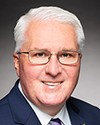
Evidence of meeting #16 for Access to Information, Privacy and Ethics in the 45th Parliament, 1st session. (The original version is on Parliament’s site, as are the minutes.) The winning word was screen.

A video is available from Parliament.

On the agenda

Members speaking

Before the committee

Sabia  Clerk of the Privy Council and Secretary to the Cabinet, Privy Council Office

6:25 p.m.

Clerk of the Privy Council and Secretary to the Cabinet, Privy Council Office

Michael Sabia

In my opinion, no.

Luc Thériault Bloc Montcalm, QC

The Prime Minister didn't do what you did, Mr. Sabia. He didn't divest himself of his assets.

Now, he's promoting a region, and on the same day—

6:25 p.m.

Clerk of the Privy Council and Secretary to the Cabinet, Privy Council Office

Michael Sabia

He's promoting Canada.

Luc Thériault Bloc Montcalm, QC

Pardon me?

6:25 p.m.

Clerk of the Privy Council and Secretary to the Cabinet, Privy Council Office

Michael Sabia

He's promoting Canada.

Luc Thériault Bloc Montcalm, QC

He's promoting Canada, but at the same time, he's promoting a company that's going to invest in a region, which he says the—

6:25 p.m.

Clerk of the Privy Council and Secretary to the Cabinet, Privy Council Office

Michael Sabia

Outside the country, whether it's Singapore or the Middle East, he's trying to promote Canada. We need investment. The country's future depends on it.

Luc Thériault Bloc Montcalm, QC

Does the Prime Minister have any contact with Brookfield? If so, how many times has he been in contact since he became Prime Minister?

6:25 p.m.

Clerk of the Privy Council and Secretary to the Cabinet, Privy Council Office

Michael Sabia

In my opinion, the answer is no. He's extremely vigilant about that.

Luc Thériault Bloc Montcalm, QC

Is that your understanding, or do you know for sure?

You say “in my opinion”, but might he have been in contact? Did you record that? Do you tell Mr. Carney that under no circumstances should he be in contact with Brookfield anymore and that he shouldn't even talk to Brookfield?

6:25 p.m.

Clerk of the Privy Council and Secretary to the Cabinet, Privy Council Office

Michael Sabia

He's very conscious of—

Luc Thériault Bloc Montcalm, QC

Did you tell him that? You said that you forced him to do things: Did you force Mr. Carney not to speak to Brookfield anymore?

6:25 p.m.

Clerk of the Privy Council and Secretary to the Cabinet, Privy Council Office

Michael Sabia

I didn't need to, because the Conflict of Interest and Ethics Commissioner told him exactly the same thing during their discussions several months ago.

I have something else to say about the Middle East and Singapore. We analyze the Prime Minister's agenda on a regular basis. He meets with people, and we look at whether there is a potential conflict of interest. We follow a rigorous process to analyze his entire agenda to avoid any conflicts of interest.

Luc Thériault Bloc Montcalm, QC

To you, it's a coincidence, then, isn't it?

The Chair Conservative John Brassard

Thank you, Mr. Thériault.

Mr. Sabia, I have a question for you.

I've been keeping notes of some of your testimony throughout the course of these two hours. One of the comments you made was that you work within how the current legislation functions.

Herein lies the problem, sir, as it relates to the general application rule. The Conflict of Interest Act is so open to it that you can actually drive a truck through it, in terms of that general application rule.

You gave examples of how a policy decision is made on the part of the country, and then there are very specific layers that happen as a result of that. The problem is that we're in a situation right now where—and some witnesses who have come before us have said this—we've never had a prime minister as conflicted as this one.

For some of these major policy announcements—and Mr. Thériault referred to artificial intelligence, modular homes, heat pumps, small nuclear modular reactors and, for example, the lumber business—the problem is that within the Prime Minister's portfolio, which is being held, as we all know, in a blind trust, there are deferred stock units, options and bonus incentives related to that, notwithstanding the fact that there are stocks within there.

I know you said that you're making a serious effort. The difficulty is that, under the transition fund, there are many entities related to that.

This is for the sake of the confidence that Canadians have in their designated public office holders, whether it's the Prime Minister or the minister. You mentioned that you divested yourself of Brookfield assets because you did not want that to be perceived as a conflict of interest, real or otherwise.

Do you not believe, sir, that when a person runs for prime minister and is that conflicted, they should divest themselves of all the assets? It would ensure that we can have public confidence, restore public confidence, that the person holding the highest office in the land is not benefiting from decisions being made, even on a general basis, given the policy announcements that have been made. When you layer it down to the specifics, there is the potential for profit to be made.

I understand that there are tax implications, but we're talking about the confidence that Canadians have in the office-holder of the highest office in the land. Do you not believe, sir, that divestment should be the option?

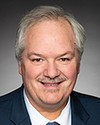
6:30 p.m.

Clerk of the Privy Council and Secretary to the Cabinet, Privy Council Office

Michael Sabia

Honestly, Mr. Chair, I come back to something I said earlier. To be blunt, I don't think it's that simple. Given the issues facing Canada today, this is a time when Canada needs to be able—and it's not just the Prime Minister I'm talking about, but also the ministers and other senior people coming into government—to access the best talent this country can provide.

That's fundamentally important, because this country faces a set of challenges the likes of which we probably haven't faced since the Second World War. That, I think, requires careful judgment about striking a balance. On the one hand, the very legitimate point you made with respect to confidence, accountability and transparency is what the screen is all about. It's why we are being so diligent and so careful about that screen, because I endorse 100% the importance of those principles in the eyes of Canadians. On the other hand, we also have to be able to get the best talent we can, because Canada needs it.

Therefore, I would urge you.... It's your decision. You folks were elected. I wasn't elected. It's for you to decide what that legislation should be.

My job, as I've said, is to run the system that exists today. Your job is to say what it should be and to ask if the current system is adequate. I would just urge you, in thinking that question through, not to create a set of barriers that makes it impossible for talented people to come to the aid of the country at a time when we need access to the best talent we can possibly have.

I can assure you this, Mr. Chair, because I live it. Attracting people into the Government of Canada today is not easy. There are many barriers, be they compensation barriers, post-employment guidelines, or X, Y or Z. It is not easy.

We work within those rules because those rules are important, and we do the best we can. I'll put it this way. To me, having access to the best talent this country has to offer seems to be an extremely important priority, because we have to get this country going and moving forward.

6:35 p.m.

Conservative

The Chair Conservative John Brassard

I would submit to you, sir, that we can draw that talent without the backdrop of the individual who is in that office causing Canadians and parliamentarians to wonder whether they are personally benefiting from being in the position they're in.

6:35 p.m.

Clerk of the Privy Council and Secretary to the Cabinet, Privy Council Office

Michael Sabia

That goes, Mr. Chair, to the rigour with which we run this this system. I can assure you.... If I've done anything in that—

6:35 p.m.

Conservative

The Chair Conservative John Brassard

The rigour, Mr. Sabia, comes with complete divestment. It's the only way to deal with this. I don't want to argue this point with you, but Canadians have to have confidence that the person who is running this country is not benefiting from it.

The virtuous reason you say makes a person want to run as a designated public officer or to become the Prime Minister should be part of the backdrop of the decision-making process in deciding to run and come back—as you say—to save this country. That should be the number one consideration, in my view, in the decision they make to come back. They should come back for a virtuous reason, not to profit and not to benefit.

We, as a committee, are charged.... I agree with you on this, and we've heard from lots of witnesses who have talked about this loophole within the act that needs to be challenged and changed, and we are going to have a decision to make.

We're not trying to do this for any one individual. We have to do this in order to protect the integrity of the office of the Prime Minister and to assure Canadians that decisions aren't being made in the best interest of any individual but in the best interests of the country.

I want to thank you—

6:35 p.m.

Clerk of the Privy Council and Secretary to the Cabinet, Privy Council Office

Michael Sabia

I think we both share the goal of protecting the integrity of the country and continuing to reinforce the confidence that Canadians have in the institution of the Government of Canada. I don't think there's any disagreement between me, you or other members of the committee that this is very important.

6:35 p.m.

Conservative

The Chair Conservative John Brassard

The only way to do that is to change this massive loophole within the law as it relates to the general application rule.

Mr. Sabia, I want to thank you for the time you've spent with the committee.

Thank you, committee members.

I also want to thank the clerk and the analysts for today.

I have just a couple of notes I want to make. There are two things.

Number one is thanking the clerk again. The dynamics of trying to add another meeting to our schedule are much more difficult than anyone would think. Tomorrow, between 3:30 and 5:30, we have Mr. Blanchard coming. He is the chief of staff for the Prime Minister.

There will be a work plan distributed later today, or maybe first thing tomorrow, on the artificial intelligence study we're doing.

Finally, Mr. Beber from Brookfield has confirmed that he will be in front of the committee in person next Monday from 11 a.m. to 1 p.m.

That's all I have. I want to thank you again, Mr. Sabia, for being with us today.

Thank you to the committee members, analysts, clerks and technicians.

The meeting is adjourned.