Evidence of meeting #17 for Access to Information, Privacy and Ethics in the 45th Parliament, 1st session. (The original version is on Parliament’s site, as are the minutes.) The winning word was screen.

A video is available from Parliament.

On the agenda

Members speaking

Before the committee

Blanchard  Chief of Staff of the Prime Minister of Canada, Office of the Prime Minister of Canada

3:30 p.m.

Conservative

The Chair Conservative John Brassard

Good afternoon, everyone.

I call this meeting to order.

Welcome to meeting number 17 of the House of Commons Standing Committee on Access to Information, Privacy and Ethics.

Pursuant to Standing Order 108(3)(h), the motion adopted by the committee on Wednesday, September 17, and the order of reference of October 28, the committee is resuming its study of the Conflict of Interest Act.

I would like to welcome our witness for today.

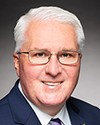
From the office of the Prime Minister, we have Marc-André Blanchard, chief of staff to the Prime Minister.

Mr. Blanchard, I understand that you would like up to eight minutes to address the committee, so I'm going to give you that.

Go ahead, sir. Please start.

Marc-André Blanchard Chief of Staff of the Prime Minister of Canada, Office of the Prime Minister of Canada

Thank you, Mr. Chair.

Thank you for the opportunity to appear before you today to discuss my responsibilities as chief of staff to the Prime Minister and, more importantly, as the administrator of the verification mechanism agreed to between the Prime Minister and the Office of the Conflict of Interest and Ethics Commissioner.

Last April, Canadians elected Prime Minister Carney in a moment of economic volatility, geopolitical realignment and growing pressure on democratic institutions. Canadians chose Mark Carney as Prime Minister because of his deep experience in both the public and private sectors. In fact, they did not elect him in spite of his vast global private sector experience but precisely because of it. Canadians understood that if we are to build a stronger, more resilient economy—one worthy of being the strongest in the G7—this experience is not optional. It is essential.

A key condition for this government's success is public trust. At the heart of that trust are the high ethical standards the Prime Minister set for himself and for everyone who works with him in his office and across government. Part of protecting that trust is ensuring that the ethics screen, agreed upon by the Prime Minister and the Ethics Commissioner, is implemented, always erring on the side of caution. An important part of my role as an administrator of the screen is precisely to ensure that the Prime Minister is not put in a situation of conflict of interest.

As you know, the conflict of interest screen is a compliance measure developed under the direction of the Ethics Commissioner, in accordance with the requirements of the Conflict of Interest Act. The fundamental purpose of the screen is to prevent conflicts of interest. It serves as a mechanism to identify, report and redirect issues that fall into the categories established by the Ethics Commissioner. It is an administrative and procedural mechanism based on the principles of transparency and integrity set out in the act.

Conflict of interest screens are frequently used in legal and commercial settings, and they are also an effective way to manage potential conflicts for individuals within the government.

In recognizing the reasonableness of the application of ethical screens in government, the Federal Court of Appeal confirmed:

This practice of publicly identifying the potential conflicts of interest of each public office holder before any problematic situation has occurred strikes me as an eminently reasonable way to ensure the furtherance of the Act's purpose

The Conflict of Interest and Ethics Commissioner determined that a blind trust combined with a conflict of interest screen is the appropriate measure for Prime Minister Carney. When appearing before you, the Ethics Commissioner confirmed that the Prime Minister divested himself of all his interest in a blind trust.

The Ethics Commissioner further added:

to avoid a situation where he would make a decision knowing that it would increase the value of one of the companies he divested...we set up this screen.

It is in this context that the Prime Minister and the commissioner agreed to a screen as a preventive and appropriate measure of compliance. The Clerk of the Privy Council and I, as chief of staff to the Prime Minister, are the administrators of the screen.

On this issue, I want to refer you to what the commissioner said to this committee in response to a question asked by Mr. Cooper.

The commissioner said:

Let's be practical. Anything that goes to the Prime Minister for a decision goes through either one of these men or both. They are in effect the keyholders of what gets on his desk and what he deals with. They are the logical ones to make sure he does not get involved in these things.

It is important to underline that my role is first and foremost about ensuring that conflicts are prevented. The administration of the screen is a responsibility I approach with utmost seriousness.

In practice, the Privy Council Office and the Prime Minister's Office are in constant communication. Although some meetings or events can be planned without the direct participation of the Privy Council, no official policy or government decision can be adopted without the participation of the public service and the political arm.

The screen is administered on a daily basis by the Privy Council Office. When a department or agency prepares a note, a policy proposal, an update or any other document for the Prime Minister, that document is first assessed using the assessment tool developed by the Privy Council with the assistance of the Ethics Commissioner. That tool enables us to determine whether the screen may apply.

Privy Council governance officials then perform due diligence, review the analysis and ensure that all relevant information has been considered. Their recommendation is submitted to the Clerk of the Privy Council for review and approval. Once the clerk has confirmed his position, his office sends it to me for review and agreement. When both administrators agree, the decision is referred to the Privy Council governance officials to continue implementation.

Today, all the recommendations from the public service have been jointly confirmed by the Clerk and me.

For negative determinations, where the screen does not apply, no further action is required by departments or agencies. For positive determinations, departments must clearly identify the material as subject to the screen. These documents are not shown to or discussed with the Prime Minister. The screen is applied on a precautionary basis. As soon as the analysis indicates there may be a triggering factor, access is restricted pending the final determination of the administrators.

I would like to point out that the system currently in place to prevent the Prime Minister from being in a conflict of interest is one of the most comprehensive and rigorous I have seen in my career. It is proactive and preventive and, above all, it is extremely rigorous because of the high level of awareness within the government.

Thank you, Mr. Chair. I look forward to questions.

3:35 p.m.

Conservative

The Chair Conservative John Brassard

Thank you for your statement, Mr. Blanchard.

We're going to start with our first six-minute round.

Mr. Barrett, you have six minutes. Go ahead, please.

Michael Barrett Conservative Leeds—Grenville—Thousand Islands—Rideau Lakes, ON

Has the Prime Minister provided you with a full list of all of his investments with Brookfield?

3:40 p.m.

Chief of Staff of the Prime Minister of Canada, Office of the Prime Minister of Canada

3:40 p.m.

Conservative

Michael Barrett Conservative Leeds—Grenville—Thousand Islands—Rideau Lakes, ON

Do you have the list?

3:40 p.m.

Chief of Staff of the Prime Minister of Canada, Office of the Prime Minister of Canada

Marc-André Blanchard

As the administrator of the ethical wall, I am responsible for the administration of the wall as agreed upon by the Ethics Commissioner and the Prime Minister. The list that I obey is annex A of the public declaration made by the Prime Minister.

3:40 p.m.

Conservative

Michael Barrett Conservative Leeds—Grenville—Thousand Islands—Rideau Lakes, ON

Do you have full visibility on all of the investments in the global transition fund and all of Brookfield's investments?

3:40 p.m.

Chief of Staff of the Prime Minister of Canada, Office of the Prime Minister of Canada

Marc-André Blanchard

As I said, the Ethics Commissioner and the Prime Minister have agreed that the appropriate measures for the Prime Minister upon his election were two things: He would divest of his investments through a blind trust and, as an additional preventive measure, an ethical wall would be set up. There's a list in annex A of the companies that, in a preventive way, could be the object of a wall, if necessary.

3:40 p.m.

Conservative

Michael Barrett Conservative Leeds—Grenville—Thousand Islands—Rideau Lakes, ON

When Canadians hear that the Prime Minister has divested, I think they expect that there's been a sale of those controlled assets. I appreciate that within the laws, it's currently written that placing them in a blind trust satisfies that requirement. That's what the Ethics Commissioner has said.

However, funds like the global transition fund and future payments to Mr. Carney based on the performance of Brookfield create a scenario where, it seems to me, the only way you could effectively ensure the Prime Minister isn't making decisions that benefit Brookfield or himself financially would be for you to have the full list of the investments and interests in the global transition fund and in Brookfield's portfolio.

3:40 p.m.

Chief of Staff of the Prime Minister of Canada, Office of the Prime Minister of Canada

Marc-André Blanchard

I'll refer you to a comment made by Nigel Wright in front of this committee. Nigel Wright was the chief of staff to Prime Minister Harper.

Similar measures were applied in his case. He had to divest his assets in a blind trust. There were 40 companies that were screened in that context. They were kind of similar measures to what we see here.

At the time, Mr. Wright, who became the chief of staff to Prime Minister Harper, talked about his blind trust. He said that the “blind trust follows a form that was created and drafted by the Ethics Commissioner”, as in the case of the Prime Minister here. He said:

I transferred all of my controlled assets into the blind trust in late October. The blind trustee is the legal owner of them all now, and I'm not to have any communication of any sort—no direction, no advice, no information about what's in there. I do not know and will not know what's in there. Once a quarter I'll be told what the value of it is.

He said:

There is a direct link between the Ethics Commissioner and the blind trustee so that the Ethics Commissioner's office will have the ability to know what's going on, but the purpose of the blind trust is to remove me and any knowledge I may have about my controlled investments and have them administered by a third party.

It's exactly the same kind of situation that you have with Prime Minister Carney.

3:40 p.m.

Conservative

Michael Barrett Conservative Leeds—Grenville—Thousand Islands—Rideau Lakes, ON

If I may, sir, I appreciate that it may be similar, but the chief of staff to the Prime Minister is not the Prime Minister. The chief of staff to the Prime Minister does not have the ability to make decisions and does not have the influence that the Prime Minister has.

The situation also appears to be different, because with Brookfield's investments in all of the things that the government is committing major government spending to, whether it's artificial intelligence, modular housing or heat pumps, the Prime Minister's future payments depend on Brookfield's performance. That's not something that's going to be sold by the trustee; that's something that went in and something that's going to come out looking the same way.

The Prime Minister knows the investments of Brookfield from when he was chair of Brookfield Asset Management. He created the funds that he's going to benefit from based on their performance. Canadians are the ones who are in the dark about the decisions that the Prime Minister is taking and how they're going to impact his potential future compensation. It's a lack of transparency that gives rise to this concern.

My recommendation.... I don't come with a problem without a proposed solution. Would you not say that in this situation it would give Canadians confidence that decisions aren't being taken with the perception of personal financial gain, if anyone holding the office of Prime Minister were to divest their assets by selling them before taking decisions, instead of placing them in a blind trust where they would still be able to know what they put into it?

3:45 p.m.

Conservative

The Chair Conservative John Brassard

We're going to have to come back to that, Mr. Blanchard.

Mr. Barrett, I invite you to ask that question again in a later round, or get a response to it.

Madame Lapointe, go ahead for six minutes.

I'm going to be sticking to the time. We want to make sure we get in as many rounds as we can.

Linda Lapointe Liberal Rivière-des-Mille-Îles, QC

Thank you very much, Mr. Chair.

Good afternoon, Mr. Blanchard. Welcome to our committee.

In your remarks, you mentioned your role as chief of staff of the Prime Minister and your role as one of the administrators of the Prime Minister's conflict of interest screen.

Can you explain to the committee why you chose to take on those roles and what they entail?

3:45 p.m.

Chief of Staff of the Prime Minister of Canada, Office of the Prime Minister of Canada

Marc-André Blanchard

Those roles were proposed to me by the Prime Minister and the Ethics Commissioner, and I accepted them for the reasons I mentioned in my presentation. The Commissioner is of the view that the screen is a preventive measure. The goal is to ensure that the Prime Minister is not in a conflict of interest. For the screen to be effective, the people responsible for applying it have to be aware of what's going on, both on the political side and on the public service side. That's why the Ethics Commissioner, when he came here, explained his decision by saying that this absolutely had to involve people who were aware of what was being put before the Prime Minister, so that they could screen that information. An outside person would not be able to play that role.

Linda Lapointe Liberal Rivière-des-Mille-Îles, QC

To what extent have you had discussions with the Ethics Commissioner to ensure that he was satisfied with the conflict of interest screen that was put in place and its administration?

3:45 p.m.

Chief of Staff of the Prime Minister of Canada, Office of the Prime Minister of Canada

Marc-André Blanchard

There are regular discussions with the Office of the Conflict of Interest and Ethics Commissioner. In the beginning, when I took office, I had discussions with the Ethics Commissioner and the Clerk of the Privy Council. Afterwards, our respective teams also had many discussions with the Commissioner, and they continue to do that, as the Ethics Commissioner is there to advise us and confirm the directions or decisions that are taken with respect to the application of the screen.

Linda Lapointe Liberal Rivière-des-Mille-Îles, QC

So far, is the Ethics Commissioner satisfied with the process that has been put in place? Does he feel it is sufficient?

3:45 p.m.

Chief of Staff of the Prime Minister of Canada, Office of the Prime Minister of Canada

Marc-André Blanchard

I can't speak for the Commissioner, but my understanding is that he is satisfied with the way the process is being administered. I'll give you an example.

The tool to assess the application of the Prime Minister's conflict of interest screen, which is used to assess every situation raised by members of the public service or my office, for example, has been the subject of extensive discussions with the Ethics Commissioner. He says he is satisfied with the tool we use to make the appropriate decisions. The goal is always the same: to prevent the Prime Minister from finding himself in a conflict of interest. This is important, both for the Prime Minister and for the office he represents and our institutions. So we strive to succeed and to comply with all the measures that have been put in place jointly with the Ethics Commissioner.

Linda Lapointe Liberal Rivière-des-Mille-Îles, QC

Thank you. I assume that the tool you're talking about is the same as the one the Clerk of the Privy Council submitted to the committee yesterday.

3:50 p.m.

Chief of Staff of the Prime Minister of Canada, Office of the Prime Minister of Canada

Linda Lapointe Liberal Rivière-des-Mille-Îles, QC

There's a part A and a part B, and if it doesn't work, you go to the end and tick a box.

3:50 p.m.

Chief of Staff of the Prime Minister of Canada, Office of the Prime Minister of Canada

Marc-André Blanchard

That's right. There are actually seven questions to guide us. The goal is to take a rigorous and systematic approach to our decisions.

When we talk about ethics measures, it's important to ensure that the people concerned remain informed and aware of the measures in place, and it's my role to ensure that. I am referring in particular to the deputy ministers of the departments concerned, the associate deputy ministers, the management of those departments and the political staff.

We also have to make sure that there is a way to identify and redirect the questions that correspond to the six categories in the assessment tool. Obviously, we have to make sure that we keep appropriate records and, throughout this process, obtain the advice of the Office of the Conflict of Interest and Ethics Commissioner and work with him.

Linda Lapointe Liberal Rivière-des-Mille-Îles, QC

Thank you very much.

3:50 p.m.

Conservative

The Chair Conservative John Brassard

Thank you, Ms. Lapointe and Mr. Blanchard.

Mr. Thériault, you have the floor for six minutes.