Evidence of meeting #47 for Foreign Affairs and International Development in the 45th Parliament, 1st session. (The original version is on Parliament’s site, as are the minutes.) The winning word was institutions.

A recording is available from Parliament.

On the agenda

Members speaking

Before the committee

Steil  Director General, Strategy, Department of Foreign Affairs, Trade and Development
MacKenzie  Director General, International Organizations and Human Rights Bureau, Department of Foreign Affairs, Trade and Development
Larose  Director General, International Security Policy and Strategic Affairs Bureau, Department of Foreign Affairs, Trade and Development
Dufour  Full Professor and Research Chair on Sustainable, Responsible, and Inclusive Trade Law, Faculty of Law, University of Ottawa, As an Individual
Slaughter  Incoming Dean, School of Public Policy, London School of Economics, As an Individual
Robertson  Director, Research and Advocacy, B'nai Brith Canada

5:20 p.m.

Conservative

Jacob Mantle Conservative York—Durham, ON

You interrupted me to ask a question, and I responded.

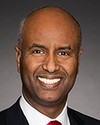
The Chair Liberal Ahmed Hussen

I'll let them respond.

5:20 p.m.

Conservative

Jacob Mantle Conservative York—Durham, ON

Thank you.

5:20 p.m.

Director General, Strategy, Department of Foreign Affairs, Trade and Development

Shawn Steil

Mr. Chair, once again, I think, for the line of questioning that was on the agenda today, we don't have the experts in the room who can properly answer that question.

5:20 p.m.

Conservative

Philip Lawrence Conservative Northumberland—Clarke, ON

I have a point of order.

The Chair Liberal Ahmed Hussen

Yes. Go ahead.

Philip Lawrence Conservative Northumberland—Clarke, ON

I know we'll go into committee business, but that is in camera.

I'd just like to put it on the public record that, at some point, the Conservatives would very much support additional meetings on the subject on the areas of international development and the Francophonie.

The Chair Liberal Ahmed Hussen

Thank you for that.

MP Sari, go ahead for five minutes.

Abdelhaq Sari Liberal Bourassa, QC

Thank you very much, Mr. Chair.

I'd like to thank the four witnesses for being with us today.

I would like to make a few remarks before asking you a couple more questions if I have time.

As you know, the Prime Minister presented a fairly clear global vision in Davos. He advocated for a more pragmatic Canada, one that engages with the entire world despite the current differences that exist there.

I'd like to hear your thoughts on how this vision presented by the Prime Minister can be implemented.

5:20 p.m.

Director General, Strategy, Department of Foreign Affairs, Trade and Development

Shawn Steil

Canada's foreign policy is going through a review right now, largely based on changes to the international environment that require us, as the honourable member said, to be more pragmatic and more diversified in our bilateral relationships. How we become more pragmatic and diversified in our bilateral relationships is something we're all working on and trying to articulate more fully, but it means putting Canada's interests first in a way that allows us to co-operate with a wide variety of partners where we can find common interests. That might be in cases where we have disagreements or difficulties in relationships, but we'll still try to find ways to have effective and mutually beneficial partnerships. For Global Affairs Canada, that means engaging more strategically and also more broadly with a wider variety of partners.

I have one final comment. The Prime Minister said, not just in Davos, but in his speech at Lowy Institute, and then again in Strasbourg before the European Parliament, that Canada will build its strength at home in order to be a better international partner. Part of what he's talked about is ensuring that Canada has access to the supply chains we need to power our economy.

Looking for the partners that will reduce our dependencies and have capabilities that we require, and partnering strategically with them are among the core functions of being pragmatic and diversified.

Abdelhaq Sari Liberal Bourassa, QC

In terms of that pragmatism, you spoke of shared benefits. I really appreciate that expression. However, efforts at multilateralism have also been discussed on the sidelines of the United Nations General Assembly.

Can you explain this initiative and what it will actually change? Furthermore, is Canada, as a country, in a good position to lead it?

5:20 p.m.

Director General, International Organizations and Human Rights Bureau, Department of Foreign Affairs, Trade and Development

Alexandra MacKenzie

The effort to reinforce the partnership for multilateralism is looking at the UN system as well as other opportunities. My colleague talked about being pragmatic and strategic in working with partners on issues that concern us. The UN system is one such platform within which we can do that, but there are other opportunities as well. The Commonwealth and la Francophonie are two other examples.

Yes, they are opportunities for us to connect, pursue common interests and address global challenges together.

Abdelhaq Sari Liberal Bourassa, QC

It's really nice to hear from you, but I only have five minutes.

I'd like to wrap up by discussing a topic that's very important to me: AI. You mentioned China, and you also mentioned the G20, where there is a certain degree of openness.

My colleague asked you a question about that. I'd really appreciate it if you could take the time to provide us with more information or, at the very least, respond in writing if possible. That's something I'd like to explore further. AI can take on many dimensions. In particular, it can be approached from the perspective of an international alliance we might form to promote greater democracy or greater freedom, values that these new technologies could undermine.

5:25 p.m.

Director General, Strategy, Department of Foreign Affairs, Trade and Development

Shawn Steil

We would be happy to come back to you.

Canada, of course, has passed an AI strategy with a primarily domestic focus, but it's also international. Those very questions you've raised about AI and democracy are part of the discussions, for example, that were had in Évian at the G7 summit.

Abdelhaq Sari Liberal Bourassa, QC

I have 20 seconds left, so I want to thank you.

Regarding that point, I'm particularly interested in knowing whether there are other countries that have approached us about forming some kind of alliance or that have shown an openness to the idea, given that in Montreal, Toronto or Edmonton, we do have some fairly interesting technology hubs, and we have the potential to influence things. If you've had any requests in that regard, please let us know in writing. We would greatly appreciate it.

The Chair Liberal Ahmed Hussen

Thank you very much.

On behalf of all of the members, I want to thank all of the witnesses for their appearance before the committee and for their testimony.

We will now briefly suspend in order to prepare for the next panel.

The Chair Liberal Ahmed Hussen

I call this meeting back to order.

I would now like to welcome our witnesses for the second hour.

I would now like to welcome the next panel of witnesses for the second hour of the meeting.

We have Dr. Geneviève Dufour, full professor and research chair on sustainable, responsible and inclusive trade law at the faculty of law at the University of Ottawa. We have Dr. Anne-Marie Slaughter, incoming dean of the school of public policy at the London School of Economics, joining us by video conference. From B’nai Brith Canada, we have Richard Robertson, director of research and advocacy, who is also joining us by video conference.

Welcome.

Up to five minutes will be given for opening remarks, after which we'll proceed to rounds of questions.

I now invite Dr. Geneviève Dufour to make an opening statement of no more than five minutes, please.

Thank you.

Geneviève Dufour Full Professor and Research Chair on Sustainable, Responsible, and Inclusive Trade Law, Faculty of Law, University of Ottawa, As an Individual

Members of the committee, thank you for the invitation. It's always an honour to have the opportunity to speak with you and address you.

Today, I would like to present three observations on the effectiveness of international institutions, followed by a recommendation on the role Canada could play in redefining international institutions.

The first observation is that international institutions are undergoing a profound crisis. Violations and blockages are nothing new, of course, but their increasing frequency and intensity at this time are certainly undermining these institutions.

The second observation is that, despite this crisis, institutions continue, on the whole, to perform essential functions and produce results. The WTO, the World Trade Organization, is an excellent example. Despite the paralysis of its appellate body since 2019, its members continue to bring cases before the dispute settlement body. Above all, despite the trade war launched by the Trump administration, more than 70% of international trade continues to take place under the most favoured nation principle. I think that's a very telling example.

The third observation is that maintaining this effectiveness also depends on the adaptability and resilience of states. To return to the example of the WTO, faced with the blockage in the appellate body—driven by Canada and the European Union—several members established a provisional appellate arbitration mechanism. As a result, they used the possibilities offered by existing law to preserve a function that was at risk.

It could also be said that WTO members are currently negotiating a possible reform of the organization. Just a few days ago, on October 23, they were working on substantial proposals. Consequently, these efforts show resilience but, above all, signal a redefinition of our international institutions, the outcome of which remains uncertain for the time being.

This is where my recommendation comes in, dear members of the committee: If this transformation gains momentum and accelerates, Canada needs to be ready, and it needs to be prepared to help lead. It can play a role in setting the standard.

We know that, in the past, Canada has often played a significant role in bringing about major transformations, but it must be said that Canada has taken a back seat in recent decades. The ambition expressed in Davos by Prime Minister Carney, the ambition for concerted action by middle powers, now calls for a sustained investment in our capabilities. I think the impetus is there for us to move forward.

I therefore propose a four-part strategy for establishing a global presence and providing international legal expertise.

First, we should anticipate upcoming vacancies and support Canadian candidates with a dedicated team, a budget and diplomatic engagement. In other words, we need to increase the presence of Canadians in key positions. We need to recognize this. Our presence in international institutions remains sporadic and insufficient. No Canadian has ever been nominated as a judge to the International Tribunal for the Law of the Sea, even though we have the world's longest coastline. We haven't had a judge on the International Court of Justice since Justice Read, whose term ended in 1958. Furthermore, since 2016, we have had no Canadians serving on the International Law Commission, the body of the United Nations General Assembly that works to codify and advance international law.

Let's face it: Other medium-sized countries, such as Romania and Tunisia, have fared much better than we have in recent years. They have succeeded in having their judges—their own nationals—elected to major bodies. This did not happen by accident, but as a result of a strategy. In 2024, Global Affairs Canada was considering structured support for candidacies. Where do we stand today?

Second, I think we need to involve university professors more closely in the teams that advise and represent Canada before international bodies, obviously, to complement the expertise of public servants. We should take a cue from countries that systematically include university professors, such as France and Belgium, and that succeed in promoting and gaining acceptance for new ideas.

Third, as a university professor, I cannot overlook the need to develop the next generation of talent. We need secondments, litigation experience and mentorship opportunities, all developed in partnership with universities.

Fourth, this strategy must explicitly include francophone legal professionals and capitalize on Canada's bilingualism. French and English are the official languages or working languages of all the international courts and tribunals and of most international institutions. Canada therefore possesses a tangible advantage and must make the most of it.

In closing, Mr. Chair, we're at a pivotal moment. Institutions are under strain, and a period of redefinition lies ahead. Canada must therefore prepare to help shape that redefinition and seize the current momentum to become one of its leading architects. To that end, it must adopt a strategy aimed, among other things, at securing key positions for Canadians.

Thank you.

The Chair Liberal Ahmed Hussen

Thank you for your opening statement.

I now invite Anne‑Marie Slaughter to make her opening remarks.

Anne-Marie Slaughter Incoming Dean, School of Public Policy, London School of Economics, As an Individual

Mr. Chair, and honourable members, it's an honour and a pleasure to be able to speak to you today.

I have been studying, writing about and working with international institutions for 35 years as a professor, as a dean of a public policy school, aa a government official in the U.S. Department of State, and then, as the head of a think and action tank.

In 2022, I was invited to join the UN Secretary-General's High-Level Advisory Board on Effective Multilateralism, which was tasked with making recommendations on how to reform international institutions for the pact for the future in 2024. It seems like another world. However, we met for two years. We were 12 people, including the current president of Singapore. We were completely representative of the world's geography and population. We issued a report, which I would recommend to you, given that this is the outset of your investigations. It is entitled “A Breakthrough for People and Planet: Effective and Inclusive Global Governance for Today and the Future”. It is very long—well, not very long for a UN report, but it is long. Nevertheless, I would commend it to you as the distillation of many comments from people all over the world, as well as from experts.

One of the parts of that report, which is much shorter, is that we set out 10 principles for effective multilateralism on one page. I am going to list those, and then I'm going to focus on five of them directly in the context of this moment.

First, effective multilateral institutions must be people-centred. They must be focused on the people they are supposed to serve—not the states but the people within the states. That's how you judge them.

They need to be representative. I'll come back to that.

They need to be transparent. This doesn't mean they need to be completely open, but it does mean their data and content need to be publicly accessible.

They need to be equitable. I will come back to that.

They need to be networked. Again, I will come back to that.

They need to be resourced. That one needs no explanation.

They need to be mission-focussed with a clear mission, which is, in fact, where progress is measurable.

They need to be flexible—and I'll come back to that—accountable and, finally, future-oriented.

There's more on each of these, but it is, I think, a very good framework for thinking about how to design new international institutions.

The principles of representativeness and equity are linked, and the attributes of being networked, flexible and future-oriented are linked, so I'll talk about them that way.

On representation, we cannot have a global institution in 2045 that is run by the victors of 1945. As long as that is the case, the institution is illegitimate and ineffective, and that is what we are seeing now.

Kofi Annan really tried to reform the UN Security Council. He got as close as I think you can get. I don't believe that can happen now. Instead, I think you have to work through the parts of the UN and the UN system that do work, specifically the UN General Assembly.

One of the things we said representativeness means is that stakeholders have a place at the table and a clear voice but also that you must have majority voting, even against the wishes of a minority opposition in matters of global concern. That is a key principle. It's hard to do, but you're not going to be effective without it.

In terms of representation and majority voting, real representation means a far greater role for global south countries in all global institutions, and a real role, not a role where the global north countries get together, and then add a few global south countries at the table. It has to be representative, with genuine input throughout.

Then, we get to representative, equitable, networked, flexible and future-oriented. These, again, all go together.

I want to start here by quoting a late great Canadian, John Ruggie, who was a professor and a dean and worked hard for Kofi Annan. He said back in the 1970s that institutions are not just entities with headquarters and letterhead. They are not just these formal things that we had always studied. Instead, they are collections of rules, norms and decision-making procedures that constrain behaviour, shape agendas and actually prescribe the behaviour of states.

If you look at that definition, when we look at international institutions, we have to include informal institutions, like the Basel committee on central bankers or the International Organization of Securities Commissions, which was actually chartered under the law of Quebec as a non-profit. These are very informal, but many of them are very powerful institutions that bring together the right officials from the right countries, who can then act directly domestically.

The Chair Liberal Ahmed Hussen

Thank you, Doctor. We'll have to—

5:50 p.m.

Incoming Dean, School of Public Policy, London School of Economics, As an Individual

Anne-Marie Slaughter

I have one last statement.

The last thing I would say is that we have to include state and non-state actors, and the members of an institution have to commit themselves with money or action so that they have a stake in the outcome.

Thank you very much.

The Chair Liberal Ahmed Hussen

Thank you for your statement.

Richard Robertson, I now invite you to make your opening statement.

Richard Robertson Director, Research and Advocacy, B'nai Brith Canada

Thank you, Mr. Chair.

Honourable committee members, my name is Richard Robertson. I am B'nai Brith Canada's director of research and advocacy.

Established in 1875, B'nai Brith Canada is this country's longest-serving human rights organization. As part of its study on the effectiveness of international institutions and how Canada is meeting its foreign policy priority of strengthening these institutions, it is imperative that the committee examine Canada's present support for the United Nations Relief and Works Agency for Palestine Refugees in the Near East, UNRWA.

Canada is one of the largest contributors to UNRWA, having donated over $25 million U.S. In 2025 alone, as part of an over $100-million multi-year funding commitment. Following the October 7 Hamas-led terrorist attacks in Israel, evidence emerged of the links between UNRWA, listed terrorist organizations and the October 7 attacks themselves. As a UN agency, UNRWA has a fundamental obligation to maintain neutrality, to ensure both the integrity of the agency and the success of its operations.

The allegations against UNRWA prompted the UN Secretary-General to commission an independent review of UNRWA in 2024. The review focused on UNRWA's adherence to the international humanitarian principle of neutrality. From January to March 2024, Canada paused its funding to UNRWA while the review took place.

The resulting report, the Colonna report, found that although UNRWA had developed a significant number of mechanisms and procedures to ensure adherence with the principle of humanitarian neutrality, violations of the principle continued to persist. Violations recorded in the report include instances of staff publicly expressing political views, host country textbooks with problematic content being used in UNRWA schools, and politicized staff unions making threats against UNRWA management and causing operational disruptions. The report made 50 recommendations to strengthen UNRWA's neutrality, accountability, oversight and institutional integrity in eight critical areas requiring immediate improvement.

When Canada announced it was resuming funding to UNRWA on March 8, 2024, Global Affairs Canada stated that it was committed to ensuring full accountability, decisive action and the implementation of the necessary reforms within UNRWA. GAC further stated that Canada would work with stakeholders to ensure that the recommendations stemming from the report were fully implemented. GAC affirmed that Canada expects UNRWA to meet its obligation and uphold the UN value of neutrality, an essential component of UNRWA's mandate.

Canada further pledged additional funding to aid UNRWA in the implementation of the Colonna report recommendations. In May 2024, GAC doubled down on its expectations. GAC reaffirmed that Canada expects all the recommendations to be fully and swiftly implemented and that Canada will be monitoring progress closely. It has now been over 30 months since the Colonna report was published, yet publicly available evidence suggests that UNRWA has failed to implement its recommendations.

In July 2026, the Institute for Monitoring Peace and Cultural Tolerance in School Education, IMPACT-se, published an analysis of UNRWA's response to the Colonna report. IMPACT-se found that in the two years since the Colonna report was published, there had been limited publicly available evidence of meaningful structural change.

The IMPACT-se report noted that UNRWA's implementation reporting contained significant inconsistencies and has increasingly become difficult to assess. This includes evidence that recommendations previously classified by UNRWA as complete now appear to remain incomplete, and UNRWA's repeated requests for additional funding to facilitate the implementation of recommendations that it had already reported as complete.

The IMPACT-se report highlights that despite commitments to review educational materials and remove problematic content, there is limited evidence that such reforms have been undertaken. As an example, IMPACT-se referenced the continued use of educational materials containing anti-Semitic narratives, glorification of violence and encouragement of jihad.

UN Watch, an independent human rights organization accredited with special consultative status to the UN Economic and Social Council, raised similar concerns about UNRWA's implementation of the Colonna report's recommendations.

In September 2026, UN Watch found that UNRWA frequently measured administrative activity instead of meaningful reform and that, at most, 13 of the Colonna report's 50 recommendations had been completed as prescribed. They note that its employees continue to be exposed as members and supporters of terrorist organizations, that hateful educational content persists and that Hamas-dominated unions continue to obstruct neutrality.

Despite evidence from leading think tanks and human rights organizations that UNRWA has failed to implement the recommendations found in the Colonna report, the implementation of which the federal government acknowledged as essential and specifically committed funding towards, Canada continues to fund UNRWA.

If Canada wishes to ensure the effectiveness of international institutions and demonstrate its leadership in this sphere, it must demand an independent review of UNRWA's implementation of the Colonna report recommendations and cease sending Canadian funds to UNRWA until it has been demonstrated that it has successfully undertaken the required reforms.

If it proves incapable of reform, Canada must reconsider its continued support for UNRWA. Continuing to fund UNRWA as it currently exists is both a disservice to Canadian taxpayers and antithetical to Canada's attempts to ensure the effectiveness of international institutions.

The Chair Liberal Ahmed Hussen

Thank you very much for your statement.

I will now open the floor for questions, beginning with MP Lawrence.

You have six minutes.