Next, we'll do the final round. We'll do four minutes, four minutes and two minutes.
We'll start with Mr. Bragdon for four minutes.

Evidence of meeting #41 for Agriculture and Agri-Food in the 45th Parliament, 1st session. (The original version is on Parliament’s site, as are the minutes.) The winning word was local.
A video is available from Parliament.
Liberal
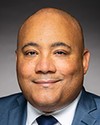
The Chair Liberal Michael Coteau
Next, we'll do the final round. We'll do four minutes, four minutes and two minutes.
We'll start with Mr. Bragdon for four minutes.
Conservative
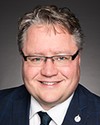
Richard Bragdon Conservative Tobique—Mactaquac, NB
Thank you, Mr. Chair. It's much appreciated.
Thank you to our guests and the witnesses who are here today, for the important work that they each do in their organizations.
I can say that, from any observation and experience I've had with the Salvation Army and the incredible work that it does across the country and around the world for the most vulnerable among us, that work is to be commended.
First off, let me say, on behalf of a grateful nation, thank you for your incredible work in that space.
As well, I've had the privilege of meeting Mr. Boyd on several occasions in Fredericton. It's great work that they're doing at Greener Village.
These are some wonderful innovations and proposals that you're putting forward or already have in that space, so thank you.
I'll be directing a lot of my questions to both of you and your organizations. I'll start with the Salvation Army.
Your organization works directly with many Canadians who are facing food insecurity head-on. I would like for you to just...and then I'll go to Greener Village as well. Can you tell us what kind of increase in the demand for your services you have seen in the last year—even year over year or even in the last four or five years, but definitely in the last year?
I know the food banks in my area are certainly seeing an increase in demand. I wonder if you could speak to that from your perspective.
Assistant Public Affairs Director, Salvation Army
I've been a Salvation Army officer for 39 years. I served in many places across our country. Food insecurity right now at our food lines is trending to new groups that are coming to see us. It's often people who have been our donors. They are now coming to us for help with food as costs go up for rent, housing and transportation. Of all the different costs, food is the one that gets squeezed out. It can be provided by others or...trying to match how we get into that. The others are pretty stable costs, so you can't change them.
We're seeing that shift all across our country. The donations are not enough to meet the demand. During COVID-19, groups of people who were usually not food insecure showed us that the federal government can play a part in food security across our nation. In the last four years, it never really has.
We're asking for innovative and new ideas that will change the face of our country. Many of the presenters have spoken to some of those. We would love to participate in that to see the people served.
Chief Executive Officer, Greener Village
We've seen a 135% increase in the last five years in the number of people we're serving. That's double and some since we looked at the stats from 2021. During that same time, we have seen a significant increase in certain demographics. For instance, the percentage of people who are accessing our food bank who are full-time employed has more than doubled in the last five years. The number of newcomers has more than doubled in the last five years. The number of students has more than quadrupled in the last five years. We're seeing certain demographics there. We're seeing a lot more people, and that's driving the growth in demand for food banks like ours.
Conservative
Richard Bragdon Conservative Tobique—Mactaquac, NB
Do you see the increased taxation and regulatory burdens on our farmers and producers, as well as the increased tax burden and rising cost of living, playing a significant role in the increased demand for your services, Mr. Boyd and the Salvation Army?
You can submit it in writing if you don't have time.
Liberal
The Chair Liberal Michael Coteau
He's run out of time. I think he caught on to it at the last second.
Thank you.
We'll go to the Liberals and Mr. Fergus for four minutes.
Liberal
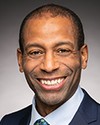
Greg Fergus Liberal Hull—Aylmer, QC
Thank you very much to all the witnesses for joining us. Their testimony is greatly appreciated.
In the previous panel, it was mentioned that it is important for the government to implement initiatives.
My question is for the representatives of the three associations.
We discussed with the previous panel the missing link in all of this. A question I asked one of the witnesses privately was about the respective roles of retailers and wholesalers in the agri-food sector.
Mr. Archambault, do you think there would be a benefit to preventing this vertical integration that exists between wholesalers and retailers—that is, grocery stores?
Founder and Chief Executive Officer, La Tablée des Chefs
Thank you for the question.
I've had discussions about that. Wholesalers must primarily plan their operations around the possible dates or days when products will go on sale at the retailer. Take fruits and vegetables, for example. It needs to be ensured that these products go on sale within 15 days to guarantee the freshest possible products. In some cases, certain retailers may refuse the product. In that case, the wholesaler is left with an inventory of 15 pallets of broccoli that they cannot send to the retailer. So they'll donate them to food banks, but in some cases, that's not possible.
As for frozen products, I spoke with Nicholas‑P. Pedneault of Congebec, which manages large-scale freezer facilities. In some cases, certain retailers refuse to allow stored products that do not meet standards to be donated to food aid organizations. That should be prohibited. A process absolutely must be put in place to ensure that any edible and accessible food that will not be sold is donated to food aid organizations.
Regarding the freezing sector or the freezing-related outsourcing, Mr. Pedneault and I had a very productive discussion. That said, I'm sure that's also the case for many other refrigeration and freezing facilities across the country.
Liberal
Greg Fergus Liberal Hull—Aylmer, QC
I'm sorry to interrupt you, but I don't have much speaking time left, and I'd like to share it with my colleague from Nova Scotia.
Liberal

Braedon Clark Liberal Sackville—Bedford—Preston, NS
Thank you very much to all the witnesses for the work they do in their communities. It's really, profoundly important.
Thank you to my colleague for the time.
I just have one question for Mr. Boyd.
One of the things we often hear about from charitable groups and non-profits, as we heard in the last hour, is the difficulty of taking an operation to the next level in terms of impact and scale.
Mr. Boyd, could you pinpoint the one or two things the federal government could do, either on its own or in partnership with provinces and others, to help organizations like yours scale to address the issue of food insecurity? What are those, in your mind?
Chief Executive Officer, Greener Village
Thank you for that question.
Briefly, if I were to pick one thing, it would be to focus on the right infrastructure that can “benefit beyond”. We build most infrastructure projects for a given need, but once we've built that infrastructure, it could be used for things that weren't the original need. For instance, you could build a road to a new community and then use it for a whole host of different avenues.
We have partnerships with—
Liberal
The Chair Liberal Michael Coteau
Thank you. I'm going to stop you there, as I have limited time today.
I'm going to the Bloc for two minutes.
Bloc
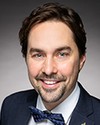
Sébastien Lemire Bloc Abitibi—Témiscamingue, QC
Thank you, Mr. Chair.
Mr. Boyd, can you tell us about the challenges posed by the concentration of businesses, grocery stores and distribution centres, particularly initiatives like FoodHero?
To what extent does making affordable food more accessible to people who really need it also have an impact?
Chief Executive Officer, Greener Village
Thank you for that question.
I think it's important for the grocery sector to do that. It's part of their business model to not give away food when they can sell food. That's what they exist for. It can have an impact, obviously, when organizations like Greener Village or others are reliant on that food so they can give it to people. What we need to do is broaden the people we're working with and not be reliant on one particular demographic. Part of that is partnering with producers and wholesalers, so we're not just reliant on the end-user. Everyone is going to be working towards efficiency. We certainly encourage that, because we don't want to have food waste at all.
If we could create the right infrastructure to gather food at every point in the chain, we'd be less susceptible to the risk of discount food being significantly less...than it was in previous times.
Bloc
Sébastien Lemire Bloc Abitibi—Témiscamingue, QC
Initiatives like FoodHero and Liquidation Marie ensure that food is sold at low cost rather than being sent to organizations and food banks. Naturally, this has an impact on inventory levels.
How can we ensure to help the people who need it most?
Chief Executive Officer, Greener Village
That's a hard question to give a short answer to.
The reality is that we're going to have to keep looking at alternate sources of food, beyond reclaimed food at the end of its life, in order to get it to people who need it.
Liberal
The Chair Liberal Michael Coteau
Thank you very much.
I want to thank the witnesses for being here today, for the very meaningful work they do to help Canadians, and for their time.
We'll now suspend for five minutes in order to go in camera.
[Proceedings continue in camera]