Okay, thank you.
Chair, I have no further questions.

Evidence of meeting #21 for Foreign Affairs and International Development in the 45th Parliament, 1st session. (The original version is on Parliament’s site, as are the minutes.) The winning word was strait.
A recording is available from Parliament.
Conservative

Michael Chong Conservative Wellington—Halton Hills North, ON
Okay, thank you.
Chair, I have no further questions.
Liberal
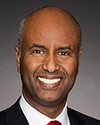
The Chair Liberal Ahmed Hussen
I understand that Mr. Ziad Aboultaif would also like a final opportunity for questions.
You have five minutes.
Conservative
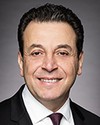
Ziad Aboultaif Conservative Edmonton Manning, AB
Thank you, Chair, for that generous time.
Canadians are watching us, and I think there are some obvious questions about how we go about those trips or missions in the Taiwan Strait. We know the Chinese do their drills. They show us that as an example that at one time they may want to invade the island, and that could be a trigger for a bigger war.
How do we go about the Canadian mission? Do we do it alone? Do we do it in conjunction with our G7...? I think it would be nice to explain that to Canadians, since they're watching.
MGen Travis Morehen
I'll just go very quickly into the breakdown of transits that we've done with the nations we've done them with.
We've done 13 transits since 2018, seven since the introduction of the Indo-Pacific strategy in 2022. Of those 13 transits, six of them have been by ourselves and seven have been with bilateral partners. Six of those bilateral transits have been with the United States, and sometimes on one operation it's to go north and to go south, because of the training activities. The last one that we conducted was with Australia.
I'm prepared to provide the exact breakdown afterwards, so we don't take more time here in committee, but all of those are coordinated through joint objectives for training for those exercise areas, north and south.
Other countries that conduct transits are the United States, Australia, New Zealand, the United Kingdom, France, Germany, Japan, Turkey and the Netherlands. We're not the only Indo-Pacific or Euro-Atlantic country that is conducting those transits.
Conservative
Ziad Aboultaif Conservative Edmonton Manning, AB
An escalation could be an option. That's the way things are. Do we have a capacity constraint as far as Canada is concerned?
MGen Travis Morehen
I'm not sure what you mean by escalation as an option. Certainly, the Government of Canada, through the Department of National Defence, would not look to escalate our activities.
The Canadian Armed Forces do have finite resources to meet all of our commitments through the defence of the homeland as our first priority; with our own Arctic binational command through NORAD for maritime warning, aerospace warning control; and we have our operations with Operation Reassurance in Latvia and environs. Then, also equally important, is our Indo-Pacific....
At this time, there are finite resources for us to be everywhere.
Conservative
Ziad Aboultaif Conservative Edmonton Manning, AB
Mr. Baerg, can we say that our mission in the strait is a reminder to China about our historical position when it comes to the dynamic of this region?
Executive Director, Greater China Political and Coordination Division, Department of Foreign Affairs, Trade and Development
I'm not sure how to answer that—a reminder of our historical position.
I think what's most important when we're dealing with the PRC—what they want to see, and what we're happy to provide—is a reaffirmation of our one China policy; to be able to have those channels of communication and be able to explain to them what that means and why we believe these transits are in accordance with our position. Reaffirm that we aren't changing our position, our one China policy hasn't changed, that we're not escalating...as we talked about.
In a sense, I guess what you're getting at is the same kind of thing. Yes, it's a reaffirmation of our one China policy.
Conservative
Ziad Aboultaif Conservative Edmonton Manning, AB
The G7 is asking for peace and stability in the region. That's an obvious position because, as I said earlier, the last thing anybody wants is a major war around this issue. How do you see China responding to that?
Executive Director, Greater China Political and Coordination Division, Department of Foreign Affairs, Trade and Development
Mr. Chair, how they respond to it is how we've talked about already—a démarche. Every time a transit happens or a statement is released, whether that be the G7 or whether that be an individual country, they raise it as an issue. Just like our reaffirming our position, they will reaffirm their position and put it on the table. That's how they respond to it.
Conservative
Ziad Aboultaif Conservative Edmonton Manning, AB
Where does the international law fit in this whole dynamic? China tried to reaffirm its position, as far as Taiwan...or its policy. It is the same on our side. We try to remind China that this is our position. How do you see the international law at play here?
Executive Director, Regional Security and Defence Relations Division, Department of Foreign Affairs, Trade and Development
Unless it goes to an actual tribunal as a court case, international law is depending a bit on what is meant by “the eye of the beholder”, in some instances. In this case, a vast majority of countries believe that the Taiwan Strait is one of the international straits under UNCLOS. China recognizes that it is. It actually says it is an international strait, but it opposes having foreign military transits without, at least, asking for notification, etc. It is, in a way, how China interprets its position over the strait.
Liberal
Bloc

Alexis Brunelle-Duceppe Bloc Lac-Saint-Jean, QC
I just have a quick question that came to mind. We recently saw two Liberal MPs on a mission to Taiwan, who had not yet completed their mission, being quickly recalled either by Prime Minister Carney or the Minister of Foreign Affairs. We don't know where the decision came from. Do you think that—
Liberal
The Chair Liberal Ahmed Hussen
Monsieur Brunelle-Duceppe, I'm sorry, but I don't think that's relevant to the topic at hand.
Bloc
Alexis Brunelle-Duceppe Bloc Lac-Saint-Jean, QC
We talked about the environment and COP, so I think I can talk about—
Liberal

Steven Guilbeault Liberal Laurier—Sainte-Marie, QC
That was in the context of negotiations and diplomacy.
Liberal
Bloc
Alexis Brunelle-Duceppe Bloc Lac-Saint-Jean, QC
I'm referring to China-Taiwan relations.
I'd like to know if, in your opinion, these missions by Canadian MPs will be affected by the new relationship that the government appears to have with the current regime in China.
Executive Director, Greater China Political and Coordination Division, Department of Foreign Affairs, Trade and Development
In terms of what I mentioned—our position on and our unofficial engagement with Taiwan—in line with the independence of Parliament, MPs have been travelling to Taiwan for a very long time. I imagine that would continue.
Liberal
The Chair Liberal Ahmed Hussen
Thank you very much. That concludes our questioning.
Thank you very much, officials, for your appearance before the committee and for your testimony today.
I have some general information regarding next week. I'd like to inform members that our subcommittee on agenda and procedure will meet on Tuesday, February 10, to discuss the future business of this committee. Our next regular committee meeting will take place on Thursday, February 12. The notice of the meeting has already been distributed.
I would also like to inform members that the Subcommittee on Committee Budgets of the Liaison Committee will meet on Wednesday, February 11. At that time, I will present our various travel requests to that committee.
Having said all of that, is it the will of the community to adjourn the meeting?