Evidence of meeting #21 for Foreign Affairs and International Development in the 45th Parliament, 1st session. (The original version is on Parliament’s site, as are the minutes.) The winning word was strait.

A recording is available from Parliament.

On the agenda

Members speaking

Before the committee

Travis Morehen  Director General, International Security Policy, Department of National Defence
Laporte  Executive Director, Regional Security and Defence Relations Division, Department of Foreign Affairs, Trade and Development
Baerg  Executive Director, Greater China Political and Coordination Division, Department of Foreign Affairs, Trade and Development

Rob Oliphant Liberal Don Valley West, ON

Thank you.

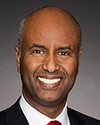
The Chair Liberal Ahmed Hussen

We next go to MP Duceppe for six minutes.

Alexis Brunelle-Duceppe Bloc Lac-Saint-Jean, QC

Thank you, Mr. Chair.

Thank you to the witnesses for being here today.

This is a really interesting study. Indeed, the questions from all parties are extremely interesting.

I'd like to know whether National Defence has analyzed the risks of regional escalation following the transit of the Canadian ship, the various transits, through the Taiwan Strait.

MGen Travis Morehen

My answer has to have some nuance, I imagine.

I'll continue in English, sir, if that's okay.

The way we approve these operations is that the maritime component commander represents to Lieutenant-General Steve Boivin, who's commander of our joint operations command. That is done in conjunction with allies. That concept of operations is brought to the chief of the defence staff and the deputy minister, for approval and recommendation to the minister, based on the inherent risks that are involved in that.

There's a delegated authority matrix based on the risk, but, certainly, in all the concepts of operations that I've seen, we go through a process of identifying what the actual risk is, assessing how bad it is and the probability versus the severity. We then go through mitigating actions: How do we reduce that risk? We assess what the resulting risk is, and, then, compare that against the authority matrix for who can approve...at what risk level. If it's an acceptable level of safety, then that's delegated lower. The higher risk operations have a higher level of authority.

I want to reassure the chair and the committee that this is looked at in great detail for every deployment we undertake.


3:50 p.m.

Executive Director, Regional Security and Defence Relations Division, Department of Foreign Affairs, Trade and Development

Eric Laporte

I can add to that. What the general said is absolutely correct. In all cases, there is interdepartmental consultation to ensure that what's proposed takes risks into account.

Alexis Brunelle-Duceppe Bloc Lac-Saint-Jean, QC

It's really your two departments that are pursuing these discussions. There aren't any others. It's just Global Affairs Canada and the Department of National Defence.

Is that correct?

3:50 p.m.

Executive Director, Regional Security and Defence Relations Division, Department of Foreign Affairs, Trade and Development

Eric Laporte

It's mainly Global Affairs Canada and the Department of National Defence, but, in certain circumstances, other departments are invited to take part in the discussions.

Alexis Brunelle-Duceppe Bloc Lac-Saint-Jean, QC

You mentioned the submitted concept of operations. I imagine that the objective of such an operation is at the core of this concept.

In the case before us today, what was the main objective of the operation that sailed a Canadian ship in the Taiwan Strait?

MGen Travis Morehen

Often the deployments start in Halifax and end up in Esquimalt. They travel around the world, conducting various operations. We never just send one warship to sail through the Taiwan Strait.

Just to reaffirm, the exercises we partake of—the multinational, multilateral co-operation activities with New Zealand, Australia and the Philippines—are in the south. Then we transit through the Taiwan Strait to conduct a similar exercise with Japan and South Korea. That is the most direct route. It's about 200 nautical miles and a 13-hour transit. We don't conduct any other provocative activities while we're on that transit. Although we could fly helicopters and do boat drills, we just sail at an economic speed through the Taiwan Strait so that we can get to the next operating area.

Alexis Brunelle-Duceppe Bloc Lac-Saint-Jean, QC

There are still reactions from the Chinese Communist Party every time such operations are conducted.

How do you receive those reactions? How do you analyze them when they're published or broadcast publicly?

3:50 p.m.

Executive Director, Regional Security and Defence Relations Division, Department of Foreign Affairs, Trade and Development

Eric Laporte

Thank you for the question.

When we carry out a transit, we're interested in what the Chinese ministries of foreign affairs and defence will say. We examine the actions that will take place during the transit. For example, we look at whether the Chinese navy decides to follow the Canadian navy, in other words, shadow it.

There are often situations where the Chinese military attaché or Chinese diplomats based in Ottawa will approach us in Ottawa. They may call our Canadian diplomats or military based in Beijing to ask them to present themselves to the Chinese ministry of foreign affairs or ministry of defence and explain Canada's actions.

As we mentioned a little earlier, those are frank conversations in which we explain our position and they explain theirs. It doesn't mean that we're going to change our mind or that they're going to change theirs, but we explain ourselves. We communicate that way.

Alexis Brunelle-Duceppe Bloc Lac-Saint-Jean, QC

You have the right to answer or not answer my next question.

Recently, Xi Jinping launched a purge within the military commission. Today, an extremely important figure has been accused of corruption. Out of the six or seven people who sat on the committee, only one person is left: Xi Jinping.

What's your analysis of that purge? People are being appointed; new people are sitting on the commission. If there were eventually another Canadian operation in the Taiwan Strait, do you think the reaction would be more virulent?

What's your analysis of that purge?

What do you think are the long-term consequences?

The Chair Liberal Ahmed Hussen

Give a brief response, please, because we're running out of time.

3:55 p.m.

Executive Director, Regional Security and Defence Relations Division, Department of Foreign Affairs, Trade and Development

Eric Laporte

I think it's still a bit early to see the implications. Issues of corruption in the Chinese military system are certainly nothing new.

The fact that President Xi Jinping is taking charge is nothing new either. As it stands, we're still in the early stages of analyzing the longer-term implications.

The Chair Liberal Ahmed Hussen

I'll go to MP Aboultaif, who is starting the second round.

3:55 p.m.

Conservative

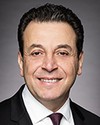
Ziad Aboultaif Conservative Edmonton Manning, AB

Thanks for appearing before the committee.

How often do Canadian warships transit through the Taiwan Strait?

MGen Travis Morehen

Through the Indo-Pacific strategy, we've regularized the Canadian warship presence to three times through the year. It may be off a little, depending on the actual calendar date. It depends on where our operations fall. If we are going to maintain operations just in the south or just in the north, it won't require a transit.

We have Royal Canadian Navy ships sailing literally halfway around the world to try to maximize the training opportunities we have with our Indo-Pacific partners—Japan, South Korea, the Philippines, Australia and New Zealand. I would suggest that, because of transit between those operational areas, if required, there will nearly always be transit through the Taiwan Strait.

3:55 p.m.

Conservative

Ziad Aboultaif Conservative Edmonton Manning, AB

After each passage, we hear condemnation from the PLA.

You've probably been following their tone throughout the years. Do you see any change in their tone from the last time we crossed compared with the ones before?

MGen Travis Morehen

The démarches I've received since being in this job since August have been consistent. Once again, they state their position, the defence attaché to me here, representing their concerns.

The response for my testimony before you today is that we conduct transits in accordance with international law and through our understanding of the United Nations Convention on the Law of the Sea.

3:55 p.m.

Conservative

Ziad Aboultaif Conservative Edmonton Manning, AB

Our movement there, along with that of our allies, is to somehow stand for democratic principles. At least, that's what we believe we're doing.

Is there any other strategic interest that you believe we have in going through the Taiwan Strait?

MGen Travis Morehen

I'll speak for the military before passing it over to my Global Affairs colleagues, Mr. Chair.

Our presence in the Indo-Pacific region is meant to demonstrate that Canada is a reliable and enduring partner in the region. We believe our defensive activities there are some of the strongest expressions to our partners and allies in the region that we are there. This can open up defence co-operation agreements with other countries that allow us to advance Canada's interests.

3:55 p.m.

Conservative

Ziad Aboultaif Conservative Edmonton Manning, AB

Mr. Baerg and Mr. Laporte, I have a question for you both.

The Prime Minister recently visited China. That relationship with China could affect us either way. It could affect our relationship with Taiwan in a positive or negative way.

How do you read that? Do you see a change of attitude in the Chinese government toward our passage through the strait? Do you also see a change in our relationship with Taiwan?

Ryan Baerg Executive Director, Greater China Political and Coordination Division, Department of Foreign Affairs, Trade and Development

Maybe it's too early to say. The visit just happened very recently. I think all indications point to a willingness or a desire on the part of the Chinese to re-engage with us. They're sending very positive signals. They're happy that we seem to be moving forward with a pragmatic approach to co-operation with China. I've noticed, in my démarches, a shift in tone.

Specifically related to the strait and transits, we haven't done any since that visit, so I couldn't really speak to that yet.

4 p.m.

Conservative

Ziad Aboultaif Conservative Edmonton Manning, AB

Mr. Laporte, would you like to weigh in on the same question?

4 p.m.

Executive Director, Regional Security and Defence Relations Division, Department of Foreign Affairs, Trade and Development

Eric Laporte

I think Ryan answered it perfectly fine.

Thank you.