We go next to MP Oliphant.
You have five minutes.

Evidence of meeting #21 for Foreign Affairs and International Development in the 45th Parliament, 1st session. (The original version is on Parliament’s site, as are the minutes.) The winning word was strait.
A recording is available from Parliament.
Liberal

Rob Oliphant Liberal Don Valley West, ON
I will be brief. I will turn to Mr. Louis after one question.
At Global Affairs right now, there's a big conversation about the nexus between development and trade. That is a constant conversation about how we advance our commercial and domestic interests with development.
Do you see our work in the Indo-Pacific as a nexus between security and trade? Is there a part of it that is that? If not, that's also fine, but I'm wondering if there's another nexus we should be talking about.
Executive Director, Regional Security and Defence Relations Division, Department of Foreign Affairs, Trade and Development
I can start and I'm happy to have others join in.
I would agree with the member that there is a security and trade nexus, as we highlighted at the beginning of this presentation. For example, the Royal Canadian Navy's transit through the straits is oftentimes to move from one operational area to another, but it's also to demonstrate freedom under UNCLOS. It's not freedom of navigation in the U.S. FONOPs kind of way, but it's the ability to work and operate in international straits.
Openness to maritime transit is key for trade. Those are the routes that are being used. For the Taiwan Strait, 20% of global trade goes through there, but there's also the Strait of Malacca. There's also the South China Sea. There are also areas where there are natural resources and fishing, etc. Those are all trade related.
I would tend to agree with you that there is a trade-security nexus to be had, particularly in the maritime domain.
Liberal

Tim Louis Liberal Kitchener—Conestoga, ON
Thank you for sharing your time.
Thank you all for being here and for your service to our country. It strikes home because a good friend of mine has two children in the armed forces, one of whom has been on ships in the west coast and comes back. I get stories anecdotally.
You mentioned that Canada interacts with all sorts of allies. It does joint exercises and lands in countries. What are our allies' perceptions of the Canadian Armed Forces?
I hear the stories anecdotally, but what are we hearing? What lessons can we learn from that? How do people perceive Canada's armed forces?
MGen Travis Morehen
If you've heard the stories, they're probably closest to the source of what the sailors hear while they're visiting ports. What I hear is that, through our Indo-Pacific strategy, we have shown up and we've stayed. That makes us a reliable partner within the Indo-Pacific region.
Wherever we go, when I've travelled with the chief of the defence staff or with the minister, there's always want for more of Canada. I think that speaks well to the competency, professionalism and the way the Canadian Armed Forces presents itself. That's my understanding, as the stories are relayed to me from allies.
Liberal
Tim Louis Liberal Kitchener—Conestoga, ON
I appreciate that. Some of the stories from the younger people might use a bit saltier language.
You also mentioned the importance of having a dialogue with adversaries as well. What's working? What can be improved? How can the dialogue make sure that stays? The first line of defence is diplomacy.
MGen Travis Morehen
I think it's super important to be able to have that dialogue. When the moment of crisis comes—we're trying to defuse tensions or make sure that we have a common understanding of what transpired—we need to revert to dialogue as the first course of action rather than escalation. They may be difficult conversations, and we may feel uncomfortable, but at the end of it, we need to be able to represent the interests of our government and the people of our nation.
Certainly, in my interactions with my PLA counterparts, even though there's been strong messaging, it's always been done in a respectful and courteous manner, notwithstanding the depth and gravity. I think that goes a long way to...I wouldn't necessarily call it trust, at this point, but a mutual respect that we're representing the positions of our government and we're doing so in a professional manner.
Liberal
Tim Louis Liberal Kitchener—Conestoga, ON
[Technical difficulty—Editor] grateful nation. I want to thank you for that.
Thank you, Chair.
Liberal
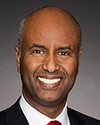
The Chair Liberal Ahmed Hussen
Thank you very much.
We will go to MP Brunelle-Duceppe for 2.5 minutes, please.
Bloc
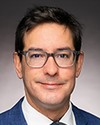
Alexis Brunelle-Duceppe Bloc Lac-Saint-Jean, QC
Thank you, Mr. Chair.
I've consulted many experts in the region, as well as individuals representing people who have been threatened by the Chinese communist regime but who are familiar with the inner workings of the Chinese Communist Party and its internal power struggles.
I want to quickly come back to the purge, because it's related to today's study. Everyone tells me that this is directly related to the Taiwan issue, because the people who were removed were rather cautious about a military operation against Taiwan. People are also saying that President Xi Jinping might want to put new people in their place or even not want to replace them, so as to have free rein to potentially conduct a military operation against Taiwan, whatever its size or form.
You talked about Japan and our Indo‑Pacific allies. We did see a rather virulent outburst from the new prime minister, Ms. Takaichi, about a possible intervention by China in Taiwan.
If we care about it, talk about it and are aware of it, I imagine that you and your various departments are certainly more informed than we are about it. I imagine that there are various scenarios on the table should a Chinese military operation against Taiwan ever happen. Could you not give the committee the details of the scenarios, obviously, but tell us whether there are any scenarios and, if so, whether Canada will respond in the same way as the Japanese prime minister plans to respond?
Executive Director, Regional Security and Defence Relations Division, Department of Foreign Affairs, Trade and Development
That's a very good question. I'd just like to say that we are still studying all contingencies and possibilities. In terms of what Canada's response would be, I can't comment on that at this point.
Bloc
Alexis Brunelle-Duceppe Bloc Lac-Saint-Jean, QC
I understand that we don't want to go into detail. I imagine, however, that you're keeping an eye on everything that's going on, as we all are. We're all concerned.
At the end of the day, would it not be appropriate for the Government of Canada to send a strong message? I understand that this isn't a free trade agreement, but shouldn't we ratify the agreement that was negotiated in April between Taiwan's and Canada's representatives? Wouldn't that be a good message to send, especially since the agreement provides for investments in sectors like artificial intelligence, clean energy and ethical supply chains? Wouldn't we be sending a message of solidarity with Taiwan, while also making sure that we don't break our ties with Taiwan for fear of offending Beijing?
Liberal
Executive Director, Greater China Political and Coordination Division, Department of Foreign Affairs, Trade and Development
Again, I don't know how much more I can say on that besides the fact that I know that discussions are under way. I think trade with Taiwan is an area that historically.... There's no reason we can't trade with Taiwan. It's been the core of our relationship. We have a Canadian trade office, CTO, in Taipei. Taiwan has the Taipei economic and co-operation office, TECO, here too. It's fundamental to our relationship.
That's why we were engaged in those discussions. We have an annual consultation group with Taiwan, called CTEC, where we talk about trade issues and related co-operation. As I mentioned, discussions are under way in terms of next steps for that arrangement.
Liberal
The Chair Liberal Ahmed Hussen
Thank you very much.
Next we have MP Michael Chong for five minutes, please.
Conservative

Michael Chong Conservative Wellington—Halton Hills North, ON
Thank you.
I'd like to go back to the Taiwan Strait. We were saying earlier that the Canadian navy has transited down the median line of the strait in international waters.
I'd like to talk about the airspace above the strait, as has been referenced earlier in this committee. We are seeing increased frequency and number of flights by the PLA into Taiwan's air defence identification zone. They seem to be increasing in tempo and in scale. How concerned should Canadians be about that turning into a kinetic conflict?
Executive Director, Regional Security and Defence Relations Division, Department of Foreign Affairs, Trade and Development
I would agree with your assessment that we've seen an increasing tempo of Chinese air and maritime activity in and around Taiwan. There have been a number of exercises. As I mentioned earlier in this testimony, we are obviously very concerned about that, about the risk of escalation, the risk of an actual conflict or even the risk of an incident spiralling and arriving at unfathomable consequences. In those instances, we continue to call to resume the status quo, to be peaceful and to de-escalate. That is our approach.
MGen Travis Morehen
Mr. Chair, I will just add not that I'm condoning those actions but, in international law, the air defence identification zone doesn't represent an illegal act or an act of war. It's 12 nautical miles, which is a firm line. The air defence identification zone is there to alert other nations that, when they enter there, they're most likely going to be positively identified. I just want to make that clear, sir.
Conservative
Michael Chong Conservative Wellington—Halton Hills North, ON
That's understood, and I appreciate that clarification.
Speaking of the 12-mile nautical zone and the sovereign territory of nation states, how do we as Western powers differentiate between PLA exercises above the Taiwan Strait and in the air defence identification zone and the beginning of an actual invasion or conflict?
MGen Travis Morehen
From a military perspective, what we're seeing could be construed as rehearsals to be able to conduct those activities, which is concerning. Our position from a military point of view is that this needs to be solved through means other than military confrontation. It has the possibility to disrupt security and stability in the region.
Conservative
Michael Chong Conservative Wellington—Halton Hills North, ON
The reason I ask this question is that all of us around the table read almost weekly and certainly monthly about these PLA operations in the air defence identification zone, and we have been now for years. At what point should we become concerned about it? It's happening at such a frequency that it almost seems like a weather update when another news article pops up about Taiwan's air defence identification zone. At what point should our constituents, Canadians, be concerned about this and not treat it as just a regular occurrence that's been taking place now for many years?
Executive Director, Regional Security and Defence Relations Division, Department of Foreign Affairs, Trade and Development
As the member points out, yes, there has been an increase in tempo. I think that some people could argue that the status quo has kind of changed as a result of that, because it normalizes Chinese air activity around Taiwan. I would say that, as a result of that, the indicators and warnings become a lot harder to track in the shorter time frames. There are other indicators and warnings that are also looked at, including things that are happening in mainland China, for example, that would be looked at as a more determinative factor to an actual activity.
Conservative
Michael Chong Conservative Wellington—Halton Hills North, ON
President Xi Jinping has established the goal of achieving the great reunification of the Chinese nation by the centenary of the establishment of the People's Republic of China in 2049. As part of that goal, he has established military goals in the shorter term, particularly a 2027 military goal and a 2035 military goal.
How should we interpret China's goal of national rejuvenation, particularly with respect to the 2027 goal and the 2035 goal in the context of Taiwan?
MGen Travis Morehen
As I mentioned earlier, the People's Republic of China and their development of military capabilities across the entire spectrum lead us to believe that they're developing a capability that would be close to achieving that goal.
There's obviously more reporting at levels above what we can talk about here, sir, but it's an incredible buildup of military capability that would be counterproductive for international peace and security in the region.