
Thank you.
Evidence of meeting #24 for Official Languages in the 45th Parliament, 1st session. (The original version is on Parliament’s site, as are the minutes.) The winning word was draft.
A recording is available from Parliament.

Evidence of meeting #24 for Official Languages in the 45th Parliament, 1st session. (The original version is on Parliament’s site, as are the minutes.) The winning word was draft.
A recording is available from Parliament.
Liberal
Bloc

Mario Beaulieu Bloc La Pointe-de-l'Île, QC
Thank you, Mr. Chair.
Mr. Léger, you said that the centrepiece was advancement towards substantive equality, which is not clearly defined in the draft regulations.
How would you define substantive equality?
Full Professor, As an Individual
Advancing substantive equality means recognizing the realities facing official language minority communities. Subsection 41(1) recognizes their uniqueness and diversity. It means listening to what their realities, needs and priorities are. Lastly, it means taking asymmetrical, differentiated approaches. Franco-Albertans may need one thing, while Franco-Manitobans need something else, so it's important that the government listen to communities' needs and priorities in order to advance equality between the two official languages on the ground.
Bloc
Mario Beaulieu Bloc La Pointe-de-l'Île, QC
Basically, the idea is to ensure that francophones' access to education in French is equivalent to anglophones' access to education in English. Is that more or less in line with your definition?
Full Professor, As an Individual
That's necessary in every sector, not just education, but also health, employment and immigration, especially.
Bloc
Mario Beaulieu Bloc La Pointe-de-l'Île, QC
Mr. Desilets, do you have good mechanisms in health care to ascertain where things stand and determine the direction you need to take to make things better?
Managing Director, Société Santé en français
I'm going to interpret what you mean by where things stand. That's an interesting question in relation to substantive equality. A lot of information is missing in health care, particularly on official languages. As far as the tools in the tool box go, first and foremost, federal institutions need to be collecting all data that could affect the health of Canadians, but through the lens of official languages and specifically from the standpoint of minority communities. In health care, language is a factor, but the experience of minority communities often comes into play as well.
Bloc
Mario Beaulieu Bloc La Pointe-de-l'Île, QC
Do data exist? For instance, a study showed that, in Quebec, 37% of nurses regularly or most often used English at work. It was 51% for doctors, and the figure was much higher in Montreal. What do those figures mean?
Managing Director, Société Santé en français
I think I know where the figures you're referring to come from. In March 2025, Statistics Canada published data on the use of official languages by health care workers. There was a major gap between English-speaking Quebeckers and French speakers.
According to Statistics Canada's estimates, 160,000 health care workers outside Quebec spoke French. The numbers were a bit more nuanced in terms of how many people used French. My apologies, but off the top of my head, I believe that, while 25% of doctors outside Quebec spoke French, only about 10% of them used it. That's not sufficient, so it's important to empower those who speak French to use it. We were talking about positive measures earlier, and that is one of them.
Bloc
Mario Beaulieu Bloc La Pointe-de-l'Île, QC
According to what I'm hearing, on the ground, it's very hard to access health care in French, even in Ontario, except at the Montfort hospital and a few other places. That may be widespread, I don't know.
Managing Director, Société Santé en français
It's pretty widespread. At the end of the day, it isn't due to a lack of professionals, for the most part. Since 20% of the population is francophone, then about 20% of hospital staff are probably francophone too. It's about identifying the abilities of health professionals and the language needs of patients and having a system that brings them together. That, however, falls under provincial jurisdiction over health, since it's really about how health systems are organized.
Something the federal government could support is the inclusion of official languages-related data in the health indicators identified in the health agreements. Currently, that is not something the agreements cover, but they could.
Bloc
Mario Beaulieu Bloc La Pointe-de-l'Île, QC
What about supports for access to French health care outside Quebec? I know that, in Quebec, even the Quebec government gives money to groups asking for even more English health services. The federal government gives them a good bit of money as well. I think it's about $10 million a year.
Would that be a good thing? How much does that happen now, in terms of support for French health care outside Quebec?
Managing Director, Société Santé en français
That's a very good question. How much money would be needed? We don't even know the real impact current professionals outside Quebec can have. All kinds of training is available, but it's very hard to know whether it's having an impact. I was asked a question recently. A number of doctors in the Outaouais area left to work across the river, and I was asked whether there had been an impact on French-language health services in Ontario. I don't know. No such information is collected. Referrals to francophone service providers happen randomly, so it's hard to measure the actual impact.
Quebec is doing the right things in many cases, but I don't want to say too much about that. Something that is definitely within the federal government's power is collecting data, whether on public health, service availability or the number of family doctors, and giving those collecting the data the tools they need. All of that information should be broken down by official language, and those levers exist.
Bloc
Mario Beaulieu Bloc La Pointe-de-l'Île, QC
In Quebec, it's mainly English advocacy groups that have the money to do that. Do you think there is enough funding for that?
Liberal

The Chair Liberal Yvan Baker
Your time is up, Mr. Beaulieu. Thank you.
We are now starting the second round. We have 20 minutes left, so to make sure we get a full round in, I'm going to shorten everyone's speaking time slightly. The Liberals and Conservatives will each have four minutes, instead of five, and Mr. Beaulieu will have two minutes, instead of two and a half. I'll be enforcing time limits strictly.
Mr. Dalton, please go ahead. You have four minutes.
Conservative
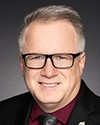
Marc Dalton Conservative Pitt Meadows—Maple Ridge, BC
I'd like to thank the witnesses for being here.
It's a pleasure to see you, Mr. Léger. As I told you before the meeting, I went to Simon Fraser University. If I was still a student there, I would register for your class. In my completely unbiased opinion, Simon Fraser University is the best school in Canada.
Conservative
Marc Dalton Conservative Pitt Meadows—Maple Ridge, BC
I'll start with Mr. Désilets.
We're doing a review, and then we're preparing a report. You made a number of points. You didn't mince words. You said clarity and concrete measures were lacking. Is this a failure, in your view?
Managing Director, Société Santé en français
I just want to be sure I understand your question. Are you asking me whether the draft regulations, in their current form, are a failure?
Managing Director, Société Santé en français
I think the draft regulations need some work. I'm not ready to call them a failure, but I will say that many of the recommendations that came from francophone communities during the consultations are not in the draft regulations.
Are the regulations satisfactory? No. Are they a failure? I don't know. That might be a bit harsh.
Conservative
Conservative
Marc Dalton Conservative Pitt Meadows—Maple Ridge, BC
We've heard them referred to as a trophy. We've heard that they lack teeth in terms of concrete measures.
Mr. Léger, you said that the regulations should illustrate how the act operates and provide a way to determine whether minorities are affected by the decisions that are made. That is what the regulations are supposed to do. You don't seem to think the current version of the draft regulations will provide adequate support to francophone communities. Would you agree?