Evidence of meeting #50 for Canadian Heritage in the 45th Parliament, 1st session. (The original version is on Parliament’s site, as are the minutes.) The winning word was advertising.

A video is available from Parliament.

On the agenda

Members speaking

Before the committee

Marty Deacon  Senator, Ontario, ISG
Desjardins  President and Chief Executive Officer, Canadian Association of Broadcasters
Nauta  Program Director, Work and Economics, Cardus

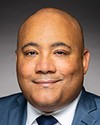
Michael Coteau Liberal Scarborough—Woburn, ON

Thank you very much, Madam Chair.

I want to thank our witnesses for being here today. I know the senator has put in countless hours, many months, to get it to this point. I want to thank our colleague from the House side for her work on helping to champion this issue.

How big is online gambling in Canada today?

11:45 a.m.

Senator, Ontario, ISG

Marty Deacon

My first response is it's real big. When we look at it, there is a more significant statistic. We're looking at betting on sport but not looking at other parts of the gambling sector. However, when we talk about participants, from 2010 to 2015, to 2020, to 2023, to 2026, the number is exponentially reaching up.

The data is provincial in nature, but we know that, when we look at the dollars, the billions and billions of dollars in revenues, those are telling us more of the story than the number of bodies. There is a lot of data on this, like this: Who's a repeat? Is it 10 people voting 10 times when there are 100, or are there 100 people voting once? There are all kinds of very rich data on it that says this is growing—and not just in provinces where it's regulated. That's a key piece too: It's up everywhere.

Alberta's recent. Alberta's in what we call a six-week or maybe even a three-week learning period. In those first three weeks, they were generating $186 million. That tells us, quickly, the volume and the mass. We have the breakdown of the demographic too.

Michael Coteau Liberal Scarborough—Woburn, ON

We're seeing a change in the nature of gambling. I've read stories about how it's getting into predictive types of gambling: What percentage do you think is going to happen? You can gamble on anything today. There's an evolution that's taking place, and I think it's important for us to put in place some safeguards.

Last night we were debating Bill C-34, but different bills presented in the House—Bill C-16 and others—are trying to tackle the evolution of technology in modern society. I think this is an important piece of that puzzle, because the world is changing.

You mentioned that the Government of Ontario commissioned a report. Have we heard about some of the findings of that report?

11:45 a.m.

Senator, Ontario, ISG

Marty Deacon

This is the report that I believe you're talking about, that we're not privy to and that has been, I'm going to call it, hidden. Some of our media partners are trying to dig into some of these numbers, but some of the information does show really damning results.

Just to respond to the first part of what you said about how it's changing, there are, in this time of online, so many options: We have the broadcasting, what's called the micro betting, the in-play live and the pre-game. There is variety in the kinds of things that people are betting on.

In Ontario, as you just talked about, a report came out that showed great concerns, but was buried or suppressed. I think you're going to find some of that data and some of that information is being shared, last night, today and tomorrow. As we speak, the story is unfolding of the real information that was hidden.

Michael Coteau Liberal Scarborough—Woburn, ON

The fact that one in four young people between the ages of 18 and 34—I believe that was the age group—is suffering from some type of harm through online gambling is a significant number. When they talk about gambling related harm, what type of harm are we talking about for people who fall into that category?

11:45 a.m.

Senator, Ontario, ISG

Marty Deacon

“Harm” is an interesting word. Some people might think of physical and mental harms. Emergency room doctors would tell you about issues around mental health and the dopamine that is pushed into the brain, wanting to win. We're dealing with some real mental health issues first, and those are leading to, particularly for young boys, reclusiveness—moving into the basement and not coming out in public. Then, the ultimate end of this is suicide and suicide attempts, which are up. That's the harm on the body.

There is also what these young people will do to get their money to get the bet and to pay the bill. Quite often, they are winning bets initially, so it's set up to be successful and, then, to want and want.... Advertising is increasing that want and that need.

I would also say that there is the harm of going bankrupt, the harm of not being able to pay a bill and the harm of not telling. I think that Rick Campanelli tells a good story about how hidden this was and how harmful it was over time.

Bardish Chagger Liberal Waterloo, ON

I'm sorry, but I would like to add this really quickly. There are loved ones, people around them, and so it's not just the individual who's participating in the sports betting. Don't forget about the ripple effects to the loved ones and the impact on those surrounding the individual.

Michael Coteau Liberal Scarborough—Woburn, ON

When I sat in the Ontario legislature, we saw some data around suicide from gambling in general, and the harm that has caused. I think we need to be very careful, as algorithms and tech companies can use certain approaches to engage people and pull them further in. I think you made a very valid point about how a person can feel good about winning, and then, in trying to get to that point again, eventually losing almost everything or, in some cases, everything. It can destroy families.

I want to say thank you to the both of you for taking this issue to where we are today. I'm 100% supportive of what you're doing.

I also want to thank Bruce Kidd, Mr. Crombie and others who have been speaking on this issue here in Ontario. I know this is a national push.

Thank you for your work. I hope this legislation gets to a point at which we can ban it completely across this country.

The Chair Liberal Lisa Hepfner

Thank you.

Mr. Champoux, you have the floor for six minutes.

Martin Champoux Bloc Drummond, QC

Thank you, Madam Chair.

Senator Deacon, your bill would establish a federal framework on advertising. If I understood your opening remarks and your answers to my colleagues' questions correctly, your concerns have to do with gambling addiction, particularly among young people, as well as related mental health issues and, to some extent, public health issues. In talking about your concerns, you mentioned health, advertising and gambling, all of which fall under the jurisdiction of Quebec and the provinces.

Which aspects of this bill fall under federal jurisdiction, which aspects are consistent with the 1985 agreement, and why should we support your idea?

11:50 a.m.

Senator, Ontario, ISG

Marty Deacon

Thank you very much for the question. I think I understand it.

The intent of this bill is fourfold. The very first is around the advertising and trying to find ways to reduce advertising. We know that.

The fact is that it's a framework and, to the comment you just made, it is tasking the minister to bring stakeholders to the table to develop a framework of common understandings that we can work with our provinces and territories on to improve this problem. That's number one.

Martin Champoux Bloc Drummond, QC

Go ahead, I'm listening.

11:50 a.m.

Senator, Ontario, ISG

Marty Deacon

The next piece is to look at some of the implications of this and at how we support the mental health piece.

The next piece is the consultation, working with and ensuring that we have the players, including the gaming folks, around the table to put this in place.

Martin Champoux Bloc Drummond, QC

First, are you familiar with the 1985 federal-provincial agreement on gaming?

11:55 a.m.

Senator, Ontario, ISG

Martin Champoux Bloc Drummond, QC

Are you familiar with section 8 of that agreement? It stipulates that the agreement may only be amended or terminated by the unanimous consent of Ottawa and the provinces. As things stand, there is no consent. We'd be voting on a bill that would have no effect because Quebec will not consent to interference in its areas of jurisdiction. Advertising, gambling and health all fall under the jurisdiction of Quebec and the provinces. I raise these concerns because, even though the bill targets advertising, the underlying objective is clearly to encroach on provincial areas of jurisdiction. Your bill has implications for health care. That's why I have serious reservations and why we don't support this proposal at all.

I know it's well intentioned and you're doing this because you care, and that's commendable. Earlier, my colleague, Mr. Coteau, talked about some things he observed when he was at the Ontario Legislative Assembly. However, good intentions alone don't make something relevant. I haven't found any grounds on which to support this proposal, and I can assure you that I've tried, Senator Deacon. Everything in it falls under the jurisdiction of Quebec and the provinces.

Earlier, you said something I found very interesting. You said that the world has changed, that the reality of communications, particularly with the Internet, has changed and that the provinces' rules around advertising no longer apply because there are no borders. That's simply not the case. The scope of states' and nations' jurisdiction is readily defined by territory. Quebec can enact regulations and laws governing advertising that apply within its borders and do not apply to Ontario, which has its own rules.

One example of that is the ban on advertising to children, which has been in effect for decades. It's in effect in Quebec—and pretty much everywhere else—and if ads aimed at children appear on online platforms, they're quickly reported and removed. Existing laws and regulations are as effective as they can be in today's digital environment.

Even on that point, where I had hoped to find grounds for supporting Bill S‑211, I came away empty-handed. I don't see any way in which this bill respects the jurisdiction of Quebec and the provinces in these areas.

I would even argue that reopening this issue is risky, given that the 1985 agreement was the result of a lengthy dispute. From 1973 to 1985, there was disagreement on this issue. The parties had to negotiate and, ultimately, they decided that responsibility for regulating gambling, lotteries and the like would belong to the provinces. Each province approaches these matters according to its societal values, priorities and circumstances, which aren't the same in Nova Scotia or British Columbia as they are in Quebec or Alberta, and that's entirely appropriate.

When I hear that the gambling industry itself, as well as representatives from several provinces, have raised concerns and aren't in favour of the idea, that's a warning sign. With all due respect, I applaud your idea and your dedication to this issue. I know your intentions are sincere and your objective is worthy, but, unfortunately, this bill encroaches on the jurisdictions of Quebec and the provinces, so I can't support it.

Thank you.

The Chair Liberal Lisa Hepfner

Thank you.

Mr. Lawton, you have the floor for five minutes.

11:55 a.m.

Conservative

Andrew Lawton Conservative Elgin—St. Thomas—London South, ON

Thank you very much, Madam Chair.

Thank you to the sponsors for being here.

I supported this bill. I recognize the harms of online gaming and the vast proliferation of advertising. I will continue to support the bill, and I hope that things do come of it.

That being said, as Mr. Hardy mentioned, we have, as a committee, been denied the opportunity for a couple of weeks now to be able to have a public airing of a lot of the issues that Canadians have expected us to deal with. I am going to be moving a motion and speaking to it.

The motion, which is on notice, is as follows:

That, given that,

(a) since 2015, police-reported hate crimes targeting religion have more than doubled, from 469 to 1,115 a year, and those targeting Jewish Canadians, about one per cent of the population, have more than quadrupled, from 178 to 788;

(b) the government has confirmed, in answer to a written question, 423 police-reported arsons at places of worship since 2015, 90 of them in 2021 alone;

(c) more than 100 churches have been burned or vandalized since 2021, and at least 33 of them were destroyed by fire, with arrests in only nine of those cases; six worshippers were murdered at the Islamic Cultural Centre of Quebec City in 2017; synagogues have been firebombed and shot at; and Hindu temples, Sikh gurdwaras and mosques have been repeatedly targeted;

(d) on September 20, 2026, the eve of Yom Kippur, a gunman opened fire outside the Sons of Jacob Synagogue in Belleville and critically wounded Constable Jeff Smith of the Belleville Police Service, who was standing guard;

(e) the Prime Minister himself has acknowledged that Canada's “civic compact is failing Jewish Canadians”;

the committee, pursuant to Standing Order 108(2), undertake a study of no fewer than eight meetings on vandalism, arson, shootings and other criminal attacks against places of worship in Canada;

the committee invite the Minister of Canadian Identity and Culture to appear on a panel of his own, without other witnesses, for no less than two hours, and invite the Minister of Public Safety, the Minister of Justice and Attorney General of Canada, Statistics Canada, police services and their hate crime units, and representatives of Jewish, Christian, Muslim, Hindu, Sikh and other faith communities, including congregations whose places of worship have been attacked, as well as any other witnesses the committee deems relevant; and

the committee report its findings and recommendations to the House.

What I will say in support of this motion is that hate against faith communities is very real. This has been very close to home. In London, a little over five years ago, the Afzaal family was murdered for no other reason than their Muslim faith, a despicable act of hate and terror. We have seen, again, the rampant anti-Semitic attacks not just on Jewish institutions but also on Jewish neighbourhoods and Jewish individuals for no other reason than their identity. We have also seen over the last five years, according to the latest number, which Juno News has been tracking, 133 Christian churches across Canada vandalized, burned or desecrated.

There has been little to no public attention from many political leaders in the current Canadian government on that issue. The reason I use examples from all the Abrahamic faiths is to say that religious freedom for one is religious freedom for all. We need to acknowledge attacks on all faith communities, recognizing the importance of faith and faith communities to the cultural and social fabric of this country.

I know that for many members of this committee, there have been examples in their own ridings, in their own communities, of these attacks. I believe this should be an opportunity in which we will have support from all of them. I know, for Madame Auguste in Terrebonne, about four years ago at the Église Saint-Joachim, an intruder forced the doors open and broke—

Noon

Liberal

The Chair Liberal Lisa Hepfner

I'm sorry, Mr. Lawton, you have presented your motion. Let me give you a ruling on it, because you can't debate the motion until I make that ruling.

I will tell you that I agree that this is a very serious issue in our society today; I don't want to downplay that at all.

As I read your motion, which was received in time, I note that a lot of it relates to the application of the Criminal Code and any recommendations the committee may make to the House; therefore, I believe this study would not fall within this committee's mandate. I believe it is better placed before the Standing Committee on Justice—and I know that Mr. Lawton is a member of that committee as well—or equally the Standing Committee on Public Safety.

As stated in the House of Commons Procedure and Practice, fourth edition, in paragraph 20.114, “motions moved in committee must not go beyond the committee's mandate”.

For the awareness of everyone at the committee, I'll read this committee's mandate.

The House of Commons Standing Committee on Canadian Heritage has the power to review and report on the policies, programs and expenditure plans of the Department of Canadian Heritage and most of the agencies and Crown corporations within the Portfolio. These policies and programs relate to culture, the arts, heritage, official languages, civic education and literacy, diversity and inclusion, and Parks Canada, as well as youth, sport and Indigenous culture initiatives.

Therefore, the application of the Criminal Code is not part of this committee's mandate, and I declare this motion out of order.

Noon

Conservative

Andrew Lawton Conservative Elgin—St. Thomas—London South, ON

I have a point of order.

Noon

Liberal

The Chair Liberal Lisa Hepfner

This is not debatable.

Noon

Conservative

Andrew Lawton Conservative Elgin—St. Thomas—London South, ON

Madam Chair, you are setting up—

Noon

Liberal

The Chair Liberal Lisa Hepfner

You can challenge my ruling, Mr. Lawton, but you can't debate it at this moment.

Noon

Conservative

Andrew Lawton Conservative Elgin—St. Thomas—London South, ON

Madam Chair, I'm not debating. I'm asking for an indulgence for a moment.

Noon

Liberal

The Chair Liberal Lisa Hepfner

No, you can't have an indulgence for a moment.