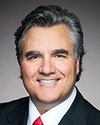
Evidence of meeting #25 for Environment and Sustainable Development in the 45th Parliament, 1st session. (The original version is on Parliament’s site, as are the minutes.) The winning word was vehicles.

A recording is available from Parliament.

On the agenda

Members speaking

Before the committee

Julie Dabrusin  Minister of the Environment, Climate Change and Nature
Nichols  Assistant Deputy Minister, Environmental Protection Branch, Department of the Environment
Lane  Executive Director, Legislative Governance, Department of the Environment
McDermott  Assistant Deputy Minister, Strategic Policy and International Affairs Branch, Department of the Environment

The Chair Liberal Angelo Iacono

I call the meeting to order.

Good morning, colleagues.

Today is meeting number 25 of the Standing Committee on Environment and Sustainable Development.

This meeting is taking place in a hybrid format and is in public.

We are meeting with the Honourable Julie Dabrusin, Minister of the Environment, Climate Change and Nature, for one hour. Government officials will remain for the second hour.

Time permitting, the committee will consider amendments or recommendations to the bill at the end of testimony, at the will of the committee, if necessary.

The committee has also scheduled Tuesday, February 24, as a day for considering amendments or recommendations to Bill C-15.

I would also like to take a few minutes, in the second hour, to issue drafting instructions to the analysts for the report on the electric vehicle availability standard.

For those attending in person, please follow the health and safety guidelines, per the cards on the table, to prevent audio feedback incidents.

I have this little yellow card to give you a heads-up on how much time you have left for speaking. Once I turn it over, please kindly end your sentence.

The committee is beginning its study on the subject matter of clauses 595 and 596, found in part 5, division 42 of Bill C‑15, an act to implement certain provisions of the budget tabled in Parliament on November 4, 2025.

This morning, Minister Dabrusin is accompanied by, from the Department of Environment, Alison McDermott, assistant deputy minister, strategic policy and international affairs branch; Megan Nichols, assistant deputy minister, environmental protection branch; and Stephanie Lane, executive director, legislative governance.

Minister Dabrusin, you have up to five minutes. The floor is yours.

Thank you.

11:05 a.m.

Toronto—Danforth Ontario

Liberal

Julie Dabrusin LiberalMinister of the Environment

Thank you so much, Mr. Chair.

I'd like to begin by acknowledging that we are gathered on the unceded territory of the Anishinabe Algonquin Nation.

I'd also like to take a moment before I begin my formal remarks to acknowledge the tragic news we have heard from Tumbler Ridge and from Kitigan Zibi.

As someone who has had a mass tragedy occur in my own community along the Danforth, I know how much it means when we can see people from across the country lean in and show strength in a time of grieving. I really want to thank everyone around this table. I know we've all come together to show support for the community. I want to say that my heart is with the victims, the survivors and all the people who have lost loved ones they are grieving today. May their memories be a blessing.

Today, I will speak to the proposed amendments to the Canadian Environmental Protection Act, 1999, or CEPA, contained in part 5, division 42 of Bill C‑15.

CEPA is cornerstone federal legislation for preventing pollution and protecting the environment and human health. It enables federal action on a wide range of environmental and human health risks, from chemicals and waste to air and water pollution.

It also supports collaboration across governments through mechanisms such as administrative and equivalency agreements.

Administrative agreements are work-sharing arrangements between the Minister of the Environment and other governments in Canada, including indigenous partners. They can cover inspections, enforcement, monitoring, reporting and coordinated responses to environmental incidents, such as oil or chemical releases.

These agreements are already in place in several provinces and territories and help streamline oversight while strengthening public safety.

Equivalency agreements are a long-standing feature of CEPA. They allow the federal government to stand down certain federal regulations where another government's laws are equivalent.

Over the years, the federal government has entered into such agreements with provinces, including British Columbia, Alberta and Saskatchewan, notably for oil and gas methane regulations.

These agreements reduce regulatory duplication and allow industry to comply with a single, tailored regulatory system.

Part 5, division 42 of Bill C‑15 proposes targeted amendments to clarify and improve the operation of these provisions.

First, these amendments would remove the five-year statutory limit on administrative and equivalency agreements. This would provide greater flexibility, reduce unnecessary renegotiation and support stable, long-term intergovernmental co-operation, while creating more predictable conditions for industry to invest in clean technologies.

Second, the amendments would clarify that another government's provisions must be—I'm putting this in quotes just to be clear—“equivalent in effect” to CEPA regulations, codifying existing practice. These changes would apply prospectively, meaning that current agreements would continue under their existing terms.

Together, the amendments strengthen CEPA as a practical, co-operative tool for environmental protection.

I'd like to now briefly turn to the climate competitiveness strategy. Launched in budget 2025, the strategy supports emissions reductions while strengthening Canada's economic position through clear, predictable rules that attract investment and drive innovation. Progress is already under way. In December, the government released a discussion paper on targeted amendments to the clean fuel regulations, with consultations concluding in January. Once finalized, these amendments would strengthen Canada's low-carbon fuel sector while maintaining core emission reduction objectives.

The strategy is also delivering results across major industrial sources. Enhanced methane regulations for the oil and gas sector and new methane regulations for landfills were finalized last year in close partnership with provinces. Under the Canada-Alberta memorandum of understanding, Canada has committed to entering into a new agreement that would stand down federal methane regulations in favour of an updated Alberta provincial regime.

Carbon pricing remains a central pillar of this approach. It is the most cost-effective way to reduce emissions while encouraging innovation and efficiency, positioning industry to make the best choices as Canada builds and decarbonizes. Importantly, proceeds from industrial carbon pricing are reinvested directly into Canadian industry. As of 2025, the decarbonization incentive program has supported over $874 million in investments across 53 clean energy projects.

Finally, Chair, because I know that time is close, clean, reliable and affordable electricity is essential to achieving net zero by 2050. The government is investing billions to unlock investment and make it more attractive to build on our clean power advantage. We're working with provinces and territories to advance a net-zero electricity grid supported by significant investment tools, including the Canada Growth Fund and clean economy investment tax credits, which, I would point out, are in this budget implementation act.

Mr. Chair, I would be pleased to answer questions from the committee.

The Chair Liberal Angelo Iacono

Thank you, Minister.

We'll begin with the Conservative Party for six minutes.

Mrs. Anstey, the floor is yours.

11:10 a.m.

Conservative

Carol Anstey Conservative Long Range Mountains, NL

Thank you, Minister.

Thank you for appearing today.

I also appreciate the leverage that the committee has given us to address any concerns we have.

Minister, in light of the recent announcements around Chinese EVs, I'm curious. Will you personally be permitted, under current federal security guidance, to drive a Chinese-manufactured electric vehicle, yes or no?

Julie Dabrusin Liberal Toronto—Danforth, ON

First of all, I think we should place this within the larger automobile strategy, which was a great news announcement that we had last week for industry and for environment.

11:10 a.m.

Conservative

Carol Anstey Conservative Long Range Mountains, NL

But—

Julie Dabrusin Liberal Toronto—Danforth, ON

No, I will answer your question. I am happy to purchase any EVs that are available on the market in Canada.

11:10 a.m.

Conservative

Carol Anstey Conservative Long Range Mountains, NL

Does that include Chinese-manufactured EVs, Minister?

Julie Dabrusin Liberal Toronto—Danforth, ON

I would purchase any EV that's available for purchase in Canada at the time that I would purchase it.

11:10 a.m.

Conservative

Carol Anstey Conservative Long Range Mountains, NL

So there is no security risk for any Chinese EV manufactured in China.

Julie Dabrusin Liberal Toronto—Danforth, ON

No, and I will go on to add that we're talking about also investing in building EVs here in Canada.

11:10 a.m.

Conservative

Carol Anstey Conservative Long Range Mountains, NL

Thank you, Minister.

I'm also curious about what coordination your department has undertaken with Public Safety Canada, Innovation, Science and Economic Development and the Privacy Commissioner to assess cybersecurity, data sovereignty and national security risks associated with connected vehicles in general.

Julie Dabrusin Liberal Toronto—Danforth, ON

To be frank, this would be part of ISED. ECCC is not working on connectivity science, but I can assure you that as a whole—

11:10 a.m.

Conservative

Carol Anstey Conservative Long Range Mountains, NL

It's relevant, though, Minister, because we're opening this up now. You're responsible for these electric vehicle mandates and you're responsible for these electric vehicles coming into Canada. With all respect, they do collect a lot of personal information. I'm curious to know, since you are the minister responsible, whether you have coordinated with these other departments as a way to protect Canadians.

Julie Dabrusin Liberal Toronto—Danforth, ON

Let me back that up for two seconds, because you used the word “mandate”.

In fact, if you were listening to the announcement last week, one of its really important pieces is moving to GHG regulations. It's how we're moving forward. That's the first part I just wanted to clarify.

11:10 a.m.

Conservative

Carol Anstey Conservative Long Range Mountains, NL

Sure.

Julie Dabrusin Liberal Toronto—Danforth, ON

Second, of course, as a whole-of-government approach across all of our ministerial offices, we are working to make sure Canadians have access to the best and most affordable vehicles, and, frankly, to support our auto workers right here in Canada, because they build the best vehicles.

11:10 a.m.

Conservative

Carol Anstey Conservative Long Range Mountains, NL

I appreciate that, Minister, but I'm speaking specifically about security. I think that's also an important part of the conversation.

I'm just wondering if you could address it from that perspective.

Julie Dabrusin Liberal Toronto—Danforth, ON

Let's also take a moment for history here. These vehicles were available in Canada previously. I think it was up to 2021. The numbers we are talking about bringing back into Canada would match those numbers. They're a cap number.

11:15 a.m.

Conservative

Carol Anstey Conservative Long Range Mountains, NL

It's not important, then. Is that the short answer?

It's okay. I can move on.

Julie Dabrusin Liberal Toronto—Danforth, ON

Okay. I'm happy if you want to move on, but I think my main point is that all vehicles sold in Canada are vehicles that we are absolutely comfortable with and that we believe Canadians should have access to.

We're talking about affordability and vehicles being built right here in Canada, which is the main motivation for the work we're doing to support our auto workers. We are also encouraging investments in that industry at the same time.

11:15 a.m.

Conservative

Carol Anstey Conservative Long Range Mountains, NL

However, Chinese EV manufacturers are receiving massive state subsidies to expand globally. Has your department assessed whether this strategy could result in Canada becoming dependent on this foreign-controlled vehicle technology and software?

Julie Dabrusin Liberal Toronto—Danforth, ON

As I mentioned earlier, the number of vehicles that would be brought in from China is capped.

Also, the most important part of the announcement we made was auto strategy. It was being cheered by auto workers on the floor. We are putting into place a suite of measures that will encourage investment for vehicles built right here in Canada. As an Ontario MP, that is something I know is so important to our economy.

11:15 a.m.

Conservative

Carol Anstey Conservative Long Range Mountains, NL

Yes, that's fair enough. However, that doesn't mean we just turn a blind eye to the security risks. I think, as responsible parliamentarians, we need to ask that question. It's something the government should be taking seriously. The Canadian government had a very different position on this just a few years ago, and now it seems as if it's not at all a concern.

Therefore, I just want to be sure, based on that, where you stand on this, because I think it's an important question.

Julie Dabrusin Liberal Toronto—Danforth, ON

I believe I have answered it, now, in many different ways, many times. I am comfortable with any vehicle that will be sold here in Canada.

I have never seen the Conservatives support any EVs, any manufacturer of EVs or any affordability in getting these vehicles to Canadians, which Canadians want. Globally, one in four vehicles being sold right now is an EV. Why would you hold us back from that?

11:15 a.m.

Conservative

Carol Anstey Conservative Long Range Mountains, NL

I'm not suggesting that we hold you back. I'm suggesting that we're responsible in the way we roll these out, and that we make sure we're protecting Canadians. I'm not suggesting that we don't move forward, Minister, with all due respect, but—

Julie Dabrusin Liberal Toronto—Danforth, ON

[Inaudible—Editor] actually moving forward on getting EVs built here in Canada and making sure that Canadians have rebates to buy those vehicles and that we have affordable vehicles.

11:15 a.m.

Conservative

Carol Anstey Conservative Long Range Mountains, NL

My time is up.

The Chair Liberal Angelo Iacono

Go ahead with one last comment. I'm being flexible today.

11:15 a.m.

Conservative

Carol Anstey Conservative Long Range Mountains, NL

It's okay. I'm fine.

The Chair Liberal Angelo Iacono

Thank you very much.

Mr. St‑Pierre, go ahead.

Eric St-Pierre Liberal Honoré-Mercier, QC

Thank you.

First, Minister, thank you for acknowledging Tumbler Ridge yesterday. It's been a very difficult moment for everybody, including me. I have two young daughters of six and 10, so thank you for acknowledging the tragic losses and the hard time Canada is going through right now.

Second, despite the obstructive behaviour of the opposition, I would like to congratulate you on the auto strategy. Our committee has been doing a lot of work around the EV availability standard, and a lot of the findings.... Actually, one from our colleague was about the lack of charging infrastructure in Newfoundland, which our government is addressing with a $1.5-billion loan through the Canada Infrastructure Bank.

I just want to commend you for the very exciting auto strategy announcement last week.

I will continue in French, if I may.

You've also appeared a number of times before the Standing Committee on Environment and Sustainable Development, so thank you for your generosity.

I'll ask you a question about the topic we're discussing today, clauses 595 and 596 of Bill C‑15.

How do you think these clauses can contribute to better air quality and a healthier and less toxic environment?

Julie Dabrusin Liberal Toronto—Danforth, ON

Thank you for the question.

I also thank you for your first comment. This is an opportunity for all of us in Canada, whether we have children or not, to reflect on the impact of violence in our communities.

With respect to your question on Bill C‑15, it's about finding ways to work better with provinces and territories to make sure that the policies we have in place are working well. We have a very large country, and things can work differently in each region. Therefore, it is very important to be able to enter into equivalency agreements with the provinces to ensure that everyone can achieve common objectives at the same time. Everyone has the same goals and wants to achieve them, but the best ways to achieve them may differ from one region of the country to another. The amendments proposed here are intended to facilitate negotiations and equivalency agreements.

I would say that it goes even further. Currently, these agreements can last up to five years. This means that we have to restart negotiations every time, which is a lot of work. The ability to enter into longer-term agreements will help us have agreements that work better, and it will be less wasteful. I'm sorry, I'm trying to find the word in French.

A voice

There will be less waste.

Julie Dabrusin Liberal Toronto—Danforth, ON

That's it, thank you.

Eric St-Pierre Liberal Honoré-Mercier, QC

I know the regulations are fairly technical, but can you talk about the positive effects these changes would bring?

Julie Dabrusin Liberal Toronto—Danforth, ON

First, as I said, one of the big changes has to do with the duration of agreements. Previously, each agreement could last a maximum of five years, which meant that negotiations had to begin again with the province or territory very shortly after the agreement was concluded.

Let's take the example of the clean electricity regulations, certain provisions of which will come into force in 2035. If the negotiations started now, the agreement would end before 2035. So it's a matter of finding ways to work with the provinces to achieve long-term objectives. Certain provisions of these regulations are expected to come into force as late as 2050. The possibility of having longer-term agreements will help us better plan with the provinces and territories. In addition, we'll waste less time constantly starting negotiations all over again.

Eric St-Pierre Liberal Honoré-Mercier, QC

You previously mentioned the methane regulations, which require a lot of collaboration with the provinces.

With regard to the amendments proposed here concerning equivalency agreements, you talked a bit about the collaboration between the federal government and the provincial governments, but regarding clauses 595 and 596, could you comment on the work you're doing to keep the dialogue going with the provinces and give us some examples of your approach?

Julie Dabrusin Liberal Toronto—Danforth, ON

The story on methane is so important, as it's an area where we can significantly reduce greenhouse gas emissions. In fact, the regulations we implemented in December will reduce emissions in Canada by 400 megatonnes. So that's a big change.

That said, to better continue this work, we have agreements that have already been reached with the provinces on other regulations, and that helps us operate better.

Let's take the example of Alberta, with which we had a methane equivalency agreement.

They overperformed.

So that enables the province to work based on the way things operate in its region, and we've achieved very good results for the country.

The Chair Liberal Angelo Iacono

Thank you, Minister.

Thank you, Mr. St‑Pierre.

Mr. Bonin, you have the floor for six minutes.

Patrick Bonin Bloc Repentigny, QC

Thank you for being here today, Minister.

I have a few things to discuss. I'll start by following up on the issue of Chinese electric vehicles.

The Bloc Québécois has introduced a bill to prevent products made using forced labour, particularly child labour, from entering Canada. We have a number of concerns about what's happening in China right now.

Have you looked at that bill? Do you think it would be worthwhile for Canada to have assurances that these vehicles are not made using forced labour?

Julie Dabrusin Liberal Toronto—Danforth, ON

There are two things I would say about that.

First, in Canada, we have significant protections for workers. When we talk about attracting foreign investment here, we're always talking about how we're going to continue not only to protect these workers, but also to have good wages for them.

On the one hand, our government already has policies to verify how things work in certain countries and to ensure that there are protections. It's always important to think about that, around the world.

We have a human rights approach.

On the other hand, it's important to ensure that we have good jobs here in our country and that we protect our workers.

Patrick Bonin Bloc Repentigny, QC

I was really talking about vehicle production in China. The bill we introduced aims to ensure that there is no forced labour, particularly for children. Currently, there is no such measure on the federal side.

Will you at least commit to looking at the bill and telling us whether it's a measure that Canada would like to implement?

Julie Dabrusin Liberal Toronto—Danforth, ON

I'm always prepared to look at what you are proposing, and I think everyone here around the table agrees that we need to protect workers around the world, but especially….

In short, yes, I am prepared to look at that.

Patrick Bonin Bloc Repentigny, QC

Okay. We'll wait for a response from you on that.

In terms of vehicles, there are currently barriers to the entry of European electric vehicles, including the fact that safety standards aren't considered equivalent. That is one of the reasons why we have fewer European vehicles here in Canada, compared to what they have in Mexico or elsewhere in the world.

Can you assure us that this measure will be corrected to allow European electric vehicles to enter the country?

Julie Dabrusin Liberal Toronto—Danforth, ON

I would like to begin by reminding you of what we have done. There are the Chinese vehicles you're talking about, but there's also everything we're doing to better build the vehicles here. On the affordability front, we've reintroduced the electric vehicle rebate, making it easier for Canadians to buy electric vehicles. That's what we're doing when it comes to affordability. We're trying to build those vehicles here and we're offering a rebate.

We're also trying to reach agreements so that more businesses can set up here. Affordability is important, but we also need good jobs. So I'm also interested in how we can make sure we build those vehicles here.

Patrick Bonin Bloc Repentigny, QC

However, when it comes to importing vehicles more specifically, are you aware of the fact that the entry of a number of European vehicles is blocked because of safety standards that aren't considered equivalent?

Julie Dabrusin Liberal Toronto—Danforth, ON

I don't know if it's a matter of safety or if it's more a matter of how European countries calculate greenhouse gas emissions.

Once again, when we talk about vehicle affordability, I'm thinking of the people who work at Bécancour, for example, who will build vehicles here in Canada. I want to make sure that we have good jobs here in Canada to build the vehicles of the future. We have a good industry, as evidenced by the Bécancour example. So it's a matter of finding ways to work better to ensure that, in addition to thinking about affordability by offering rebates.

Patrick Bonin Bloc Repentigny, QC

Will you commit to looking at the standards with Transport Canada, among others, to ensure that vehicles produced in Europe have access to Canada right now?

Julie Dabrusin Liberal Toronto—Danforth, ON

I would say that how it's going to be implemented and how it's going to work is more a Transport Canada issue.

What I'm saying is that, as a government, we'll look at affordability by offering rebates and figuring out how to build those vehicles here in Canada.

Patrick Bonin Bloc Repentigny, QC

I would have liked you to commit to talk to your colleague at Transport Canada about this because it's an important issue.

You're talking about jobs. The situation is currently critical for Lithion, which is the only lithium battery recycling plant in Quebec. However, it could close its doors and even be liquidated as soon as tomorrow. The company is applying for a $30‑million loan so it can continue to operate. As things currently stand, the batteries, which contain critical minerals, will be sent to the United States. It's a recycling issue. It's an important link in the chain. There was a $2‑billion critical minerals fund in the last budget.

Are you concerned by the fact that we are at risk of losing this Quebec flagship?

Do you expect your government to act by tomorrow?

The Chair Liberal Angelo Iacono

The time is up, but I'll let you to answer, Minister.

Julie Dabrusin Liberal Toronto—Danforth, ON

I would like to answer that it's important to support industries, and this bill provides for investment tax credits and other tools to help industries, whether in the critical minerals sector or the manufacturing sector. I hope the Bloc Québécois will support us.

The Chair Liberal Angelo Iacono

Thank you.

11:30 a.m.

Conservative

Ellis Ross Conservative Skeena—Bulkley Valley, BC

Thank you, Mr. Chair.

Minister, thank you for coming.

My colleague here asked about the security risk in terms of Chinese-manufactured EVs. Even my colleague from the Bloc asked the same question. It's unfortunate that our Liberal members of this committee find that discussion point destructive, when other countries around the world have made it clear that they will not allow Chinese-manufactured electric vehicles near their governmental operations or military bases. I think this is important. We're talking about the ability to extract data from a country—especially since, as we all know, China and Russia are actually contemplating getting through the Northwest Passage in Canadian sovereign waters in the Arctic.

I'll ask you a direct question. In terms of your mandate and bringing in EVs from China, has the issue of security ever been on your desk?

Julie Dabrusin Liberal Toronto—Danforth, ON

I will respond by saying that if the Conservatives really cared about security issues, they would make sure their leader got the security clearance to be able to get this information.

11:30 a.m.

Conservative

Ellis Ross Conservative Skeena—Bulkley Valley, BC

Wait a minute. I'll tell you what—

Julie Dabrusin Liberal Toronto—Danforth, ON

I mean, you're asking about security issues. I'm answering about security.

11:30 a.m.

Conservative

Ellis Ross Conservative Skeena—Bulkley Valley, BC

You're politicizing an issue. You know for a fact that if he did get the security clearance, we would not be able to question these issues. On behalf of Canadians, on behalf of our riding members, we have to hold government to account.

It's a clear question: Has the issue of security ever been across your desk in terms of acquiring at least 50,000 manufactured EVs coming from China?

Julie Dabrusin Liberal Toronto—Danforth, ON

There are two things. My work, as the Minister of the Environment, is on parts like the regulatory piece on EVs that we've just talked about.

However, let me say the second piece: Absolutely, if your party cared about knowing about security risks, your leader would get the clearance. Every other leader has gotten that clearance.

11:30 a.m.

Conservative

Ellis Ross Conservative Skeena—Bulkley Valley, BC

So the issue of security with Chinese-manufactured EVs has never come across your desk. You've never talked about it. It's never been brought to your attention.

Julie Dabrusin Liberal Toronto—Danforth, ON

What I am saying, sir, is that if you actually want to keep coming to me about security issues—

11:30 a.m.

Conservative

Ellis Ross Conservative Skeena—Bulkley Valley, BC

I'm just asking a simple question.

Julie Dabrusin Liberal Toronto—Danforth, ON

—there is a way for your party to get the information you want.

The leader of the Bloc, the Prime Minister, the leader of—

11:30 a.m.

Conservative

Ellis Ross Conservative Skeena—Bulkley Valley, BC

I'm not in charge of buying 49,000 EVs from China. It's on everybody's mind in terms of Canadian sovereignty, in terms of security and in terms of espionage.

Has the issue of security ever come across your desk, as a talking point even, in terms of purchasing 49,000 EVs from China?

Julie Dabrusin Liberal Toronto—Danforth, ON

Look, I'm not the Minister of Public Safety. As I said, I'm the Minister of the Environment. My work—

11:30 a.m.

Conservative

Ellis Ross Conservative Skeena—Bulkley Valley, BC

So it's no.

Julie Dabrusin Liberal Toronto—Danforth, ON

Actually, it's a day for our country to celebrate that we have an automobile strategy that will make sure Canadians have access to the vehicles that are being purchased right around the world while reducing emissions and while building a strong industry right here in our country.

11:30 a.m.

Conservative

Ellis Ross Conservative Skeena—Bulkley Valley, BC

Okay. I'll tell you what; I'll give you the benefit of the doubt that, yes, it's not your file. I'll assume that your answer is, no, it's never come across your desk. I will forward this question to the appropriate minister.

Thank you.

Julie Dabrusin Liberal Toronto—Danforth, ON

As soon as he gets his security clearance, he can get these answers.

11:35 a.m.

Conservative

Ellis Ross Conservative Skeena—Bulkley Valley, BC

I have another question, about the oil emissions cap.

Thank you for the answer to my question, by the way. I submitted a question to your department on whether or not LNG Canada phase two would be subject to the national oil and gas emissions cap. Your answer was pretty much similar to your opening statement, but curiously, your last paragraph basically said that the oil and gas emissions cap would not be implemented if the Alberta MOU was successful.

Can you give me a timeline on when some type of comparable emissions plan will be made public to replace the oil and gas emissions cap nationally?

Julie Dabrusin Liberal Toronto—Danforth, ON

It was in our budget 2025, and it was very clearly in the climate competitiveness strategy, that for certain pieces—this is based on expert advice we received from environmental experts—if we have strong, enhanced methane regulations and if we have strengthened industrial carbon price and carbon capture, there would be a path to not needing to go forward with an oil and gas emissions cap.

We are currently working on strengthening the industrial carbon price. I hope the Conservatives will support us. It's a great economic initiative. It helps our industries right here in Canada. We have put in place enhanced methane regulations. We are continuing to work. Right in this budget implementation act is support for carbon capture. I'm hoping you will support that.

11:35 a.m.

Conservative

Ellis Ross Conservative Skeena—Bulkley Valley, BC

The way I read it is that the timeline will be based on an application being made for a pipeline being built to the west coast of British Columbia, and then the clock will start ticking to see if the Alberta MOU actually precedes it. That's when the comparable emissions caps will be considered to replace the national emissions cap.

The Chair Liberal Angelo Iacono

Minister, I'll allow you a short answer.

Julie Dabrusin Liberal Toronto—Danforth, ON

It was fairly clearly set out in the budget. The wording is very clear. I set it out myself, and I do not agree with the paraphrasing that's been proposed by the member opposite there.

The Chair Liberal Angelo Iacono

Thank you, Minister.

Thank you, Mr. Ross.

Mrs. Miedema, the floor is yours for five minutes.

Shannon Miedema Liberal Halifax, NS

Thank you very much.

Thank you for being here, Minister.

I, too, would like to offer congratulations on our auto strategy. Not only do I think it's a really wonderful path forward, but I also think it's another example of the way our government is trying to really consider environment and climate issues and address the crisis across all of the major work we're doing across all of the departments. I've heard you say before that when the environment and climate become part of the thinking across all departments and all ministers, this is how we actually get things done.

I saw first-hand, and drove first-hand, that very thing in Halifax when I was working as the director of environment and climate change for the city. The way we saw progress, buy-in and momentum really involved all departments and just making it a necessary consideration across all major work.

I give you huge congratulations on that.

I will ask my first question in French.

Clauses 595 and 596 would make it easier for provinces, territories and indigenous governments to manage regulations without those regulations having to be completely identical to those in CEPA.

What are the benefits of co-operative federalism, where the federal government gives more decision-making power to the various levels of government?

Julie Dabrusin Liberal Toronto—Danforth, ON

First, I'm very pleased that you used some of your time to talk about everything you've done for the environment in your work in Halifax. It had an impact. I saw it myself, when I was parliamentary secretary and we were there to set up charging stations, among other things. I also saw the work that was done to improve the energy efficiency of buildings.

It's important to see how we need to work, and your question kind of illustrates what this is about. It's not just about the federal government. We need to work with other governments to get results. We have to accept that things are different in different parts of the country and facilitate co-operation.

When we can enter into an equivalency agreement with a province, that means that the province has the same objectives and wants to achieve the same end result, but perhaps it will do so in a slightly different way.

The changes we are proposing in this bill will give us more flexibility to conclude these agreements. As I said earlier, the provinces have to achieve the same end results, but perhaps they will have another way of getting there.

Something that is very important for us is the fact that these agreements could last longer than five years. Right now, we can only implement five-year agreements. This means that, shortly after we have reached an agreement, we have to start negotiations again. It wastes a lot of time and energy, and it doesn't allow us to do long-term planning.

So the changes proposed in this bill will help us work better with the provinces and reach agreements that allow for long-term planning.

Shannon Miedema Liberal Halifax, NS

Thank you.

It sounds like it's being optimized and it's more efficient, and it sounds like we're reducing red tape and being more flexible. It all sounds like great news, especially from a government perspective.

Extreme weather events are having a major impact, as we all know, on the well-being of our communities across Canada, including Halifax and Nova Scotia. Our committee has recently been conducting a study on the impacts of extreme weather events driven by climate change. This is focused mainly on the insurance industry, but also on the very real impacts of extreme weather on all Canadians.

How is our government taking action in the budget implementation act to combat increased extreme weather?

Julie Dabrusin Liberal Toronto—Danforth, ON

It's very important that you're highlighting the fact that climate change is real. I'm not trying to say this in a light way. Communities are feeling the impact right now.

There are two pieces. One, how do we fight climate change and its continued impacts? Two, how do we help Canadians manage through this and be able to adapt?

In fact, I believe I was with you in Halifax when we announced that we were helping municipalities, including smaller municipalities, to come up with those plans so they can better protect themselves and plan for the future.

Those are very tactile projects that help small communities right across our country, and it's important that we continue to do that.

The Chair Liberal Angelo Iacono

Thank you.

Mr. Bonin, you have the floor for two and a half minutes.

Patrick Bonin Bloc Repentigny, QC

Mr. Chair, I would like to ask my colleagues if they agree to give one minute of our speaking time to our honourable colleague from Saanich—Gulf Islands, who is here. I am prepared to do so, but I would like to know if my colleagues are, as well.

The Chair Liberal Angelo Iacono

You can use your time as you wish.

Patrick Bonin Bloc Repentigny, QC

Okay, but I am asking my colleagues if they are in favour of this proposal.

The Liberals are in favour of it.

Are my Conservative colleagues in favour of it?

The Chair Liberal Angelo Iacono

Again, you can use your time as you wish. You don't need anyone else's permission to do that.

Patrick Bonin Bloc Repentigny, QC

I see that my Liberal colleagues are in favour of it. That's great, thank you. I hope it will be done.

Thank you, Mr. Chair.

Minister, on the finance side, we've heard about the increase and the extension of the carbon capture and sequestration subsidies in the last budget. It's an additional $3 billion by 2035 for oil and gas companies, among others.

Do you have the same number as I do, in terms of additional funding for these subsidies?

Julie Dabrusin Liberal Toronto—Danforth, ON

There's the investment tax credit for carbon capture, but there's also one for clean electricity.

Patrick Bonin Bloc Repentigny, QC

Okay, but I'm talking about capture.

Julie Dabrusin Liberal Toronto—Danforth, ON

This is the first time we'll have a—

Patrick Bonin Bloc Repentigny, QC

How many billions of dollars are we talking about?

Julie Dabrusin Liberal Toronto—Danforth, ON

—investment tax credit for clean electricity. That's a big thing for Quebec and for Hydro‑Québec.

Patrick Bonin Bloc Repentigny, QC

Is $3 billion the number you have, as well?

Julie Dabrusin Liberal Toronto—Danforth, ON

What I would say is that it's very important that we have the support of the Bloc Québécois to pass this bill. That way, we can have a clean electricity system.

Patrick Bonin Bloc Repentigny, QC

Is it indeed $3 billion?

Julie Dabrusin Liberal Toronto—Danforth, ON

The amounts for all that are in the documents you have.

Patrick Bonin Bloc Repentigny, QC

Okay. So you are confirming that it is $3 billion.

Have you calculated how much the agreement between Canada and Alberta represents in terms of reducing greenhouse gas emissions compared to the regulations in place, particularly with regard to methane, emissions caps and clean electricity?

Julie Dabrusin Liberal Toronto—Danforth, ON

I'm very glad you asked me that question, as it's not a step backwards. We're going to do something new. It's an equivalency agreement, and that's exactly what we're talking about today. When we enter into equivalency agreements with provinces, they have to demonstrate that they will achieve the same results. They just have another way of getting there.

Patrick Bonin Bloc Repentigny, QC

So you're telling me that an additional pipeline with a capacity of 1 million barrels a day, or 300,000 barrels a day in the case of the TMX project, while taking into account the delay in reducing methane emissions, will produce equivalent results.

Julie Dabrusin Liberal Toronto—Danforth, ON

There is no delay in reducing methane emissions. As I said, we have methane regulations, which were finalized in December, and we think they will reduce methane emissions by 62%. Then, on the other side, we have other measures that we need to have.

I know you always like to talk about pipelines. Recently, we saw that the Parti Québécois passed a resolution saying that it would not ban pipelines—

Patrick Bonin Bloc Repentigny, QC

Minister, I'll give my last minute to Ms. May.

Julie Dabrusin Liberal Toronto—Danforth, ON

—so I don't know if you agree with the Parti Québécois.

Patrick Bonin Bloc Repentigny, QC

I'll give you the rest of my time, Ms. May.

Elizabeth May Green Saanich—Gulf Islands, BC

Thank you to my colleague Patrick Bonin of the Bloc Québécois.

Hello, Minister.

I don't like omnibus bills. This one is enormous, at over 600 pages. I'd been reading for quite a while when I wondered why the International River Improvements Act is being amended, and why the Canada Wildlife Act is being amended. Why is the Migratory Birds...? I was finally, of course, able to trace it down to the fact that we're creating a new tribunal, the Environmental Protection Tribunal. It is hard to read word for word through 600 pages. I almost missed division 5. We'll talk about that some other day.

We've had experience with the Canadian Environmental Protection Act for about 30 years, and now we're creating something called an Environmental Protection Tribunal and wrapping up a role we're familiar with in terms of chief review officers.

I wonder how this will affect judicial reviews. We've had—

The Chair Liberal Angelo Iacono

I'm sorry. You'll have to come up with a question for a short answer.

Elizabeth May Green Saanich—Gulf Islands, BC

The question is why. What's the background? What's the rationale for the Environmental Protection Tribunal, and will it be a quasi-judicial body?

The Chair Liberal Angelo Iacono

Give a short answer, Minister.

Julie Dabrusin Liberal Toronto—Danforth, ON

I'm pretty much out of time, but I'll say that we continue to remain strong on the Canadian Environmental Protection Act and on our wildlife protections.

I'd be happy to talk with you further off-line when we're done.

Elizabeth May Green Saanich—Gulf Islands, BC

Thank you, Patrick.

The Chair Liberal Angelo Iacono

Thank you, Minister.

Thank you, Ms. May.

Mr. Bexte, the floor is yours for five minutes.

11:45 a.m.

Conservative

David Bexte Conservative Bow River, AB

Thank you, Chair.

Thank you, witnesses, for attending today.

I find it frustrating coming to committee sometimes, especially when divisive, evasive comments come from the minister.

I have a question related to plastics and the recent changes. You've labelled plastic straws, utensils and bags as toxic. Why is it okay for Canada to make plastic bags and straws and send them to other countries, export them for good economic reasons, but it's not okay for Canadians to use them?

Julie Dabrusin Liberal Toronto—Danforth, ON

First, let me say that we recently had a decision from the Federal Court of Appeal that actually supported something that the Conservatives have fought us on all along, by the way, which is not only that plastics can be toxic to the environment but also that the federal government has the ability to be involved in it.

11:45 a.m.

Conservative

David Bexte Conservative Bow River, AB

I understand that, but why are you allowing the export of products that we can't use here at home?

Julie Dabrusin Liberal Toronto—Danforth, ON

To continue, because this is shocking news that now the Conservatives are actually supporting having a listing of plastics as toxic, I have not heard that support—

11:45 a.m.

Conservative

David Bexte Conservative Bow River, AB

I'm wondering about the regulatory hypocrisy. It's something that we've been using domestically and globally for a long time, safely, hygienically. These are wonderful products. All of a sudden, we can't use them in Canada. Now the government does a backflip, and we export them for economic reasons, but we can't use them at home. Why?

Julie Dabrusin Liberal Toronto—Danforth, ON

I'm really pushing back on the first part of your question, to start with. I think the Federal Court was quite clear that the sea otter choking on a plastic straw isn't going to care about its chemical composition. I think we have seen, and Canadians have seen—

11:45 a.m.

Conservative

David Bexte Conservative Bow River, AB

That's a mechanical risk, not a toxic risk. You're obfuscating.

Julie Dabrusin Liberal Toronto—Danforth, ON

The court actually found it was a toxic risk. That was actually their finding.

11:45 a.m.

Conservative

David Bexte Conservative Bow River, AB

Interesting.

Julie Dabrusin Liberal Toronto—Danforth, ON

The thing is, beyond that piece, I think that most Canadians—

11:45 a.m.

Conservative

David Bexte Conservative Bow River, AB

Why are we exporting them?

Julie Dabrusin Liberal Toronto—Danforth, ON

What I would say on that piece—but I'm celebrating the first part, the part about us having taken these steps on plastics—

11:45 a.m.

Conservative

David Bexte Conservative Bow River, AB

That's great. Why are we exporting them? Don't divert into other avenues.

Julie Dabrusin Liberal Toronto—Danforth, ON

With what I control and what we control.... We control what we do in this country, and we stand up for the best. We're working on global treaty negotiations so that we can move away from plastic waste globally and—

11:45 a.m.

Conservative

David Bexte Conservative Bow River, AB

Where does most of the plastic waste hit the oceans? What part of the world?

Julie Dabrusin Liberal Toronto—Danforth, ON

I do not have that global piece, as to which part of the world, but we have the world's longest coastline, so we would have real issues from coast to coast to coast.

11:45 a.m.

Conservative

David Bexte Conservative Bow River, AB

It's all about the introduction of plastics to the environment. Most of that happens in Asia.

I still don't have an answer to the question, though. Why is it okay for Canada to export these materials for consumer use in other countries but we can't use them here at home?

Julie Dabrusin Liberal Toronto—Danforth, ON

We are domestically doing what we can to protect our own environment.

11:50 a.m.

Conservative

David Bexte Conservative Bow River, AB

Then why enable other countries to pursue the use of a toxic product?

Julie Dabrusin Liberal Toronto—Danforth, ON

My hope is that through global plastics treaties we're actually going to move the world away from—

11:50 a.m.

Conservative

David Bexte Conservative Bow River, AB

Then why not stop exporting? That would contribute to your goals.

Julie Dabrusin Liberal Toronto—Danforth, ON

First, common goals for all Canadians are to not have plastics washing up on our shores and to not have them in our green spaces.

11:50 a.m.

Conservative

David Bexte Conservative Bow River, AB

You're telling me that it's okay for plastic to fall into or be dumped into Milk River in Montana and flow into Alberta. That's okay, because it's okay to export it to the United States.

It still shows up on our shores. I'm trying to understand the hypocrisy of the changes.

Julie Dabrusin Liberal Toronto—Danforth, ON

I feel that the hypocrisy is in having the Conservatives finally turn around and cheer that we actually have taken action on reducing plastic waste.

11:50 a.m.

Conservative

David Bexte Conservative Bow River, AB

I wouldn't call this cheering.

Julie Dabrusin Liberal Toronto—Danforth, ON

I would hope that you would start cheering, sir, because I think it's important for us.

11:50 a.m.

Conservative

David Bexte Conservative Bow River, AB

Let's change topics here a little bit.

Do you believe that Canada should be an energy superpower?

Julie Dabrusin Liberal Toronto—Danforth, ON

Absolutely.

11:50 a.m.

Conservative

David Bexte Conservative Bow River, AB

The reason I ask is that I have heard directly from Canadians and energy leaders, and I have read recent reports in The Globe and Mail suggesting that while your government talks about Canada being an energy superpower, its policies are sending very mixed signals to investors. We're still not seeing investment in energy industries as required to achieve that. We still don't see pipelines to all three coasts needed to achieve that aim.

What are you doing to enable that?

Julie Dabrusin Liberal Toronto—Danforth, ON

In this budget implementation act, we have a clean electricity ITC that actually will be—

11:50 a.m.

Conservative

David Bexte Conservative Bow River, AB

The scalability of clean electricity is not anywhere close to the opportunities in nuclear and in oil and gas.

In order to truly become an energy superpower—

Julie Dabrusin Liberal Toronto—Danforth, ON

There isn't a pathway—

11:50 a.m.

Conservative

David Bexte Conservative Bow River, AB

What are you doing for the easiest, best, lowest-hanging fruit?

Julie Dabrusin Liberal Toronto—Danforth, ON

It's so interesting, though, because the clean manufacturing tax credit, I believe, does help nuclear. Our major projects include the Darlington nuclear plant.

11:50 a.m.

Conservative

David Bexte Conservative Bow River, AB

I understand that.

Julie Dabrusin Liberal Toronto—Danforth, ON

We have also put in place, through our Major Projects Office's referrals, clean electricity through the wind west project.

These are opportunities. Offshore wind is a huge opportunity for our country, so we are absolutely able to be an energy—

11:50 a.m.

Conservative

David Bexte Conservative Bow River, AB

That's not exportable power, though. That's not the definition of an energy superpower. It is exportable power—

Julie Dabrusin Liberal Toronto—Danforth, ON

That is actually not what those provinces—

Eric St-Pierre Liberal Honoré-Mercier, QC

I have a point of order.

Julie Dabrusin Liberal Toronto—Danforth, ON

I think the Atlantic provinces would disagree with you on that.

The Chair Liberal Angelo Iacono

Mr. St-Pierre.

Eric St-Pierre Liberal Honoré-Mercier, QC

On a few occasions, there has been pretty loud discussion. I think we can all hear each other quite well, so I would just ask that we maybe calm our voices. I don't have as loud a voice as some other members, but just be mindful.

Thank you.

The Chair Liberal Angelo Iacono

Thank you. It's noted.

Let's be joyful.

Talking about joy, Mr. Fanjoy, go ahead.

Bruce Fanjoy Liberal Carleton, ON

Thank you.

It's noteworthy that my esteemed Conservative colleagues were talking about security. I think it's worth pointing out, and I thank the minister for pointing out, the disconnect between their words and their deeds.

First of all, addressing climate change is a national security matter. Second, their leader is unique among leaders of all federal parties in Parliament in not having his top security clearance, a subject on which I have recently sponsored a petition. The initiator of the petition is a Canadian in the riding of Carleton, a retired member of the RCMP who in his career specialized in national security investigations.

11:50 a.m.

Conservative

Carol Anstey Conservative Long Range Mountains, NL

I have a point of order, Chair.

This is important work. We get the minister for a very limited amount of time. I don't understand how this is relevant to the work of this committee. It's highly political. It's taking up time when the minister is here and could be addressing some real concerns related to the work of this committee. I don't appreciate the banter.

I would just ask that we return to the important work of the committee.

Bruce Fanjoy Liberal Carleton, ON

I have a point of order, Mr. Chair.

It was my esteemed—

An hon. member

Her point of order has to be answered by the chair.

Bruce Fanjoy Liberal Carleton, ON

I have my own point of order.

The Chair Liberal Angelo Iacono

Can it be answered by the member?

Bruce Fanjoy Liberal Carleton, ON

I'm speaking to the committee through the chair.

The Chair Liberal Angelo Iacono

Before you do your point of order, can you respond to her point of order? Do you have a response to it?

Is that the way it works?

11:55 a.m.

Conservative

Ellis Ross Conservative Skeena—Bulkley Valley, BC

No, that's not how it works.

The Chair Liberal Angelo Iacono

Do you want me to decide on the point of order? Is that what you're asking the chair? You didn't ask the chair, so I figured—

11:55 a.m.

Conservative

Ellis Ross Conservative Skeena—Bulkley Valley, BC

That's what a point of order is, isn't it?

The Chair Liberal Angelo Iacono

Well, yes and no. It depends—

11:55 a.m.

Conservative

Carol Anstey Conservative Long Range Mountains, NL

I can address it through the chair; that's not a problem.

Chair, I don't see the relevance. I think it's political banter, and there is important work this committee has to do. I'm just asking what it has to do with the work of this committee, given the fact that the minister is here. We've requested several times that she come. She is finally here, and now this is just a back-and-forth that the Liberal member wants to have.

That's all.

The Chair Liberal Angelo Iacono

Your comment is noted. I understand where you're coming from. I was also once sitting on that side and raising those kinds of comments, and made many other comments that were relevant or not.

I just need to highlight that when each member is asking questions, they can ask the question they prefer to ask or make the comments they prefer to make.

As to the debate about whether there is relevance or not, he is referring to the comments at the beginning of your questioning, actually, which were with respect to security, so there's a fine line right there.

11:55 a.m.

Conservative

Carol Anstey Conservative Long Range Mountains, NL

He is talking about a petition coming out of his riding, and we're talking about Chinese EVs. I don't see the relevance, Chair.

The Chair Liberal Angelo Iacono

Well, there is—

11:55 a.m.

Conservative

Carol Anstey Conservative Long Range Mountains, NL

With all due respect, I just—

The Chair Liberal Angelo Iacono

—no direct relevance, but there is common ground with respect to security, with respect to issues, and I guess he's going to explain that. I'm not the one who can explain that.

11:55 a.m.

Conservative

Carol Anstey Conservative Long Range Mountains, NL

He can present his petition. There are levers available to him to present his petition on the floor of the House of Commons. I don't know why he's burning up committee time talking about a petition out of his riding.

The Chair Liberal Angelo Iacono

Maybe you can ask him the question and we can get an answer to that.

11:55 a.m.

Conservative

Carol Anstey Conservative Long Range Mountains, NL

I have to address him through the chair.

The Chair Liberal Angelo Iacono

You can ask the question through the chair. I'll allow it if you want, on free time.

Would you like to respond to that? You had a point of order as well.

Bruce Fanjoy Liberal Carleton, ON

Yes. First of all, I'd like to request my time back.

The Chair Liberal Angelo Iacono

Your time has been stopped, so don't worry about that.

Bruce Fanjoy Liberal Carleton, ON

I would also like to note for the committee that it was my esteemed colleague from Newfoundland who brought up security earlier in this session. The issue is security, and I'm making the point that addressing climate change is a matter of national security. Perhaps it's the greatest matter of national security, as we see impacts all across the nation, including in her riding and in many of our ridings.

11:55 a.m.

Conservative

Ellis Ross Conservative Skeena—Bulkley Valley, BC

You're conflating the issue.

We were talking about the EV mandate in relation to what the minister is here for. This is a security issue for EV mandates around the world. Now you're talking about petitions and you're talking about our leader and everything else. Now you're trying to twist it into the security of the national climate crisis.

We're supposed to be here on behalf of our membership and our ridings. These are important questions—I agree with you on that point—but this is not for our political interests, our parties or our leaders; it's for the people of Canada in terms of where our country is going. Conflating the issue is not helping.

Eric St-Pierre Liberal Honoré-Mercier, QC

I have a point of order.

The Chair Liberal Angelo Iacono

Mr. Ross, do you want me to respond to you, or do you want—

11:55 a.m.

Conservative

Ellis Ross Conservative Skeena—Bulkley Valley, BC

Yes, through the chair, of course, because I'm not clear on that.

The Chair Liberal Angelo Iacono

Who would you like a response from, me or the member?

11:55 a.m.

Conservative

Ellis Ross Conservative Skeena—Bulkley Valley, BC

The member.

The Chair Liberal Angelo Iacono

Before I let the member speak, I just want to note that we've already put five minutes on this. If we're talking about time with the minister, I want to bring you all back to the reality that she'll be leaving some time shortly. I understand that this is an important issue. I don't want to steer it in any direction, but I want to bring us to reality with respect to time.

Mr. Fanjoy, the floor is yours to respond to Mr. Ross's point of order.

Bruce Fanjoy Liberal Carleton, ON

Unless I'm mistaken, my time is my time to use as I see fit.

I understand that this is an issue that makes my Conservative colleagues uncomfortable. They should be uncomfortable about it. The petition, which was launched less than a week ago and which was initiated by an individual in the riding of Carleton who had a career in national security investigations, already has over 34,000 signatures. This is a matter that is of great interest to people not just in Carleton, but all across the country. We have people signing from across the country.

Minister, I congratulate you for calling out that hypocrisy.

Noon

Liberal

The Chair Liberal Angelo Iacono

Mr. Fanjoy, I'll bring you back to your time.

Noon

Liberal

Bruce Fanjoy Liberal Carleton, ON

Thank you.

Minister, thank you very much for joining us today.

Since administrative and equivalency agreements will no longer be automatically renewed after five years, how will the government make sure that environmental protection standards do not weaken and that they continue to reflect the best available science?

Noon

Liberal

Julie Dabrusin Liberal Toronto—Danforth, ON

I want to clarify that one of the challenges we have right now is that we have a five-year hard stop and then we have to start renegotiating. You don't start renegotiating at five years; you start renegotiating before that. It means that there's this constant cycle of negotiating.

The most important piece—if I was going to talk about how equivalency works and why it's important—is to get the same outcome. The whole point is to get to the same outcome. In fact, that's strengthened in the wording of this BIA. What happens now is that there is a longer timeline that can be applied to that. In some industries, especially, it might make more sense to have that longer timeline.

When we talk about climate competitiveness, this is at the centre of what we're talking about. We are working co-operatively with the provinces and territories to make sure we can build the economy of the future. As you said, climate is a national issue for so many reasons. I've said this before. We might be there because we care deeply about the future we're going to give to our children, as we should, but it is also an economic imperative.

That's what's so frustrating, when I see a bill like this being obstructed, because there are opportunities in this bill for clean technology investment tax credits in electricity that would help us build more interties and help build out the backbone of the clean economy future for our country. There are also other investment tax credits in here for manufacturers that will expand and create more of those opportunities. Because of the obstruction we've been facing, we can't move these forward. We really need to move past the obstruction that we've seen and actually be able to put forward these really important climate-focused tax credits that are also economically important to our country.

I believe we have everything it takes to have the strongest economy and a low-carbon economy future, but if the Conservatives keep holding us back from being able to move in that direction, they're not just holding back our future on reducing emissions, but they're holding back our economic capability. That's going to impact workers in all of our communities.

If we all want that bright future, and I think we do, with good-paying jobs, by reducing emissions so that we have cleaner air in our communities and by reducing the impact of natural disasters.... We hope to have a future where our homes are heated in a way that is cheaper, because we're using electricity, heat pumps and solar panels, etc. That future of being able to get around in electric vehicles that are cheaper to maintain and are cheaper in day-to-day use, all of that, is a brighter future for our country. We just need to move past the Conservative obstruction and get to the point where we can have it.

Noon

Liberal

The Chair Liberal Angelo Iacono

I would like to thank the minister for her presence.

We will suspend for the next panel.

Thank you.

The Chair Liberal Angelo Iacono

Mr. Bexte, you start first with a big six minutes. You've lost a minute already, but it's okay.

12:10 p.m.

Conservative

David Bexte Conservative Bow River, AB

Thank you for round two, witnesses. I appreciate your time today. We'll endeavour to be a little more calm.

Provinces like Alberta have demonstrated that the industrial carbon pricing system, such as the TIER program, with a 100,000-tonne threshold and free credit markets, can reduce emissions while maintaining competitiveness and flexibility for smaller facilities.

Why does your department's discussion paper propose constraining these proven provincial systems, increasing compliance costs and eliminating free credit markets? The notion of going down to a 10,000-tonne threshold especially is going to capture a lot of facilities.

Megan Nichols Assistant Deputy Minister, Environmental Protection Branch, Department of the Environment

Thanks very much for the question.

Certainly, the discussion paper was put out in December and recently the comment input period closed. We're just in the process of reviewing all that input. At the same time, we've been talking to provinces, territories and stakeholders to get their views.

The very intent of the discussion paper is to solicit input on the parameters for an updated carbon pricing benchmark. Carbon pricing is a pillar of our approach to climate change, but there's a recognition that it could be working more effectively in terms of making sure that it's actually incentivizing the investments in decarbonization that are intended.

We are seeking input on what the appropriate threshold is. The one thing that is different is that when the fuel charge was in place, all facilities were subject to some kind of carbon price, whether it was the fuel charge or industrial pricing. It's really about making sure that industrial pricing continues to cover a broad range of emissions.

12:15 p.m.

Conservative

David Bexte Conservative Bow River, AB

The question at hand, then, is what the prescriptive range is.

I have some trouble with the notion of equivalency agreements. It's about clarity and making sure that we're maximizing economic opportunity to generate wealth for the nation and trying to meet an objective. If the objective is made clear for a province or jurisdiction to pursue, then stay out of it, as long as they're meeting their objectives. I have some concern, then, that there's a push to go to smaller facilities.

I'm wondering if you can best estimate how many facilities would be impacted in Alberta and Saskatchewan by going from 100,000 tonnes to 10,000 tonnes.

12:15 p.m.

Assistant Deputy Minister, Environmental Protection Branch, Department of the Environment

Megan Nichols

I don't have those numbers in front of me, but we can provide that. We've kind of looked at what it would mean for 10 kilotons, 25 kilotons and 50 kilotons, just so we have that full picture.

12:15 p.m.

Conservative

David Bexte Conservative Bow River, AB

Do you have granular data, like company names and locations of plants?

12:15 p.m.

Assistant Deputy Minister, Environmental Protection Branch, Department of the Environment

Megan Nichols

I'm not sure we have that level of data, but we do have an idea of numbers, so we can certainly provide that.

12:15 p.m.

Conservative

David Bexte Conservative Bow River, AB

I would really like the granular data, so that we can understand what geographic impact it will have and what sector impact it will have.

I have some more questions about the mechanics of this. In the absence of an automatic expiry, what will the process be for addressing changes to the agreement by one or both parties? Is it just a notice period? At the five-year expiry, you had to renegotiate and you could take into account changes in circumstance, which would be incorporated. How is that going to happen now?

Stephanie Lane Executive Director, Legislative Governance, Department of the Environment

The statutory changes to the Canadian Environmental Protection Act will simply remove the five-year mandatory time frame. There were already protections in the act that set out a series of steps that the government had to take in advance of finalizing an equivalency agreement and making an equivalency order, which stands down the provisions of a CEPA regulation. Those agreements are negotiated with provinces and territories. In some cases, that five-year or six-year time frame, or any sort of time frame, might be appropriate, and that would be included in the agreement.

The agreements also include provisions that speak to a mandatory review period and things like that. Those provisions about how the parties will come to an agreement—

12:15 p.m.

Conservative

David Bexte Conservative Bow River, AB

In the regulations, then, there are review periods and opportunities to institute changes.

12:15 p.m.

Executive Director, Legislative Governance, Department of the Environment

Stephanie Lane

They are in the agreements themselves, yes.

12:15 p.m.

Conservative

David Bexte Conservative Bow River, AB

Will Parliament receive regular updates, or will there be public reporting of progress or of these things happening?

12:15 p.m.

Executive Director, Legislative Governance, Department of the Environment

Stephanie Lane

The act requires a pre-publication prior to entering into an equivalency or an administrative agreement, and it requires those agreements to be published as well. Then there is a regulatory process specifically for equivalency agreements, whereby those are published on the laws page under the Canadian Environmental Protection Act.

12:15 p.m.

Conservative

David Bexte Conservative Bow River, AB

How can the provinces be confident that there won't be mission creep or that there won't be a step toward federal override rather than genuine equivalency? Who's the arbiter if there's a dispute, if a province is claiming that they have performance and they're meeting these objectives and the federal government maybe thinks differently?

The Chair Liberal Angelo Iacono

Give a short answer, please.

12:20 p.m.

Executive Director, Legislative Governance, Department of the Environment

Stephanie Lane

The agreements must be negotiated between a province and the federal government in order for there to be an equivalency agreement and for the agreement to stand down.

The Chair Liberal Angelo Iacono

Thank you very much.

Mr. St‑Pierre, the floor is yours.

Eric St-Pierre Liberal Honoré-Mercier, QC

Thank you, Mr. Chair.

I'd like to share my time with the member for Saanich—Gulf Islands, if you will permit.

The Chair Liberal Angelo Iacono

Who goes first?

Eric St-Pierre Liberal Honoré-Mercier, QC

I'll go first. I'll do three minutes, and then the member will go second.

Equivalency agreements, which are at the heart of the bills we're considering today, require strong collaboration between the federal and provincial governments. Earlier, the minister spoke about her efforts to maintain dialogue with the provinces. Can you give us some examples of your interactions with your provincial counterparts on this issue?

12:20 p.m.

Executive Director, Legislative Governance, Department of the Environment

Stephanie Lane

I'll answer the question in English. I think it'll be easier for me.

There are existing equivalency agreements in place with Alberta with respect to methane, and with other provinces. For those agreements, whenever a new regulation is in place, there's always an opportunity to negotiate an equivalency agreement if the provisions of the act are met. An equivalency agreement, as the minister mentioned, can be entered into where equivalent regulations or equivalent laws are enforced in a province or territory or aboriginal government jurisdiction, and where there are provisions that are equivalent to the investigation provisions under CEPA as well.

In cases where there are those provisions in a provincial law, the federal government can negotiate an agreement under certain regulations under CEPA, the Canadian Environmental Protection Act, and those regulations would be stood down in that particular jurisdiction.

Eric St-Pierre Liberal Honoré-Mercier, QC

My next question is about tax credits.

Bill C–15 includes measures to increase investments in clean energy or renewable energy projects, a sector which constitutes a blind spot in the Conservatives' strategy.

Can you take 30 seconds to talk about these tax measures and the positive impact they would have on the Canadian economy?

Alison McDermott Assistant Deputy Minister, Strategic Policy and International Affairs Branch, Department of the Environment

The climate competitiveness strategy announced in the budget confirms and strengthens a number of these investment tax credits. In particular, it confirms the implementation of the clean electricity tax credit and the expansion of eligibility for the clean technology and clean technology manufacturing tax credits, among other changes.

Eric St-Pierre Liberal Honoré-Mercier, QC

Thank you.

I'll pass the rest of my time to the member for Saanich—Gulf Islands.

Elizabeth May Green Saanich—Gulf Islands, BC

Thanks, Eric.

I know the minister didn't have time to answer my question before, so I'm going to dig into this again.

Under the Canadian Environmental Protection Act, we've typically had chief review officers. They can issue compliance orders and such. They've been under various acts, which is why, in omnibus fashion, those acts are all being amended to accommodate the creation of the Environmental Protection Tribunal.

I'm trying to understand why the department put this in an omnibus bill. Does it require more of our care and attention in terms of knowing why a new tribunal is being created, and the nature of that tribunal?

12:20 p.m.

Executive Director, Legislative Governance, Department of the Environment

Stephanie Lane

Thank you for the question.

The amendments MP May is describing are in division 32 of part 5 of the budget implementation act. Those amendments are purely administrative. The Environmental Protection Tribunal has been operating as such under the federal identity program of the Treasury Board Secretariat since 2019. Since that time, there's been an agreement with the administrative tribunals support service of Canada to provide administrative services to the Environmental Protection Tribunal of Canada.

The amendments—and it is a series of quite a few—are, in essence, to formalize the existence of the Environmental Protection Tribunal of Canada in CEPA and switch the name of “chief review officer” or “review officer” to “board member” of that tribunal. They are purely administrative changes. The responsibility of the review officers and the chief review officers is not changing. They are currently able to review compliance orders and administrative monetary penalties issued by enforcement officers, who are employees of Environment and Climate Change Canada. They have certain powers to adjust those compliance orders or administrative monetary penalties. Those authorities are not changing. The powers are not changing.

In essence, this will allow the Environmental Protection Tribunal of Canada to continue operating, and for there to be clarity. It has been operating as such since 2019.

The Chair Liberal Angelo Iacono

Thank you.

Elizabeth May Green Saanich—Gulf Islands, BC

Was that all of the three minutes?

The Chair Liberal Angelo Iacono

I gave you a little more.

Elizabeth May Green Saanich—Gulf Islands, BC

Thank you, Mr. Chair.

The Chair Liberal Angelo Iacono

All right.

Mr. Bonin, you have the floor for six minutes.

Patrick Bonin Bloc Repentigny, QC

Thank you, Mr. Chair.

I want to go back to section 596.

What was the purpose of the five-year limit that had been set for the agreements? Also, in your opinion, what is the impact of abolishing this limit? There used to be one, but now there isn't. We're trying to understand why.

12:25 p.m.

Executive Director, Legislative Governance, Department of the Environment

Stephanie Lane

As the minister said, the five-year term has been around for a while. Removing this duration is intended to allow agreements to continue to operate and to reduce the administrative burden in situations where modelling or other factors indicate that the equivalency agreement can last longer.

Patrick Bonin Bloc Repentigny, QC

Wouldn't it be preferable, for example, to increase the term from five years to 10 years, or even 15 years?

12:25 p.m.

Executive Director, Legislative Governance, Department of the Environment

Stephanie Lane

With regard to the duration of the agreements, it will be on a case-by-case basis. The appropriate duration will really depend on the regulations or legislation in effect in the province. It may be that the five-year term is appropriate for certain types of instruments. However, the federal government thought it would be preferable to have the flexibility to negotiate the time limit with the province.

Patrick Bonin Bloc Repentigny, QC

Under the current wording, who can terminate an equivalency agreement? Do both parties have to agree?

12:25 p.m.

Executive Director, Legislative Governance, Department of the Environment

Stephanie Lane

Yes. According to the current wording, agreements automatically expire after five years, but you can also terminate an agreement with three months' notice. This provision remains in the act, despite the proposed changes, so that doesn't change.

Patrick Bonin Bloc Repentigny, QC

Shouldn't it be specified that either party could put an end to it?

12:25 p.m.

Executive Director, Legislative Governance, Department of the Environment

Stephanie Lane

I'll just take a look at the act's current wording to answer the question.

The current act says: “l'accord prend fin sur préavis de trois mois”. In English, it says that the notice may be given “by either party”. So either party can do it.

Patrick Bonin Bloc Repentigny, QC

Okay. So each party can do it.

Is it clear that the agreement would end if it were no longer equivalent?

12:30 p.m.

Executive Director, Legislative Governance, Department of the Environment

Stephanie Lane

In the section that talks about why you can enter into equivalency agreements, the only change in the test is that “provisions that are equivalent” become “provisions that are equivalent in effect”.

I'm going to switch to English. I'm sorry.

The agreements will likely include provisions that speak to the maintenance of equivalency over the life of the agreement, and they will likely include review provisions by either party to ensure that the requirements of the act may continue.

Patrick Bonin Bloc Repentigny, QC

What difference does it make to write “provisions that are equivalent in effect” instead of “provisions that are equivalent”?

12:30 p.m.

Executive Director, Legislative Governance, Department of the Environment

Stephanie Lane

It doesn't change anything. For agreements that have already come into force, this test has already been used. That's the test in the Fisheries Act as well. So we just wanted to codify the current practice.

Patrick Bonin Bloc Repentigny, QC

Would there be any downside to specifying in the wording that the agreements would end as soon as they were no longer equivalent? You say it would be in the agreement, but why not specify it in the act itself?

12:30 p.m.

Executive Director, Legislative Governance, Department of the Environment

Stephanie Lane

I can't speak to the policy behind that or whether that would be a good idea. It's up to the government to decide whether that's something that should be changed. However, the act states quite clearly that this is the test for having an equivalency agreement. So I don't know if it will change much.

Patrick Bonin Bloc Repentigny, QC

I want to go back to something. The minister mentioned that the Alberta‑Canada agreement would strengthen the fight against climate change and further reduce emissions. That is a key element in the budget. At least, the climate competitiveness strategy is.

Do you have any documentation on the agreement that shows how it will affect the country's greenhouse gas reduction forecasts?

12:30 p.m.

Assistant Deputy Minister, Strategic Policy and International Affairs Branch, Department of the Environment

Alison McDermott

At the moment, we're not about to be able to quantify the impact of this agreement on emissions, particularly because we still need to have discussions and reach specific agreements. We know that there are a few areas where Alberta's agreements would be very important. For example, the fact that it has agreed to participate in—

The Chair Liberal Angelo Iacono

Thank you.

I have a little note before we go to the next member.

When you're speaking into the mic, you don't need to push the button on or off. Staff here will do it for you automatically.

Mrs. Anstey, the floor is yours for five minutes.

12:30 p.m.

Conservative

Carol Anstey Conservative Long Range Mountains, NL

Thank you, Chair.

Given that the minister appeared, and we were all very disappointed that she didn't answer any questions with respect to the hypocrisy in the plastics policy, I'd like to move a notice of motion:

That the committee undertake a study, pursuant to Standing Order 108(2), of at least two meetings, on the federal government's plastic manufacturing policy, specifically that Canada will permit the manufacturing of straws and other plastic goods in Canada but only for export to the United States; that the committee invite the Minister of Environment and Climate Change, and any other witnesses appropriate to this study to appear before it; and that the committee report its findings and recommendations to the House.

Chair, it's obvious that there's a glaring contradiction, and we'd like answers, especially given that we've been pretty focused on a food affordability crisis that we think is a Canadian-made crisis. We know that alternative products are more expensive right now. We don't understand why these products are deemed illegal as soon as they go across the border. It doesn't seem to make a lot of sense. Therefore, we think it would be important to get answers to these questions.

The Chair Liberal Angelo Iacono

Thank you, Ms. Anstey.

Mr. St-Pierre.

Eric St-Pierre Liberal Honoré-Mercier, QC

I have a point of order.

I always have Mr. Leslie's voice in my head. Unfortunately, he's not here today—not physically, but virtually. I just want to remind members that I believe we have only 22 days left from now until June. Time is limited, and we have some other important studies.

I'm struggling a little with the relevance of the motion. We would like to take a moment and suspend, though, just to review, and then come back in a few minutes, please.

The Chair Liberal Angelo Iacono

We'll suspend.

The Chair Liberal Angelo Iacono

We're back.

Mr. Grant, go ahead.

Wade Grant Liberal Vancouver Quadra, BC

Mr. Chair, before we resume debate, I don't think we have much time, so I'm just wondering if everybody around the table is okay with dismissing the witnesses. I don't think we're going to get back to them.

The Chair Liberal Angelo Iacono

Just to get a clearer understanding, there's really no debate because....

The Clerk of the Committee Leif-Erik Aune

Ms. Anstey gave oral notice.

The Chair Liberal Angelo Iacono

Ms. Anstey only gave oral notice. Is that correct?

12:40 p.m.

Conservative

Carol Anstey Conservative Long Range Mountains, NL

Yes.

The Chair Liberal Angelo Iacono

It's not something we can finalize right now. Is that correct?

The Clerk

No, we can't, unless there's unanimous consent of the committee to debate the motion.

Ms. Anstey has not moved a motion, nor has she requested to move a motion. She has given oral notice.

12:40 p.m.

Conservative

Carol Anstey Conservative Long Range Mountains, NL

I requested to move a motion. Yes, I did.

The Clerk

I thought she said oral notice.

12:40 p.m.

Conservative

Carol Anstey Conservative Long Range Mountains, NL

No, I requested to move a motion.

The Chair Liberal Angelo Iacono

That's not what we understood at the beginning. I'm sorry.

The Clerk

All right. That takes unanimous consent.

The Chair Liberal Angelo Iacono

That takes unanimous consent, then.

Do we have unanimous consent to move the motion? Shall I give you another minute or two to figure this out? Okay.

We will suspend.

The Chair Liberal Angelo Iacono

I'm sorry for the confusion.

I'll ask the clerk to resume so that we can get a better understanding of what was done, what is being done and where we're going. This way everything can be cleared up and we can move forward.

Mr. Clerk.

The Clerk

Ms. Anstey, just to clarify, is the motion that you moved the one for which you gave notice last week? It was regarding plastics.

12:40 p.m.

Conservative

Carol Anstey Conservative Long Range Mountains, NL

That's correct.

The Clerk

That's my mistake. I apologize for my confusion.

The Chair Liberal Angelo Iacono

Okay. Are we ready for debate?

Mr. Grant, you were saying something about our guests. We were ready to let them go, since we're going to be moving into debating this motion. Is that unanimous?

Some hon. members

Agreed.

The Chair Liberal Angelo Iacono

I'd like to thank our guests for being here today. I would say “the officials”, but they are guests.

You are now free to go.

Mr. Bexte, I see your hand was up first. Go ahead.

12:40 p.m.

Conservative

David Bexte Conservative Bow River, AB

Thank you, Chair.

I would implore everybody, all the members of the committee, to support this motion. It's important that we understand if there are inconsistencies in process or inconsistencies in regulation that can lead to the perception of hypocrisy. It puts efforts by our enterprises at odds with each other. We want to avoid counterproductivity by design. Further to this, it allows us to investigate if there were gaps because of oversight in how it was connected and to pursue looking for unintended consequences.

I absolutely implore that we support this motion.

The Chair Liberal Angelo Iacono

Go ahead, Mr. St-Pierre.

Eric St-Pierre Liberal Honoré-Mercier, QC

If we can make amendments, would you allow an amendment to the motion?

12:40 p.m.

Conservative

David Bexte Conservative Bow River, AB

It's the will of the committee and the members.

Eric St-Pierre Liberal Honoré-Mercier, QC

I'd move an amendment to the language around “at least two meetings”. I'm just very mindful that we have about 20 or so meetings left until summer, and two on this topic, out of 20 meetings, would be 10% of our meetings.

We have the study on the industrial carbon price, which we know is one of the most effective climate mitigation policies. According to the Canadian Climate Institute, it's the number one policy to reduce our emissions, and the Canadian Climate Institute is very credible. We've had this study continuously being pushed over, so I'm very mindful of the amount of time this study will take.

It will further delay the industrial carbon price study—for which, by the way, you have submitted a long list of witnesses and the Bloc has submitted a long list of witnesses, and so have we. I think there's a lot of interest in that topic. We might not all agree on the policy framework, but I think there's strong interest there. I'm just concerned that this study here will take some valuable time.

I'm sorry; I think I learned from wise MPs such as Mr. Leslie about the limited amount of time we have in committees and how things move. Yes, that's right; I did call him wise, and that's on the record. I will compliment him. He does have certain wisdom, so I'll give him that.

I'm just mindful about the two days. I'd bring an amendment to bring the two days down to just one hour. I think we can do this in one hour, a half-day. That's my amendment.

The Chair Liberal Angelo Iacono

Are you moving this amendment?

Eric St-Pierre Liberal Honoré-Mercier, QC

That's correct. I'm moving an amendment to change the wording from two meeting days to one half of a meeting day.

The Chair Liberal Angelo Iacono

Is there debate on that?

Before I get there, based on how the motion was written, the clerk is saying that there's no official time frame as to when this should be coming. It will not displace anything else before the end of the session.

I'm reading the motion. It can be when we come back in September. It won't be before September. That's just to be clear on that.

We're going to debate the amendment now.

Bruce Fanjoy Liberal Carleton, ON

I have a point of order.

Can you remind the committee who makes the decision and how the decision is made as to what order we follow in our studies? I think this is an important matter.

The Chair Liberal Angelo Iacono

I'll refer this question to the clerk.

The Clerk

The committee has authority to plan all of its business. In the absence of any explicit decision by the committee, the chair is also empowered in his administrative role to give instruction.

As a matter of course, I prepare a calendar of the committee's program of activity that is distributed to all members. If ever there's an activity planned or proposed for a date and there is no decision by the committee or instruction from the chair, then it says “not confirmed” at the top, so it's within the committee's power to determine the schedule of its own activities.

I hope that answers your question, sir.

Bruce Fanjoy Liberal Carleton, ON

Just for further clarification, is the default order “first in, first out”? If a study has already been agreed upon by the committee, it would take precedence over any additional studies. They would get into a queue. Is that correct?

The Clerk

I don't take a default approach when it comes to the committee's planning of activities. If the committee agrees to undertake a new activity, then I will consult with the chair at the earliest opportunity to determine a good time to schedule a new study.

The Chair Liberal Angelo Iacono

Thank you.

Now we're back to the debate on the amendment: from two days to half a day.

Mrs. Anstey.

12:45 p.m.

Conservative

Carol Anstey Conservative Long Range Mountains, NL

I'd be happy to meet in the middle and say one meeting. I think that would be fair.

Patrick Bonin Bloc Repentigny, QC

I would agree to at least one meeting.

The Chair Liberal Angelo Iacono

We have consensus to bring it from two days to one.

Is that good?

Eric St-Pierre Liberal Honoré-Mercier, QC

I think in politics we could show collaboration. This is meeting halfway.

The Chair Liberal Angelo Iacono

We'll vote first on the amendment to change it from two meetings to one meeting.

(Amendment agreed to [See Minutes of Proceedings])

Now we'll go back to the initial motion as amended.

I have Mrs. Miedema.

Shannon Miedema Liberal Halifax, NS

Thank you.

We'd like to propose another amendment to the language of the motion.

I'm not sure how best to say this in a clear way. The first sentence reads, “That the committee undertake a study, pursuant to Standing Order 108(2)...on the federal government's plastic manufacturing policy”. We would strike out “the federal government's plastic manufacturing policy” and replace it with “the implementation and impacts of the single-use plastics prohibition regulations, as well as the suspension of Ottawa's export ban on single-use plastics”.

I think that's just accurate language for those pieces of work, and then we'd say—

The Chair Liberal Angelo Iacono

Before we go forward, can you repeat what you've just suggested so the clerk can write that down and we'll have a better way to figure it out?

Shannon Miedema Liberal Halifax, NS

Yes, and I think we can also provide this in writing for everyone to review once I've said it.

The Chair Liberal Angelo Iacono

You want to read it all out first and then give it to us after.

Shannon Miedema Liberal Halifax, NS

Is that okay?

The Chair Liberal Angelo Iacono

Sure.

Shannon Miedema Liberal Halifax, NS

Okay.

We're just replacing it with the technical terms of those two pieces, and then saying, after the semicolon, “that the study take into account the scientific evidence that shows that plastic pollution poses a threat to the environment”, and then striking out “specifically that Canada will permit the manufacturing of straws and other plastic goods in Canada but only for export to the United States”. We are striking that.

I guess the other one is a separate amendment, so I'll stop there for that one. I know it's confusing to read it out, so we can show the amendments in writing, unless you like it and it's fine already.

The Chair Liberal Angelo Iacono

All right. For the sake of the clerk, so that he'll be able to finalize this part of the amendment, can you reread it slowly so he can make the corrections and we can proceed with the administrative tasks to said amendment?

Shannon Miedema Liberal Halifax, NS

Okay. I'm going to read it from the top.

It will say, “That the committee undertake a study, pursuant to Standing Order 108(2), of one meeting, on”, and then we strike out “the federal government's plastic manufacturing policy” and replace it with “the implementation and impacts of the single-use plastics prohibition regulations as well as the suspension of Ottawa's export ban on single-use plastics; that the study take into account the scientific evidence that shows that plastic pollution poses a threat to the environment”. Then we would delete “specifically that Canada will permit the manufacturing of straws and other plastic goods in Canada but only for export to the United States” in full. That gets struck.

Thank you.

The Chair Liberal Angelo Iacono

Colleagues, do you need the clerk to send you that? Do you want him to reread it before we go to debate?

You're all good.

Mr. Bonin.

Patrick Bonin Bloc Repentigny, QC

I think I understand, but I would like to propose a subamendment to ensure that—

The Chair Liberal Angelo Iacono

Excuse me, Mr. Bonin, but before we deal with a subamendment, we'll finish this.

Patrick Bonin Bloc Repentigny, QC

Okay.

A voice

He said he wanted to amend the amendment.

The Chair Liberal Angelo Iacono

Mr. Bonin, do you want to amend the amendment? Is that what you want to do?

Patrick Bonin Bloc Repentigny, QC

Yes.

The Chair Liberal Angelo Iacono

Go ahead.

Patrick Bonin Bloc Repentigny, QC

The subamendment would add, after “single use plastics prohibition regulations”, the words, “as well as the suspension of the government's export ban on single use plastics”.

The Chair Liberal Angelo Iacono

Can you repeat that?

Patrick Bonin Bloc Repentigny, QC

After “single use plastics prohibition regulations”, the subamendment would add the words, “as well as the suspension of the government's export ban on single use plastics”.

The Chair Liberal Angelo Iacono

What you just said, Mr. Bonin, is already covered at the beginning of the amendment.

If I may, I'll let the clerk read it to you slowly. That will give you a better idea.

Patrick Bonin Bloc Repentigny, QC

I thought it had been crossed out.

The Chair Liberal Angelo Iacono

No, it hadn't been crossed out, but just to be sure, we'll let the clerk repeat the amendment to you.

Patrick Bonin Bloc Repentigny, QC

Okay.

The Chair Liberal Angelo Iacono

Mr. Clerk, can you read the amendment?

Unfortunately, it will be in English, but you will hear the interpretation.

The Clerk

The motion as amended would read as follows:

That the committee undertake a study, pursuant to Standing Order 108(2), of one meeting, on the implementation and impacts of the single-use plastics prohibition regulations as well as the suspension of Ottawa’s export ban on single-use plastics; that the study take into account the scientific evidence that shows that plastic pollution poses a threat to the environment; that the committee invite the Minister of Environment and Climate Change, and any other witnesses appropriate to this study to appear before it; and that the committee report its findings and recommendations to the House.

The Chair Liberal Angelo Iacono

I think we can strike the subamendment then.

Is there debate on the amendment?

Mr. Fanjoy.

Bruce Fanjoy Liberal Carleton, ON

To clarify, the amendment refers to Ottawa's ban on single-use plastic exports. Ottawa is a municipality. We don't have a ban.

This is just a point of clarification. We need to refer to the federal government's ban and not Ottawa's. It's a common misconception that the two are equivalent. They are not.

The Chair Liberal Angelo Iacono

Are there any comments with respect to Mr. Fanjoy's comments?

Can we get more clarification as to what it should read? Is it “the government” instead of “Ottawa”?

Bruce Fanjoy Liberal Carleton, ON

Yes, it's the federal government. “Ottawa” doesn't belong in the amendment.

The Chair Liberal Angelo Iacono

Are there any further comments with respect to the amendment? Is there any further debate?

(Amendment agreed to [See Minutes of Proceedings])

Is there a further amendment?

Wade Grant Liberal Vancouver Quadra, BC

After that, where it says, “that the committee invite”, strike “the Minister of Environment and Climate Change, and any other”. It would read, “that the committee invite witnesses appropriate to this study to appear before it; and that the committee report its findings and recommendations to the House.”

The Chair Liberal Angelo Iacono

Is there any debate?

Mr. Bexte.

12:55 p.m.

Conservative

David Bexte Conservative Bow River, AB

Respectfully, after today, the minister has to be there. To get to the nub of the matter and to get an unequivocal response on how this is going to be implemented, what the connotations are and what the unintended and intended consequences are, it has to come from the minister's mouth, full stop.

Further to all of that—maybe this refers to other parts of the previous amendment—if the government is suddenly getting urgent about the time, the timeline and our shortening schedule with the summer coming, the parliamentary schedule is by and large fully in the government's hands. The number of sitting days has been set by the government, and we could have been sitting a lot more days to get work done, so it's a bit of a fallacy to go down that road.

Anyhow, the minister needs to be there to answer to us. We're not going to have adequate answers from bureaucrats.

Thank you very much.

1 p.m.

Liberal

The Chair Liberal Angelo Iacono

Mr. St-Pierre.

1 p.m.

Liberal

Eric St-Pierre Liberal Honoré-Mercier, QC

It's not debate, but a comment. I would appreciate an acknowledgement of how generous the minister has been with her time. I'd like a respectful acknowledgement of the minister, who's been present at our committee many times. It's not an amendment, but looking for an acknowledgement.

1 p.m.

Conservative

Ellis Ross Conservative Skeena—Bulkley Valley, BC

Yes, I acknowledge the comment made by my colleague. She's been generous with her time, but not generous with her answers. I think that's probably the rub. We're not getting specific answers to specific questions. There's a countercomment.

1 p.m.

Liberal

The Chair Liberal Angelo Iacono

Okay.

Monsieur Bonin.

Patrick Bonin Bloc Repentigny, QC

Mr. Chair, I am aware that the minister's time is precious, as is ours, of course. However, when it comes to this decision, obviously it's a political decision. The minister answered some of the questions today. I don't want us to waste her time, but suspending this ban seems inconsistent to me. We're the committee the minister reports to, so it is part of her mandate and her job to come and explain decisions. We're talking about plastic, which is a major issue.

1 p.m.

Liberal

The Chair Liberal Angelo Iacono

Thank you.

We don't have a lot of time left, so we'll go to a vote on the amendment proposed by Mr. Grant about the minister's presence.

(Amendment negatived)

1 p.m.

Liberal

The Chair Liberal Angelo Iacono

Now we'll go to the vote on the motion as amended.

(Motion as amended agreed to [See Minutes of Proceedings])

We will now proceed to the following item, which is with respect to the study of Bill C-15. I would like to thank all members for collaborating in doing this brief study.

Shall the committee now proceed to amendments and recommendations or resume the study at the next meeting of the committee or report back to the finance committee with respect to Bill C-15?

There are no recommendations with respect to Bill C-15. We can report back to the finance committee.

Some hon. members

Agreed.

1 p.m.

Liberal

The Chair Liberal Angelo Iacono

We will report back to the finance committee what we've completed today vis-à-vis the study of Bill C-15.

Next, do we have any recommendations to give the analysts regarding drafting instructions on the EV study?

Monsieur Bonin.

Patrick Bonin Bloc Repentigny, QC

I'll be brief.

We do have recommendations, but I propose that we email them, if possible.

1 p.m.

Liberal

The Chair Liberal Angelo Iacono

I'm getting confirmation that you can do that.

Mr. St‑Pierre, you have the floor.

Eric St-Pierre Liberal Honoré-Mercier, QC

Maybe I'll do the same thing, because I have several pages, and I don't want to take up too much time, or we'd be here until 6 p.m. There are recommendations on electric vehicle subsidies and incentives for zero-emission vehicles. I may have some recommendations on research infrastructure as well.

The Chair Liberal Angelo Iacono

Okay.

Mr. Ross, you have the floor.

1:05 p.m.

Conservative

Ellis Ross Conservative Skeena—Bulkley Valley, BC

All the recent announcements regarding EV rebates as well as subsidies should be included in the draft report.

The Chair Liberal Angelo Iacono

Is there anything else?

Analysts, you have another toy to play with.

Last but not least, I want to keep you updated on our agenda. I don't think this report will be ready by the time we return on February 24. Since this report will not be available, the analysts will give us a rough idea, on our return, when this report on the EV study will be ready.

As for February 24, we will do committee business. It will be on the emissions reduction plan report, which was distributed on February 3. That's the ERP study.

Is that good? That's for February 24.

To also put you in the loop for what's happening upon our return, on February 26, we will have our last day of the other study.

The committee will resume its study on protecting Canadian residents from extreme weather events.

We will finish Ms. Miedema's study, and we have witnesses for that day.

I guess that on February 24, we will figure out what we will be doing in the weeks after.

Is that all good for members?

I wish you all a good, restful week with family, friends and constituents, but most importantly, with yourself. Take some time, have a drink or two, but don't drive.

Don't forget: It's Valentine's Day, so let's make our spouses very happy. I wish you all a happy St. Valentine's Day.

The meeting is adjourned.