Thank you, Mr. Fortin.
Now we have Mr. Housefather.

Evidence of meeting #14 for Justice and Human Rights in the 45th Parliament, 1st session. (The original version is on Parliament’s site, as are the minutes.) The winning word was c-9.
A recording is available from Parliament.
Liberal
Liberal

Anthony Housefather Liberal Mount Royal, QC
Thank you very much, Mr. Chair. I appreciate the opportunity to speak.
First of all, I want to wish everybody on the committee a happy new year. I look forward to working with all of you on three very important justice bills that I think we should all send back to the House as quickly as possible. Certainly, I will support sending any bill back to the House in the form it came to the committee, if that happens, but I think what we need to do now is try to actually get through Bill C-9, which to me is an incredibly important bill.
Since this committee last—
Liberal

The Chair Liberal James Maloney
I'm sorry, Mr. Housefather. Apparently, interpretation is not working. Perhaps you could hold on for a second.
Liberal
Anthony Housefather Liberal Mount Royal, QC
Very well, then, I’ll stop.
Should I test this or do the interpretation myself? I can do it. Would that be a violation of union rules?
Bloc
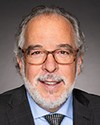
Rhéal Fortin Bloc Rivière-du-Nord, QC
Of course, you are free to speak in English or French, Mr. Housefather. I would even say that I encourage you to speak in French. However, as far as interpreting is concerned, frankly, I don’t think that’s part of our job.
Liberal
Anthony Housefather Liberal Mount Royal, QC
I understand.
Mr. Chair, should I try seeing if it works?
Liberal
The Chair Liberal James Maloney
I think the English to French is now working. The French to English was not working.
Liberal
Anthony Housefather Liberal Mount Royal, QC
Is the English to French working? Are you guys getting interpretation?
Bloc
Liberal
Anthony Housefather Liberal Mount Royal, QC
Thanks very much, Mr. Chair.
Since our committee last met, there was a mass shooting at Bondi Beach in Australia. Fifteen people were murdered because they were attending a Hanukkah celebration on a beach. It was a tragedy. I think all members of the committee will join me in sending our thoughts and prayers to all the people of Australia, and particularly to the Jewish community worldwide, which was deeply impacted by this tragedy.
We saw what that shooting caused to happen in Australia, which is that a royal commission on anti-Semitism was set up and laws were passed by its Parliament on gun control and hate. In fact, one of those laws proposed by the Government of Australia and eventually adopted by Parliament was similar to things in our combatting hate bill. In Canada, we were being proactive. We were trying to pass laws that police say will give them more tools before such a tragedy could occur, which theoretically could occur anywhere in the world. There's great danger that tragedies like that could occur in any place in the western world. We need to do our best to have criminal laws that give police and intelligence services the tools to stop that from happening.
One of the provisions contested in the law in Australia, proposed by Australia's Labor government, was a hate exemption based on religious conviction that was similar to what we currently have in the criminal law in Canada. Ironically enough, the conservative parties in Australia—the Liberal Party and the National Party—argued that this exemption made the law useless. It's exactly the opposite argument that our colleagues are bringing up here in Canada. They are saying we need this exemption. In Australia, the conservative parties said the opposite.
I don't think taking out this exemption is a panacea, nor do I think having this exemption to allow somebody who already has promoted hate and been charged with promoting hate to have a defence that has never been successful in Canadian history means a lot either. This is why I want to get to the amendment and the subamendment, but I want to start with the larger principle.
The claims that have been made that people would no longer be able to preach the Bible, the Torah, the Quran or any religious text without being charged with hate speech is absurd. It doesn't deserve the credence being given to it. I can't even believe these arguments are being made.
This was a defence in the law if you had already been charged under the already high threshold of promoting hate against an identifiable group. Then you were able to claim that you promoted that hate, that horrible hate, based on sincere religious conviction. I don't know any religion in the country that promotes that kind of hate in its mainstream religion. Taking this out should not be a problem. I don't think it makes a great difference, but it shouldn't be a problem.
I wanted to put on record the op-ed in the Toronto Sun that was written by Joseph A. Neuberger, who's a criminal lawyer and the chair of the Canadian Jewish Law Association. I'm going to read that for the record.
Claims that Bill C-9, The Combating Hate Act, threatens religious freedom in Canada are false. They are not supported by the bill itself, by the Constitution, or by decades of court decisions.
More than that, the claim that Bill C-9 undermines religious freedom is not a matter of interpretation or reasonable disagreement—it is misinformation. Religious freedom is explicitly protected by section 2(a) of the Canadian Charter of Rights and Freedoms and has been repeatedly affirmed by Canadian courts as a core constitutional guarantee.
Nothing in Bill C-9 amends, limits or conditions that protection. The bill does not interfere with worship, belief, religious teaching, sermons, or doctrine. To suggest otherwise is to assert a legal effect that simply does not exist.
What is Bill C-9
Bill C-9 is proposed federal legislation that updates parts of the Criminal Code dealing with hate-motivated conduct, hate propaganda, and the public promotion of terrorism. Its purpose is limited and clear: To address conduct that causes serious harm, including the glorification of terrorist groups and extreme hatred directed at identifiable communities. It does not regulate belief, worship, sermons or religious teaching. It does not criminalize disagreement or political debate.
Religious freedom in Canada is firmly protected by the Charter. That protection is well established and robust. Bill C-9 does not weaken it. What the Charter does not protect—because it never has—are threats, intimidation or the deliberate promotion of violence or terrorism. Canadian constitutional law has always distinguished between protected belief and unprotected conduct, and Bill C-9 operates squarely within that settled framework.
I write as a criminal lawyer with more than 32 years of experience, and as the chair of the Canadian Jewish Law Association. Since October 7, 2023, we have worked directly with students, professionals, and community members—Jewish and non-Jewish—who have faced harassment, exclusion, and intimidation. We have also contributed to antisemitism training for police and are preparing similar work with judges. The pattern is consistent: When hateful conduct is excused or ignored, it escalates.
Canadian law already draws a clear line between strong opinions—which are protected—and extreme hatred, which is not. The Supreme Court of Canada made this clear in Regina v Keegstra, defining hatred as extreme vilification and dehumanization, far removed from criticism or disagreement. Bill C-9 does not lower this threshold. It relies on it....
Much of the opposition to the bill rests on a misunderstanding—or misrepresentation—of free expression and religious liberty. The Charter does not shield conduct that promotes terrorist organizations designated under Canadian law. No democratic society treats the public glorification of terrorism as a protected freedom, religious or otherwise.
Another uncomfortable reality is that Canada already has laws to address hate crimes and terrorism, but they are enforced inconsistently.
On this, I agree with the author and with my Conservative colleagues.
That failure has contributed to a loss of civility and restraint, and to the normalization of conduct that targets people based on identity. Jewish Canadians have experienced this acutely, particularly when they are blamed for international events beyond their control. But the consequences affect all communities.
Law alone will not eliminate hatred or extremism. But law sets boundaries. It signals what conduct a society will not tolerate. Bill C-9 reflects that responsibility. Bill C-9 also provides authorities with additional tools to combat the display of symbols of terrorist entities and will provide additional protections for our most vulnerable religious and educational institutions, including synagogues, schools and community centers. Bill C-9 is not the only answer to the rise in hate, but it is necessary to not only send a message that hate, and antisemitism will not be tolerated but will be prosecuted.
I also write as a supporter of political campaigns, including the Conservatives in the last election, and I want to be clear that the real danger is not that religious freedom will be curtailed. The real danger is allowing false claims about religious freedom to obscure the actual purpose and effect of the law, and to prevent Parliament from responding to conduct that undermines safety, dignity and social cohesion.
Read plainly, Bill C-9 respects constitutional freedoms while reaffirming a basic principle: Freedom does not include the right to promote hatred or terror.
I wanted to put that on the record because I believe in Bill C-9. We have a bill that deals with many of the issues that have impacted our communities, particularly my own Jewish community, but also other communities in Canada. It would be a positive force to tell law enforcement that we, as a federal Parliament, are sending them a message that we expect the law to be enforced when there are demonstrations in Mr. Baber's riding in Toronto that are entirely unacceptable that target Jewish communities for absolutely no other reason than they are Jewish, or in other ridings across this country. I think we all share that objective.
I will now come to the amendment that was proposed by Mr. Lawton and the subamendment by Mr. Brock, which I think are misplaced. They are saying that the charter guarantees in section 2 remain. Obviously the charter guarantees in section 2 remain, but they remain for all parts of the bill, not just the proposed subsection where this charter right would be mentioned.
The idea to me, then, would be a complete misinterpretation where somebody could look at this bill and ask, “Does that mean Parliament intended those charter rights not to apply to the rest of the bill or to other laws where we don't expressly reference that section 2 rights are protected?” It doesn't make any sense, because charter rights remain protected. We have not used section 33 in this bill or anywhere else to remove those rights. To insert them, I believe for the first time in a bill, and say that these rights are not undermined or thwarted would cause doubt in every other bill and every other provision of the bill if we didn't repeat the same message.
I will end my remarks there, because I strongly support this bill. This bill is really important to me, as are the bills on bail and the bills on giving greater rights to victims and dealing with intimate partner violence. This bill is really important to me because it deals with something that I have requested Parliament do for almost two years now to protect schools, community centres, places of worship and other places occupied by vulnerable communities and to take action against people who carry terrorist symbols in demonstrations.
I don't want to just let this bill go, delay it and cause it to disappear off the parliamentary radar because people are misinterpreting it or misleading people about which religious rights are or are not included in the bill. I'm going to fight hard for it.
I'm asking my colleagues.... If they disagree, that's fine. Let them vote against the parts of the bill they disagree with. Let them vote against the bill if they want, but let this bill go through clause-by-clause and come back to the House.
Thank you, Mr. Chair.
Liberal
Conservative

Roman Baber Conservative York Centre, ON
Thank you, Mr. Chair.
Welcome, everyone. Happy new year to all of you.
Before I defer to my colleague MP Larry Brock, I'd like to make a couple of comments not just with respect to what my colleague Mr. Housefather just said, but in particular with respect to tomorrow, when we mark the 81st anniversary of the liberation of Auschwitz. This has been designated by the international community as International Holocaust Remembrance Day.
I'll share a personal story that I've previously shared in the provincial legislature. My family is partially from Ukraine and partially from Russia. My great-great maternal grandparents were Ukrainian Jews from Odessa. In October of 1941, Joseph and Rosalia Rosenfeld were executed by the Nazis in the courtyard of their Odessa family home. As one of the first things my family did when we first visited the Holy Land, my mom went to the Yad Vashem museum, the Holocaust museum in Jerusalem, and noted the Rosenfeld name.
For many Jews like me, the Holocaust is not just an abstract or theoretical concept. It's a reality that many in my community have dealt with for many years. It's very instructive to us in much of what we do, not just in terms of the welfare, safety and security of the Jewish people, but in terms of the welfare, safety and security of all people. When we read about the horrors of what's transpiring in Iran, with a report this morning in one of the New York newspapers, a credible report, of over 35,000 protesters, 35,000 Persians, being killed in the last two weeks alone, it is horrifying.
That brings me to the point I want to make. Too often, many in this building, while very well-intentioned.... I want to be very clear. I respect all of my colleagues, and I never impute any negative intention when it comes to combatting hate or anti-Semitism in particular, but regrettably, I have come to believe, in witnessing the events of the last couple of years, that when many use the phrase “never again”, they use it more as a platitude. They don't really mean it, and that allegation may apply to more than one of the recognized parties.
Mr. Housefather was correct in mentioning the weekly events in the riding of York Centre, and specifically my home in North York, about a kilometre from where I live, at the very intersection where my family first dwelled when we came to Canada, the intersection of Sheppard and Bathurst. I invite every single member here, every staffer and every official to come and join me in North York on a Sunday at Sheppard and Bathurst to see what goes on with a group of masked men and women. They don't just stand at the northeast corner of the intersection, because the police have decided that they're going to segregate both sides. Aside from the fact that they stand at the northeast corner of the intersection, in front of the very building that welcomed me to Canada, they chant incitement to violence every week, chant for intifada every week and encourage people to violently revolt every week. Seemingly, nothing is being done.
We had the director of legal services for the NCCM here during hearings on this bill. I think her testimony on the definition of the word “intifada” and whether she would encourage some sort of legal action or criminal action with respect to that spoke for itself. This is an organization that has received, in the last couple of years, a considerable amount of money from this Liberal government.
We had the Toronto police here during the bail hearing meeting, who said they weren't sure what the interpretation of the law was. Clearly, we all agree that incitement to violence is illegal, and that is incitement to violence but even worse.
Every Sunday, they walk off Sheppard and Bathurst and start walking west on Sheppard. Sometimes they make a right into the neighbourhood of Bathurst Manor, which is where I lived for a number of years. It is one of the key neighbourhoods that I'm blessed to represent, and it probably has one of the largest Jewish communities in the country.
These masked thugs walk up residential streets next to residential neighbourhoods, and they chant incitement to violence. They're masked. They're clearly denying residents enjoyment of their property. I would suggest, respectfully, that it's at the very least mischief.
I think it's very important, as we discuss these things, to appreciate that, number one, this is very serious for many of my constituents and Canada's Jewish community. That number is at about 350,000. We're nearing—
Conservative
Roman Baber Conservative York Centre, ON
I appreciate my friend's correction. There's some disagreement.
We are going to mark International Holocaust Remembrance Day tomorrow, and we're all going to tweet “never again”. I would invite everyone who's unwilling to implore law enforcement to do the right thing here—it doesn't matter which side of the aisle you're on; my constituents right now are threatened in their homes—to say, “We are not going to tolerate this. We have existing laws on the books, and we insist that the Toronto police, the Toronto Police Service Board and Mayor Olivia Chow enforce the law and protect Toronto's Jewish community.” When we say “never again”, we should actually mean never again.
I'm very grateful to my colleagues for the deference I received here. I'm going to defer my time to MP Larry Brock.
Liberal
The Chair Liberal James Maloney
Thanks, Mr. Baber.
I had Mr. Lawton and Mr. Brock. You both put your hands up at the same time. I'll leave it to you to decide who goes first.
Conservative
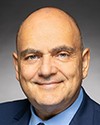
Larry Brock Conservative Brantford—Brant South—Six Nations, ON
Thank you, Chair.
Much like my colleagues Mr. Baber and Mr. Housefather have said, it's good to be back. I'm thankful that we are here to study three important bills. I trust everyone had a peaceful and relaxing break.
I want to welcome back the departmental officials. I know this has been a challenging exercise for you.
I'm optimistic that 2026 will usher in a fresh approach to how we get things done here at the justice committee. When I first accepted the position of vice-chair, obviously there was a different chair at that time, but I have often said that my experience has always been one of deep respect for everyone here at the justice committee. We deal with extremely important pieces of legislation and policy, and our tradition, at least from my perspective going back to September 2021, has been to be extremely collaborative. I'm hoping that is going to continue.
Clearly we are facing an impasse, and it's an impasse that in my view should never have come to be. When I listen to the messaging from the government, specifically in the messaging from Sean Fraser, Canada's justice minister and Attorney General, he often reflects about the quality time he spends engaging with stakeholders, particularly from the Jewish community in Canada but also other stakeholders involved in policing and victim advocacy and rights, all of which informed, with the direction and assistance of his departmental officials, the drafting of Bill C-9.
In Bill C-9 as it's currently stated, there is no specific reference to the government intending to remove the religious exemption that has been codified in the Criminal Code of Canada for over four decades—no mention at all. There was no indication of it in any of the press releases or technical briefings that parliamentarians received during the initial debate in the House at second reading. There was no mention at all from any member of the Liberal Party of Canada that this would ultimately be their stated intention.
Contrast that with my friend and colleague Monsieur Fortin, who made it abundantly clear, as did members of the entire Bloc Québécois during debate, but particularly during the meetings we held on Bill C-9, with the witnesses who gave evidence and responded to all questions.... Monsieur Fortin, on a regular and consistent basis, would always seek input from those stakeholders as to their position on the removal of the religious exemption.
I may be wrong in this assessment, and if I'm wrong I will apologize to any particular member of the Liberal Party of Canada. I've done a number of interviews, written a number of articles and posted on social media, and if I'm wrong, please correct me, but I don't recall during the meetings we had on Bill C-9 any particular member—the core Liberal members and their subs from time to time—ever exploring the issue of removing the religious exemption. I could be wrong, but I don't recall that ever being raised by any member of this committee, with the exception of Monsieur Fortin.
Then we progressed closer and closer to our Christmas break knowing we were making progress with respect to clause-by-clause, but we reached an impasse when we found out—leaked by the media—that a secretive backroom deal had been brokered between the Liberal Party and the Bloc Québécois to fully support the Bloc's amendment to remove the religious exemption. Critics rightly commented that this was insincere and was not about addressing the evils my colleague Mr. Baber so eloquently and correctly put on record, which have been plaguing our country for two-plus years under the auspices of supporting the Palestinian people. Critics said this all had to do with politics as opposed to what is in the best interests of Canadians.
I 100% agree with Mr. Baber's assessment—I know he didn't use these words, but these are my words—that Bill C-9 in its entirety was completely redundant, in the sense that we've had hate laws codified in the Criminal Code of Canada for over four decades. This was not an issue of police lacking resources or tools. This was a political decision by various police services, on their own or under the direction of their municipal leaders, to not do their damn job, and they were sworn to uphold every single law in the 1,000 pages of the Criminal Code of Canada.
We have witnessed, right across this country, example after example and story after story of criminal activity that should have resulted in charges being laid against these thugs, but they weren't. It's inexcusable that they weren't. In fact, I'm not going to identify the city nor out the municipal leaders and municipal police service, but examples from one particular municipality rocked me to the core when I learned that the direction given by municipal leaders to the municipal police service was to simply act as peacekeepers—sworn, armed peacekeepers—and to not make any arrests. I heard examples in that particular city of threats being uttered, physical assaults taking place, and pushing, shoving and spitting at Jewish individuals who were there simply to enjoy their synagogue or place of recreation free from any abuse, intimidation and harm, and the police dropped the ball. That's what this issue really is.
I'm glad, Mr. Housefather, that you raised the issue of the events in Australia. It rocked the conscience of anyone who deeply cares about this issue. That was a horrific experience, and I can only surmise that perhaps the uniqueness of Canada's law enforcement interpreting the Criminal Code not in a black versus white lens but a grey lens is what has caused this hate to go unchecked. When it goes unchecked, it emboldens the participants. It gives them immunity.
I can scream and call for intifada, as some did at the Eaton Centre on Boxing Day. That was not in a public square, but in a private centre. Again, police were there. I don't know if there were any arrests, but there were certainly not enough. Let's put it that way. That's why the consciences of Canadians were shocked that it was allowed to happen again.
I appreciate the passion of everyone's arguments, but we also need to remember that we have two other pressing pieces of legislation: Bill C-14 and now Bill C-16, which is set to be debated today for the first time.
In framing my argument in support of prioritizing Bill C-14, I want to reiterate the words of the Prime Minister today in Ottawa: “tougher bail, tougher sentencing, protecting younger Canadians from online harm, protecting people who go to their place of worship or their community centre, protecting them from harassment, all of that crime legislation is being held up”. It's not being held up by the Conservative Party of Canada.
Then, later, House leader MacKinnon indicated to us in the House of Commons that Pierre Poilievre should “support the quick passage” of Bill C-14 and Bill C-16. To quote him, it's time for us to “put up or shut up on crime”.
Since day one, I have been an advocate at the justice committee for prioritizing community safety and the safety of Canadians, particularly victims. If the Prime Minister wants us to prioritize Bill C-14, and if the House leader wants us to shut up or put up, I'm prepared to, as are my Conservative colleagues.
I'll follow up on a letter that our leader, Pierre Poilievre, wrote to the Prime Minister, setting out his expectations, his priorities and his willingness to work with parliamentarians to prioritize what Canadians want. What they want is to live in safe communities. I've said this repeatedly, and I'll keep saying it till I'm blue in the face: Community safety is not partisan. I don't care what your background is. I don't care what your ideology is. Everyone wants to live in and raise their families in a law-and-order community. We have an opportunity here as parliamentarians to give them exactly what they want.
Therefore, I am moving the following dilatory motion, Mr. Chair: That the committee proceed to the consideration of Bill C-14, the bail and sentencing reform act, immediately.
Liberal

Patricia Lattanzio Liberal Saint-Léonard—Saint-Michel, QC
I would like to respond to the comments that were made by Mr. Brock. I'd like you to rule if the motion is in order.
Liberal
Conservative
Larry Brock Conservative Brantford—Brant South—Six Nations, ON
Yes. I move that the committee proceed to the consideration of Bill C-14, the bail and sentencing reform act.