Evidence of meeting #22 for Transport, Infrastructure and Communities in the 45th Parliament, 1st session. (The original version is on Parliament’s site, as are the minutes.) The winning word was capacity.

A video is available from Parliament.

On the agenda

Members speaking

Before the committee

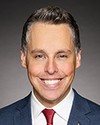
Fenn  Vice-President, Corporate Affairs, Hamilton-Oshawa Port Authority
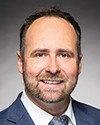
Marr  President and Chief Executive Officer, Nanaimo Port Authority
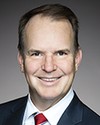
Farman  Chief Executive Officer, Quebec Port Authority
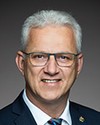
Steven MacKinnon  Minister of Transport

11 a.m.

Liberal

The Chair Liberal Peter Schiefke

I now call this meeting to order.

Welcome to meeting number 22 of the House of Commons Standing Committee on Transport, Infrastructure and Communities.

Pursuant to Standing Order 108(2) and the motion adopted by the committee on Thursday, December 11, 2025, the committee is beginning its study on supporting, diversifying and modernizing Quebec and Canada's ports.

Today's meeting is taking place in a hybrid format, pursuant to the Standing Orders.

I'd like to make a few comments for the benefit of witnesses and members.

Those participating by video conference on Zoom, click on the microphone icon to activate your mic, and please mute yourself when you are not speaking. At the bottom of your screen, you can select the appropriate channel for interpretation: floor, English or French. Those in the room, you can use the earpiece and select the desired channel. I will remind you that all comments should be addressed through the chair. Members in the room, if you wish to speak, please raise your hand. The clerk and I will manage the speaking order as best we can. We appreciate your patience and understanding in this regard.

Colleagues, I'd now like to welcome our witnesses for the first hour today.

We have, from the Hamilton-Oshawa Port Authority, Ms. Larissa Fenn, vice-president of corporate affairs. From the Nanaimo Port Authority, we have Ian Marr, president and chief executive officer, who is here by video conference. From the Québec Port Authority, we have Olga Farman, chief executive officer, who is here by video conference as well.

Welcome to you all. Thank you all for taking the time to join us today.

We'll begin with opening remarks.

I will turn the floor over to you, Ms. Fenn. You have five minutes, please.

Larissa Fenn Vice-President, Corporate Affairs, Hamilton-Oshawa Port Authority

Thank you very much.

Hello, Mr. Chair and members of the committee.

Thank you for the opportunity to speak with you today.

We welcome the essential question this committee is pursuing: How do we as Canadians do more than simply protect what we have? How do we build something more resilient, more diversified and more ambitious?

HOPA operates a port network on the Great Lakes. With your indulgence, that's where I will be focusing my remarks today.

HOPA operates ports and marine facilities in Hamilton, Oshawa and Niagara and, coming soon, a public port in Sault Ste. Marie, where we're building, in partnership with the City of Sault Ste. Marie, a corridor that connects northern Ontario's minerals and forest products with steel processors and manufacturers in Ontario's south and with overseas markets beyond.

The Great Lakes St. Lawrence Seaway system is Canada's industrial heartland, home of steelmakers, grain farmers, miners of critical minerals, energy producers and manufacturers of products shipped around the world. This region is at the heart of our shared mission to increase and diversify our trade, but the catch is this: If we are successful in our trade diversification goals, we don't have the port capacity we need to make it work.

We believe port authorities are uniquely positioned to help Canada meet this moment, but ambition requires capacity, and capacity requires a systems approach. With that context, let me turn to some specific actions this committee may consider in its work.

The first of these is treating the capacity as a national system issue. In addition to coastal gateways, Canada needs inland and regional capacity that relieves pressure on those gateways and moves goods closer to where they are produced and consumed. Better corridor integration creates efficient flows of raw and semi-processed materials, reduces long-haul trucking and builds the sovereign supply chains Canada is now urgently seeking.

Second, invest in the Great Lakes St. Lawrence Seaway network. The ports and marine facilities in this system already serve Canada's industrial heartland. With a systems approach to investment, they can drive our “Canada Strong” goals for domestic supply chains, for export growth, and for Canada's industrial capacity and competitiveness. The good news is that it's not all brand new infrastructure. It builds on a seaway that's already in place and that has capacity to spare in terms of the number of ships that can transit the system.

Third, ensure that system enablers are in place. Extending the Great Lakes shipping season is critical. We know that our colleagues at the Great Lakes St. Lawrence Seaway are working on this. Enhanced icebreaking capacity will be necessary. We are pleased to see Canada rapidly investing in new icebreaking.

Fourth, sustain the commitment to Great Lakes containerization. We were thrilled to see that the recent federal budget recognized Hamilton, alongside our colleagues in Quebec City, as an emerging container-capable port. Hamilton is advancing an inland rail terminal as a first step, moving imports and exports of containers by rail, connecting the big market of the GTHA to ports like Quebec, Montreal and Halifax. Our next step is to support marine container shipments—imports and exports—directly into the Great Lakes to provide system resilience and market flexibility. This is the kind of novel offering needed to build modernized and diversified trade relationships.

Fifth, focus on Canada's reliability and competitiveness as a trading partner. Labour disruptions, congestion, system costs and productivity challenges have had a cumulative impact on our reputation and on our supply chains. These issues don't stay at ports and waterfronts; they impact productivity in manufacturing, agriculture and other sectors. The disruptions we've seen in the past few years have damaged Canada's brand as a place to do business. The committee has an opportunity to signal that Canada is serious about being a dependable, competitive trading partner.

Finally, there is governance flexibility. Canada's ports have a solid track record of financial self-sufficiency and stewardship of federal assets. To meet our ambitious goals as a country, port authorities can be better empowered as active instruments of Canadian trade policy, as well as responsible stewards of infrastructure. The current borrowing limits and the capitalization structure of subsidiaries are a good place to start looking at how to maximize port authorities' agility in the market.

Again, we believe port authorities are in a unique position to be proactive instruments of an assertive national trade policy. We are ready to work with you to deliver on behalf of Canadians.

Thank you. I look forward to your questions.

The Chair Liberal Peter Schiefke

Thank you very much, Ms. Fenn.

Next, we'll turn the floor over to Mr. Marr.

Mr. Marr, the floor is yours. You have five minutes for your opening remarks, sir.

Ian Marr President and Chief Executive Officer, Nanaimo Port Authority

Thank you, Chair and committee members, for the invitation to contribute to your study today.

My name is Ian Marr. I'm the president and CEO of the Nanaimo Port Authority.

The objective of supporting, diversifying and modernizing Quebec's and Canada's ports should consider the many touchpoints of ports—harbours, rail, roads and communities—and how every port can contribute to diversifying Canada's ability to find and support trade with new markets.

There is a need to diversify and fully utilize Canada's current port properties and maximize individual capacities, creating a resilient, diverse system supported by short-sea shipping, rail or road. There is major pressure on our current system with port backups, road and rail congestion, industrial land scarcity, climate events and labour uncertainty. Developing ports on the St. Lawrence, the Great Lakes and the west coast outside current heavily urbanized regions would significantly increase capacity for containerized and non-containerized cargo.

Canada's objective of expanding trading markets requires consideration of where and how an infrastructure investment is made. Investment decisions should benefit exports, imports and communities, not only at ports but also along the internal trade routes I previously mentioned. Consideration should be given to the new trade patterns and to providing complementarity within our port frameworks. If growth and diversification are the objective, we can no longer rely on “the first to the line with the most money wins” when it comes to investment decisions.

The government should establish the capabilities, possibilities and strengths within its port system to build required infrastructure and create funding streams that allow it to meet the needs of new trading markets and a diversification strategy. Infrastructure funding should create capacity at different contact points along ocean, river and road networks. Funding must consider the benefits of reducing congestion and overall environmental impact while increasing the capacity and throughput of the system.

Ports require some regulatory and legislative changes to their current act, which has been largely unmodified for 27 years. Ports require flexibility through subsidiary capitalization review, allowing them to create partnerships that encourage third party investment and release the value of their balance sheets.

Modernization of ports requires integration of existing technologies and the development of new technologies to increase the capacity and security of our ports and waterways. Modernization should flow across the entire transportation system, not in isolation to any single component, to ensure fluidity and increased value to Canadian industry and consumers.

A key component of modernization integrates technology with education and development of the workforce. Labour must be engaged to achieve mutual long-term goals to maintain employment benefits in port regions and increase the reliability in our national port system.

Thank you for your time. I welcome any questions.

The Chair Liberal Peter Schiefke

Thank you very much, Mr. Marr, for your opening remarks.

Ms. Farman, you have five minutes for your opening remarks.

Olga Farman Chief Executive Officer, Quebec Port Authority

Thank you.

Good morning, Mr. Chair and members of the committee.

I also want to acknowledge my colleagues from the ports of Hamilton and Nanaimo, whose remarks accurately reflect the concerns we are having in Quebec.

Your work today is focused directly on Canada's competitiveness and the ambition to double exports in 10 years. To achieve that, one key condition is the reliability of our existing infrastructure. Without that, there is no predictability, no growth and no sustainable diversification. Over the past year at the head of the Port of Québec, I have been assessing the importance of the public infrastructure we manage to serve the Canadian economy and supply chains. Modernizing that infrastructure is not just about maintaining a public good, but about protecting a lever for competitiveness and economic sovereignty.

The Port of Québec is the oldest port in the country and an essential link in the St. Lawrence corridor. We handle 28 million tonnes of goods annually worth $15 billion. We welcome close to 1,000 vessels, and we support 12,000 jobs. As the last deep-water port in the St. Lawrence, our direct connection to the heart of the continent enables us to accommodate large vessels and offer economies of scale that result in lower costs for businesses and, ultimately, better affordability for Canadians. In 2025, our revenues exceeded $70 million, making ours the fourth-largest port in the country. However, this performance relies on wharves, nearly half of which will be over 100 years old by 2040.

This past January, we had a concrete reminder: 60 metres of our wharf 25 collapsed. No one was injured and the area was closed, but the incident illustrates what happens when 100-year-old infrastructure reaches the end of its life, and it especially reminds us of what awaits if we delay action: a loss of capacity, additional costs and increased vulnerability in supply chains.

In November 2025, we launched the largest investment plan in our history, which we estimate to be $1.7 billion over 10 years, to rebuild our critical infrastructure. Our goal is clear: secure our gains, build resilience and position ourselves for the future. To deliver the first phase of this plan, over the next four years, we are seeking a federal contribution of between $340 million and $380 million—approximately half the cost. This plan is supported at the municipal, provincial and regional levels, as well as by Minister Lightbound. Private investments of $220 million have already been confirmed for this first phase. The 10‑year impact is significant: close to $1.8 billion toward the Canadian GDP and $1.1 billion in tax revenue. This is a project that will protect our port capacity in Quebec City and create tangible economic value for our country. These benefits are consistent with the St. Lawrence corridor, where each port plays a complementary role: Montreal opens, Quebec consolidates, Trois-Rivières ensures fluidity, Saguenay and Sept‑Îles support strategic sectors. We can't diversify our markets if the infrastructure isn't resilient, and we can't support growth without some redundancy in the corridor. This complementarity rooted in each region is the network's strength.

The container terminal project led by QSL is directly based on this complementarity. Developed on existing facilities, without encroaching on the river and without dredging, it will add needed capacity to the corridor and reduce logistical costs for eastern Quebec. It's not a volume-movement project. It's a project that will strengthen the entire corridor. The latest federal budget also identified Quebec City and Hamilton as ports for the export of containers, which confirms that direction.

Ensuring the resilience of the corridor also means reviewing our tools. Maintaining multi-generational public infrastructure has a real cost, and the current mechanisms don't always reflect that. The time has come to modernize the legislative framework that applies to port authorities to carefully diversify our levers and align our governance model with the strategic scope of the assets we manage.

The direction is clear. If we truly want to diversify our markets and reduce our vulnerabilities in a highly volatile global economic and political environment, we must first ensure that our wharves and facilities are sustainable. These are the foundations that enable trade to take place and, above all, to grow every day. If we want them to continue to play their role over the next few decades, we need to modernize them now, while we still have control over them and before they end up at the bottom of the river, like our wharf 25. We have a coherent network, engaged partners, a clear vision and ready projects. We must now consolidate our achievements so that the next 50 years will live up to Canada's ambitions.

Thank you for your attention.

The Chair Liberal Peter Schiefke

Thank you very much, Ms. Farman.

Before we begin our line of questioning, I have, for the benefit of our witnesses, a yellow card and a red card. The yellow card means you should wrap up, and the red card means your time has expired and I will be passing the floor on to another member.

With that, we'll start our line of questioning today with Mr. Muys.

Mr. Muys, the floor is yours. You have six minutes, sir.

11:15 a.m.

Conservative

Dan Muys Conservative Flamborough—Glanbrook—Brant North, ON

Thank you, Mr. Chair, and thank you to our witnesses from coast to coast.

My question will be for Ms. Fenn mostly, because as a proud MP from the Hamilton area I've seen the success of HOPA on many levels.

You talked about Hamilton, Oshawa and Niagara, because this is about the Great Lakes, not just the Hamilton port. I'm encouraged to hear now about Sault Ste. Marie, because of course the Great Lakes and the St. Lawrence Seaway are Canada's fourth coast, which we always forget about, yet it means billions of dollars for the southern Ontario economy.

In the budget, there was an announcement of the CBSA facility that, after many years, is finally going to happen. Despite that, as a very simple and small ask, I'd suggest that HOPA has actually been successful in spite of the federal government, and here is why I think that. We had the national supply chain task force summit back in 2022, which had on it leading experts from across the country. The final report of that supply chain task force had eight immediate recommendations and 13 medium-term recommendations. Not all of those are done, and it's been some years now. Then, of course, we had Bill C-33, the strengthening ports bill, which was introduced in 2022 by a minister now five times removed. It died on the Order Paper when the Prime Minister called the election in 2025. Perhaps that's a good thing, because frankly the bill was woefully inadequate. We've had some discussions on that at this committee. What preceded that bill were seven years of consultation.

As well, this committee did a study on port infrastructure. We visited ports from coast to coast and tabled a report. In fact, we were in Hamilton to see the great works there.

There have been at least five years of talking and good intentions, but nothing to show for it. Is it fair to say that there's been a lot of talk and really no action?

11:15 a.m.

Vice-President, Corporate Affairs, Hamilton-Oshawa Port Authority

Larissa Fenn

We certainly have not, at the Hamilton-Oshawa Port Authority, been waiting to act in terms of growing our relationships with business, growing the impact that we can have on the economy and growing our port network. That's one of those things that I think came up through the course of those many consultations.

We think there is probably work that can be done in partnership with government, but in the meantime, we have really found the ability to reach into new communities throughout the Great Lakes seaway. In Niagara, we have been working with private sector partners to undertake new models of managing working waterfronts in Port Colborne and Thorold, for example, and we have looked at other ways to see where we can bring into our portfolio lands that might be surplus within the federal portfolio. We have been working forward in partnership with Transport Canada on that.

We really see the work that HOPA has done as proof positive of the positive impact that port authorities can make. Our infrastructure investments usually yield a 4:1 impact in terms of their ability to attract private sector investment. We see that as one of the ways in which port authorities can really strengthen not just the supply chains, but also the communities where we do business. We also see the impact of integrating port assets around the Great Lakes. Our partnership with Oshawa is a really great example—

11:15 a.m.

Conservative

Dan Muys Conservative Flamborough—Glanbrook—Brant North, ON

I'm sorry. I want to interject at this point.

Certainly, you talked about a lot of the actions in your opening statement. Frankly, all those actions have been talked about for years. I would suggest that the time for talk is over. We need results. Our economy depends on it, as you've pointed out.

Let me refer to a point made by the Association of Canadian Port Authorities. Ian Hamilton, your colleague, is a past chair of that organization. They've said that there is a need for “streamlined project reviews” to make major infrastructure happen more quickly.

From HOPA's perspective, are federal approval processes still slowing down port expansion or modernization projects?

11:20 a.m.

Vice-President, Corporate Affairs, Hamilton-Oshawa Port Authority

Larissa Fenn

Certainly, the faster the projects can be advanced, the faster they can be producing positive economic impacts for Canadians. I think it's particularly important at this moment, when we are talking about, potentially, a $200-million investment in Sault Ste. Marie for a new public port. That's one of those places where an accelerated project approval and implementation timeline would be extremely helpful.

11:20 a.m.

Conservative

Dan Muys Conservative Flamborough—Glanbrook—Brant North, ON

Let me get one more question in before we get the red card.

Again, these are great things that are happening, and that's because of HOPA's leadership, your leadership and Hamilton's leadership. I don't think the federal government has really been a great contributor to that, so I'd ask you this: From your perspective, has the federal government done anything really meaningful to help reduce the bottleneck that we're seeing at Canadian ports?

11:20 a.m.

Vice-President, Corporate Affairs, Hamilton-Oshawa Port Authority

Larissa Fenn

Well, certainly—to give credit where it is due—we have worked with the national trade corridors fund on a couple of occasions in the past. As I mentioned, back in 2017, I think there was a $17-million investment through the national trade corridors fund into base infrastructure. We matched that money.

This spring, we are going to announce the biggest sugar refinery in the country, a $150-million investment in Hamilton. The genesis of that was supported by a contribution from the national trade corridors fund. I think being able to illustrate that and expand the impact of those kinds of things throughout a bigger port network would be extremely helpful.

The Chair Liberal Peter Schiefke

Thank you very much, Ms. Fenn.

Our eyes lit up as you mentioned the opening of a sugar refinery. We very much appreciated that.

We'll turn the floor to Mr. Kelloway for six minutes.

Mike Kelloway Liberal Sydney—Glace Bay, NS

We go from sugar to me.

I really appreciate all the witnesses here today.

This is, again, an important study with regard to where we need to go as a country, as an economy. Prime Minister Carney has been very much focused on how one gateway to diversify our economy, to strengthen our supply chains and to be ambitious with our supply chains is ports. Each of you talked about the specific challenges that ports face every single day, such as turnaround times and infrastructure capacity. The adoption of modern technology, I think, was another one.

I'll start with Ms. Fenn and then go around the horn.

If we were to triage this.... They're all very important, and I totally understand that we have to focus on solutions from a systems-based approach, but I'm wondering if we can isolate the biggest barriers right now in terms of exceeding what ports can do—existing ports, secondary ports. How do we strengthen the supply chain, and how do we grow the economy through ports?

11:20 a.m.

Vice-President, Corporate Affairs, Hamilton-Oshawa Port Authority

Larissa Fenn

Certainly, infrastructure investment is at the top of the list if we want to modernize and enable ports to do what they are capable of doing. There is a significant infrastructure deficit across the whole federal portfolio, and that is true for Hamilton as well.

We have also had challenges with the speed with which CBSA support has come forward, so one thing would be making sure that the approvals of terminals are matched with the speed with which we want to set up trade capacity.

Mike Kelloway Liberal Sydney—Glace Bay, NS

That's very helpful.

Mr. Marr, can you chime in with respect to some of the key structural barriers holding us back?

11:20 a.m.

President and Chief Executive Officer, Nanaimo Port Authority

Ian Marr

When I think about our port out here in Nanaimo, we look at the overall impact of what we do. We've had significant benefits from the trade corridors fund and working in that capacity.

Really, the restriction for us is the ability to get to a railhead and to be moving things by rail across the country. We've recently established our container terminal, a $105-million project that took five years to get through the bureaucracy and get approved. The value of that in the five years went from $105 million up to about $160 million, which definitely doesn't help development and partnerships with other parties. However, in establishing short-sea shipping, which we really believe is needed out on the west coast—and we have further expansion available—we see that as being a definite hindrance, in that you need to provide that access so that things can move more easily, particularly across the Lower Mainland.

Mike Kelloway Liberal Sydney—Glace Bay, NS

Thank you.

Ms. Farman, what are your thoughts on that?

11:25 a.m.

Chief Executive Officer, Quebec Port Authority

Olga Farman

Thank you for your question.

Beyond what my colleagues have said, I think the trade diversification corridors fund announced in the latest budget is becoming fundamental for the Port of Québec and for all my colleagues across the country. We need the program to be implemented quickly. The eligibility criteria must also include the rebuilding of assets, and not just the creation of new ones.

Mike Kelloway Liberal Sydney—Glace Bay, NS

Thanks to the three of you for answering that question. I wanted to frame it as the challenges. Now we'll go to the solutions.

If we look at this budget, which has yet to be passed, there is some obstruction going on with respect to the budget and putting funds in place for the Arctic sovereignty fund and the trade diversification corridors fund. How key is it to moving forward in a substantial way?

It was brought up here today that these are mere concepts and we have to put things into practice. Okay, let's take that argument. Let's take moving concept to practice. The bottom line is that the way we move forward on making investments is passing $6 billion in funds for ports to allow them to do their thing.

I want to go into the future. If these funds are not passed, where do we find ourselves in terms of the things that you each want to do with your respective ports in your respective regions for this country to drive the economy forward, have more jobs in place and strengthen the supply chain? If we don't vote on this, or if we vote on it and it doesn't pass, what will that do to your operations?

We'll start with Ms. Fenn.

11:25 a.m.

Vice-President, Corporate Affairs, Hamilton-Oshawa Port Authority

Larissa Fenn

Certainly, we know the country's ambitions to increase non-U.S. trade and to increase diversified overseas trade are not possible without increased port capacity. We don't have the port capacity, if we are successful, to make those trade ambitions come true.

At the local level, the need for port infrastructure investment in Sault Ste. Marie, for example, is essential to activate a public port there, which would employ 2,000 people in a community that's quite challenged at this moment. It means that the issue around containerization in the Great Lakes remains unresolved, and there is essential maintenance work to be done throughout the network in Hamilton, Oshawa, Niagara and elsewhere.

Mike Kelloway Liberal Sydney—Glace Bay, NS

Thank you very much.

I have a red card. Does that mean I have 10 seconds, or is that it? Okay. I thought I would try.

I'd be interested to hear from the other two witnesses, if they could provide some thoughts in writing to this committee on the last question I asked.

The Chair Liberal Peter Schiefke

Thank you very much, Mr. Kelloway.

Mr. Barsalou‑Duval, you have the floor for six minutes.

Xavier Barsalou-Duval Bloc Pierre-Boucher—Les Patriotes—Verchères, QC

Thank you, Mr. Chair.

I'll turn to you, Ms. Farman. Welcome to the committee, even though you are appearing virtually.

I have a first question for you. In your presentation, you mentioned that 50% of your facilities are over 100 years old, and that they require an investment plan of $1.6 billion over 10 years. How did the situation get to that point? Is it due to a lack of federal government investment, local mismanagement, other phenomena, or a combination of all those things? Can you shed some light on that?

11:30 a.m.

Chief Executive Officer, Quebec Port Authority

Olga Farman

That's a great question.

This is clearly not a local management problem because, since the creation of the Port of Québec, all of its funds and revenues have been devoted to rebuilding or maintaining assets. It's just that, after 100 years or 125 years, the wharves are coming to the end of their useful life. Above all, as I mentioned, they are made of wood, so we can well imagine that after 100 years, we have no choice but to rebuild the structure to deal with climate change. There are challenges related to the positioning of the Port of Québec with respect to the St. Lawrence River—that is to say its elevation relative to the river.

So we have invested and stretched the useful life of our infrastructure. However, we are at a point where we need to rebuild the infrastructure outright, hence the request to the government.

Xavier Barsalou-Duval Bloc Pierre-Boucher—Les Patriotes—Verchères, QC

If I understand correctly, you applied for an investment in the neighbourhood of $380 million. Have you received a response from the government yet?

11:30 a.m.

Chief Executive Officer, Quebec Port Authority

Olga Farman

Last November, we presented the entire 10‑year project to the public and the government. The government has confirmed to us that we should submit an application under the trade diversification corridors fund. I emphasized that earlier in the hope that the fund will be launched very quickly.

Xavier Barsalou-Duval Bloc Pierre-Boucher—Les Patriotes—Verchères, QC

What will be the consequences for the Port of Québec if the Canadian government does not grant the money?

11:30 a.m.

Chief Executive Officer, Quebec Port Authority

Olga Farman

This question hurts because we will then be talking about wharf closures. I mentioned that wharf 25 unfortunately ended up at the bottom of the river on January 4. That is a concrete example of what happens when a wharf is at the end of its life. We are talking about a disruption of supply chains, a loss of competitiveness, which is important, and of international attractiveness. We estimate that about 25% of port traffic could disappear over the next 10 years if the Port of Québec does not begin its infrastructure rebuilding plan this year.

Xavier Barsalou-Duval Bloc Pierre-Boucher—Les Patriotes—Verchères, QC

We understand that this investment is very critical for the Port of Québec.

You say that 25% of what goes through the port could be at risk if no investment is made. Did I understand correctly?

11:30 a.m.

Chief Executive Officer, Quebec Port Authority

Olga Farman

Absolutely, as it targets three different critical sectors that are commercially very active. The estimated loss could be downright disastrous for Quebec if it were to occur.

Xavier Barsalou-Duval Bloc Pierre-Boucher—Les Patriotes—Verchères, QC

If I understand correctly, this investment is not optional, but mandatory.

I would now like to discuss another topic with you. Earlier, you mentioned a project with a partner, QSL. First, could you tell the members of the committee exactly what this is about? Second, what is the role of the Port of Québec in the context of this project?

11:30 a.m.

Chief Executive Officer, Quebec Port Authority

Olga Farman

For a number of years now, the Port of Québec has felt that it must become an international container terminal to enable complementary access to these containers on the St. Lawrence.

Two years ago, the Quebec company QSL, whose head office is in Quebec City, set up an international container terminal project to complement the activities already under way on the St. Lawrence. We're talking about economic benefits estimated at more than $55 million for a capacity of 200,000 containers per year. We're relying on spaces that are already available and that don't require encroachment on the river. They have little or no environmental impact. In addition, no dredging is required.

To give you a more concrete answer, I would say that we are currently waiting for the designation for the Port of Québec, as is Hamilton. This designation will enable QSL to submit its project. We will then be able to assess it and consider the impact on everyday life with the company and the public.

Xavier Barsalou-Duval Bloc Pierre-Boucher—Les Patriotes—Verchères, QC

What about the relationship with the community? I understand that there have been significant tensions in the past between QSL, the union and the community about air quality. Where does the port stand on that?

I would actually like to help people understand better, as they don't always make the distinction between the port and the operators. Where do things stand in terms of social acceptability? Do you think people are ready to move forward with this project as it stands right now?

11:35 a.m.

Chief Executive Officer, Quebec Port Authority

Olga Farman

Mr. Barsalou‑Duval, your question is very appropriate. To me, it's a matter of value. It's also part of our strategic plan. A lot of waves have been made over the past few years. Either we communicated poorly or we didn't necessarily take the time to properly address the concerns raised by the public. The Port of Québec has developed a plan for these communities. We meet with them on a consistent basis and we address those concerns. We have a plan to support the various communities affected by project-related concerns.

We distinguish between our port partners and ourselves, but we also invite our partners to join us in these meetings with citizens. We announced the Vision Ville‑Port—city‑port vision—with the mayor of Quebec City a few weeks ago.

Xavier Barsalou-Duval Bloc Pierre-Boucher—Les Patriotes—Verchères, QC

Thank you very much.

The Chair Liberal Peter Schiefke

Thank you very much, Ms. Farman.

Thank you, Mr. Barsalou‑Duval.

Ms. Kronis, the floor is yours. You have five minutes, please.

11:35 a.m.

Conservative

Tamara Kronis Conservative Nanaimo—Ladysmith, BC

Thank you so much, Mr. Chair.

Mr. Marr, I'm always delighted when our colleagues in Ottawa get to hear about the contributions our west coast can make to Canada's economy. I really appreciate the thoughtful framework you set out in your introduction around the need for an integrated network of infrastructure supporting the new trade patterns that we hope to see in Canada, including, of course, short-sea shipping from the port of Nanaimo. I was also glad to see you elaborate in one of your earlier answers on the nature of that infrastructure, including access to railhead that would most help unlock that potential, including short-sea shipping from our west coast.

My colleague talked about the budget and the negative consequences of not passing it. I actually want to ask the inverse question. In dollar terms, what do we need at the port of Nanaimo from that budgetary pool to avoid those negative consequences and to realize the potential and the opportunity we have at the port of Nanaimo?

11:35 a.m.

President and Chief Executive Officer, Nanaimo Port Authority

Ian Marr

Thank you for your question.

We need to look at the positive aspect of the numbers. We definitely have a long-term plan to develop. We see the whole project. There are a million people, almost, on Vancouver Island, and no commercial port, per se. Everything moves by truck. Therefore, we're looking to re-establish rail on the island, combine that with the port activity and then move it by short sea to Vancouver. Based on our initial assessments and initial costings, it is under $1 billion to re-establish rail on the Lower Mainland and provide an additional capacity of some 1.2 to 1.4 million TEUs a year on the island. We very much see ourselves as freeing up that capacity to allow Vancouver to better move exports out of the country.

11:35 a.m.

Conservative

Tamara Kronis Conservative Nanaimo—Ladysmith, BC

In your introduction, you talked about the ballooning costs that came from the delay in receiving the money for the last phase of the project, the $105-million allocation. How quickly do you need those funds to come through in order to avoid the same consequence for the future plans?

11:35 a.m.

President and Chief Executive Officer, Nanaimo Port Authority

Ian Marr

For those future plans, what we need is something to be happening within two years. I don't see it moving any faster than that, by the time you put everything together. You have to get orders out there and get those prices fixed. Otherwise, they will continue to grow in the marketplace.

11:35 a.m.

Conservative

Tamara Kronis Conservative Nanaimo—Ladysmith, BC

Especially in the context of recent job losses on the island due to the closure of mills resulting from the trade situation with the United States—which the government hasn't yet succeeded in addressing—can you talk about how your plans would help mitigate some of the negative impacts coming from the government's inaction on the forestry file?

11:35 a.m.

President and Chief Executive Officer, Nanaimo Port Authority

Ian Marr

Obviously, construction would bring more jobs and revenue to the communities that are affected. People move and find new jobs. The people in the forestry industry are skilled labour and able to move around. They are desiring to move around to make that happen.

Also, on a long-term, ongoing basis, as we build a new facility, there will be additional employment for longshore labour, moving ahead. I think this is very important in our communities. It has been there for a lot of years and is respected in the community.

11:40 a.m.

Conservative

Tamara Kronis Conservative Nanaimo—Ladysmith, BC

Before I get red-carded, I'm wondering if you could elaborate a bit on how important it is to get government out of the way in order to make these projects move as quickly as possible and realize the benefits.

11:40 a.m.

President and Chief Executive Officer, Nanaimo Port Authority

Ian Marr

I think it's very important.

If we look back through the NTCF process—where we got some funding for the last piece of infrastructure we built—it's been very successful. We've gone above our weight, I would say.

However, it needs to move. It needs to be cohesive. There are multiple departments involved whenever you're doing anything in the water and around ports. There needs to be a central processing facility that allows it to move more quickly so that you're just speaking to one person at one time who is going to make the decisions.

The Chair Liberal Peter Schiefke

Thank you very much, Mr. Marr.

Thank you, Ms. Kronis.

Next, we'll turn the floor over to Mr. Greaves.

The floor is yours for five minutes, sir.

Will Greaves Liberal Victoria, BC

Thank you, Mr. Chair.

Good morning, colleagues.

Also, welcome to my honourable colleague from Nanaimo. We have a veritable surplus of Vancouver Islanders on the committee this morning. It's wonderful, although Mr. Marr had the good sense to stay on the west coast.

I'll ask a question of Mr. Marr.

Thank you for joining us, sir.

I'd like to ask you to continue to sketch out this big-picture vision for the port of Nanaimo in the near and medium-term future. As you've already alluded to, we understand that Nanaimo plays a critical role not just for that community but also as the major port for Vancouver Island. We also know that the west coast ports in this country are absolutely critical to our trade diversification efforts, in particular for opening new markets and accessing the Asia-Pacific region.

Could you give us a sketch, please, Mr. Marr, of how you see the port of Nanaimo's role changing over the next decade, beyond just moving more containers?

11:40 a.m.

President and Chief Executive Officer, Nanaimo Port Authority

Ian Marr

We definitely see the role changing from where we traditionally have been with the forest industry and things like that. We've already adapted. We're now moving autos from our existing structure downtown in central Nanaimo that we repurposed. We've maintained those facilities, similar to Quebec. They're 60 years old and they're made of wood, but we keep maintaining those. We've created a good short-sea shipping business with that auto industry.

What we're looking at in the long term is the container business on the island, to move goods to and from there and across the country. We feel that when we look at it, you could call us an inland port on the ocean that allows the flexibility to hold and move. We have more industrial land available. We're creating logistics parks. We're joining partnerships with first nations up and down the rail corridor that can create business opportunities along that corridor for manufacturing and moving ahead.

The long-term vision is to complete that corridor from the south, where you are, to the north up Campbell River and out to Port Alberni to make that a wholly integrated system on the island that can move goods that need to be exported but also move imports across the country.

Will Greaves Liberal Victoria, BC

That's great.

Let's stay on the topic of trade corridors for a moment.

Mr. Marr, as you know, in budget 2025 the trade diversification corridors fund is proposed to ensure that our transportation systems across the country can keep up with this desire to grow our exports.

If you had the opportunity to leverage that fund to its full potential in the port of Nanaimo, can you tell us the single most transformative upgrade you would prioritize to help transform Nanaimo from a regional gateway to a larger-scale international shipping hub?

11:40 a.m.

President and Chief Executive Officer, Nanaimo Port Authority

Ian Marr

The largest one would be the further extension of our dock facility that allows two large vessels to dock at the facility. We have open-water access. We have deep water, so it's easy for ships to get in and out. Delay times would be reduced. We can take the large ships, although most of them are only going to be in the 12,000 TEU range. We can take larger than that, just with our depths alongside.

That would be the most important investment, which would be about $300 million, based on our estimates at this time. That would start the additional investment in logistics parks and things like that, and moving up and down the island and over to the mainland. We would partner with our port operators, DP World, to do that.

We're very similar to Quebec; we're structured in the same way, in that it's the key movement of containers from the congested urban area that I mentioned earlier. We need to do that and look at that before we make these monetary decisions and just hand out money.

Will Greaves Liberal Victoria, BC

These are my last couple of seconds, Mr. Marr.

Your top priority would be expanding the size of your docking facility. Is it fair to say that doing so, and thus having larger vessels docking in Nanaimo, would further increase the strain on the rail and road infrastructure that you've already noted? Would it therefore lead to the need to invest in that capacity as well, on the other side of expanding the size of your docking berths?

11:45 a.m.

President and Chief Executive Officer, Nanaimo Port Authority

Ian Marr

Yes, I think I mentioned earlier that we need to look at how we would do that. Does it have to be at the same points, similar to where we're landing containers and moving containers? Does it have to be at the same points as existing rail? No, it doesn't. I think it can be moved to other places that are more beneficial, on the river.

The Chair Liberal Peter Schiefke

Thank you very much, Mr. Greaves.

Thank you, Mr. Marr.

Mr. Barsalou‑Duval, you have the floor for two and a half minutes.

Xavier Barsalou-Duval Bloc Pierre-Boucher—Les Patriotes—Verchères, QC

Thank you, Mr. Chair.

Ms. Farman, we started discussing QSL's container terminal project and customs clearance needs.

At the moment, if I'm not mistaken, there are container terminals on the east coast where customs clearance is integrated. They are in Montreal, Saint John and Halifax. However, there apparently aren't any in Quebec City.

First, why would it be necessary for Quebec City to obtain this permit or service from the federal government? Second, what level of commitment has the government made to that so far?

11:45 a.m.

Chief Executive Officer, Quebec Port Authority

Olga Farman

Thank you for your questions. I'll answer the second one first.

In its budget, the federal government clearly indicated that it wanted to try to designate both Hamilton and Quebec City as international container terminals. We're still waiting for that. I hope to have that designation in the coming weeks.

To answer your first question, you're right. There are already ports that are designated and that operate very well. Our project provides additional capacity for import and export in eastern Canada. So we are really targeting Quebec City and the eastern part of our province. This is a solution that complements the operational limits of certain existing ports, particularly given the depth of the water, which is a significant advantage for the Port of Québec.

Xavier Barsalou-Duval Bloc Pierre-Boucher—Les Patriotes—Verchères, QC

If I understand correctly, you're referring to the advantage that the water depth provides to the Port of Québec, compared to other ports located further on the St. Lawrence. The Port of Montreal also has an expansion project in Contrecœur.

To what extent does your project fit in with that of the Port of Montreal?

11:45 a.m.

Chief Executive Officer, Quebec Port Authority

Olga Farman

We see it as a fully complementary project. So the goal is to offer economies of scale to shipping lines that will strengthen the competitiveness of the St. Lawrence as an entry point for Ontario and eastern Quebec.

Xavier Barsalou-Duval Bloc Pierre-Boucher—Les Patriotes—Verchères, QC

I would like to discuss one last point.

I know there's not much time left, but I'd like to know whether we can expect to have environmental studies for the QSL project.

11:45 a.m.

Chief Executive Officer, Quebec Port Authority

Olga Farman

Absolutely. That will be possible as soon as the environmental assessment process is launched, but we have to obtain the designation as an international port before receiving the project as such.

The Chair Liberal Peter Schiefke

Thank you, Ms. Farman.

Next, we have Mr. Lawrence.

Mr. Lawrence, the floor is yours. You have five minutes.

11:45 a.m.

Conservative

Philip Lawrence Conservative Northumberland—Clarke, ON

Thank you.

My questions will be for you, Ms. Farman.

I apologize. My French is not nearly as good as Xavier's, so I'll be speaking English here.

I want to first give you an opportunity just to brag a little bit about the Port of Quebec. What type of impact does the Port of Quebec have on the GDP of Canada? Again, that's if you know the numbers. Also, maybe you can talk a little bit about the fact that it is the deepest water port along the St. Lawrence Seaway.

11:45 a.m.

Chief Executive Officer, Quebec Port Authority

Olga Farman

Thanks so much for your question.

I'm sure your French is fantastic.

11:50 a.m.

Conservative

Philip Lawrence Conservative Northumberland—Clarke, ON

It's really not.

Some hon. members

Oh, oh!

11:50 a.m.

Chief Executive Officer, Quebec Port Authority

Olga Farman

I really appreciate your question.

I want to start by mentioning my fellow port authorities along the St. Lawrence. I represent the Port of Québec, but whether it's the Port of Saguenay, the Port of Trois‑Rivières, the Port of Sept‑Îles or any other provincial port, we are all part of an ecosystem. You'll be meeting with some of those port administrators, if I'm not mistaken. This whole time, I've been talking a lot about the complementary role we each play in a broader ecosystem that serves not just Quebec, but also the Great Lakes.

To answer your first question, I will say that the Port of Québec ranks fourth in the country in terms of revenue. It handles 28 million tonnes of goods a year, generating $2 billion in economic spinoffs annually, while supporting 12,000 jobs in the greater Quebec City area. We serve more than a thousand ships a year.

I am extremely proud to say that we are the leading cruise destination on the St. Lawrence, with 140,000 cruise passengers in 2025 and more than 103 stopovers.

11:50 a.m.

Conservative

Philip Lawrence Conservative Northumberland—Clarke, ON

Thank you very much.

I've actually had the opportunity to see some of the pictures of the wharfs and the piers. Honestly, it was shocking to me. It looked like something that was built by Jacques Cartier many, many years ago. We currently have one—I believe it's wharf 60.... There's also the threat that 104 and 106 could fall into the water. I think nearly everyone—including the government, I think—agrees that we need to update those.

How much are the delays hurting? If you'd had that $380 million two or three years ago, how much further along would you have been right now?

11:50 a.m.

Chief Executive Officer, Quebec Port Authority

Olga Farman

I'm always looking to the future. Having been at the port authority's helm for a year now, I think making the investments so that the reconstruction work can begin is fundamentally important.

We've already issued the requests for proposals, basically, and the requests for qualifications.

As soon as all the funding comes together, we'll be able to do the work to strengthen the docks. That means the money from the federal government, but also the money from the provincial government, port assets and, above all, the $200 million in private investment—which is conditional on the federal investment.

11:50 a.m.

Conservative

Philip Lawrence Conservative Northumberland—Clarke, ON

Thank you very much.

At this point, I would just like to give notice of the following motion. I do not want to debate it.

I apologize. This will just take a minute.

It reads:

That the Minister of Transport, along with officials from the Department, be invited to appear on the Supplementary Estimates (C), 2025-26, for two hours; and that this meeting take place at least five calendar days before the Supplementary Estimates are to be reported to the House.

Thank you for your excellent testimony. I appreciate it.

The Chair Liberal Peter Schiefke

Thank you very much, Mr. Lawrence.

Thank you again, Ms. Farman.

To wrap up the first round, we'll turn the floor over to Ms. Nguyen.

Ms. Nguyen, you have five minutes, please.

Chi Nguyen Liberal Spadina—Harbourfront, ON

Thank you very much, Mr. Chair.

It's nice to see everyone today.

Thank you very much to our witnesses, both those joining us online and those appearing here today.

My first question comes out of your testimony, Mr. Marr. You noted the need for whole systems thinking, not just the maritime pieces but also the rail corridor, etc. I would love to hear your reflections on the best role or the best place for the federal government around leading that work in collaboration with our partners here.

I would invite each witness to share a couple of minutes on that before I do my next round.

11:50 a.m.

President and Chief Executive Officer, Nanaimo Port Authority

Ian Marr

I'll open up on that. Thank you very much.

You're talking about the best place to amalgamate that thought process and things like that. The national supply chain office has obviously started that work. It has gone through some of that stuff and understands everybody in the marketplace. I would see building on that. Maybe you have to look at a different mandate for that as well, but I really think we have to get to the bigger thing of how we make a better system and not just fix a bridge here and a railhead there or whatever.

11:50 a.m.

Vice-President, Corporate Affairs, Hamilton-Oshawa Port Authority

Larissa Fenn

I can add to that. Because we are operating a port network, we certainly view all our ports as multimodal hubs. We know from our customers that when they come to locate their business at the port, they are looking to be able to use the right mode of transportation at the right time. The ability of port authorities to invest across the modes of transportation is really essential. It's what our customers expect.

I think ports are really useful instruments of federal public policy in making sure we are meeting customer needs at that really granular community level.

The Chair Liberal Peter Schiefke

Ms. Farman, do you have anything to add?

11:55 a.m.

Chief Executive Officer, Quebec Port Authority

Olga Farman

Yes, I will add that the legal framework governing ports needs to be modernized and the trade diversification corridors fund needs to start operating as quickly as possible.

Chi Nguyen Liberal Spadina—Harbourfront, ON

In terms of regulatory or operational changes, what would be most useful and advantageous in order to attract new global shippers and reduce the reliance on American gateways for both imports and exports as we think about the big system picture?

Larissa, do you want to start?

11:55 a.m.

Vice-President, Corporate Affairs, Hamilton-Oshawa Port Authority

Larissa Fenn

Sure.

We've already talked a little bit about how the speed of CBSA approval for new container facilities and other cargo facilities needs to move at the same pace as the other government departments are moving. That is really important. It's been important to us, as has the ability to activate the infrastructure funding and to make sure that the funding is rolled out with the system in mind so that where those investments are happening, they are complementary to one another. By making sure that we are able to talk to the government and give our thoughts in a fluid way, I think we can really help move things forward quickly.

Chi Nguyen Liberal Spadina—Harbourfront, ON

Ms. Farman, do you want to add anything to that?

11:55 a.m.

Chief Executive Officer, Quebec Port Authority

Olga Farman

Absolutely. It's important to confirm the designation of complementary ports in corridors as soon as possible. That will make all the difference, helping us chart a course for the next 50 years.

Chi Nguyen Liberal Spadina—Harbourfront, ON

Do you have any last comments on this one?

11:55 a.m.

President and Chief Executive Officer, Nanaimo Port Authority

Ian Marr

I have no further comments.

Chi Nguyen Liberal Spadina—Harbourfront, ON

Okay.

Thanks, Chair. I'm good.

The Chair Liberal Peter Schiefke

Thank you very much.

Thank you, witnesses, for appearing here and for your testimony on this very important study. I wish you all a wonderful rest of your day.

Colleagues, we'll suspend for a couple of minutes to allow the clerk to set up for our next round of witnesses, which will include the Minister of Transport.

This meeting is suspended to the call of the chair.

Noon

Liberal

The Chair Liberal Peter Schiefke

I call this meeting back to order.

Colleagues, pursuant to Standing Order 108(2) and the motion adopted by the committee on Thursday, December 11, 2025, the committee commences its study of improving Via Rail security and customer service, and it resumes its study of supporting, diversifying and modernizing Quebec's and Canada's ports.

I'd now like to welcome our witnesses.

Appearing before us, we have the Honourable Steven MacKinnon, Minister of Transport.

Also from the Department of Transport, we have Mr. Arun Thangaraj, deputy minister; Mr. Serge Bijimine, assistant deputy minister, policy; and Stephen Scott, director general, rail safety and security.

Welcome to all of you. Thank you for appearing before us today.

We'll get right into it, Minister. For that, I'll turn the floor over to you for your five-minute opening remarks.

12:05 p.m.

Gatineau Québec

Liberal

Steven MacKinnon LiberalMinister of Transport

Thank you, Mr. Chair.

Good afternoon, committee members.

Thank you for inviting me to speak about the Via Rail issues affecting passengers, as well as the future of Canadian ports—a subject central to our national economic success, our security and our sovereignty.

Canadians increasingly recognize that their quality of life and our economic security depend on transportation that is efficient, reliable and affordable. We have all seen how vulnerable it can be.

In recent years, we have seen how weather events, labour disruptions and approval delays directly affect Canadians, whether Via Rail passengers or the marine supply chains essential to Canada's economic prosperity.

I want to be clear: Via Rail must do better. This service is essential for connecting communities across Canada, and as Minister of Transport, it is my top priority to ensure that all Canadians remain safe on our transportation networks.

Following the incidents in 2024, the government instructed Via Rail to update its emergency management action plan within 30 days and to provide an independent third party report investigating the event and Via Rail's response. After Transport Canada completed its own review, we made it clear that Via Rail needs to strengthen staff training, address equipment failures and keep passengers' well-being at the forefront during any service disruption.

In response to the government and the recommendations of the independent investigation, Via Rail updated its response protocols and staff training, introduced new measures to improve communications with passengers and established a new reporting procedure to involve Transport Canada officials sooner when major disruptions occur.

Through budgets 2024 and 2025, we provided funding to Via Rail to replace its aging fleet and to implement technologies that will improve on-time performance. When our transportation system works, businesses increase productivity, our provinces are better connected, and Canadians are better off. This is especially true for Canada's ports, which are important not only for our economy and our supply chains, but also for strategic leverage in a world that is increasingly fragmented, volatile and unpredictable.

The Prime Minister has been clear in identifying rising tariffs and protectionism as a rupture. This is the time for Canada to become more resilient, more flexible and better positioned to seize global opportunities. We must strengthen our strategic trade corridors and invest in state-of-the-art infrastructure to modernize our ports, to keep Canada competitive and to reduce our reliance on the United States. There's no question that our ports are strategic gateways that will help us double our exports to markets beyond the United States.

Today, our maritime sector is a powerhouse of economic activity, with Canada's ports and marine shipping carrying nearly $140 billion in exports and more than $180 billion in imported goods for Canadians. In 2024, over 360 million tonnes of cargo moved through these strategic ports.

However, they lag in modernization and automation, and they rank among the least efficient in the industrialized world for containerized cargo. This must change. That is why our focus is on modernizing Canada's strategic ports, helping Canadian port authorities access private sector investment, increasing resilience to risk, and pursuing the highest environmental and safety standards. We are investing $5 billion in our trade diversification corridors fund to develop the infrastructure needed to move Canadian products to diversified markets, to strengthen supply chains and to open new export opportunities.

In addition, our $1-billion Arctic infrastructure fund will support additional transportation projects in the north to increase our Arctic presence and sovereignty, to improve connectivity between Arctic and northern communities, and to enhance Canada's emergency response capacity. These efforts will ensure that our ports and the Canadians who rely on them are positioned for success in a rapidly changing world.

Recognizing the need to be ambitious and to build at a speed and a scale not seen in generations, we also passed the Building Canada Act and established the Major Projects Office to streamline federal regulatory approvals and to create a framework for faster project delivery.

My department is currently leading several major transportation infrastructure projects that are already benefiting from this new approach, including the expansion of the Contrecœur container terminal in Quebec. A megaproject supported by up to $150 million from the national trade corridors fund, this terminal expansion will increase the Port of Montreal's capacity by nearly 60%, create thousands of jobs and inject $140 million into the economy each year.

With generational investments, bold policies and a clear commitment to trade diversification and Arctic sovereignty, we can build a safer, more competitive and more prosperous Canada.

I'm now happy to take your questions.

The Chair Liberal Peter Schiefke

Thank you, Minister.

We'll begin our lines of questioning today with Mr. Albas.

The floor is yours. You have six minutes, sir.

12:10 p.m.

Conservative

Dan Albas Conservative Okanagan Lake West—South Kelowna, BC

Thank you, Mr. Chair.

Thank you, honourable Minister and your assistants here today. Thank you, Deputy Minister. It's good to see all of you. Thank you for your work on behalf of our great country.

Minister, Parliament treated Bill C-5 like an emergency, so we passed it in essentially 10 days last June. You and your government told us that national interest projects just couldn't wait, yet eight months after royal assent, the schedule 1 list of designated projects, the entire engine of the act, is still at zero.

You've already referred to two full tranches of projects at the Major Projects Office in your comments, including the Montreal Contrecœur terminal. Why has not a single one been formally designated? When will you stop referring projects and actually sign the first conditions document so shovels can hit the ground?

Steven MacKinnon Liberal Gatineau, QC

Bill C-5, of course, created the Major Projects Office. I have the privilege of working closely on transport and other projects with that office. I can tell you, and Canadians should know, that the project pipeline is chockablock full of projects that are transformative in terms of our energy superpower aspirations and our logistics, port and other transportation priorities. These projects are progressing, in my view, extremely quickly through the system.

A number of strategies and projects have been referred to that office. Ms. Farrell has assembled a very impressive team around her to be able to quickly assess these projects. When we encounter obstacles, their job, my job and the government's job is to respond quickly to those. Our aspiration is to get big things done more quickly than ever, and the Major Projects Office is instrumental in getting us there.

12:10 p.m.

Conservative

Dan Albas Conservative Okanagan Lake West—South Kelowna, BC

It's very important, Minister, to get big things done. We just heard from the Nanaimo port that there were five years of regulatory red tape and costs escalated a $105-million project into a $160-million project. That makes it less affordable and more difficult to expand trade.

Minister, in Calgary last week, you mentioned that Canada has slipped on reliability. As a former minister of labour, you know better than anyone that voluntary protocols and interim orders do not provide the stability that our supply chain needs. Given your background, what is your specific solution to end the cycle of port disruptions, while respecting collective bargaining?

Steven MacKinnon Liberal Gatineau, QC

It's an extremely good question, and I thank you for it. It's something we're working on presently. It is true that Canada, to refer to the first part of your observations, Mr. Albas, has taken too long to approve projects. We're changing that.

It is also true that reliability around the Canada Labour Code and labour disputes in Canada are areas where Canada has suffered. You can literally see that when a labour dispute happens, or is even threatened, marine traffic turns around on the ocean, heads to another port and never comes back. Canada must urgently solve this in the interest of workers and in the interest of our nation's supply chain security and prosperity.

We are going to be consulting with labour, owners and operators in our supply chains to ensure that we get to a better and more predictable process. Neither unions nor employers like this late-stage bargaining and this eleventh-hour pressure. It disrupts families and other unionized environments across the country. I made the observation when I was the labour minister, and I will make it again, that hundreds of thousands of union jobs across the country are at risk, including in my own riding at a newsprint mill, when labour disruptions are threatened or are actually executed. We want to bring more order and predictability to that process.

12:15 p.m.

Conservative

Dan Albas Conservative Okanagan Lake West—South Kelowna, BC

I think predictability would be helpful, including regulatory predictability. Not designating anything under Bill C-5 is a legitimate criticism, as is whether or not you're going to be fixing the cycle of port disruptions while respecting collective bargaining.

Now, you say that you want more diversified trade, but anchorage is literally the Wild West right now in places off the coast of B.C., and it will only get worse before someone gets hurt. When will you replace the voluntary 2018 anchorage protocol with a binding legislative framework for the B.C. coast?

Steven MacKinnon Liberal Gatineau, QC

Frankly, I'm more interested in how we turn ships around more quickly so that we need less anchorage. I think the long-term solution to this is to have more efficient ports, where boats have predictable berthing and are turned around, loaded and off on their journey to foreign markets. The infrastructure we have is not always favourable to that. In Vancouver, and in other ports around the country, we have to work on the investments that expand our capacity.

Also, I'm glad you referred to my Calgary speech. One of the things that I went on about at great length was the fact that we need to digitize our trade and make it paperless to make it easier for marine shippers, for our railways and for our port authorities to understand and measure travel times, berthing times and turnaround times and to understand where the bottlenecks are in our logistics system. We will be working very hard on that aspect of improving Canada's supply chains as well.

The Chair Liberal Peter Schiefke

Thank you.

12:15 p.m.

Conservative

Dan Albas Conservative Okanagan Lake West—South Kelowna, BC

I want to say very briefly, Minister, that I appreciate the response, but I do think that you need to look at anchorage, in addition to more efficient ports.

Steven MacKinnon Liberal Gatineau, QC

I'm happy to take note of that.

The Chair Liberal Peter Schiefke

Thank you very much, Mr. Albas.

Thank you, Minister.

We'll turn the floor over to Mr. Greaves.

You have six minutes, sir.

Will Greaves Liberal Victoria, BC

Thank you, Mr. Chair, and good morning. Well, it's morning in British Columbia.

Voices

Oh, oh!

Will Greaves Liberal Victoria, BC

Good afternoon, Minister.

Thank you for being with us today.

As we've seen in recent months, and really since last spring, the Prime Minister has focused extensively on expanding Canada's relationships in the Asia-Pacific, which is critical to meeting the government's target of doubling our non-U.S. exports over the next decade. This will—I think by necessity—mean an increase in volumes and capacity at west coast ports, notably in British Columbia, but as we heard this morning, some of the west coast ports are already struggling with peak season congestion and capacity constraints.

Could you please elaborate, Minister, on how the trade diversification corridors fund will be deployed to ensure that the west coast ports can handle the anticipated surge in Indo-Pacific volume without continuing this problem of bottlenecking that we're seeing?

Steven MacKinnon Liberal Gatineau, QC

Thank you very much, colleague MP Greaves. I appreciate your giving me this opportunity to say just how much time, effort and energy are currently being expended on getting our Pacific gateway right. That will invariably require an expansion of capacity, but we're also mindful that we're asking a lot of the people in British Columbia—and the Lower Mainland specifically—to host this infrastructure.

There's a lot of marine traffic, as you observe. Whether it be a small project like a debottlenecking or a large project like the Roberts Bank terminal 2 expansion, which we've been discussing for a long time, we're working hard on making that port, the Vancouver Fraser Port Authority, work and move a lot more efficiently for the people who live around it and for our nation's economy.

The trade diversification corridors fund will be an important addition to our investment arsenal. There are other funding sources—ports themselves have borrowing capabilities—but we will be working very hard on the west coast to make our marine traffic move more efficiently and therefore have a more competitive export economy in Canada.

Will Greaves Liberal Victoria, BC

Thank you for that, Minister.

One of the things that we hear about from the leaders of different ports, but also others who work in this field, is the importance of the somewhat less glamorous behind-the-scenes infrastructure, which is critical to maintaining functioning port operations: things like graving docks, mechanical facilities and vessel repair hubs, which are really essential for a functioning marine economy.

Would you please expand on how budget 2025 and the work of your department might support the expansion of that behind-the-scenes infrastructure, so to speak, going forward?

Steven MacKinnon Liberal Gatineau, QC

Thank you very much.

Building on my previous answer, some of these projects—Contrecœur in Montreal and Roberts Bank—are headline-grabbing, major and visible investments that will make life better for Canadians and make our country more prosperous. Alongside those, as you mentioned, there are graving docks, inland terminals, bottlenecks, rail bridges and spur lines. These are all smaller and perhaps more obscure. They are not as visible, but they are no less important as investments.

We have a lot of single points of failure in logistics and supply chains in Canada. We're looking to be able to—per my previous answer—better measure those so that we can address them more quickly. We'll make those investments in local communities to help move goods more fluidly through our country, expand east-west trade and, obviously, give greater and better access to port facilities on our coasts. That, in turn, makes life better for the people who live near those ports.

Will Greaves Liberal Victoria, BC

Thank you, Minister.

Mr. Chair, if I may, I'd like to share the remainder of my time with my honourable colleague from Cape Breton, who would like to ask a question as well.

Mike Kelloway Liberal Sydney—Glace Bay, NS

Thank you, MP Greaves.

Minister, I'm interested in your take on how ports can collaborate rather than compete as we pursue these international opportunities. You mentioned large-scale investment in ports as a necessity. I'm wondering, from your perspective, how we focus and work with the private sector and the ports to encourage more collaboration regionally and nationally.

Steven MacKinnon Liberal Gatineau, QC

Canada is an ocean-going nation. If we are to expand the trade not destined for the United States, we'll largely do that by transiting goods through ports. The fact is that our port capacity is insufficient today to meet that objective. We don't have enough capacity to be able to afford to duplicate capacity. We want to discourage ports from competing with each other in areas where, perhaps, we have too much capacity, and focus on areas of great potential.

I would also say that, in Cape Breton—your region—it's not just export activity at ports that is a major economic generator. It's things like ship repair and the life-cycle maintenance of some of our major ships, whether these are private ships, cruise ships—I know that is an important business sector in Esquimalt—or Coast Guard ships. These are important economic generators too, and we want to make sure ports are empowered and enabled to take up that work as well.

The Chair Liberal Peter Schiefke

Thank you, Minister.

Mr. Barsalou‑Duval, over to you for six minutes.

Xavier Barsalou-Duval Bloc Pierre-Boucher—Les Patriotes—Verchères, QC

Thank you, Mr. Chair.

Welcome to the committee, Minister.

I hope the chair will indulge me, so that I may ask you a question about an issue I raised in a press conference an hour ago. There is no way I could not ask you this, since you're right here in front of me.

Passenger rights groups are complaining that the government still hasn't fulfilled its 2023 promise to implement passenger rights reforms—reforms passed by Parliament, I might add. The system to recover costs from airlines hasn't been implemented either. Is implementation coming, and are you committed to moving that forward?

Steven MacKinnon Liberal Gatineau, QC

We are in the process of examining the entire system. Obviously, I want to reassure people that passengers have, and will have, rights. We know that the current system is pretty complicated and doesn't work, given how many people are looking to have their air travel complaints resolved. We are working on it. We are studying the options, and you, this committee and Parliament, will be the first to know when we are ready to announce our approach.

Xavier Barsalou-Duval Bloc Pierre-Boucher—Les Patriotes—Verchères, QC

I gather that you are still studying the situation but that you are not making a firm commitment at this time. I don't want to take advantage of the chair's indulgence, so I will switch to today's topic.

You highlighted earlier, and rightfully so, the Contrecœur expansion project at the Port of Montreal, which will increase the port's container handling capacity by about 60%, which is really something. That's a lot. It's a big project, but when I look at the federal government's track record in my riding, it's clear that we've had a lot of problems caused by the Contrecœur project that are either directly or indirectly connected to the federal government. These are unresolved issues, including shoreline erosion. In fact, the committee did a report in which it called on the government to reinstate the shoreline protection program it had abandoned.

You also received a report on rail lines, which called on the government to fund studies on relocating or, at least, reconfiguring lines, as well as feasibility studies. In response to both committee reports, the government said it had taken note of the issues raised.

The federal wharf in Verchères has been abandoned for more than 30 years, and Ottawa appears to be totally unconcerned. Last week, I found out that land on the site where the Contrecœur terminal is being built is contaminated, and the port authority is not seeking a permit to carry out work on that land. We don't know what's going to happen.

When it comes to problems in my riding, do you think the federal government has a good track record?

Steven MacKinnon Liberal Gatineau, QC

I will check on that. I'll get back to you regarding the wharf in Verchères.

Xavier Barsalou-Duval Bloc Pierre-Boucher—Les Patriotes—Verchères, QC

It's a Fisheries and Oceans Canada wharf.

Steven MacKinnon Liberal Gatineau, QC

It's a Fisheries and Oceans Canada wharf, so we'll get back to you with an answer later.

With respect to Contrecœur, the project has been under review for many years. The project is necessary so that the Port of Montreal can expand. It will bring jobs, economic growth, and import and export opportunities. Given that we need to undertake great projects to achieve our great ambitions, we have to move. The project has received all the necessary permits, except one for construction, if I'm not mistaken. What's more, the project was debated and studied at length. At a certain point, a decision has to be made, and that decision is to move forward with the Contrecœur project.

As for the environmental risks, if I can sum up your comments, I think—

Xavier Barsalou-Duval Bloc Pierre-Boucher—Les Patriotes—Verchères, QC

That wasn't my question. My question was about the many requests the federal government has received from people in my riding, requests that have gone completely ignored. Some of those requests were in committee reports that went to the government.

People in my riding have questions about the project, especially the rail component and the 60% increase in the Port of Montreal's capacity. That's going to be a lot of containers. People want to know how much longer their morning commute is going to be if there's a train. Will it cause cracks in the foundations of their homes? Will there be so much noise that they won't be able to hear themselves think in their own homes? Will emergency response vehicles be able to cross the tracks? These are very real questions from the people in my riding, and they still haven't received answers, at least none that are satisfactory.

Considering all the problems I've raised in the past and the federal government's rejection of those requests, why would we expect Ottawa to deal with those issues going forward? That's my question to you.

Steven MacKinnon Liberal Gatineau, QC

They weren't rejected. We always want to be very sensitive to the needs of communities where major projects like the Contrecœur expansion are being carried out. I can't respond individually, but I can tell you that the modernization project is using modern methods of construction.

Xavier Barsalou-Duval Bloc Pierre-Boucher—Les Patriotes—Verchères, QC

If people are looking for commitments, do you think—

The Chair Liberal Peter Schiefke

Out of fairness, Mr. Barsalou‑Duval, I can't give you any more time unfortunately, but you will have another chance to ask questions.

Next, we'll go to Mr. Lawrence.

Mr. Lawrence, you have five minutes.

12:30 p.m.

Conservative

Philip Lawrence Conservative Northumberland—Clarke, ON

Thank you, Mr. Chair.

Thank you for being here, Mr. MacKinnon.

I'm going to take a little bit of liberty here, because this is an issue that.... Honestly, on Friday alone, I got two or three calls from people in tears. That's with respect to the high-speed rail and the concern that it's causing in eastern Ontario and, I assume, in some of the rural areas of Quebec as well. They are really concerned out there, and I'm hoping we get some concrete answers as much as possible from you, Minister. I'm just going to ask you some pretty concrete questions, and hopefully I'll get those answers.

When will the final route be determined?

Steven MacKinnon Liberal Gatineau, QC

It will be this year.

12:30 p.m.

Conservative

Philip Lawrence Conservative Northumberland—Clarke, ON

Thank you.

When will expropriation begin, and when will property owners get notice of that?

Steven MacKinnon Liberal Gatineau, QC

Should the expropriation provisions be adopted by Parliament, the land acquisition phase would begin almost immediately.

12:30 p.m.

Conservative

Philip Lawrence Conservative Northumberland—Clarke, ON

What notice would they receive of expropriation, right of first refusal or other limitations on their properties being registered?

Steven MacKinnon Liberal Gatineau, QC

What notice...?

12:30 p.m.

Conservative

Philip Lawrence Conservative Northumberland—Clarke, ON

How much time will they get from when they're told their property will potentially be expropriated to when they have their property taken from them?

Steven MacKinnon Liberal Gatineau, QC

I'll get back to you on the exact time frame, but there will be lots of contact. We will have extensive maps published of the exact alignment, and people will be on the ground to meet with property owners.

The Chair Liberal Peter Schiefke

Minister, excuse me. There is a point of order.

Chi Nguyen Liberal Spadina—Harbourfront, ON

On a point of order, we are here to talk about Via Rail and ports, and while I am very excited about Alto, I know that the focus of today's conversation is on those pieces.

12:30 p.m.

Conservative

Philip Lawrence Conservative Northumberland—Clarke, ON

The minister is happy to answer. I would also say that one of the government's responses to Via Rail's poor service is the creation of the Alto high-speed rail, so I think it completely fits in the four-square.

The Chair Liberal Peter Schiefke

Thank you for your point of order, Ms. Nguyen.

Mr. Lawrence, it's a valid point.

In the framing of everyone's questions today, please make it clear how they relate to the study at hand; I think it would be helpful, and we'll avoid points of order.

I'll turn the floor over to you. We stopped your time, so you'll have three minutes and 10 seconds left.

12:30 p.m.

Conservative

Philip Lawrence Conservative Northumberland—Clarke, ON

Thank you.

Minister, my next question is with respect to the crossings. People agree that it's a laudable goal to be able to get from Ottawa to Toronto in less than two hours; that's great. However, one of the other concerns I've heard from my residents is that their communities are going to be bisected by this high-speed rail. There will be students separated from their classrooms, workers separated from their offices, farmers separated from their fields and, perhaps most troubling, patients separated from their hospitals.

What guidelines or restrictions are you putting on Alto in terms of the distance between crossings?

Steven MacKinnon Liberal Gatineau, QC

I want to start at the beginning and say that the first and most important thing is that we're talking about, at maximum, a 60-metre-wide corridor. Maps have been published, obviously, to study options on the entire alignment right from Quebec City to Toronto.

Consultations are happening as we speak to get community voices involved to deal with exactly the kinds of things you're discussing, Mr. Lawrence: “We need a crossing here. We need a livestock accommodation here, and we don't want to split this field in two.” It's exactly that kind of anecdotal and other data that Alto is looking for. We're obviously very well aware of the kinds of concerns you're raising.

I can't answer for every spot along the alignment of a 1,000-kilometre linear project—

12:30 p.m.

Conservative

Philip Lawrence Conservative Northumberland—Clarke, ON

I understand that.

Steven MacKinnon Liberal Gatineau, QC

—but what I can say is that we will be very sensitive. For those who have those kinds of concerns or questions, I would direct them to the Alto consultation currently occurring so that their voices may be heard.

If you specifically have residents expressing those things to you, send them to us, and we'll aim to get them some satisfaction.

12:30 p.m.

Conservative

Philip Lawrence Conservative Northumberland—Clarke, ON

I appreciate that, Minister.

I don't mean to interrupt here, but my specific concern—and, quite frankly, that of people right across eastern Ontario—is that quite a few of the hospitals and other infrastructure are located around the Highway 401 corridor. For the people from north of where the projected line will be, regardless of whether it's just a metre, the fact that there is no crossing means that instead of it taking 20 minutes to get to a hospital, it could take you an hour or two hours, so our residents really do need information on that as soon as possible.

Steven MacKinnon Liberal Gatineau, QC

Both you and I are probably very eager to land on the final alignment, and I understand that it raises concerns in some places.

This phase that we're going through is important, to hear those exact stories so that access to hospitals, fields, agricultural operations and so on is not affected. That is why we have this ongoing process.

12:35 p.m.

Conservative

Philip Lawrence Conservative Northumberland—Clarke, ON

I have one quick question before my time is up, Minister.

It's been reported that there is going to be a financial analysis and that you have brought in consultants. Will you make that public and will you commit today to sharing that?

Steven MacKinnon Liberal Gatineau, QC

Is that with respect to high-speed rail?

12:35 p.m.

Conservative

Philip Lawrence Conservative Northumberland—Clarke, ON

Yes.

Steven MacKinnon Liberal Gatineau, QC

This is a very transformative, ambitious project, and it will require major investments on the part of the Government of Canada. This is a decision that will be made by Parliament, so Parliament will have all the information it requires to enable it to make that decision.

The Chair Liberal Peter Schiefke

Thank you, Mr. Lawrence.

Thank you, Minister MacKinnon.

Next, we'll turn the floor over to Ms. Nguyen.

Ms. Nguyen, the floor is yours. You have five minutes, please.

Chi Nguyen Liberal Spadina—Harbourfront, ON

Thank you, Mr. Chair.

Hello, Minister MacKinnon. Thank you for joining us today at the transport committee—one of the best committees in Parliament, I would argue.

As Canadians and our government work to diversify our exports and reduce our dependence on U.S. trade infrastructure, can you tell me a little bit about how Transport Canada is prioritizing investments in Canadian-controlled gateways—like east and west coast ports, but also speaking to the St. Lawrence Seaway—to ensure that exporters have resilient alternatives within our own jurisdiction?

Steven MacKinnon Liberal Gatineau, QC

Thank you for raising the St. Lawrence Seaway. This is, as has been observed many times, a singular Canadian accomplishment and a major piece of infrastructure. It is very much the spirit that animated the investment in the seaway that we want to ignite and rely upon in the face of our current challenges with respect to the United States.

The seaway, unfortunately, is underutilized. It is not operating at capacity. I believe you heard from the Hamilton-Oshawa Port Authority—to cite but one, albeit very important, port on our Great Lakes system, on the St. Lawrence. We want to make it easier to get to, and we want to be able to rely upon service to those ports and expand the market share—if I can call it that—of the marine option with respect to moving goods, bulk materials and so on into the heartland of Canada's economy, which is clustered around the Great Lakes.

This is a very important objective. We can take a lot of trucks off Highway 401 if we do that. It's an important objective in terms of developing those communities where we will be able to enhance port access. More generally, I think it's important that Canada utilize its strategic assets, like the St. Lawrence Seaway, to much greater effect.

Chi Nguyen Liberal Spadina—Harbourfront, ON

Thank you.

I would love it if you could speak to how the government is responding in terms of strengthening the resilience of our domestic supply chains, especially if we're thinking east-west as well as north-south, so that Canadian producers and companies are less vulnerable to external shocks that are beyond our control.

Steven MacKinnon Liberal Gatineau, QC

Canada—all governments—has underinvested in our trade-enabling infrastructure and supply chains. Let's all agree, as members of Parliament, as politicians around this table, that they're not always, perhaps, the most appealing. Monsieur Barsalou-Duval just illustrated why communities in some cases have discomfort around hosting some of these assets. I talked about the Lower Mainland in British Columbia too.

However, we need to do it. Too many jobs in manufacturing, mining and energy are stymied because our supply chains and transportation networks do not suffice. We need to expand our supply chain infrastructure in big and small ways. We need to expand and improve the digitization and our ability to measure the performance of our supply chains. As Mr. Albas pointed out, we need better predictability in terms of labour relations in the sector broadly.

These are important objectives. They are objectives that we will be pursuing and objectives that I've been talking about to all of the players—to the extent that that's possible—inside the transport sector and in our other economic sectors, to make sure that we have a network that's performing adequately for the very high ambitions we have for our economy.

Chi Nguyen Liberal Spadina—Harbourfront, ON

Thanks.

I want to ask a little bit about the role the federal government is playing in terms of supporting efforts to expand export-handling capacity through the modernization of elevators, improved storage and more efficient scheduling. How can this help support the Great Lakes seaway in particular, which benefits both Ontario and Quebec?

Steven MacKinnon Liberal Gatineau, QC

Every part of this great land has unrealized economic potential. Underpinning this economic potential is our ability to move products from the point of origin to markets elsewhere. Obviously, we want to increase trade within Canada. We want a manufacturer in the Beauce to be able to move his products to Alberta as well as Europe. In both cases, it requires nimble, agile, modern, reliable and predictable supply chains.

The Great Lakes do not have access as ports of first arrival in Canada. The budget spelled out the fact that we are looking at expanding this, on a business case level, to ports in the Great Lakes network. That will help communities, from Thunder Bay right up through the St. Lawrence, meet their economic aspirations as well.

The Chair Liberal Peter Schiefke

Thank you, Minister MacKinnon.

Thank you, Ms. Nguyen.

Over to you, Mr. Barsalou‑Duval.

Xavier Barsalou-Duval Bloc Pierre-Boucher—Les Patriotes—Verchères, QC

Thank you, Mr. Chair.

Minister, I'll pick up where I left off. I don't know if you're familiar with my riding. It is 50 kilometres long, extends along the St. Lawrence River, and a railroad cuts through it from one side to the other. We directly experience everything that happens on the river, everything that happens on the railways, and even everything that happens on the highways, because we have Highway 30. Obviously, a project like the Contrecœur terminal can't not have an impact. It will have some impact locally. Let's not bury our heads in the sand. To some extent, the government is asking people to sacrifice part of their quality of life.

At the same time, for years, various cities in my riding have been asking the federal government for a feasibility study for the redevelopment of the rail line in Boucherville, an interest in the Verchères wharf, which has been abandoned, and the return of the shoreline protection program for residents living along the river. At the moment, none of these requests have gotten a response from Ottawa.

So, instead of solving problems, the government is going to add problems. Is there a way to make commitments to solve some of these problems before adding others?

Steven MacKinnon Liberal Gatineau, QC

Mr. Barsalou‑Duval, one day, we'll go and visit the places in question together. I'll be pleased to analyze all of these requests one by one. Some are municipal and some are provincial. If they're related to Transport Canada, I'll be happy to work with you on that.

Xavier Barsalou-Duval Bloc Pierre-Boucher—Les Patriotes—Verchères, QC

So you're not saying that you're going to solve one issue in particular. A concrete example I can give you is that there were no consultations on the project in Boucherville or Varennes. People are sort of in the dark. Obviously, given all the train cars that will be passing through, I can't not have plans. How is it that people weren't informed? How is it that, for example, the rail service plan for the sector isn't disclosed? These are all things that people would like to know so that there's some transparency, and also to consider and put in place mitigation measures to limit the disadvantages associated with this project.

Steven MacKinnon Liberal Gatineau, QC

The Port of Montreal is in charge of the project. I think you and I can pass on the residents' request on these issues.

Xavier Barsalou-Duval Bloc Pierre-Boucher—Les Patriotes—Verchères, QC

The report says that Canadian National is responsible for the railway tracks.

Steven MacKinnon Liberal Gatineau, QC

All these people can coordinate to respond. I think it's absolutely reasonable to share the specific plans that can affect the everyday lives of people in your riding.

Xavier Barsalou-Duval Bloc Pierre-Boucher—Les Patriotes—Verchères, QC

Thank you very much.

The Chair Liberal Peter Schiefke

Thank you, Mr. Barsalou‑Duval.

Next, we'll go to Mr. Muys.

Mr. Muys, the floor is yours. You have five minutes.

12:45 p.m.

Conservative

Dan Muys Conservative Flamborough—Glanbrook—Brant North, ON

Thank you, Mr. Chair.

Thank you, Minister and department officials, for being here.

Part of the mandate of this meeting, of course, was to talk about Via Rail delays, so I want to make sure that we give a bit of love to it, because we haven't done that yet.

Steven MacKinnon Liberal Gatineau, QC

I was wondering when that would come up.

12:45 p.m.

Conservative

Dan Muys Conservative Flamborough—Glanbrook—Brant North, ON

Exactly. I was on this committee back in January 2023, when we had severe weather events across the country. We had an emergency meeting of this committee at that time, and we had the then president of Via Rail here. We were shocked to learn that the minister of the day—that was five ministers ago—was not in contact during that moment of national crisis, when people were in an egregious situation and stuck on a train for quite a length of time, and there were many issues around that.

I have faith that that would not be the case with you, Minister, but as you referenced in your opening statement, we had additional delays and incidents in 2024. It was apparent during those meetings we had at this committee that a lot of the lessons from 2023 were not learned and that changes were not made in 2024.

I think a lot of doubt still remains in terms of train delays in the corridor. We hear that constantly. While high-speed rail is probably many years off—I think the timeline is ambitious—what, specifically, are you going to do to ensure that this is actually addressed and that those changes are made and publicly reported back to Parliament so that we can measure whether there's actually been an improvement?

Steven MacKinnon Liberal Gatineau, QC

Via Rail is an important service. Let's agree that the service has not been as customer-friendly, reliable or punctual in recent years as it needs to be.

Let's also agree, I hope, that we live in a northern country with sometimes unpredictable weather. We also live with a situation where, along many segments of the so-called corridor, Via Rail shares tracks with CN Railway and in fact does not have priority over those tracks. Within those constraints, because we certainly want Via Rail and CN Railway to collaborate, to the extent that it is possible, and to make that situation better, I have made my expectations clear in no uncertain terms to the new senior management at Via Rail that this must improve. Customer service and communication with customers must improve. There must be reliability of service. People want to know that trains are going to depart on time and arrive on time.

Everyone understands—you do, I do and Canadians do—that storms happen and freak incidents occur, but beyond that, the things that are controllable I expect Via Rail to control.

12:45 p.m.

Conservative

Dan Muys Conservative Flamborough—Glanbrook—Brant North, ON

Thank you, Minister, because that's an important aspect for the ridership on those particular lines. It isn't just during storms; delays are actually more constant than should be the case.

Let me switch back to ports for a moment, Minister. The national ports association says Canada needs “greater agility”, “more flexible financial tools” and “streamlined project reviews”. We heard that amplified this morning by the Hamilton-Oshawa Port Authority, the Nanaimo Port Authority and the Quebec Port Authority, among others.

There was Bill C-33, which, again, five ministers ago, was woefully inadequate in addressing some of those particular issues. That died, of course, when the Prime Minister called the election last year. The industry is still asking for these particular issues to be addressed, so what reforms are you planning to implement so they'll actually get done?

Steven MacKinnon Liberal Gatineau, QC

All of them.

12:45 p.m.

Conservative

Dan Muys Conservative Flamborough—Glanbrook—Brant North, ON

Excellent. When can we look forward to seeing those?

Steven MacKinnon Liberal Gatineau, QC

Soon.

12:45 p.m.

Conservative

Dan Muys Conservative Flamborough—Glanbrook—Brant North, ON

Can you be more specific than that?

Steven MacKinnon Liberal Gatineau, QC

There are extremely active deliberations going on right now.

12:50 p.m.

Conservative

Dan Muys Conservative Flamborough—Glanbrook—Brant North, ON

I would note that a representative of the Hamilton-Oshawa Port Authority is in the row back there, listening. I'm sure that she, as well as her organization and port authorities across the country, will be making sure that you follow through on that commitment.

If I could, I'll sneak in one last question. I asked the president of Alto at the finance committee last week about the use of Canadian steel in the project. He committed to that. I asked in an Order Paper question in 2024 about a federal project using Canadian steel, and the answer was, “We don't track that,” which was shocking. Are you committed to making sure that we use it, that we track it and that we report it back to Parliament—and not just steel—in all projects from the transport perspective?

Steven MacKinnon Liberal Gatineau, QC

One thing that surprised me—and I'm sure it would surprise all Canadians—is that we don't make rail steel in this country anymore, at least up until now. Alto has launched a process with our steel producers to see what we can do about that. We have a buy Canadian policy. Obviously, steel is an iconic, important, vital and essential part of that project, and we expect the provisions of the buy Canadian policy to be respected.

The Chair Liberal Peter Schiefke

Thank you very much, Mr. Muys and Minister.

We'll end today with Mr. Lauzon.

Mr. Lauzon, you have the floor for five minutes.

Stéphane Lauzon Liberal Argenteuil—La Petite-Nation, QC

Thank you, Mr. Chair.

Mr. MacKinnon, thank you for being with us at the Standing Committee on Transport, Infrastructure and Communities.

We've heard from many witnesses that our ports' supply chain needs to be reliable, and that international competition is important for the country. You also talked about this in your presentation. We even talked about resilience in response to climate change.

Ms. Farman told us about the consequences of progress supported by rapid investment. She spoke to us about two aspects: maintaining infrastructure and innovation. She also told us about innovation in terms of feasibility, software and technology, among other things.

What is your position on maintaining existing assets? In your opinion, is it necessary to invest heavily in aging facilities built more than 100 years ago?

Steven MacKinnon Liberal Gatineau, QC

I thank my colleague from the Outaouais.

We both understand how important it is to optimize the use of existing infrastructure. Indeed, as we've seen from the comments made by Mr. Barsalou‑Duval and others, it can be disruptive. When there's infrastructure in place, as in the case of the Port of Québec, we obviously want to optimize its use. In the case of the Port of Québec, there are aging wharves, and some facilities are no longer sufficient to operate this very important infrastructure.

You also heard me talk about the St. Lawrence Seaway, a strategic infrastructure that is underutilized. Using the infrastructure we have and getting the most out of it costs less, is faster and more optimal. It makes it possible to create wealth based on what we already have.

That said, this measure alone is not enough to achieve our trade and economic ambitions. That is why the expansion of the Port of Montreal, a key infrastructure, is essential for the entire Canadian economy. Expansion on the Pacific coast, particularly in Vancouver and elsewhere, is also essential.

We focus first on optimizing existing infrastructure, but we are also embarking on long-awaited expansion projects at some major facilities.

Stéphane Lauzon Liberal Argenteuil—La Petite-Nation, QC

You also work with private sector partners. Is that correct?

Steven MacKinnon Liberal Gatineau, QC

The financing of these projects is always complicated. Ports have a certain borrowing capacity. Sometimes, they have to be provided with additional financial support, as is the case for the Port of Montreal, and as will obviously be the case for the Port of Québec. The Canada Infrastructure Bank can participate. There are other stakeholders, including the private sector, and so on.

Every project is developed on a project-by-project basis.

Stéphane Lauzon Liberal Argenteuil—La Petite-Nation, QC

Each project is developed at its fair value, based on needs. Is that correct?

Steven MacKinnon Liberal Gatineau, QC

Absolutely.

As for the process to help diversify corridors, the $5 billion will be made available quickly to assess all projects at the national level.

Stéphane Lauzon Liberal Argenteuil—La Petite-Nation, QC

Minister, it's important to pass the budget as quickly as possible so that the file can move forward.

Steven MacKinnon Liberal Gatineau, QC

We definitely want to move into “action” and “implementation” mode as quickly as possible. It will benefit Canadians, jobs, our economy and everything else.

Stéphane Lauzon Liberal Argenteuil—La Petite-Nation, QC

Mr. Chair, as you know, we've heard from witnesses from Nanaimo, Hamilton and Quebec City. We've had many other people here.

I was also fortunate to be the parliamentary secretary to the Minister of Rural Economic Development. So I know that small and medium-sized businesses across Canada often depend on supply and ports, among other things. However, we're still talking about the major centres. We talked about Hamilton and Nanaimo. I had the opportunity to visit the Port of Nanaimo and the Port of Québec.

Can you tell us about the importance of the supply chain for rural communities and existing small businesses that we want to keep or maintain? Can you tell us a bit about that?

Steven MacKinnon Liberal Gatineau, QC

Absolutely, but let's talk about critical minerals and communities with sawmills that need these services.

In my region, there is a newsprint mill. You also have a major facility in your area, White Birch Paper, that doesn't rely on a class 1 railway, but on a railway that connects my area to the class 1 railway. When the service is not reliable, the predictability is not there and these industries suffer. You can't store newsprint outside, but the mill has to keep producing. So we absolutely have to offer, particularly in the case of the Outaouais, reliable services along supply chains and railways, big and small, and connect as many communities as possible.

It's not always going to be done by rail. That's also why we absolutely have to look at the issue of having more intermodal terminals linking the trucking sector, the marine sector where possible, and the rail sector. These facilities themselves create economic activity and jobs.

I want to grow that intermodal terminal business.

Stéphane Lauzon Liberal Argenteuil—La Petite-Nation, QC

Thank you, Minister.

The Chair Liberal Peter Schiefke

Thank you, Mr. Lauzon.

Thank you, Minister, for at least once including intermodal in our conversation today. I'm sure our former colleague Mr. Badawey will be very grateful for that, sir.

Steven MacKinnon Liberal Gatineau, QC

I'm surprised it took that long to get there, Mr. Chair.

Voices

Oh, oh!

The Chair Liberal Peter Schiefke

On behalf of all members of this committee, I want to thank you, Minister, as well as your department officials, for your generous time today.

With that, colleagues, the meeting is adjourned. I look forward to seeing you all on Wednesday.